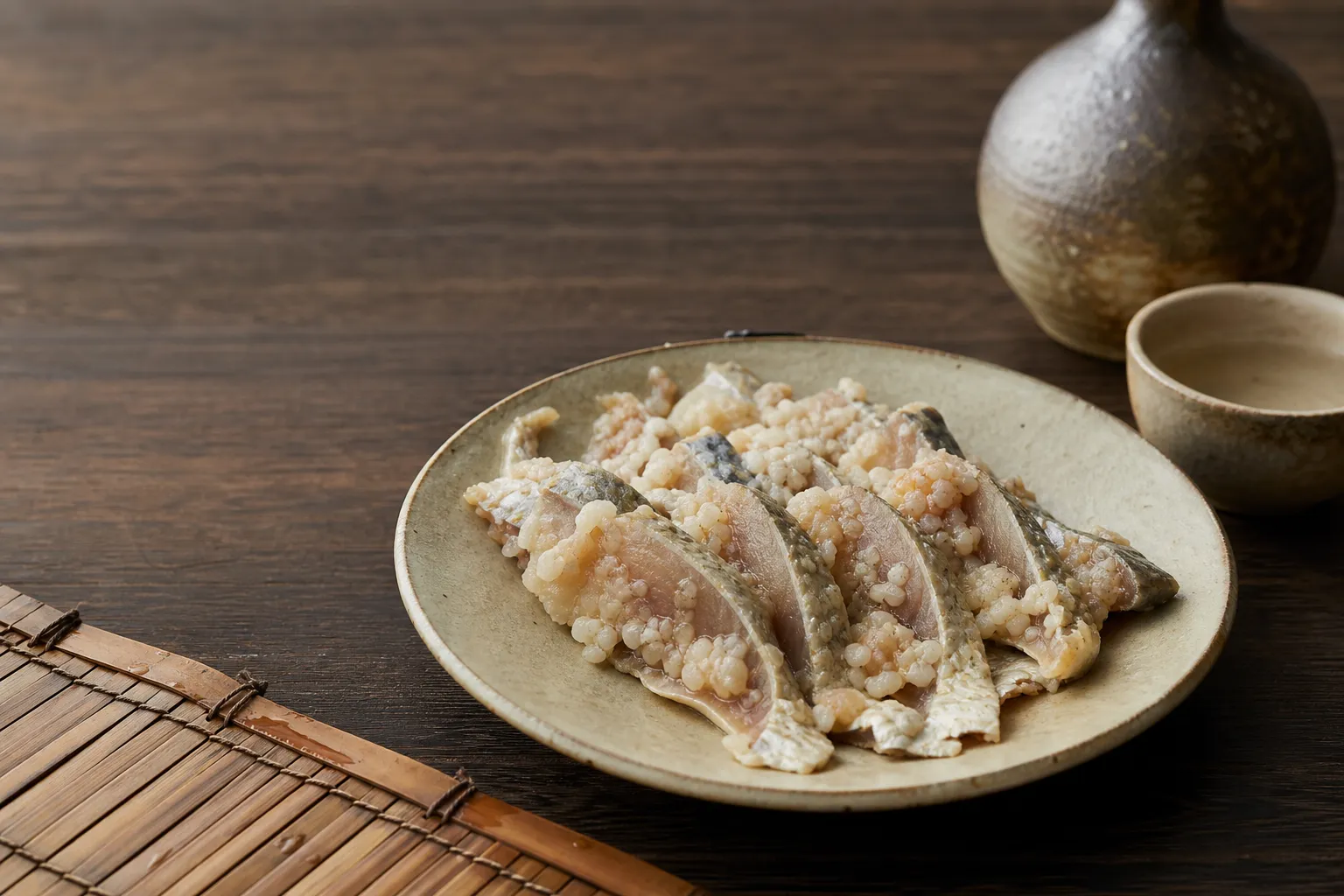
The smell arrives first, and it does not knock politely — sour, sharp, a little barnyard, the kind of aroma that makes half the table lean in and the other half lean way back. Then I put a thin amber slice on my tongue and — oh. Oh. It's sour and salty and deep and weirdly wine-like, the sake beside it suddenly makes total sense, and I understand I'm eating something ancient. This is not a dish you meet. It's a dish you reckon with.
Share this dish


Fermented lake carp aged in rice for a year or more — a sour, funky, cheese-and-sake bomb that turns out to be the great-grandparent of every piece of sushi you've ever eaten.
🍜 Planning a food trip to Shiga?Add this dish to my Food Trip →
 Add this dish to my Food Trip →
Here's what it is: funazushi (鮒寿司) is crucian carp from Lake Biwa packed in salt and then in cooked rice and left to ferment for months — often a full year or more — until the flesh turns pale and amber and the rice around it goes into a clingy, pungent paste. It's a narezushi, the old lactic-fermentation style that is the ancestor of all sushi: rice was originally the fermenting agent, not the meal. There's no fresh fish here, no vinegar-rice hand-pressed nigiri — this is the deep-past version, the great-grandparent that modern sushi grew up and away from. An acquired taste, absolutely. Also one of the most historically important bites in the country.
The dish that sushi came from
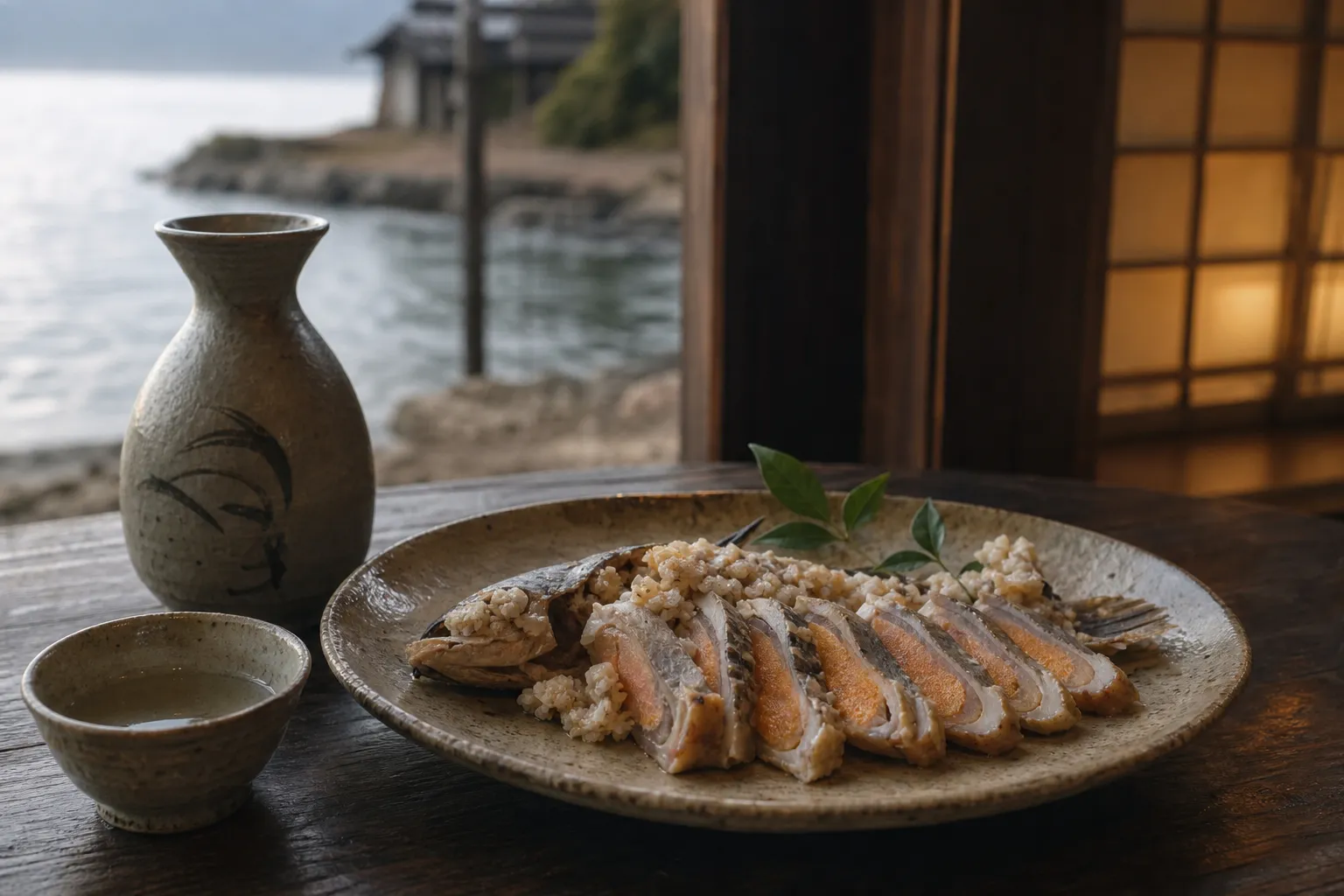
Long before anyone dreamed of a sushi counter, people across Asia preserved fish by burying it in salt and rice and letting lactic fermentation do the work — the sourness kept it edible for months. That technique reached Japan a very long time ago, and around Lake Biwa, with its endemic nigorobuna carp, it never left. Funazushi is a living fossil: what most of Japan replaced with fast vinegared rice, Shiga kept doing the slow, original way. When you eat it, you're tasting the method that eventually, over centuries, became the tuna nigiri in Tokyo.
I find that genuinely moving. We think of sushi as the pinnacle of fresh, clean, precise — and here at its root is this pungent, patient, fermented thing that asks for a year of your trust. It's expensive, it's laborious, fewer households make their own each generation, and every family that still does has its own way. Eating it feels less like a meal and more like being handed something people refused to let disappear.
What makes it so intense — and so good
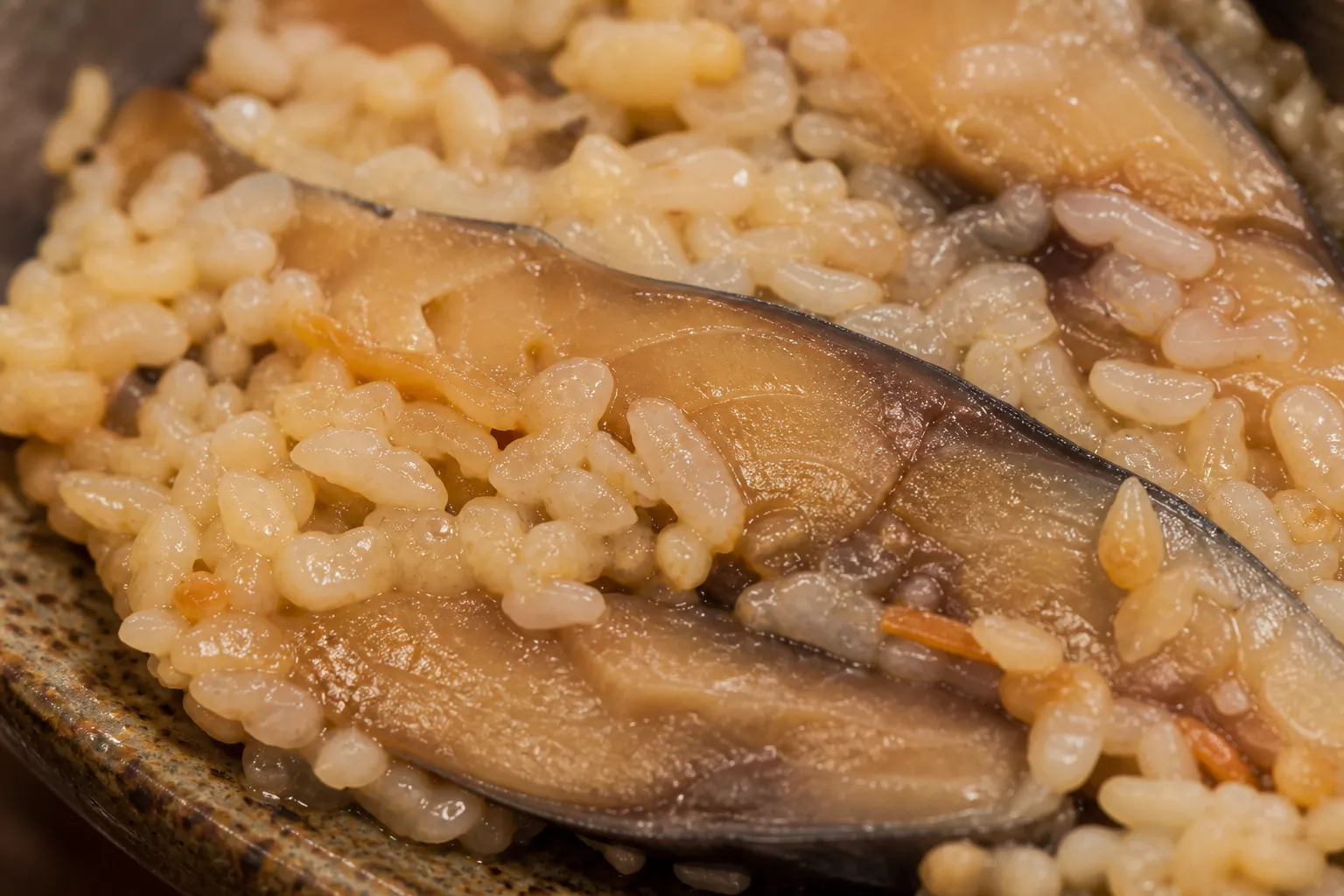
- The sourness is real and clean — lactic, tangy, more like aged cheese or sourdough than anything "fishy-off"
- The texture is firm and dense, sliced thin and translucent-amber, nothing like the soft give of fresh fish
- The fermented rice clinging to it isn't garnish — it's savory, funky and edible, carrying much of the flavor
- It's a natural umami and salt bomb, which is exactly why it's poured over with sake or green tea and eaten in small bites
- Prized fish carry roe, and the fine-grained, sticky orange eggs are the part connoisseurs prize most
How it's made
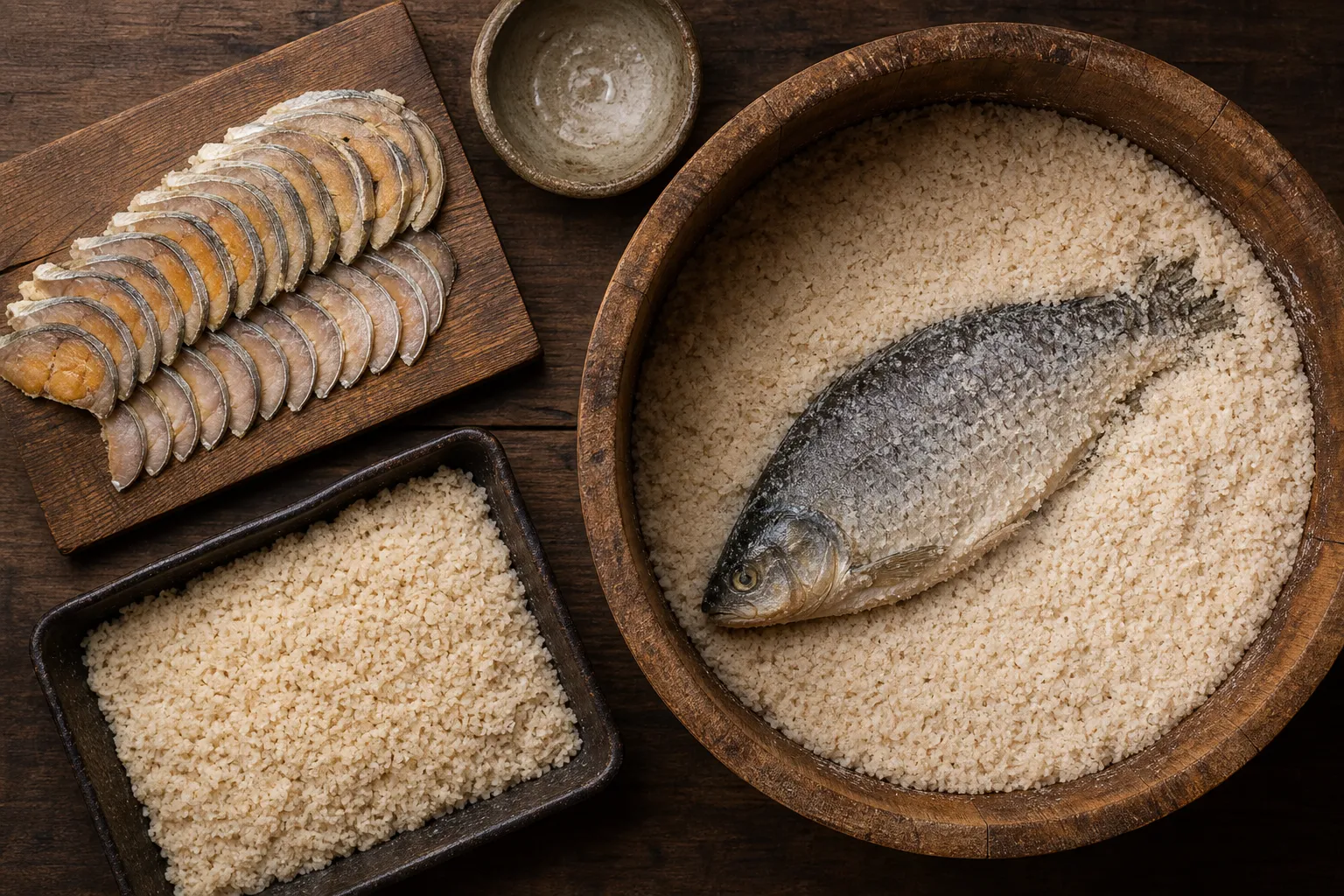
- Salt the fish. Whole crucian carp (often roe-bearing females) are scaled, gutted through the gills to keep the body and eggs intact, and packed in salt for months to draw out water and start the cure.
- Rinse and dry. The salted fish are rinsed and dried, resetting them for the second, longer stage.
- Pack in rice. The fish are layered into a barrel packed tightly with cooked rice and a little salt, weighted down, and sealed against air.
- Ferment slowly. Lactic-acid fermentation works for months to well over a year, souring and preserving the fish and turning the rice to a pungent paste.
- Slice and serve. The fish is lifted out, wiped down, and sliced thin — served with some of its rice, and usually with sake or tea alongside.
The whole craft is patience and cleanliness — the right salt, the right weight, the right amount of time. Rush any stage and it spoils instead of ferments; get it right and it keeps for a very long time and only deepens.
Before you go — go slow, and bring a drink
Your questions, answered honestly
"Be honest — how strong is it?" — Strong. The smell is pungent and the flavor is intensely sour and salty, closer to a ripe washed-rind cheese than to sushi. If you love funky, fermented, aged things, you may fall hard for it. If you don't, start with a very thin slice and no expectations.
"How am I supposed to eat it?" — In small bites, slowly, with sake or green tea. Locals also pour hot tea or dashi over it (ochazuke-style) to mellow the punch and stretch it out. Eat the clingy rice too; it's part of the dish.
"Is the fish raw?" — It's not cooked with heat, but it's heavily salted and fermented for a long time, which is the traditional preservation. It's still a raw fermented product, though, and recipes vary widely, so if you're pregnant, immunocompromised or unsure, check the ingredients and preparation with the shop and go easy.
"Will I actually like it?" — Maybe not the first bite — and that's normal, even expected. Give it a second and a third with a sip of sake in between. Plenty of people who recoil at first come back around. Either way, you've tasted the origin of sushi, which is its own reward.
What the staff will ask you
| You'll hear | Romaji | Meaning | Just say |
|---|---|---|---|
| 初めてですか? | Hajimete desu ka? | "Is this your first time?" | Hai, hajimete desu (yes, first time) |
| 卵入りにしますか? | Tamago-iri ni shimasu ka? | "Would you like the one with roe?" | Onegai shimasu (yes, please) |
| お酒はいかがですか? | O-sake wa ikaga desu ka? | "Would you like sake with it?" | Ii desu ne, kudasai (sounds good, please) |
To order, just say "Funazushi o kudasai" (鮒寿司をください) — "Funazushi, please."
Where to eat it
- Specialist shops around Lake Biwa in Shiga — long-established makers such as Kitashina (喜多品老舗) near the lake have produced funazushi for generations and sell it to eat in or take away.
- Traditional inns and restaurants in Shiga — many ryokan and Omi-cuisine restaurants around the lake serve funazushi as a small starter, a low-commitment way to try it as part of a meal.
- Omi-Hachiman and lakeside towns — old merchant towns near Lake Biwa are good hunting grounds for shops and eateries that carry it.
Funazushi is a specialty, seasonal, and often expensive; it can sell out and some shops keep limited hours or require ordering ahead, so check availability and price before you go.
Soul Score
Local Roots5/5
First-Timer Friendly1/5
Adventure Level5/5
Comfort Level3/5
Travel Worthy4/5
These scores are one obsessed eater's gut feeling — not a verdict. A low number isn't a bad mark, just a different kind of adventure.
Know someone planning Japan?
← All Articles
Local Food · Lake Biwa, Shiga
Still hungry?
Eat more from Shiga
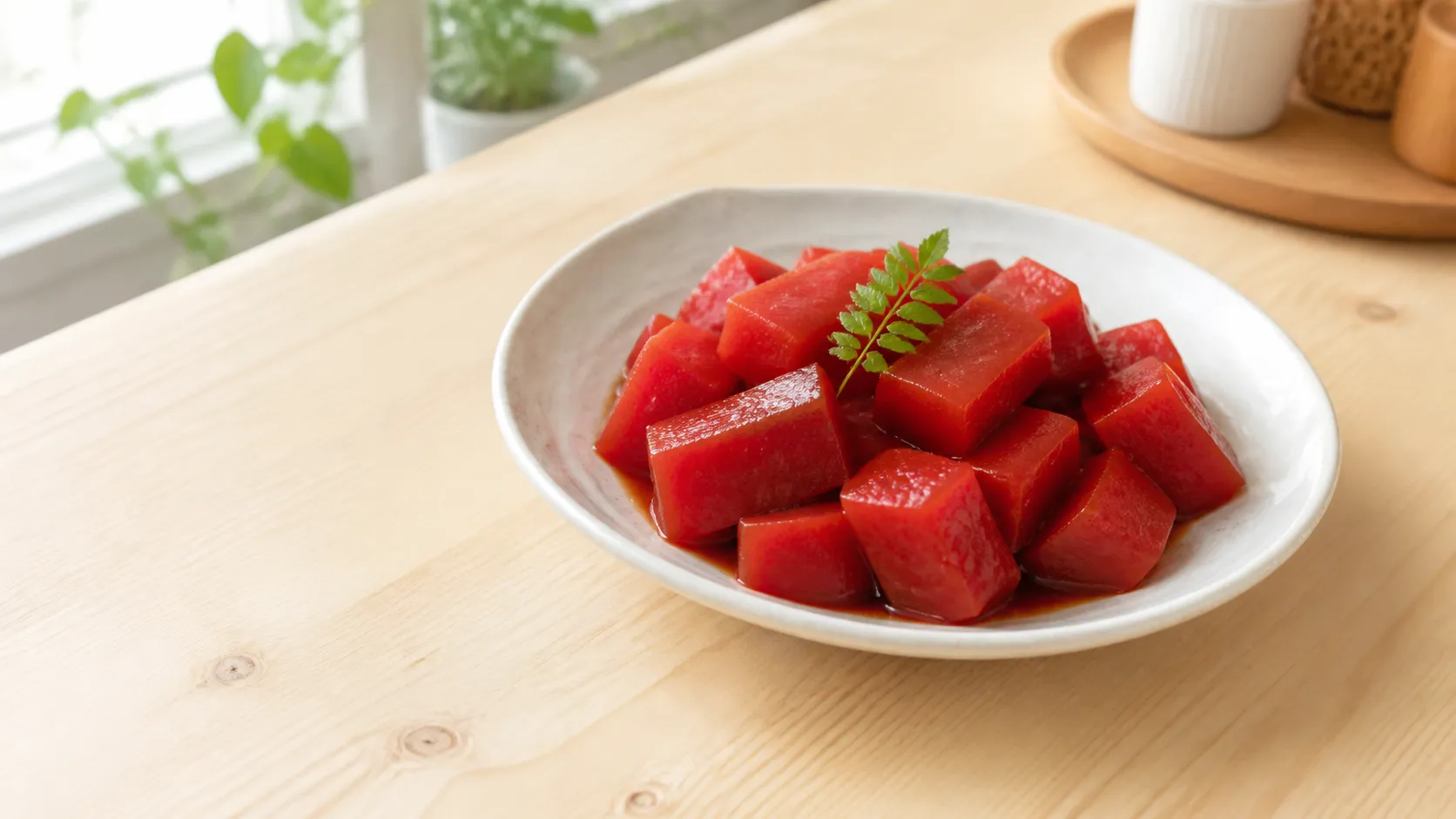
Local FoodOmihachiman, Shiga
Aka Konnyaku (赤こんにゃく)
I cut into it fully expecting the red to stop at the surface, and it didn't. It goes all the way through. That's the moment this stops being a novelty and starts being a question.
September 2, 2026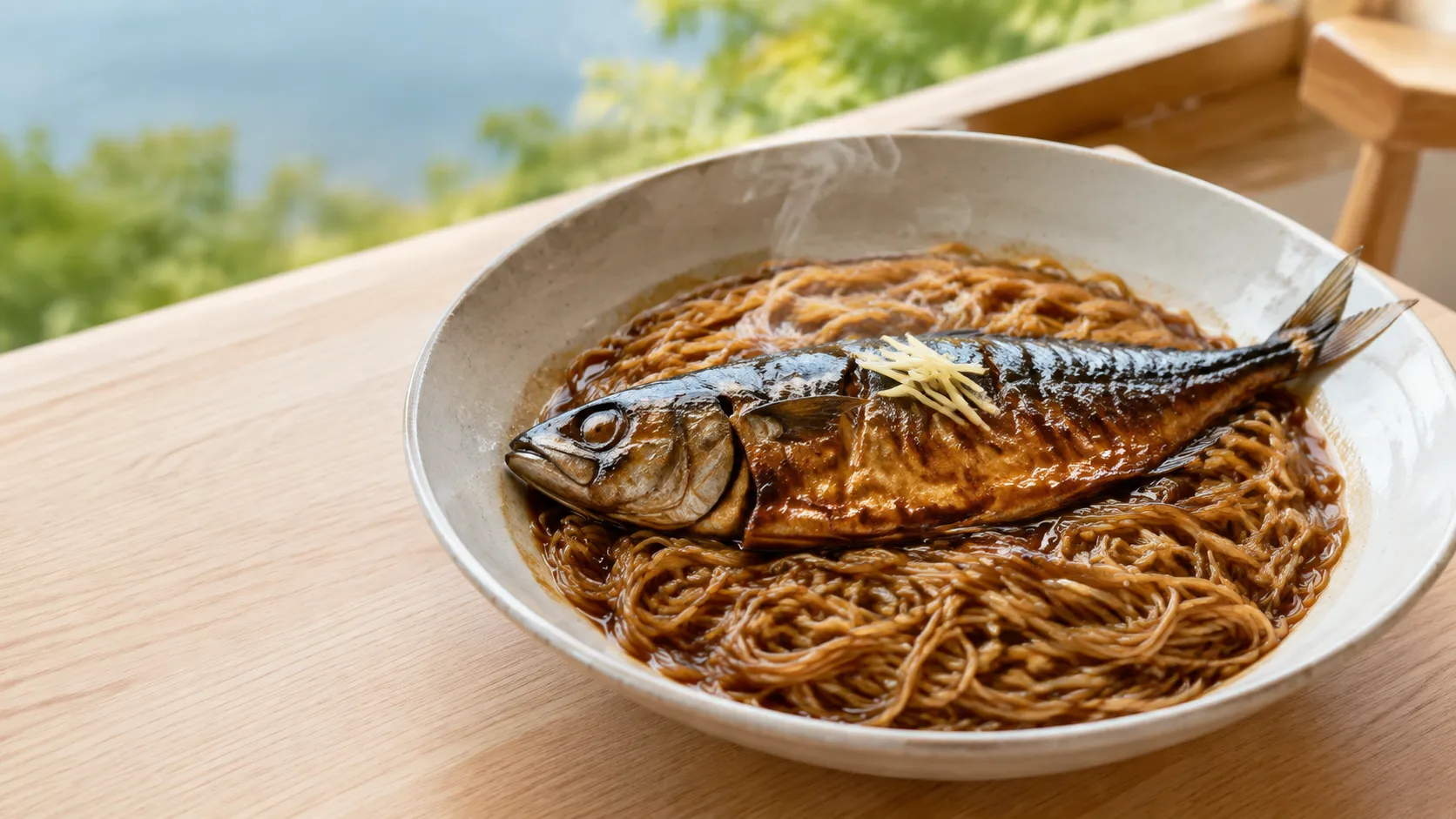
Local FoodNagahama, Shiga
Saba Somen (焼き鯖そうめん)
Somen noodles the color of strong tea, because they've been sitting in mackerel braising liquid absorbing everything it had — and yes, I drank what was left in the bowl.
September 2, 2026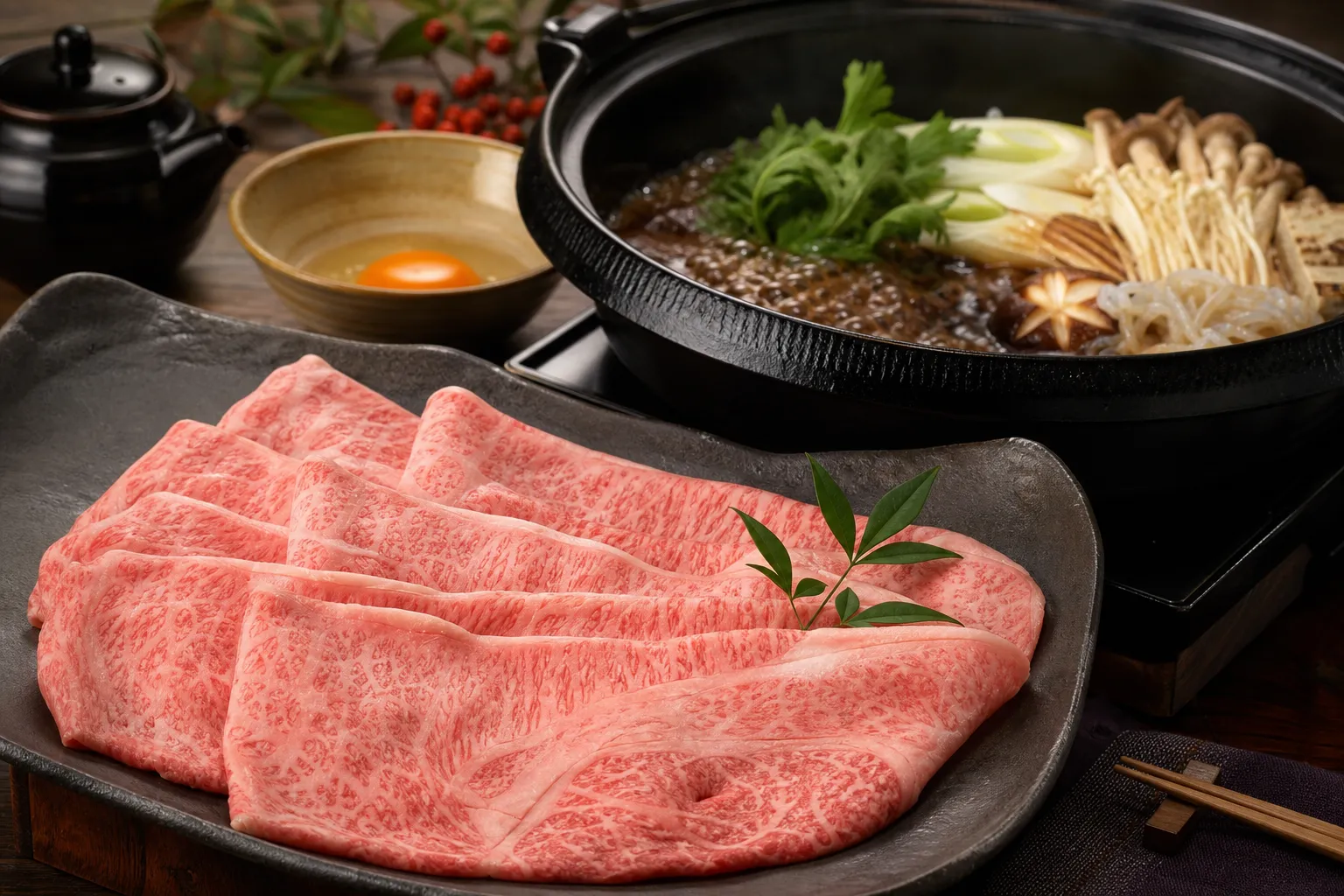
Local FoodShiga
Omi Beef (近江牛)
One of Japan's three oldest wagyu brands, its marbled fat melting into sweet nothing the second it hits the hot sukiyaki pan — Shiga's 400-year-old beef that samurai smuggled to the shogun.
July 12, 2026