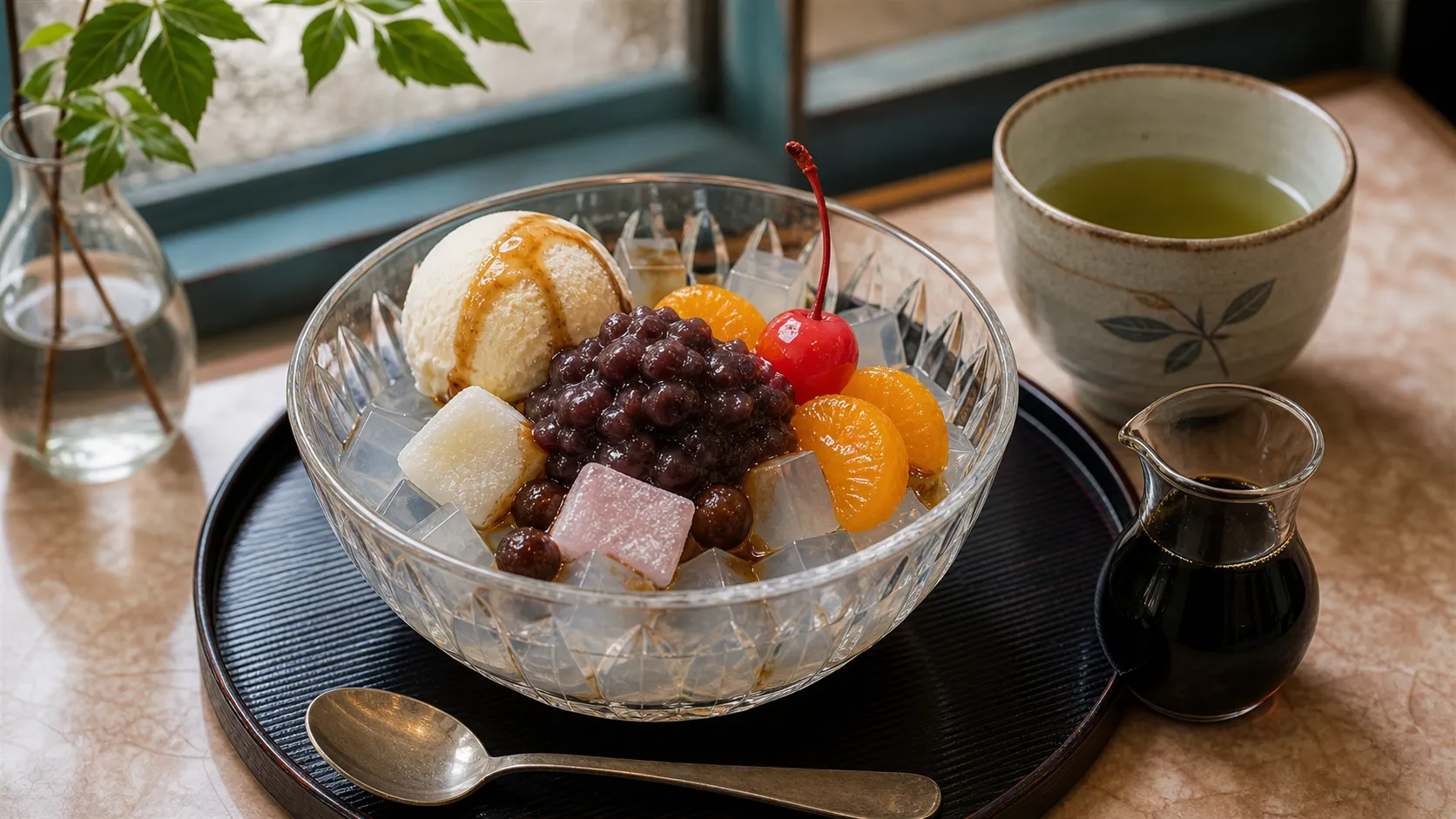
They set down a glass bowl and a little pitcher, and the bowl is a whole tiny landscape: clear cubes of jelly, a glossy mound of sweet red bean, a couple of soft mochi pieces, a few jewels of fruit. Then you pick up the pitcher of dark syrup and pour it over everything, and it pools into the clear jelly and glazes the beans, and you dig your spoon down to get a little of everything in one cool, sweet, textural bite. That's anmitsu, and it's the most fun you can have with a spoon at a Japanese sweet shop.
Share this dish


A cool glass bowl of firm agar jelly cubes, sweet red bean, soft mochi and fruit, waiting for you to pour dark sugar syrup over the whole thing — a build-your-own retro parfait that's basically a Japanese sweet-shop in a bowl.
Here's the build: anmitsu (あんみつ) is a traditional dessert of firm kanten (agar) jelly cubes topped with sweet red bean paste (anko), chewy gyuhi (soft mochi), pieces of fruit (mandarin, cherry), often a scatter of sweet peas, and served with a pitcher of kuromitsu (dark brown-sugar syrup) to pour over. Agar jelly + anko + mochi + fruit + pour-your-own syrup: that combination is what makes it anmitsu (its ancestor, mitsumame, is the same minus the big scoop of anko). It's a fixture of the kanmidokoro — the traditional Japanese sweet parlor.
The retro sweet parlor in a bowl
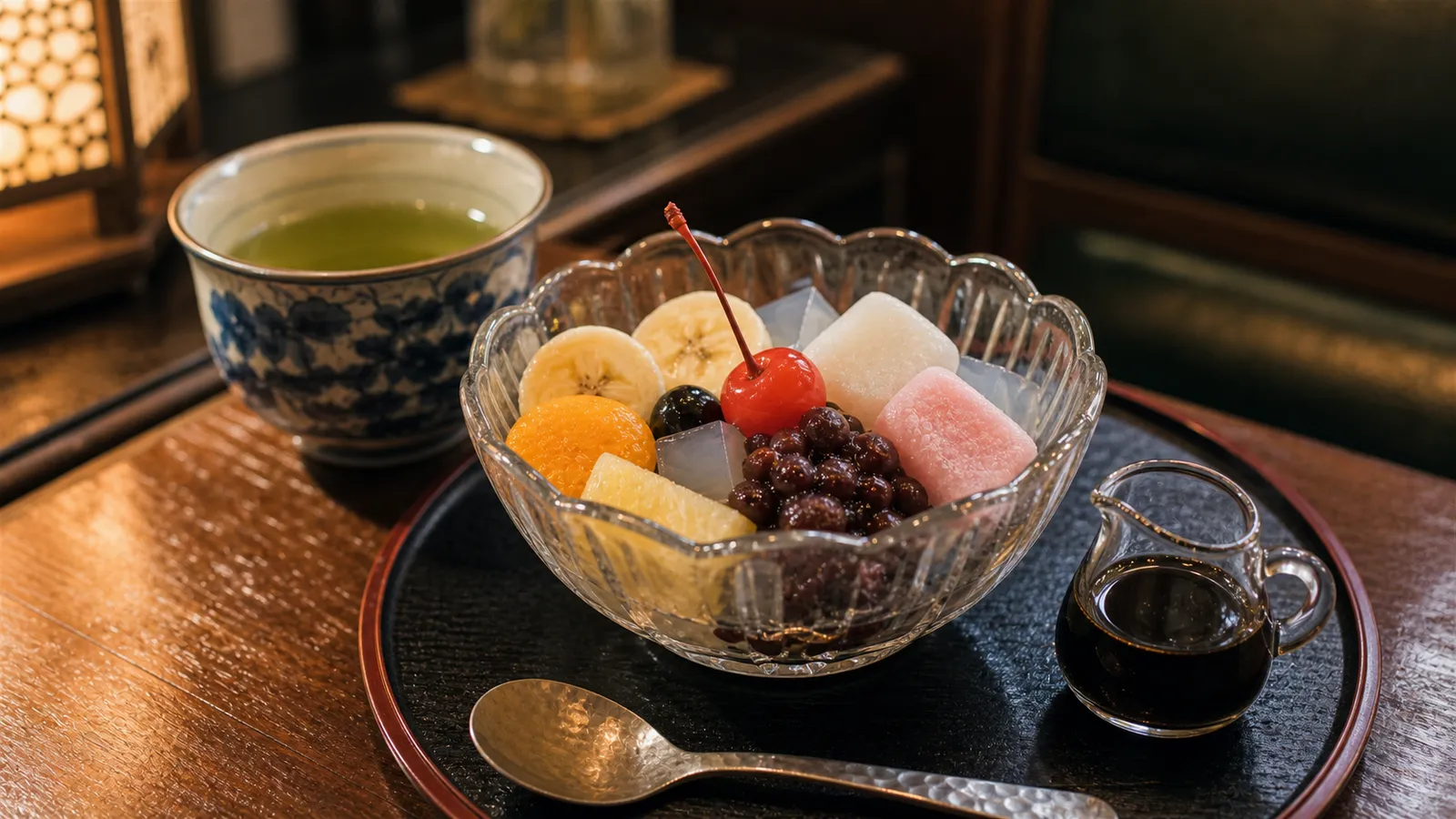
Anmitsu grew out of mitsumame — agar jelly, peas and fruit with syrup, a sweet that goes back generations — when someone had the excellent idea of adding a generous scoop of anko on top. It became a signature of the kanmidokoro, the old-school sweet shops where you sit down with a pot of green tea and a beautiful bowl of cool, mixed textures. It's nostalgic, wholesome, and quietly sophisticated — a grandmother's sweet in the best way, still adored by everyone.
What I love is that it's a dessert you assemble as you eat. The components are laid out, restrained, each with its own texture, and the pour of kuromitsu is the moment it all comes together — and you control it. It's the opposite of a one-note sugar hit; it's a considered little medley of jelly and bean and mochi and fruit, cool and gentle, made to be lingered over with tea. In a hot summer, a bowl of anmitsu in a shaded tea house is one of Japan's great small pleasures.
What makes the eating experience different
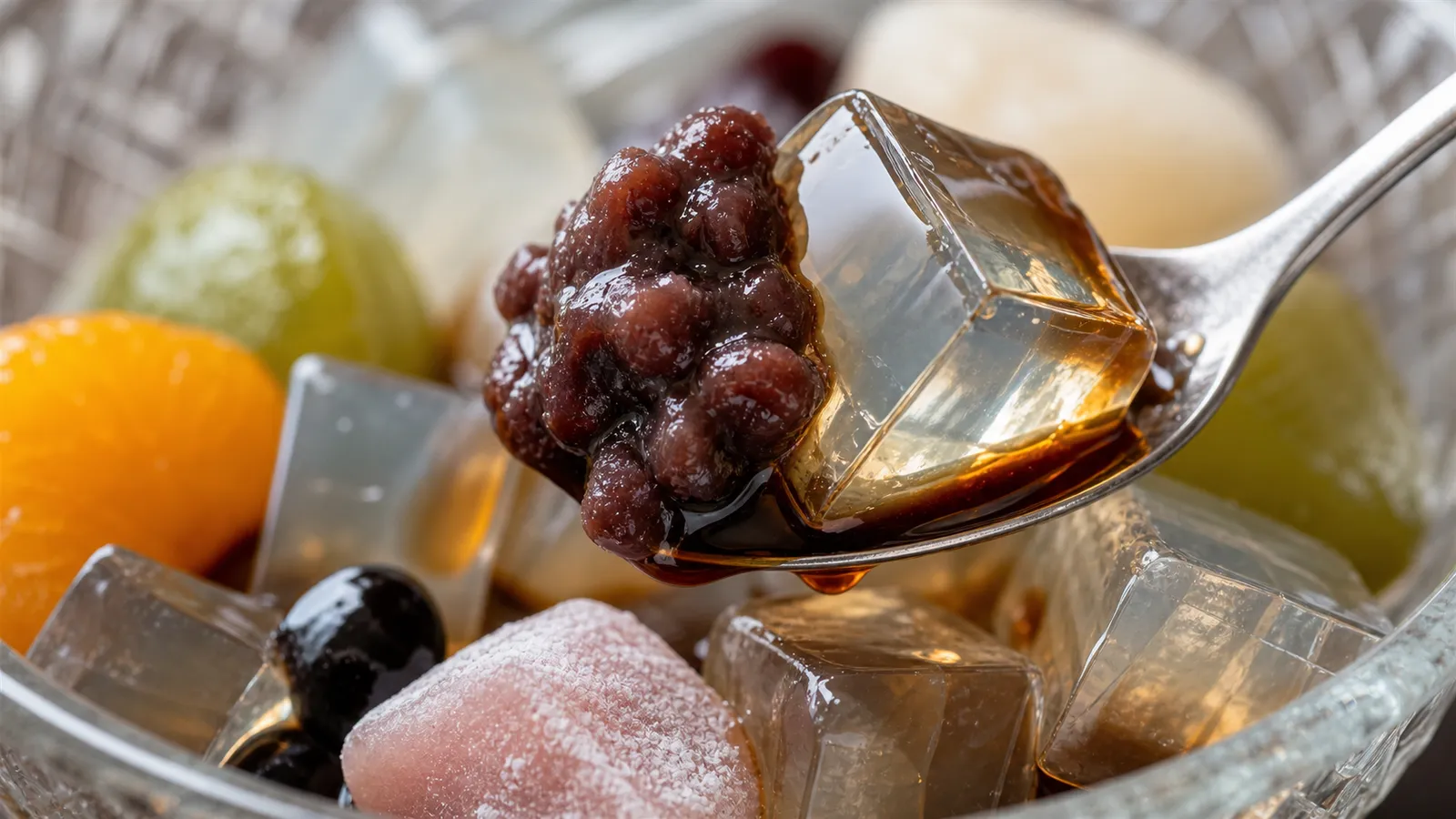
- It's a medley of textures: firm, cool agar jelly; smooth sweet red bean; chewy soft mochi; juicy fruit — every spoonful is a little different
- The kanten (agar) jelly is clean and barely sweet on its own — a refreshing, neutral base that lets the toppings shine
- Kuromitsu, poured to taste, ties it together with deep molasses sweetness — you decide how much
- It's cool and light rather than rich — a dessert that refreshes rather than fills, perfect after a meal or in the heat
- Common upgrades — a scoop of matcha or vanilla ice cream (cream anmitsu), extra fruit, shiratama dumplings — make it endlessly customizable
How it's made
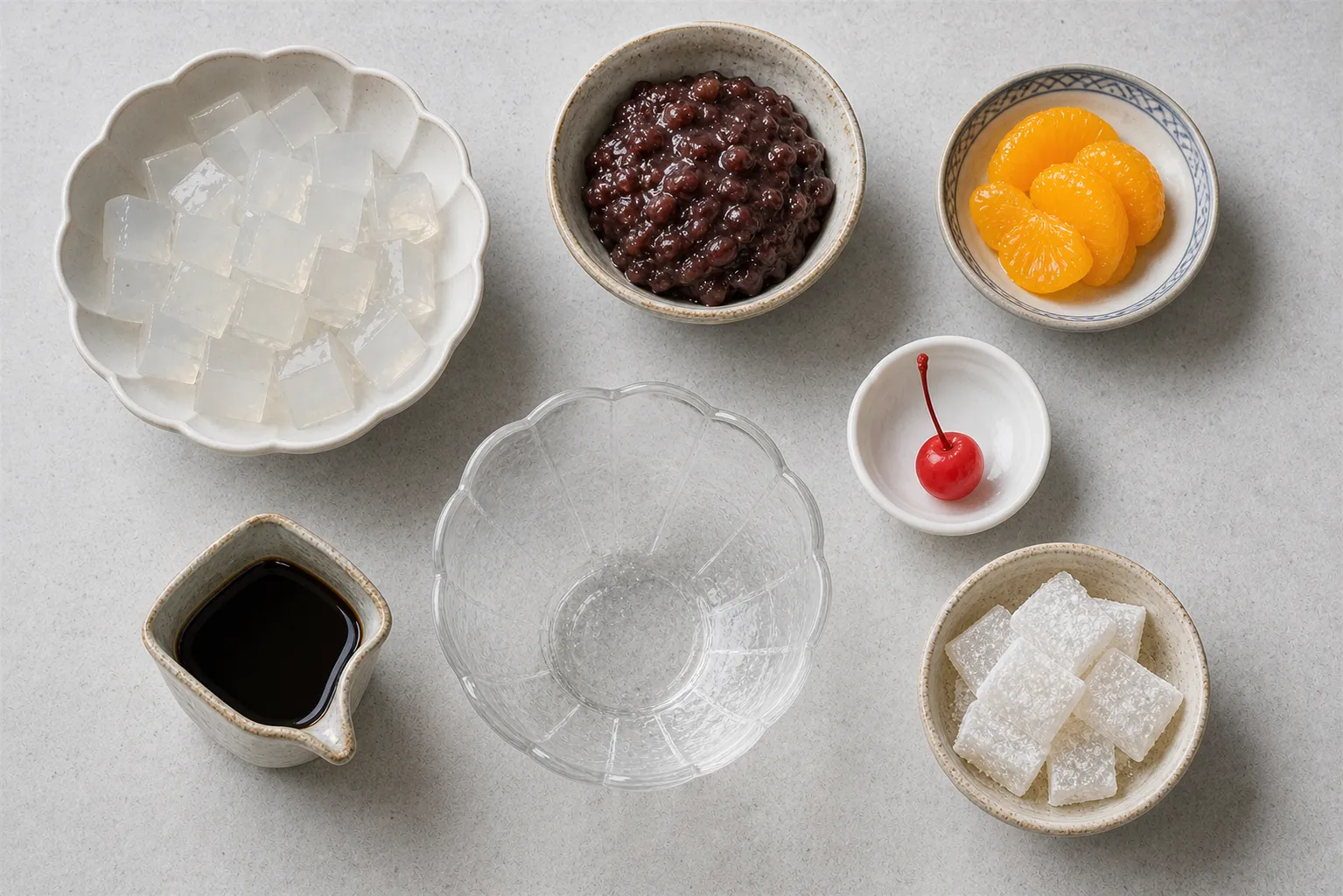
- Set the agar jelly. Kanten (agar) is dissolved in water, sometimes lightly sweetened, and set firm, then cut into clean cubes.
- Prepare the toppings. Sweet red bean paste, chewy gyuhi mochi pieces, fruit (mandarin, cherry), and often sweet peas are readied.
- Assemble the bowl. The agar cubes go in first, then the anko, mochi, fruit and peas are arranged on top in a neat little landscape.
- Serve with syrup on the side. A pitcher of kuromitsu comes alongside for the eater to pour over.
- Pour and eat cold. Drizzle the syrup, then spoon down to get a bit of everything together. Add ice cream for cream anmitsu.
There's no cooking drama here — it's a dish of assembly and balance, and the craft is in the quality of each part (good agar, good anko, good syrup) and the pretty, restrained way it's arranged. The pour is left to you, which is half the fun.
Before you go — pour your own syrup
Your questions, answered honestly
"What's the clear jelly — is it flavorless?" — It's kanten, Japanese agar jelly, and it's meant to be clean and barely sweet. It's the cool, refreshing base; the sweetness comes from the anko and the kuromitsu you pour. Don't judge the jelly alone — judge a spoonful with everything together.
"What do I do with the little pitcher?" — Pour it over! That's kuromitsu (brown-sugar syrup), and adding it is part of eating anmitsu. Start with some, taste, add more if you like it sweeter. You're in charge of the sweetness.
"What's the difference between anmitsu and mitsumame?" — Mitsumame is the older, simpler version: agar jelly, peas, fruit and syrup. Anmitsu is mitsumame with a generous scoop of anko (red bean paste) added on top. If you love red bean, get anmitsu; if you want it lighter, mitsumame.
"Should I get the ice cream one?" — If it's hot out, absolutely. Cream anmitsu adds a scoop of ice cream (often matcha or vanilla) that melts into the syrup and jelly beautifully. It's a lovely upgrade, though the classic is perfect on its own.
What the staff will ask you
| You'll hear | Romaji | Meaning | Just say |
|---|---|---|---|
| クリームあんみつになさいますか? | Kurīmu anmitsu ni nasaimasu ka? | "Would you like it with ice cream?" | Onegaishimasu / Futsū no de (yes / the regular, please) |
| 黒蜜はおかけしますか、お付けしますか? | Kuromitsu wa o-kake shimasu ka, o-tsuke shimasu ka? | "Pour the syrup, or serve it on the side?" | Betsu de (on the side, please) |
| お茶をお持ちしましょうか? | O-cha o o-mochi shimashō ka? | "Shall I bring green tea?" | Onegaishimasu (yes, please) |
To order, just say "Anmitsu o kudasai" (あんみつをください) — "Anmitsu, please."
Where to eat it
- Kanmidokoro (traditional sweet parlors) nationwide — the classic home of anmitsu; sit down with green tea and a beautifully arranged bowl.
- Tea houses and traditional cafés — especially in old districts and around temples, a bowl of anmitsu is a lovely, cooling rest stop.
- Department-store sweet counters and cafés — reliable places to try a good anmitsu, often including cream versions.
Anmitsu toppings and syrup styles vary by shop, and it's a cool, light dessert best eaten fresh — check the menu for cream and seasonal variations.
Soul Score
Local Roots4/5
First-Timer Friendly5/5
Adventure Level3/5
Comfort Level5/5
Travel Worthy3/5
These scores are one obsessed eater's gut feeling — not a verdict. A low number isn't a bad mark, just a different kind of adventure.
Know someone planning Japan?
← All Articles
Sweets & Snacks · Nationwide
Still hungry?
You might also like
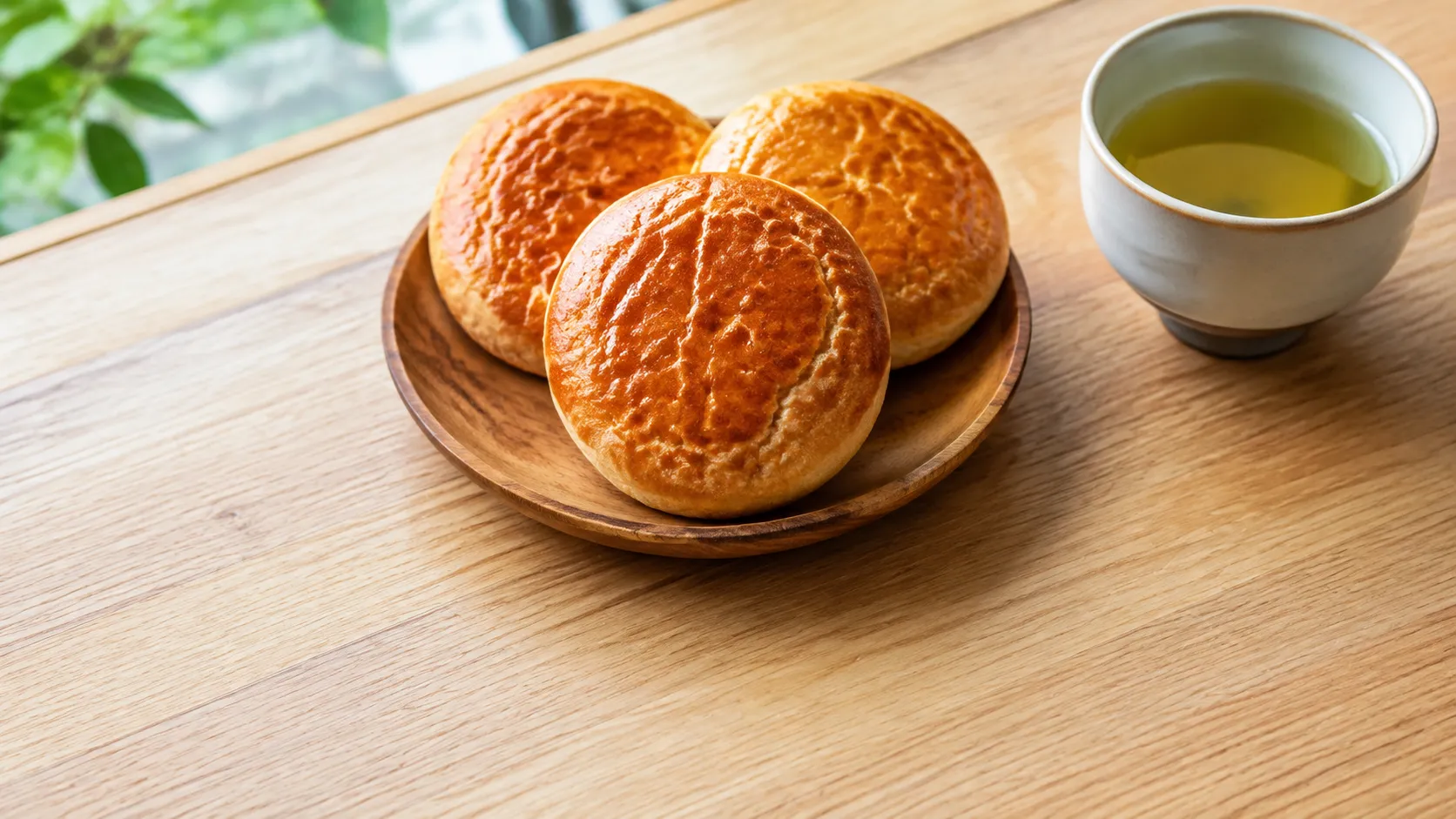
Sweets & SnacksSaga
Maruboro (丸ぼうろ)
It looks like the most boring biscuit in Japan. Then you bite it and it's soft, and honey-warm, and about four hundred years of Portuguese sailors arrive all at once.
September 2, 2026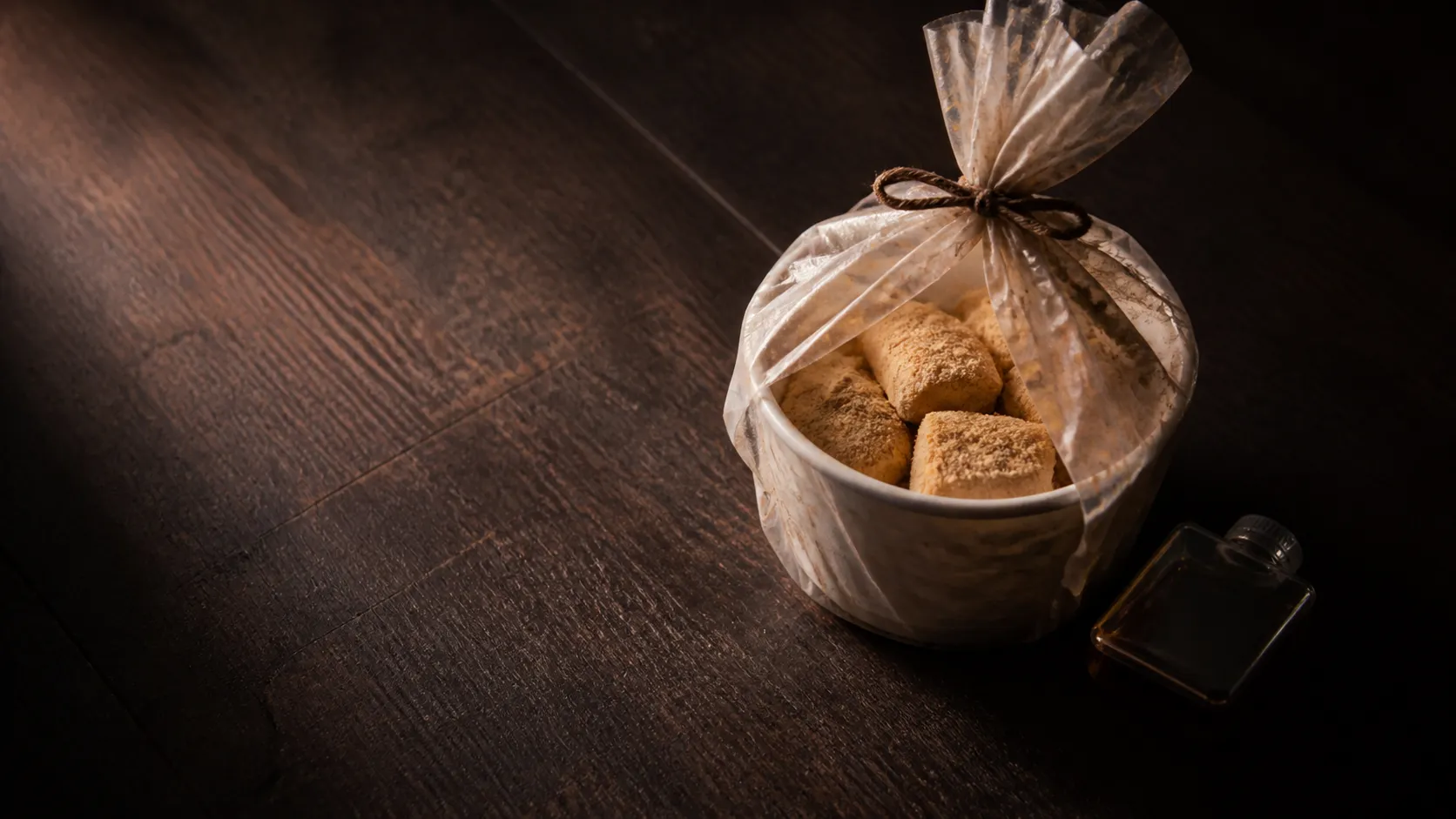
Sweets & SnacksYamanashi
Shingen Mochi (信玄餅)
There is a correct way to eat this and I did not know it, so I made a mess in front of several Yamanashi locals who were extremely kind about it and absolutely watching.
September 2, 2026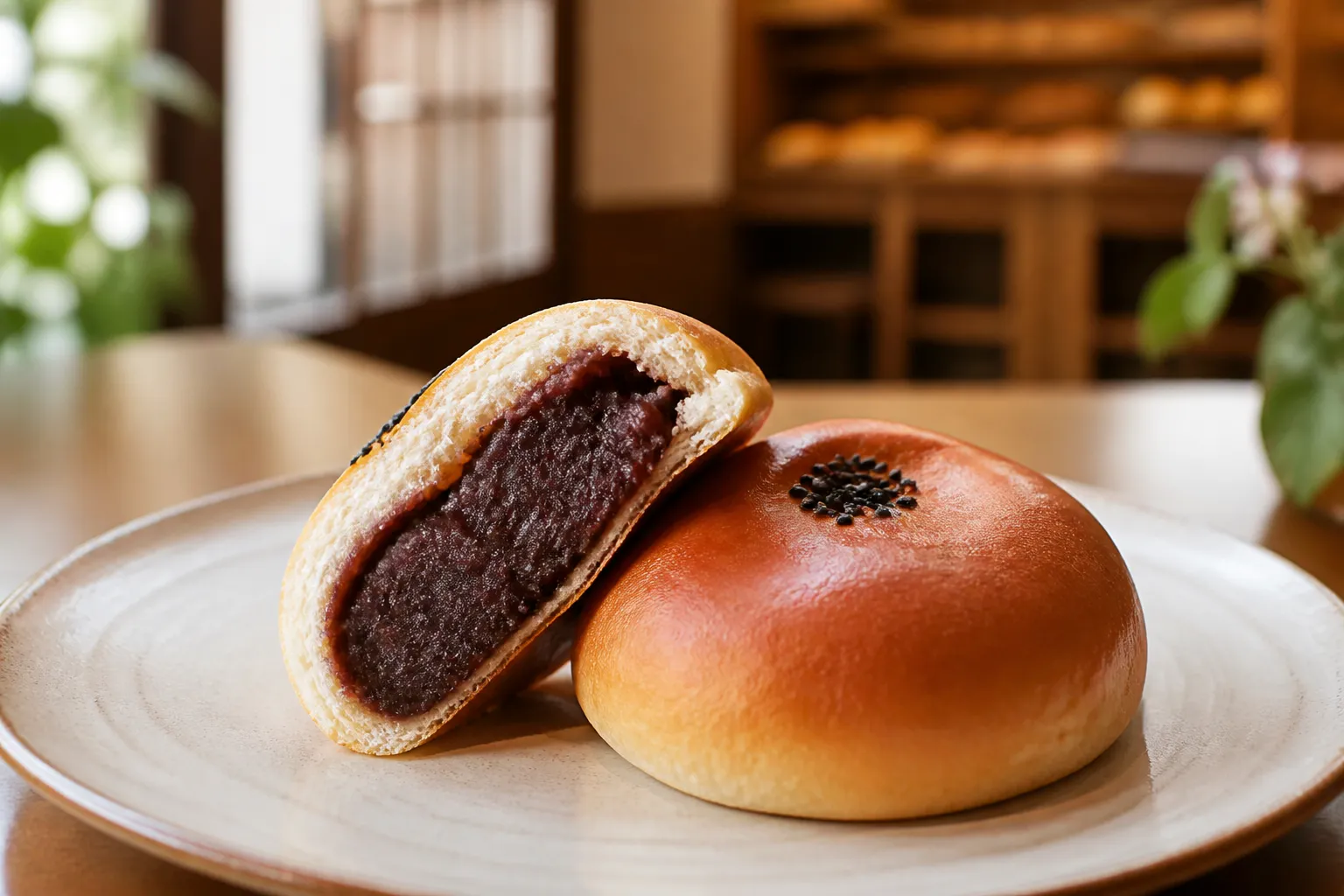
Sweets & SnacksTokyo
Anpan (あんパン)
A soft little bun, one bite in, and suddenly it's dense, dark, sweet red bean all the way through — the bread that talked 1870s Japan into eating Western-style bread at all.
July 27, 2026