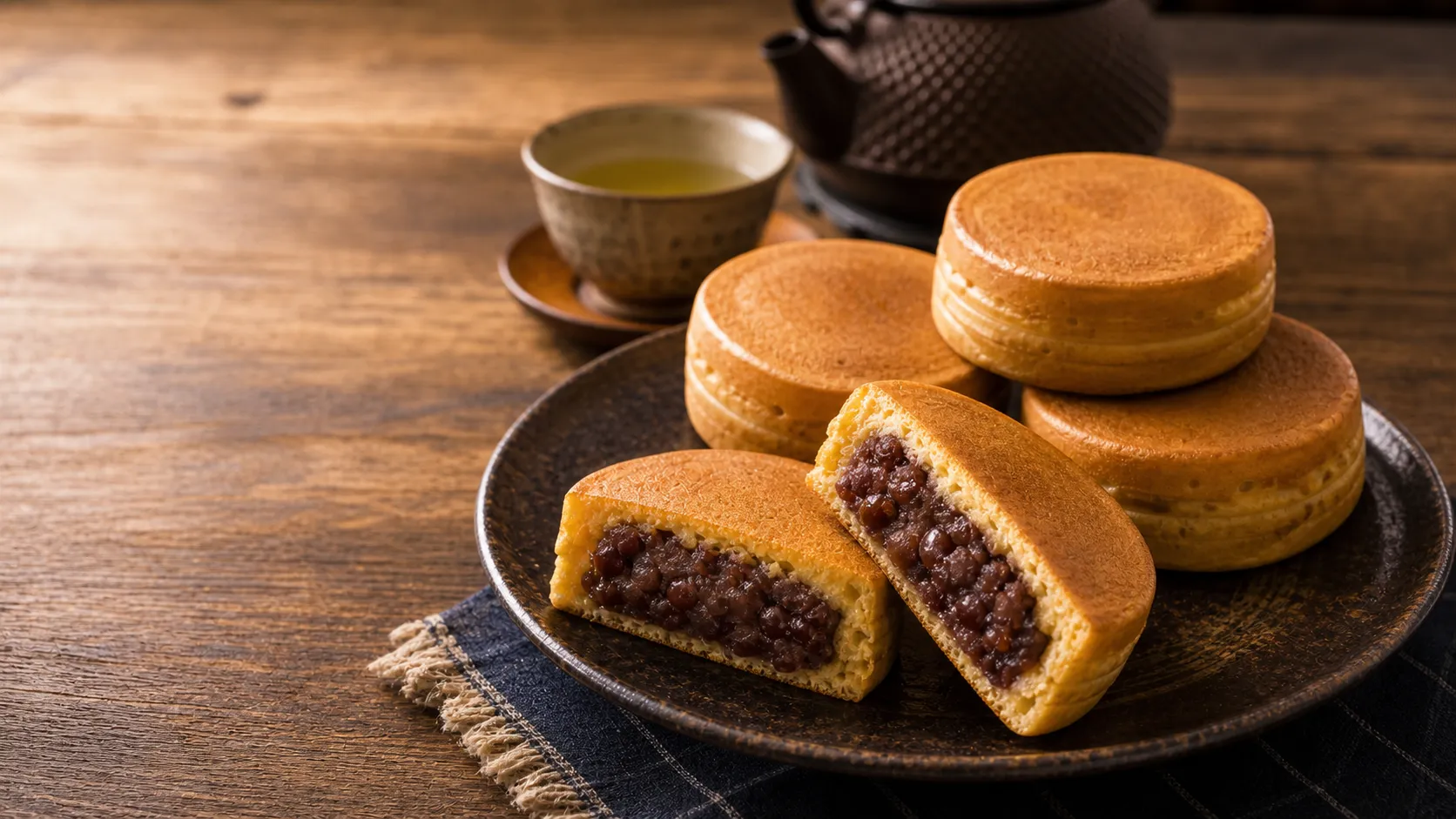
You buy it hot from a little window on a shopping street, and it's almost too warm to hold — a fat golden disc, pressed and sizzling from an iron mold. You bite in and the crisp-tender pancake shell gives way to a flood of hot, sweet red bean paste, and you make the exact same happy-startled noise everyone makes, and you keep eating even though it's scalding because you simply cannot stop. That's imagawayaki — or oban-yaki, or kaiten-yaki, or whatever your particular corner of Japan insists on calling it. The name changes; the joy doesn't.
Share this dish


A hot little drum of pancake batter with a molten core of sweet red bean, pressed in a circular iron mold and handed to you steaming — the cheap, perfect street sweet that Japan can't even agree on the name of.
Here's the thing: imagawayaki (今川焼き) is a thick, round cake made by pouring pancake-like batter into a circular iron mold, filling it with sweet red bean paste (anko), and pressing two halves together to cook into a hot, drum-shaped sweet — crisp at the edges, tender through the middle, molten in the center. Round iron-mold cake with a bean core: that's what makes it imagawayaki and not a fish-shaped taiyaki (same idea, different mold) or a flat dorayaki. And yes — depending on where you are in Japan it's oban-yaki, kaiten-yaki, gozasōrō and a dozen other regional names. It's a national treasure with an identity crisis.
One cake, a hundred names
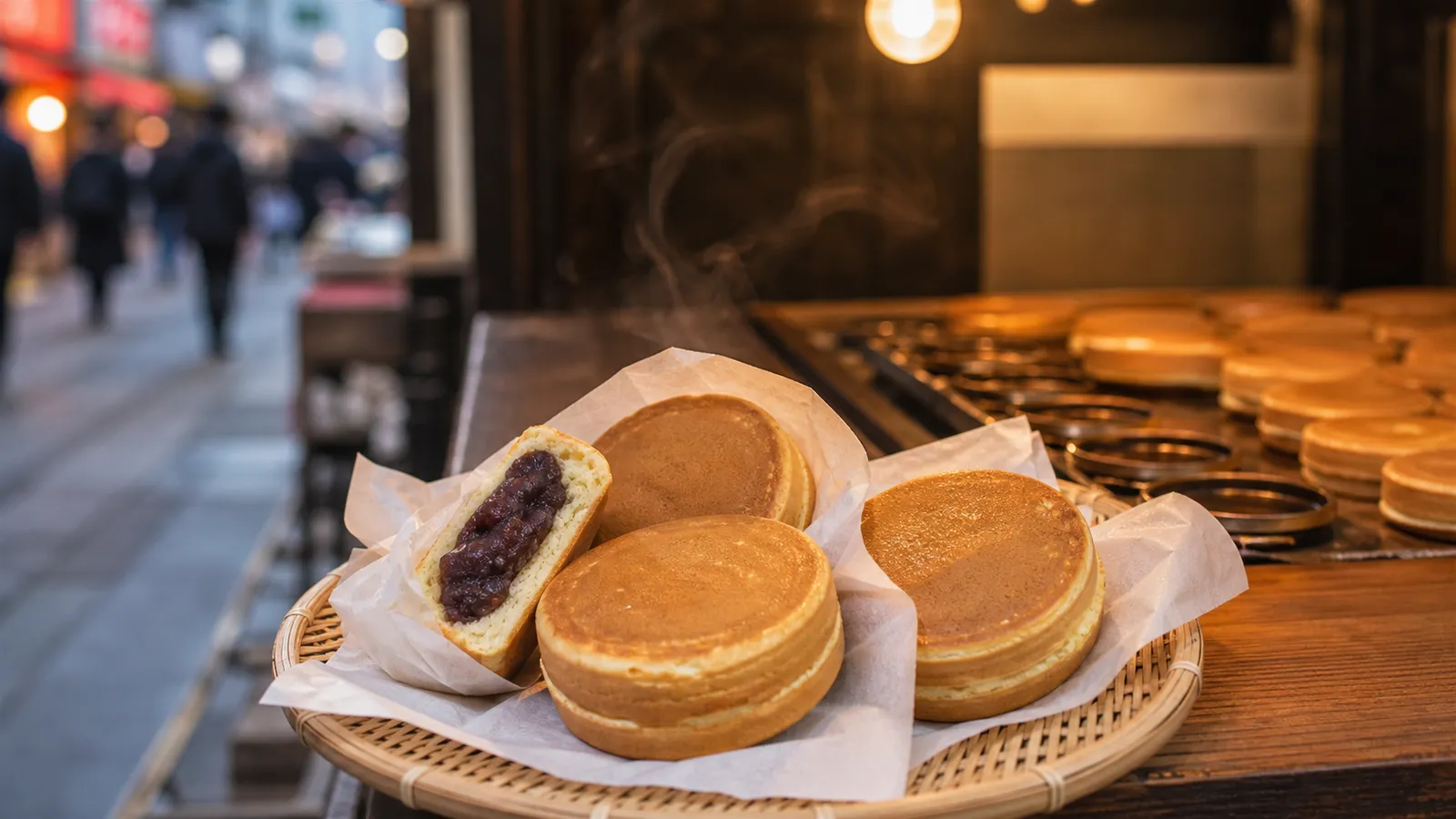
The name imagawayaki is said to come from an Edo-era shop near the Imagawa bridge in old Tokyo that started selling them — but as the cake spread across the country, region after region gave it its own name, which is why it's one of the great "what do YOU call it?" foods in Japan. It's Edo-period street food that never went out of style: cheap, hot, handheld, made in front of you in those mesmerizing circular molds, and utterly beloved by everyone from schoolkids to grandparents.
I find the whole naming chaos delightful, honestly — it's proof of how deeply and independently this humble sweet embedded itself in every part of the country. There's no fancy version, no Michelin imagawayaki; it's the same cheap, perfect thing at a festival stall, a supermarket entrance, a shopping-street window. Watching the batter poured into those glowing molds, the anko dolloped in, the halves joined and flipped, is one of the simplest pleasures of walking around Japan.
What makes it so satisfying
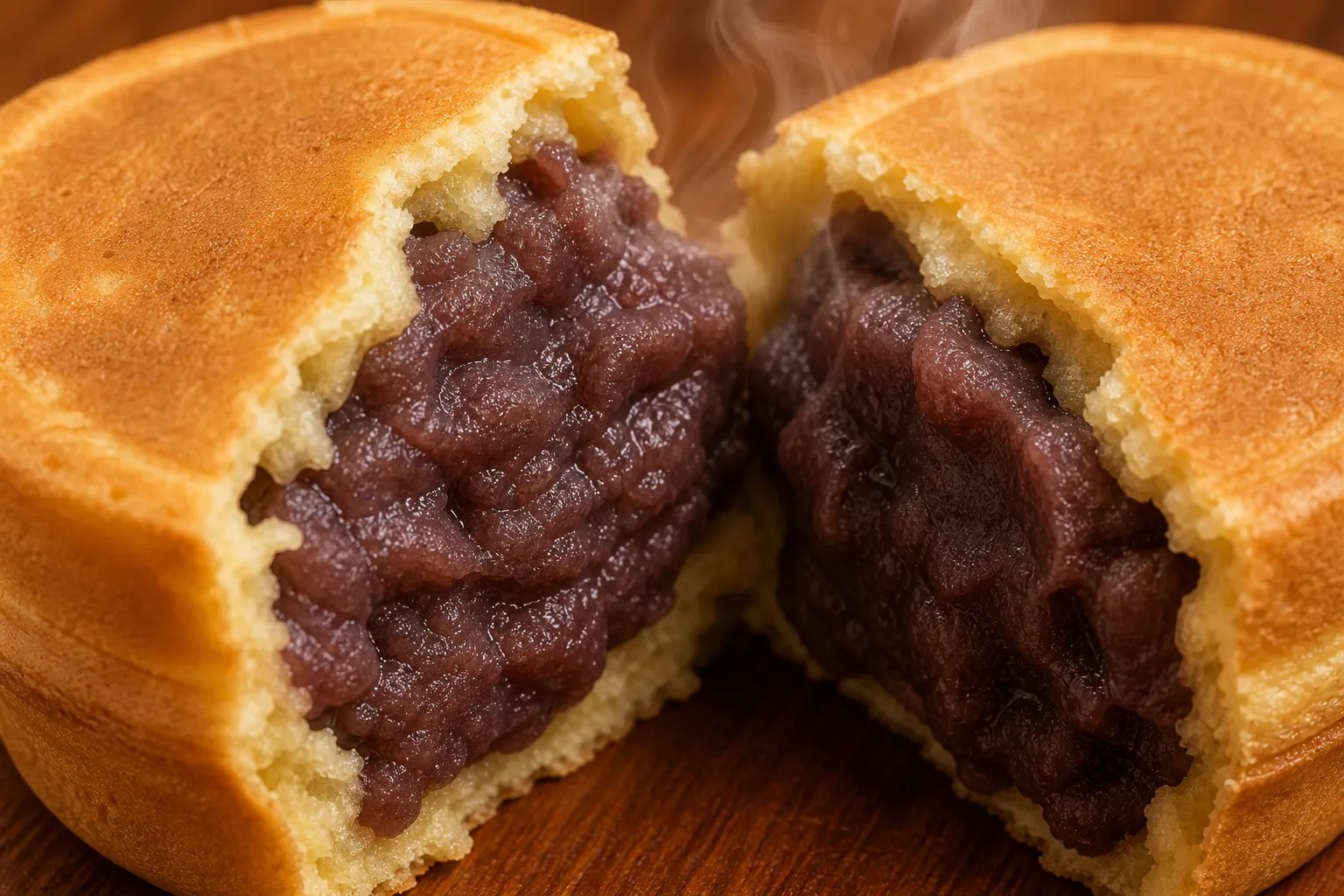
- The shell is crisp at the edges, soft and cakey inside — a pancake-cross-castella texture that's substantial without being heavy
- The classic filling is sweet red bean paste (smooth koshian or chunky tsubuan), warm and generous, right to the edges
- Custard cream is the other great filling — some shops specialize in it, and a molten custard imagawayaki is glorious
- It's the perfect handheld size and heft — one is a proper snack, dense enough to carry you to your next meal
- Best eaten hot, straight from the window, when the filling is molten and the shell is at its crispest
How it's made
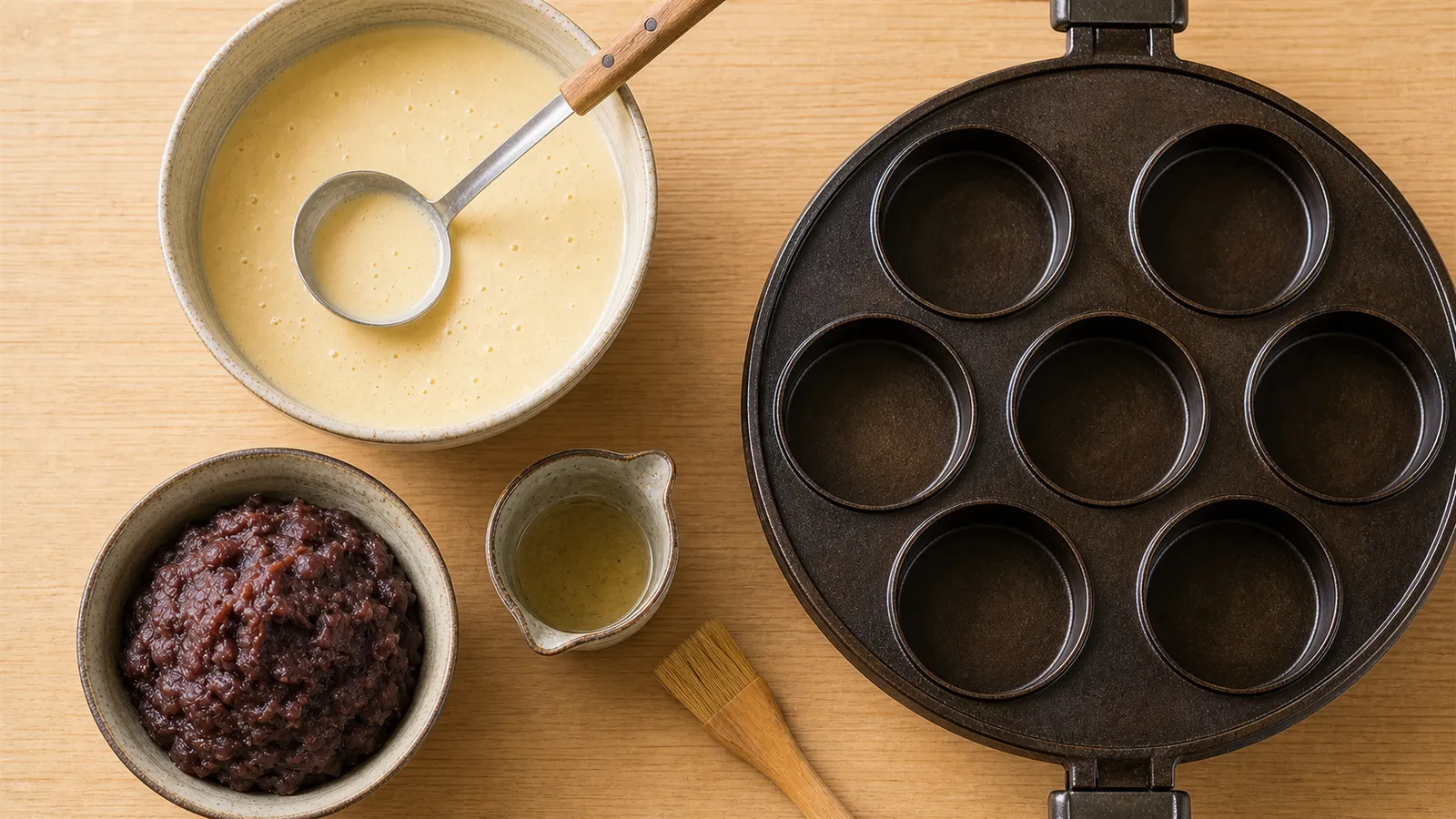
- Heat the mold. A heavy iron griddle with round wells is brought up to temperature — the mold is what gives the cake its signature shape and crisp edge.
- Pour the batter. A pancake-like batter (flour, egg, sugar, sometimes a little honey) is ladled into the greased wells.
- Add the filling. A generous scoop of sweet red bean paste (or custard) goes into each half as the batter sets.
- Join and flip. Two batter-filled halves are pressed together and the whole thing is flipped so both sides brown evenly into a sealed drum.
- Serve hot. Turned out of the mold and handed over steaming — best eaten right away.
The satisfying part is the assembly line of it: rows of glowing molds, batter poured, anko dolloped, halves flipped and joined in a rhythm. It's cooking as gentle theater, and the reward is a hot cake for pocket change.
Before you go — hot from the window
Your questions, answered honestly
"What's the difference between this and taiyaki?" — Mostly the shape and the mold. Taiyaki is the same batter-and-bean idea cooked in a fish-shaped mold; imagawayaki is cooked in a round mold into a thick drum. The imagawayaki tends to be thicker with more filling in the middle. Same delicious family, different silhouette.
"Why does it have so many names?" — Because it spread across Japan and each region adopted its own name — oban-yaki, kaiten-yaki, gozasōrō and more. If you ask for "imagawayaki" and get a blank look, point at the round cakes and you'll be understood. It's the same thing everywhere.
"Red bean or custard?" — Red bean (anko) is the classic and the one to try first. But custard cream is a beloved alternative, and many stands offer both (plus sometimes matcha, chocolate, or savory fillings). You can't go wrong; get one of each if you're torn.
"Will it burn my mouth?" — Honestly, probably, if it's fresh — that center is molten. Give it a moment, or bite the edge first to let steam out. Worth it every time.
What the staff will ask you
| You'll hear | Romaji | Meaning | Just say |
|---|---|---|---|
| あんことカスタード、どちらにしますか? | Anko to kasutādo, dochira ni shimasu ka? | "Red bean or custard?" | Anko de / Kasutādo de (red bean / custard, please) |
| 何個にしますか? | Nan-ko ni shimasu ka? | "How many?" | Futatsu kudasai (two, please) |
| 温かいうちにどうぞ | Atatakai uchi ni dōzo | "Enjoy it while it's warm" | Arigatō (thank you) |
To order, just say "Imagawayaki o kudasai" (今川焼きをください) — "An imagawayaki, please."
Where to eat it
- Festival stalls (matsuri) and shopping streets nationwide — the classic spot; look for the circular iron molds and the line.
- Supermarket entrances, station stands and department-store food halls — reliable everyday places to grab a hot one.
- Regional specialty shops — some famous stands (under whatever local name) draw real lines, especially for custard versions; a great local one is worth seeking out.
It goes by many regional names (oban-yaki, kaiten-yaki and more), and fillings and prices vary by stand — it's served griddle-hot, so let it cool a moment before that first bite.
Soul Score
Local Roots4/5
First-Timer Friendly5/5
Adventure Level3/5
Comfort Level5/5
Travel Worthy3/5
These scores are one obsessed eater's gut feeling — not a verdict. A low number isn't a bad mark, just a different kind of adventure.
Know someone planning Japan?
← All Articles
Sweets & Snacks · Nationwide
Still hungry?
You might also like
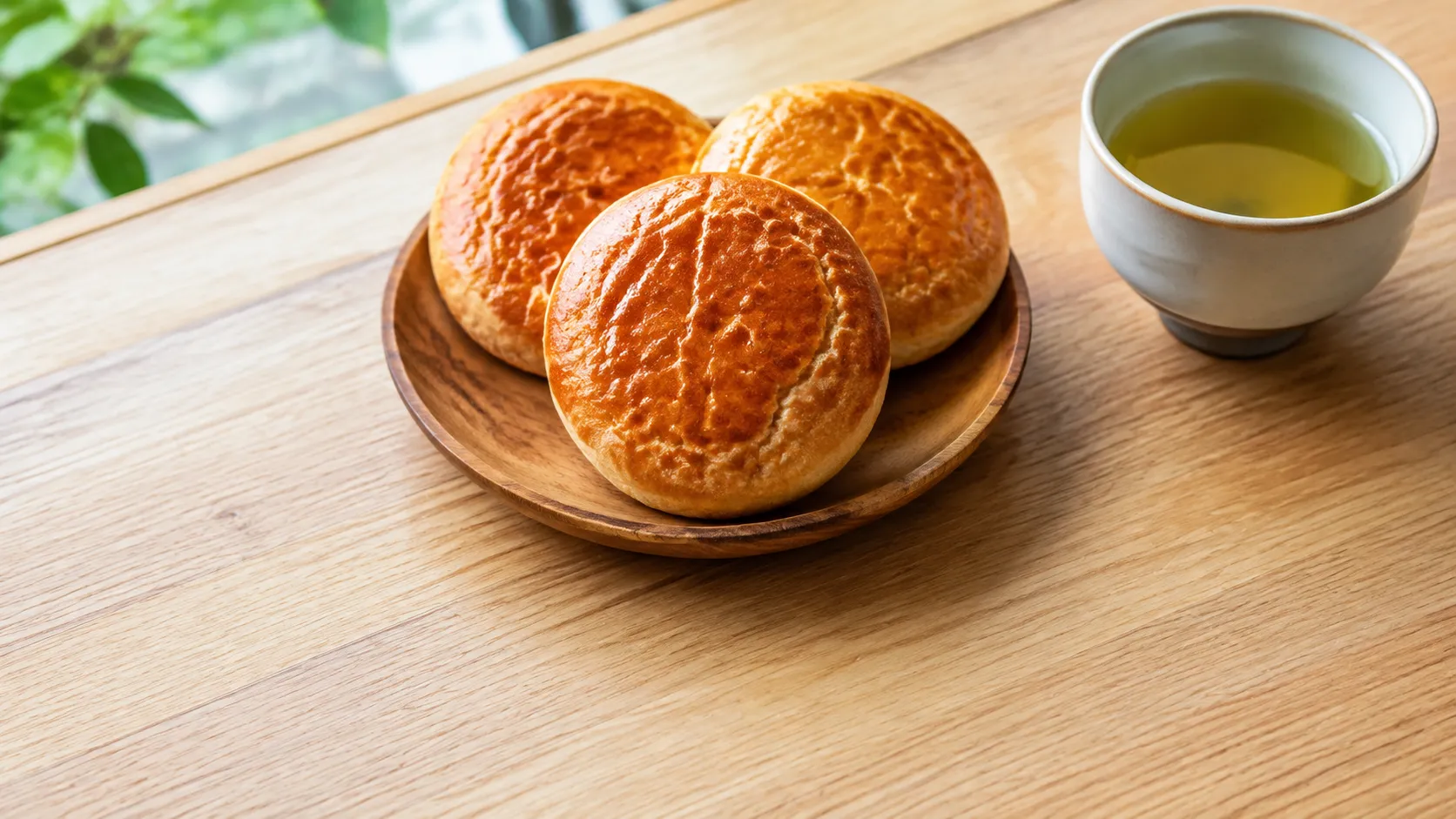
Sweets & SnacksSaga
Maruboro (丸ぼうろ)
It looks like the most boring biscuit in Japan. Then you bite it and it's soft, and honey-warm, and about four hundred years of Portuguese sailors arrive all at once.
September 2, 2026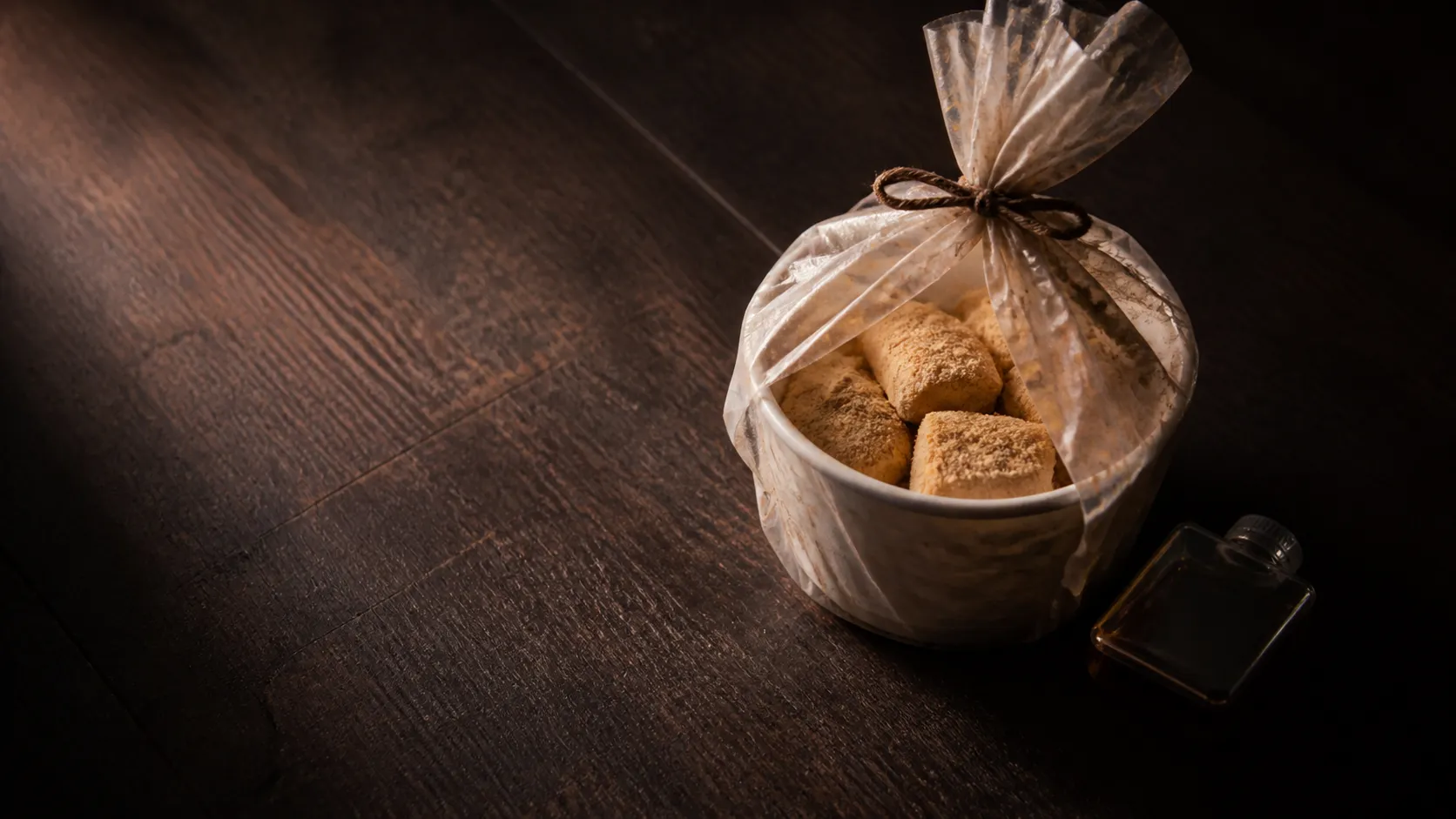
Sweets & SnacksYamanashi
Shingen Mochi (信玄餅)
There is a correct way to eat this and I did not know it, so I made a mess in front of several Yamanashi locals who were extremely kind about it and absolutely watching.
September 2, 2026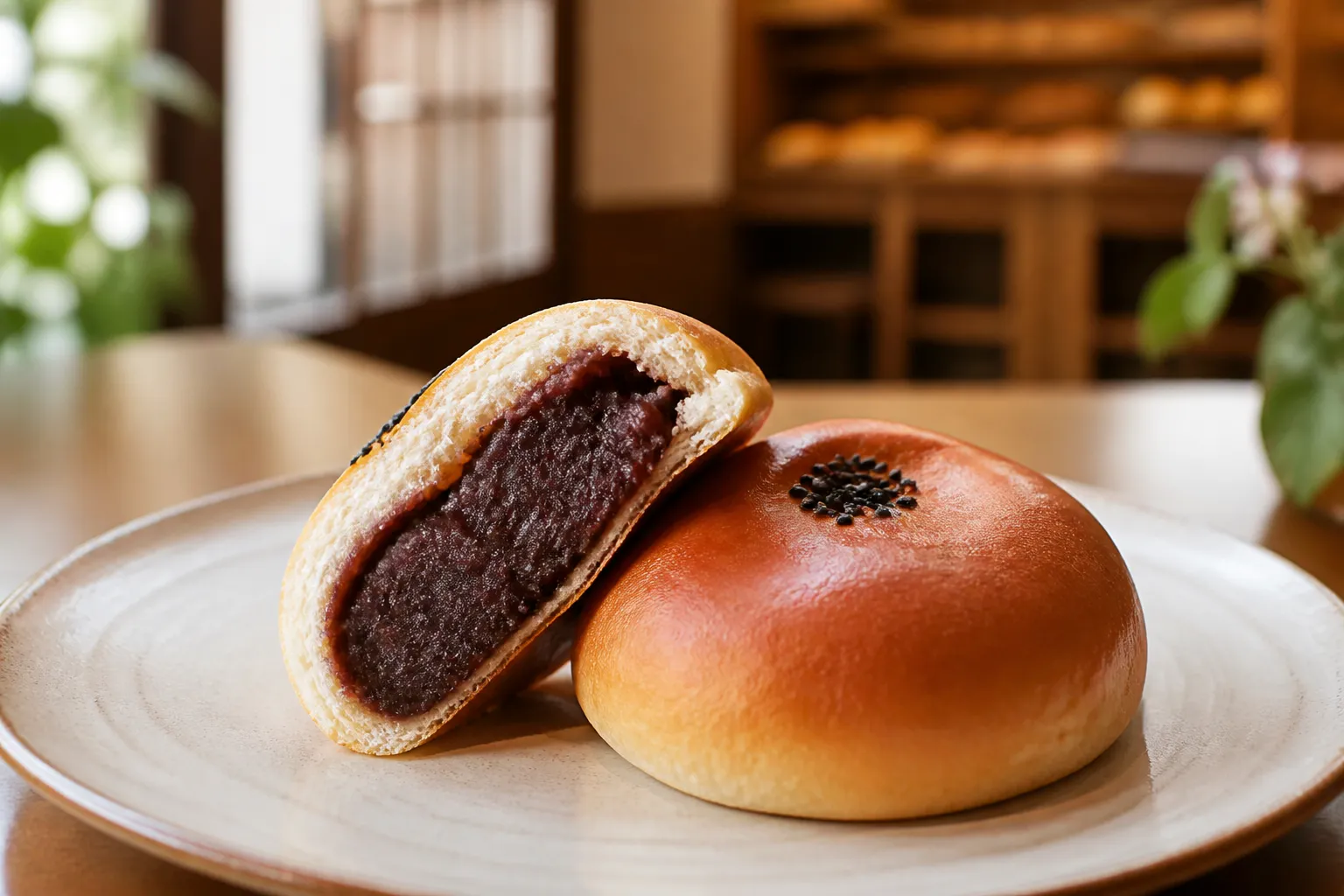
Sweets & SnacksTokyo
Anpan (あんパン)
A soft little bun, one bite in, and suddenly it's dense, dark, sweet red bean all the way through — the bread that talked 1870s Japan into eating Western-style bread at all.
July 27, 2026