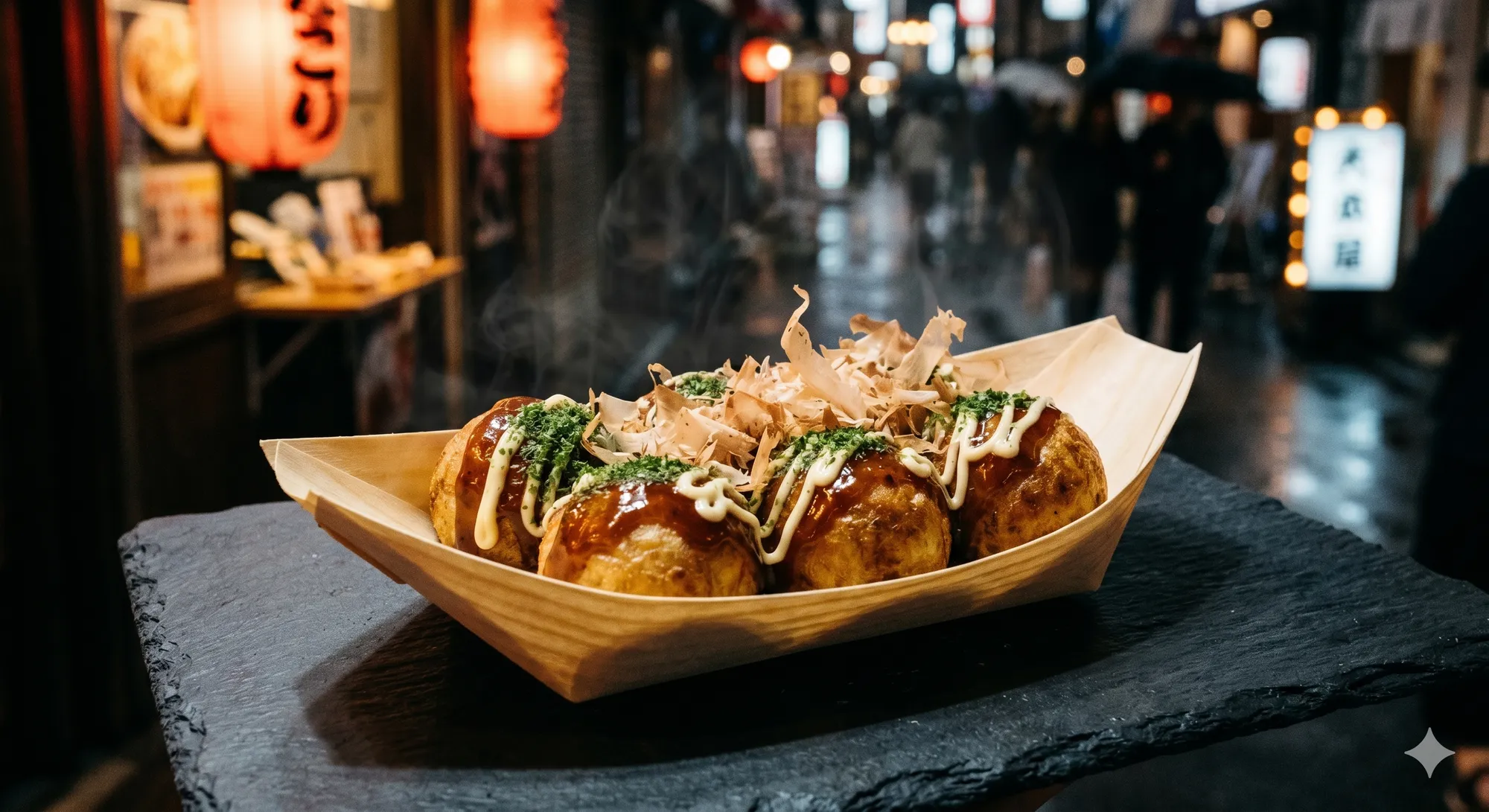
Takoyaki.
Share this dish


Osaka's molten-hot octopus balls — the one street food everyone slightly gets wrong. Here's the glorious truth, and exactly what to say at the stall.
🍜 Planning a food trip to Osaka?Add this dish to my Food Trip →
 Add this dish to my Food Trip →
I can't even say the word at a normal volume. Go on — try it. Say it like you mean it. Takoyaki. Feel that little kick behind your ribs? Good. That's the only correct reaction, and we can be friends.
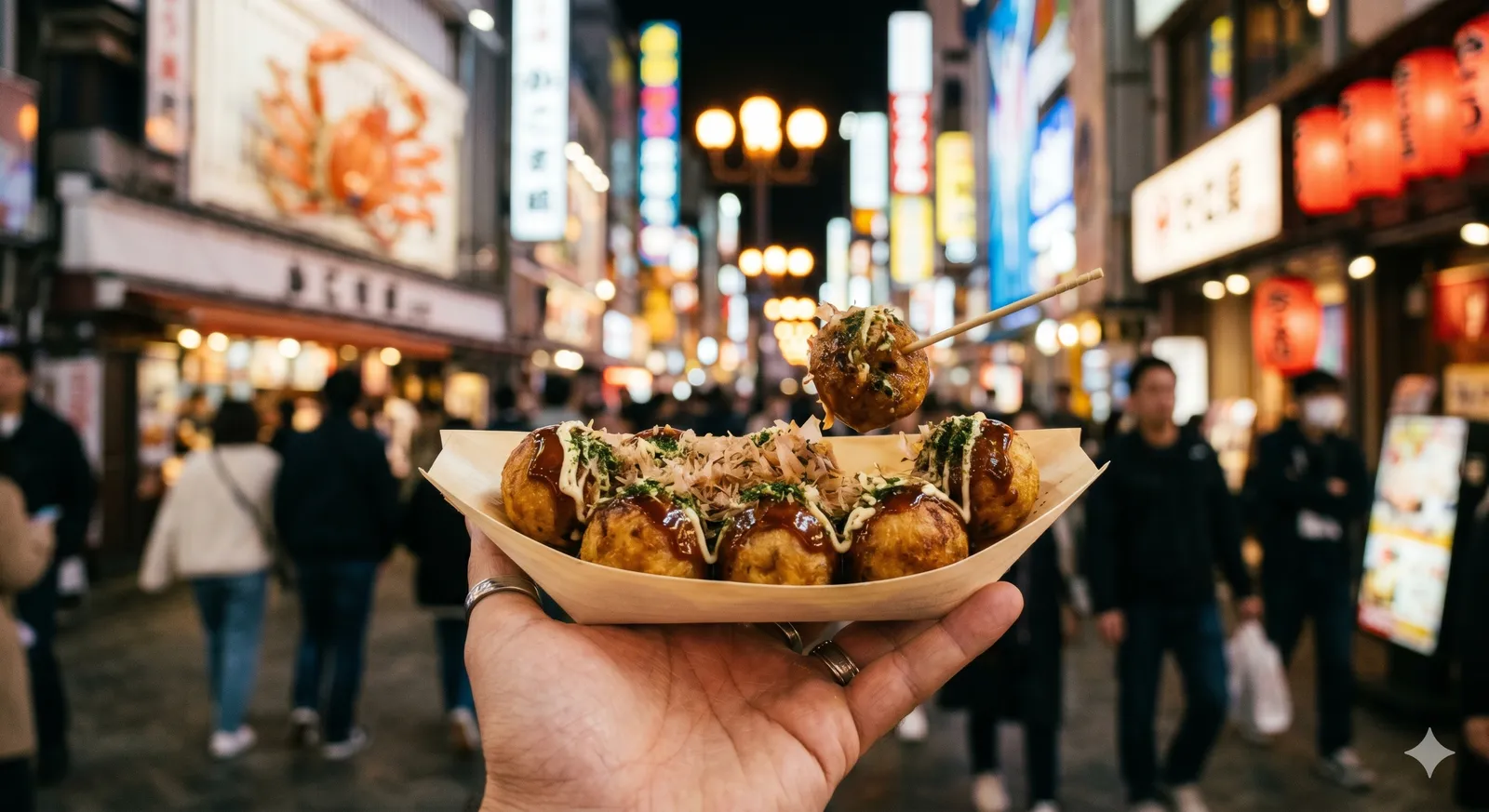
Now let me take you there. It's a cold night in Osaka. Neon bleeding across wet pavement, the whole street roaring — and then that smell hits you. Hot sauce slamming onto a screaming iron griddle, sweet and salty and alive, curling up through the steam and straight into the oldest, hungriest corner of your brain. A vendor's hand is a blur, spinning golden spheres faster than your eyes can follow. And you? You're already walking toward it. You didn't decide to. Your feet decided for you.
This is the food I would cross an entire ocean for. The one I dream about on my worst days. The single, scalding, perfect bite that made me fall — stupidly, completely, helplessly — in love with eating.
And the part that still knocks the wind out of me? The very first takoyaki had no octopus in it at all. None. So before you burn the roof of your mouth on your first one — and oh, you will — come here. Sit down. Let me tell you how these molten little miracles swallowed a whole country whole.
The happy accident that conquered Osaka
It started at a humble stall called Aizuya, with a snack called radioyaki — beef and konnyaku in a round wheat batter, named after the hot new gadget everyone wanted: the radio. (Marketing was less subtle back then.)
Then came the octopus, borrowed from nearby Akashi's egg-rich akashiyaki — and that was it. Game over. The batter got crispier, the toppings got louder, and takoyaki marched out of Osaka to take over the entire country. Today there are households with their own takoyaki pan the way other countries own a toaster.
Why it's pure magic
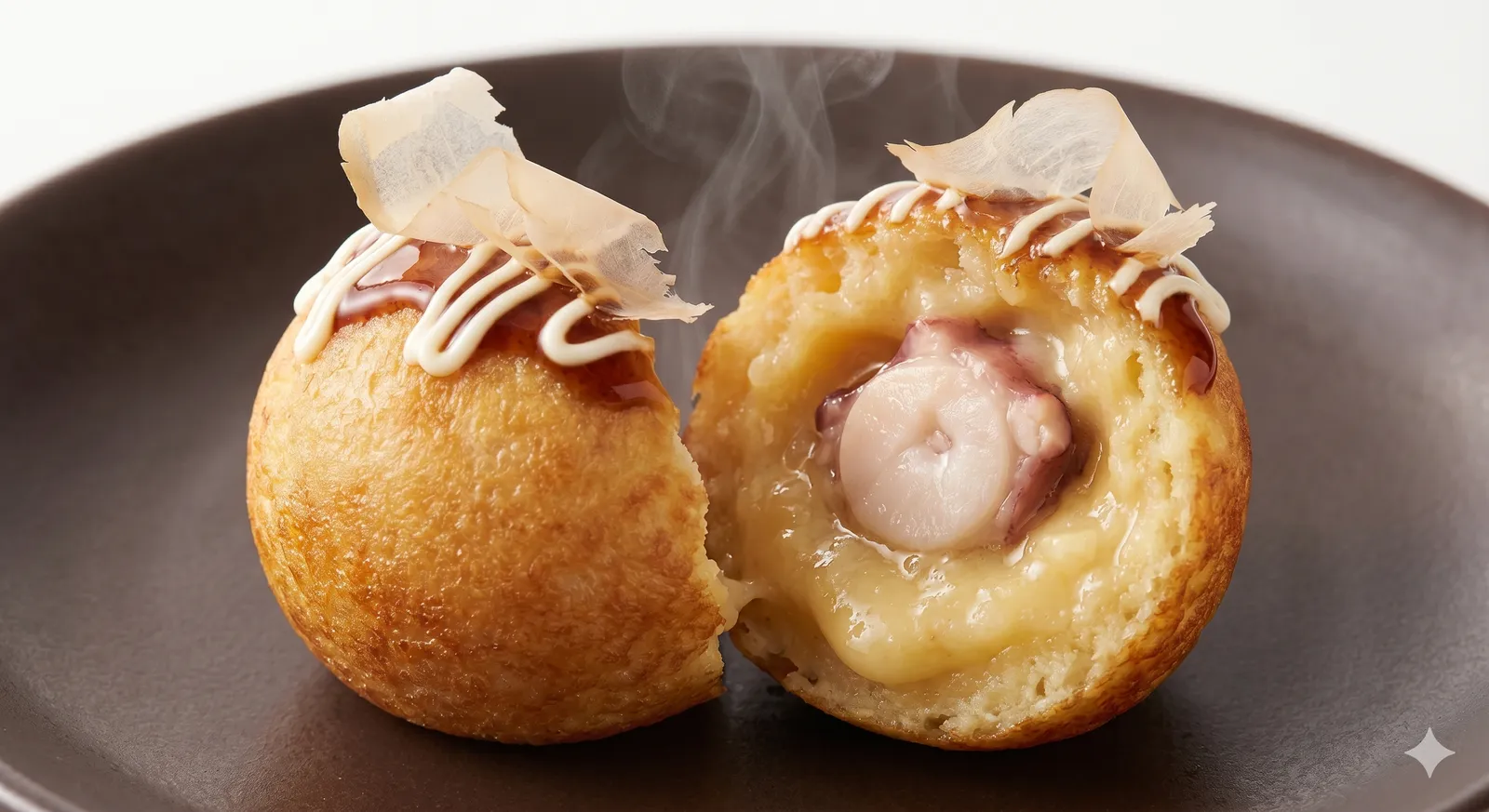
Here is the miracle that makes grown adults gasp out loud on a public street: crispy on the outside, almost-liquid on the inside. Bite too early and it's molten lava — and somehow you keep eating anyway, because you simply cannot stop. Wait the right ten seconds and that thin, shattering shell gives way to a soft, creamy, savory center, and then — there it is — a plump chunk of octopus with a chew so satisfying you'll close your eyes.
Now pile on the sauce, the creamy mayo, the green seaweed, the bonito flakes waving and curling in the heat like they're alive — and you've got a two-bite flavor bomb that smells like an entire summer festival in one breath. I'm not exaggerating when I say that smell has ended diets, changed travel plans, and made me run across a street. Every single time. No regrets.
How they pull it off
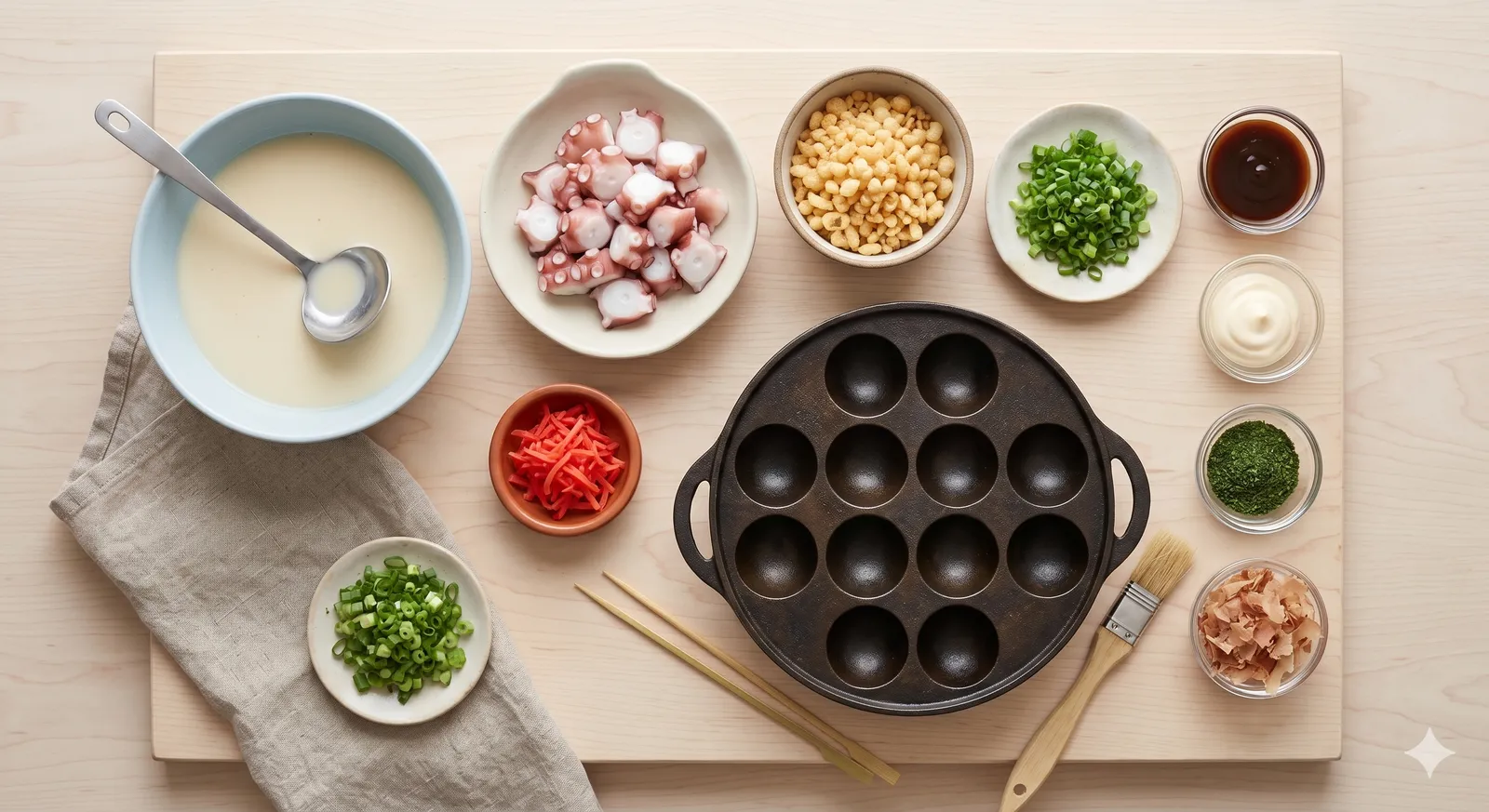
Watching a takoyaki vendor work is genuinely hypnotic. The whole thing is wrist and rhythm:
- Pour thin dashi-and-egg batter into a special dimpled cast-iron pan
- Drop in octopus chunks, tenkasu (tempura scraps), pickled ginger, and green onion
- As it sets, flip each ball a quarter-turn with a metal pick — fast, again and again, until the loose batter wraps into a perfect sphere
- Cook until golden and crisp all around
- Crown it with takoyaki sauce, mayo, aonori, and katsuobushi
Step 3 is the part that takes years to master and three seconds to admire. Do not try to look cool doing it at home. I have tried.
Before you go — the stuff that actually matters
Your questions, answered honestly
"Do I put sauce on it?" — You don't have to. They already did. Takoyaki comes drowned in sauce by default. (Fun twist: the original Aizuya style is eaten with no sauce at all — just dashi in the batter. Try both, pick a side, start an argument.)
"Mayo?" — Oh, say yes. Please say yes. That creamy white zigzag melts into the hot sauce and wraps the whole thing in soft, mellow, rounded richness — it's a warm hug in condiment form, and it pulls every loud flavor into one comforting whole. Only skip it if you want the octopus completely naked and center-stage.
"Is aonori really necessary?" — It's not garnish, it's flavor. That green seaweed dust is half the smell you fell in love with. Keep it.
"How much bonito?" — A generous pinch. Watch it wave around in the heat — that's not a gimmick, that's dinner saying hi.
"Can I use a fork?" — Toothpicks only. I will know.
"How hot is it, really?" — Molten-lava hot. Wait 60 seconds. Your future self is begging you.
What the vendor will ask you
They'll fire off quick questions while cooking. Here's what you'll hear — and exactly what to say back.
| You'll hear | Romaji | Meaning | Just say |
|---|---|---|---|
| ソースかけますか? | Sōsu kakemasu ka? | "Sauce on it?" | Hai (yes) / Nashi de (without) |
| マヨネーズは? | Mayonēzu wa? | "Mayo?" | Onegaishimasu (yes) / Nuki de (hold it) |
| 青のりかけますか? | Aonori kakemasu ka? | "Aonori seaweed?" | Hai (yes) |
| かつおぶし いりますか? | Katsuobushi irimasu ka? | "Bonito flakes?" | Hai (yes) |
| こちらで食べますか? | Kochira de tabemasu ka? | "Eat here?" | Koko de (here) / Mochikaeri de (to go) |
| 熱いので気をつけて | Atsui node ki o tsukete | "Careful, it's hot" | (just nod and believe them) |
To order in the first place, just say "Takoyaki kudasai" (たこ焼きください) — "Takoyaki, please." Point at the count you want. Done.
How the stall works
Order by the count (6, 8, or 12), pay in cash, then wait three or four minutes while they cook a fresh batch — never buy the ones sitting out. You'll get a paper boat with toothpicks, toppings already on. Eat standing up, on the street, slightly too soon. That's the whole ritual.
Where to eat it
- Aizuya (会津屋) — Nishinari, Osaka. The 1935 originator. Come for the sauce-less original and a little history with your snack.
- Takoyaki Doraku Wanaka (たこ焼道楽 わなか) — Sennichimae, near Namba. The local-favorite crowd-pleaser, almost always a line.
- Kukuru (くくる) — Dotonbori. Famous for fat, juicy octopus that barely fits in the ball.
Hours and locations change, so double-check before you make the trip — and when in doubt, follow the longest line of locals.
Soul Score
Local Roots5/5
First-Timer Friendly4/5
Adventure Level3/5
Comfort Level4/5
Travel Worthy4/5
These scores are one obsessed eater's gut feeling — not a verdict. A low number isn't a bad mark, just a different kind of adventure.
Know someone planning Japan?
← All Articles
Japanese Food · Osaka
Still hungry?
Eat more from Osaka
Local FoodOsaka
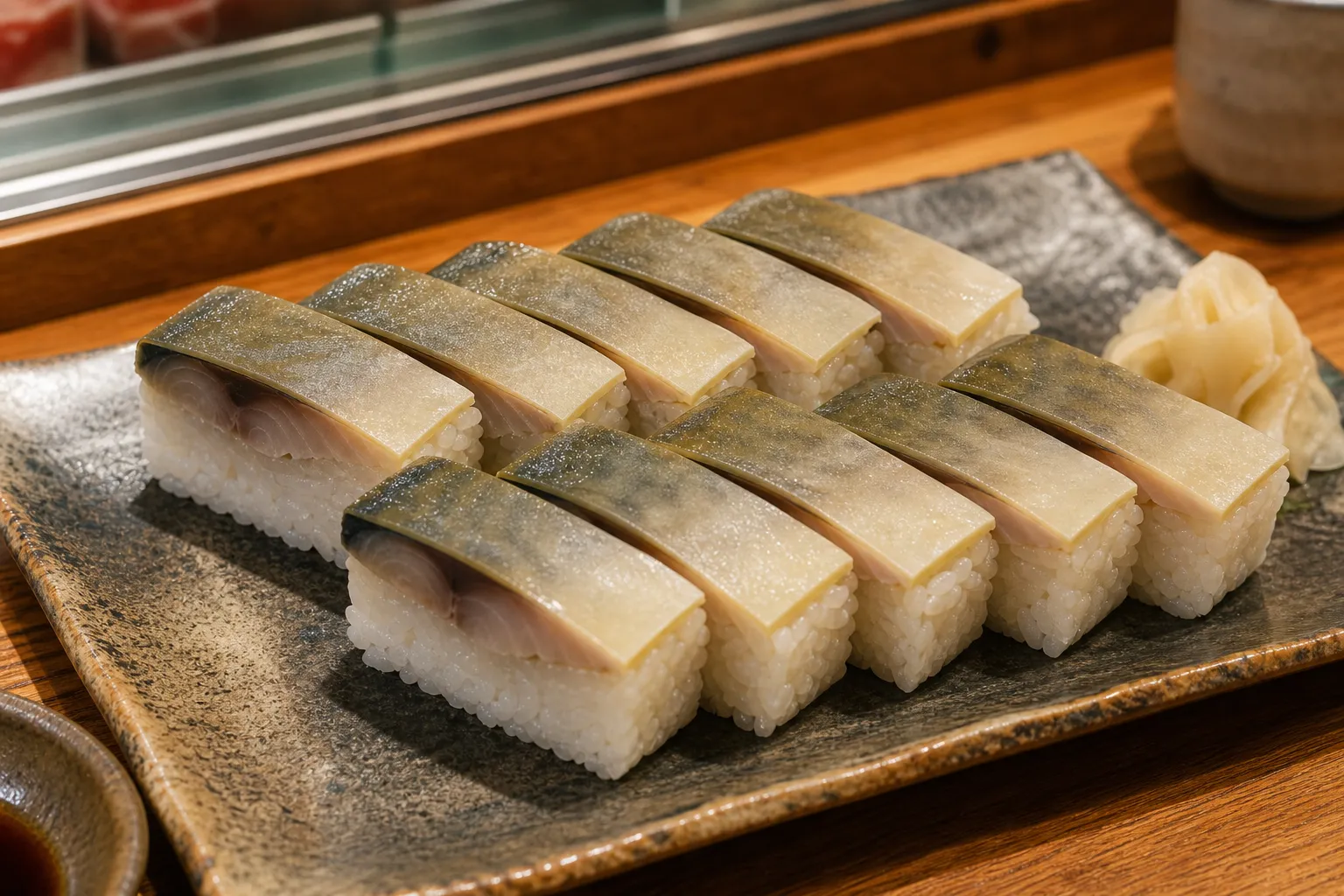
Battera (バッテラ)
Osaka's beautiful pressed sushi — vinegar-cured mackerel and rice squared off in a wooden box and crowned with a translucent sheet of kelp, sliced into glossy little bricks that taste like the city's quieter, older idea of sushi.
July 10, 2026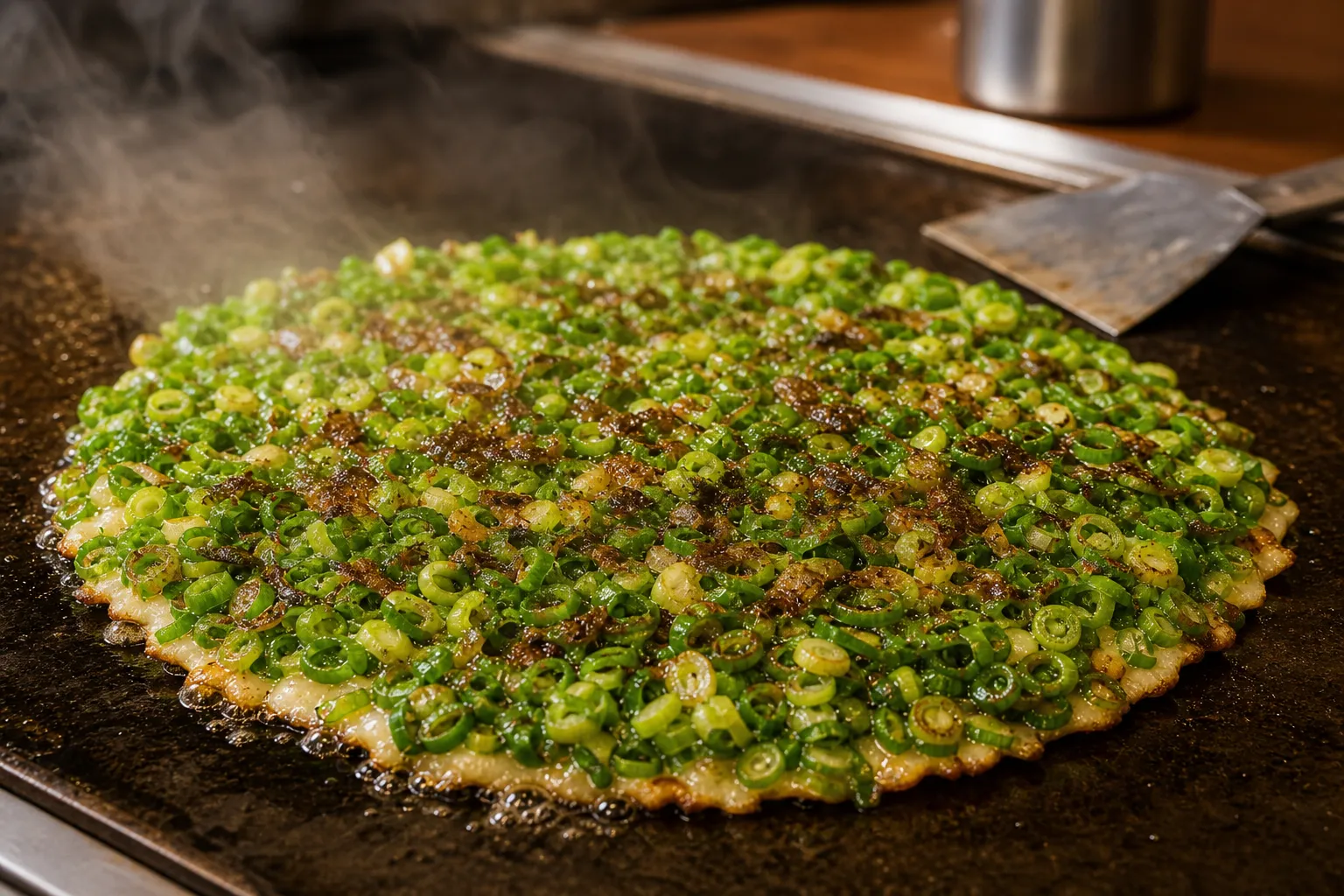
Local FoodOsaka
Negiyaki (ねぎ焼き)
Okonomiyaki's leaner, greener Osaka cousin — a thin griddle cake packed with a mountain of chopped green onion instead of cabbage, savory with beef tendon, and finished with soy instead of sweet sauce.
July 10, 2026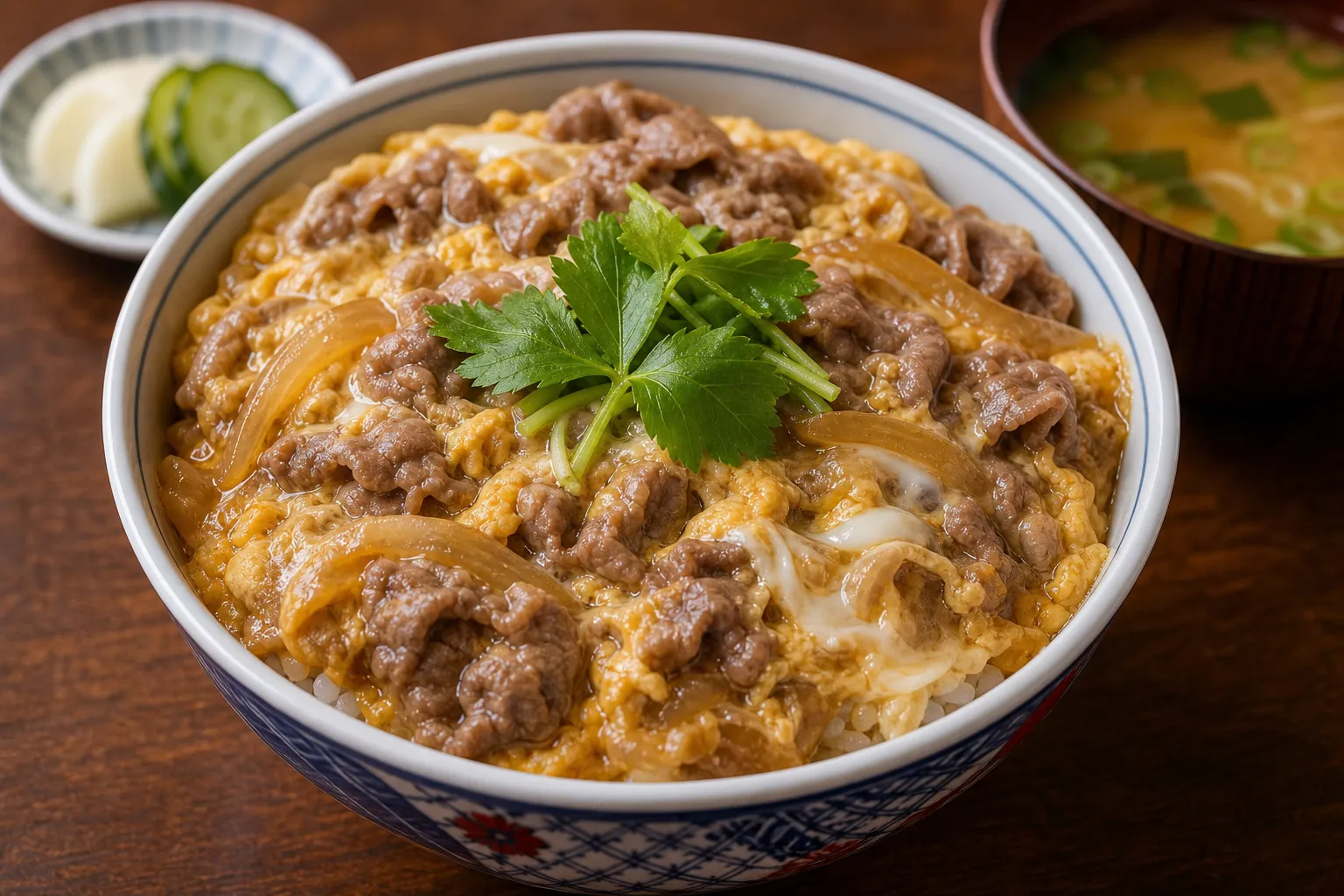
Japanese FoodOsaka, Kansai
Tanindon (他人丼)
Beef and egg who've never met, thrown together in sweet dashi over rice — the cheeky Kansai bowl with the best name in Japan. Oyakodon's troublemaker cousin, and quietly just as good.
July 9, 2026Start with the classics
Japanese FoodNationwide
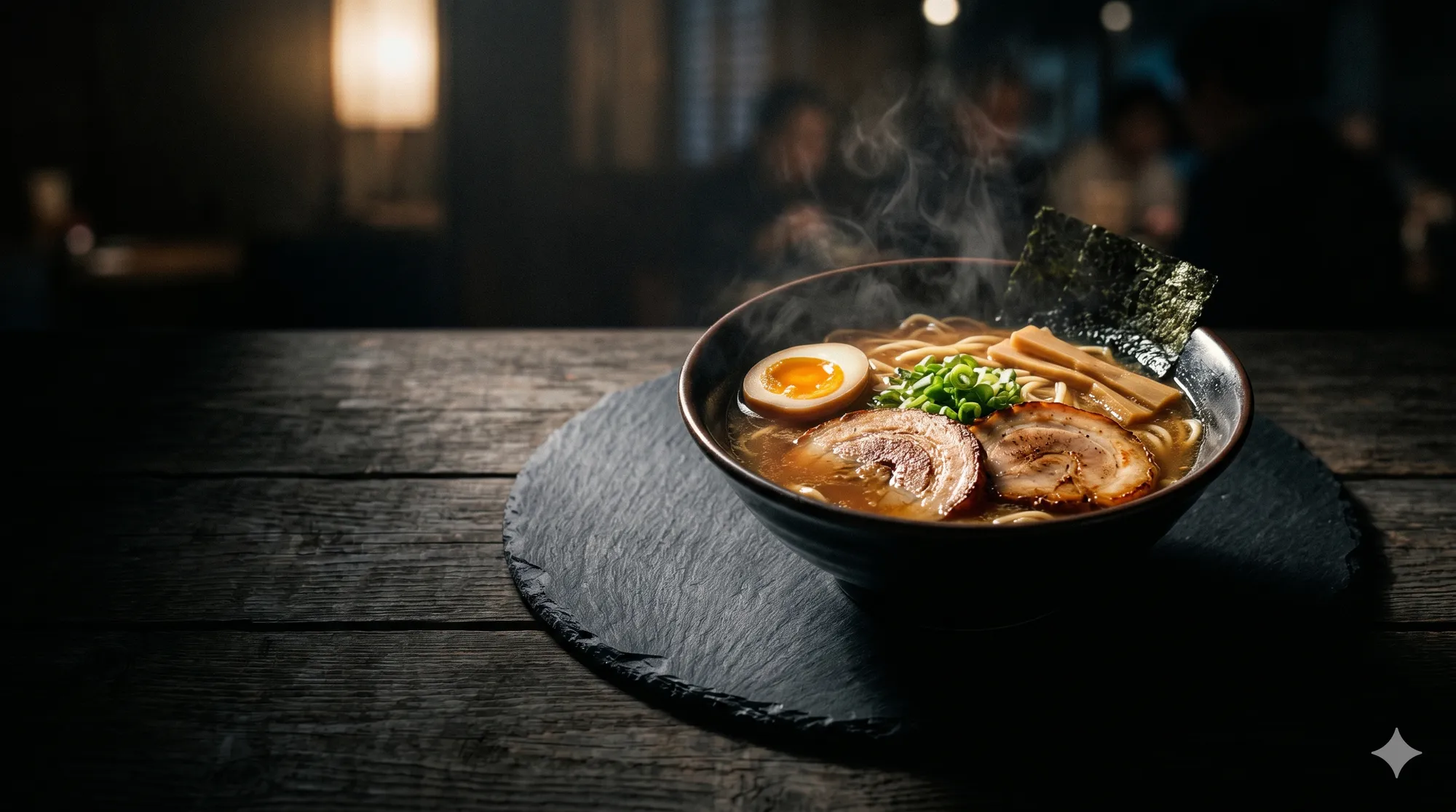
Ramen (ラーメン)
A bowl of noodles in soup — and somehow one of the most obsessed-over foods on the planet. Shoyu, miso, shio, tonkotsu: here's how to read a ramen menu and slurp like you mean it.
June 20, 2026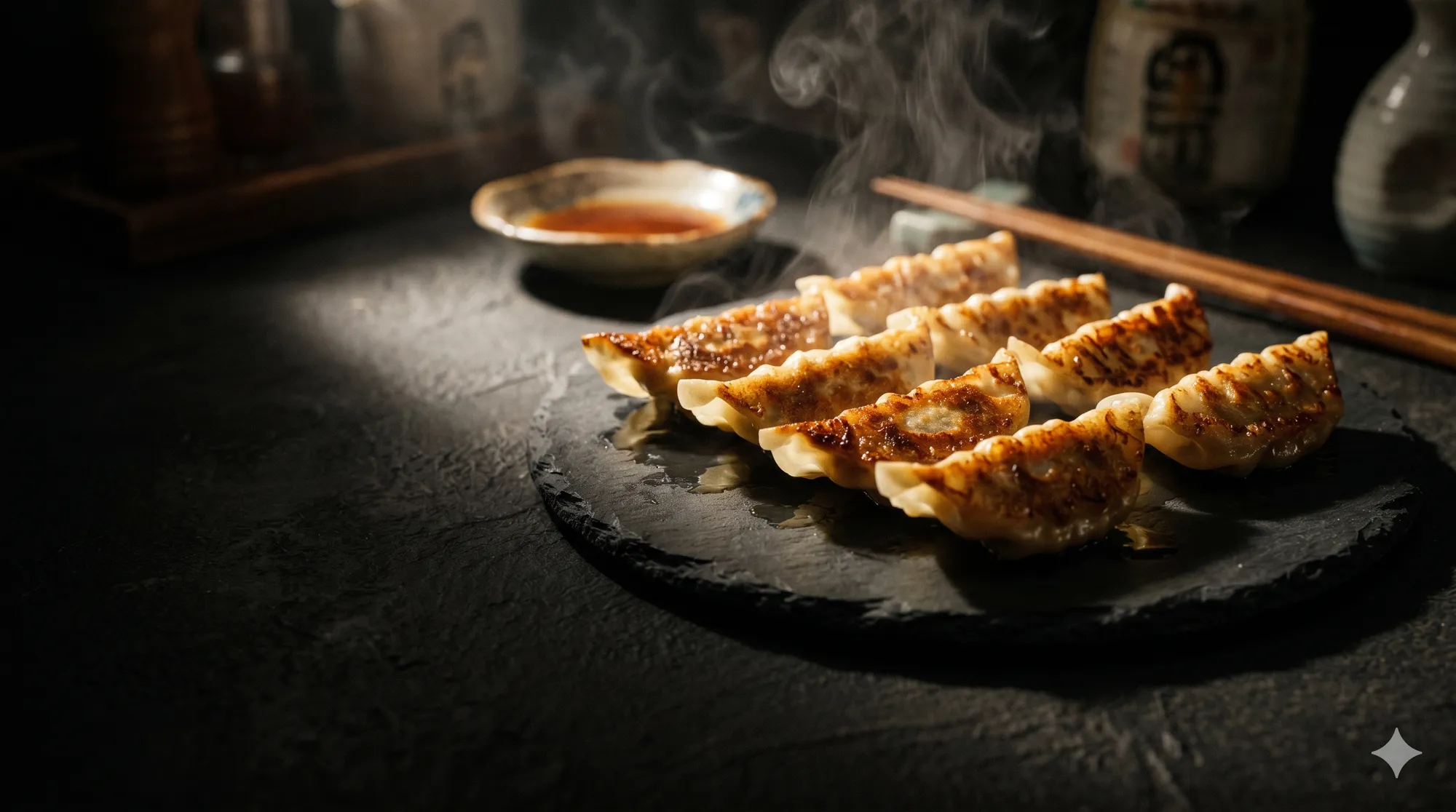
Japanese FoodNationwide
Gyoza (餃子)
Pan-fried dumplings with a crispy bottom and a juicy pork-and-cabbage filling, dunked in vinegar-soy-chili. The ultimate ramen sidekick, the izakaya staple, and the snack nobody can stop eating.
June 20, 2026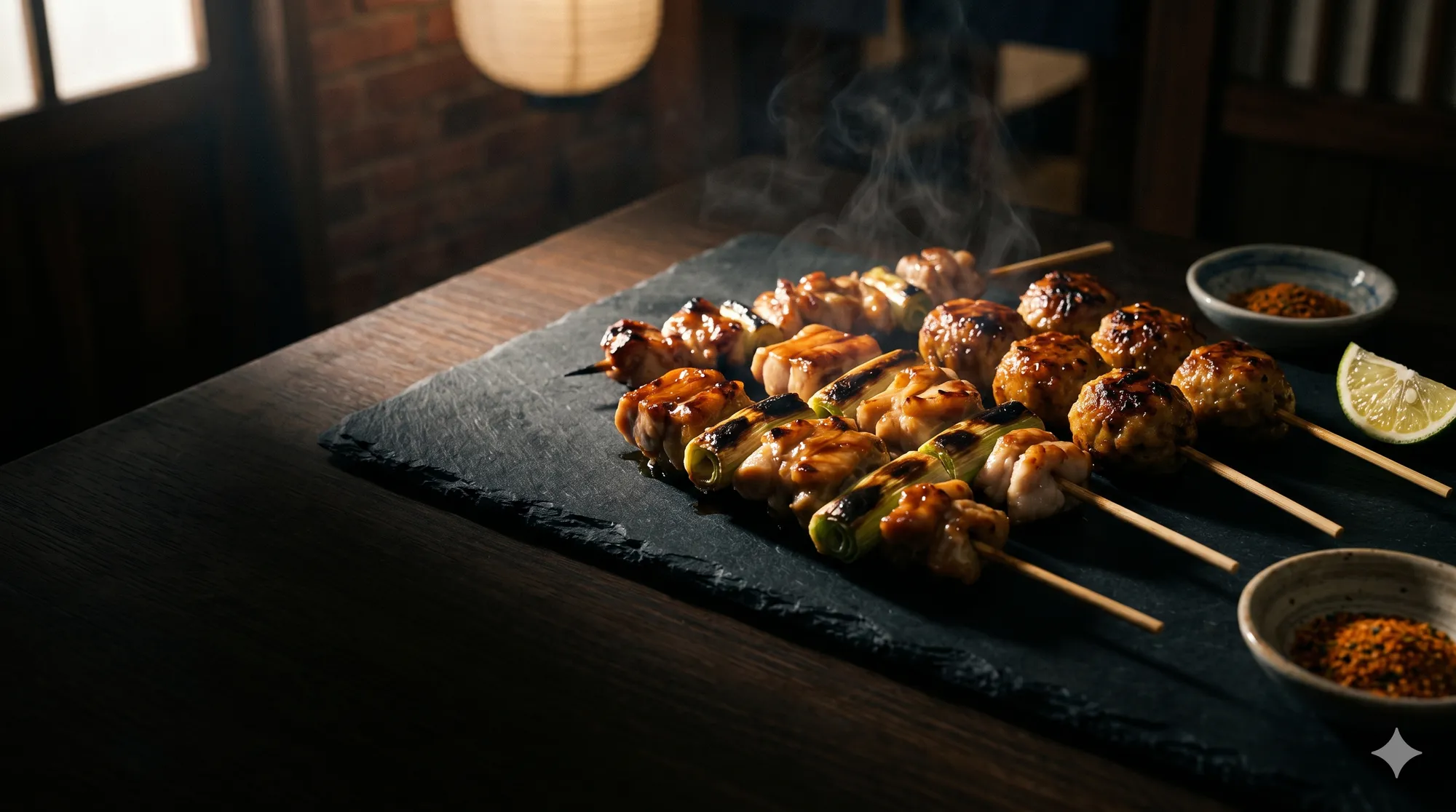
Japanese FoodNationwide
Yakitori (焼き鳥)
Bite-sized skewers of chicken grilled over blazing charcoal, seasoned with just salt or a sweet-savory tare. The beating heart of the izakaya, smoke and beer included. Nose-to-tail, and all of it good.
June 20, 2026