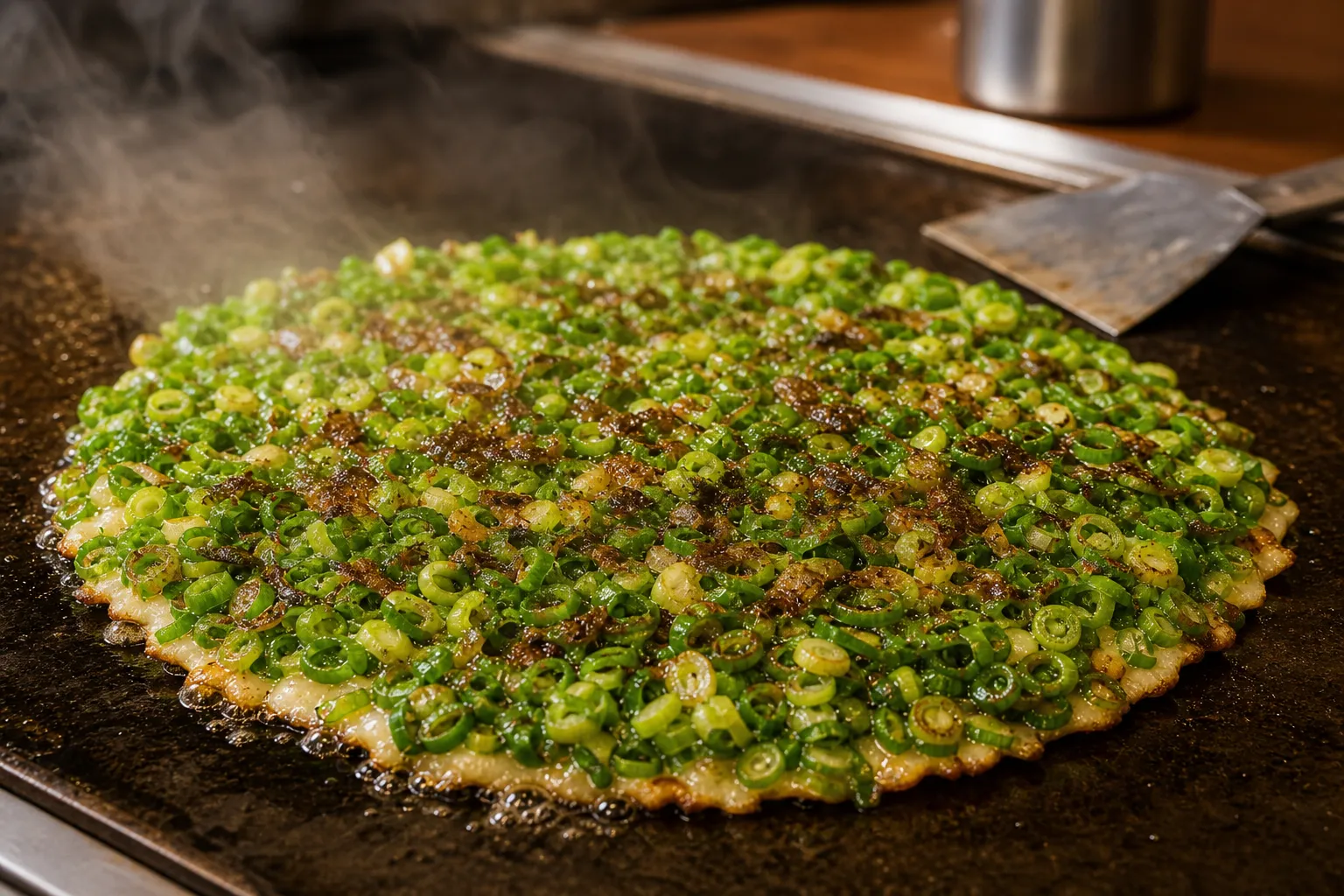
The griddle hisses and a cook tips on what looks like an unreasonable amount of chopped green onion — not a handful, a small hedge — spreads a thin layer of batter under it, and presses it all down into a lacy, green-flecked cake. The smell that comes off it is savory and sharp and completely different from the sweet-sauce okonomiyaki smell you know. First bite: soft, oniony, a chew of beef tendon, a clean hit of soy. And I think, every single time, why isn't this more famous? That's negiyaki, Osaka's leaner, greener, quietly-better-kept secret.
Share this dish


Okonomiyaki's leaner, greener Osaka cousin — a thin griddle cake packed with a mountain of chopped green onion instead of cabbage, savory with beef tendon, and finished with soy instead of sweet sauce.
🍜 Planning a food trip to Osaka?Add this dish to my Food Trip →
 Add this dish to my Food Trip →
Here's the difference: negiyaki (ねぎ焼き) is a griddle cake from the konamon (flour-food) family, like okonomiyaki — but instead of a base of shredded cabbage, it's built on a mountain of chopped green onion (negi), with a thinner batter, usually studded with beef tendon (sujikon), and finished with a light soy-based sauce rather than the sweet, thick okonomiyaki sauce. Green onion instead of cabbage, thin instead of fluffy, soy instead of sweet: those are the three things that make it negiyaki and not okonomiyaki. It's an Osaka invention, and Osaka is where it belongs.
Osaka's konamon culture, gone green
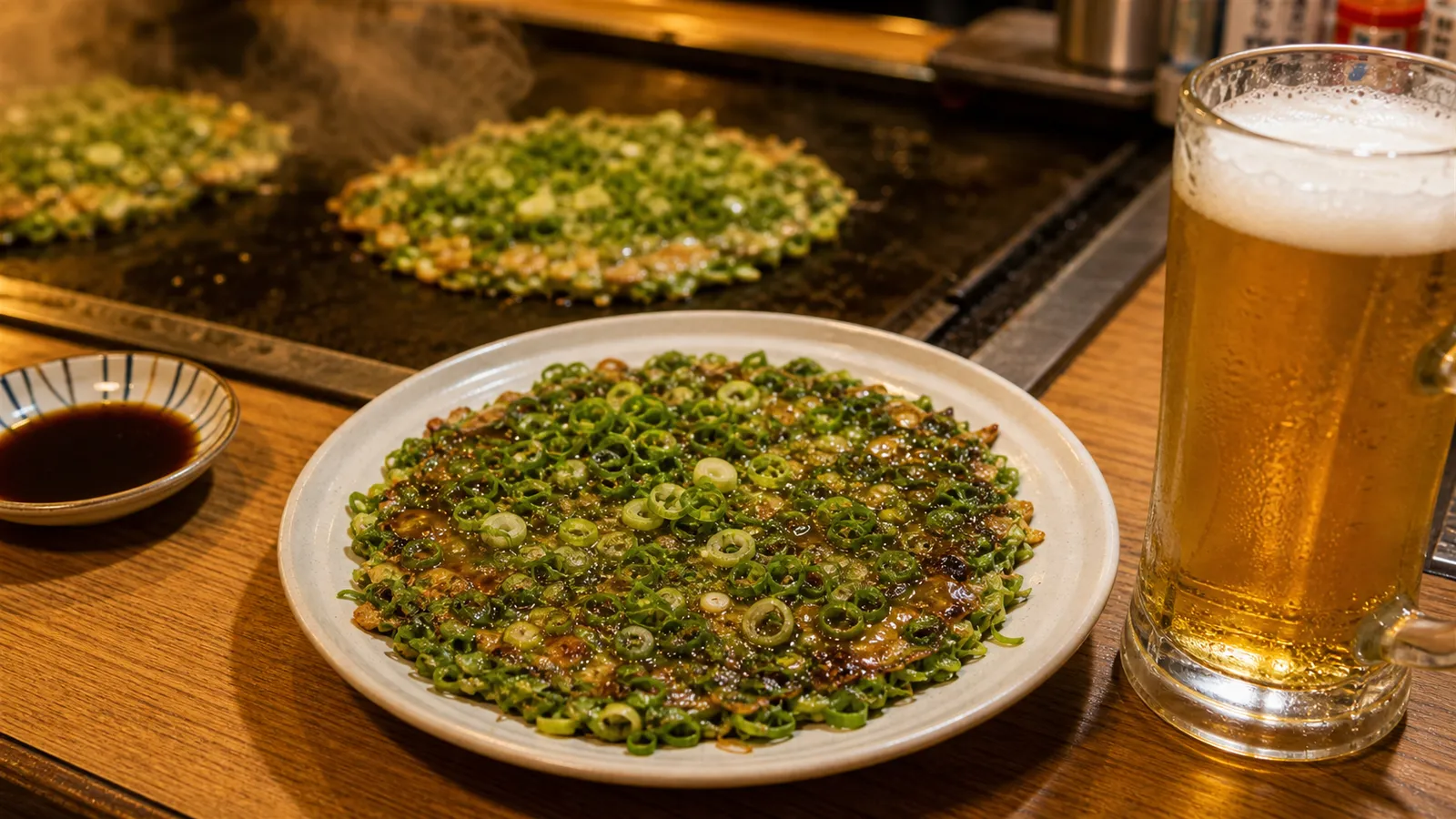
Osaka is konamon country — the culture of griddled flour foods, okonomiyaki and takoyaki chief among them — and negiyaki is one of its proudest, more grown-up variations. The story ties it to a specific Osaka shop that leaned all the way into green onion decades ago, and the idea caught on: a version for people who wanted something less sweet, less heavy, more savory and herbal than a full okonomiyaki. It became a beloved local specialty, the konamon insiders' pick.
I love it precisely because it's the connoisseur's choice. Tourists line up for okonomiyaki and takoyaki, and they should — but ask an Osaka local for their favorite konamon and there's a real chance they say negiyaki, with a slightly knowing look. It's the same griddle theater, the same neighborhood warmth, but the flavor is cleaner and more adult: all that green onion going sweet and soft on the hotplate, the savory soy, the richness of the beef tendon. It feels like Osaka showing you the deeper cut.
What makes the eating experience different
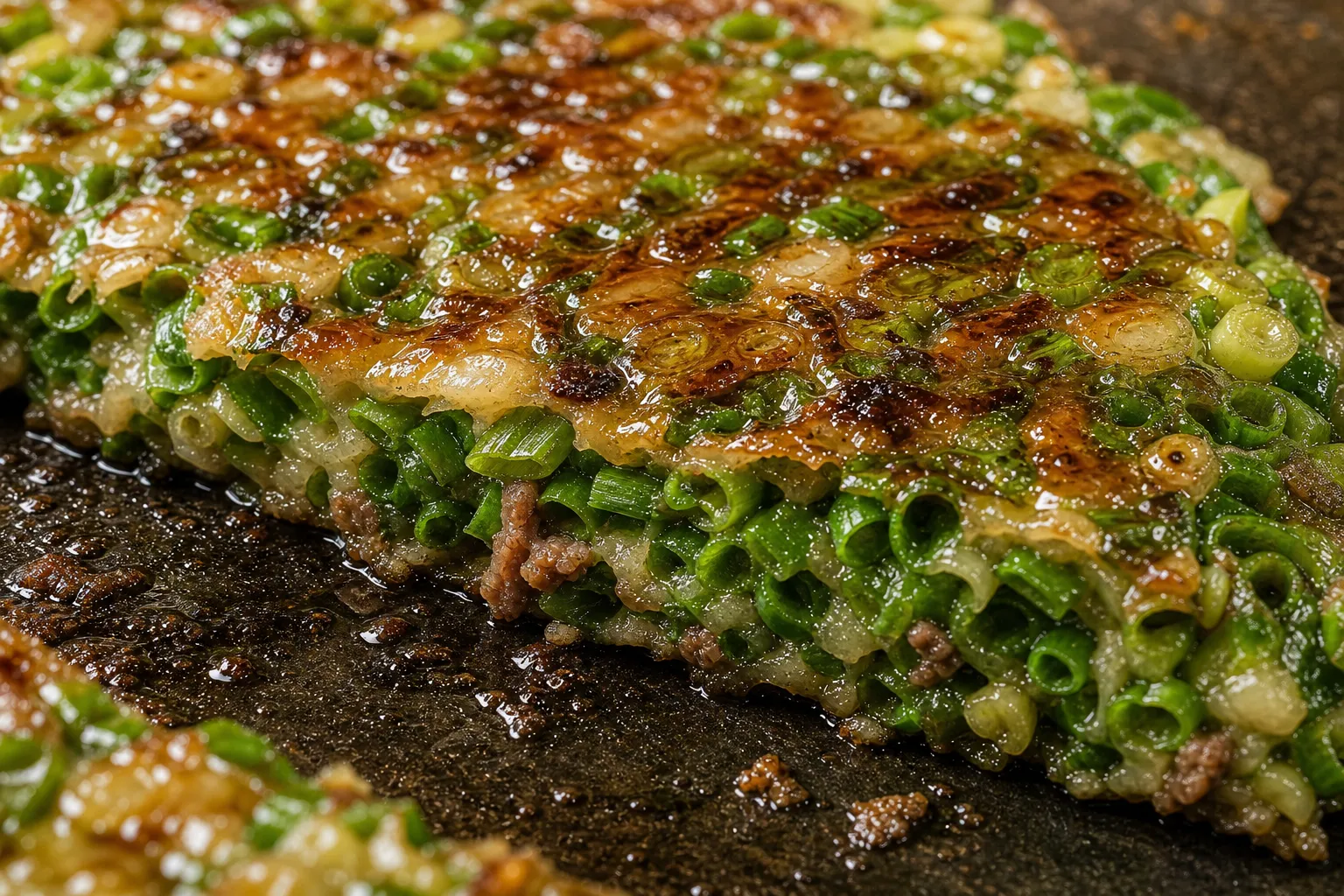
- It's loaded with green onion that goes soft, sweet and fragrant on the griddle — herbal and savory rather than cabbage-fluffy
- The batter is thin, so it's lacier and less filling than a big okonomiyaki — you taste the onion, not the dough
- Beef tendon (sujikon) — slow-cooked in a sweet-savory sauce — adds rich, chewy, meaty depth in the classic version
- It's finished with soy sauce (often with a squeeze of lemon or citrus), not the sweet brown okonomiyaki sauce — cleaner, sharper, more savory
- Cooked and eaten hot off the teppan, it's got all the sizzling, communal joy of okonomiyaki with a more grown-up flavor
How it's made
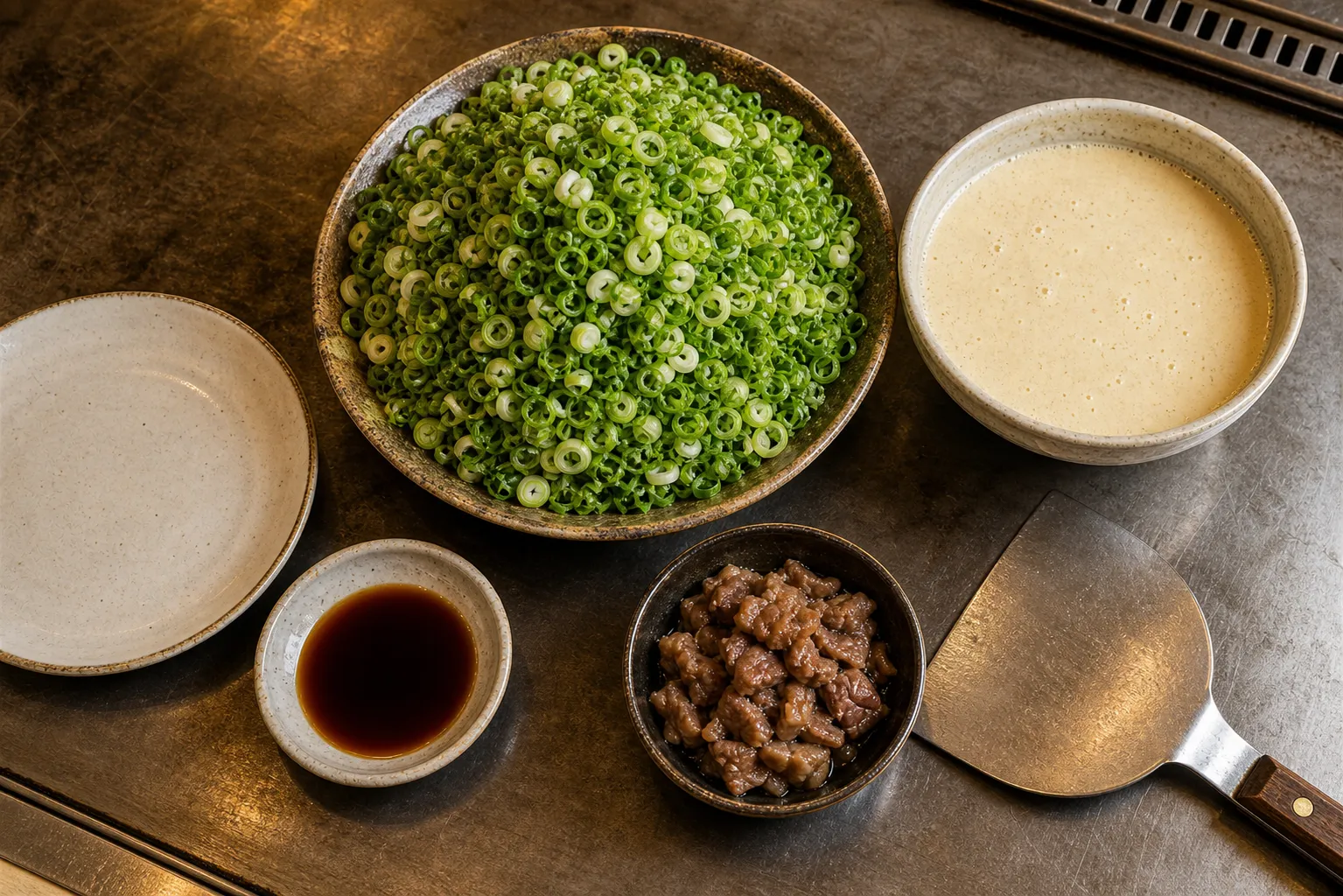
- Prep the mountain of onion. A huge amount of green onion is chopped — this is the star, not a garnish.
- Mix a thin batter. A light flour-and-dashi batter, thinner than okonomiyaki batter, ready to just barely bind all that onion.
- Griddle it with the fillings. On a hot teppan, the onion, batter and beef tendon (sujikon) are spread thin and cooked, often with egg, and pressed down as it sets.
- Flip and crisp. It's flipped to cook both sides until the edges are lacy and the onion is soft and sweet.
- Finish with soy. Brushed or served with a light soy-based sauce (often with citrus), maybe a little bonito or seaweed — but not drowned in sweet sauce. That soy finish is the point.
The whole trick is the ratio: far more onion than batter, cooked thin and hot so the negi softens and sweetens without turning to mush. Get that right and it's a completely different, cleaner thing from its cabbage cousin.
Before you go — order the local's choice
Your questions, answered honestly
"How is this different from okonomiyaki?" — Three ways: negiyaki uses a mountain of green onion instead of shredded cabbage; the cake is thinner and less fluffy; and it's finished with soy sauce (often with citrus) rather than the sweet, thick okonomiyaki sauce. It's the leaner, savory, more oniony version. If you found okonomiyaki a touch heavy or sweet, this is your dish.
"What's the sujikon?" — Beef tendon (suji) slow-simmered with konnyaku in a sweet-savory sauce until meltingly tender. It's the classic negiyaki filling and it adds wonderful rich, chewy depth. If you don't eat beef, ask what other fillings (pork, squid, plain) are available.
"Is it sweet like okonomiyaki?" — No, and deliberately so. The soy-sauce finish makes negiyaki savory and clean rather than sweet. That's the whole appeal.
"Where do I find it?" — Osaka, at okonomiyaki and teppan restaurants — many that serve okonomiyaki also offer negiyaki, and some specialize in it. Ask for it by name; it's an Osaka thing more than a nationwide one.
What the staff will ask you
| You'll hear | Romaji | Meaning | Just say |
|---|---|---|---|
| 具は何にしますか? | Gu wa nani ni shimasu ka? | "Which filling?" | Suji de (beef tendon) — or Osusume de (your recommendation) |
| 焼きましょうか、ご自分で焼きますか? | Yakimashō ka, go-jibun de yakimasu ka? | "Shall we cook it, or will you?" | Onegaishimasu (please cook it for us) |
| ソースと醤油、どちらにしますか? | Sōsu to shōyu, dochira ni shimasu ka? | "Sauce or soy?" | Shōyu de (soy, please) — the classic negiyaki way |
To order, just say "Negiyaki o kudasai" (ねぎ焼きをください) — "Negiyaki, please."
Where to eat it
- Osaka okonomiyaki and teppan restaurants — many konamon spots across the city serve negiyaki alongside okonomiyaki; some are negiyaki specialists.
- Osaka's old shops and neighborhoods — the dish is tied to Osaka's flour-food culture, so casual local teppan eateries are the place to find a proper one.
- Anywhere serving sujikon — if a shop makes beef-tendon sujikon, there's a good chance a classic sujikon negiyaki is on the menu.
Negiyaki is an Osaka specialty; availability, fillings and prices vary by shop, and some cook it for you while others have a tableside griddle — check before you go.
Soul Score
Local Roots5/5
First-Timer Friendly4/5
Adventure Level3/5
Comfort Level5/5
Travel Worthy4/5
These scores are one obsessed eater's gut feeling — not a verdict. A low number isn't a bad mark, just a different kind of adventure.
Know someone planning Japan?
← All Articles
Local Food · Osaka
Still hungry?
Eat more from Osaka
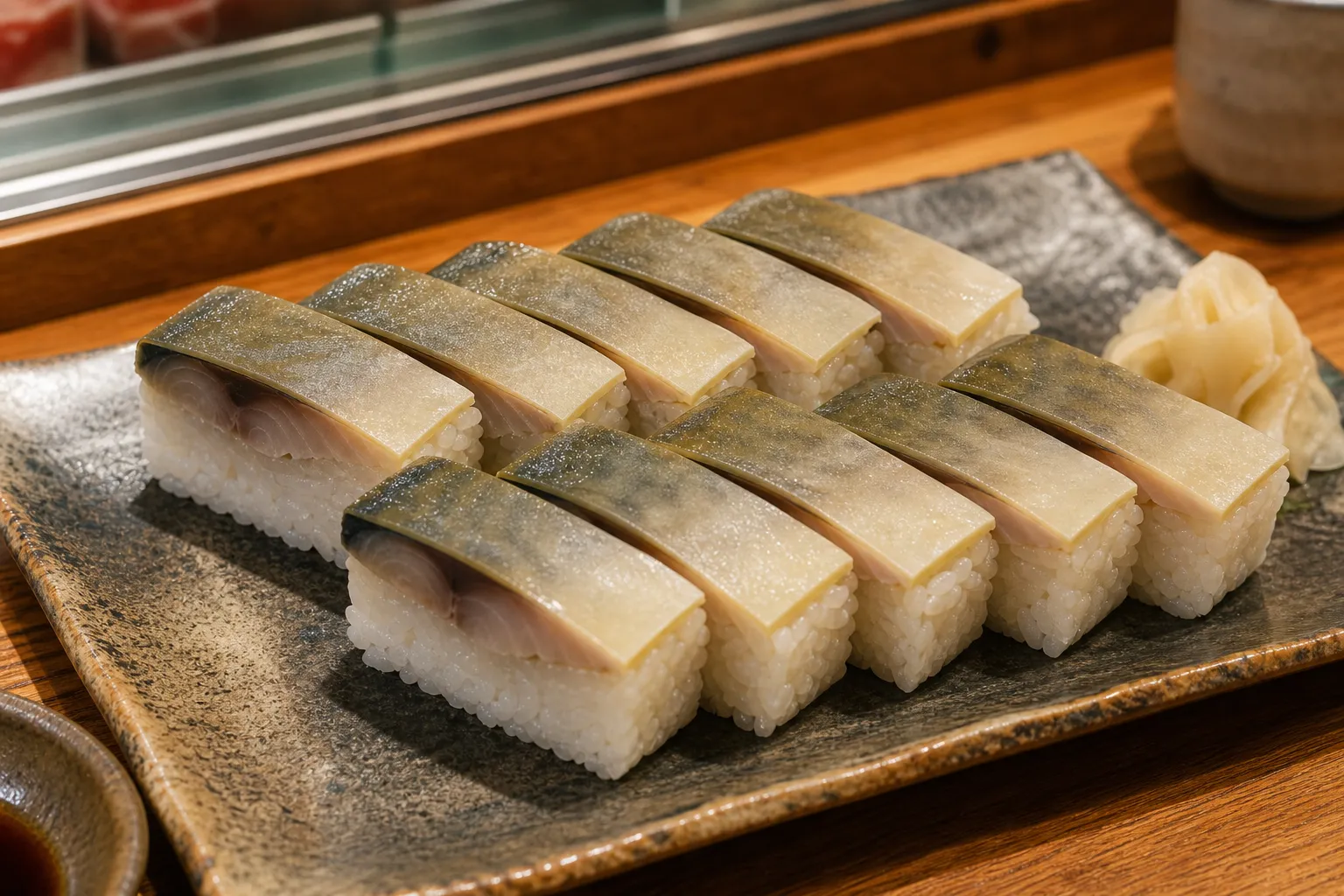
Local FoodOsaka
Battera (バッテラ)
Osaka's beautiful pressed sushi — vinegar-cured mackerel and rice squared off in a wooden box and crowned with a translucent sheet of kelp, sliced into glossy little bricks that taste like the city's quieter, older idea of sushi.
July 10, 2026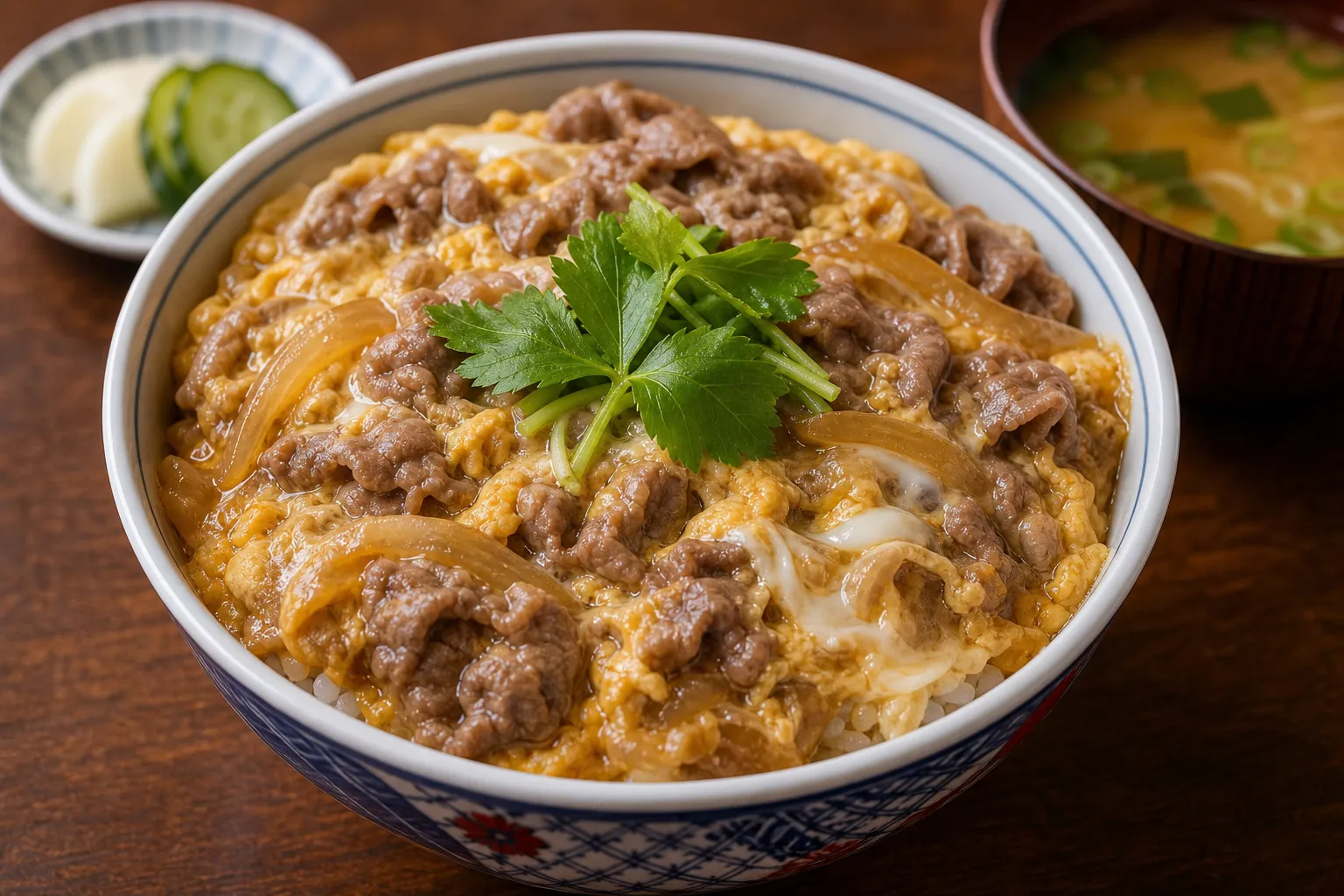
Japanese FoodOsaka, Kansai
Tanindon (他人丼)
Beef and egg who've never met, thrown together in sweet dashi over rice — the cheeky Kansai bowl with the best name in Japan. Oyakodon's troublemaker cousin, and quietly just as good.
July 9, 2026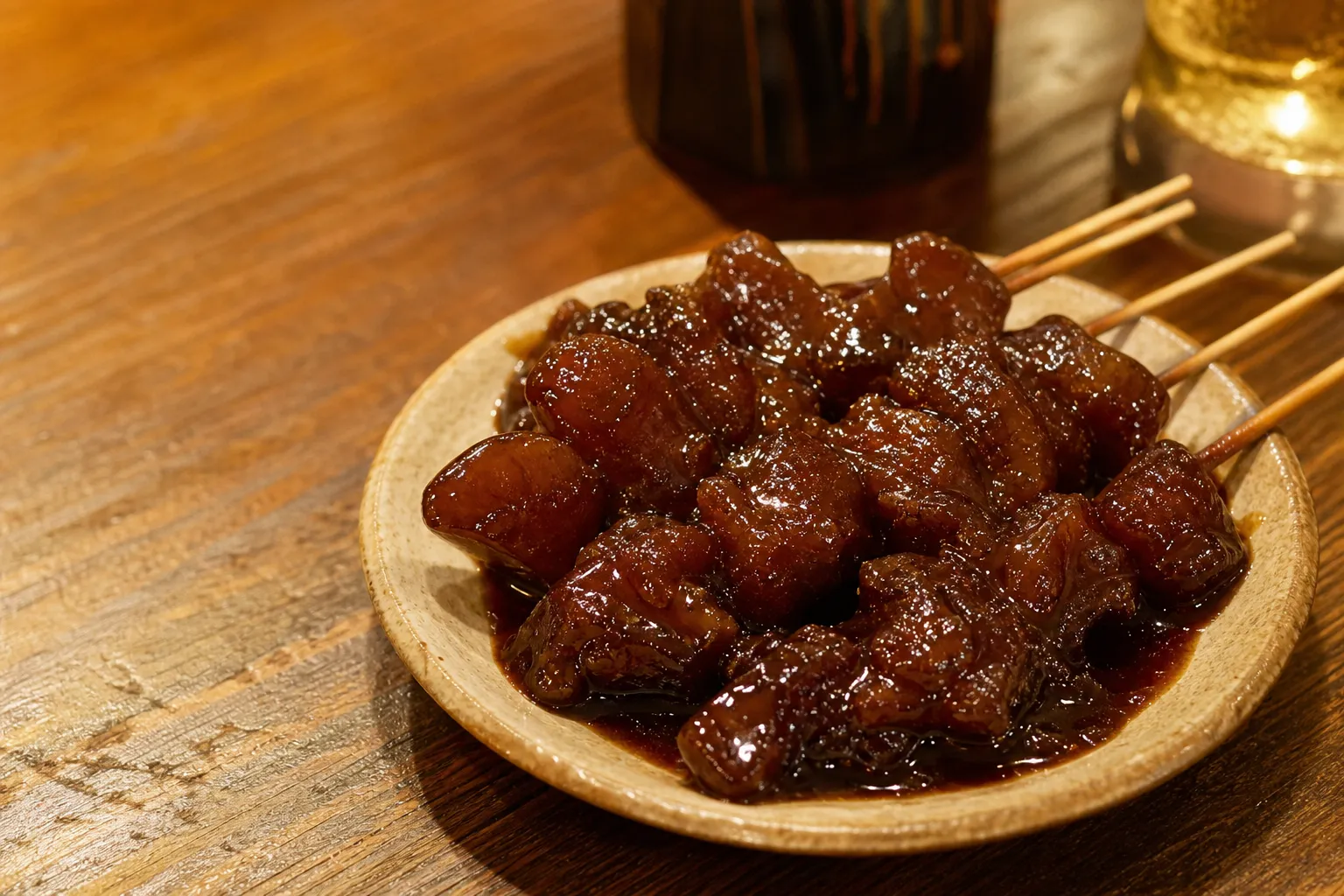
Local FoodOsaka
Doteyaki (どて焼き)
Beef tendon simmered for hours in dark miso until it goes soft, sticky, and almost sinful — this is the skewer that made me understand Osaka's love affair with cheap beer.
July 5, 2026