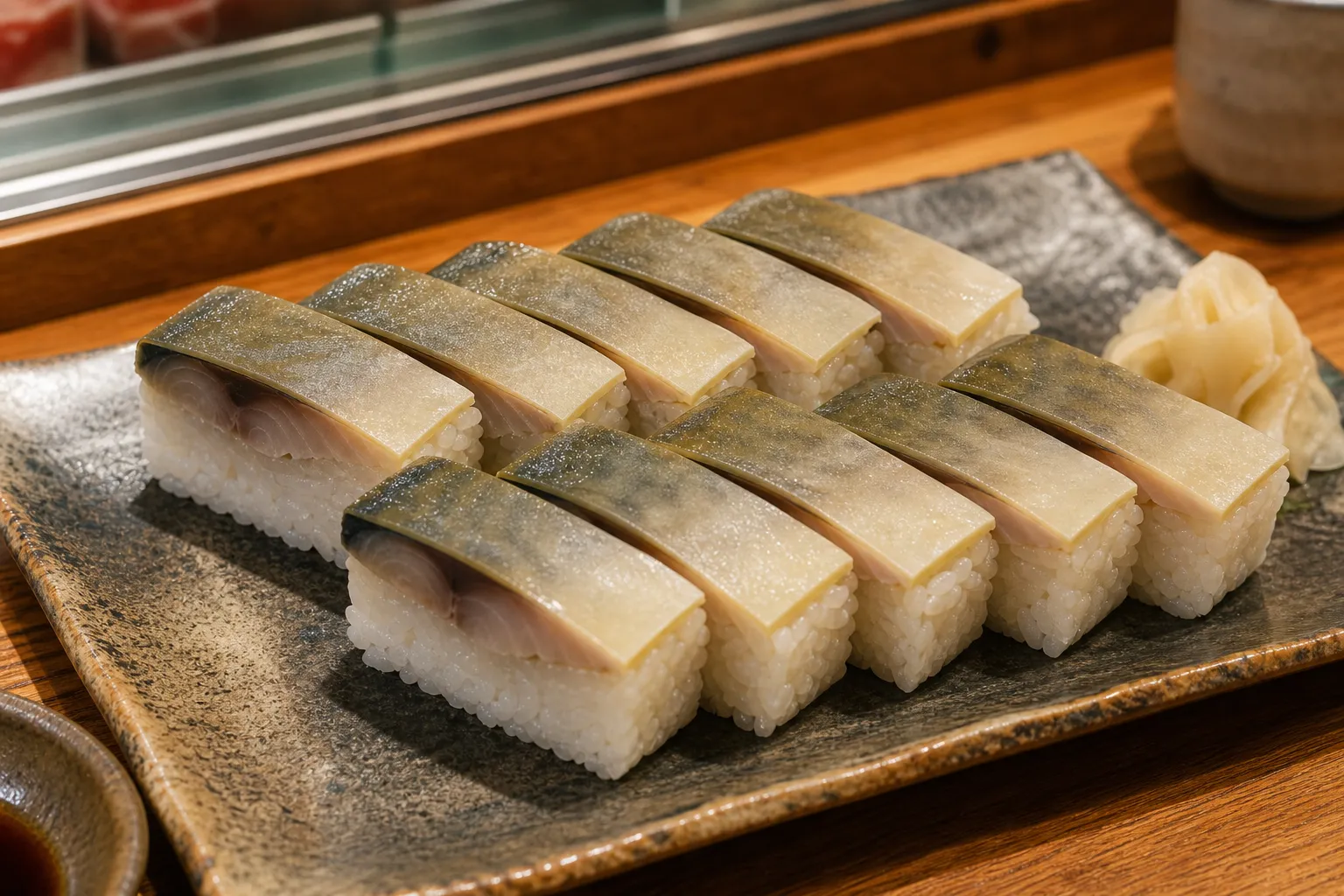
Forget the chef flipping fish over a counter for a second. In an old Osaka shop there's a different, quieter kind of sushi being made: a wooden box, packed with vinegared rice and cured mackerel, and a lid pressed down on top with two hands and a little grunt of effort — and out comes a glossy loaf you slice into neat rectangles. No theater, no showmanship, just pressure and patience. That's battera, and it's Osaka's beautiful, geometric answer to the question of what sushi was before Tokyo made it famous.
Share this dish


Osaka's beautiful pressed sushi — vinegar-cured mackerel and rice squared off in a wooden box and crowned with a translucent sheet of kelp, sliced into glossy little bricks that taste like the city's quieter, older idea of sushi.
🍜 Planning a food trip to Osaka?Add this dish to my Food Trip →
 Add this dish to my Food Trip →
Here's the build: battera (バッテラ) is a type of Osaka oshizushi — pressed box sushi — made with vinegar-cured mackerel (shime-saba) laid over vinegared rice, pressed in a rectangular wooden mold, and topped with a thin, translucent sheet of sweet-vinegared kelp (shiro-ita-konbu). Pressed into a box, not hand-formed; cured mackerel, not a raw slab; that glassy kelp lid: those are what make it battera and not a piece of Tokyo-style nigiri. The name is thought to come from the Portuguese bateira ("boat"), for the little boat-like shape of the early version.
Osaka's older, pressed idea of sushi
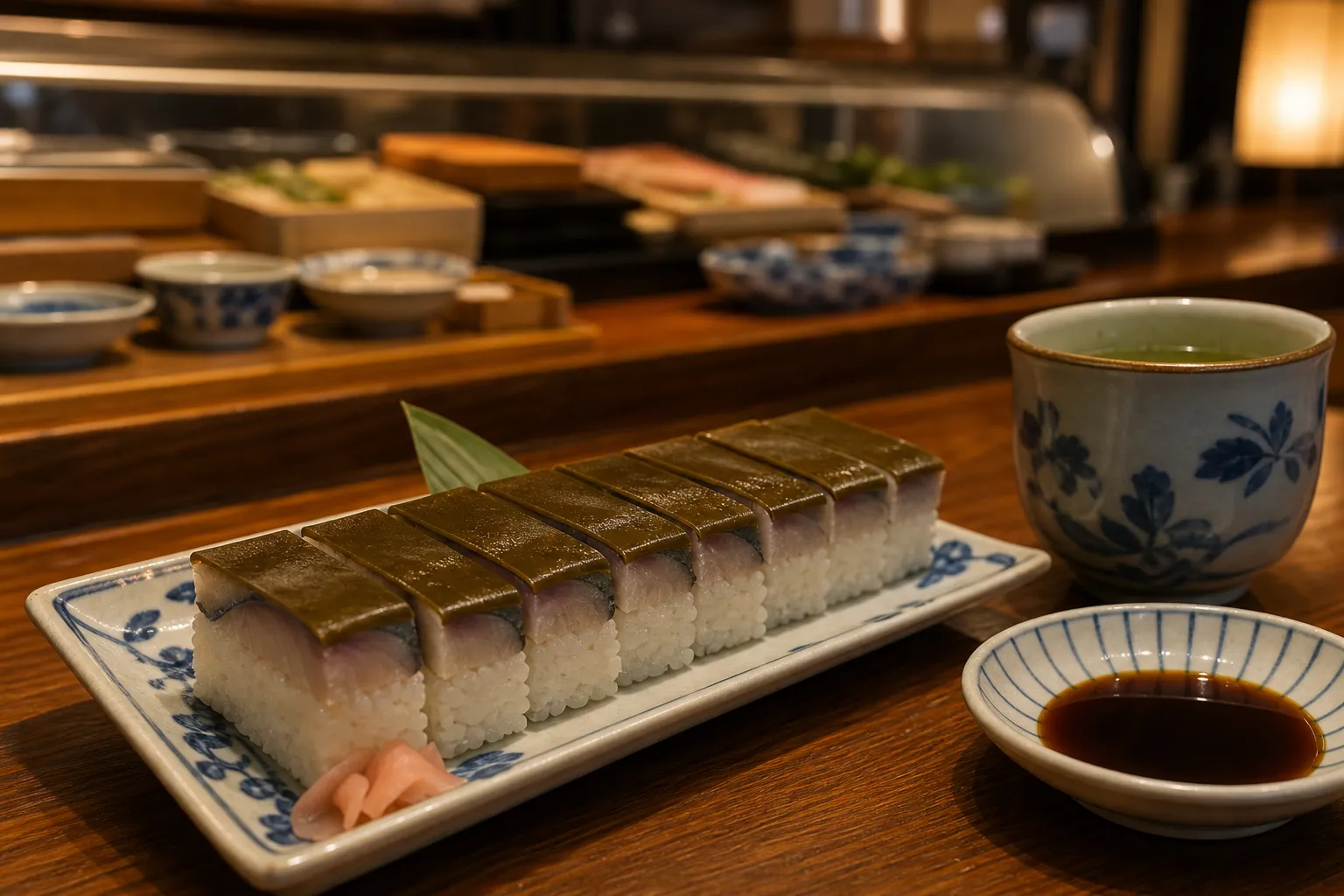
Before nigiri — the hand-pressed, made-to-order sushi you picture — became the national default, sushi in the Kansai region was largely pressed: fish and seasoned rice packed into wooden molds, weighted, and cut. Osaka is the heartland of this oshizushi tradition, and battera is one of its signature forms. It's an older, more architectural way of thinking about sushi: not a single perfect bite off a chef's fingertips, but a considered, layered block built for balance.
I love it for exactly that reason. Battera feels like a dish with an accent — unmistakably Kansai, a little formal, deeply tied to Osaka's identity as a merchant city that took its food seriously. The vinegared rice, the cured mackerel, the sweet kelp on top: each element is doing a specific job, and pressed together they become something more composed and more restrained than the flashier sushi tourists chase. It's a taste of the city's old soul.
What makes the eating experience different
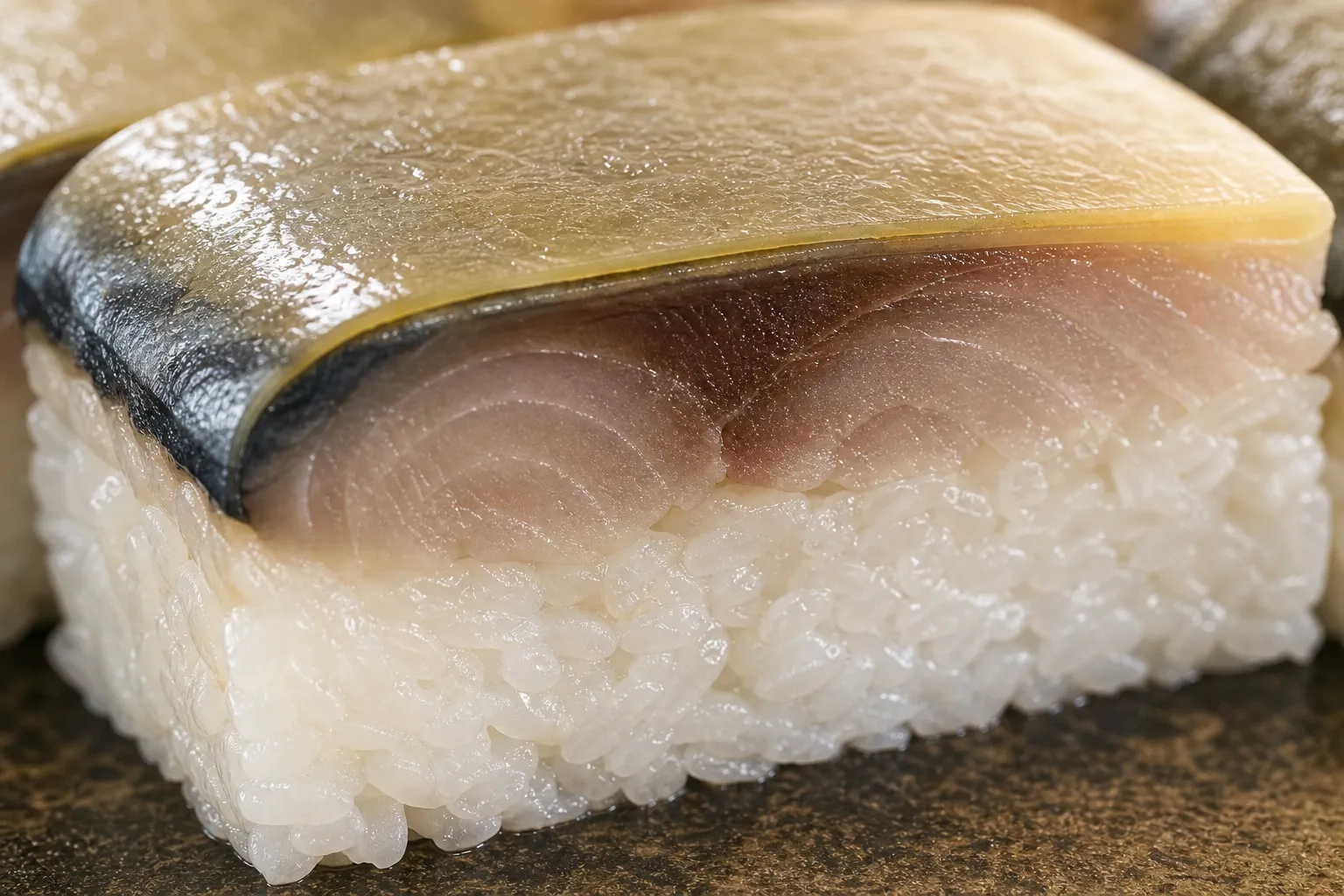
- The mackerel is vinegar-cured (shime-saba), which tames its oiliness into something bright, clean and savory rather than intensely fishy
- The shiro-ita-konbu on top — a paper-thin sheet of sweet-vinegared kelp — adds a glassy sheen, a gentle sweetness, and a subtle umami that ties it all together
- Being pressed, the rice is dense and cohesive, not loose like nigiri — each rectangle holds together as a neat, satisfying brick
- The balance is all vinegar-forward — cured fish, vinegared rice, sweet-vinegared kelp — clean and refreshing
- It travels and keeps far better than nigiri, which is exactly why pressed sushi became a thing to carry and gift
How it's made
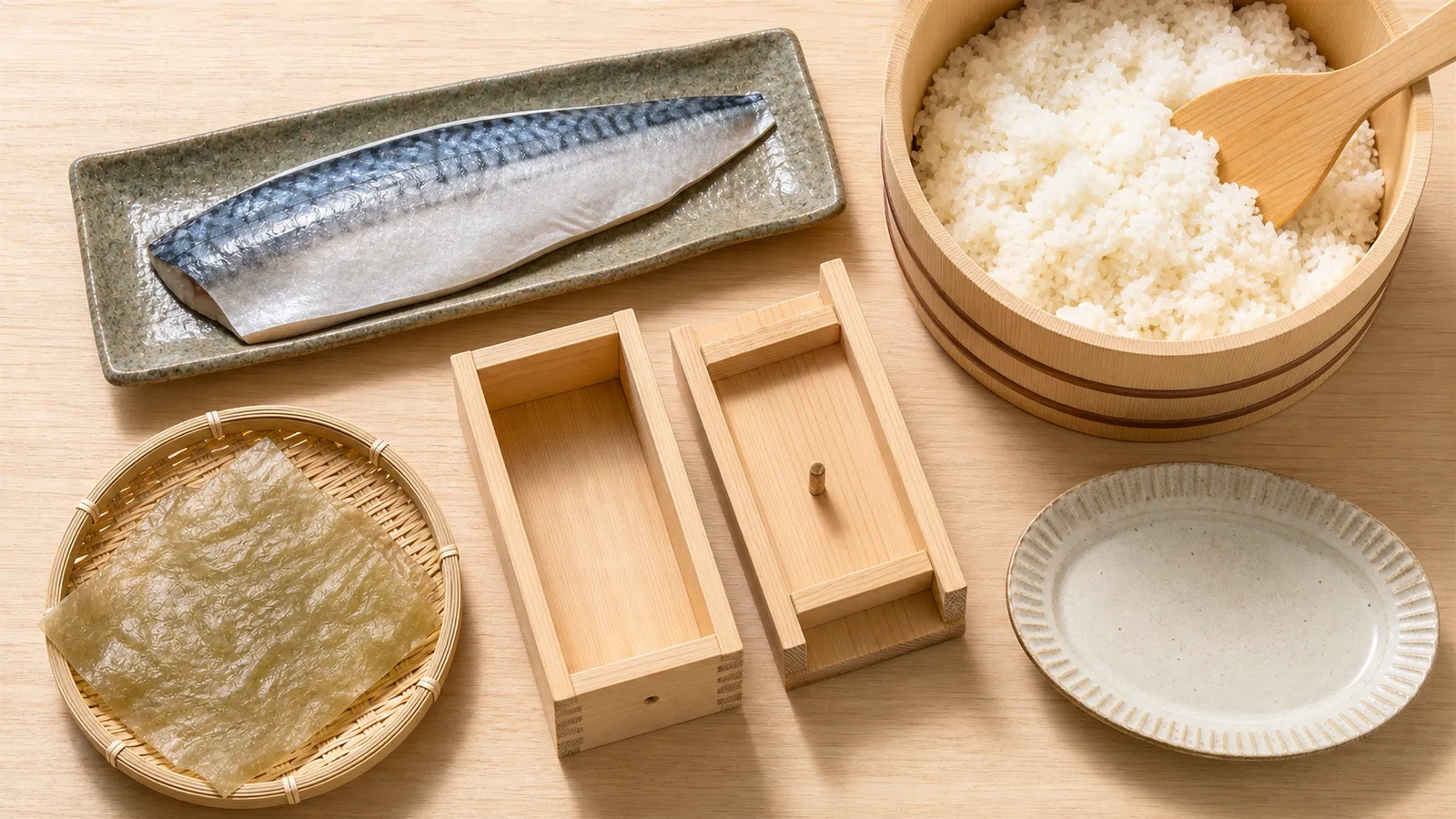
- Cure the mackerel. Fresh mackerel is salted, then marinated in vinegar to make shime-saba — firm, glossy, and no longer raw.
- Season the rice. Cook sushi rice and dress it with the sushi vinegar (rice vinegar, sugar, salt).
- Layer the mold. In a rectangular wooden pressing box (oshizushi mold), lay the cured mackerel, then pack the vinegared rice on top.
- Press it. Put the lid on and press down firmly to compact everything into a solid loaf, then top with the thin sheet of sweet-vinegared kelp.
- Unmold and slice. Turn it out and cut it into neat rectangles with a wet knife. Serve as is — no soy needed, though a little goes fine.
The pressing is the whole craft. Too little and it falls apart; too much and it's a paste. A good battera is compact but still tender, each brick holding its shape and its layers clean.
Before you go — Osaka's pressed-sushi pride
Your questions, answered honestly
"Is this raw fish?" — Not really. Battera's mackerel is vinegar-cured (shime-saba) — salted and marinated so it's firmed, brightened and no longer raw. It's a gentler entry point than raw sushi. That said, it is oily mackerel, so if you actively dislike mackerel or oily fish, this particular sushi won't win you over.
"What's the see-through sheet on top?" — That's shiro-ita-konbu, a paper-thin sheet of kelp shaved and steeped in sweet vinegar. It's edible and lovely — it adds a glassy shine, a touch of sweetness, and gentle umami. Don't peel it off; it's part of the dish.
"How's this different from the sushi I know?" — Most sushi tourists know is Tokyo-style nigiri (hand-pressed, fish on loose rice). Battera is Osaka oshizushi — sushi pressed in a box and sliced into rectangles, denser and more composed. Same family, older Kansai branch.
"Do I need soy sauce?" — Not really. Battera is fully seasoned already — vinegared rice, cured fish, sweet kelp. Try it as is first; a tiny bit of soy is fine but it's designed to be eaten straight.
What the staff will ask you
| You'll hear | Romaji | Meaning | Just say |
|---|---|---|---|
| 何人前にしますか? | Nan-nin-mae ni shimasu ka? | "How many portions?" | Ichi-nin-mae kudasai (one portion, please) |
| 持ち帰りですか、店内ですか? | Mochikaeri desu ka, tennai desu ka? | "Takeout or eat in?" | Tennai de / Mochikaeri de (eat in / takeout) |
| わさびは入れますか? | Wasabi wa iremasu ka? | "Add wasabi?" | Onegaishimasu / Nashi de (yes / without, please) |
To order, just say "Battera o kudasai" (バッテラをください) — "Battera pressed sushi, please."
Where to eat it
- Osaka's old sushi shops and pressed-sushi specialists — battera is an Osaka signature; specialist oshizushi and saba-zushi shops around the city make excellent versions.
- Department-store food halls (depachika) in Osaka and Kansai — a great, reliable place to buy a beautifully packed battera to take away.
- Kansai station shops and sushi counters — pressed sushi keeps and travels well, so it's a classic thing to grab for a train ride through the region.
Battera is a specialty of Osaka's pressed-sushi tradition; makers, styles and prices vary, and the best shops can sell out — check availability before a special trip.
Soul Score
Local Roots5/5
First-Timer Friendly3/5
Adventure Level4/5
Comfort Level4/5
Travel Worthy4/5
These scores are one obsessed eater's gut feeling — not a verdict. A low number isn't a bad mark, just a different kind of adventure.
Know someone planning Japan?
← All Articles
Local Food · Osaka
Still hungry?
Eat more from Osaka
Local FoodOsaka
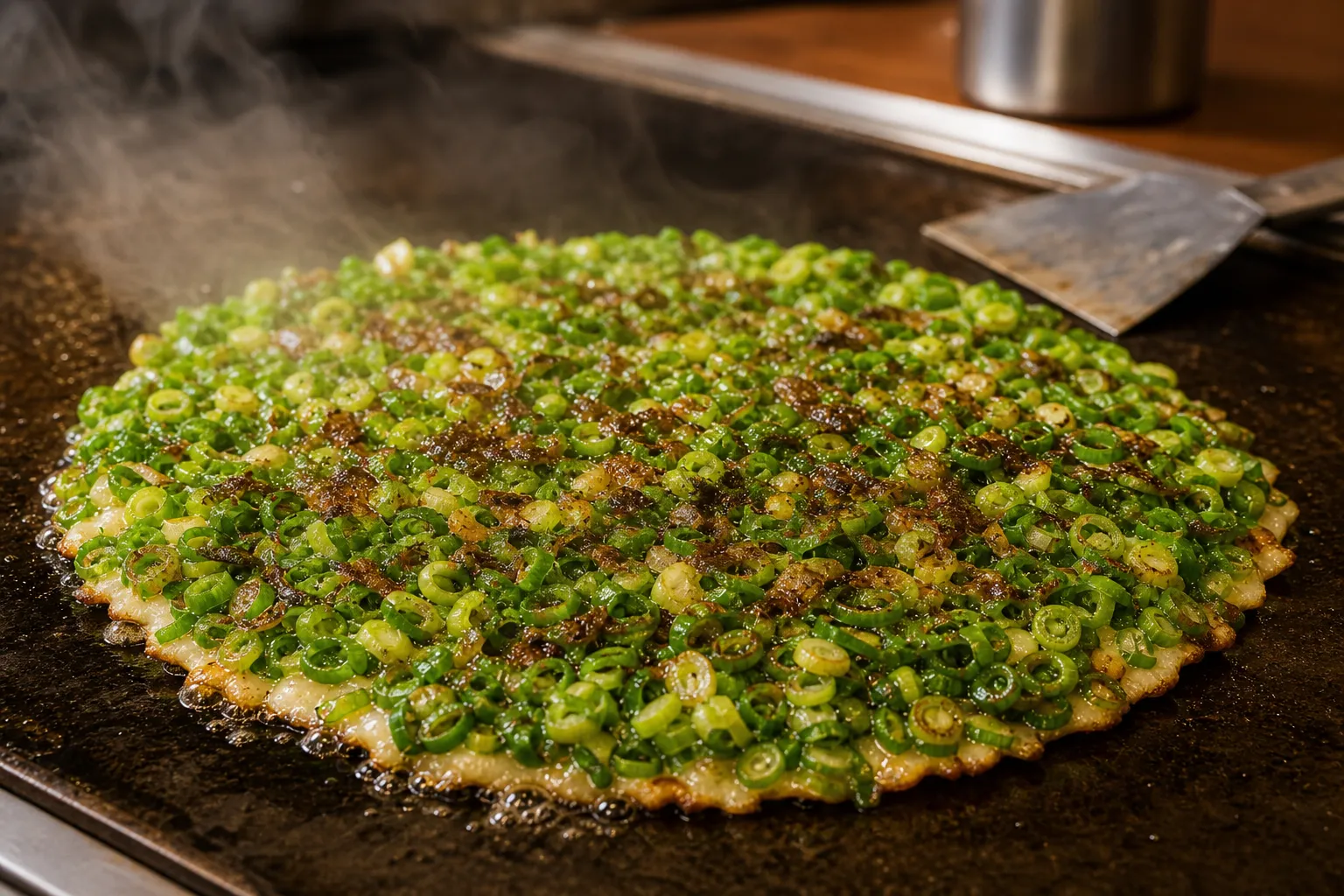
Negiyaki (ねぎ焼き)
Okonomiyaki's leaner, greener Osaka cousin — a thin griddle cake packed with a mountain of chopped green onion instead of cabbage, savory with beef tendon, and finished with soy instead of sweet sauce.
July 10, 2026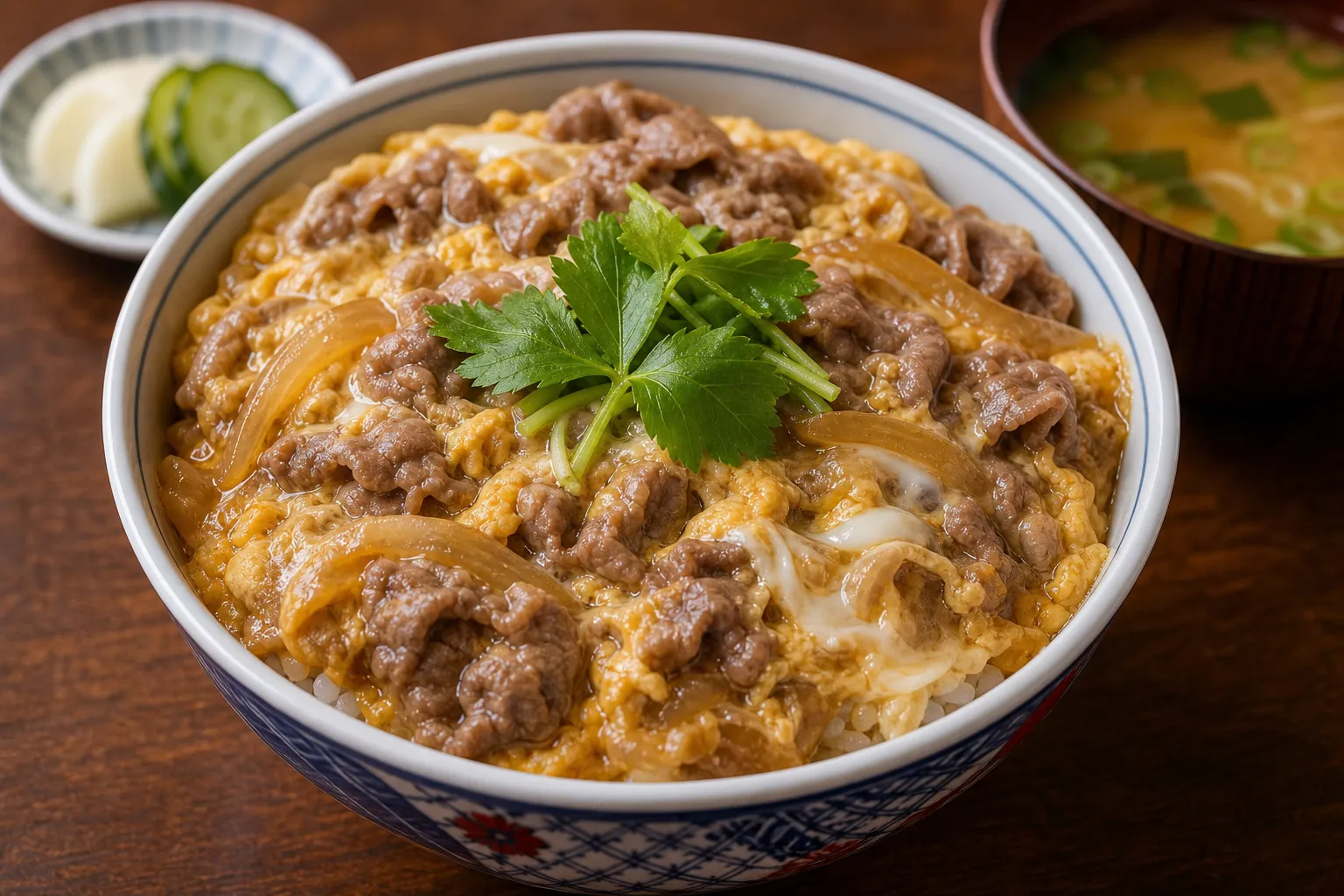
Japanese FoodOsaka, Kansai
Tanindon (他人丼)
Beef and egg who've never met, thrown together in sweet dashi over rice — the cheeky Kansai bowl with the best name in Japan. Oyakodon's troublemaker cousin, and quietly just as good.
July 9, 2026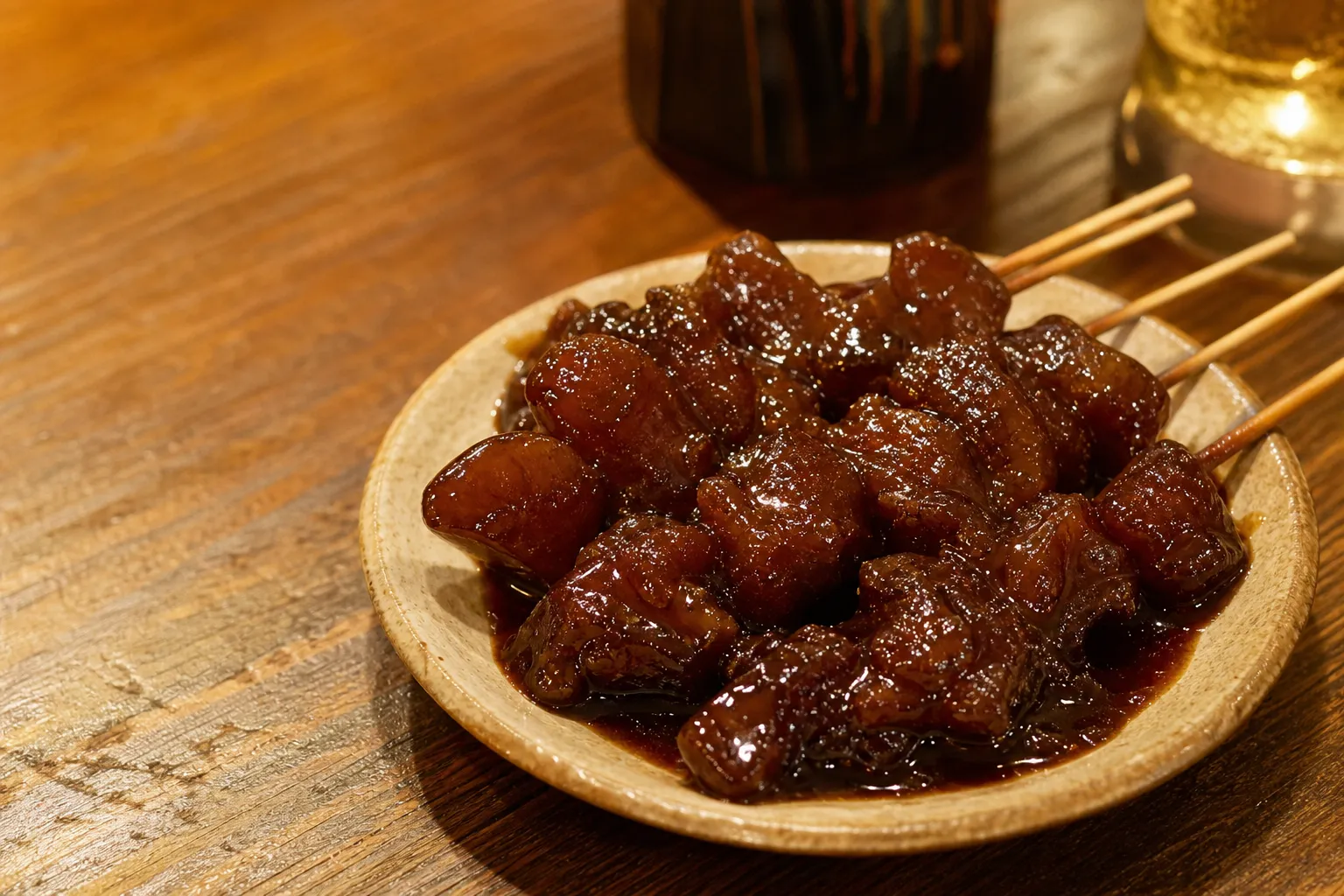
Local FoodOsaka
Doteyaki (どて焼き)
Beef tendon simmered for hours in dark miso until it goes soft, sticky, and almost sinful — this is the skewer that made me understand Osaka's love affair with cheap beer.
July 5, 2026