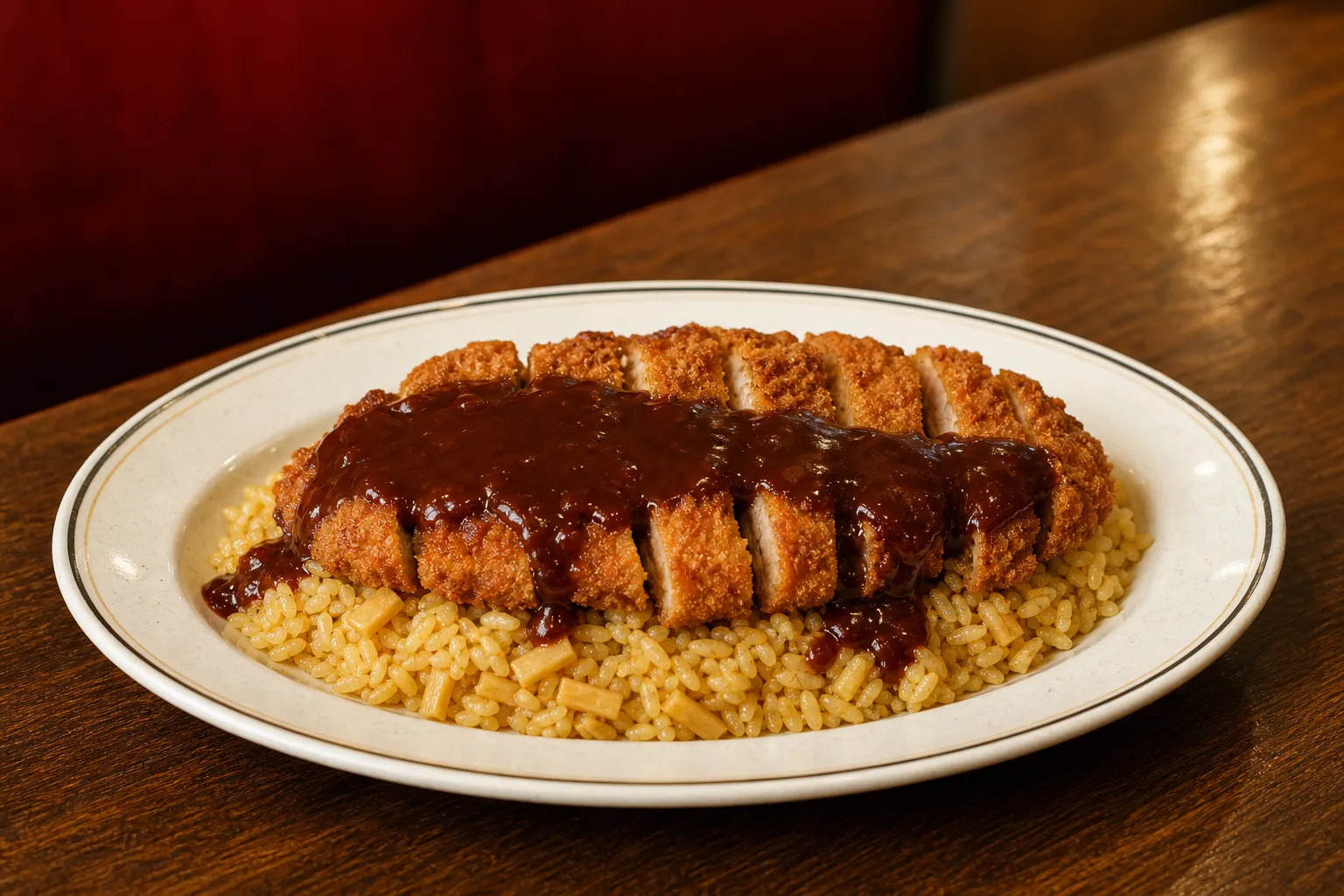
Rice with butter through it. A crisp breaded cutlet laid on top. And then a ladle of dark, glossy demi-glace poured over the whole thing until it pooled at the edges of the plate. I took a forkful with a bit of everything on it — buttery rice, crunchy cutlet, that rich brown sauce — and just went quiet. This is comfort food engineered by someone who clearly loved you. And it lives at the eastern edge of Japan, in a town most travelers never reach.
Share this dish


A pork cutlet on buttered rice, drowned in demi-glace, invented at the far eastern edge of Japan — retro Western food from a town most maps forget.
🍜 Planning a food trip to Hokkaido?Add this dish to my Food Trip →
 Add this dish to my Food Trip →
This is escalope (エスカロープ, esukaroopu), the signature local dish of Nemuro, out at the far eastern tip of Hokkaido where the sun rises on the whole country first. It's yoshoku — Japanese-style Western food — and the build is specific: a bed of buttered rice (sometimes a pilaf studded with bamboo shoots), a fried breaded cutlet of pork (or beef) on top, and the whole plate blanketed in demi-glace. Rice, cutlet, demi-glace, all on one plate. Simple to describe, ridiculously satisfying to eat, and found almost nowhere outside this one small, remote town.
A Western dish born at the edge of the map
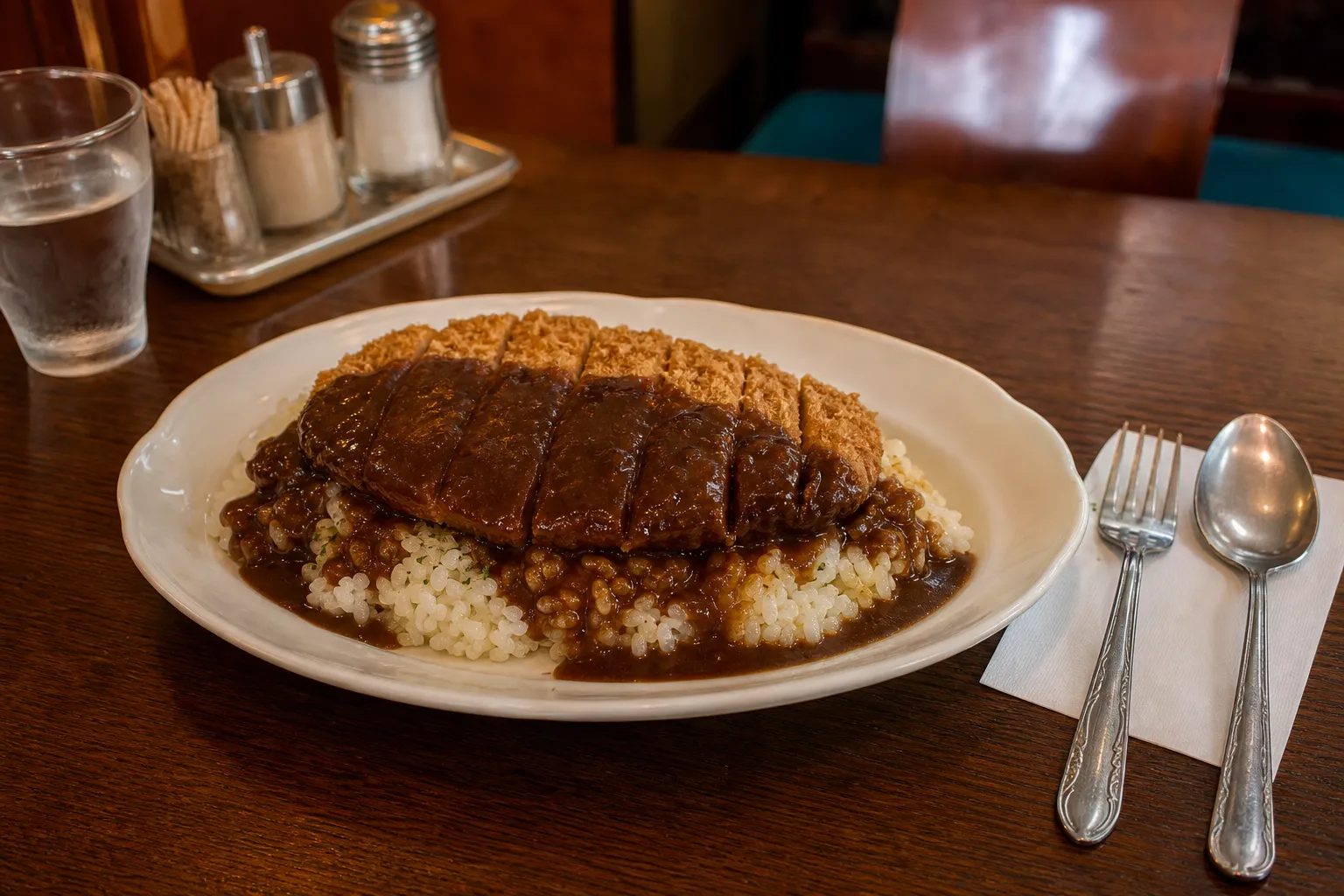
Escalope is Nemuro's own invention, a piece of postwar yoshoku history from a fishing town far from the big cities. The name nods to the European "escalope" (a thin cutlet of meat), but Nemuro remade it into something entirely local: not a bare cutlet, but that whole layered plate of buttered rice, breaded cutlet, and demi-glace. It's the kind of dish that a town's old Western diners quietly perfected and passed down until it became a point of local pride.
What gets me is the geography of it. Nemuro is out there — the easternmost inhabited edge of Japan, cold, remote, wrapped in sea fog. And in that far corner, cooks were plating up rich, buttery, demi-glace-covered Western comfort food and making it a local identity. Regional food doesn't get much more specific than a dish you essentially have to travel to the end of the country to eat properly. I love that. It rewards the effort of actually going.
Why it's such a comfort bomb
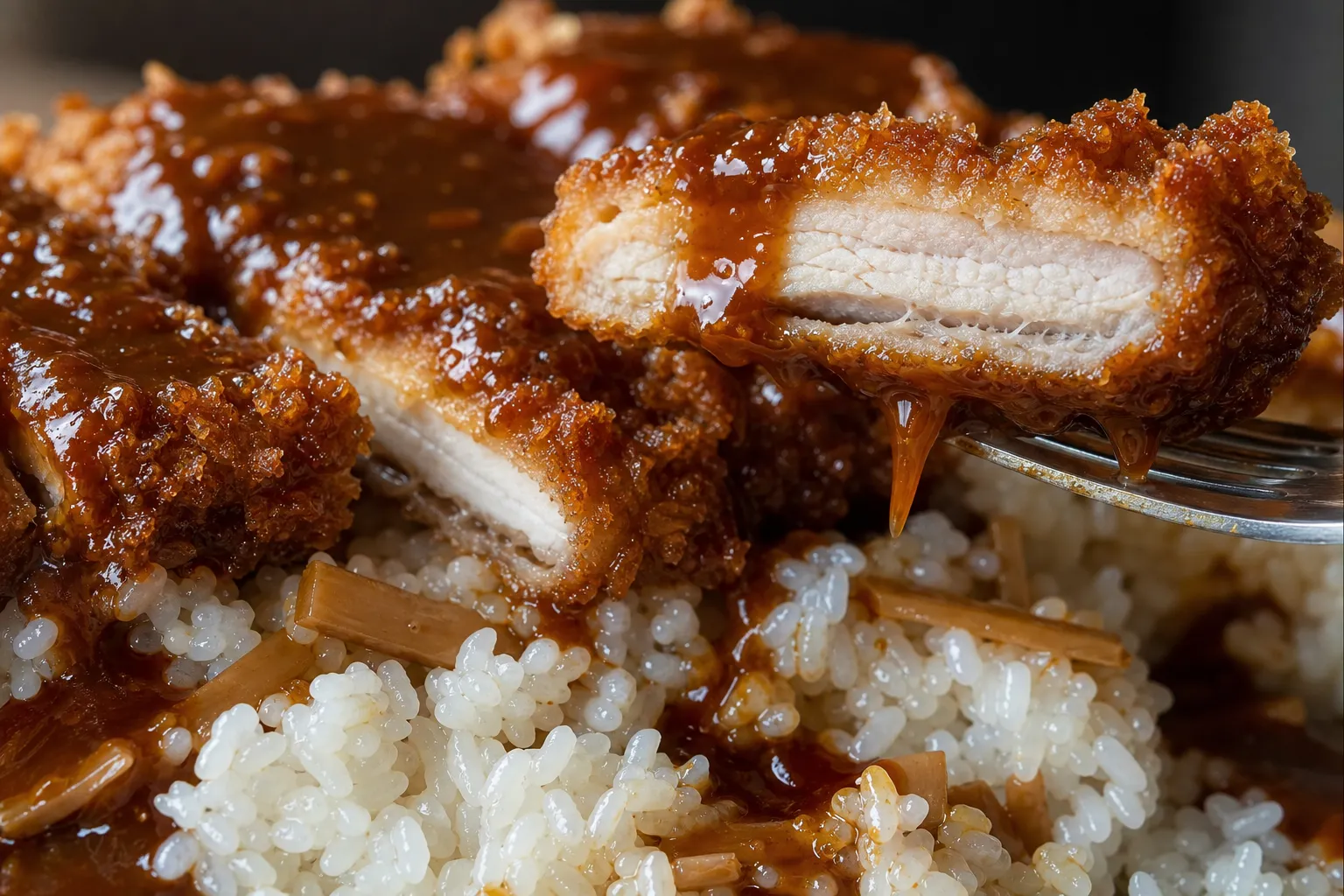
It's the layering. Buttery, savory rice on the bottom soaks up the sauce from below. The cutlet on top stays crisp on its upper edge while its underside melts into the rice and demi-glace. And the demi-glace itself — deep, dark, a little sweet, faintly winey, glossy — ties every component into one rich, cohesive bite. Nothing is fighting. Everything is pulling in the same warm, savory direction.
If there's bamboo shoot in the pilaf version, you get little pops of texture and freshness cutting through the richness, which keeps a heavy plate from feeling one-note. But even the plain buttered-rice version is a full-on comfort experience — crunch, softness, richness, and a sauce you'll want to chase around the plate with your fork. I did exactly that. Unashamed.
How it's made
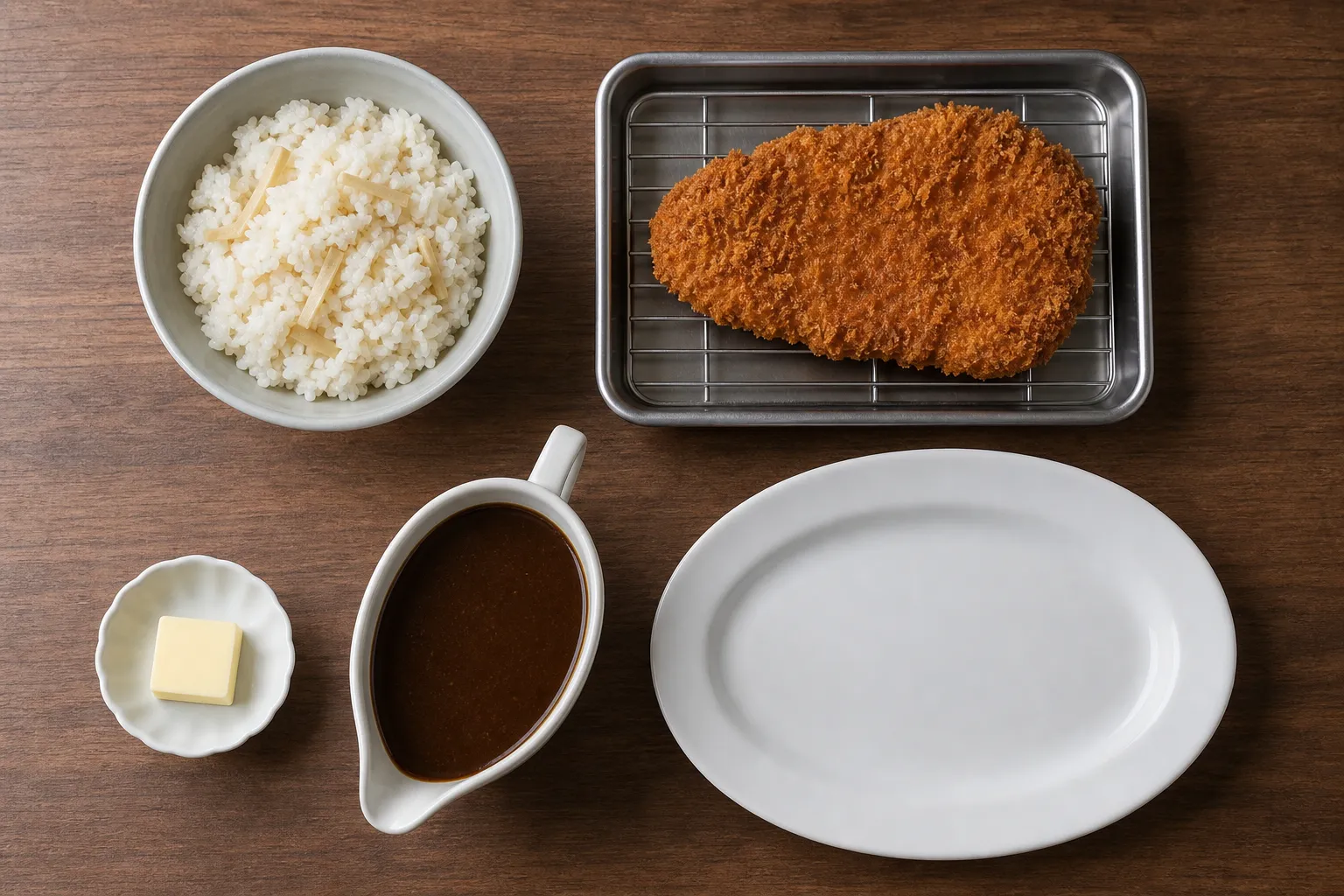
- Rice is cooked and tossed with butter (or made into a pilaf with bamboo shoots) and spread as a base on the plate
- A pork (or beef) cutlet is breaded in panko and deep-fried until golden and crisp
- A demi-glace sauce — a slow-cooked brown sauce of stock, browned vegetables, and often a touch of wine — is prepared or warmed
- The fried cutlet is sliced and laid over the buttered rice
- The whole plate is generously covered in glossy demi-glace and served hot, on an oval plate, diner-style
Before you go — how to actually eat it
Your questions, answered honestly
"Isn't this just tonkatsu?" — No. Tonkatsu is a cutlet served with shredded cabbage and a tangy brown sauce on the side, with rice separate. Escalope puts the cutlet on buttered rice and pours demi-glace over everything as one unified plate. Different sauce, different assembly.
"Is it katsu curry, then?" — Also no — no curry anywhere. The sauce is demi-glace: a rich, savory brown Western sauce, not spiced curry roux. Easy to confuse by look; completely different in flavor.
"How is it different from Okayama's demi-katsu-don?" — Good catch, since both use demi-glace over a cutlet. But demi-katsu-don is a donburi (a rice bowl) from Okayama; escalope is a plate of buttered rice from Nemuro, served yoshoku-diner style. Different region, different vessel, different soul.
"Do I really have to go to Nemuro?" — Basically, yes, for the authentic thing — it's a hyper-local specialty of that one town's Western diners. That remoteness is part of the appeal; treat eating it as a reason to make the trip east.
What the staff will ask you
| You'll hear | Romaji | Meaning | Just say |
|---|---|---|---|
| 豚と牛、どちらになさいますか? | Buta to gyū, dochira ni nasaimasu ka? | "Pork or beef?" | Buta de onegaishimasu (pork, please) |
| ご飯の量はいかがしますか? | Gohan no ryō wa ikaga shimasu ka? | "How much rice would you like?" | Futsū de onegaishimasu (regular, please) |
| ソースは多めにしますか? | Sōsu wa ōme ni shimasu ka? | "Would you like extra sauce?" | Onegaishimasu (yes, please) |
| セットになさいますか? | Setto ni nasaimasu ka? | "Would you like it as a set?" | Onegaishimasu (yes, please) |
To order, just say "Esukaroopu o kudasai" (エスカロープください) — "Escalope, please."
Where to eat it
- Nemuro, eastern Hokkaido — the town's long-running yoshoku diners are the home of escalope and the only place to get the genuine article; it's a recognized local specialty there.
- Nemuro Station area — a practical base for tracking down the old Western-style restaurants that serve it.
- Eastern Hokkaido (Konsen region) yoshoku spots — occasionally you'll find versions in the wider area, but Nemuro is the real source.
This is a hyper-local dish served by a handful of small diners, and hours and even which shops are still open change over time — check current listings before you make the long trip east.
Soul Score
Local Roots4/5
First-Timer Friendly4/5
Adventure Level3/5
Comfort Level5/5
Travel Worthy4/5
These scores are one obsessed eater's gut feeling — not a verdict. A low number isn't a bad mark, just a different kind of adventure.
Know someone planning Japan?
← All Articles
Local Food · Nemuro, Hokkaido
Still hungry?
Eat more from Hokkaido
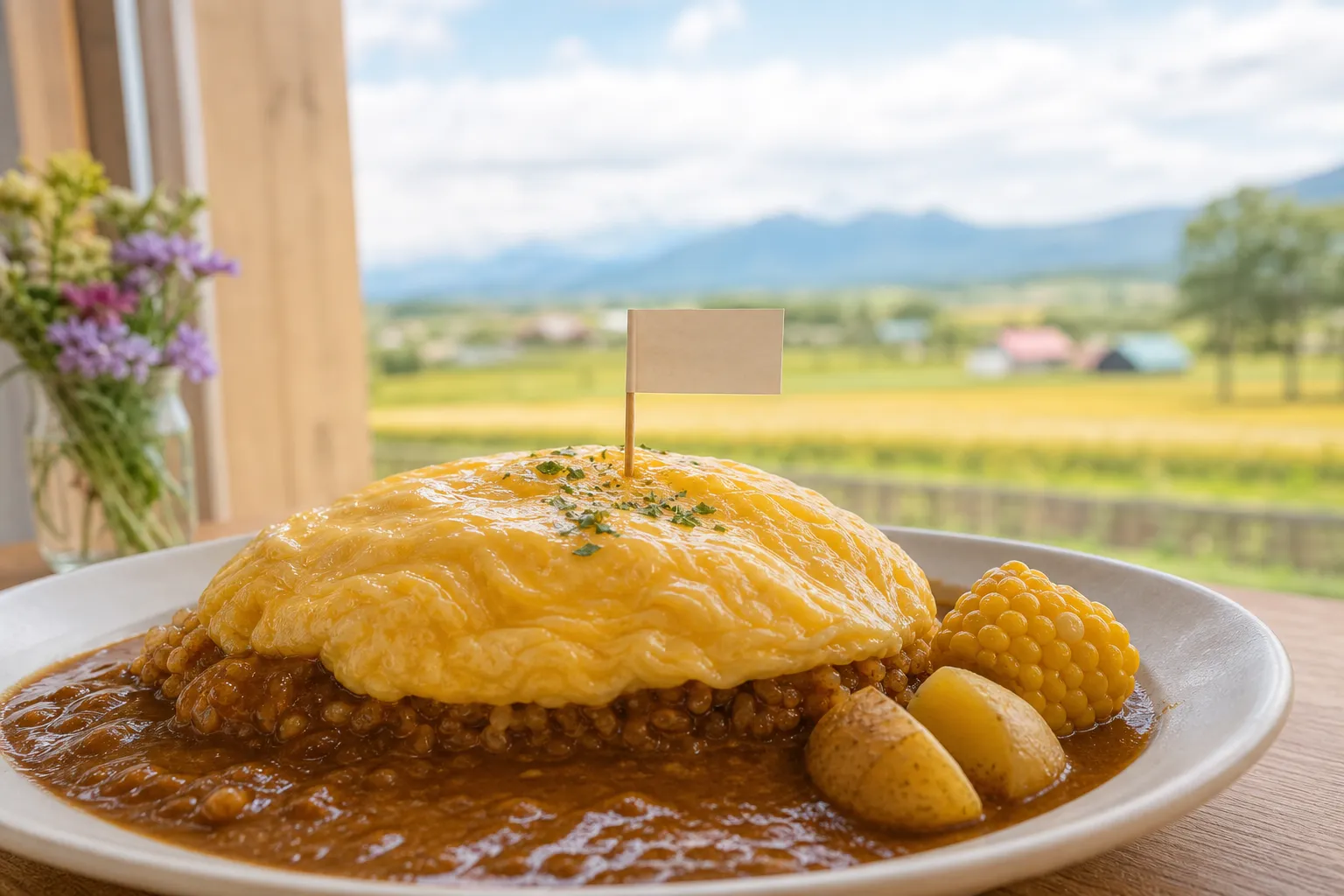
Local FoodFurano, Hokkaido
Furano Omu-Curry (富良野オムカレー)
Cut into the omelette and curry sauce comes flooding out like it's been waiting all morning for permission — with a lavender field in the window behind it.
August 2, 2026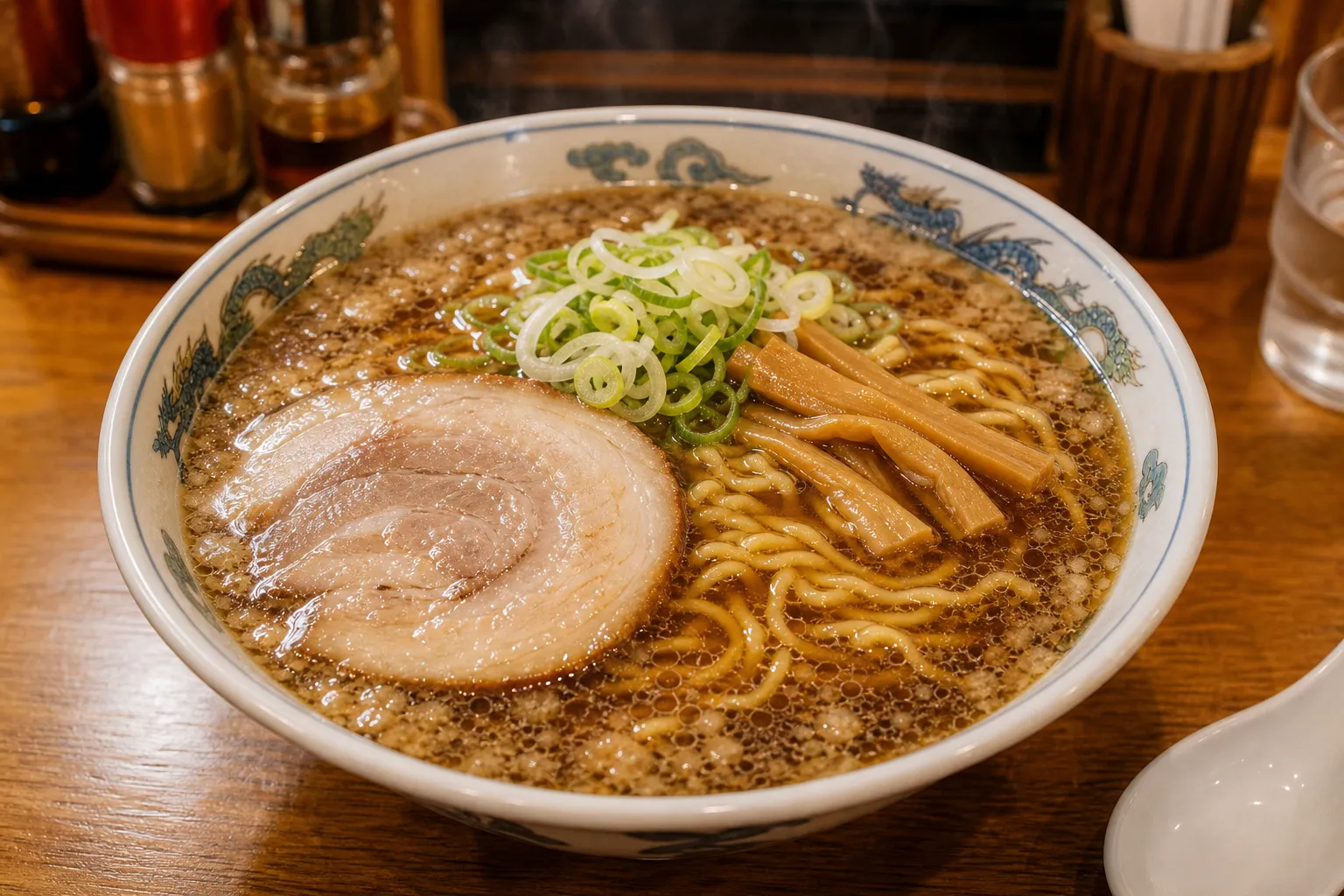
Local FoodAsahikawa, Hokkaido
Asahikawa Ramen (旭川ラーメン)
A slick of lard traps the heat so your soy broth stays scalding to the last drop — because in Asahikawa, the cold outside is trying to kill your ramen. It loses.
July 9, 2026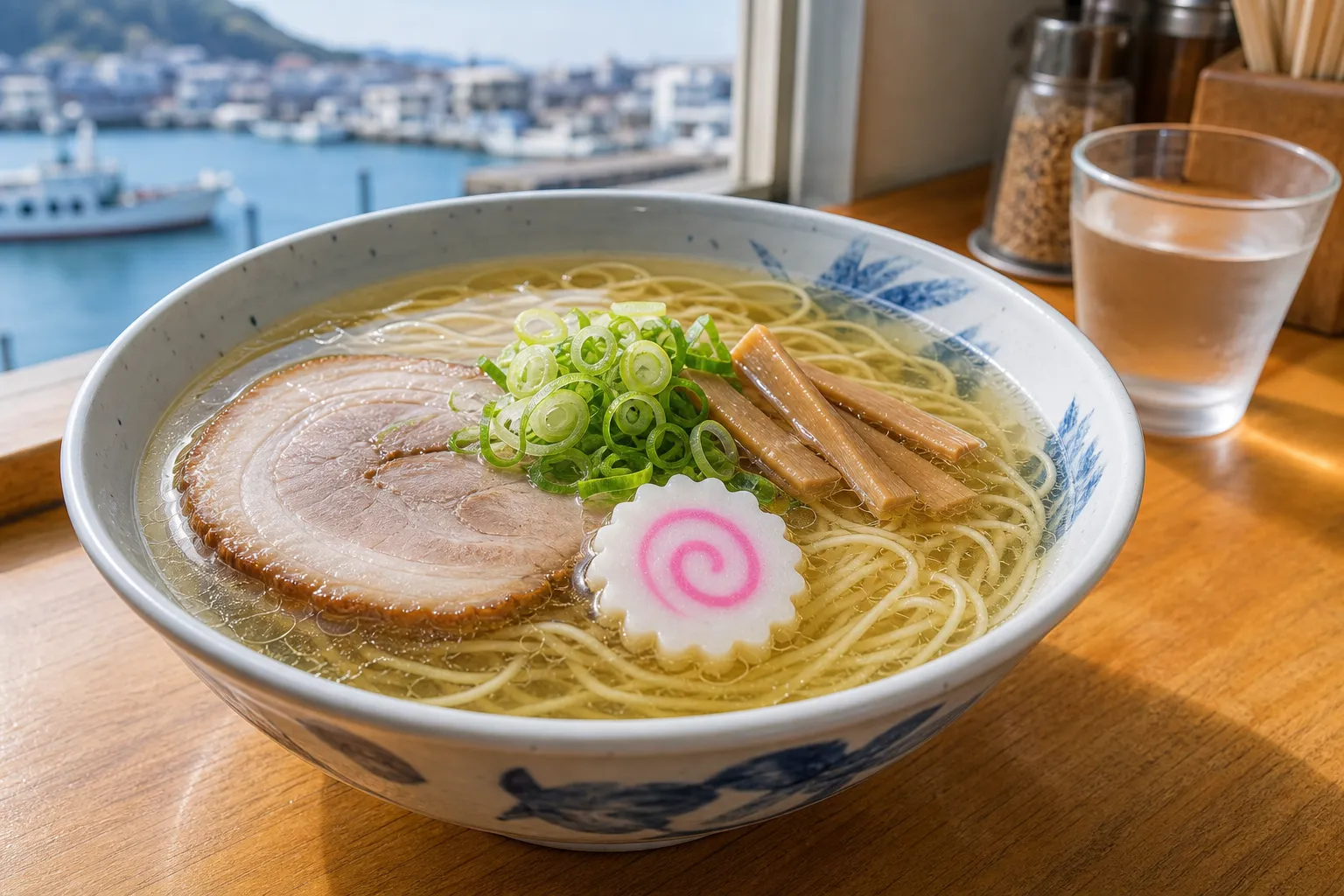
Local FoodHakodate, Hokkaido
Hakodate Shio Ramen (函館塩ラーメン)
Clear as tea, gold as morning light, quiet as a held breath — this is the ramen that proves subtraction is a flavor. Hokkaido's gentle bowl, and my hangover's best friend.
July 9, 2026