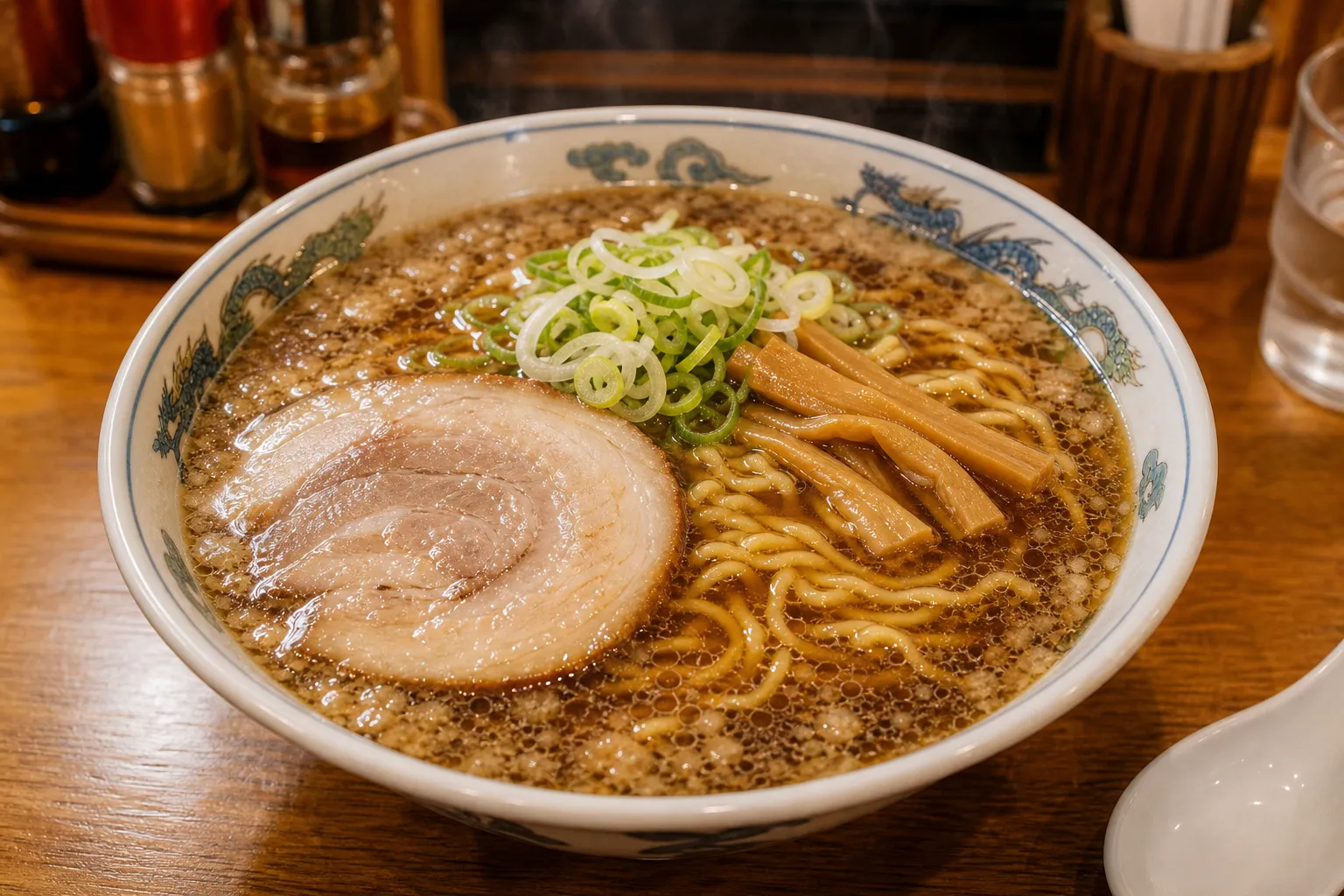
I took a confident, un-blown first slurp of Asahikawa ramen in the middle of a Hokkaido winter and nearly launched out of my seat. The surface had looked so calm — no rolling steam, just a still, dark, glossy soup — that my brain filed it as "cool enough." My tongue filed a formal complaint. That calm surface is a trap, and it is genius.
Share this dish


A slick of lard traps the heat so your soy broth stays scalding to the last drop — because in Asahikawa, the cold outside is trying to kill your ramen. It loses.
🍜 Planning a food trip to Hokkaido?Add this dish to my Food Trip →
 Add this dish to my Food Trip →
Here's the trick the whole town is in on: a thin layer of lard floats on top of the broth, and it works like a lid, sealing in the heat so the soup underneath stays molten in weather that freezes your eyelashes. Underneath that lid is a "double soup" — pork bones simmered for depth, married to a seafood broth of niboshi (dried sardines) and kombu, all pulled together with a dark soy tare. Dark, hearty, warming, and secretly volcanic. This is ramen built to win a fight with the cold.
Born to beat the Hokkaido winter
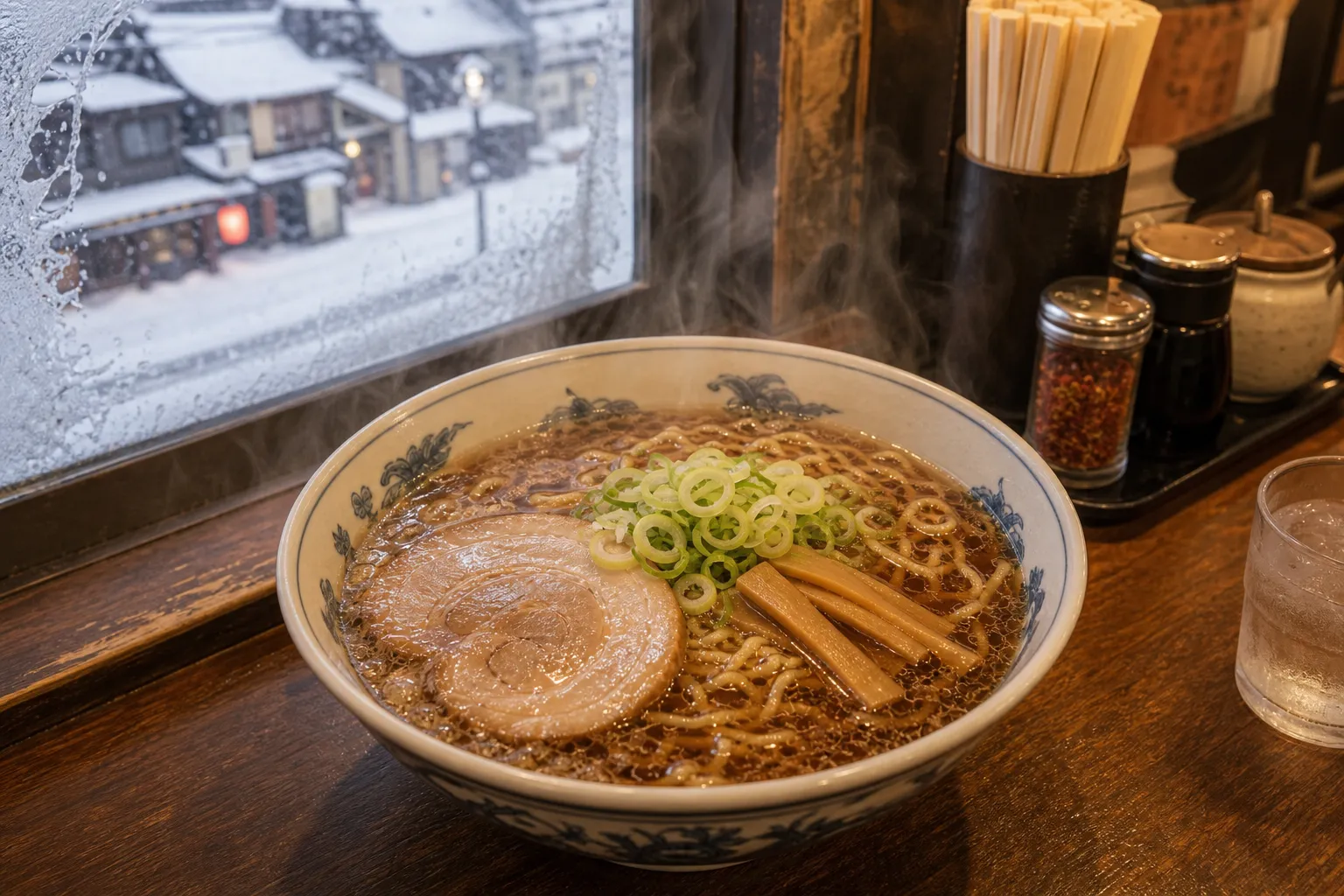
Asahikawa is one of the coldest cities in Japan — the kind of place where a bowl of soup can go from steaming to sad in the time it takes to pick up your chopsticks. So the local ramen evolved defenses. The lard lid came from pure necessity: keep the heat trapped, keep the last mouthful as hot as the first. I love that the single most distinctive thing about this ramen is basically a survival adaptation. It's ramen that grew a winter coat.
The flavor developed the same practical way. Asahikawa sits inland but Hokkaido is ringed by sea, so cooks blended porky richness with the region's dried seafood — sardines and kombu — into that signature double soup. Add the soy tare and you get something dark, savory, and deeply grounding. Alongside Sapporo (miso) and Hakodate (salt), this is one of Hokkaido's big three ramen styles, and it's the moody, hearty one of the trio.
Why it's so satisfying
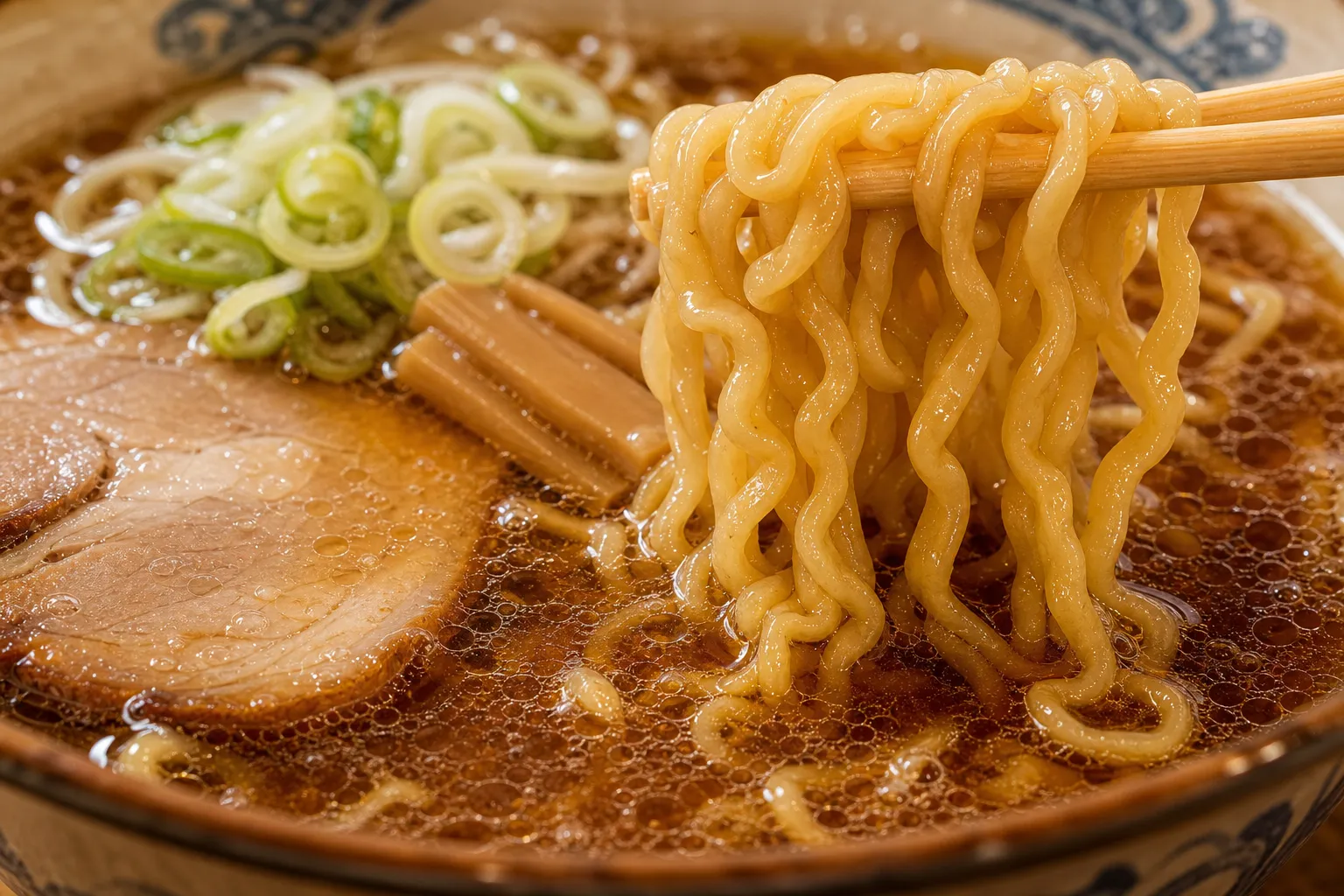
The broth is the whole personality: a soy-based double soup of pork bones plus niboshi and kombu, dark and savory, sealed under a slick of lard that keeps it fiercely hot. It's rich but not gloopy — the seafood keeps it lively, the soy keeps it sharp, the pork keeps it deep.
Then there are the noodles, and they matter here. Asahikawa uses medium, wavy, low-moisture noodles that are made to grab onto that oily, savory soup and drag it up with every bite. Because there's less water in the dough, they soak up broth fast and cling like they mean it — so every slurp arrives fully dressed. Classic toppings keep it honest: chashu, menma, green onion, a swirl of naruto. No fireworks. Just a dark, warming bowl that tastes like the answer to a cold day.
How it's made
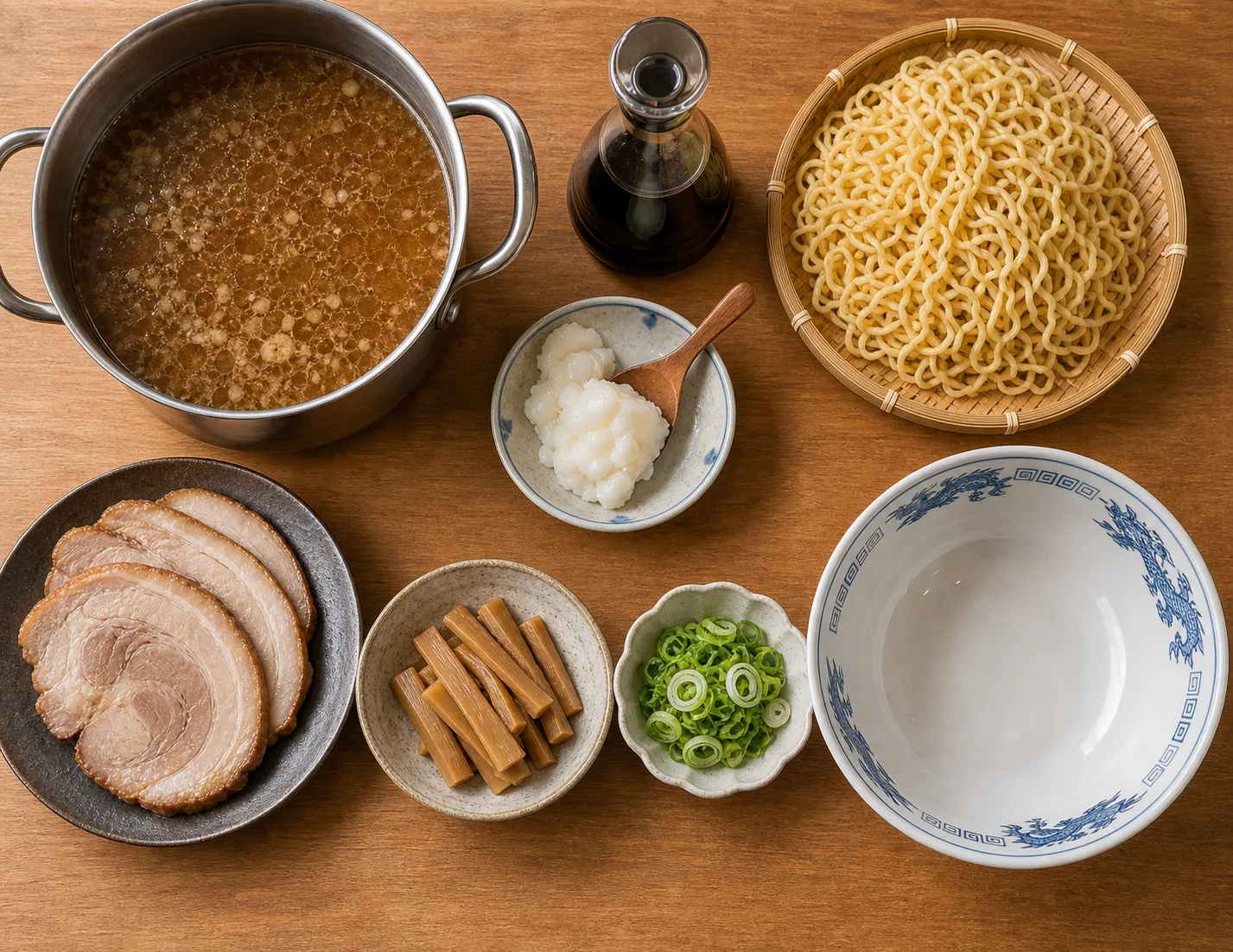
- Simmer pork bones for a rich base, and separately draw a seafood broth from niboshi (dried sardines) and kombu
- Blend the two into the signature double soup, then season with a dark soy (shoyu) tare
- Cook medium, wavy, low-moisture noodles with a firm bite
- Combine broth and noodles, and finish the surface with a layer of lard to seal in the heat
- Top with chashu, menma, green onion, and naruto — then serve it while it's scalding (which, thanks to the lard, is longer than you think)
Before you go — respect the lard lid
Your questions, answered honestly
"Why does it look like it's not even hot?" — Because a layer of lard is floating on top, trapping the heat under a calm-looking surface. Do not trust it. Blow across your first spoonful, take it slow, and you'll avoid the rookie burn I earned for you.
"What is 'double soup'?" — Two broths made separately and blended: a pork-bone soup for body and a dried-seafood (niboshi and kombu) soup for savory depth. Together with the soy tare they give Asahikawa ramen its dark, layered flavor.
"Which flavor should I order?" — Soy (shoyu) is the signature and what you should try first — it's the classic Asahikawa bowl. Some shops also offer miso or salt, but shoyu is the home team.
"Why are the noodles wavy?" — On purpose. The medium, low-moisture, wavy noodles are built to catch and hold that lard-topped soup so every bite comes loaded. It's engineering, not decoration.
What the staff will ask you
| You'll hear | Romaji | Meaning | Just say |
|---|---|---|---|
| 味は何にしますか? | Aji wa nani ni shimasu ka? | "Which flavor?" | Shoyu de (soy) |
| 麺の硬さは? | Men no katasa wa? | "How firm do you want the noodles?" | Futsū de (normal) |
| 大盛りにしますか? | Ōmori ni shimasu ka? | "Want a large portion?" | Futsū de (regular) / Ōmori de (large) |
To order, just say "Shoyu rāmen kudasai" (醤油ラーメンください) — "Soy-broth ramen, please."
Where to eat it
- Asahikawa Ramen Village (あさひかわラーメン村), Asahikawa — a collection of famous local ramen shops gathered under one roof; the easiest way to taste the style and compare bowls in one trip.
- Asahikawa city ramen shops — long-standing local shops all over town serve the classic soy double-soup with the lard lid; this is the home turf of the style.
Shops and hours change, and some of the famous names run their own separate locations too, so check before you go — and give that first slurp a good blow.
Soul Score
Local Roots5/5
First-Timer Friendly4/5
Adventure Level3/5
Comfort Level5/5
Travel Worthy4/5
These scores are one obsessed eater's gut feeling — not a verdict. A low number isn't a bad mark, just a different kind of adventure.
Know someone planning Japan?
← All Articles
Local Food · Asahikawa, Hokkaido
Still hungry?
Eat more from Hokkaido
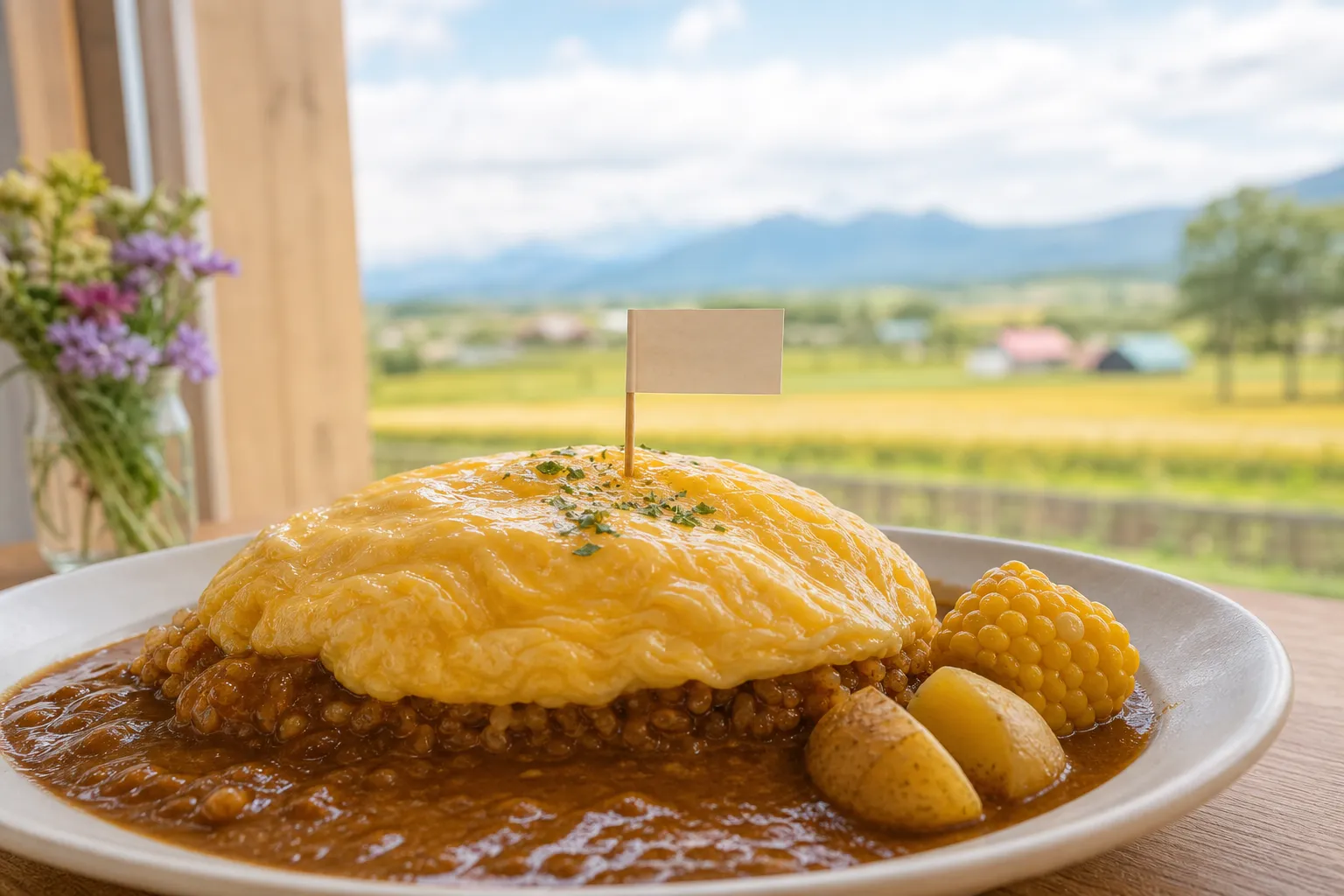
Local FoodFurano, Hokkaido
Furano Omu-Curry (富良野オムカレー)
Cut into the omelette and curry sauce comes flooding out like it's been waiting all morning for permission — with a lavender field in the window behind it.
August 2, 2026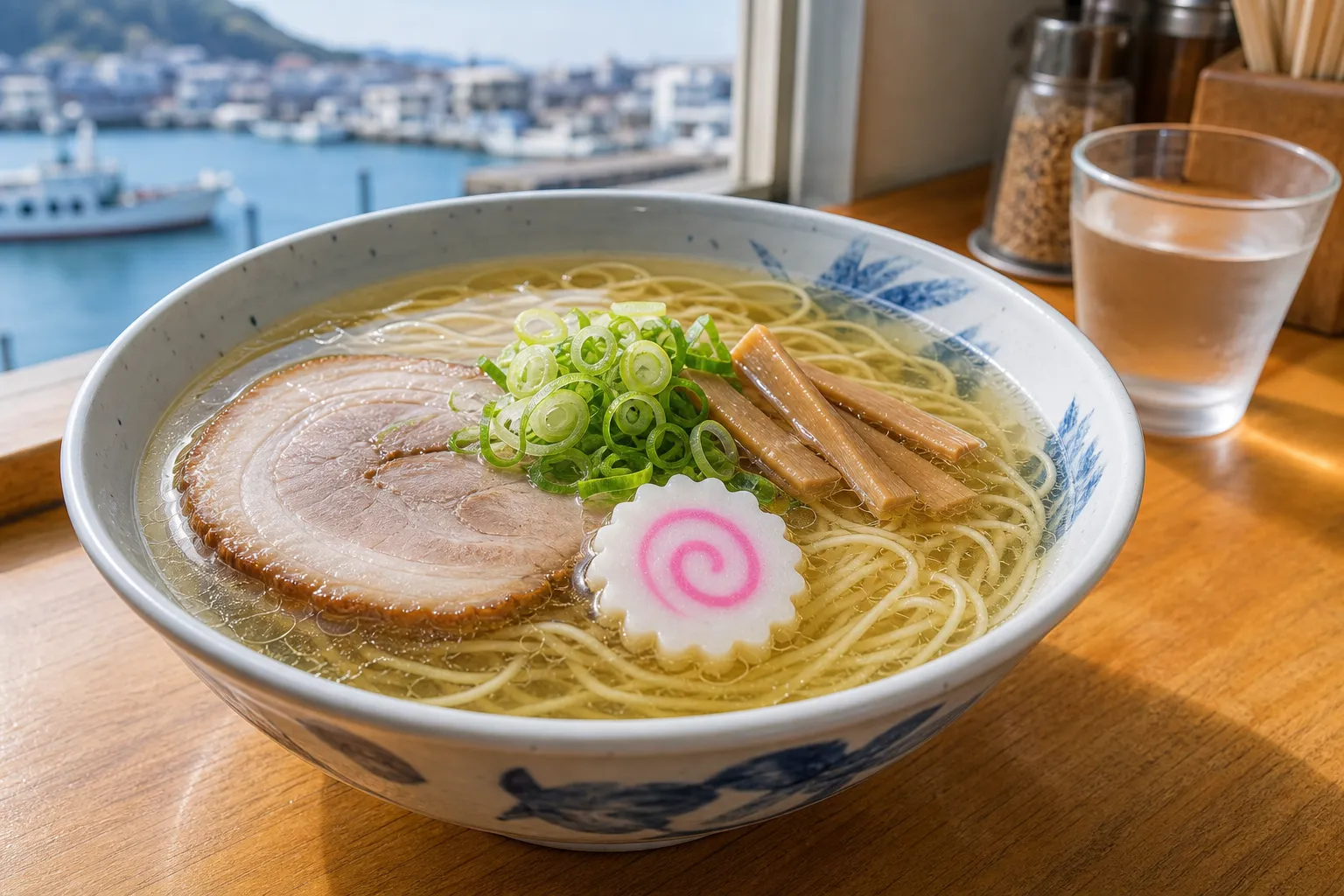
Local FoodHakodate, Hokkaido
Hakodate Shio Ramen (函館塩ラーメン)
Clear as tea, gold as morning light, quiet as a held breath — this is the ramen that proves subtraction is a flavor. Hokkaido's gentle bowl, and my hangover's best friend.
July 9, 2026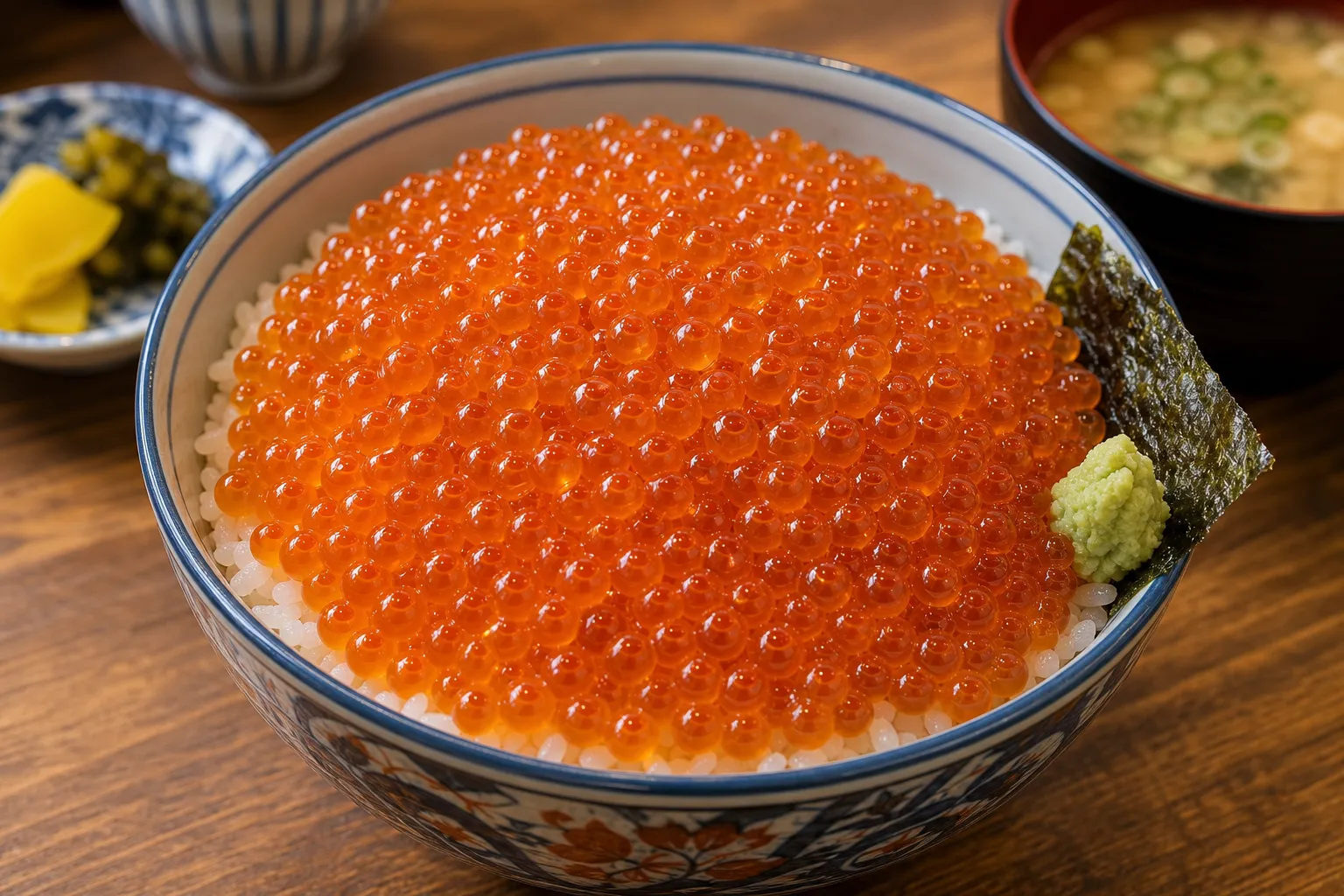
Japanese FoodHokkaido
Ikura-don (いくら丼)
A bowl heaped with glistening orange salmon roe, each bead a little grenade of the sea. Ridiculous, glorious, and completely worth the guilt — Hokkaido's most obscene one-topping wonder.
July 9, 2026