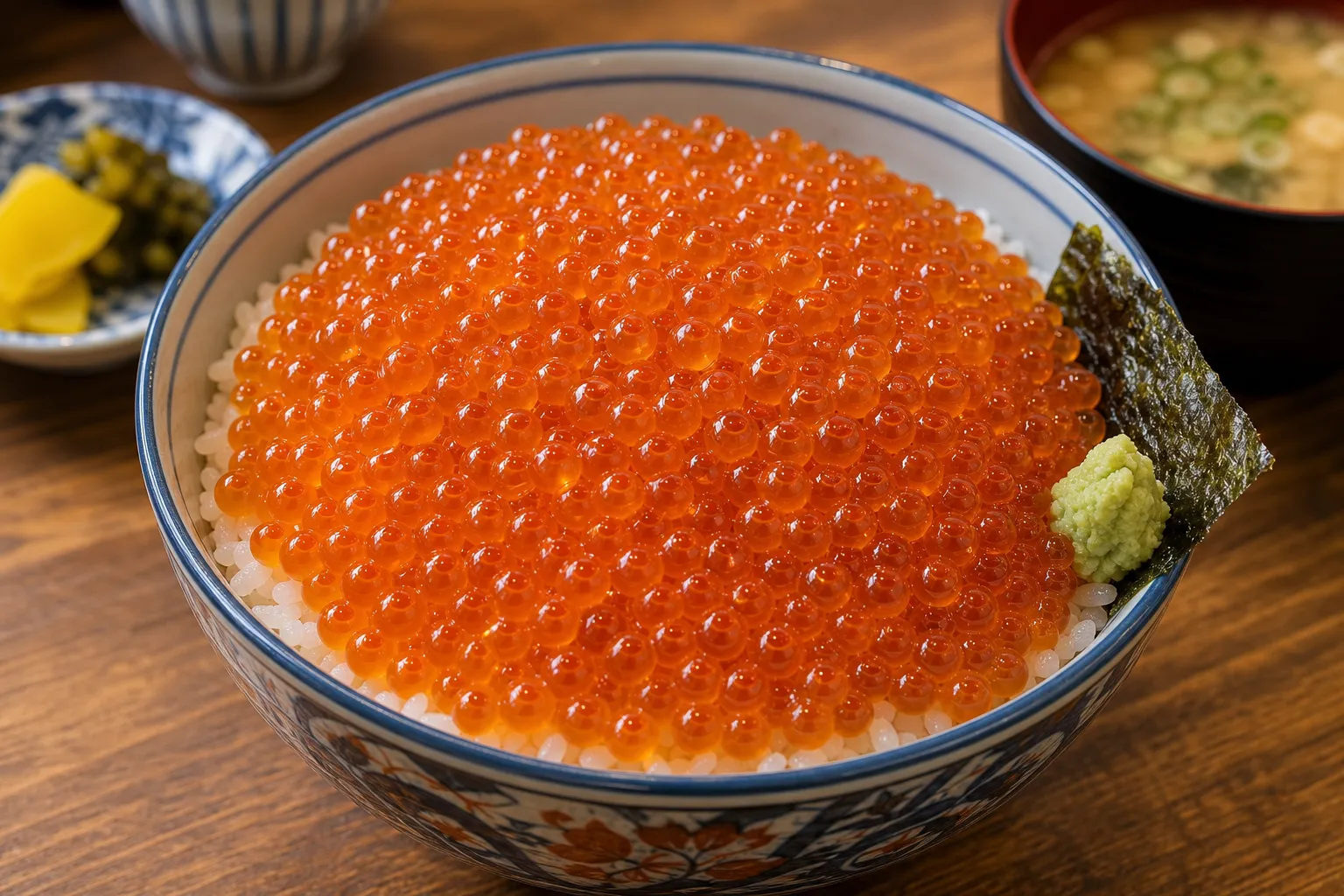
The first bead broke against the roof of my mouth and I made a noise I'm not proud of, right there at a market counter in Hokkaido. Pop. Then a rush of clean, briny, faintly sweet ocean, and then — because I'm a person of no self-control — I took a spoonful the size of my regrets and let a dozen of them go off at once. Reader, I nearly cried into a bowl of fish eggs. Zero shame.
Share this dish


A bowl heaped with glistening orange salmon roe, each bead a little grenade of the sea. Ridiculous, glorious, and completely worth the guilt — Hokkaido's most obscene one-topping wonder.
🍜 Planning a food trip to Hokkaido?Add this dish to my Food Trip →
 Add this dish to my Food Trip →
Ikura-don (いくら丼) is almost stupidly simple: glistening orange salmon roe — ikura, usually gently marinated in soy and sake — heaped over a bowl of warm rice. That's the whole show. No garnish parade, no ten kinds of fish. Just thousands of jewel-like beads, each one a tiny grenade that bursts with a salty-sweet burst of the sea.
It's a Hokkaido specialty, and it is obscene in the very best possible way. A bowl that dares you to feel guilty and then makes the guilt worth it.
Where the salmon come home
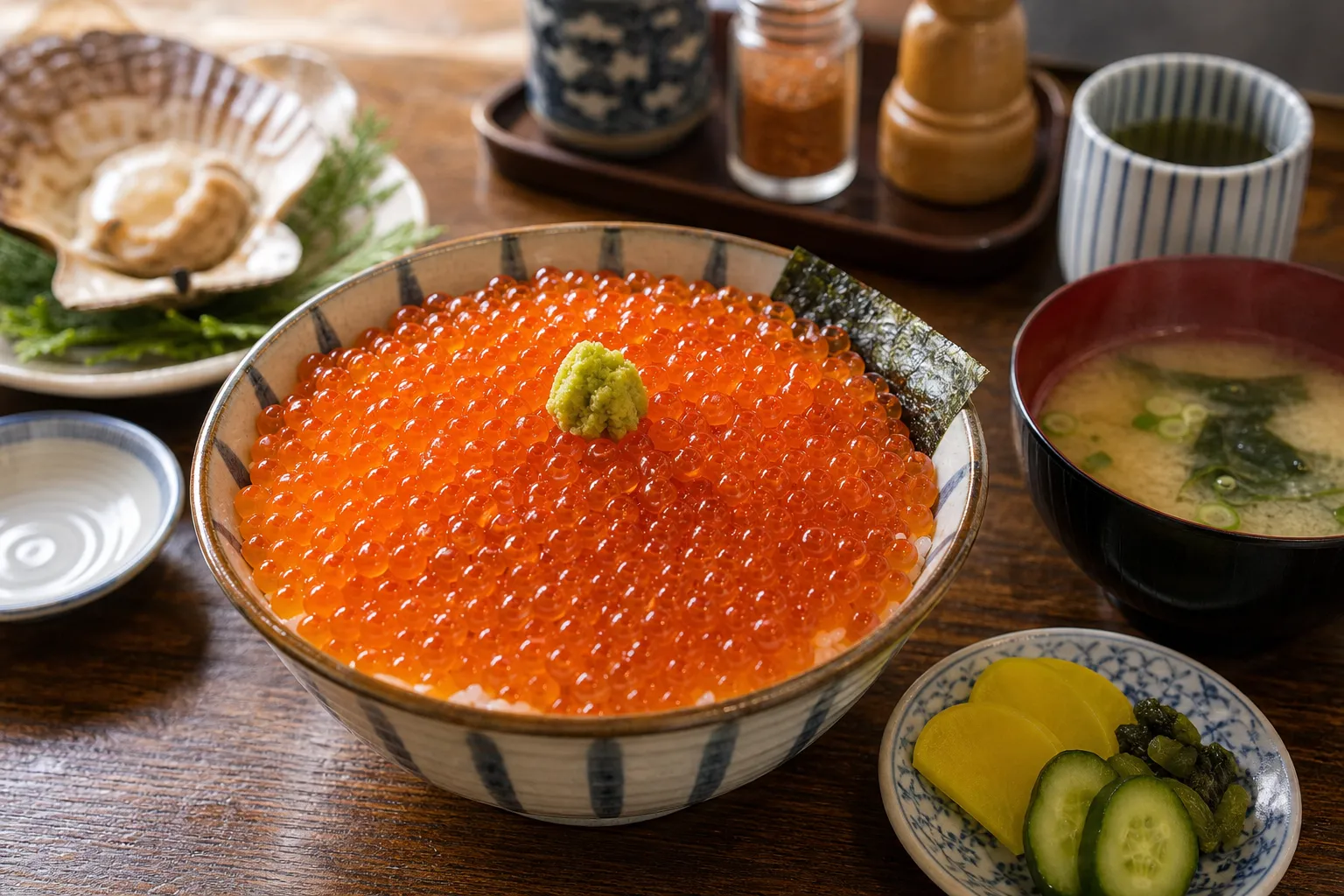
Ikura-don belongs to Hokkaido because the salmon do. In autumn the rivers of the north fill with returning fish, the roe is at its plump, glorious peak, and the markets overflow with jars of that deep-orange treasure. Marinating the beads in soy and sake — shoyu-zuke — is the old way to preserve and deepen them, and it's still how the best bowls are made.
Fun bit of trivia I love: the word ikura isn't even Japanese in origin — it comes from the Russian ikra, for fish roe, a little souvenir of the north's fishing history. Order it in Osaka and nobody blinks, but eat it in a Hokkaido port in October and you understand why they treat it like gold. Because up there, briefly, it basically is.
Why the pop is the whole point
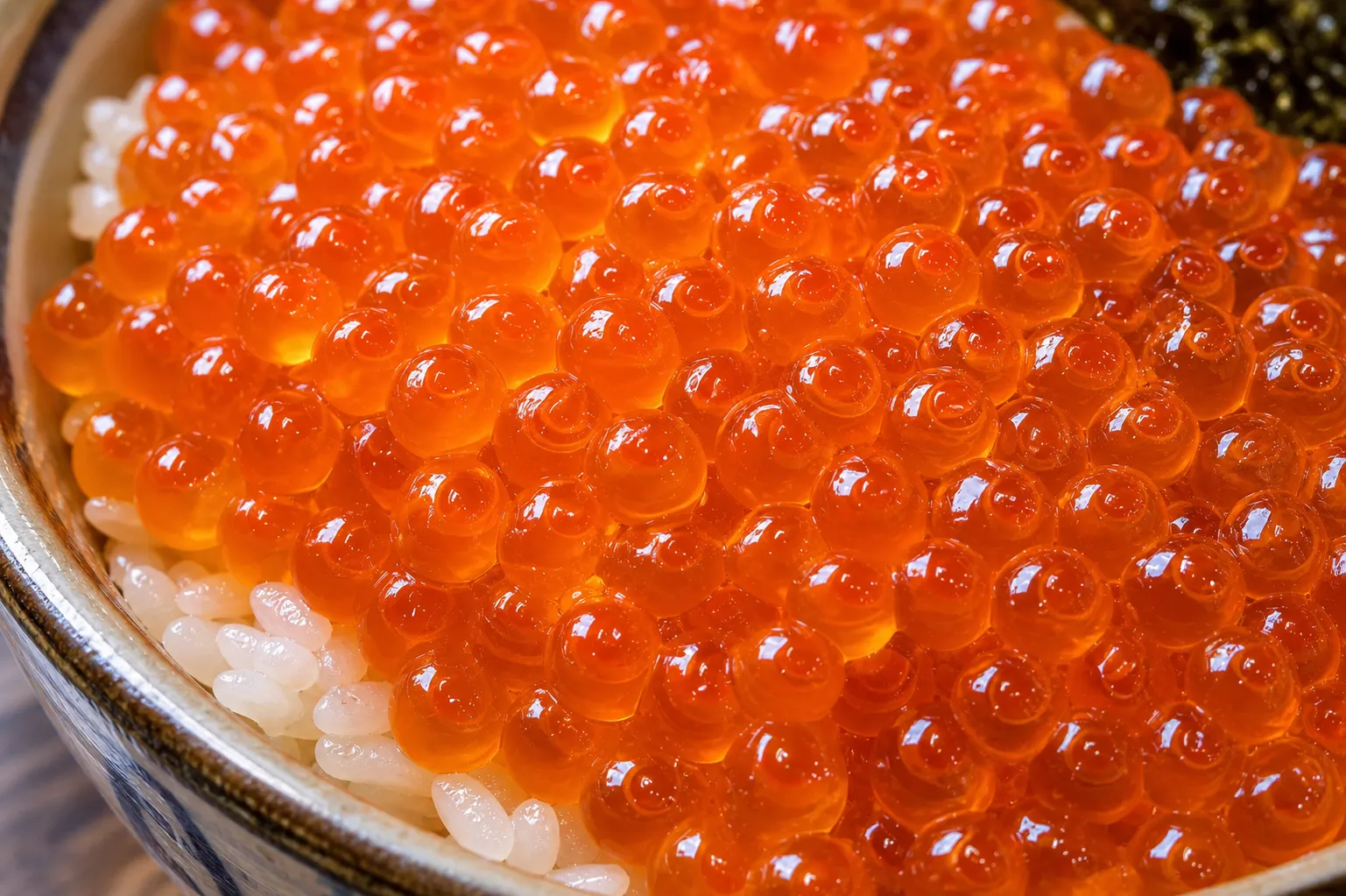
Most food you chew. Ikura you detonate. The magic is entirely in that fragile skin: press gently and each bead resists for a heartbeat, then bursts and floods your mouth with a warm, briny, umami-rich liquid that tastes like the ocean distilled. Good ikura is never fishy — it's clean, glossy, faintly sweet from the soy cure, with a salinity that makes the plain rice underneath taste sweeter by contrast.
That rice matters more than you'd think. Warm, plain (or barely vinegared) grains are the calm backdrop the roe explodes against — a little starchy comfort to catch all that briny richness. Rich as it is, I've never met anyone who could stop halfway. You just keep going, pop after pop, until the bowl betrays you by being empty.
How it's made
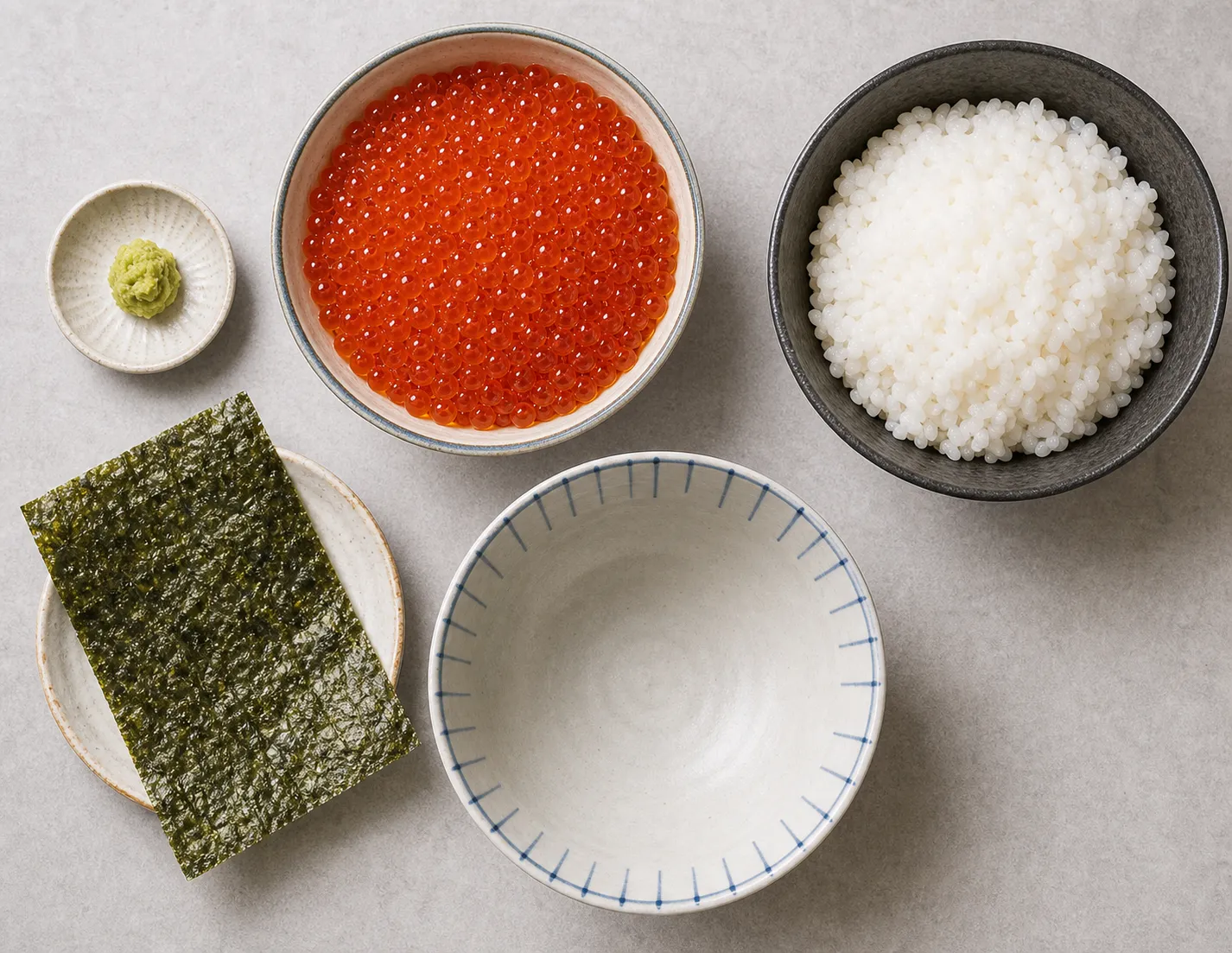
- Gently separate fresh salmon roe from its membrane (the sujiko sac) in warm salted water
- Rinse the loose beads carefully so the skins stay whole and glossy
- Marinate in a mix of soy sauce, sake, and mirin for a few hours to a day
- Cook rice and let it cool to warm — not hot, or it'll cook the delicate roe
- Heap the marinated ikura generously over the rice; finish with shiso or a strip of nori
Before you go — brace for the pop
Your questions, answered honestly
"Won't a whole bowl of fish eggs be too much?" — It's rich, yes, but the briny freshness keeps it from feeling heavy the way you'd expect. Grab a miso soup or some pickles to reset between bites and you'll get further than you think. Worst case, split one — but you won't want to.
"Marinated or raw — what's the difference?" — Soy-marinated (shoyu-zuke) ikura is deeper, glossier, a little firmer, and the classic donburi choice. Fresh unseasoned roe is milder and more delicate. If you get the choice, the marinated one is the crowd-pleaser.
"Ikura vs tobiko vs masago?" — Ikura is the big, glossy salmon roe that pops dramatically. Tobiko (flying-fish) and masago (capelin) are the tiny crunchy beads on sushi rolls. If you want the full pop, you want ikura — accept no substitutes.
"When's it best?" — Autumn, when Hokkaido's salmon run, is peak season for plump, fresh roe. It's around all year, but a fall bowl in the north is a different animal.
What the staff will ask you
| You'll hear | Romaji | Meaning | Just say |
|---|---|---|---|
| ご飯の量はどうしますか? | Gohan no ryō wa dō shimasu ka? | "How much rice?" | Futsū de (normal) |
| わさびは付けますか? | Wasabi wa tsukemasu ka? | "Wasabi on the side?" | Hai, onegaishimasu (yes please) |
| 醤油はかけてありますか? | Shōyu wa kakete arimasu ka? | "Is it already seasoned?" | Sono mama de (as it is, thanks) |
To order, just say "Ikura-don hitotsu kudasai" (いくら丼一つください) — "one ikura bowl, please."
Where to eat it
- Hakodate Morning Market, Hokkaido — bowls piled fresh by the boats; the postcard place to try it.
- Nijo Market, Sapporo — a downtown market lined with kaisendon stalls serving generous ikura bowls.
- Kushiro & the eastern Hokkaido ports — salmon country, often cheaper and closer to the source.
- Toyosu Market, Tokyo — for a top-grade bowl without leaving the capital.
Autumn is peak roe season and market shops sell out and change hours often, so check before you go — and go early.
Soul Score
Local Roots5/5
First-Timer Friendly3/5
Adventure Level4/5
Comfort Level4/5
Travel Worthy5/5
These scores are one obsessed eater's gut feeling — not a verdict. A low number isn't a bad mark, just a different kind of adventure.
Know someone planning Japan?
← All Articles
Japanese Food · Hokkaido
Still hungry?
Eat more from Hokkaido
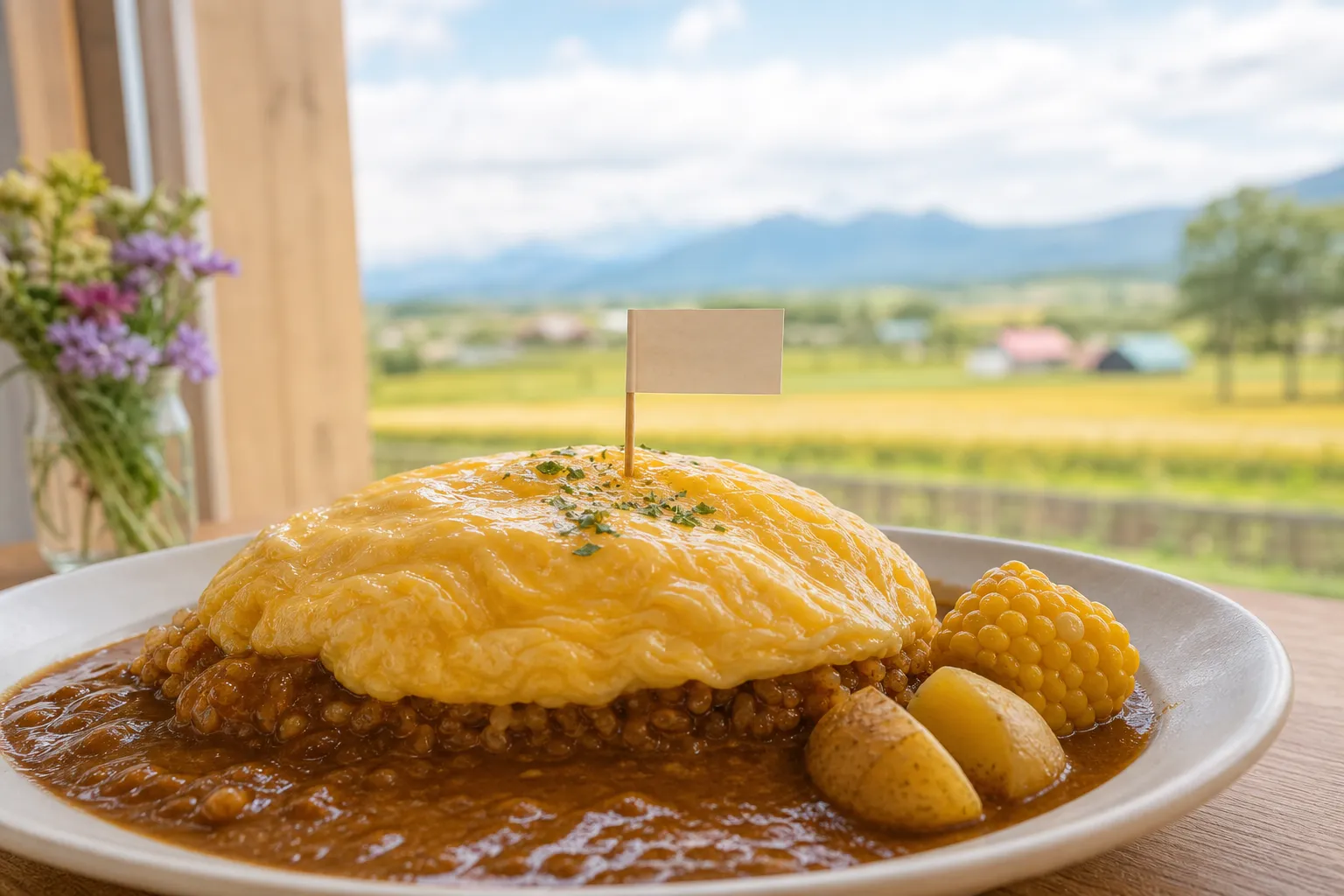
Local FoodFurano, Hokkaido
Furano Omu-Curry (富良野オムカレー)
Cut into the omelette and curry sauce comes flooding out like it's been waiting all morning for permission — with a lavender field in the window behind it.
August 2, 2026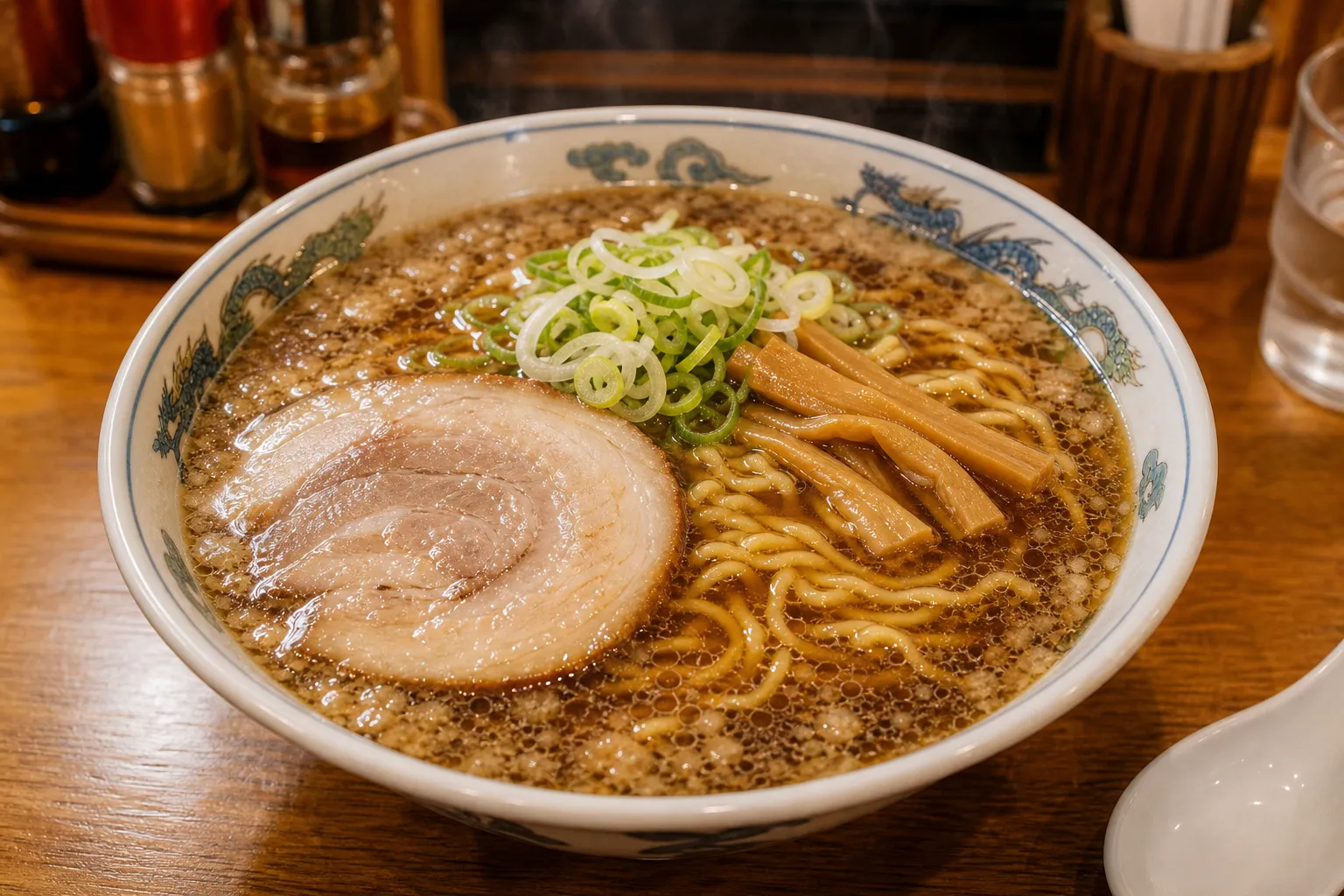
Local FoodAsahikawa, Hokkaido
Asahikawa Ramen (旭川ラーメン)
A slick of lard traps the heat so your soy broth stays scalding to the last drop — because in Asahikawa, the cold outside is trying to kill your ramen. It loses.
July 9, 2026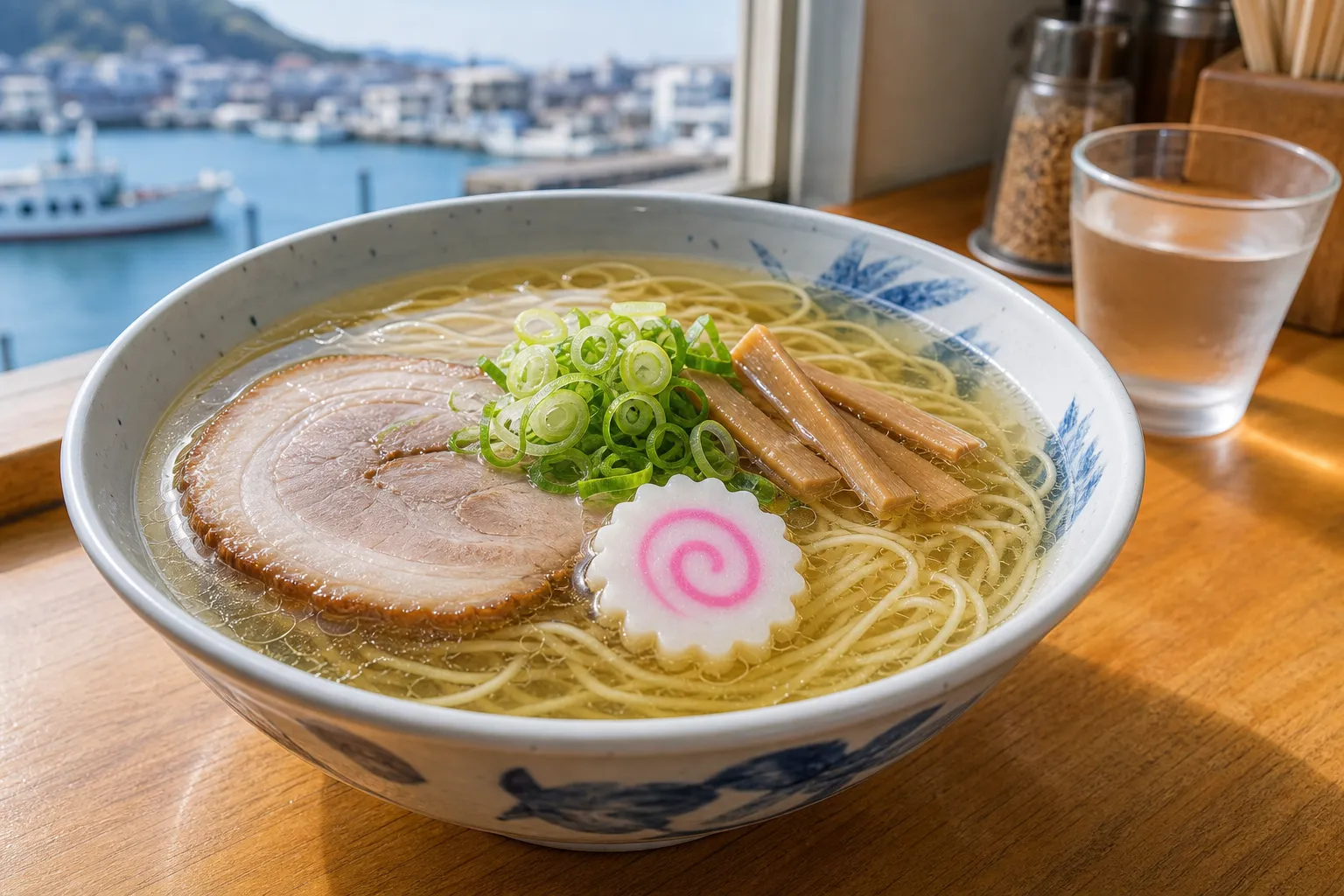
Local FoodHakodate, Hokkaido
Hakodate Shio Ramen (函館塩ラーメン)
Clear as tea, gold as morning light, quiet as a held breath — this is the ramen that proves subtraction is a flavor. Hokkaido's gentle bowl, and my hangover's best friend.
July 9, 2026