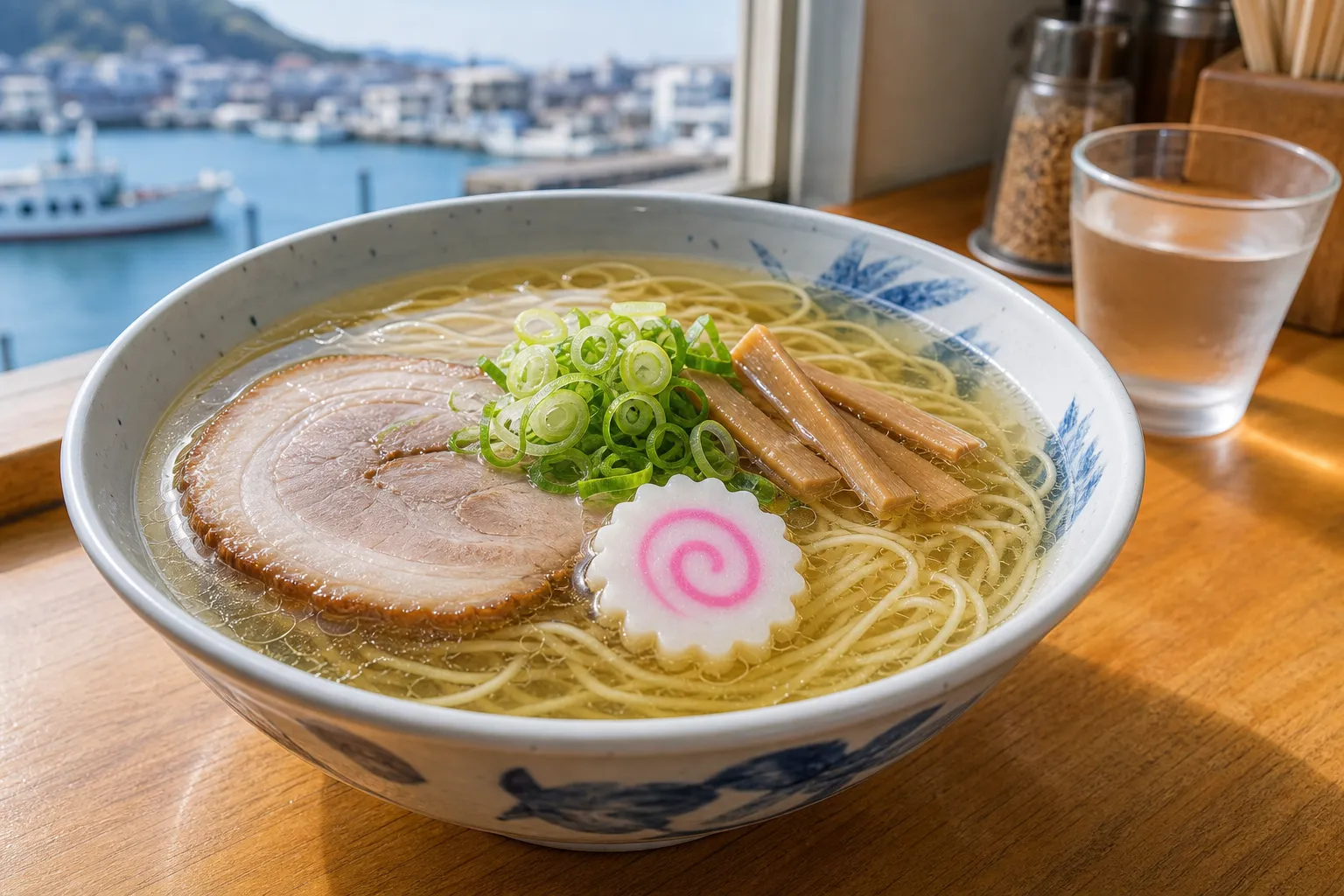
I sat down expecting Hokkaido to hit me with another rich, snow-day gut-bomb, and instead a bowl arrived that was almost see-through — a clear golden broth so calm and clean it looked more like a fancy consommé than ramen. My first thought was "that's it?" My first sip was an apology. Sometimes the loudest thing in the room is the quiet one.
Share this dish


Clear as tea, gold as morning light, quiet as a held breath — this is the ramen that proves subtraction is a flavor. Hokkaido's gentle bowl, and my hangover's best friend.
🍜 Planning a food trip to Hokkaido?Add this dish to my Food Trip →
 Add this dish to my Food Trip →
That's Hakodate's signature: a shio (salt) ramen built on a clear, delicate broth of pork bones, chicken, and kombu, seasoned with salt instead of miso or dark soy. It comes out pale gold and almost transparent, with straight noodles swimming in it, and the whole thing tastes clean and gentle and quietly deep. It's one of Hokkaido's big three ramen styles — and it's the exact opposite of a heavy tonkotsu. This is the restrained one, the one that trusts you to notice.
The port city that kept it clean
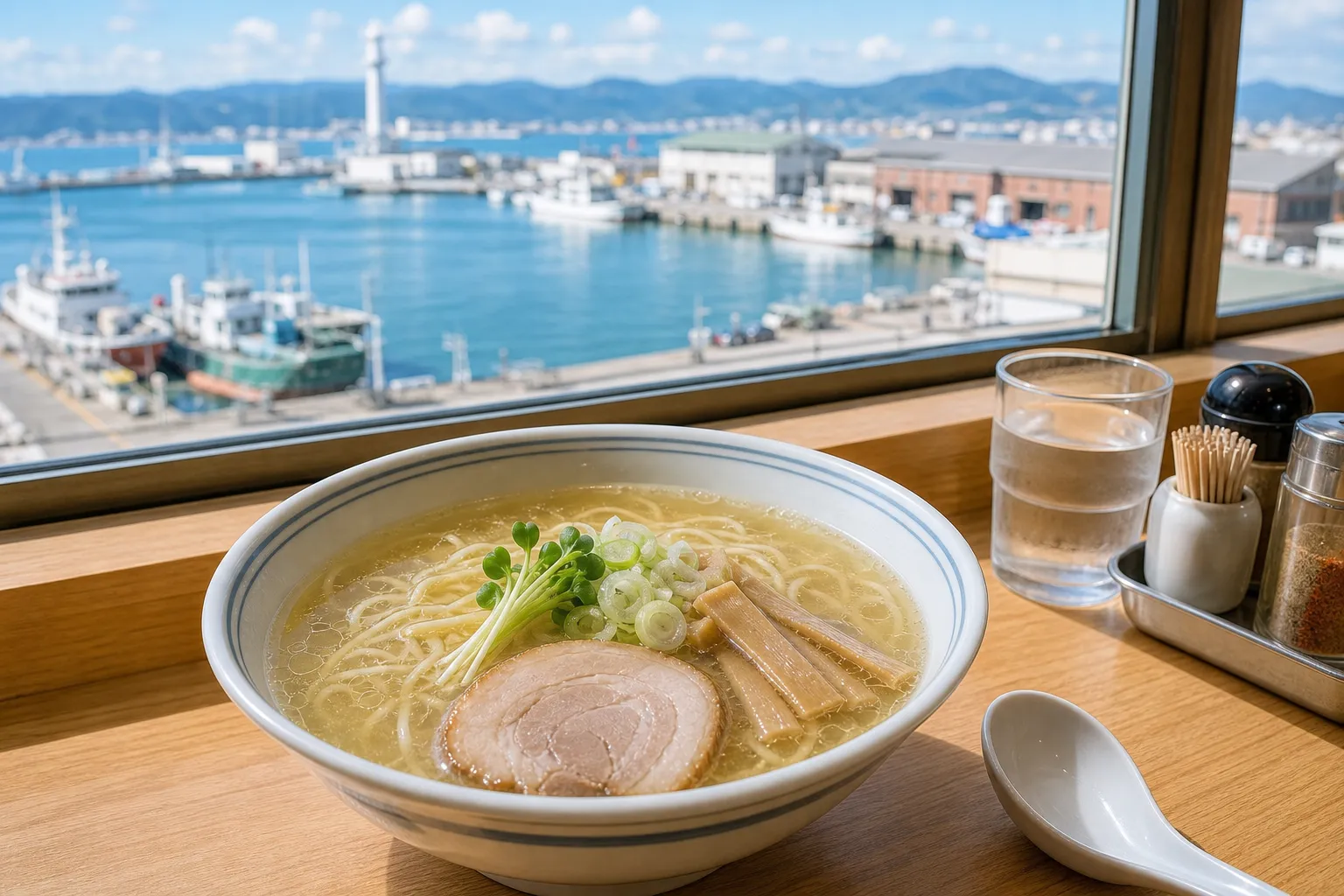
Hakodate is a port city on Hokkaido's southern tip — one of the first Japanese harbors opened to foreign trade, with a long history of ships, sailors, and outside influence coming in through the water. Salt-based Chinese noodle soups took root here early, and the local taste settled on clarity and lightness rather than the richer, heavier directions other cities chased. Where Sapporo went bold with miso and Asahikawa went dark with soy, Hakodate stayed pale and clean.
I find something a little bit brave about that. It would be so easy to pile on richness, but Hakodate shio ramen commits to holding back — to a broth so clear you can almost read the bottom of the bowl. There's nowhere to hide in a soup like this; every ingredient has to be honest. The result is understated on purpose, and once you tune into it, it's genuinely addictive in a way heavier bowls never quite manage.
Why the quiet bowl wins
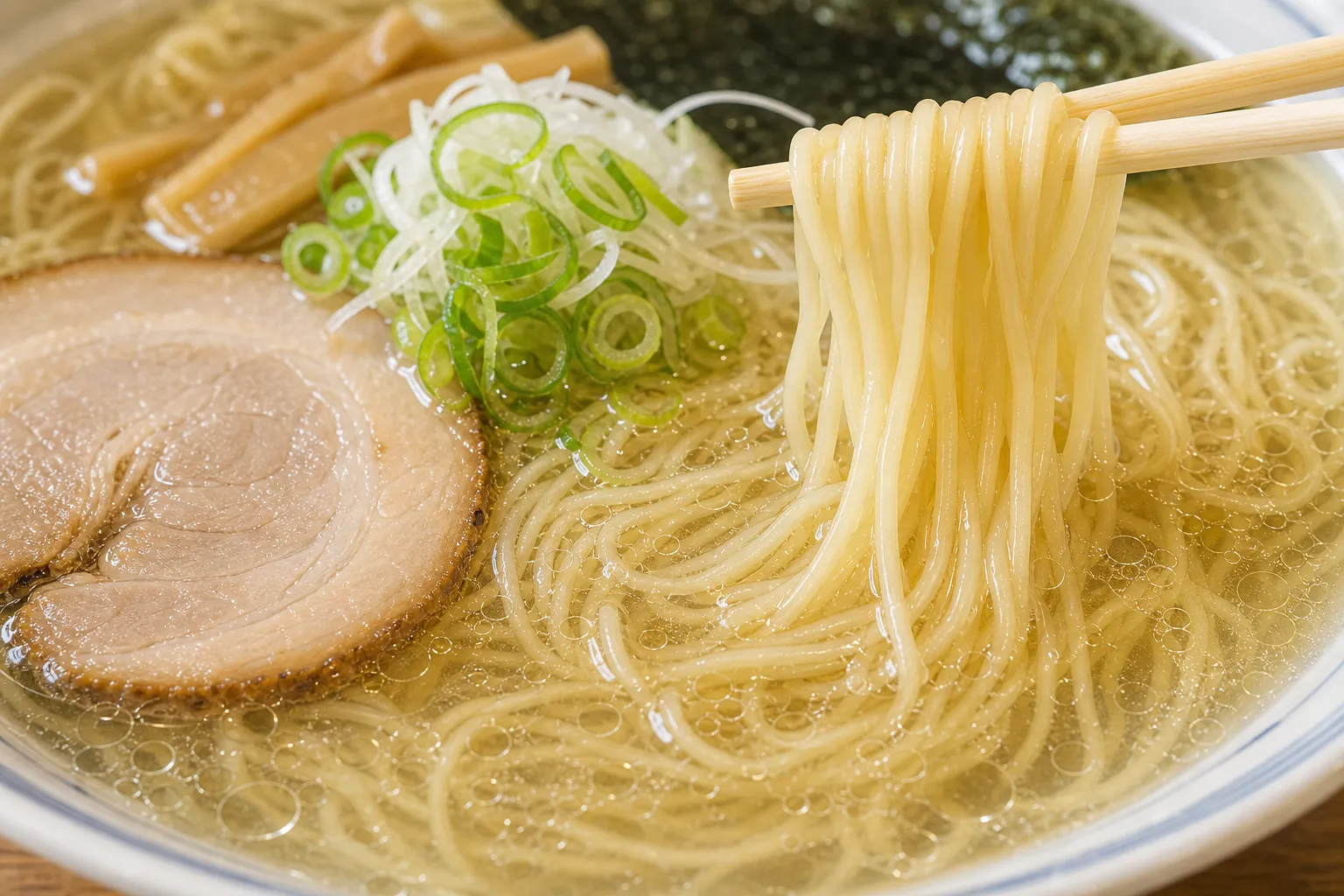
The broth is the whole art form here: a clear, delicate salt-seasoned soup drawn from pork bones, chicken, and kombu — pale gold, almost transparent, clean and gentle but with a real savory backbone. It's light without being thin, because that kombu and chicken build quiet depth under the salt. Sip it plain before you touch anything else; that's where the magic lives.
The noodles are straight and springy, a clean match for a clean soup — no heavy wavy noodle needed to drag up richness that isn't there. Toppings stay elegant and simple: a slice or two of chashu, menma, green onion, maybe a swirl of naruto. It's the most comforting ramen I can think of — the bowl you want when you're tired, cold, hungover, or just craving something that feels like a deep breath. Restraint, it turns out, is a superpower.
How it's made
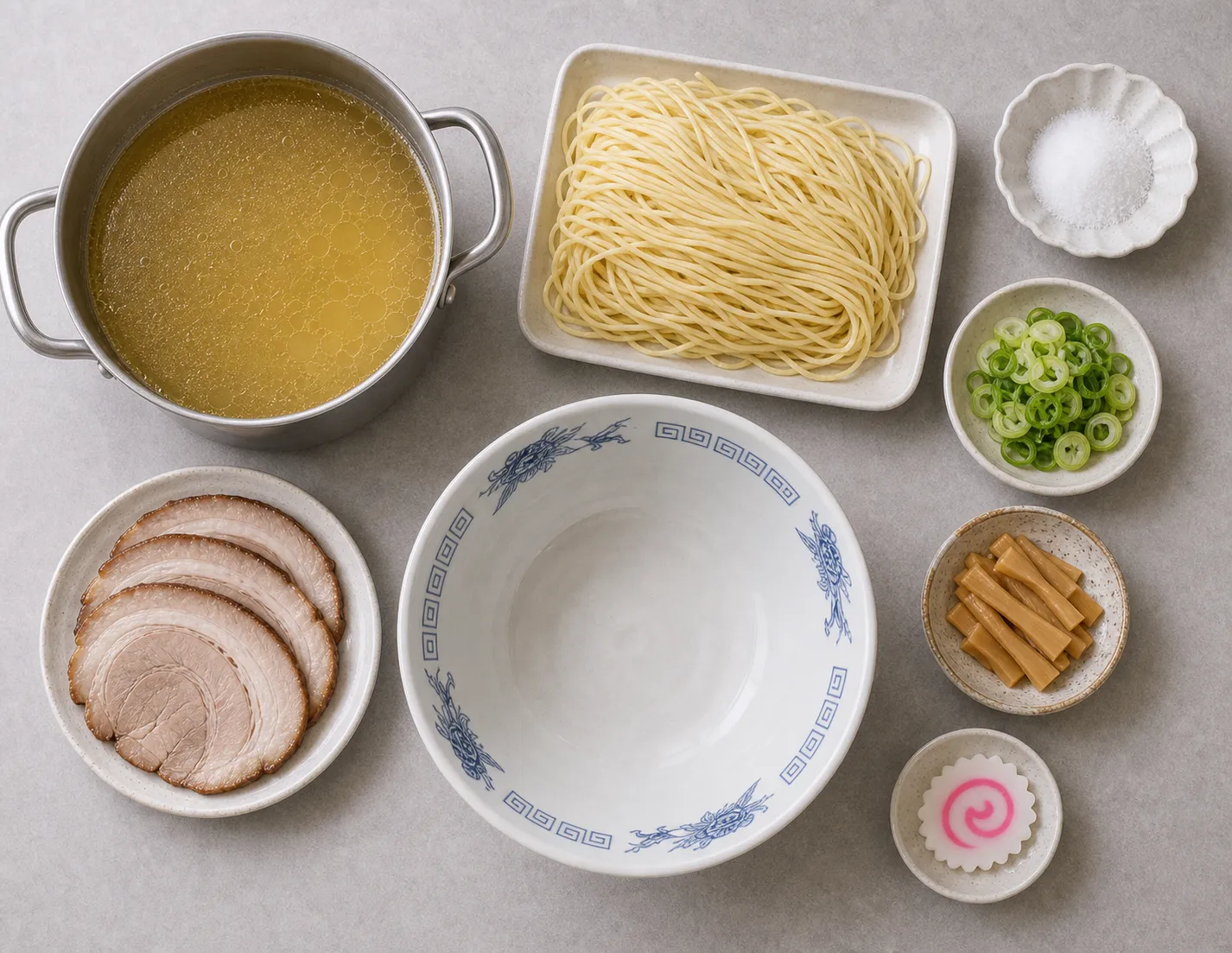
- Gently simmer pork bones and chicken with kombu to draw a clear, clean broth — kept pale, not boiled cloudy
- Season with a salt (shio) tare rather than miso or dark soy, keeping the soup transparent and golden
- Cook straight, springy noodles
- Combine broth and noodles
- Top simply — chashu, menma, green onion, sometimes naruto — so nothing muddies the clear soup; serve
Before you go — taste the quiet first
Your questions, answered honestly
"Is it going to be bland?" — No — light is not the same as bland. The salt lets the pork, chicken, and kombu come through cleanly, so it's gentle but genuinely savory. Sip the broth on its own first and you'll get it.
"How is this different from Sapporo or Asahikawa ramen?" — Those are bold: Sapporo is rich miso, Asahikawa is dark soy with a lard lid. Hakodate is the clear salt one — pale, transparent, delicate. Same island, opposite mood.
"What should I order — shio, or something else?" — Shio (salt) is the signature and the reason you came, so start there. Some shops also do soy or miso, but the clear salt bowl is the Hakodate classic.
"Is this a good first ramen for someone who's nervous?" — Honestly, yes — it's clean, mild, not spicy, and easy to love, with none of the heavy tonkotsu funk that can surprise newcomers.
What the staff will ask you
| You'll hear | Romaji | Meaning | Just say |
|---|---|---|---|
| 味は何にしますか? | Aji wa nani ni shimasu ka? | "Which flavor?" | Shio de (salt) |
| 麺の硬さは? | Men no katasa wa? | "How firm do you want the noodles?" | Futsū de (normal) |
| 大盛りにしますか? | Ōmori ni shimasu ka? | "Want a large portion?" | Futsū de (regular) / Ōmori de (large) |
To order, just say "Shio rāmen kudasai" (塩ラーメンください) — "Salt-broth ramen, please."
Where to eat it
- Hakodate city ramen shops — long-running local shops across the city serve the classic clear salt bowl; this is the home of the style, so eating it in town is the whole point.
- Near the morning market & bay area, Hakodate — the port district where the city's salt-ramen tradition feels most at home; a natural stop alongside Hakodate's famous seafood.
Shops and hours change, so check before you go — and remember to sip that clear broth before you do anything else.
Soul Score
Local Roots5/5
First-Timer Friendly5/5
Adventure Level3/5
Comfort Level5/5
Travel Worthy4/5
These scores are one obsessed eater's gut feeling — not a verdict. A low number isn't a bad mark, just a different kind of adventure.
Know someone planning Japan?
← All Articles
Local Food · Hakodate, Hokkaido
Still hungry?
Eat more from Hokkaido
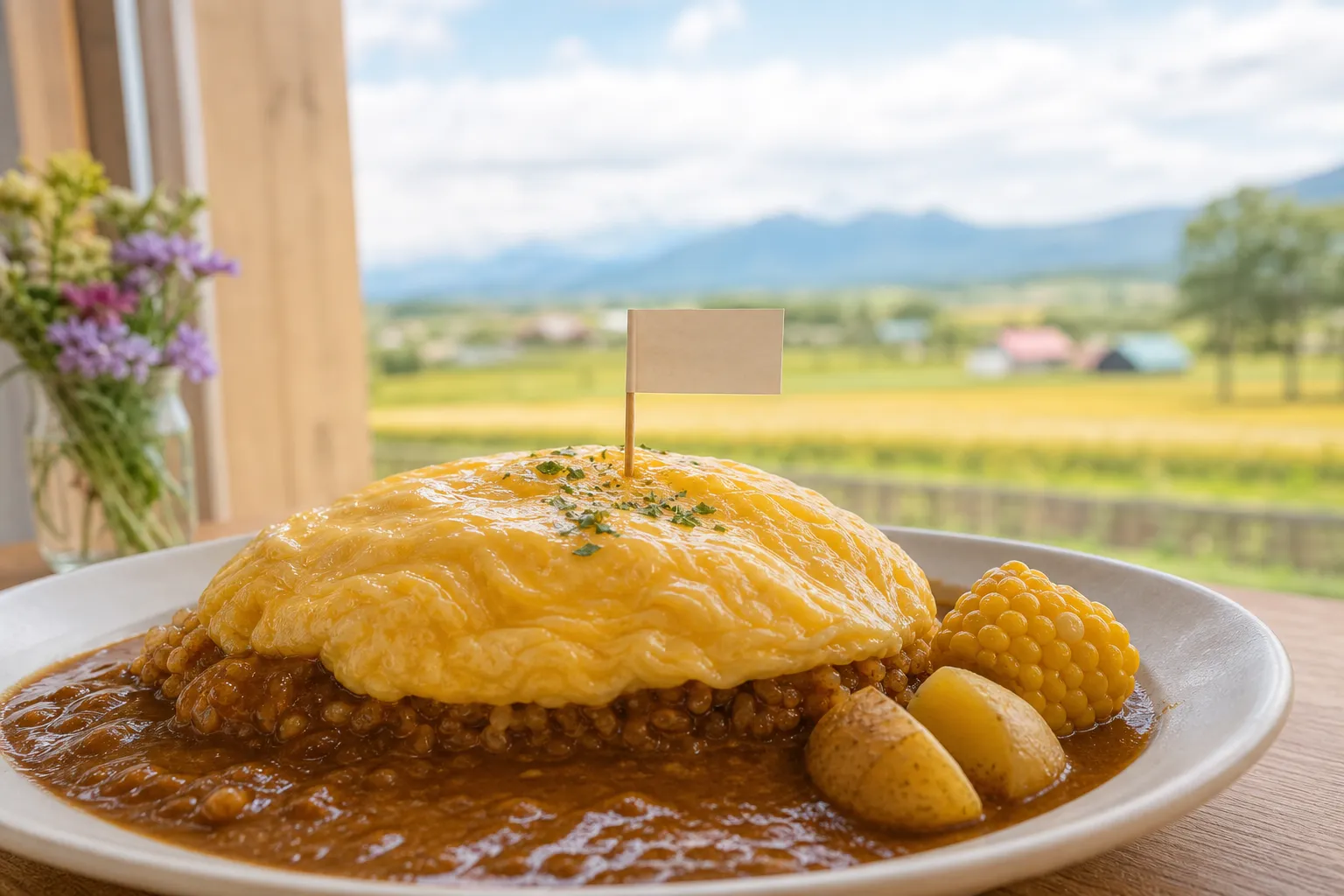
Local FoodFurano, Hokkaido
Furano Omu-Curry (富良野オムカレー)
Cut into the omelette and curry sauce comes flooding out like it's been waiting all morning for permission — with a lavender field in the window behind it.
August 2, 2026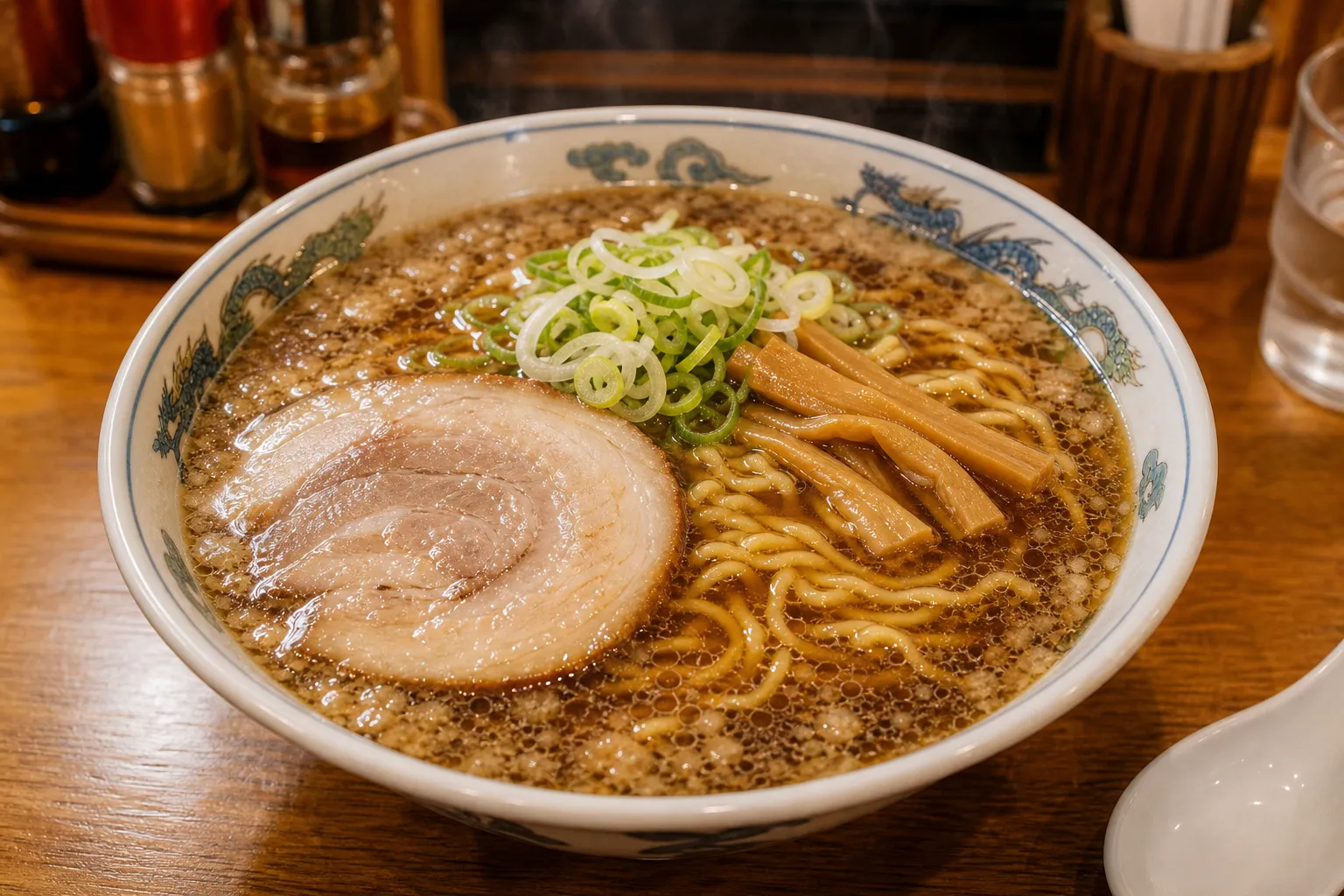
Local FoodAsahikawa, Hokkaido
Asahikawa Ramen (旭川ラーメン)
A slick of lard traps the heat so your soy broth stays scalding to the last drop — because in Asahikawa, the cold outside is trying to kill your ramen. It loses.
July 9, 2026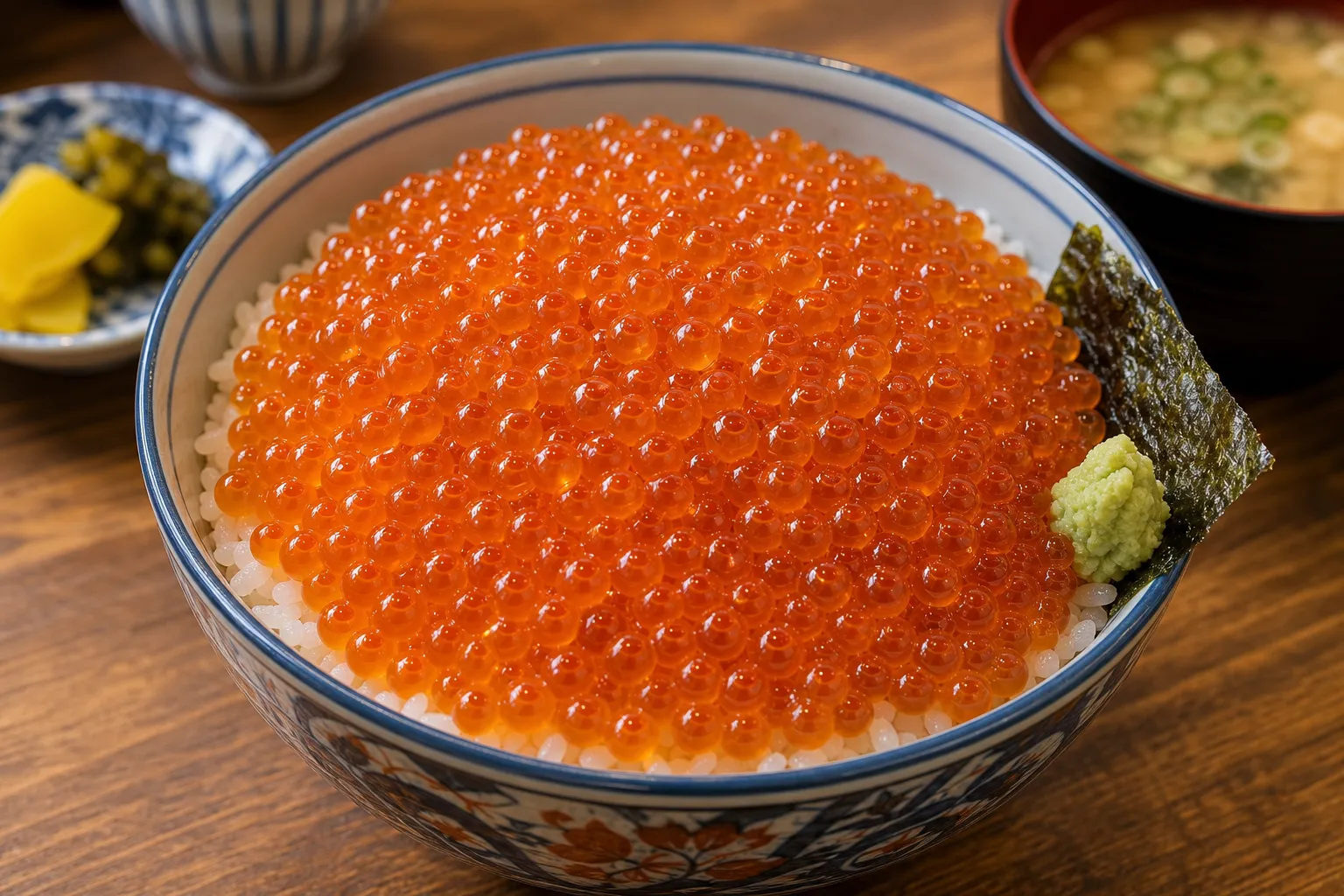
Japanese FoodHokkaido
Ikura-don (いくら丼)
A bowl heaped with glistening orange salmon roe, each bead a little grenade of the sea. Ridiculous, glorious, and completely worth the guilt — Hokkaido's most obscene one-topping wonder.
July 9, 2026