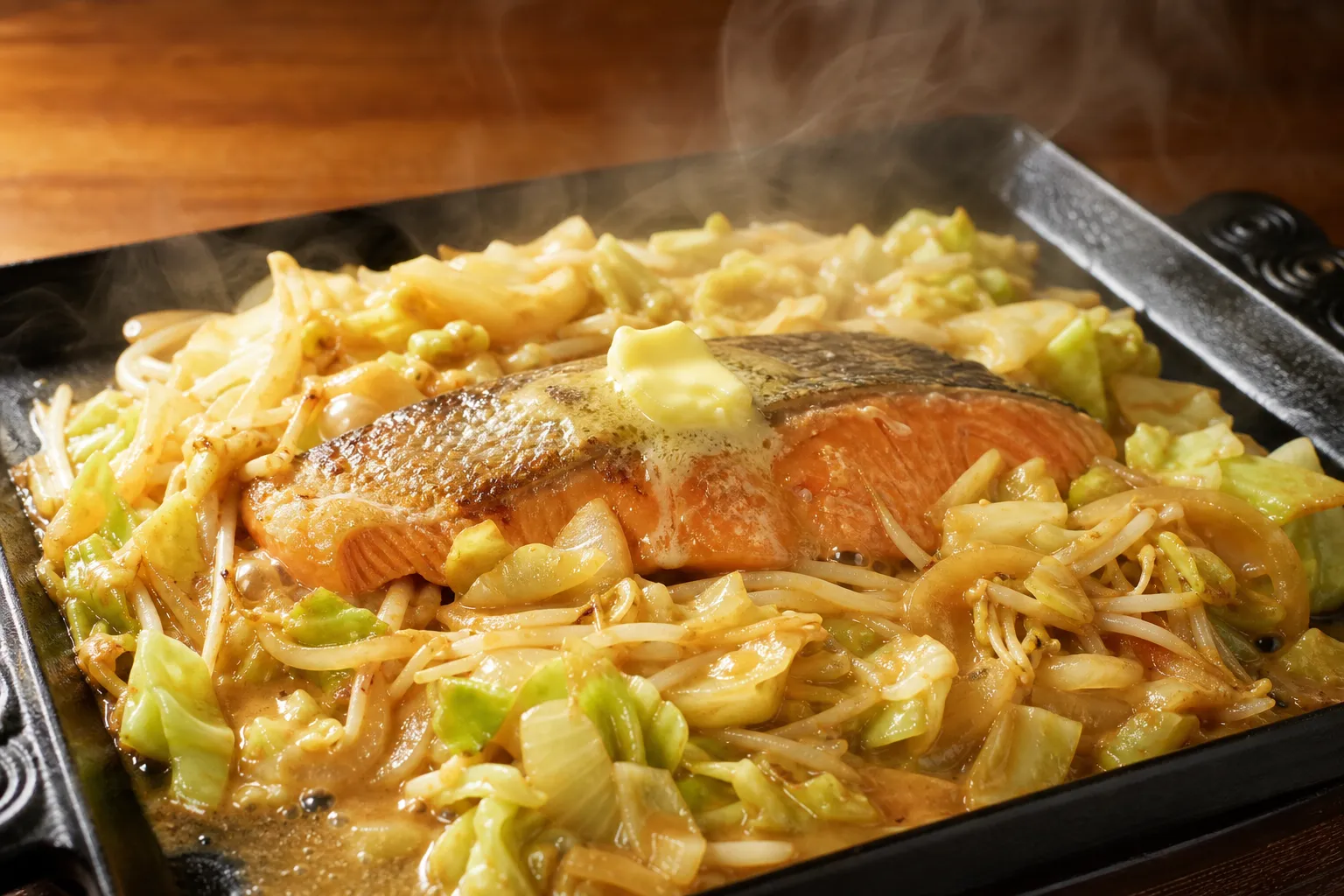
The salmon went down first, skin side to the iron. Then the cabbage, the onion, a fistful of bean sprouts piled on top like a small green hill. And then a wide, generous smear of dark miso paste and a slab of butter dropped right into the heat — and the whole plate hissed and threw up this cloud of steam that smelled like the sea and a farmhouse kitchen at the same time. I leaned in too close and got a faceful of it and did not care one bit.
Share this dish


Salmon and a mountain of cabbage hit a screaming iron plate, and then someone drops in the miso-butter — that hiss is the sound of a fisherman's dinner that outgrew the boat.
🍜 Planning a food trip to Hokkaido?Add this dish to my Food Trip →
 Add this dish to my Food Trip →
This is chan-chan-yaki (ちゃんちゃん焼き), a Hokkaido fisherman's dish, and it's exactly as unpretentious as it sounds: a fillet (or a whole half) of salmon, thrown on a hot iron griddle with a big heap of vegetables — usually cabbage, onion, and bean sprouts — and glazed all together in a sweet-savory sauce built on miso and butter. You mix it, you fold the wilting cabbage through the flaking fish, you let the miso-butter coat everything, and then you just eat straight off the shared plate. It is loud, communal, cheap, and one of the most genuinely comforting things I've eaten in the north.
Born on the boat
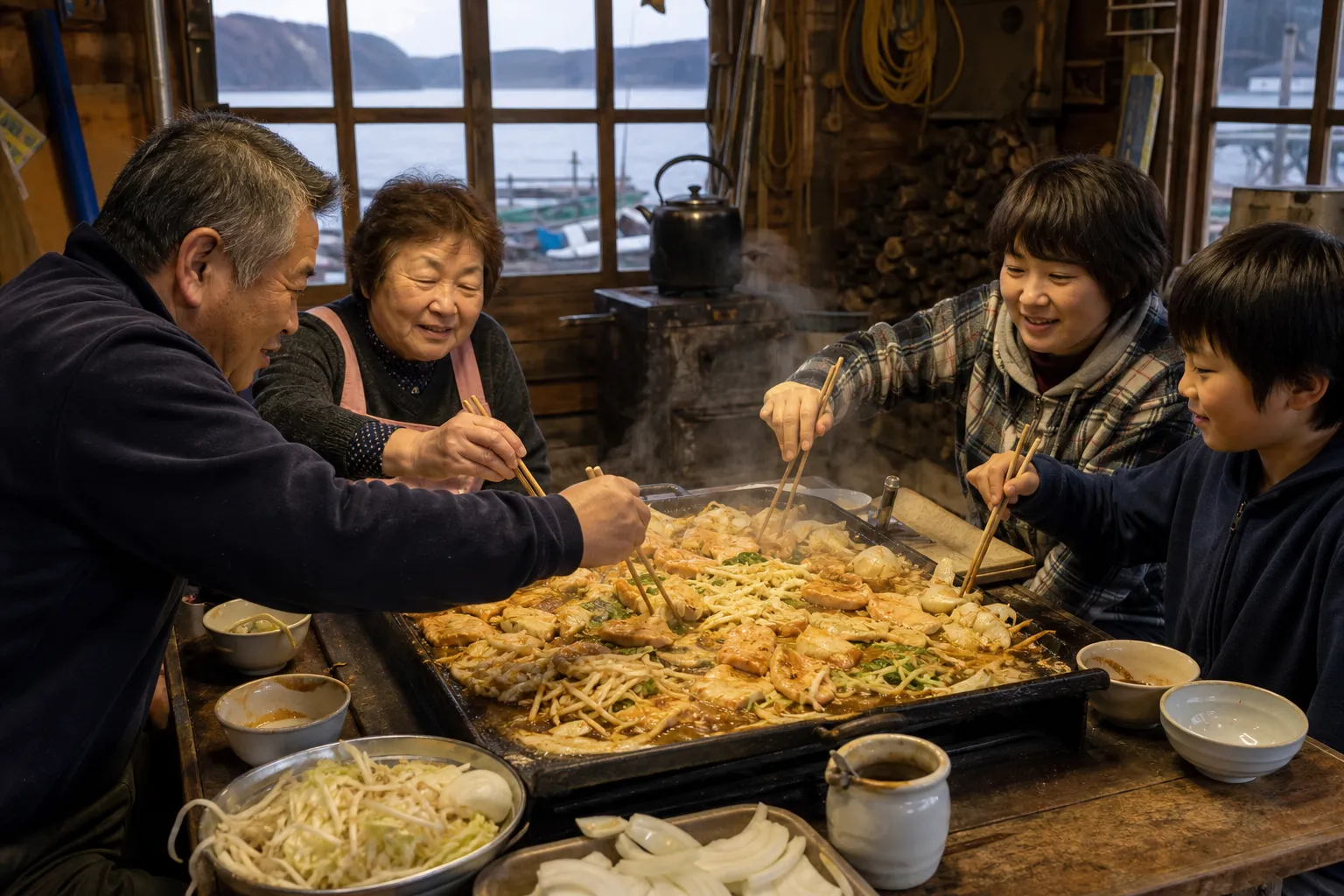
Chan-chan-yaki comes from Hokkaido's fishing communities, where fishermen would grill up their catch — salmon, most iconically — right there with whatever vegetables were around, on a big shared iron plate. No fine plating, no individual portions: one griddle, several pairs of chopsticks, everyone in. As for the funny name, the most-repeated stories tie it to the chan-chan rhythm of cooking it quickly, or to fathers ("chan") firing it up — nobody agrees, and honestly the vagueness suits a dish this offhand.
What I love is that the format is the meaning. This isn't a plated restaurant invention that later got a rustic backstory bolted on; it's a working meal that stayed a working meal. When you sit down to a big iron plate of it at a lakeside spot in Hokkaido, you're eating the same way the people who invented it did. I find that quietly moving in a way a lot of polished food never manages.
Why it works so well
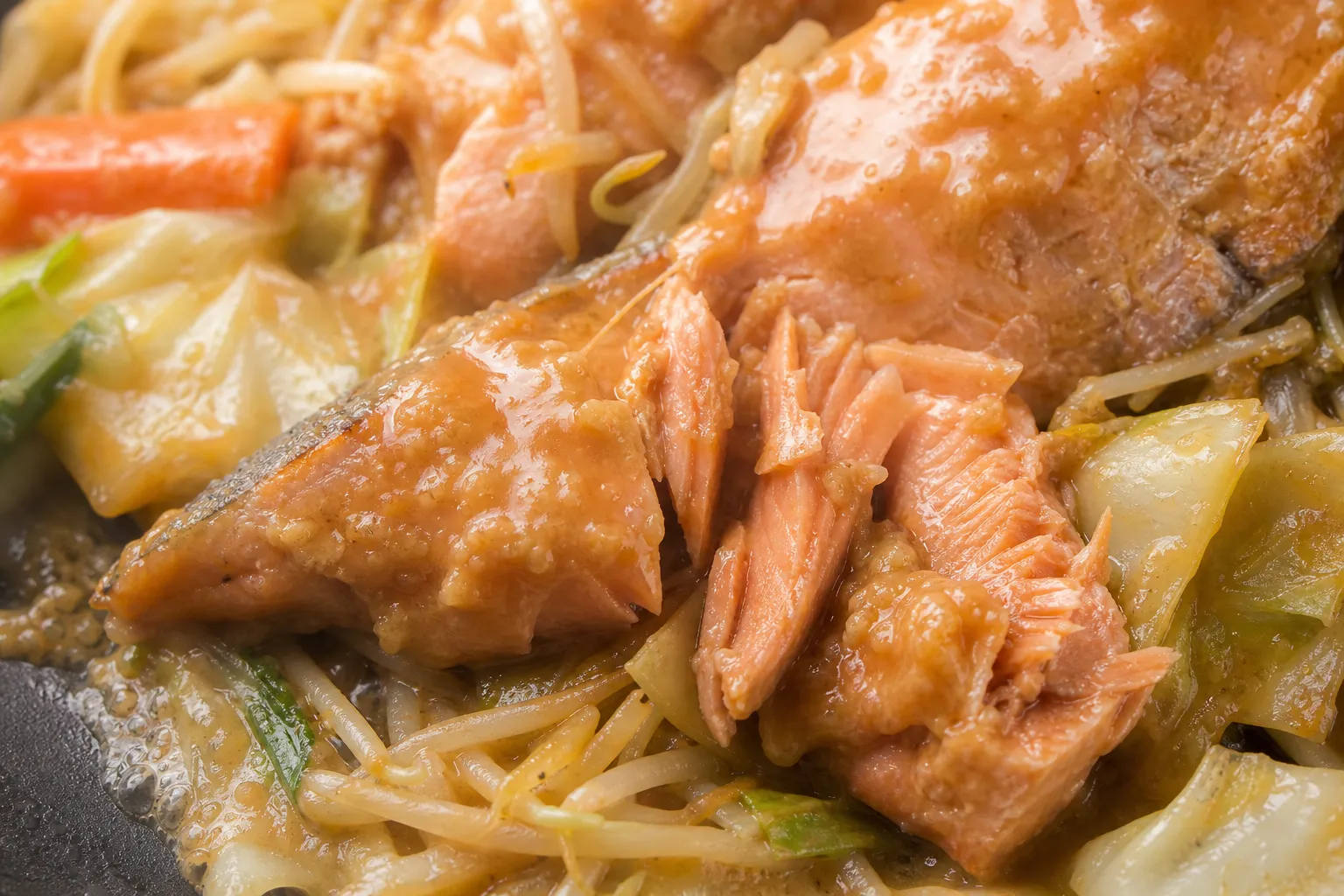
Miso and butter is the whole secret, and it is an outrageously good pairing. The miso brings deep, salty, fermented savoriness; the butter brings richness and that glossy coat; a little sugar and mirin round it into something faintly sweet. Together they wrap around fatty, flaking salmon and sweet, half-charred cabbage and turn a pile of humble ingredients into something you cannot stop reaching for.
And it's the interplay of textures on that plate that gets me — crisp-then-soft cabbage, silky onion, the snap of bean sprouts, the rich give of the salmon, all bound in that sticky miso-butter glaze. Nothing on the griddle is precious on its own. Together, mixed and messy, it's a feast. I have scraped the last of the sauce up with a spoon. I recommend it.
How it's made
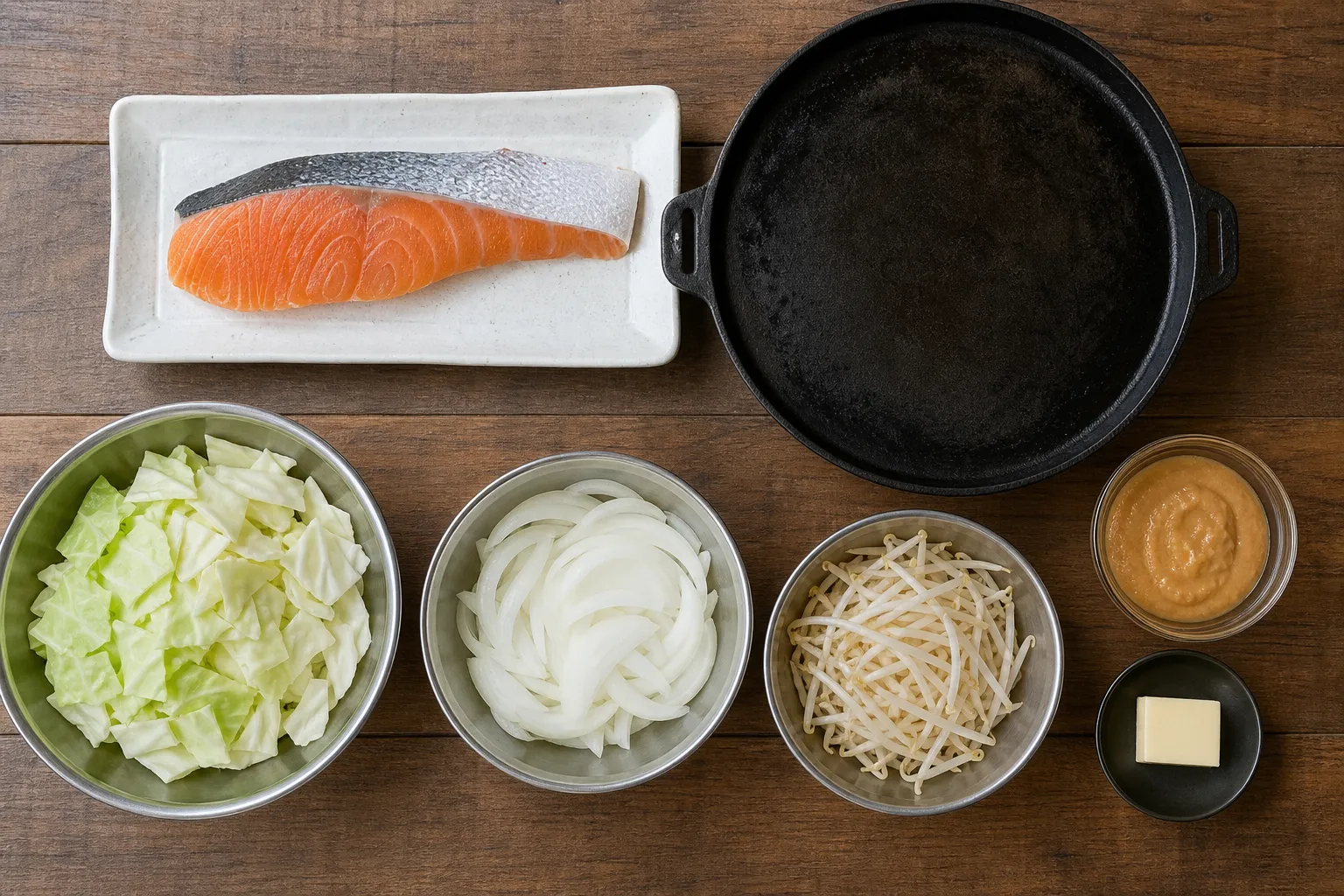
- A salmon fillet (or half-fish) and a big pile of chopped cabbage, onion, and bean sprouts are prepped
- A sauce is mixed from miso, butter, sugar, mirin, and sake
- The salmon is laid on a hot iron griddle or plate, skin side down, and the vegetables are heaped around and over it
- The miso-butter sauce is added and everything is grilled together, covered if possible, so the fish cooks through and the vegetables wilt and soak up the glaze
- Once cooked, the salmon is broken into chunks and folded through the vegetables so every bite carries the miso-butter — then eaten straight from the shared plate
Before you go — how to actually eat it
Your questions, answered honestly
"Is this just teriyaki salmon?" — No. Teriyaki is a sweet soy glaze on fish alone. Chan-chan-yaki is miso-butter, and it's fish plus a whole pile of vegetables cooked together on a griddle. Different sauce, different format, different spirit.
"How is it not just Ishikari-nabe?" — Fair question, since both are Hokkaido salmon-and-miso. But Ishikari-nabe is a hot pot — salmon simmered in miso soup. Chan-chan-yaki is grilled on a dry iron plate, not swimming in broth. One's a soup, one's a griddle dish.
"Do I mix it myself?" — Usually yes, and you should. Break up the salmon and fold it through the cabbage so the miso-butter coats everything. That mixing is the meal.
"Can one person order it?" — You can, but it's built to share off one big plate. It's happiest with two or more. Solo, look for a smaller single portion or an izakaya version.
What the staff will ask you
| You'll hear | Romaji | Meaning | Just say |
|---|---|---|---|
| 何名様ですか? | Nanmei-sama desu ka? | "How many people?" | Futari desu (two of us) |
| こちらで焼きますか、ご自分で焼きますか? | Kochira de yakimasu ka, gojibun de yakimasu ka? | "Shall we cook it, or will you grill it yourself?" | Onegaishimasu (please do it) / Jibun de yakimasu (I'll grill it) |
| ご飯はおつけしますか? | Gohan wa otsuke shimasu ka? | "Would you like rice with it?" | Onegaishimasu (yes, please) |
| 取り分けますか? | Toriwakemasu ka? | "Shall I portion it out?" | Onegaishimasu (yes, please) |
To order, just say "Chan-chan-yaki o kudasai" (ちゃんちゃん焼きください) — "Chan-chan-yaki, please."
Where to eat it
- Lakeside and countryside restaurants across Hokkaido — rustic spots, some with big communal iron plates, are the classic setting for the real, shared-off-the-griddle experience.
- Hokkaido izakaya — many carry a chan-chan-yaki as a house dish, often as a smaller griddle portion good for two.
- Fishing-town and roadside-station (michi-no-eki) eateries — near the coast and inland lakes, you'll find honest, generous versions close to the source.
Rustic and seasonal spots keep irregular hours and some are summer-leaning, so check current opening times and whether they take groups before you make the trip.
Soul Score
Local Roots5/5
First-Timer Friendly4/5
Adventure Level3/5
Comfort Level5/5
Travel Worthy4/5
These scores are one obsessed eater's gut feeling — not a verdict. A low number isn't a bad mark, just a different kind of adventure.
Know someone planning Japan?
← All Articles
Local Food · Hokkaido
Still hungry?
Eat more from Hokkaido
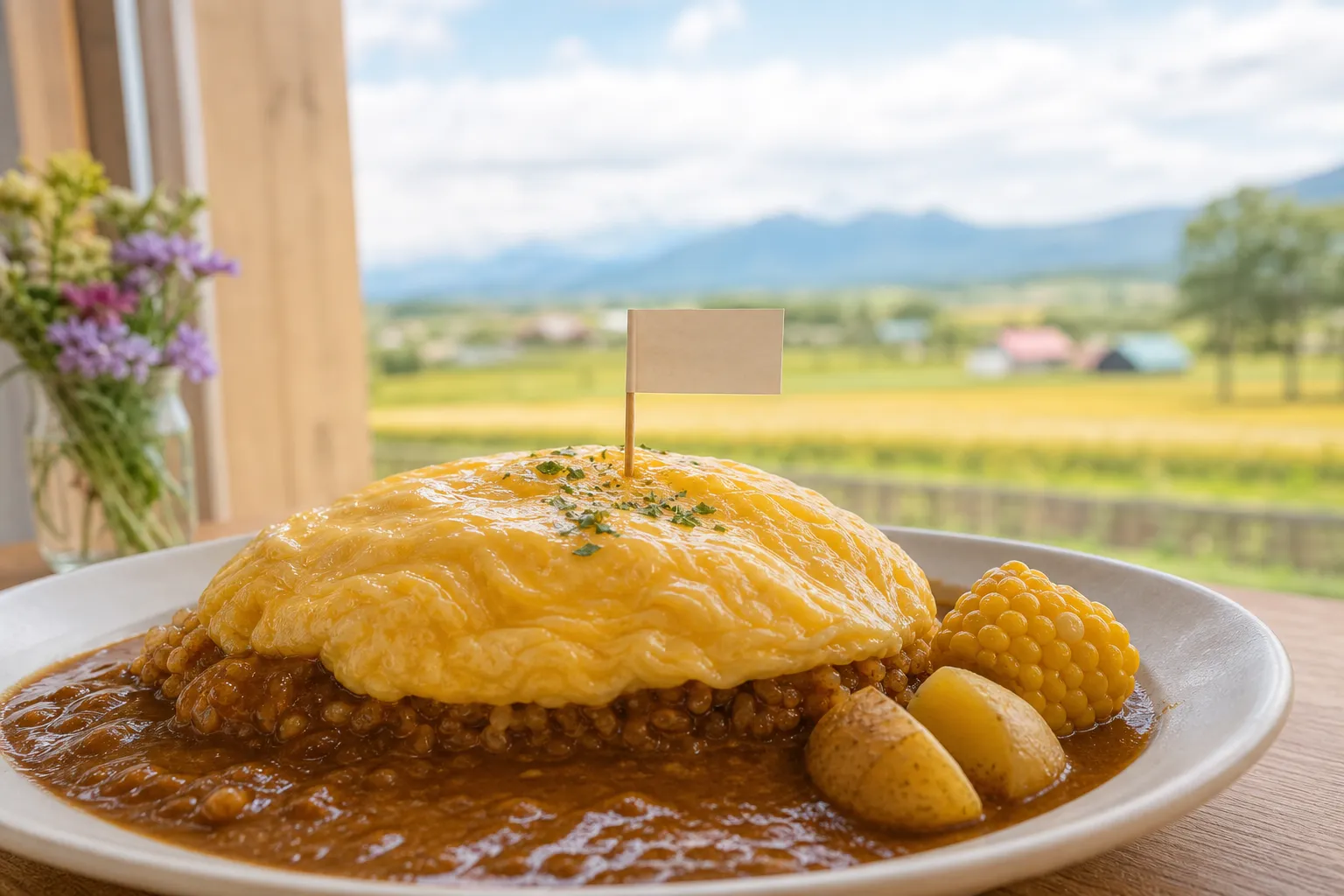
Local FoodFurano, Hokkaido
Furano Omu-Curry (富良野オムカレー)
Cut into the omelette and curry sauce comes flooding out like it's been waiting all morning for permission — with a lavender field in the window behind it.
August 2, 2026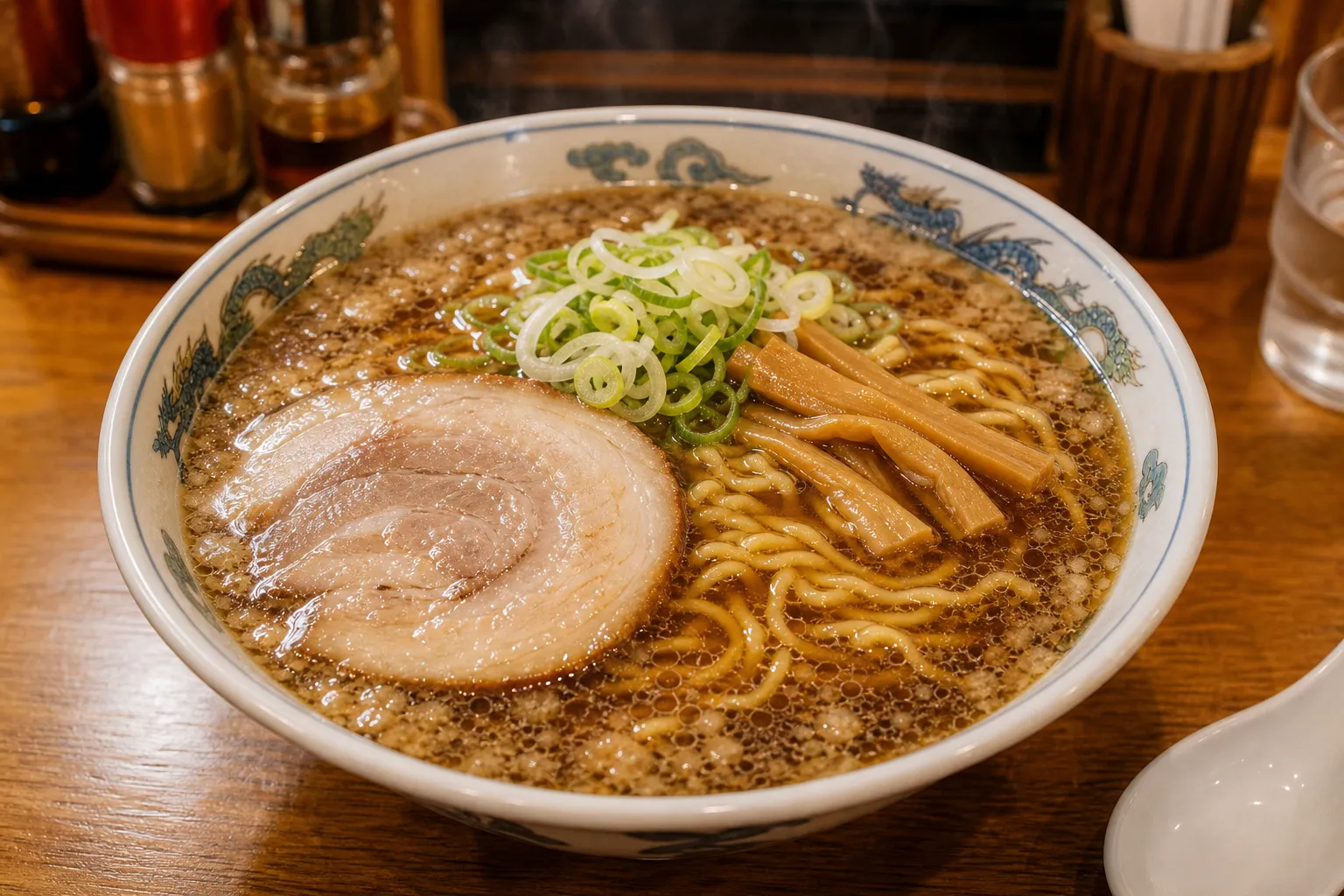
Local FoodAsahikawa, Hokkaido
Asahikawa Ramen (旭川ラーメン)
A slick of lard traps the heat so your soy broth stays scalding to the last drop — because in Asahikawa, the cold outside is trying to kill your ramen. It loses.
July 9, 2026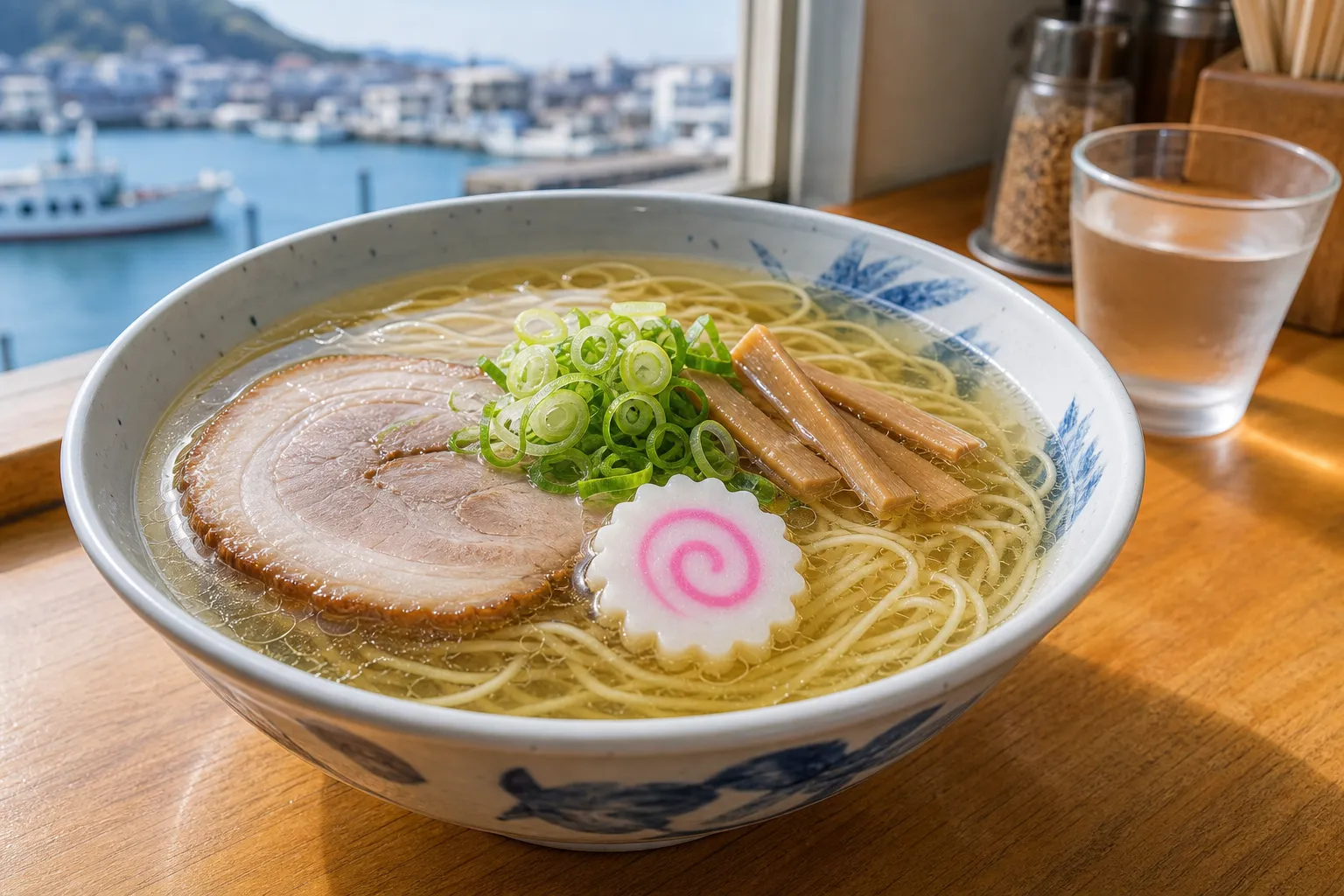
Local FoodHakodate, Hokkaido
Hakodate Shio Ramen (函館塩ラーメン)
Clear as tea, gold as morning light, quiet as a held breath — this is the ramen that proves subtraction is a flavor. Hokkaido's gentle bowl, and my hangover's best friend.
July 9, 2026