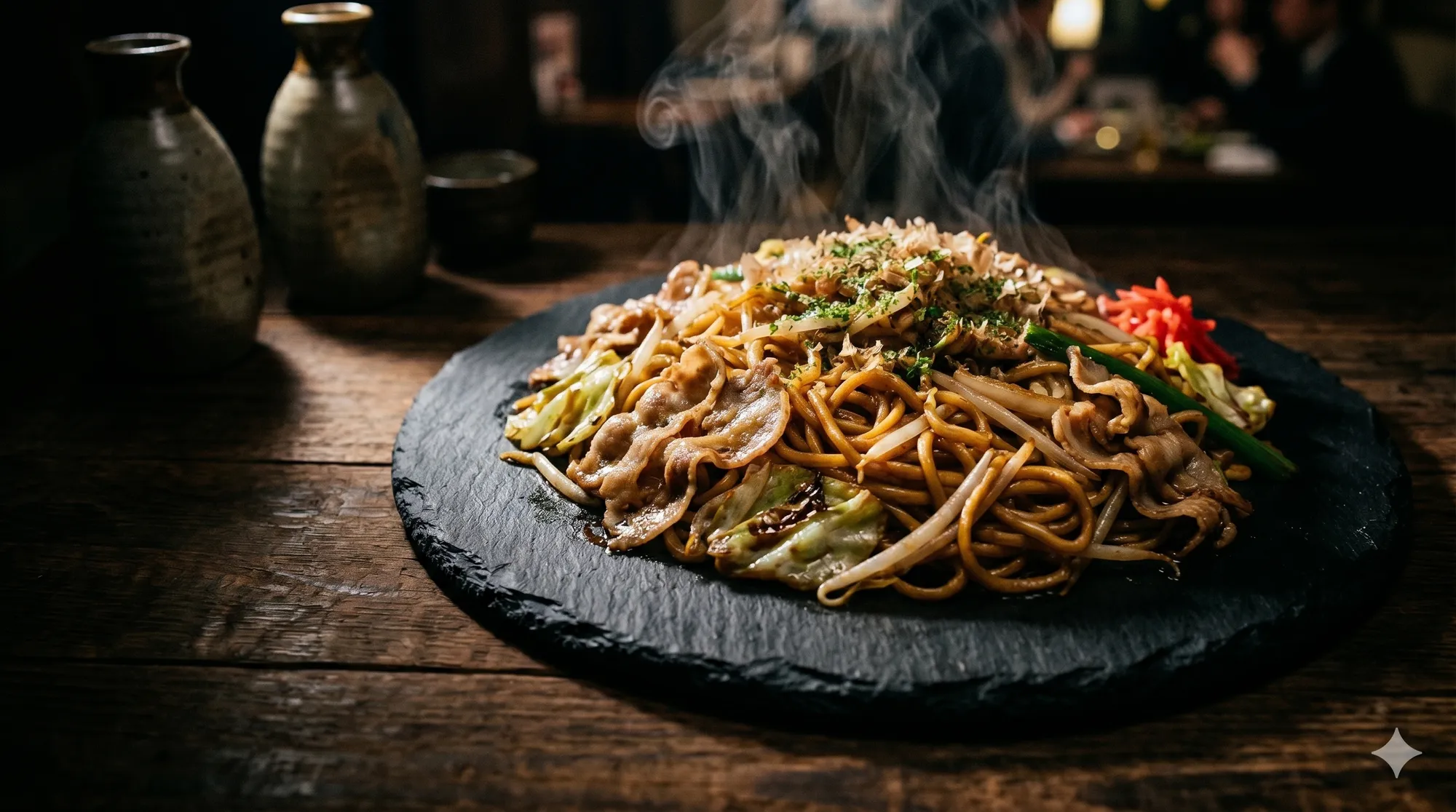
Close your eyes and picture a Japanese summer festival at night — lanterns, yukata, the crowd, and that smell. That sweet, savory, sizzling smell rolling off a griddle. Nine times out of ten, that's yakisoba, and your feet are already turning toward it.
Share this dish


Griddle-fried noodles slicked in sweet-savory sauce, the smell that defines a Japanese summer festival. Cheap, fast, joyful — and secretly one of the country's great comfort foods.
It's stir-fried noodles tangled with cabbage and pork, coated in a glossy sweet-and-savory sauce, finished with pickled ginger and a flurry of seaweed and bonito flakes. It costs almost nothing, it cooks in minutes, and it tastes like every good summer night you've ever had. It's festival food, weeknight food, leftover-in-the-fridge food. Humble to its bones — and absolutely impossible not to love.
Born from the rubble, raised at festivals
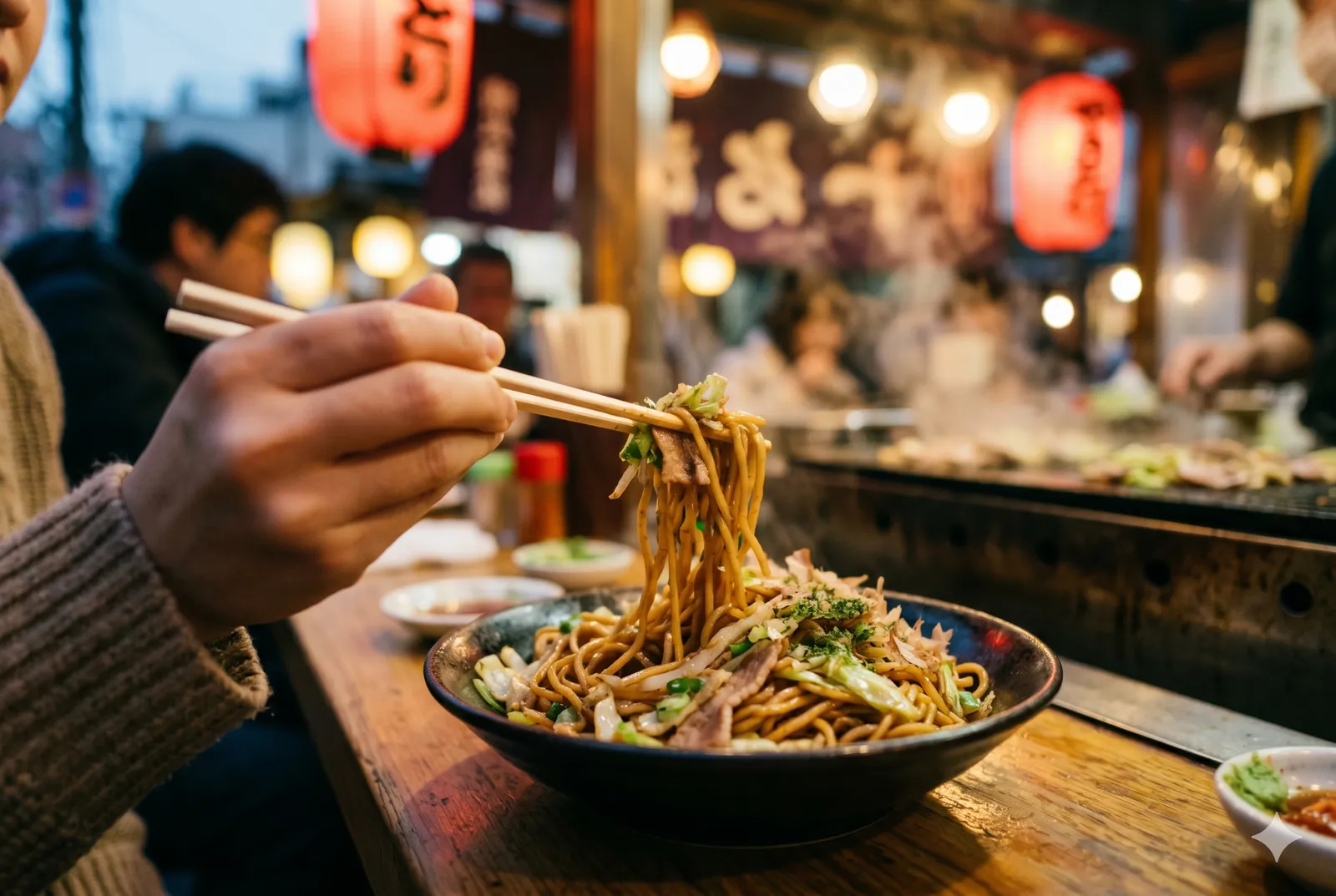
Yakisoba grew out of post-war Japan, riffing on Chinese chow mein and reworked for Japanese tastes. "Sauce yakisoba" became a specialty in Tokyo's Asakusa in the early Showa years, then spread through post-war black markets and into home kitchens everywhere. From there it marched straight to the heart of festival culture, where it's been sizzling on griddles ever since.
Why the sauce is everything
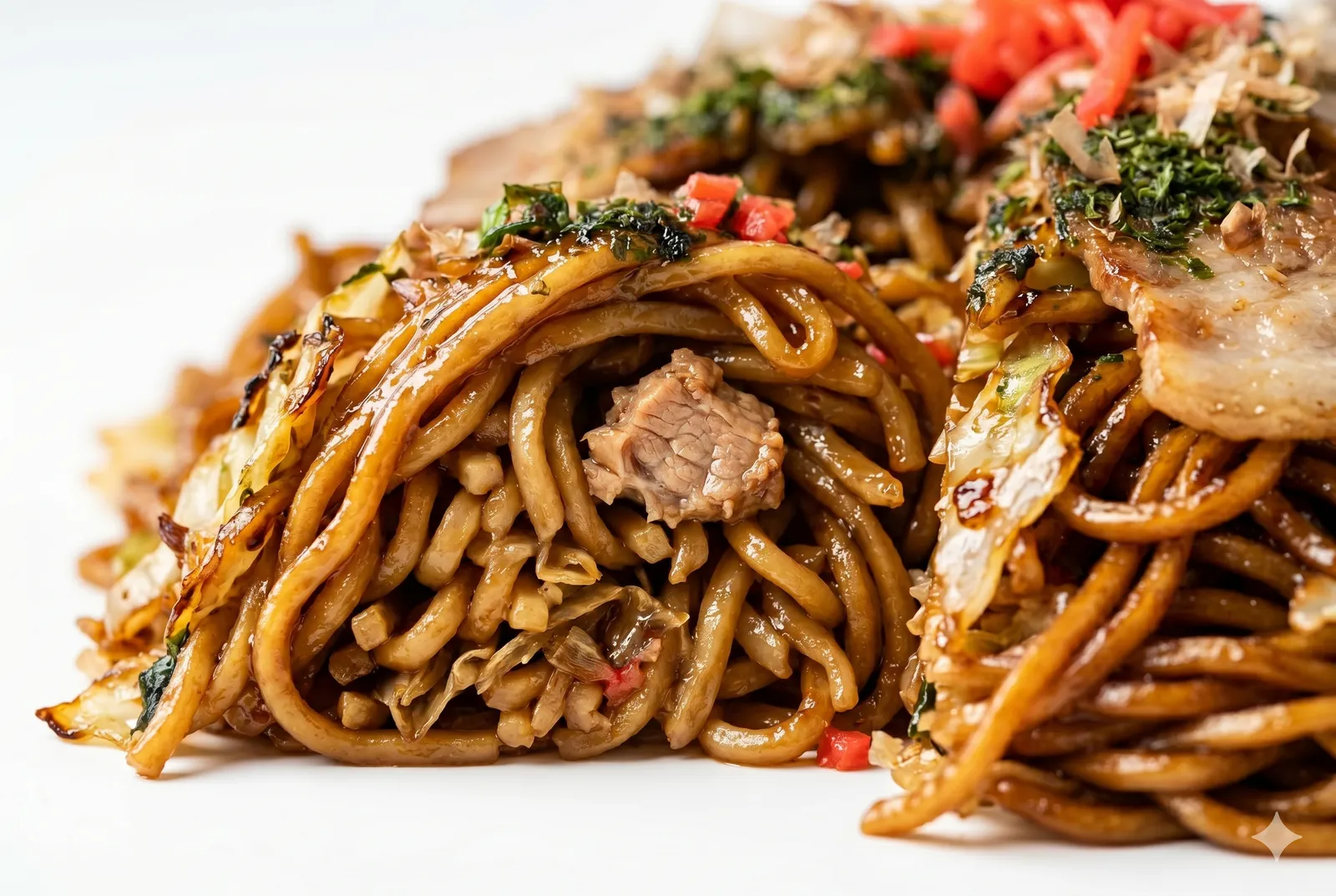
The soul of yakisoba is its sauce — a sweet, tangy, Worcestershire-based glaze that clings to the thick noodles and pulls everything together. Cabbage and carrots add sweetness and crunch, pork adds richness, and the toppings finish it: beni-shoga (red pickled ginger) for a sharp bite, aonori for the sea, and katsuobushi waving in the heat. Simple parts, perfect whole.
How it's made
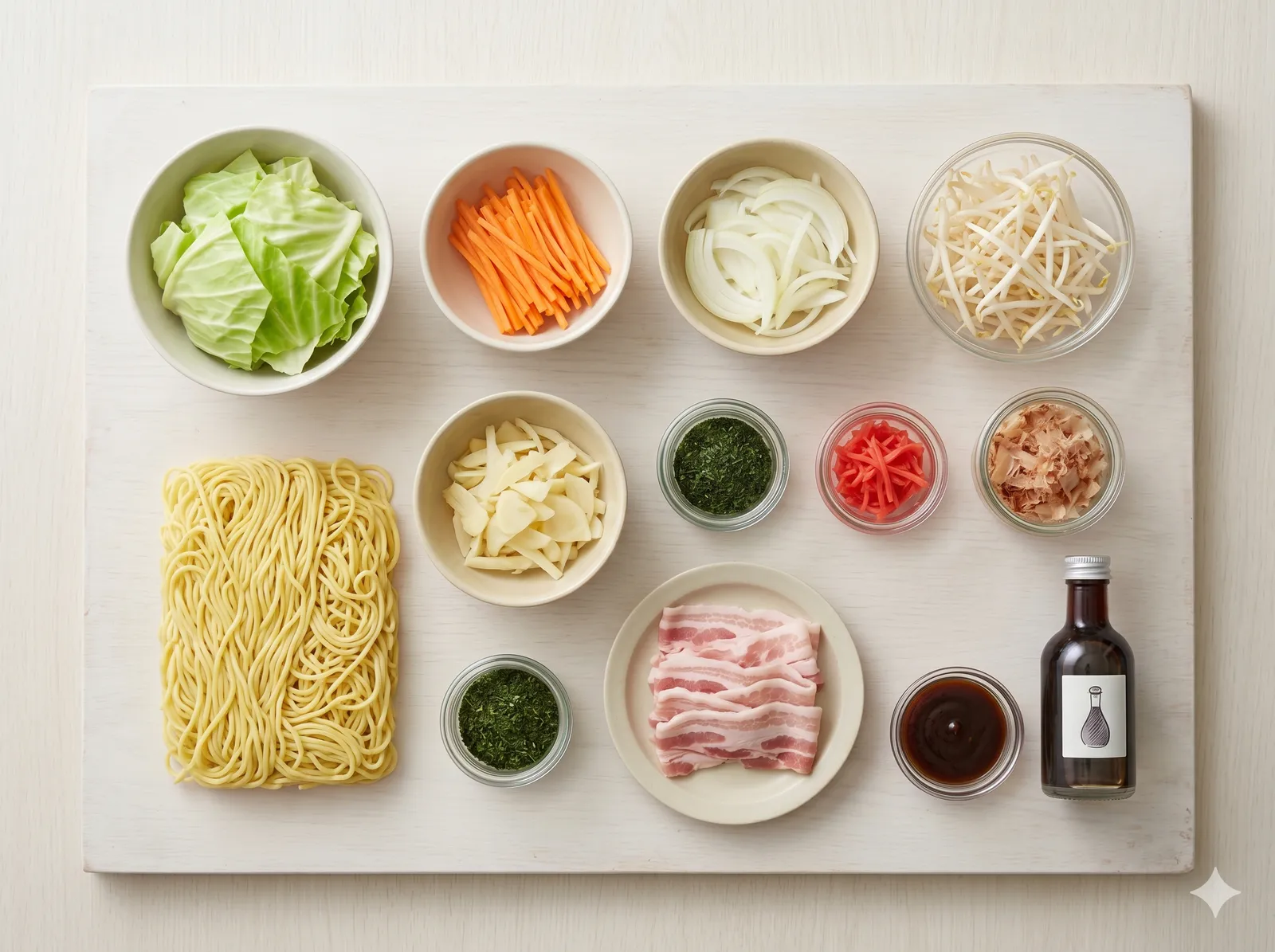
- Stir-fry thick yakisoba noodles with cabbage, carrots, and thin-sliced pork
- Season with a little salt and pepper as you go
- Coat generously with yakisoba sauce
- Plate and top with beni-shoga, aonori, and katsuobushi
Before you go — festival-stall wisdom
Your questions, answered honestly
"What's that red stuff on the side?" — Beni-shoga, red pickled ginger. Don't push it aside — its sharp, sour bite cuts the rich sauce perfectly. Eat a little with each bite.
"Should I add a fried egg?" — If it's offered, yes. A runny medama-yaki on top makes everything richer and is standard in some regional styles (looking at you, Akita). Always say yes to the egg.
"Sauce or salt yakisoba?" — Sauce is the festival classic — sweet, dark, nostalgic. Salt (shio) yakisoba is lighter and lets the ingredients shine. Start with sauce; it's the icon.
"Any famous regional ones?" — Fujinomiya yakisoba (Shizuoka) with its chewy noodles and meat-scrap crackle is a B-gourmet legend, and Yokote yakisoba (Akita) comes with a fried egg and sweet sauce. Worth a detour.
What the vendor will ask you
| You'll hear | Romaji | Meaning | Just say |
|---|---|---|---|
| 何にしますか? | Nani ni shimasu ka? | "What'll it be?" | Yakisoba hitotsu (one yakisoba) |
| 目玉焼きのせますか? | Medama-yaki nosemasu ka? | "Add a fried egg?" | Hai, onegaishimasu (yes please) |
| 紅生姜、青のりは? | Beni-shōga, aonori wa? | "Pickled ginger and aonori?" | Zenbu de (everything on) |
To order at a stall, just say "Yakisoba hitotsu kudasai" (やきそば一つください) — "One yakisoba, please."
Where to eat it
- Any summer matsuri (festival) — the truest, most atmospheric way to eat it, hot off a stall griddle
- Fujinomiya (Shizuoka) — for the famously chewy B-gourmet version
- Yokote (Akita) — fried egg on top, sweeter sauce, a regional star
- Any supermarket or convenience store — yes, even the instant cup stuff has its devoted fans
Festival stalls are seasonal and shops change, so check before a special trip — and eat it hot off the griddle if you possibly can.
Soul Score
Local Roots4/5
First-Timer Friendly5/5
Adventure Level3/5
Comfort Level4/5
Travel Worthy3/5
These scores are one obsessed eater's gut feeling — not a verdict. A low number isn't a bad mark, just a different kind of adventure.
More food guides
Know someone planning Japan?
← All Articles
Japanese Food · Nationwide
Still hungry?
You might also like
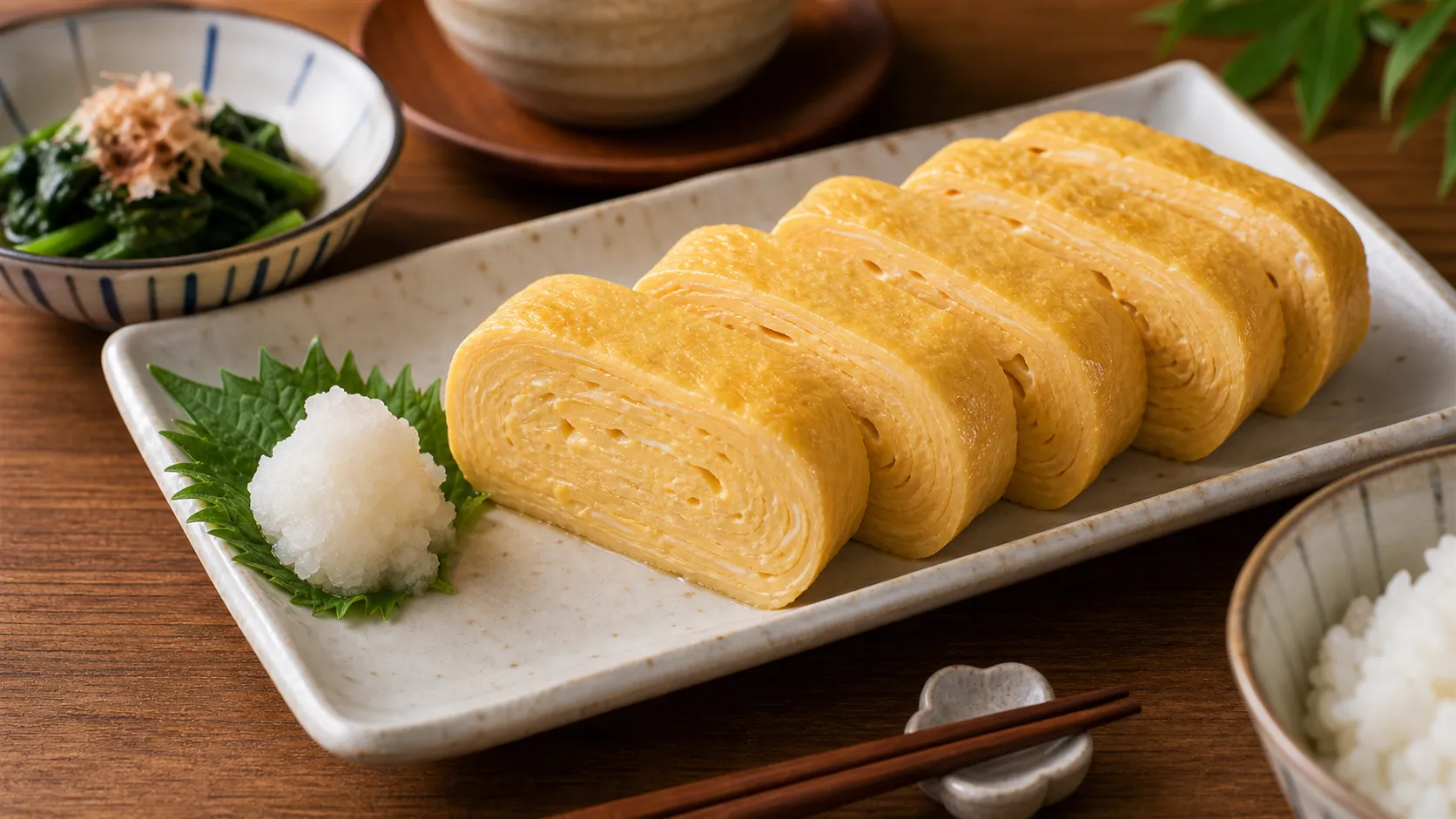
Japanese FoodNationwide
Dashimaki-tamago (だし巻き卵)
A rolled omelette so soft it almost trembles, layered fold over fold and soaked with dashi so that biting in releases a little warm rush of savory broth — the deceptively simple egg dish that Japanese chefs spend years perfecting.
July 11, 2026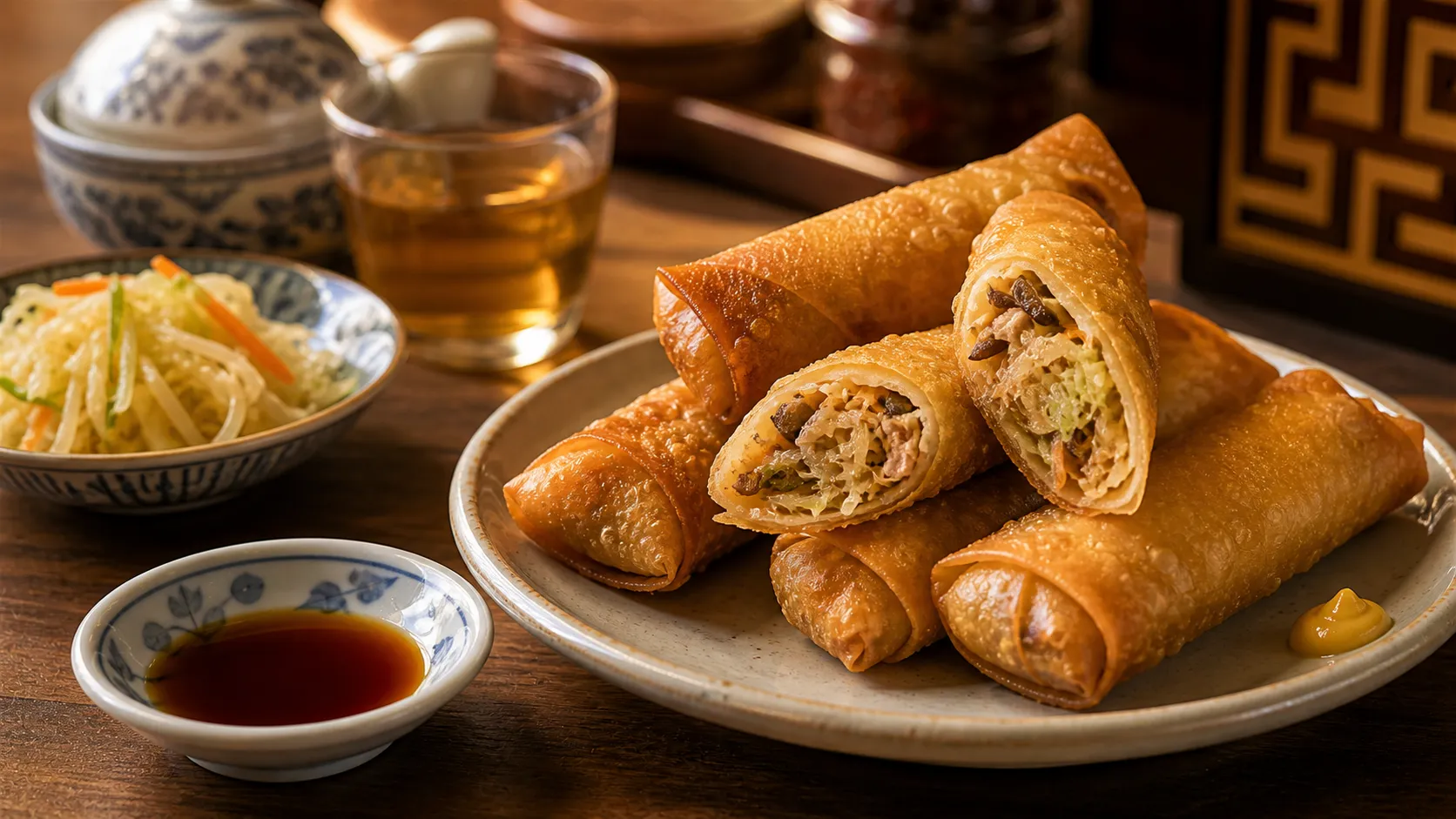
Japanese FoodNationwide
Harumaki (春巻き)
The Japanese spring roll — a shatteringly crisp golden tube that gives way to a hot, savory tangle of pork, cabbage and bamboo shoot, best eaten the second it's cool enough not to burn your mouth (you will not wait that long).
July 11, 2026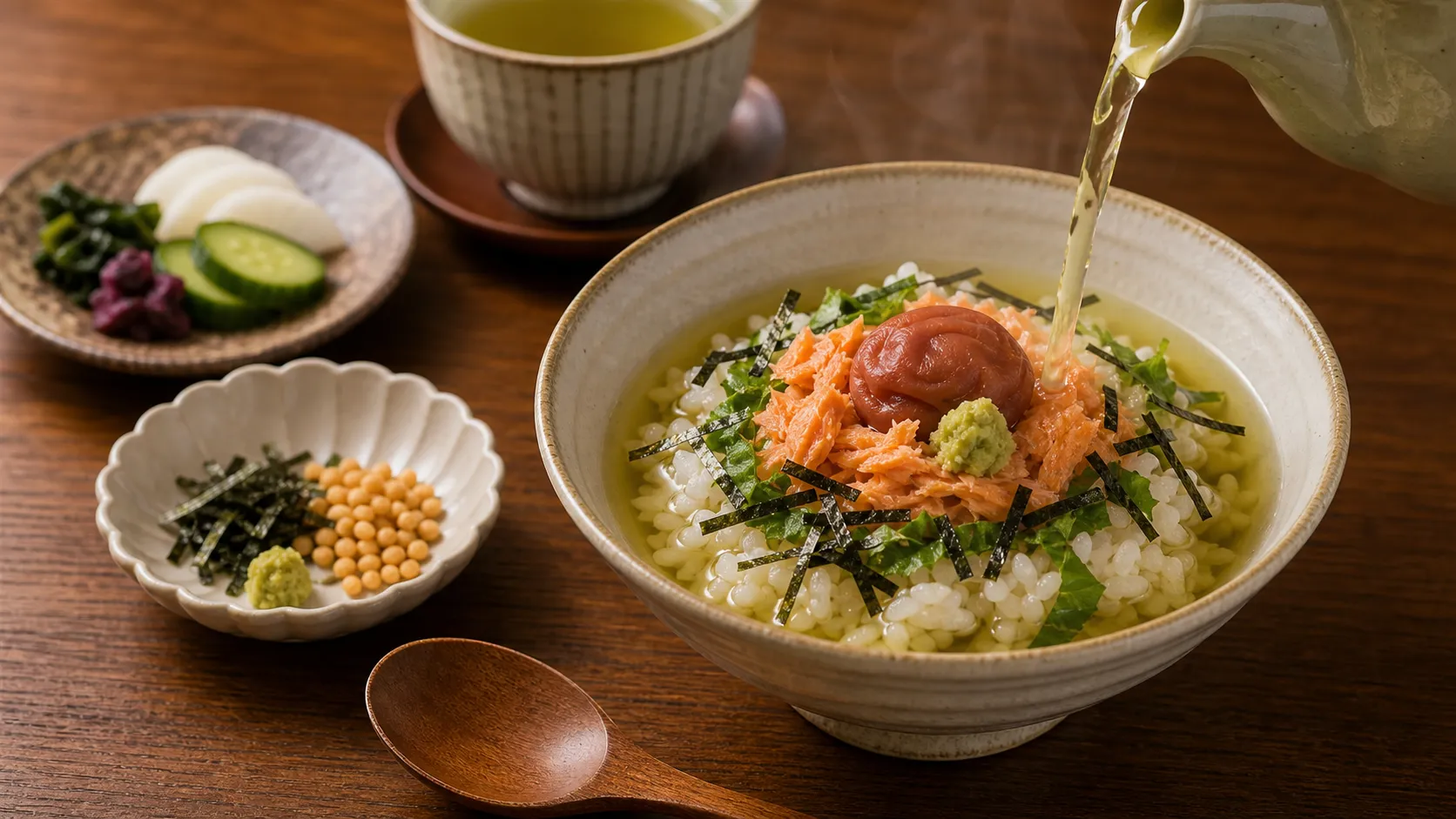
Japanese FoodNationwide
Ochazuke (お茶漬け)
Pour hot green tea or dashi over a bowl of rice, scatter something savory on top, and eat — the gentlest, most quietly restorative dish in Japan, the one you reach for late at night when you just need a warm bowl to make everything okay.
July 11, 2026