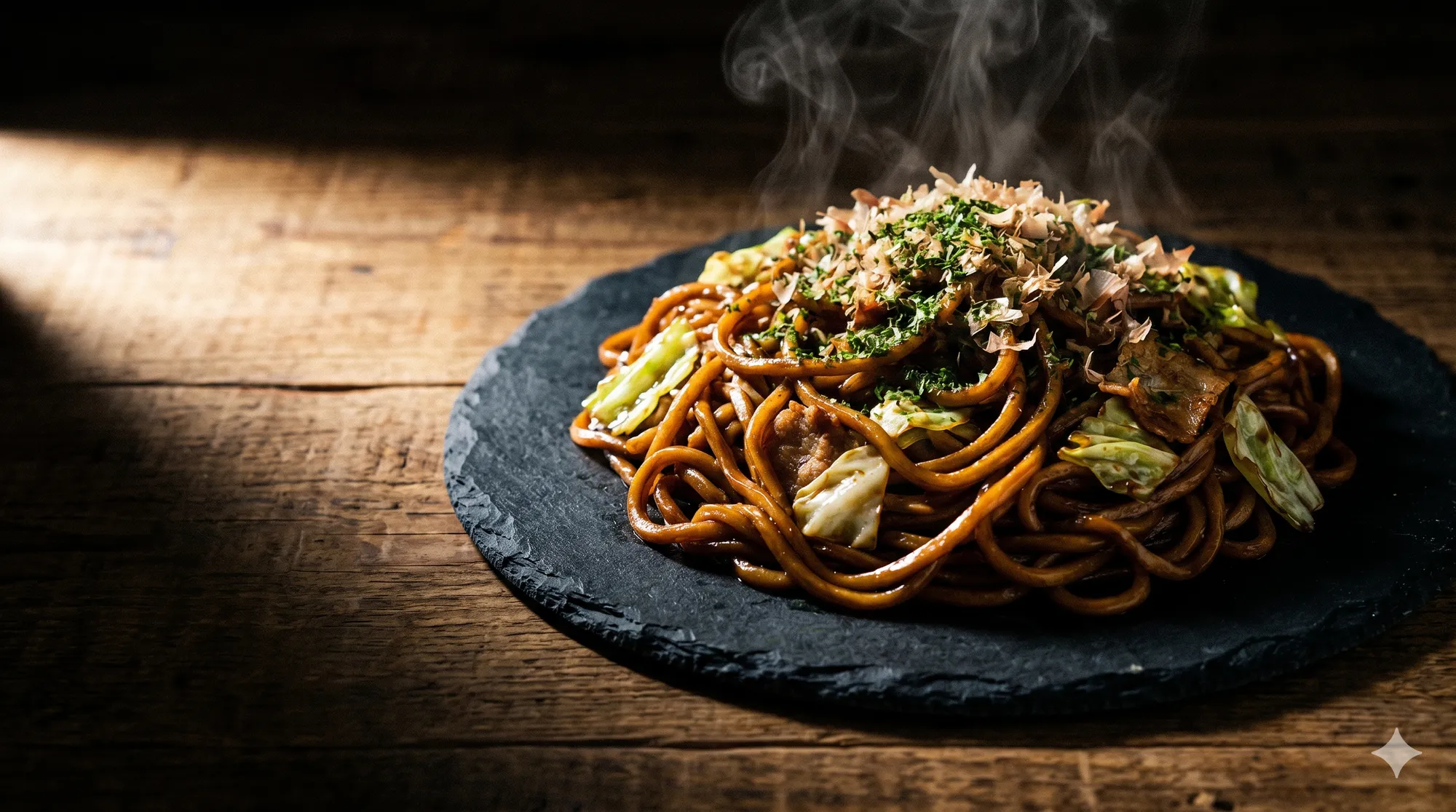
Most yakisoba is thin noodles, bright sauce, a generous scatter of toppings. Ota yakisoba throws all of that out.
Share this dish


Noodles so thick they look like udon, slicked in a dark, intense sauce, with barely any toppings to get in the way. A factory town's honest, no-frills yakisoba — and it's proud of it.
🍜 Planning a food trip to Gunma?Add this dish to my Food Trip →
 Add this dish to my Food Trip →
The noodles are thick and chewy — so thick they look more like udon. The sauce is dark, deep, and intense. And the toppings? Often almost none — maybe some cabbage, maybe bean sprouts, and that's it. This is yakisoba stripped down to muscle and bone: noodles and sauce, full stop. It's the B-grade soul food of Ota, a gritty industrial city in Gunma, and it tastes exactly like the place that made it — straightforward, substantial, and quietly, stubbornly proud. No frills. No apologies. Just a really, really good plate of noodles.
Forged in a factory town
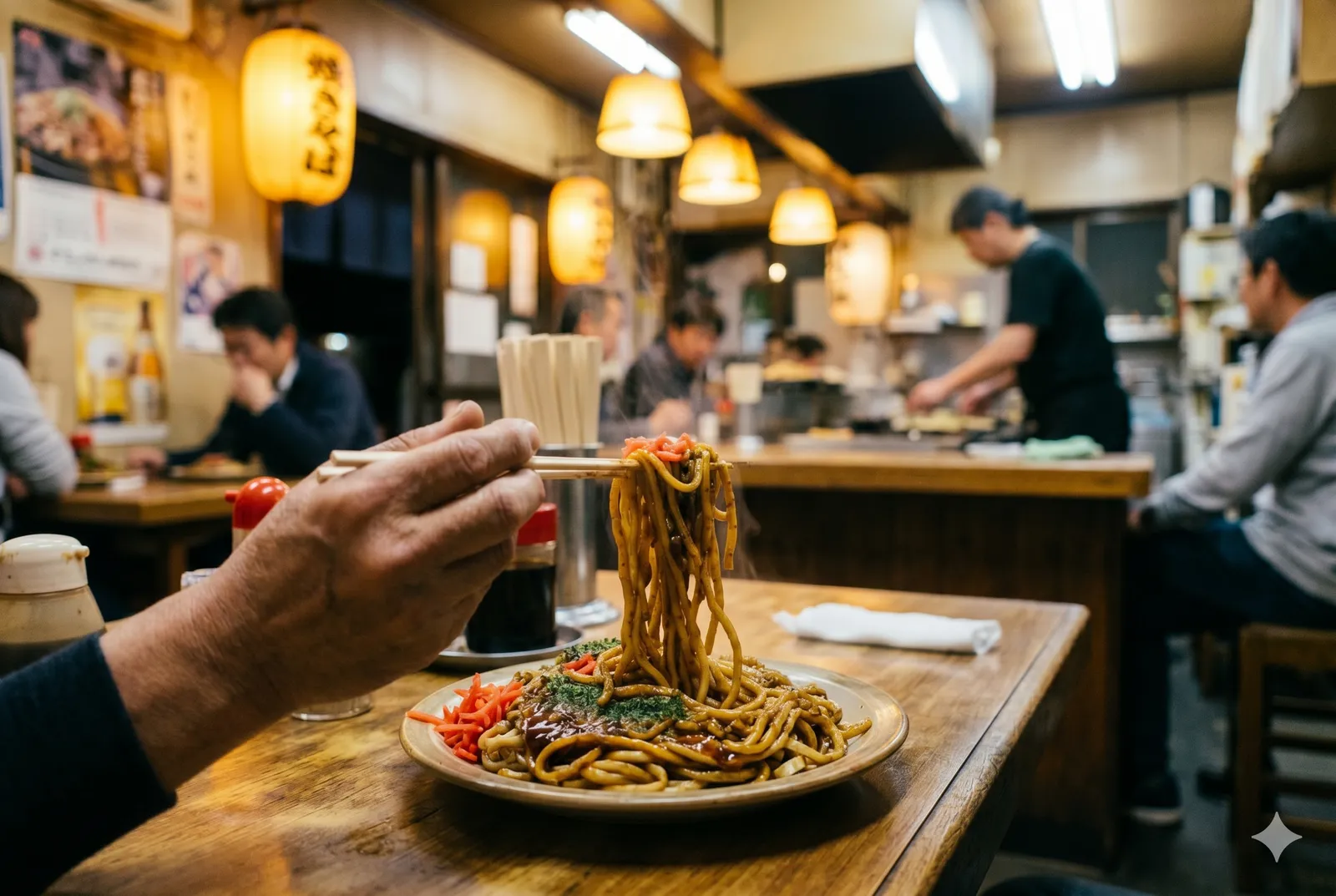
Ota yakisoba's story starts in 1956, during Japan's post-war boom. Ota City in Gunma had become a major industrial hub — eventually home to Subaru's manufacturing base — and workers poured in from all over the country. Among them were migrants from Yokote in Akita, a place with its own strong yakisoba culture. They brought their noodle traditions with them, and the dish took root and mutated in Ota's factory-town soil into something thicker, darker, and entirely its own.
What makes it different
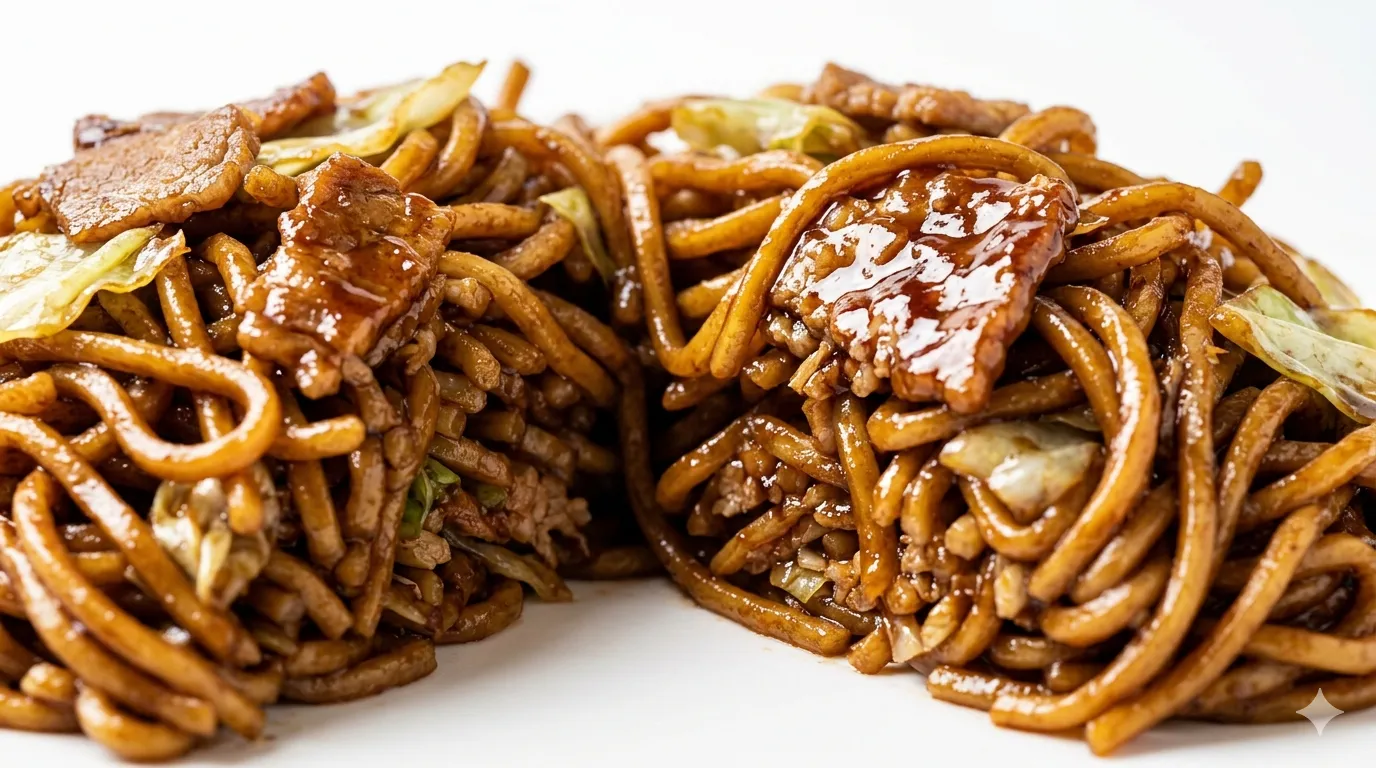
Three things define it:
The noodles — thick, chewy, udon-like, made to stand up to heavy sauce without going soft.
The sauce — dark and intense, leaning Worcestershire, far richer than the lighter sauces elsewhere. Each shop guards its own recipe.
The simplicity — most versions have little to no meat. Just noodles, cabbage, sauce. The restraint is the identity.
How it's made
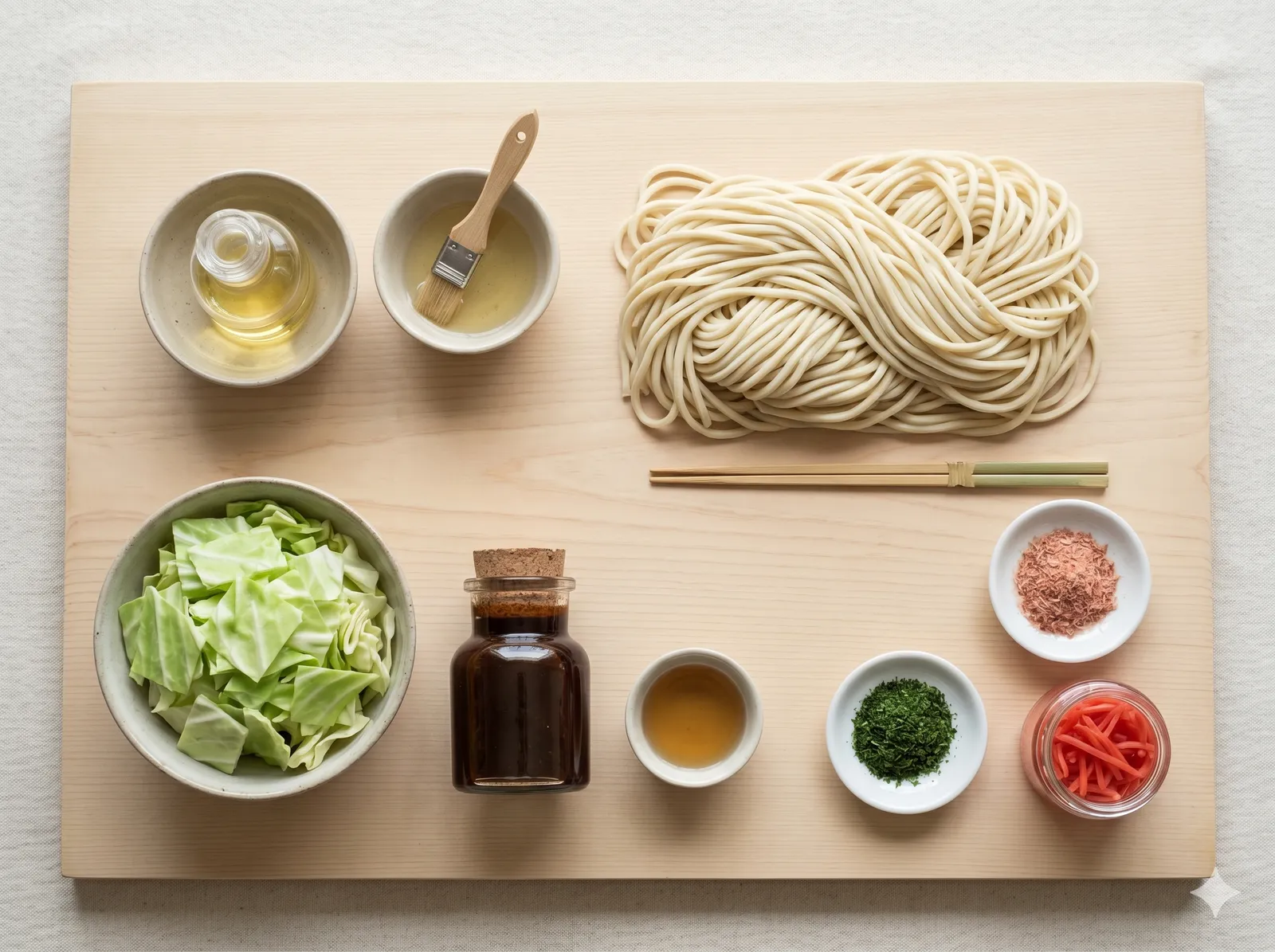
- Cook the thick noodles until chewy with real bite
- Stir-fry on a high-heat griddle with oil and shredded cabbage
- Add the dark house sauce and toss hard until every noodle is coated
- Season to taste with shichimi (seven-spice) or pepper
Before you go — eat it where it lives
Your questions, answered honestly
"Why is it so plain?" — That's the whole point — Ota yakisoba is about the noodles and the sauce, not a pile of toppings. The restraint is deliberate, and once you taste that thick chewy noodle in that dark sauce, you get it.
"Should I add anything?" — A shake of shichimi (seven-spice) or pepper sharpens it up nicely. Some shops offer toppings if you want them, but try it plain first the way the city intends.
"How is it different from regular yakisoba?" — Much thicker, chewier noodles and a darker, more intense sauce, with far fewer ingredients. It's a heavier, more noodle-forward experience.
"Can I get it outside Ota?" — Not really, and that's part of the charm. Unlike some regional dishes, Ota yakisoba hasn't been packaged and shipped everywhere. To eat the real thing, you go to Ota.
What the vendor will ask you
| You'll hear | Romaji | Meaning | Just say |
|---|---|---|---|
| 普通と大盛り、どちらに? | Futsū to ōmori, dochira ni? | "Regular or large?" | Futsū de (regular) / Ōmori de (large) |
| 肉、入れますか? | Niku, iremasu ka? | "Add meat?" | Nashi de (without) / Onegaishimasu (yes) |
| 七味かけますか? | Shichimi kakemasu ka? | "Seven-spice on it?" | Hai, sukoshi (yes, a little) |
To order, just say "Ota yakisoba kudasai" (太田焼きそばください) — "Ota yakisoba, please."
Where to eat it
- Ota City, Gunma — local shops, festival stalls, and roadside stations (michi-no-eki) all over the city. Look for a no-frills spot busy with locals — that's where the real version lives.
Hours and shops change, so check before you go — and don't expect frills. That's not what this is.
Soul Score
Local Roots5/5
First-Timer Friendly4/5
Adventure Level3/5
Comfort Level4/5
Travel Worthy4/5
These scores are one obsessed eater's gut feeling — not a verdict. A low number isn't a bad mark, just a different kind of adventure.
Know someone planning Japan?
← All Articles
Local Food · Ota, Gunma
Still hungry?
Eat more from Gunma
Local FoodKiryu, Gunma
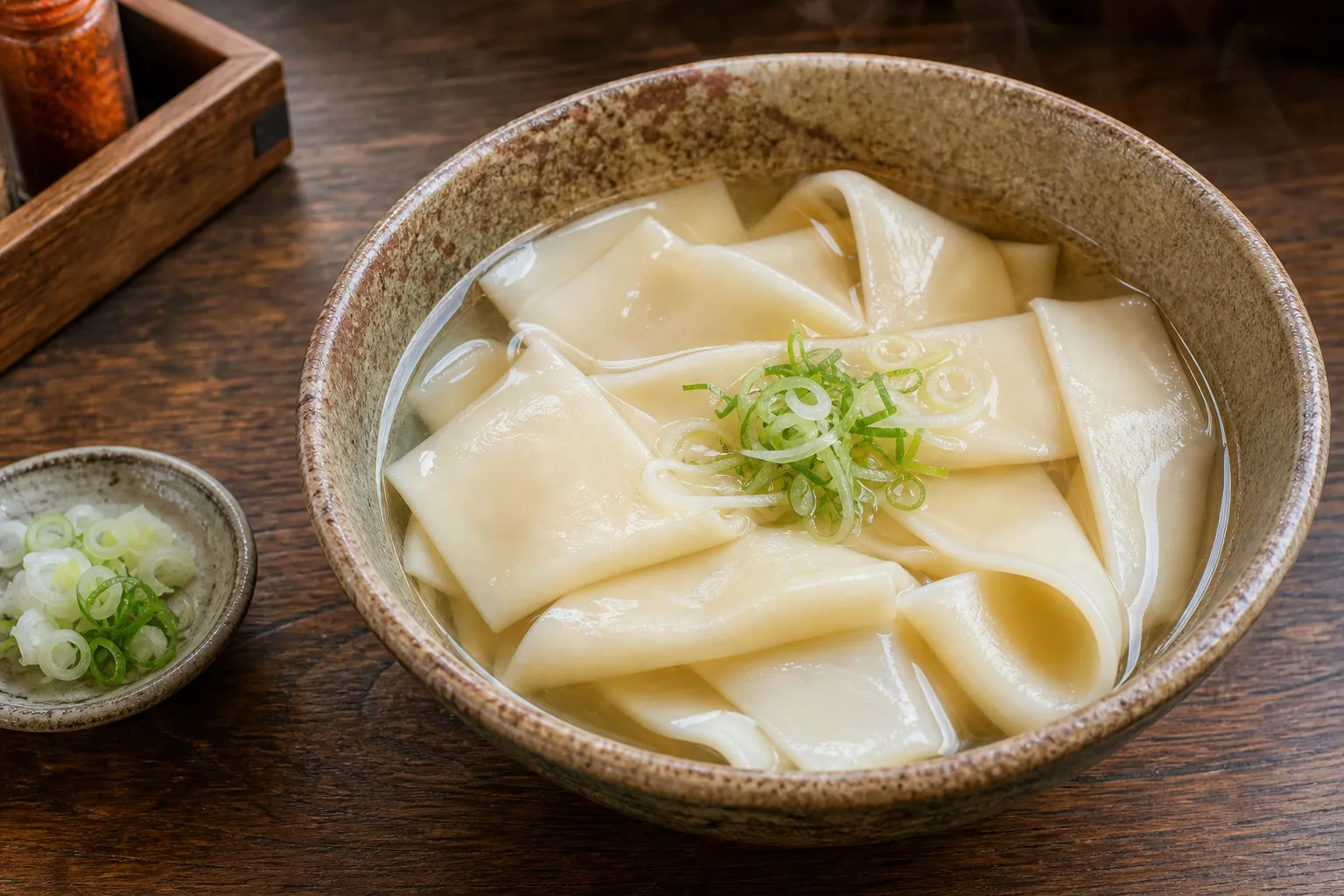
Himokawa Udon (ひもかわうどん)
You order udon and the bowl arrives holding what looks like a folded silk scarf. One noodle wider than your hand, slippery and light — you laugh out loud before you even taste it.
July 12, 2026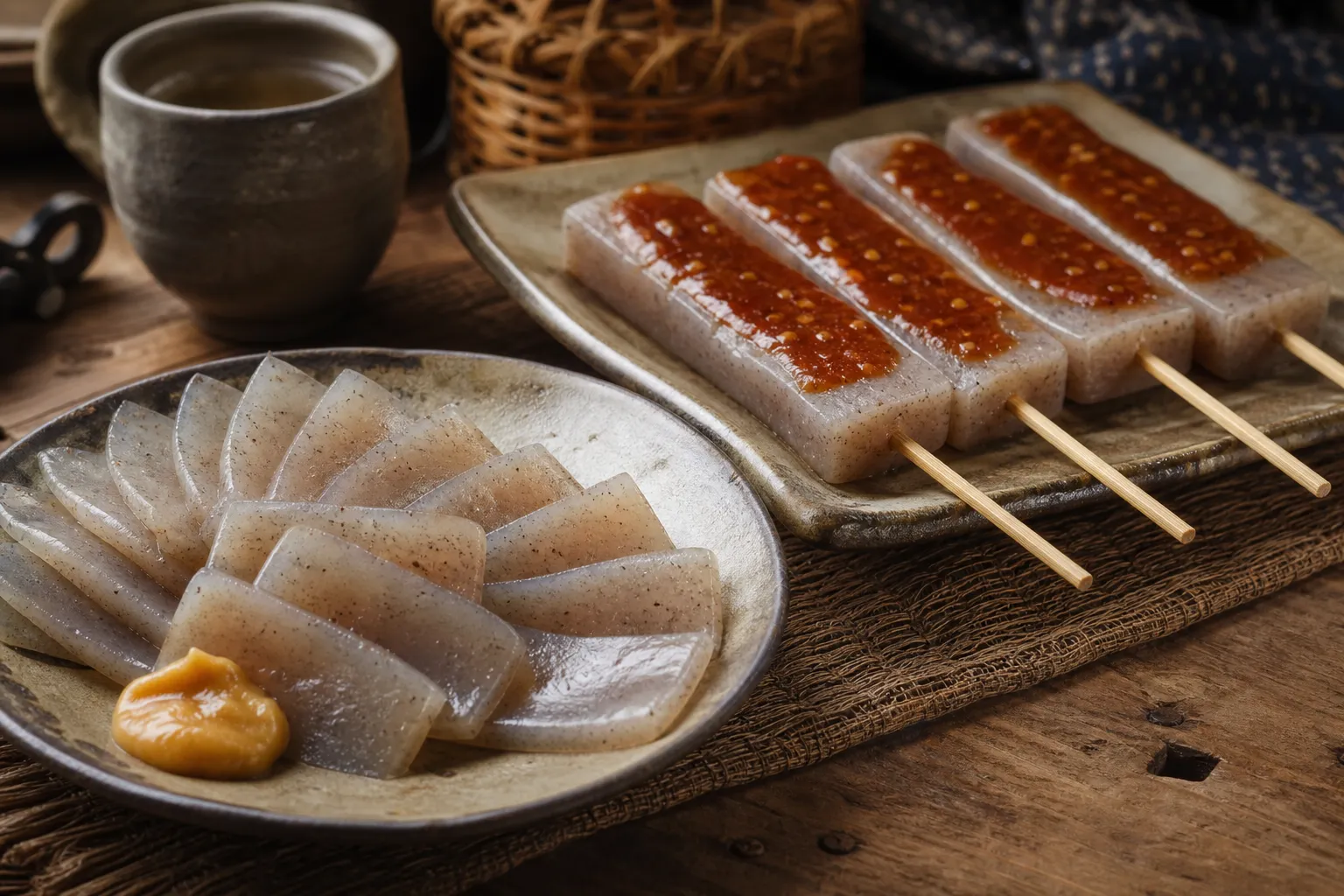
Local FoodGunma
Konnyaku Dishes (こんにゃく料理)
Wobbly, near-zero-calorie, and somehow deeply satisfying — Gunma turns a grey mountain tuber into springy sashimi and blistered miso skewers, and I will fight for it.
July 12, 2026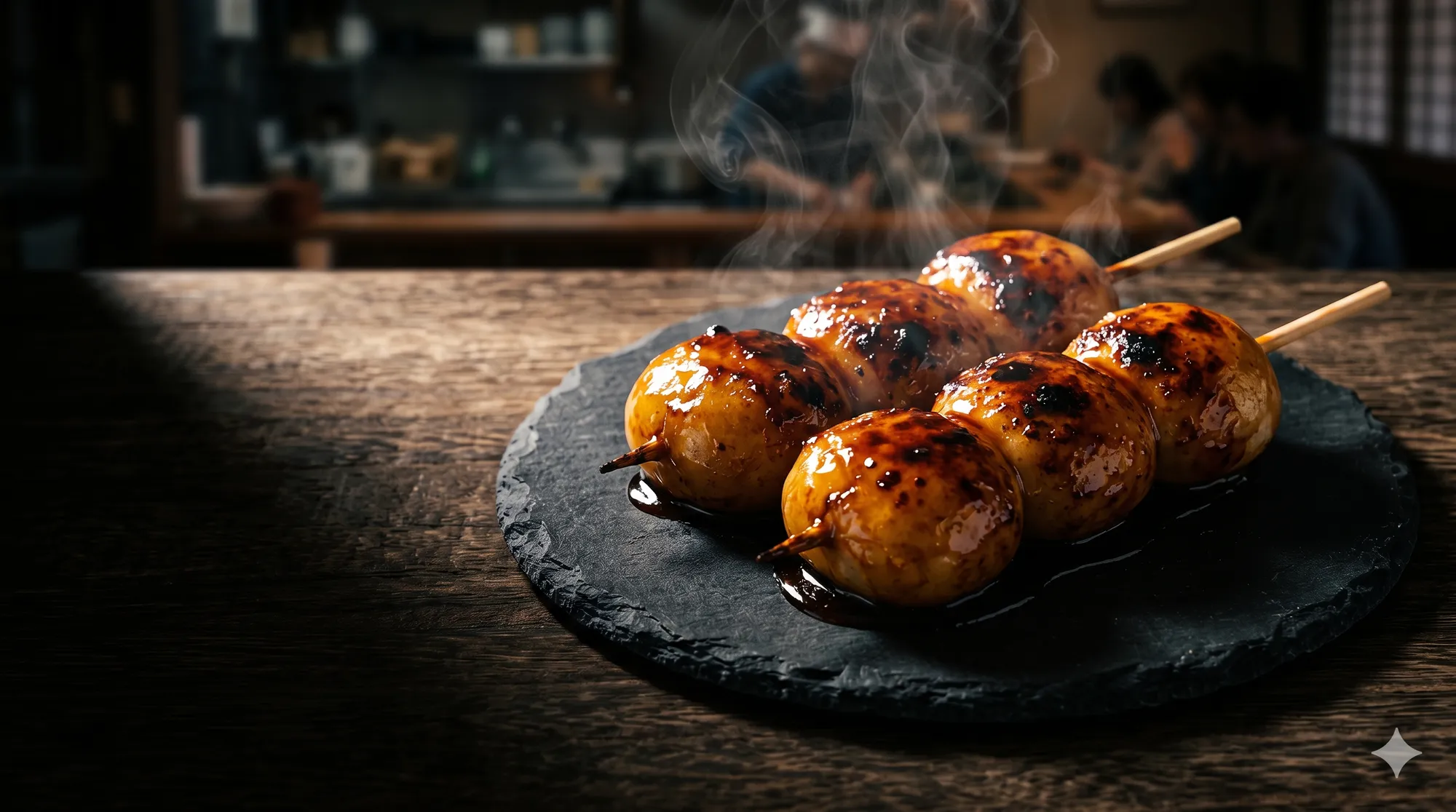
Local FoodGunma
Yakimanju (やきまんじゅう)
Fluffy fermented dough skewered, charcoal-grilled, and painted with sweet-savory miso until it caramelizes. Gunma's festival soul food — sticky-fingered, smoky, unforgettable.
July 12, 2024