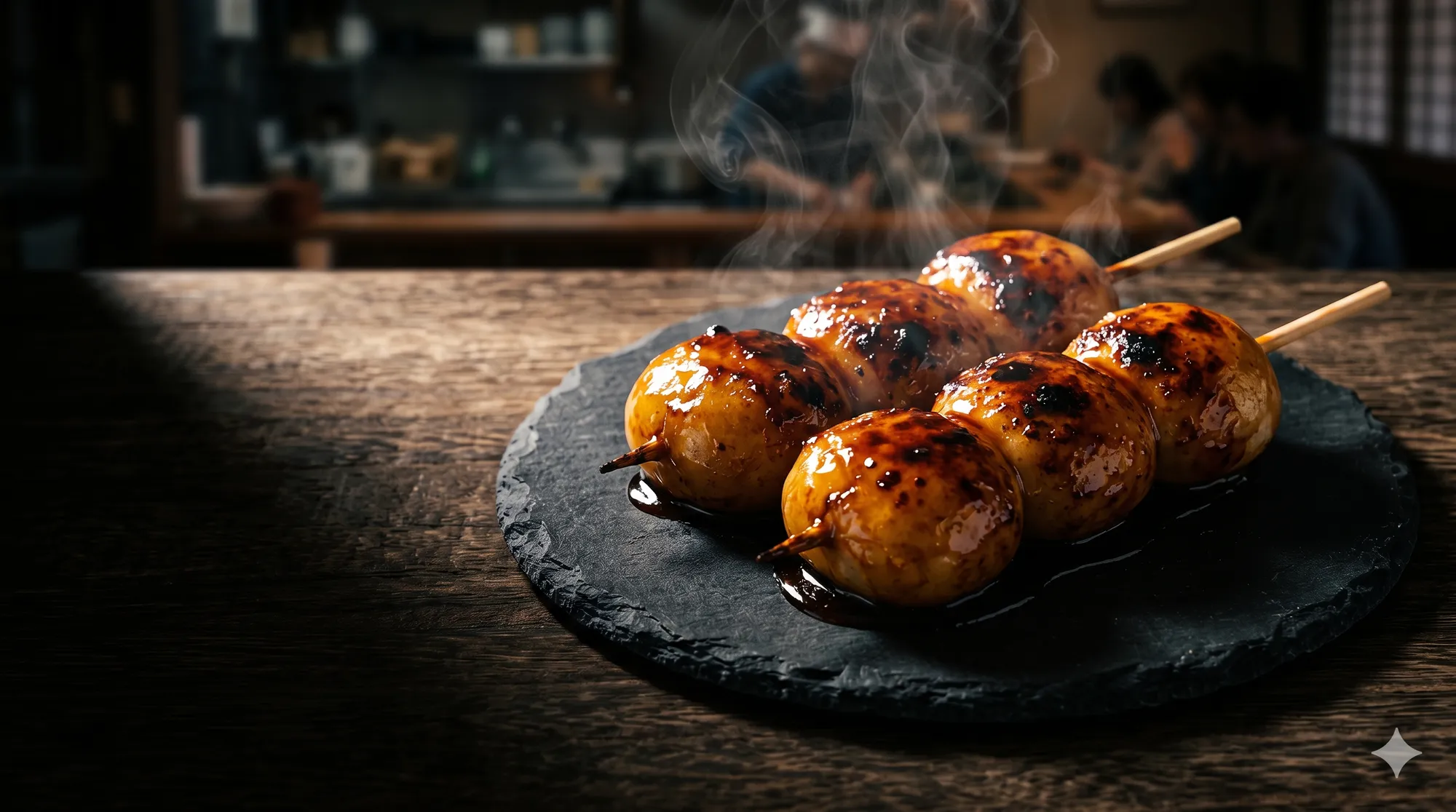
There's a smell at every Gunma festival that pulls you across the grounds like a tractor beam: sweet miso caramelizing over charcoal. Follow it. At the end of it is yakimanju, and you're about to get gloriously sticky fingers.
Share this dish


Fluffy fermented dough skewered, charcoal-grilled, and painted with sweet-savory miso until it caramelizes. Gunma's festival soul food — sticky-fingered, smoky, unforgettable.
🍜 Planning a food trip to Gunma?Add this dish to my Food Trip →
 Add this dish to my Food Trip →
Picture pillowy, fermented wheat dough — light and airy, almost like steamed bread — skewered on bamboo, grilled over charcoal until the outside crisps, then slathered in a thick, sweet-savory miso glaze and grilled again so the sauce caramelizes and soaks in. It's smoky, sweet, savory, fluffy, and a little charred at the edges, and it is pure Gunma festival joy. No filling, no fuss, just dough and miso and fire — and somehow that's everything. This is regional soul food at its most honest and most addictive.
A festival treat with Edo-era roots
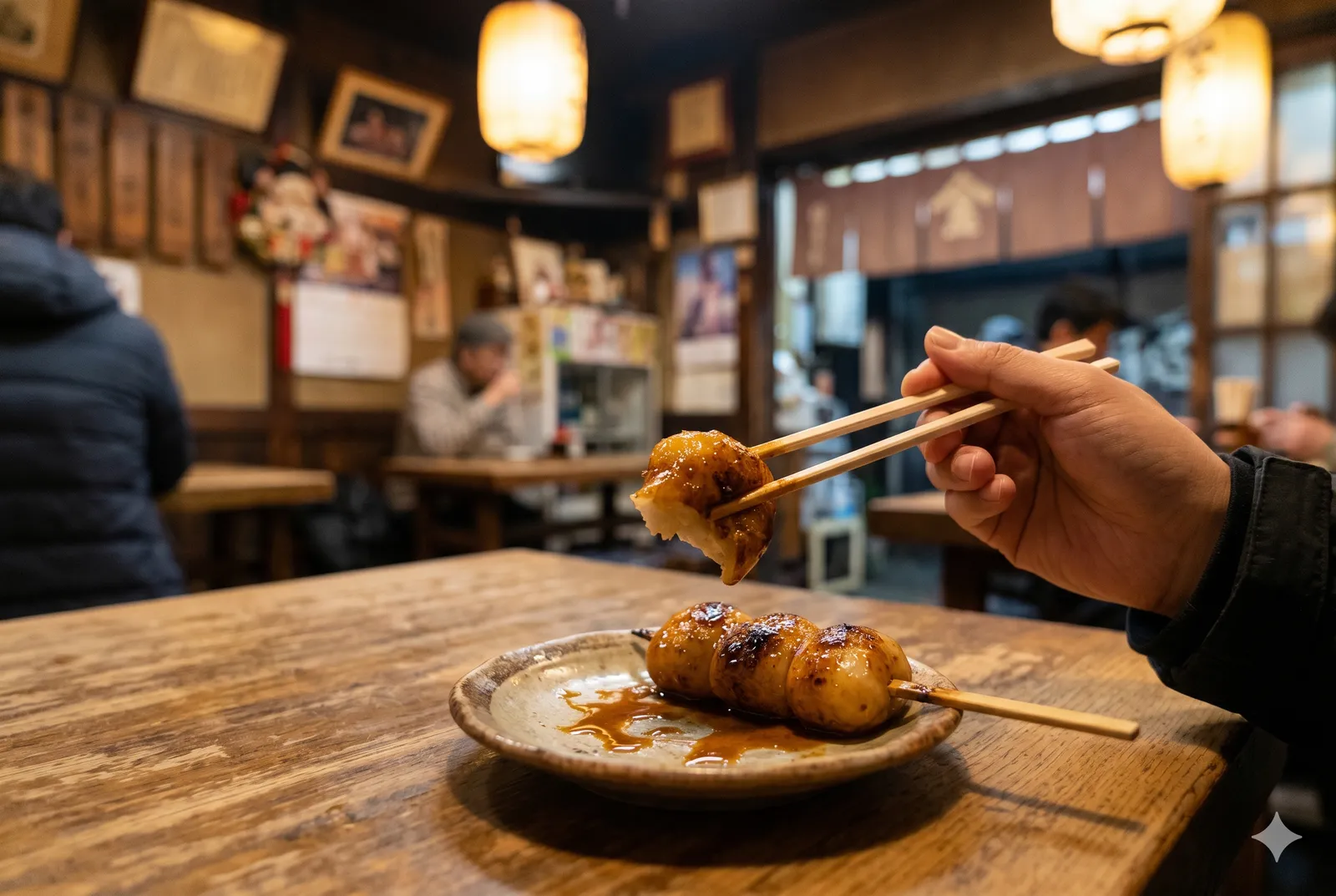
Yakimanju goes back to the late Edo period, said to have grown from skewered grilled dumplings cooked over an open fire. Over generations, the people of Gunma refined it into the fluffy, glazed treat it is today — and all the while it's been a fixture of festivals and fairs, the smell of it cherished by Gunma folk for as long as anyone can remember.
Why it's so good
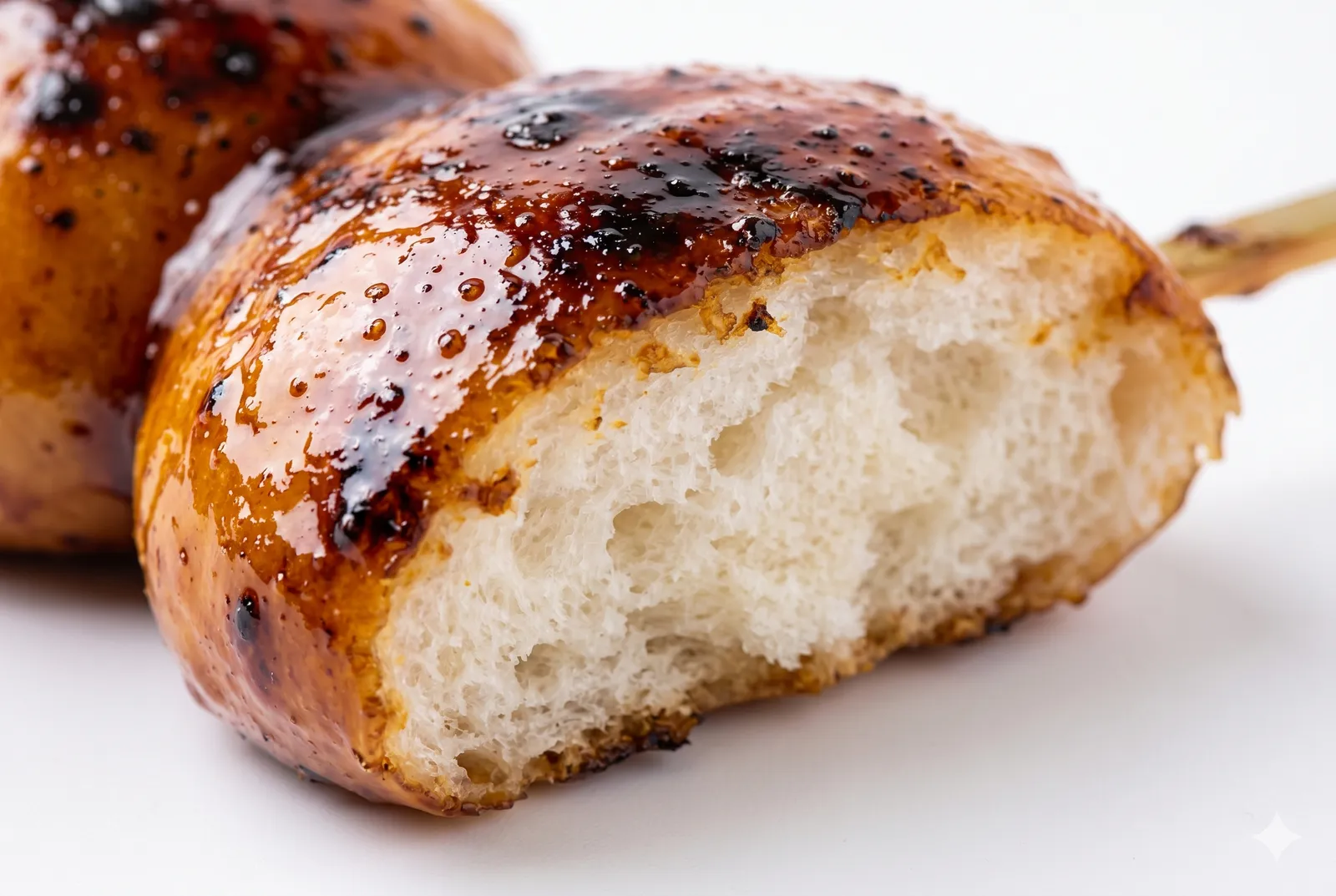
The magic is the combination of that fermented, fluffy dough and the sweet-savory miso glaze. Fermenting the wheat dough makes it airy and light; charcoal-grilling crisps the outside while keeping the inside soft and pillowy; and the generous miso glaze — miso, sugar, mirin — caramelizes over the flame into a sticky, glossy, deeply savory-sweet coat. Crispy, fluffy, sweet, smoky, all on one stick.
How it's made
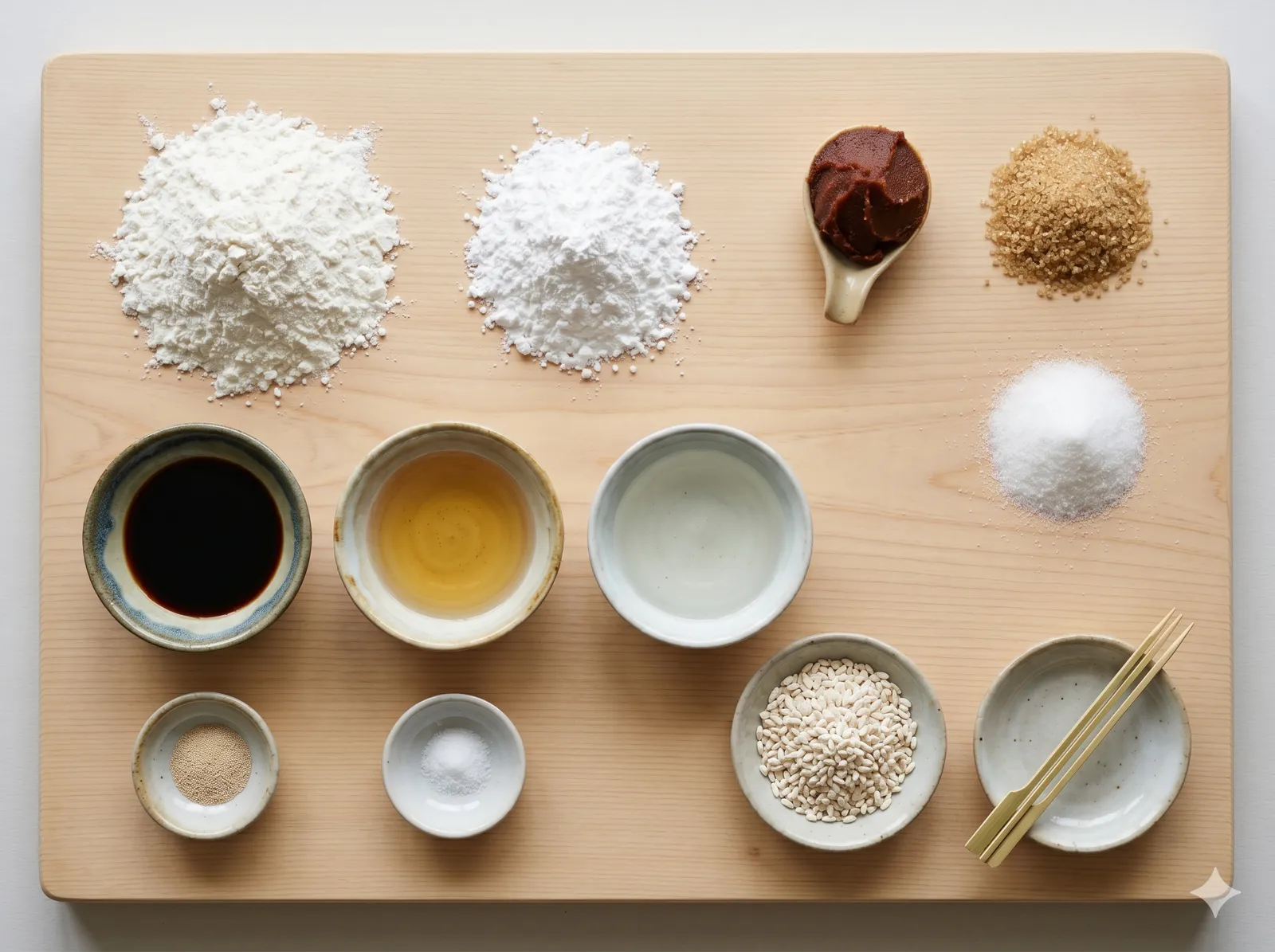
- Mix wheat flour with water and let the dough ferment
- Form into small balls (or buns) and skewer on bamboo
- Grill slowly over charcoal until the outside crisps
- Brush on a generous coat of miso glaze (miso, sugar, mirin)
- Grill once more so the glaze soaks in and caramelizes
Before you go — sticky-fingered festival wisdom
Your questions, answered honestly
"Is there filling inside?" — Classic yakimanju is just dough — no bean paste, no filling. The whole show is the fluffy bread and the caramelized miso. (Some shops do offer an anko-filled version if you want it.)
"Sweet or savory?" — Both at once — the miso glaze is sweet up front with a deep savory, fermented backbone. If you love mitarashi dango or teriyaki, this is your dish.
"How do I eat it without wearing it?" — You won't, fully. It's a sticky bamboo skewer of caramelized miso — embrace the messy fingers, grab a napkin, and eat it hot off the stick. That's the experience.
"When and where is it best?" — At a Gunma festival, hot off the charcoal, on a cool evening. But local shops grill it year-round, and it's wonderful any time.
What the vendor will ask you
| You'll hear | Romaji | Meaning | Just say |
|---|---|---|---|
| いくつにしますか? | Ikutsu ni shimasu ka? | "How many skewers?" | Hitotsu kudasai (one) / Futatsu kudasai (two) |
| あん入りにしますか? | An-iri ni shimasu ka? | "With bean paste filling?" | Nashi de (plain) / An-iri de (with anko) |
| 熱いので気をつけて | Atsui node ki o tsukete | "Careful, it's hot" | (nod, believe them) |
To order, just say "Yakimanju hitotsu kudasai" (やきまんじゅう一つください) — "One yakimanju, please."
Where to eat it
- Gunma festivals and fairs — the truest way to eat it, hot off the charcoal in the evening air
- Long-standing local shops — names like Harashimaya (原嶋屋総本家) in Maebashi and shops in Numata and Ota have grilled it for generations
Festival stalls are seasonal and shops change, so check before a special trip — and bring napkins. Lots of them.
Soul Score
Local Roots5/5
First-Timer Friendly4/5
Adventure Level3/5
Comfort Level4/5
Travel Worthy4/5
These scores are one obsessed eater's gut feeling — not a verdict. A low number isn't a bad mark, just a different kind of adventure.
Know someone planning Japan?
← All Articles
Local Food · Gunma
Still hungry?
Eat more from Gunma
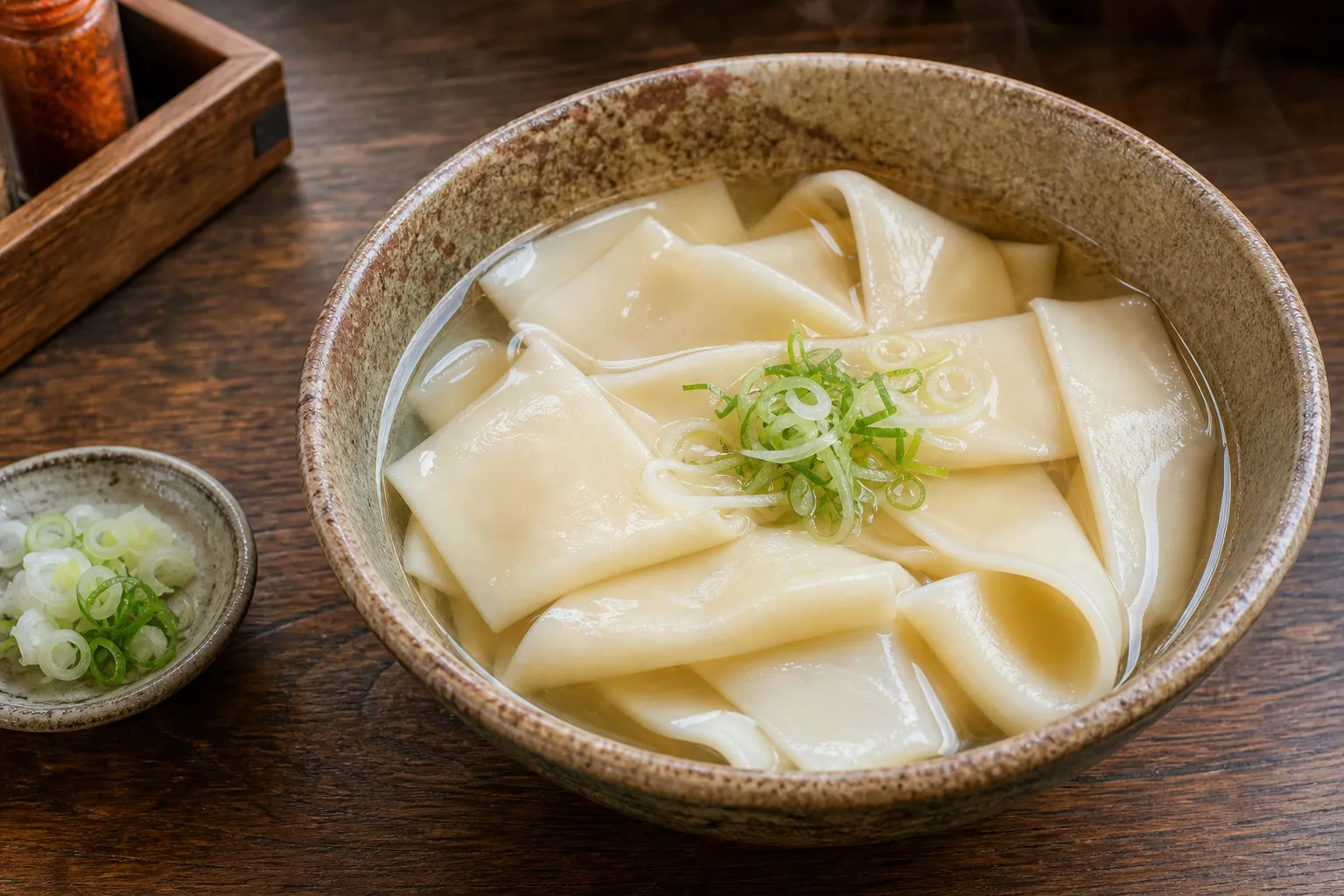
Local FoodKiryu, Gunma
Himokawa Udon (ひもかわうどん)
You order udon and the bowl arrives holding what looks like a folded silk scarf. One noodle wider than your hand, slippery and light — you laugh out loud before you even taste it.
July 12, 2026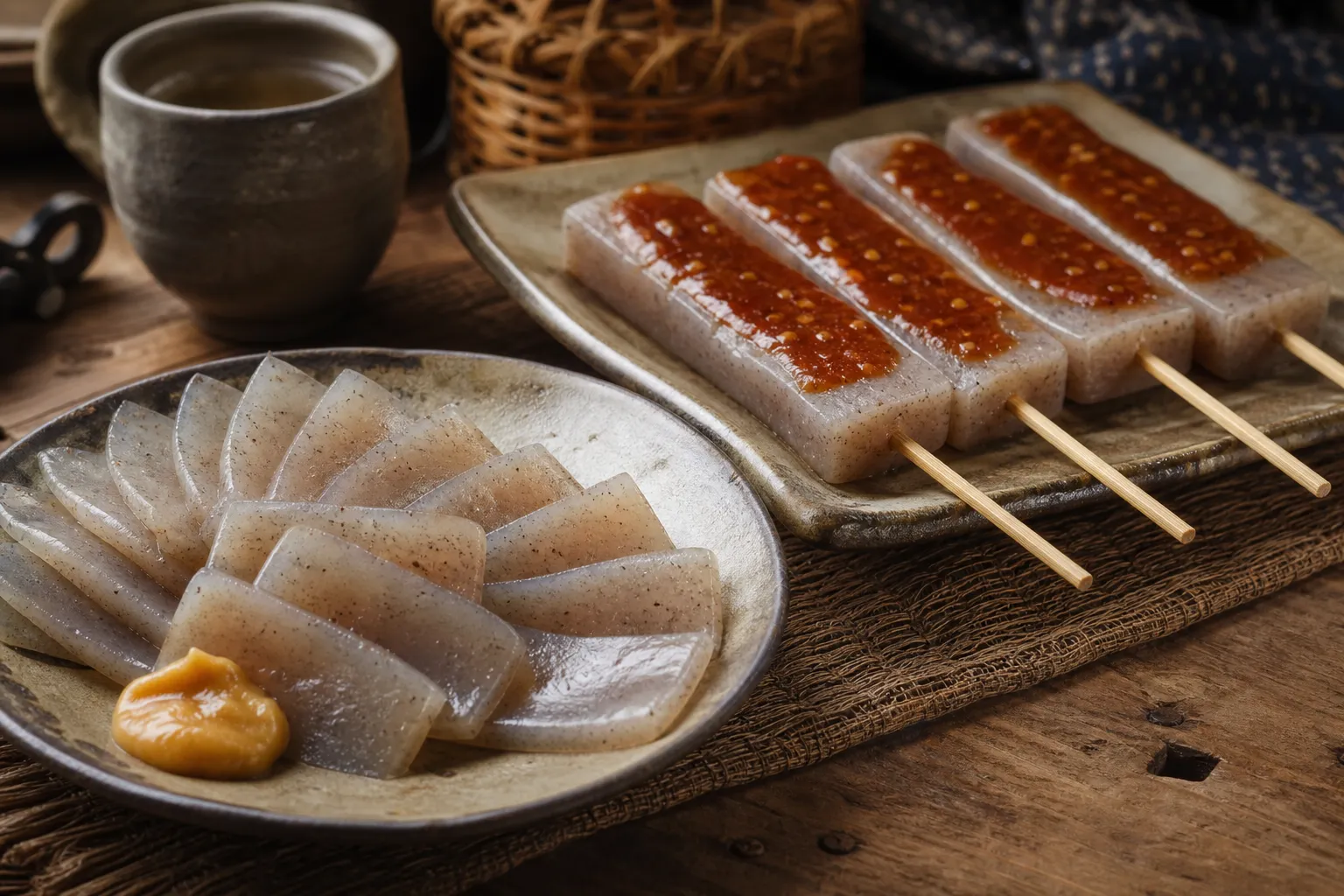
Local FoodGunma
Konnyaku Dishes (こんにゃく料理)
Wobbly, near-zero-calorie, and somehow deeply satisfying — Gunma turns a grey mountain tuber into springy sashimi and blistered miso skewers, and I will fight for it.
July 12, 2026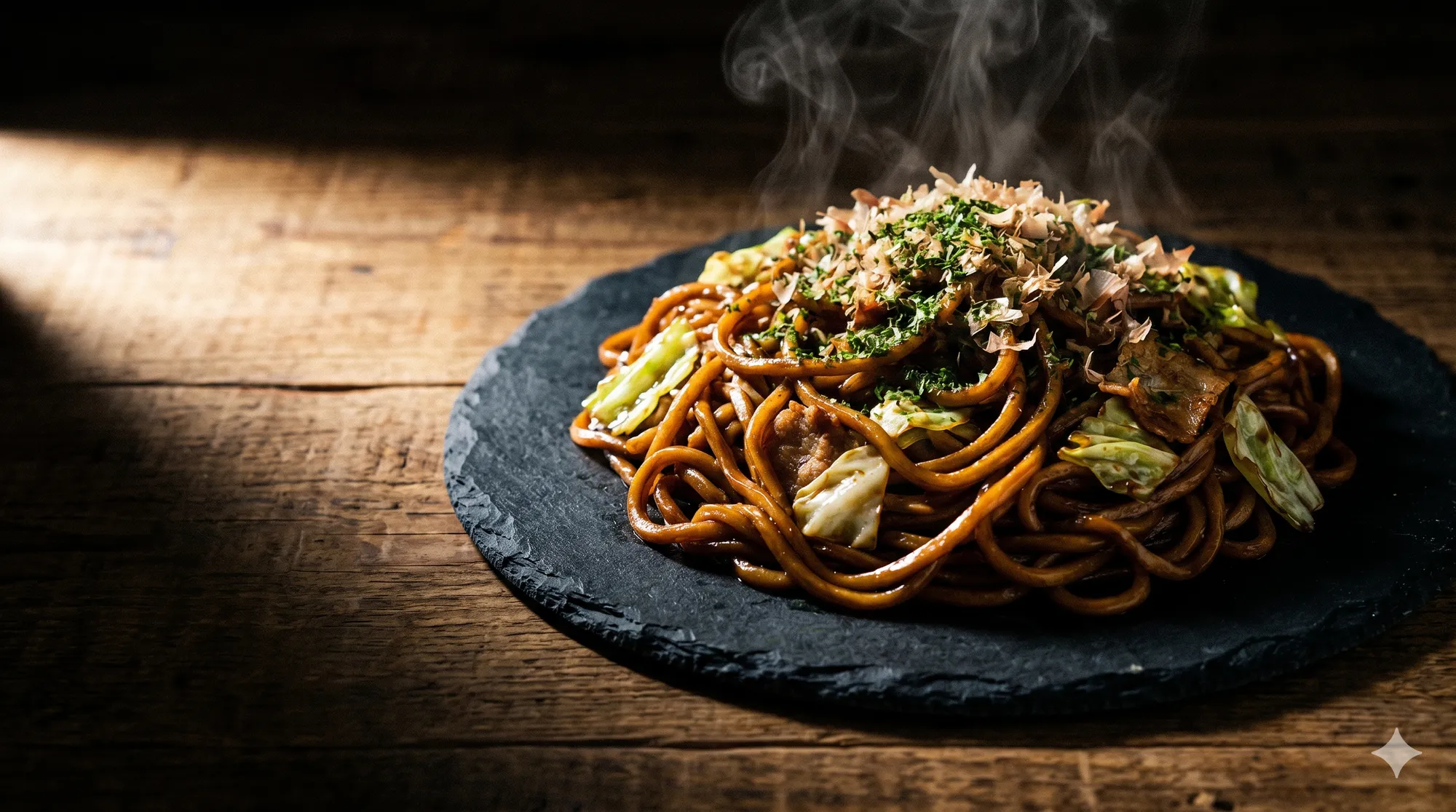
Local FoodOta, Gunma
Ota Yakisoba (太田焼きそば)
Noodles so thick they look like udon, slicked in a dark, intense sauce, with barely any toppings to get in the way. A factory town's honest, no-frills yakisoba — and it's proud of it.
July 21, 2024