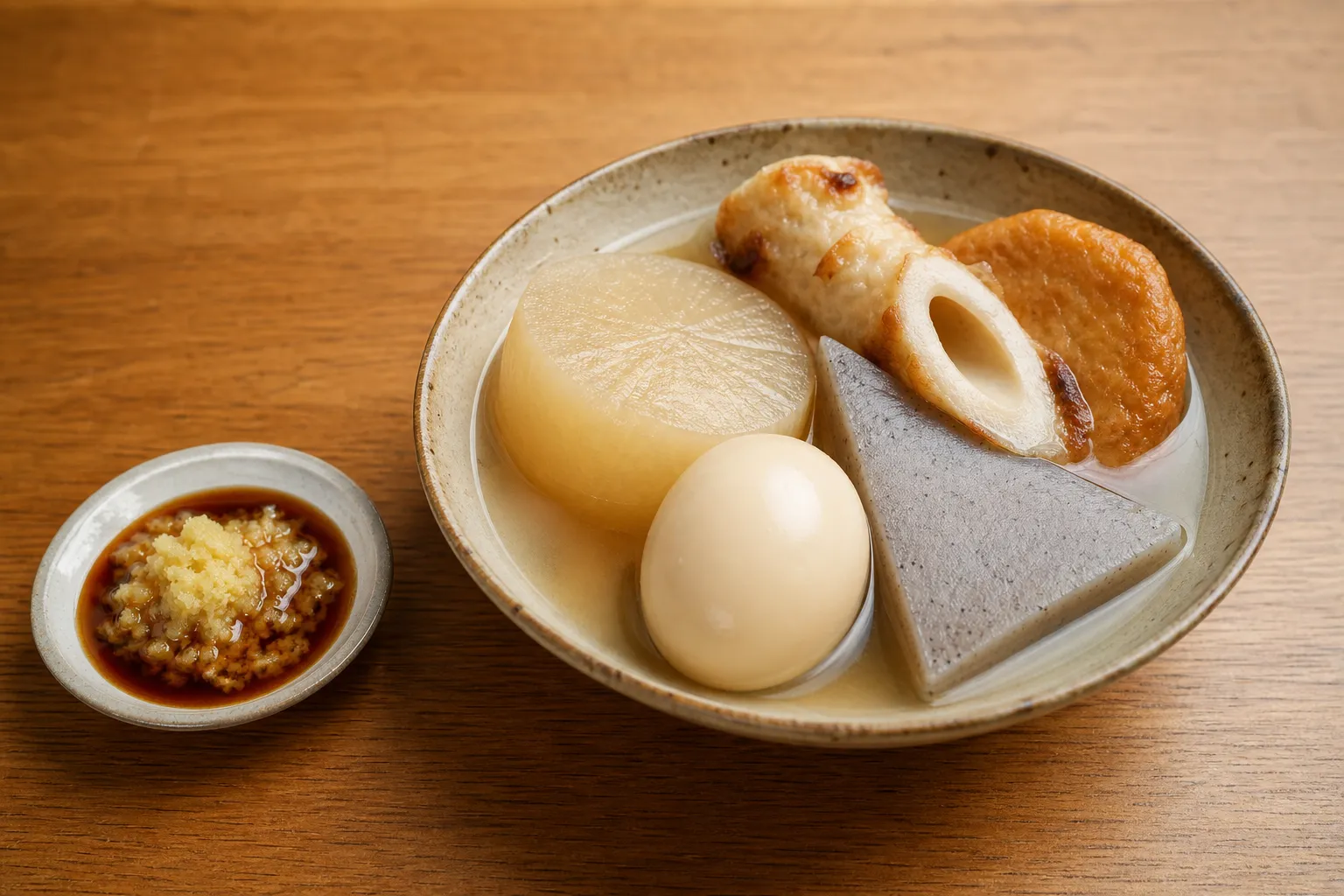
Somebody handed me a little saucer of what looked like plain soy sauce, and I almost didn't bother with it — oden, mustard, done, I know this dance. Then I noticed the grated ginger sitting in it like a secret. I dunked a piece of daikon in anyway. And it was like someone had quietly been improving oden this whole time without telling the rest of the country.
Share this dish


I dunked a chunk of daikon into the little dish of ginger soy sauce out of pure curiosity, and it rearranged how I think about oden completely — where has this been all my life?
🍜 Planning a food trip to Hyogo?Add this dish to my Food Trip →
 Add this dish to my Food Trip →
This is Himeji oden (姫路おでん), and the ingredients are exactly what you'd expect from oden anywhere: daikon radish, boiled egg, chikuwa (tube-shaped fish cake), konnyaku, simmered slowly in a dashi broth until everything tastes like the broth's best friend. What's different — the only thing that's different, and it changes everything — is what you dip it in. Instead of the sharp yellow karashi mustard that rides along with oden almost everywhere else in Japan, Himeji serves it with shoga-joyu, a soy sauce spiked with fresh grated ginger. Warm, a little sharp, faintly sweet where the mustard was just sharp. It's a small swap with a huge payoff.
A dockside habit that stuck
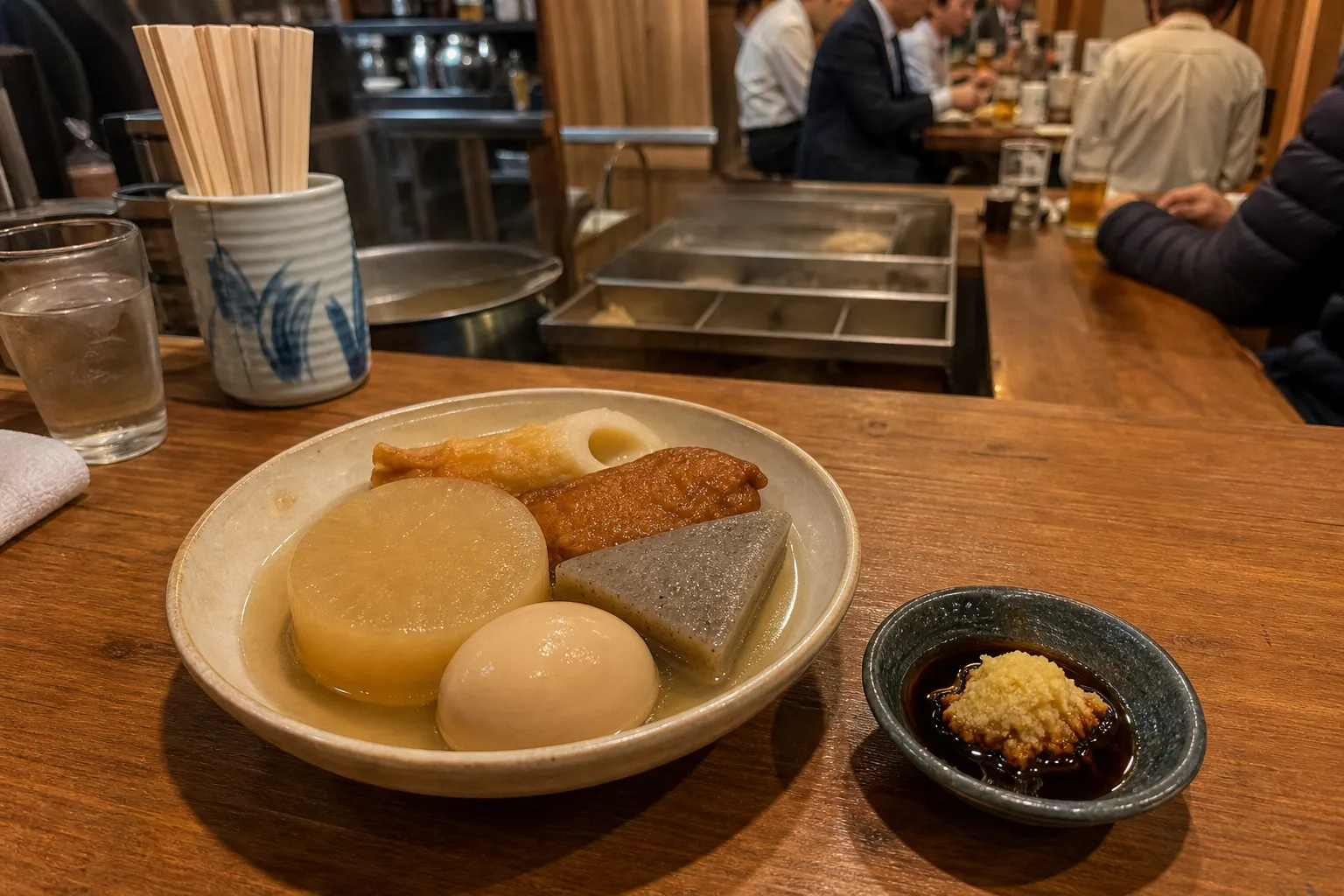
Himeji sits on the Seto Inland Sea, and the most common story locals tell is a practical one: fishermen and dockworkers wanted something to warm them up between hauls, and ginger — cheap, local, and good at cutting the smell of the sea and fish sauce alike — got mixed straight into the soy sauce dip. Whether or not that's the literal origin, it has the ring of truth: this is a working-class fix that turned into a point of civic pride. Ask someone from Himeji about it and you'll get the same tone people use to defend their hometown ramen — mild defensiveness, total conviction.
I think what I like most is that nobody in Himeji treats this as exotic. It's just Tuesday. You'll find shoga-joyu next to the register in ordinary supermarkets, sitting there as casually as soy sauce packets at a convenience store, which somehow made trying it for the first time feel less like a "food experience" and more like being let in on a local habit. I've been quietly annoyed at every other city's oden mustard ever since.
Why the ginger soy sauce actually works better
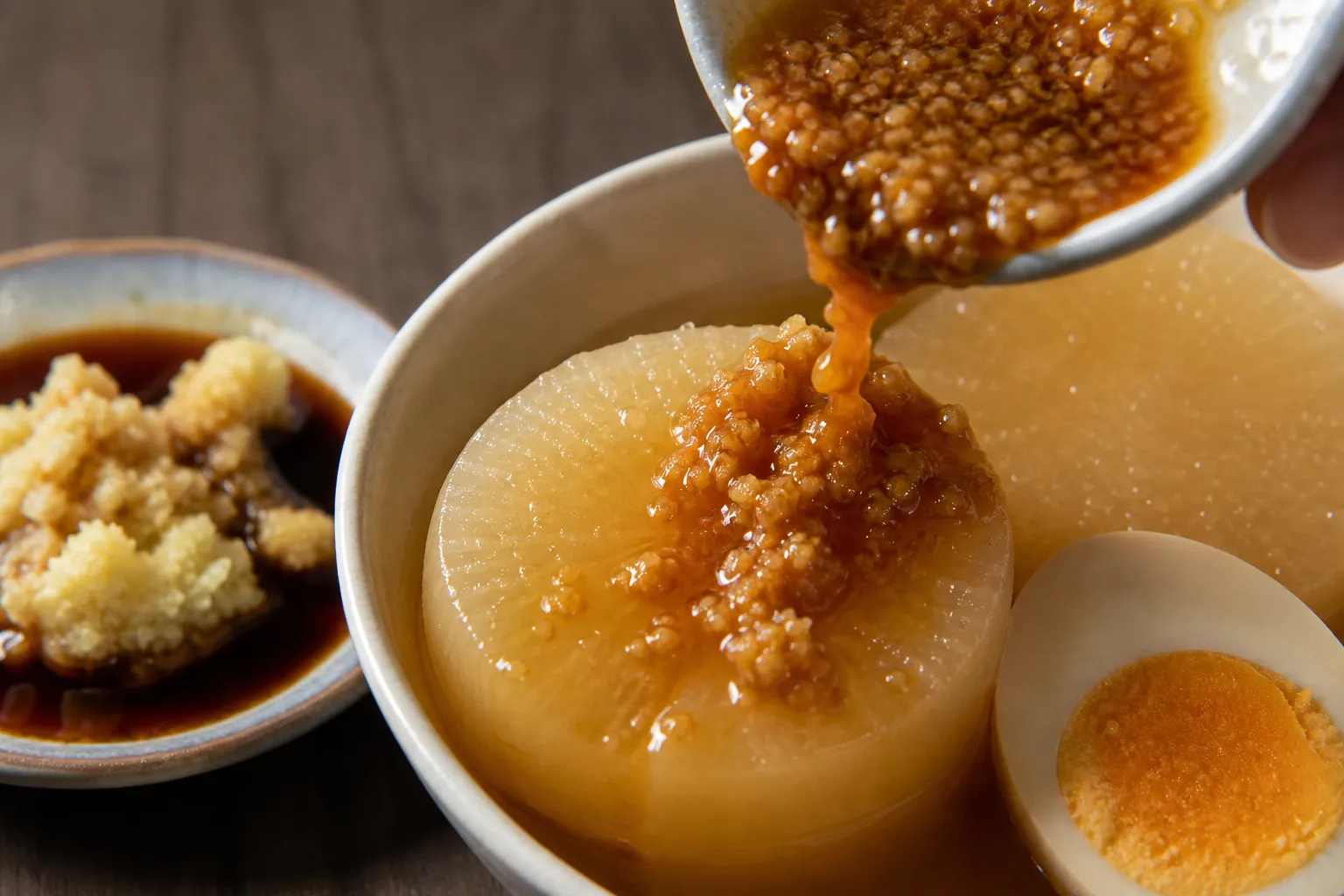
Mustard hits you in one sharp, one-note burst and then it's gone. Ginger soy sauce keeps unfolding — the soy sauce's salt-umami first, then the ginger's warmth building in behind it, with a faint natural sweetness that plain mustard never had. Against daikon, which has basically been simmering for hours soaking up dashi like a sponge, it's a genuinely better match: it complements the broth instead of just cutting through it.
It's worth being clear about how this is not the same move as other regional odens: Odawara's answer is plum miso (tangy, fruity, built around its fish-cake craft), Shizuoka's oden is skewered, dark, and dusted with fish powder, built for street-stall eating. Himeji doesn't change the pot or the format at all — same classic ingredients, same broth style you'd recognize anywhere — it changes only the dip. That's the whole regional signature, and it's exactly why it's easy to miss if nobody points it out to you.
How it's made
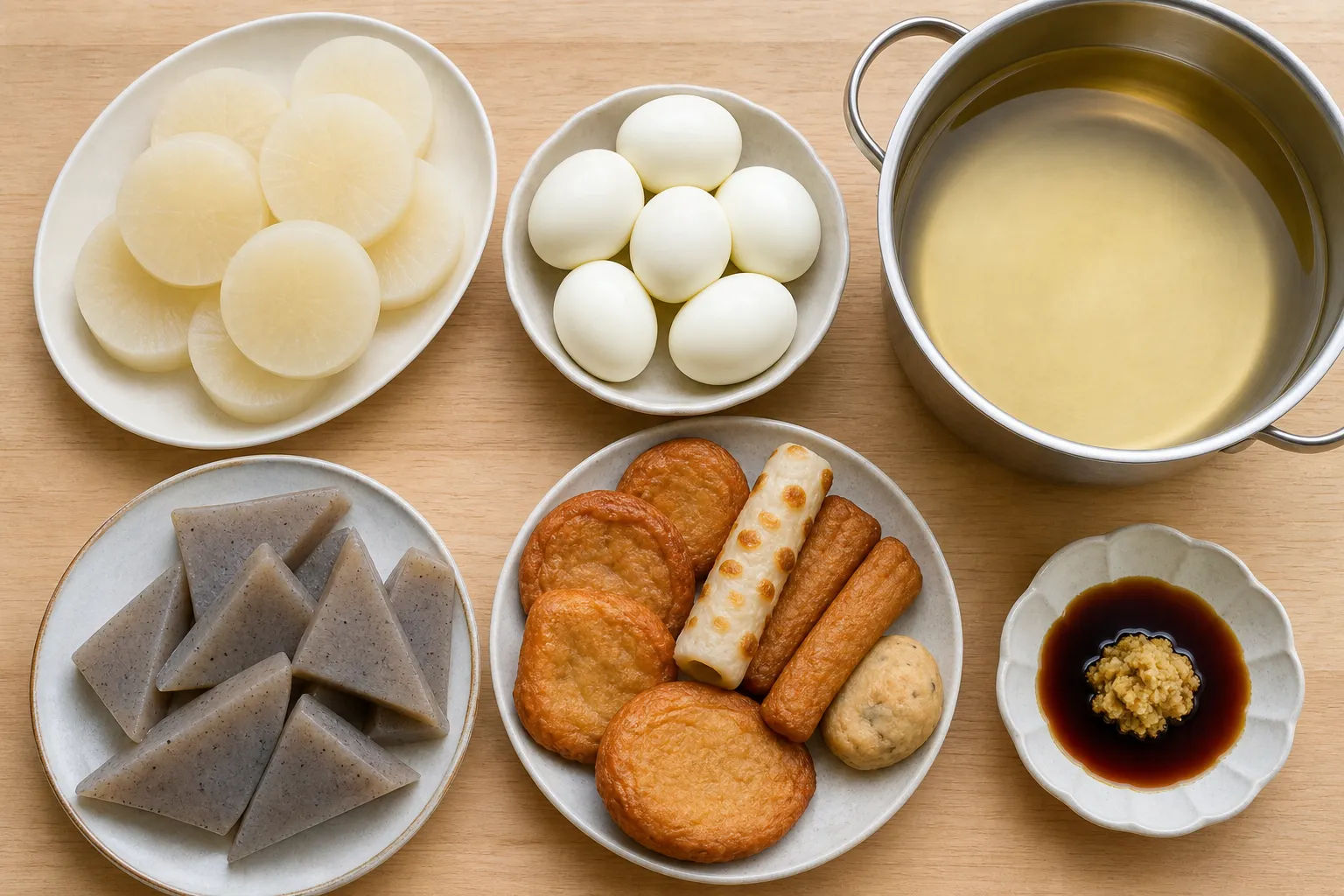
- Build a dashi broth from kelp and bonito, seasoned lightly with soy sauce
- Simmer daikon, boiled eggs, chikuwa, konnyaku, and other standard oden items slowly until they've absorbed the broth
- Grate fresh ginger and stir it into a small dish of soy sauce
- Serve the oden hot in a bowl or from the pot, with the ginger soy sauce on the side instead of mustard
- Dip each piece before eating — a little goes a long way
Before you go — dip it right
Your questions, answered honestly
"Do I have to specifically ask for the ginger soy sauce?" — In Himeji itself, often it's just there by default. Anywhere else in Japan, yes — ask for shoga-joyu, or you'll get standard mustard, which is fine but misses the entire point of the trip.
"Can I have both mustard and ginger soy sauce?" — Sure, nobody's stopping you, but try the ginger soy first, on its own, before you start mixing condiments. Give the actual regional thing a fair shot.
"Which piece should I try it with first?" — Daikon. It's the piece that's absorbed the most broth, and the ginger soy sauce plays off that best. Egg is a close second.
"Is this a full meal?" — It can flex either way — a few pieces as a snack with a drink, or a full bowl loaded up as dinner. Very normal to see people doing both, sometimes at the same counter.
What the staff will ask you
| You'll hear | Romaji | Meaning | Just say |
|---|---|---|---|
| 何にしますか? | Nani ni shimasu ka? | "Which pieces would you like?" | Daikon to tamago o kudasai (daikon and egg, please) |
| からしと生姜醤油、どちらにしますか? | Karashi to shoga-joyu, dochira ni shimasu ka? | "Mustard or ginger soy sauce?" | Shoga-joyu de kudasai (ginger soy sauce, please) |
| 温めますか? | Atatamemasu ka? | "Want it warmed up?" | Hai, onegaishimasu (yes, please) |
To order, just say "Shoga-joyu de kudasai" (生姜醤油でください) — "With ginger soy sauce, please."
Where to eat it
- Himeji, Hyogo — oden bars and izakaya throughout the city serve it this way as the local default; ask for shoga-joyu anywhere if it isn't already on the table.
- Around Himeji Station and Himeji Castle — a natural stop if you're visiting the castle; plenty of casual eateries nearby serve the local style.
- Local supermarkets and convenience stores in Himeji — worth a peek even if you're not planning to cook; shoga-joyu packets sold alongside the regular oden counter are a fun, cheap souvenir.
Menus and availability vary shop to shop, so check before you go — and if a place doesn't offer it automatically, just ask.
Soul Score
Local Roots4/5
First-Timer Friendly4/5
Adventure Level3/5
Comfort Level5/5
Travel Worthy4/5
These scores are one obsessed eater's gut feeling — not a verdict. A low number isn't a bad mark, just a different kind of adventure.
Planning what to eat in Hyogo?🐙 Hyogo Food Guide: Kobe Beef, Akashiyaki, and What to Eat Across Kobe, Himeji and Akashi →
Know someone planning Japan?
← All Articles
Local Food · Himeji, Hyogo
Still hungry?
Eat more from Hyogo
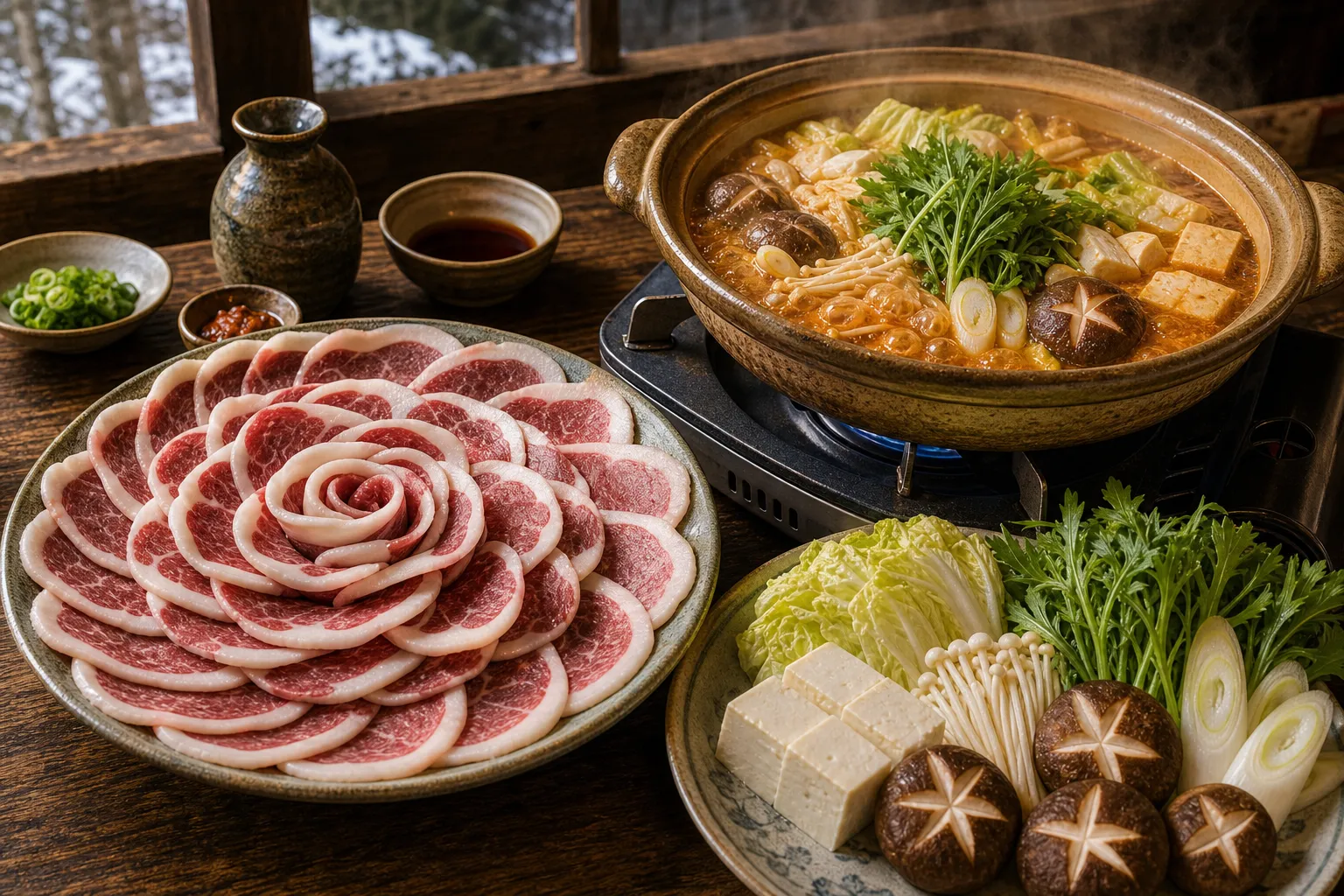
Local FoodTamba-Sasayama, Hyogo
Botan-nabe (牡丹鍋)
Wild boar, sliced so thin and marbled that it's laid out like the petals of a peony flower, then simmered in a sweet-savory miso broth in the mountains of Hyogo — the winter game dish that tastes nothing like you're bracing for.
July 10, 2026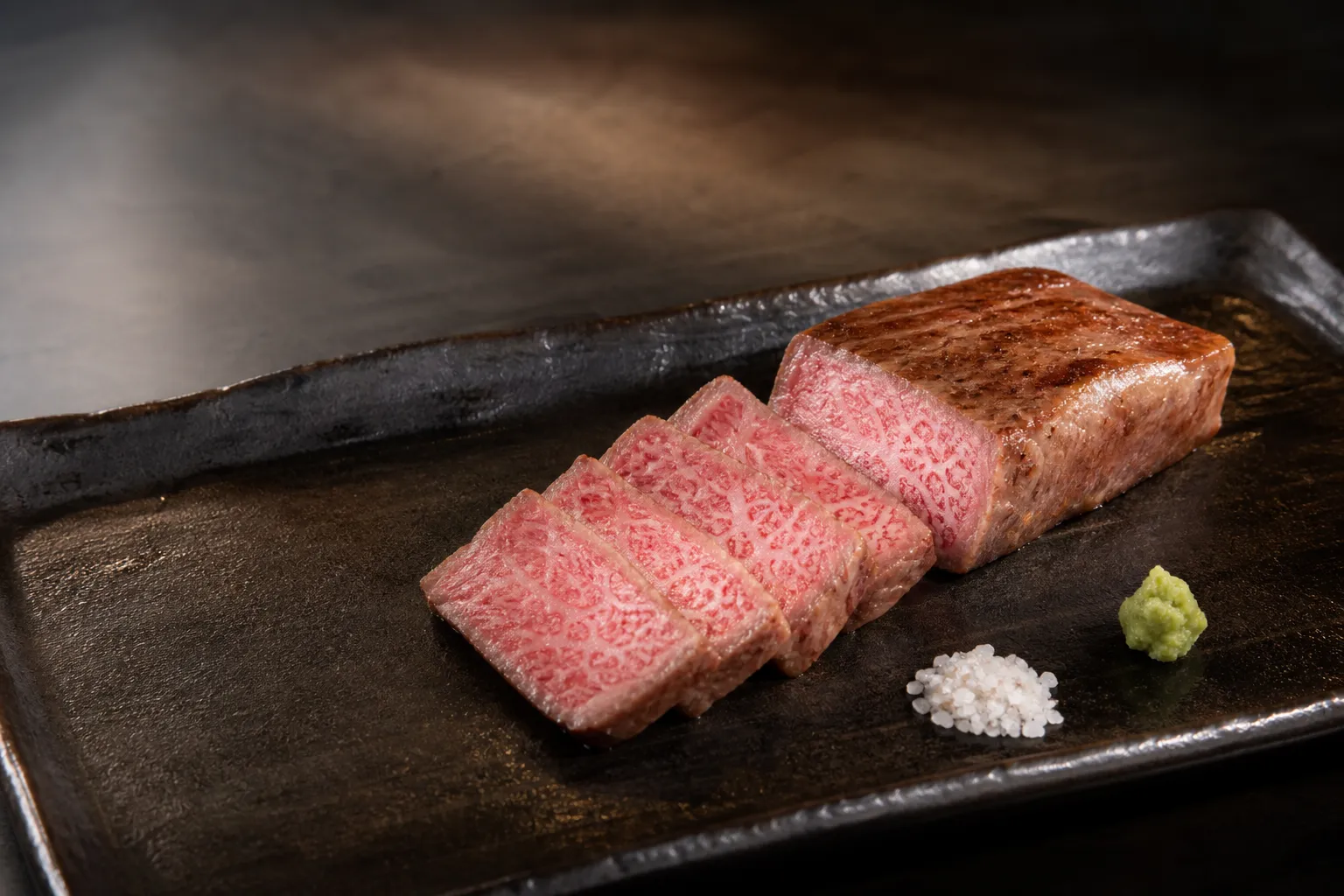
Local FoodKobe, Hyogo
Kobe Beef (神戸牛)
One bite and the fat basically evaporates on your tongue before you've even started chewing — I actually laughed out loud at the table, alone, like an idiot.
July 5, 2026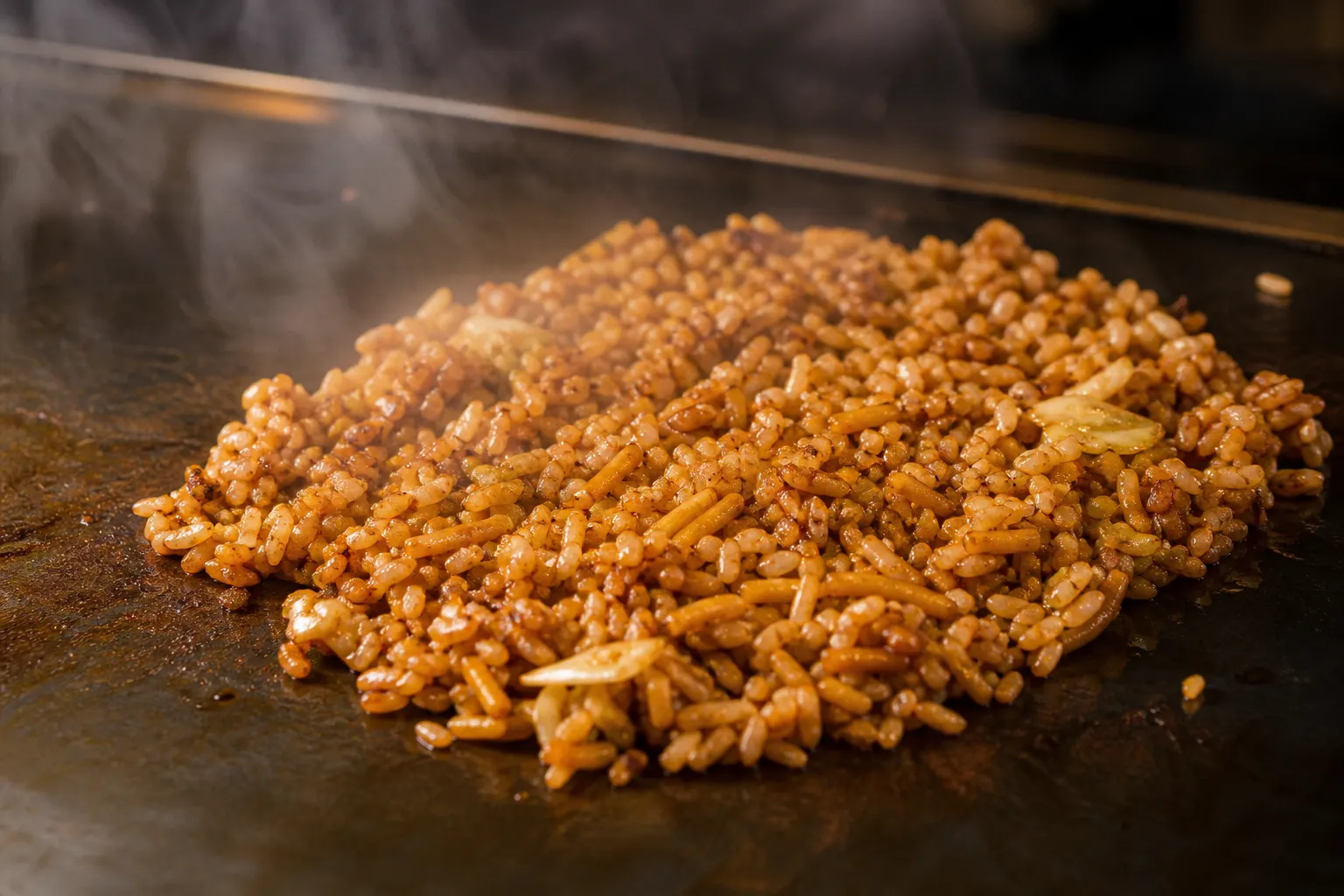
Local FoodKobe, Hyogo
Soba-meshi (そばめし)
Fried noodles and rice, chopped together and griddled into one browned, sauce-soaked, gloriously excessive plate — Kobe invented double carbs and I will defend it forever.
July 5, 2026