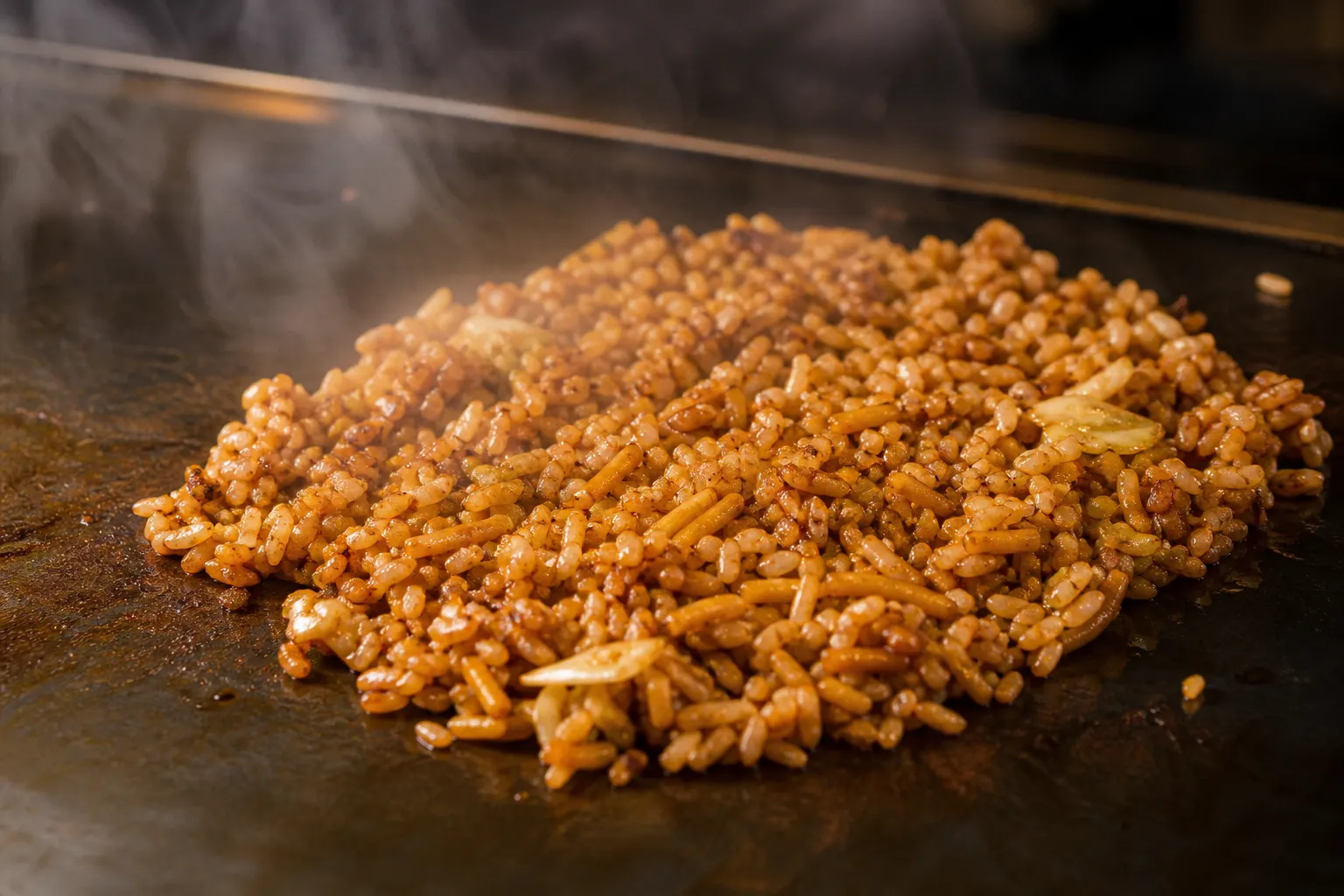
Noodles. And rice. In the same dish. Chopped together, fried on an iron plate, drowning in savory brown sauce, browned at the edges into little crispy bits. I looked at it, looked at the cook, looked back at the plate, and thought: this is the most gloriously unreasonable thing I have ever been served. Then I ate all of it and wanted more. Kobe, you absolute legends.
Share this dish


Fried noodles and rice, chopped together and griddled into one browned, sauce-soaked, gloriously excessive plate — Kobe invented double carbs and I will defend it forever.
🍜 Planning a food trip to Hyogo?Add this dish to my Food Trip →
 Add this dish to my Food Trip →
This is soba-meshi (そばめし) — literally "noodles-rice," and yes, it's exactly what it sounds like: yakisoba noodles and cooked rice, chopped up fine together and stir-fried on a hot teppan griddle with savory Worcestershire-style sauce until everything browns and mingles into one dense, savory, carb-on-carb creation. It is not fried rice. It is not plain yakisoba. It's a Kobe original, born in a specific working-class neighborhood, and it makes absolutely no apologies for being double the carbs. I love it with my whole heart.
Born on a Nagata griddle in working-class Kobe
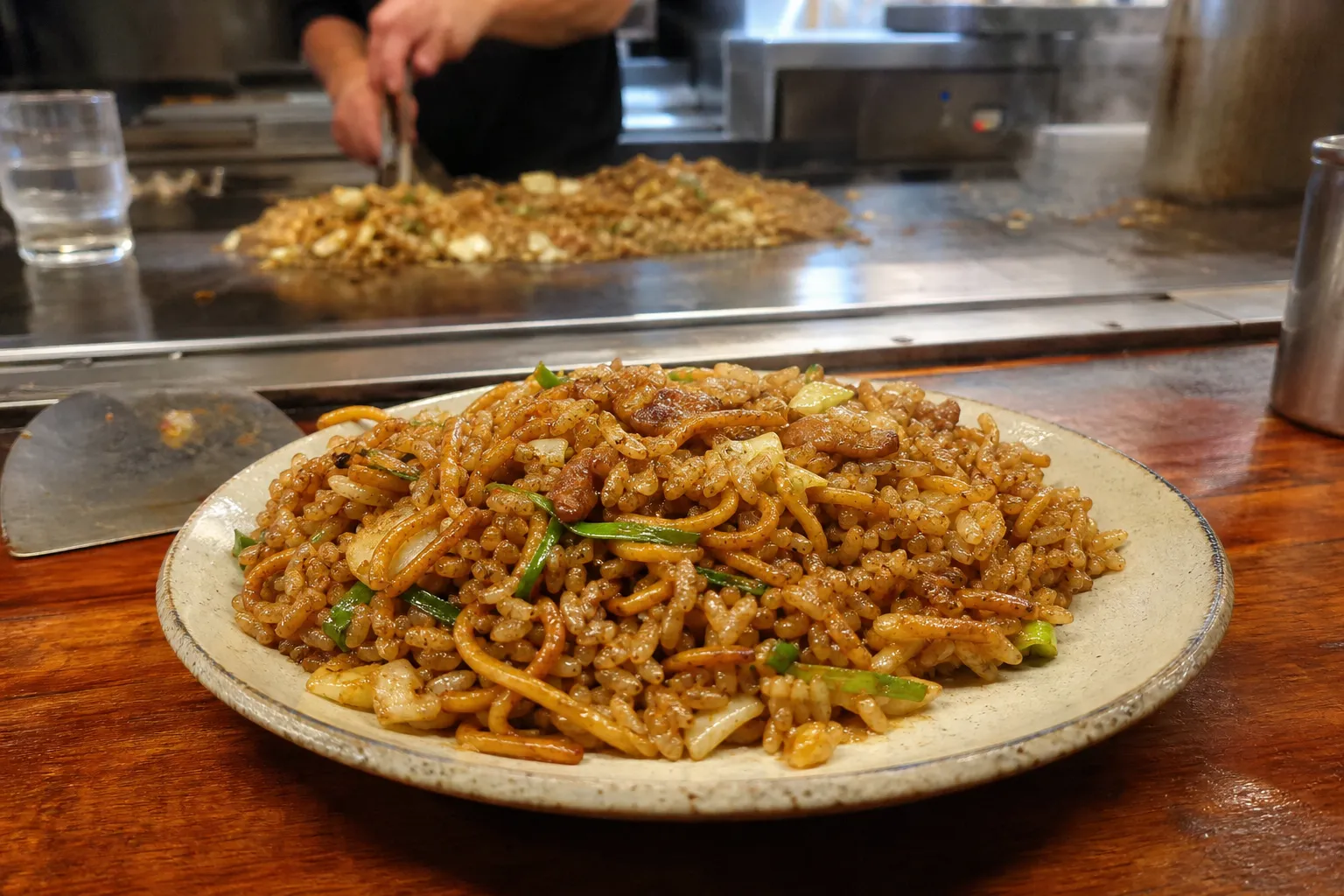
The origin story is beautiful and completely believable: in the Nagata ward of Kobe — a working-class, factory-heavy district — laborers would bring their own boxed rice (bento) into okonomiyaki and teppan shops and ask the cook to fry it up with the yakisoba on the griddle. Two cheap fillers, one hot plate, one enormous satisfying meal. The shops started making it as a proper menu item, and a local legend was born. Thrift and hunger invented it. That's my favorite kind of food history.
Nagata is also home to a large Korean-Japanese community and a tough, industrious, unpretentious food culture, and soba-meshi carries all of that DNA. It's not delicate. It's not photogenic in the polished sense. It's fuel — the kind you eat with a small metal spatula straight off the teppan, elbows on the counter, completely content. When I ate mine in Kobe, the cook chopped it against the griddle with two spatulas in a rhythm that sounded like a drum solo. I could have watched it all day.
Why chopping noodles into rice actually works
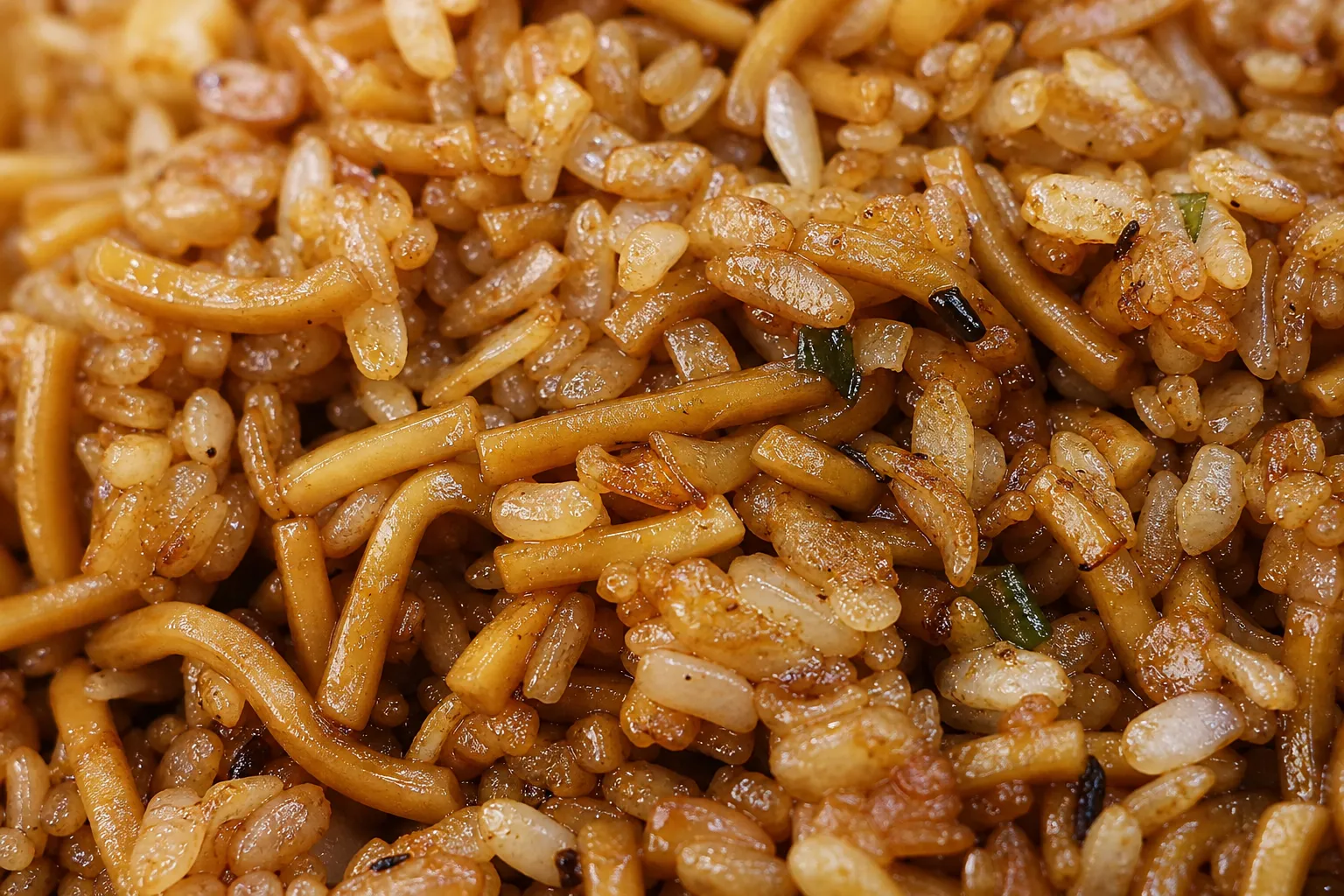
The trick is the chopping. The yakisoba noodles get cut down into short bits so they tangle evenly through the rice grains instead of fighting them — every spoonful gets both textures at once: the chew of noodle, the soft grain of rice, bound together. Fried hard on the iron plate, parts of it catch and crisp, giving you those little browned, almost-crunchy edges that are the best bites in the whole plate.
Then the sauce does what sauce does in every great Kobe/Osaka griddle dish: a savory, tangy, slightly sweet Worcestershire-style coating that soaks into both the rice and the noodles and glues the whole thing into one flavor. Some shops fold in bits of cabbage or beef tendon (suji) for a richer version. It's not spicy, not fancy, just deeply, stubbornly satisfying — the food equivalent of a warm, heavy blanket. I ate the whole plate and briefly considered a nap. No regrets.
How it's made
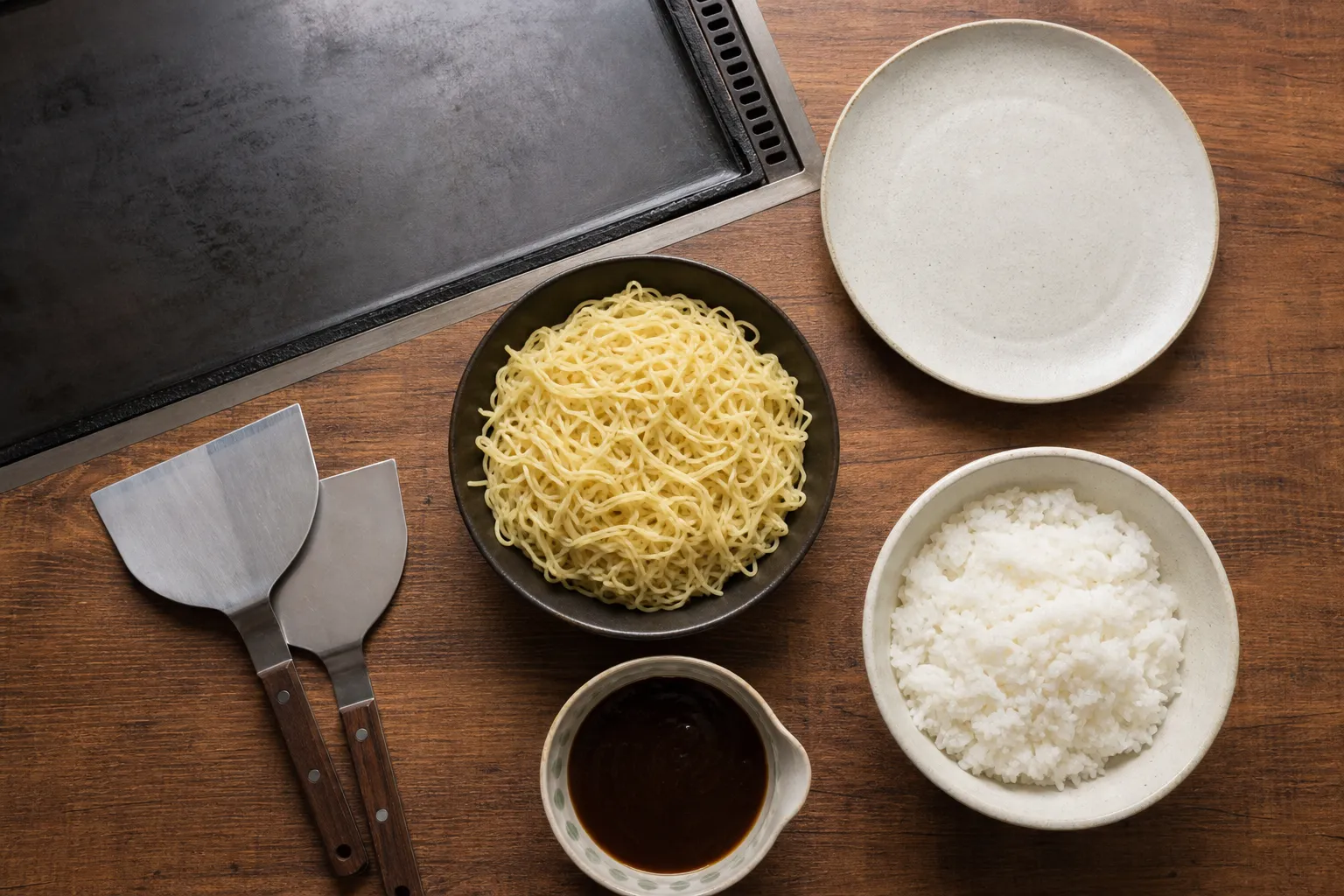
- Yakisoba noodles are griddled on a hot iron teppan, sometimes with cabbage or beef tendon
- Cooked rice is added straight onto the griddle alongside the noodles
- The cook chops everything together with spatulas, cutting the noodles short so they mix evenly into the rice
- Savory Worcestershire-style sauce is poured on and stir-fried in until browned and fragrant
- Served hot straight off the teppan, often eaten with a small metal spatula right at the counter
Before you go — order the double carbs proudly
Your questions, answered honestly
"Wait, it's really noodles AND rice together?" — Yes. On purpose. That's the entire dish and the entire point. It's a Kobe invention built on the logic that two cheap fillers on one griddle make one unbeatable meal. Don't fight it. Order it.
"Is it just yakisoba?" — No. Plain yakisoba is only noodles. Soba-meshi mixes the noodles with rice, chopped fine and fried together. Different texture, different beast. If you order yakisoba expecting soba-meshi, you'll miss the rice half of the magic.
"Is 'soba' here buckwheat noodles?" — No — this is a classic false friend. The "soba" here means yakisoba (Chinese-style wheat noodles), not the thin buckwheat soba you dip in cold dashi. No buckwheat involved.
"Can I add anything?" — Many shops offer it with an egg on top, or with beef tendon (suji) mixed in for a heartier version. A shake of aonori (seaweed) and a squeeze more sauce are fair game. Ask for suji-iri if you want the tendon version.
What the staff will ask you
| You'll hear | Romaji | Meaning | Just say |
|---|---|---|---|
| 玉子つけますか? | Tamago tsukemasu ka? | "Add an egg?" | Onegaishimasu (yes, please) |
| すじ入りにしますか? | Suji-iri ni shimasu ka? | "With beef tendon mixed in?" | Suji-iri de (with tendon, please) |
| ソース多めにしますか? | Sōsu ōme ni shimasu ka? | "Extra sauce?" | Ōme de onegaishimasu (extra, please) |
To order, just say "Soba-meshi o kudasai" (そばめしをください) — "Soba-meshi, please."
Where to eat it
- Nagata ward, Kobe — the birthplace, dense with teppan and okonomiyaki shops that treat soba-meshi as a house specialty. Go to the source.
- Okonomiyaki and teppan diners across Kobe — soba-meshi is a standard menu item at griddle shops throughout the city.
- Casual downtown griddle counters around Kobe — look for the flat iron teppan and the two-spatula chopping rhythm.
Shops, hours, and menus change, so check current details before you go — and confirm you're getting noodles-and-rice soba-meshi, not plain yakisoba.
Soul Score
Local Roots4/5
First-Timer Friendly4/5
Adventure Level3/5
Comfort Level5/5
Travel Worthy3/5
These scores are one obsessed eater's gut feeling — not a verdict. A low number isn't a bad mark, just a different kind of adventure.
Know someone planning Japan?
← All Articles
Local Food · Kobe, Hyogo
Still hungry?
Eat more from Hyogo
Local FoodTamba-Sasayama, Hyogo
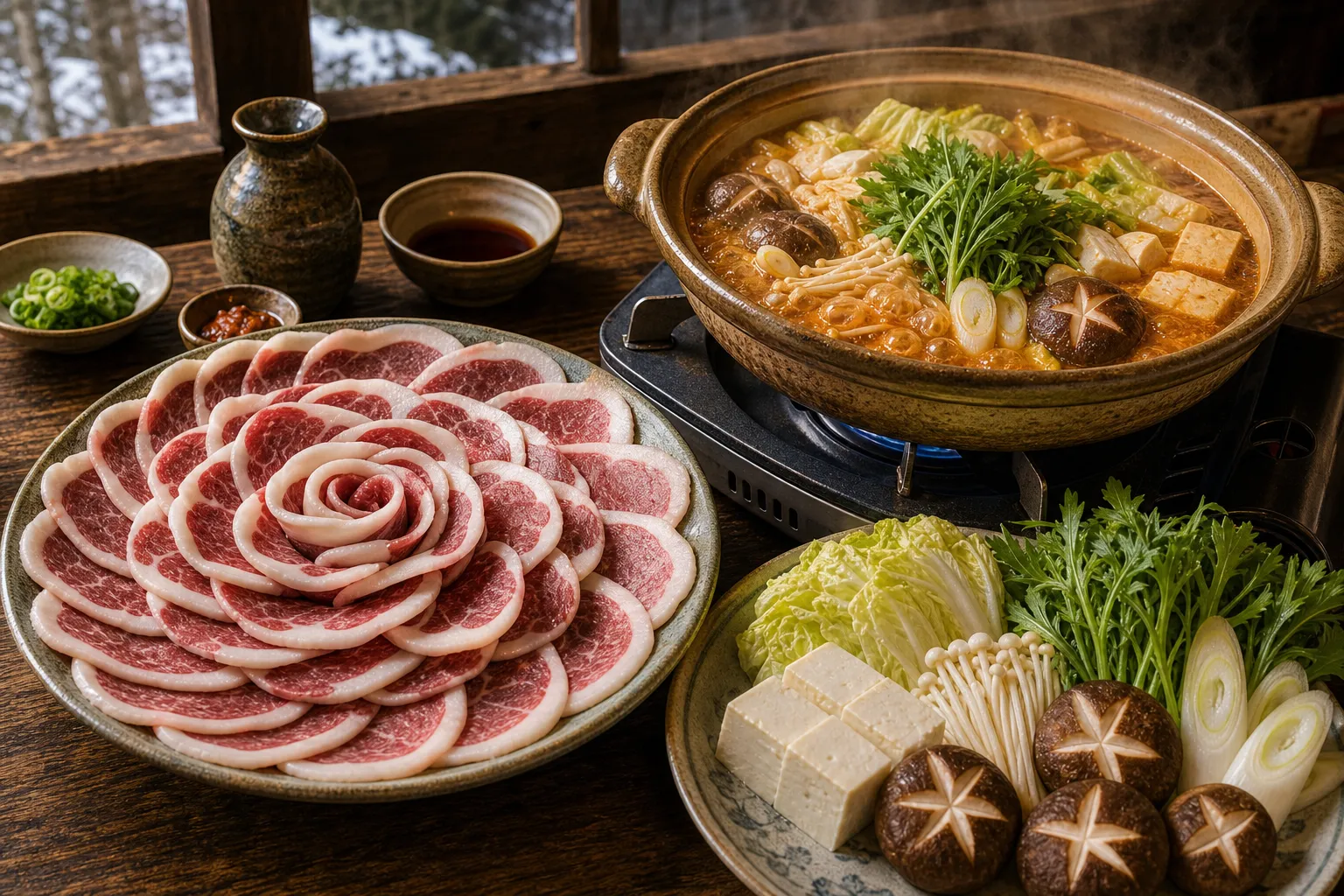
Botan-nabe (牡丹鍋)
Wild boar, sliced so thin and marbled that it's laid out like the petals of a peony flower, then simmered in a sweet-savory miso broth in the mountains of Hyogo — the winter game dish that tastes nothing like you're bracing for.
July 10, 2026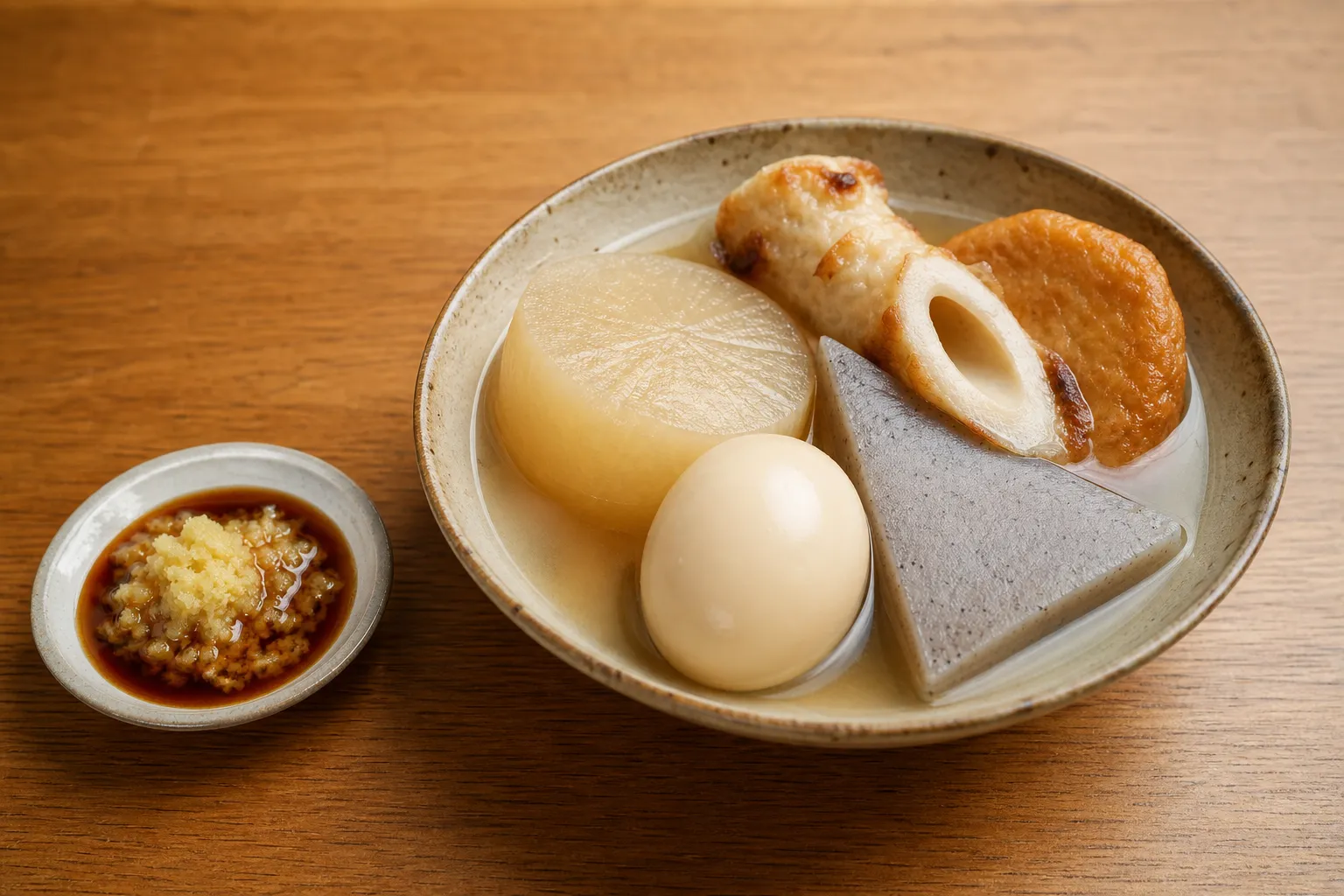
Local FoodHimeji, Hyogo
Himeji Oden (姫路おでん)
I dunked a chunk of daikon into the little dish of ginger soy sauce out of pure curiosity, and it rearranged how I think about oden completely — where has this been all my life?
July 5, 2026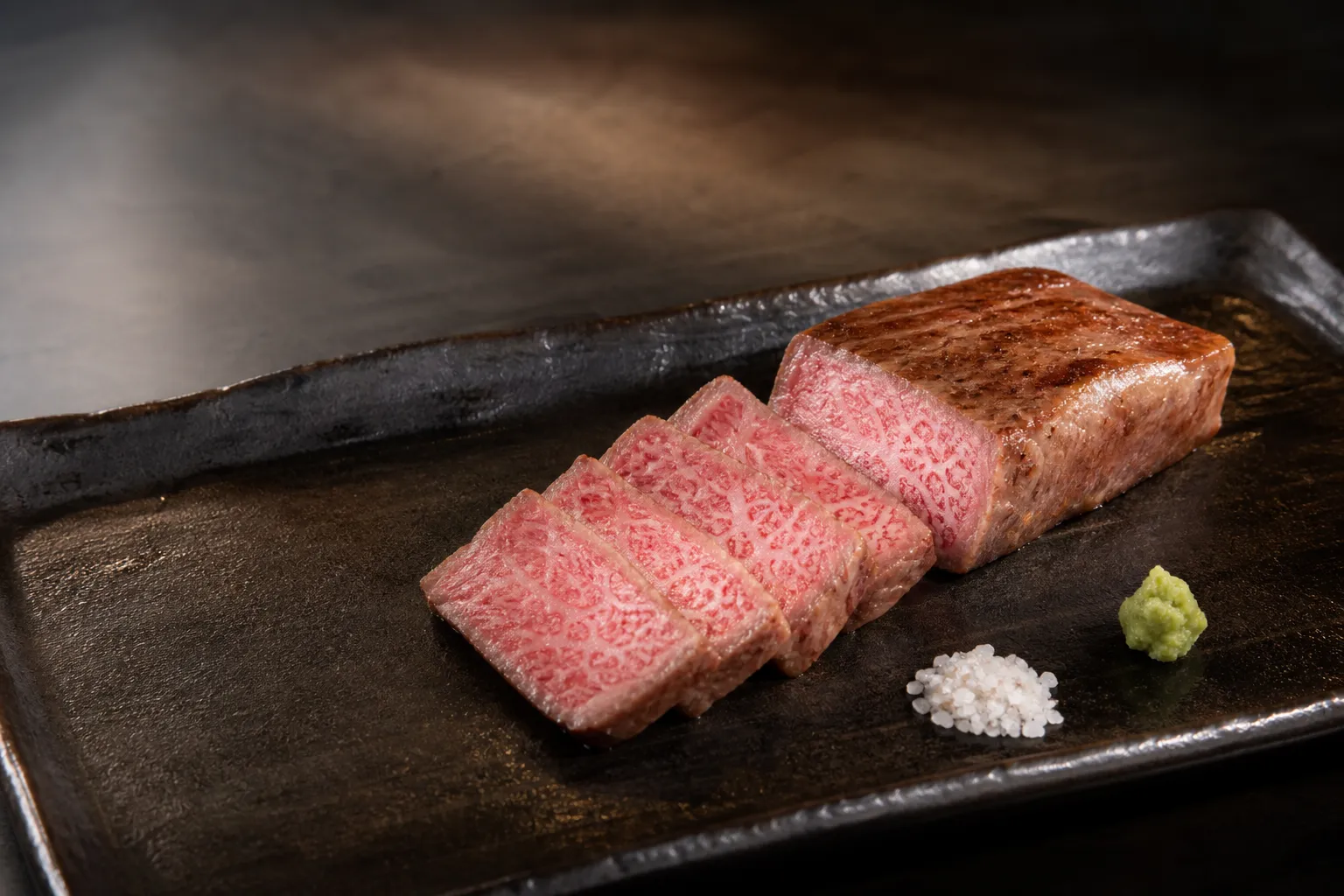
Local FoodKobe, Hyogo
Kobe Beef (神戸牛)
One bite and the fat basically evaporates on your tongue before you've even started chewing — I actually laughed out loud at the table, alone, like an idiot.
July 5, 2026