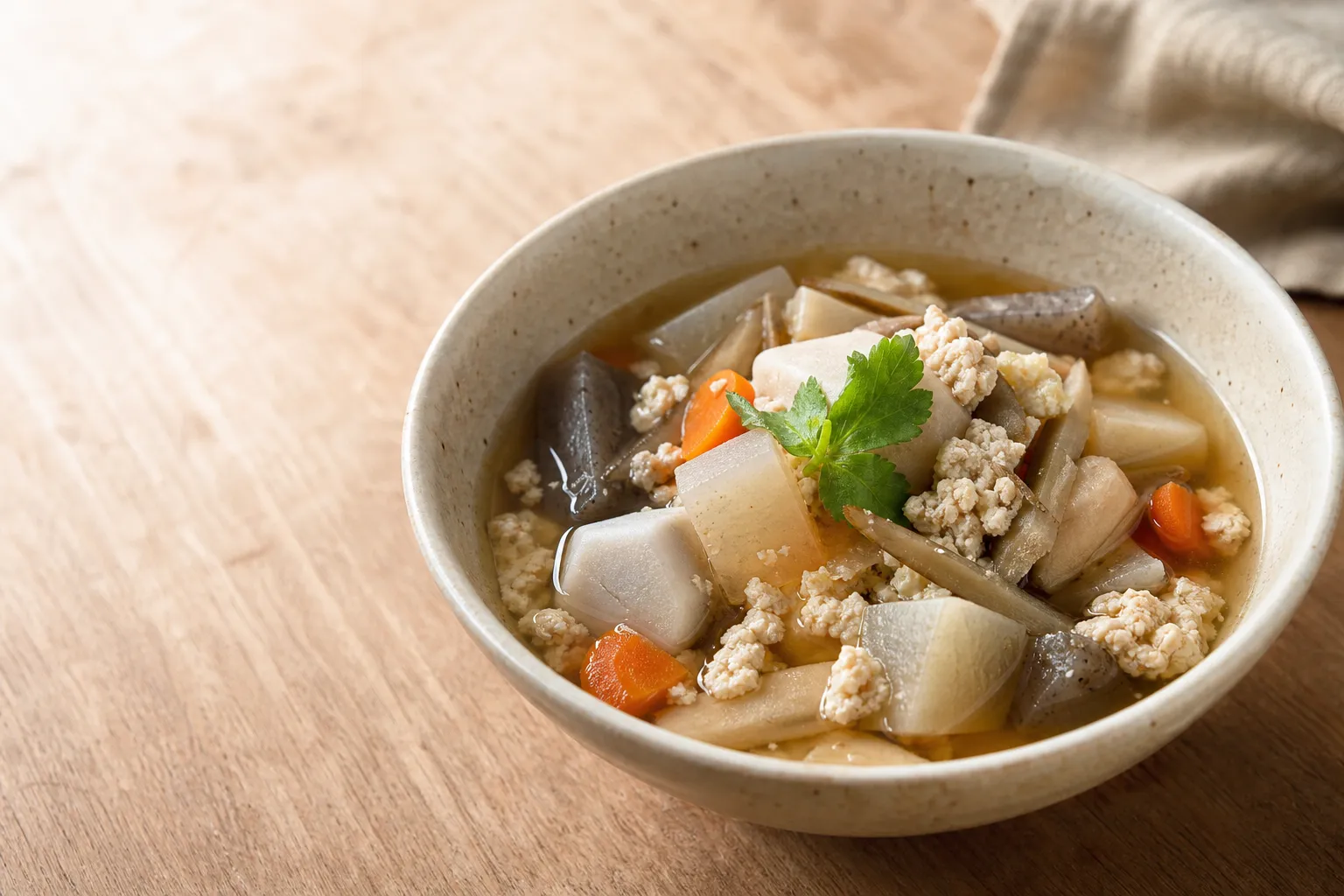
The tofu wasn't sliced. It was torn, in rough uneven chunks, like someone had given up on being neat about it entirely — and it was the best bowl of soup I'd had all week.
Share this dish


A monk broke a block of tofu apart with his bare hands instead of throwing it away, sautéed it with root vegetables, and accidentally invented one of Japan's most comforting soups.
🍜 Planning a food trip to Kanagawa?Add this dish to my Food Trip →
 Add this dish to my Food Trip →
That rough, torn tofu is basically the whole personality of kenchin-jiru in one detail. This is a clear, soy-seasoned soup built around root vegetables — daikon, carrot, burdock, taro — along with konnyaku and tofu that's been crumbled by hand and sautéed in sesame oil before anything gets simmered. It comes from a Zen Buddhist temple kitchen in Kamakura, it was originally entirely vegetarian, and it might be the single most quietly comforting bowl of soup I've had in this country. No dashi made from fish, no meat, historically — just vegetables, tofu, sesame oil, and patience.
Born in a temple kitchen that hated waste
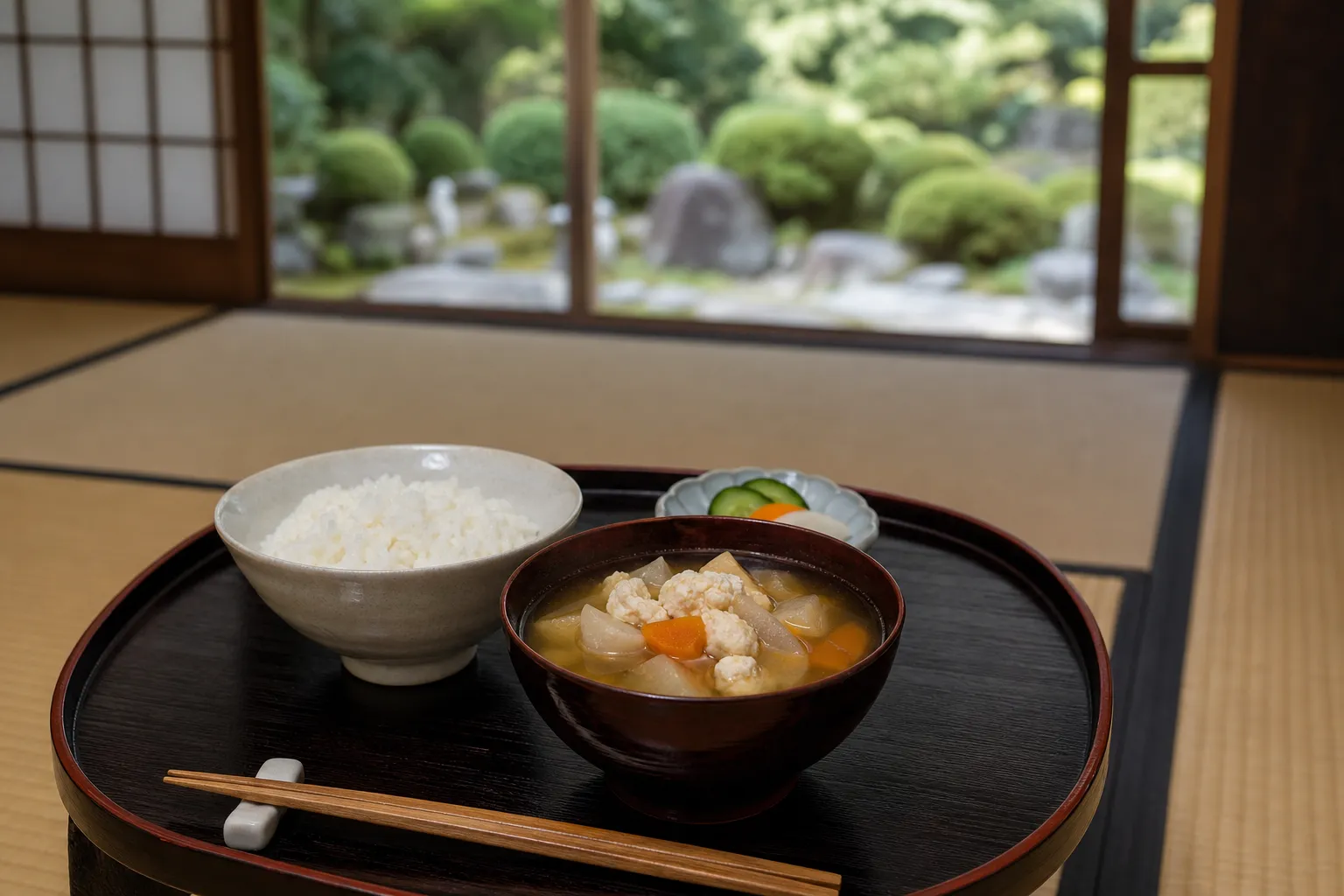
The story traces back to Kencho-ji, a major Zen temple in Kamakura founded in the 13th century — in fact, most food historians agree the name kenchin is a corruption of Kencho-ji, the soup essentially named after its birthplace. The temple story goes that a monk accidentally dropped a block of tofu, and rather than discard the crumbled pieces, sautéed them with vegetable scraps in sesame oil and simmered the lot into soup. Whether that exact story is literal or legend, the spirit of it rings true: this is shojin ryori, the deliberately humble, no-waste, meat-free cooking style of Buddhist temple kitchens, and you can taste that restraint in every spoonful.
I find something quietly moving about a dish whose entire philosophy is "don't waste the vegetable scraps, don't waste the broken tofu, don't waste anything" — and that it grew from a single temple's kitchen into a beloved regional soup served in ordinary homes and restaurants across Kamakura and well beyond. It's humble food that never needed to dress itself up to be good.
Not miso soup, and not tonjiru either
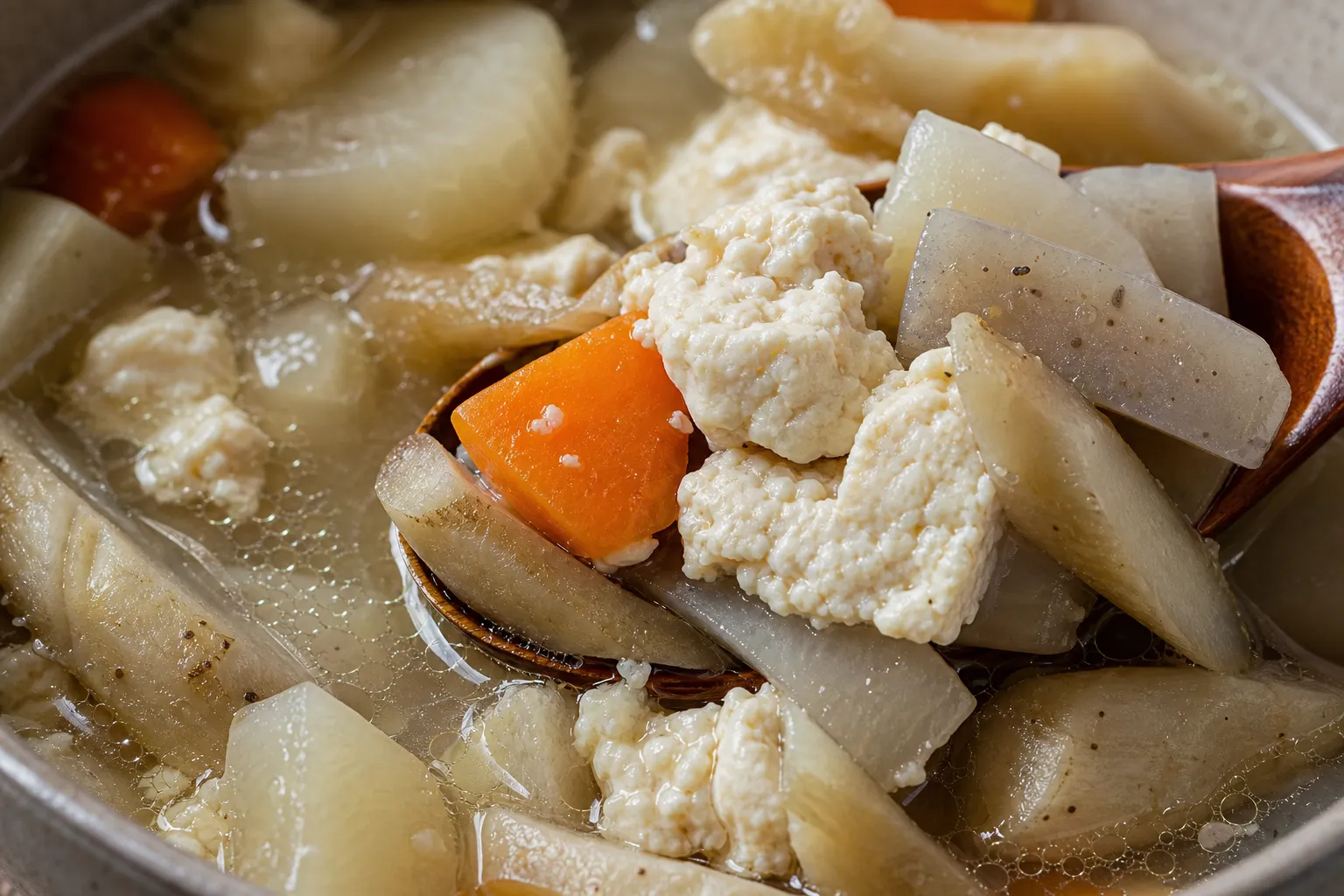
If you've had a lot of Japanese soup, it's easy to lump this in with miso soup or tonjiru (pork and vegetable miso soup), and that undersells it. Kenchin-jiru is seasoned with soy sauce, not miso, which gives it a clearer, saltier, more savory broth rather than the cloudy, slightly sweet body miso soup has. It's also traditionally meat-free — the whole point at its Kencho-ji origin was that it couldn't contain meat, being temple food — so unlike tonjiru, there's no pork fat rounding out the broth. What rounds it out instead is the sesame oil the vegetables are sautéed in before the liquid ever goes in, which gives the broth a warm, nutty backbone that plain miso soup doesn't have.
It's also just heartier. This isn't a light broth with a few cubes of tofu floating in it — it's thick with chunks of daikon, carrot, burdock root, and taro, plus slippery ribbons of konnyaku, all simmered long enough that the vegetables turn soft and the flavors fully meld. It reads less like a soup course and more like a meal in a bowl, especially on a cold day, and after one bowl at a Kamakura temple on a chilly afternoon I understood immediately why this became comfort food rather than a fancy course.
How it's made
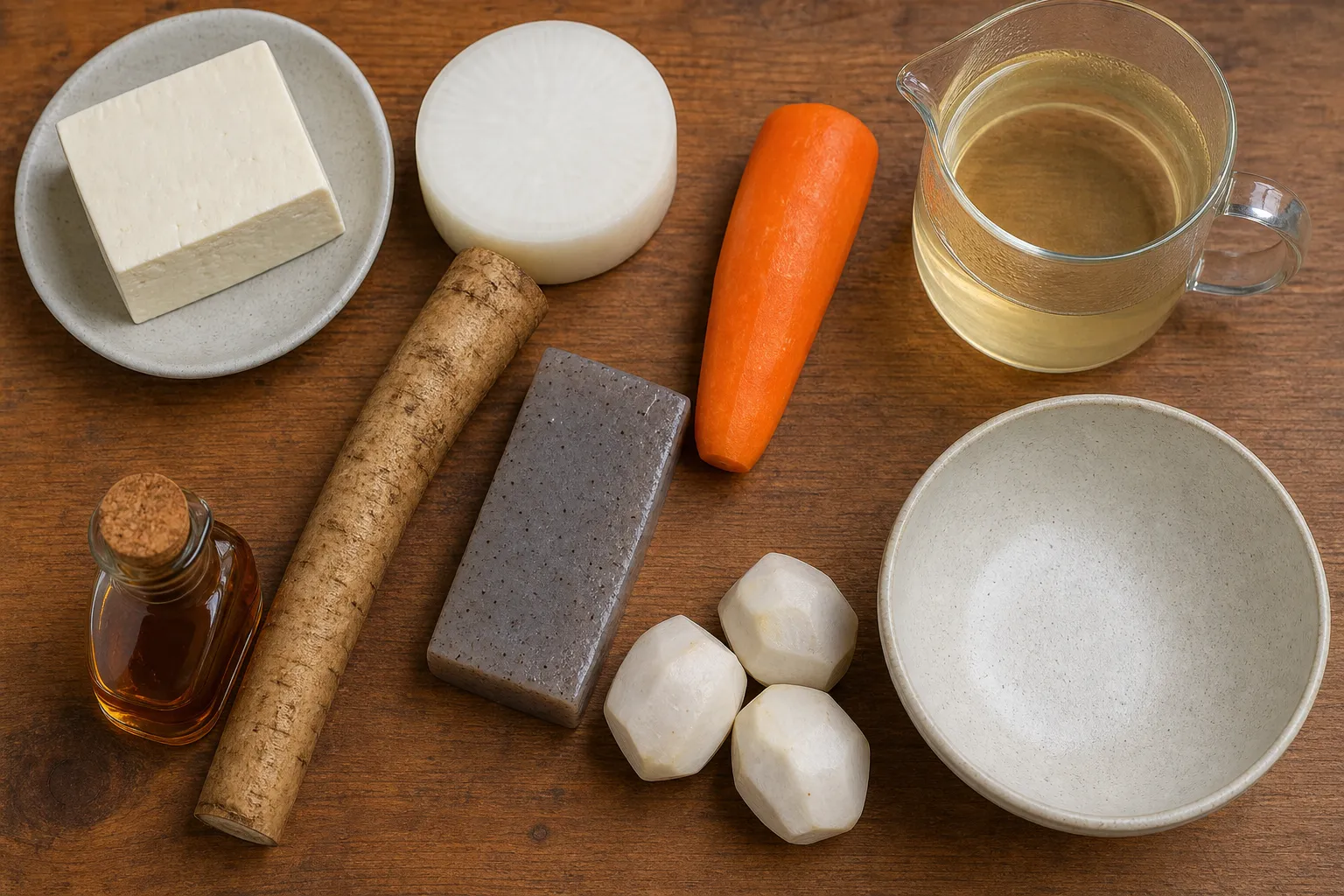
- Root vegetables — daikon, carrot, burdock, taro — are cut into chunks, along with konnyaku sliced or torn into bite-sized pieces
- A block of tofu is crumbled by hand rather than cut cleanly, staying true to the dish's origin
- Everything is sautéed together in sesame oil until lightly browned and fragrant
- Dashi (traditionally kelp-based to keep it meat-free) and soy sauce are added, and the whole pot is simmered until the vegetables turn tender
- Served hot, often with a few slivers of green onion on top, sometimes alongside plain rice
Modern versions outside temple kitchens sometimes add a little pork or chicken for extra richness, which technically drifts it toward tonjiru territory — if the traditional, fully vegetarian version matters to you, it's worth asking before you order.
Before you go — what to know about a bowl of temple soup
Your questions, answered honestly
"Is this the same as miso soup?" — No — kenchin-jiru is soy-seasoned, not miso-seasoned, and it's much chunkier and heartier, closer to a stew than the light, everyday miso soup you'd get alongside a set meal.
"Is it vegetarian/vegan?" — Traditionally, yes — it originates as Buddhist temple food and was designed to contain no meat or fish. Modern restaurant versions sometimes add pork, so if you need it strictly meat-free, ask before ordering, and check whether the dashi used is kelp-based or bonito-based.
"How is it different from tonjiru?" — Tonjiru is a miso-based pork-and-vegetable soup; kenchin-jiru is soy-based, traditionally meat-free, and features tofu sautéed in sesame oil as a core ingredient rather than an afterthought.
"Is it a full meal or a side?" — It can go either way — hearty enough to be a light lunch with rice, but also commonly served as a warming side alongside a larger meal, especially in colder months.
"Why is the tofu torn instead of cut?" — That's tradition, tracing back to the dish's temple origin story — hand-crumbled tofu instead of a clean knife cut. It also gives the tofu more rough surface area to soak up the broth.
What the staff will ask you
| You'll hear | Romaji | Meaning | Just say |
|---|---|---|---|
| お肉は入っていますが大丈夫ですか? | Oniku wa haitte imasu ga daijōbu desu ka? | "This has meat in it, is that okay?" | Daijōbu desu (that's fine) / Nuki de onegaishimasu (without it, please) |
| ご飯もご一緒にどうですか? | Gohan mo issho ni dō desu ka? | "Would you like rice with that?" | Onegaishimasu (yes, please) |
| 精進料理でよろしいですか? | Shōjin ryōri de yoroshii desu ka? | "Is the vegetarian temple-style version okay?" | Hai, sore de onegaishimasu (yes, that one please) |
To order, just say "Kenchin-jiru kudasai" (けんちん汁ください) — "Kenchin-jiru, please."
Where to eat it
- Kencho-ji Temple, Kamakura — the dish's namesake and spiritual home; some temple-adjacent eateries and shojin ryori restaurants in the area serve a version close to the traditional recipe.
- Restaurants and cafes around Kamakura Station and the temple district, many of which offer kenchin-jiru as a set-meal side, especially in cooler seasons.
- Shojin ryori (Buddhist temple cuisine) restaurants more broadly across Kamakura for the fully vegetarian, historically faithful version.
Menus and whether the dish is kept strictly meat-free vary by restaurant, so it's worth asking directly if you want the traditional vegetarian version rather than a modern pork-added take.
Soul Score
Local Roots5/5
First-Timer Friendly4/5
Adventure Level3/5
Comfort Level5/5
Travel Worthy3/5
These scores are one obsessed eater's gut feeling — not a verdict. A low number isn't a bad mark, just a different kind of adventure.
Know someone planning Japan?
← All Articles
Local Food · Kamakura, Kanagawa
Still hungry?
Eat more from Kanagawa
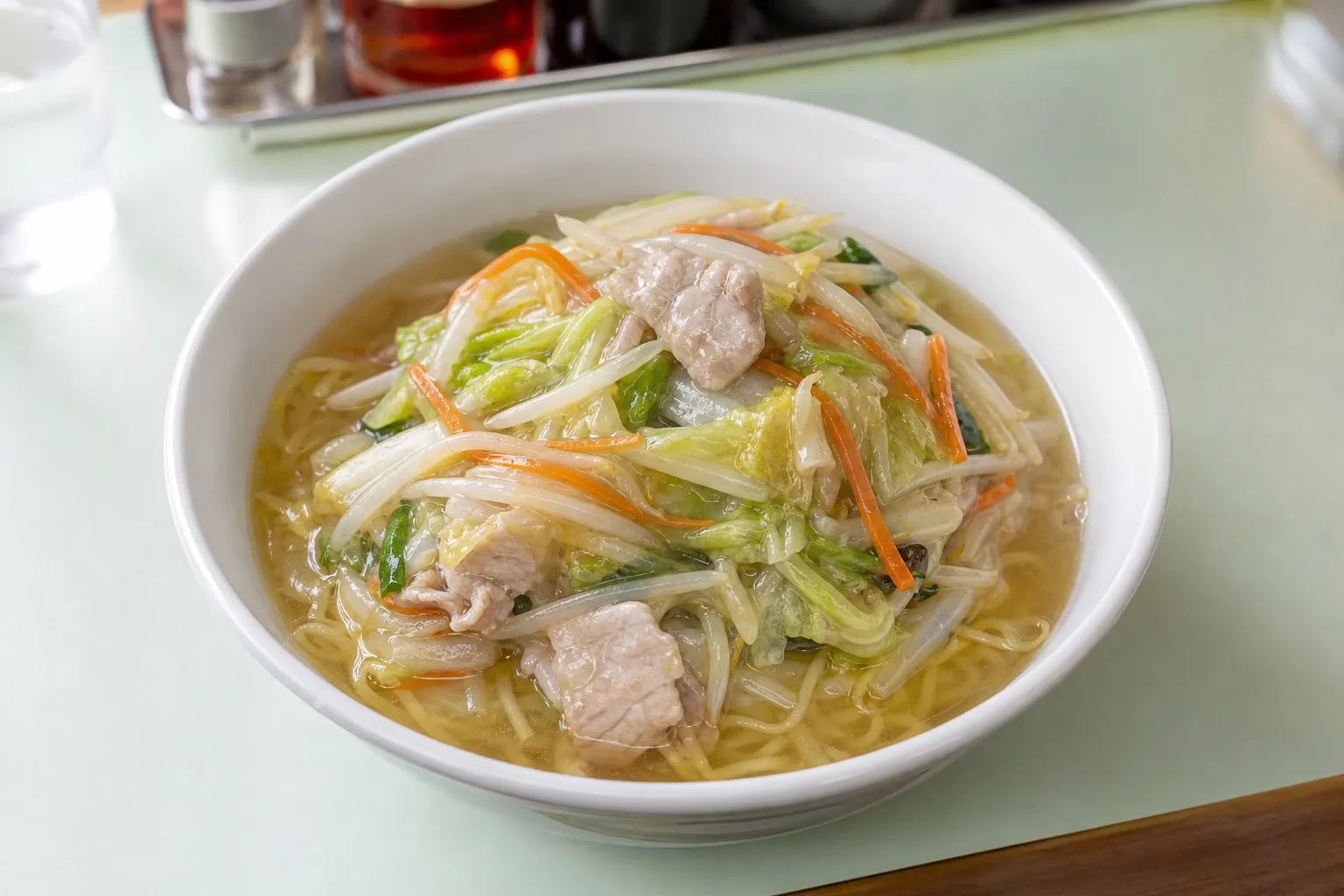
Local FoodYokohama, Kanagawa
Yokohama Sanma-men (サンマー麺)
No, it's not the fish. Yes, everyone asks. And once you get past that, this is the noodle bowl I quietly crave more than the famous ones.
August 2, 2026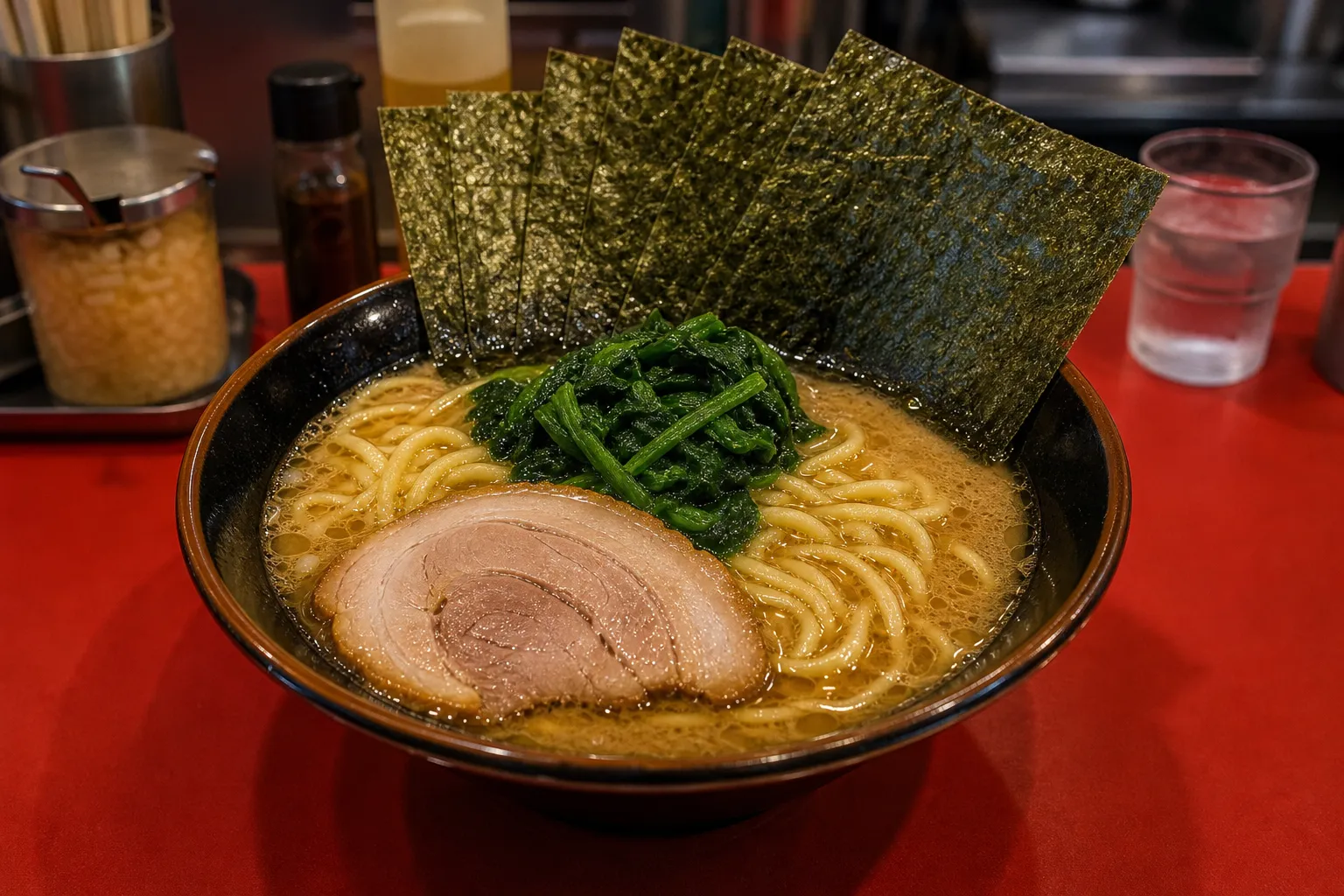
Local FoodYokohama, Kanagawa
Iekei Ramen (家系ラーメン)
Thick noodles in a pork-and-soy powerhouse, crowned with spinach and giant sheets of nori — and a bowl of white rice standing by as its secret weapon. Yokohama's build-it-your-way monster.
July 9, 2026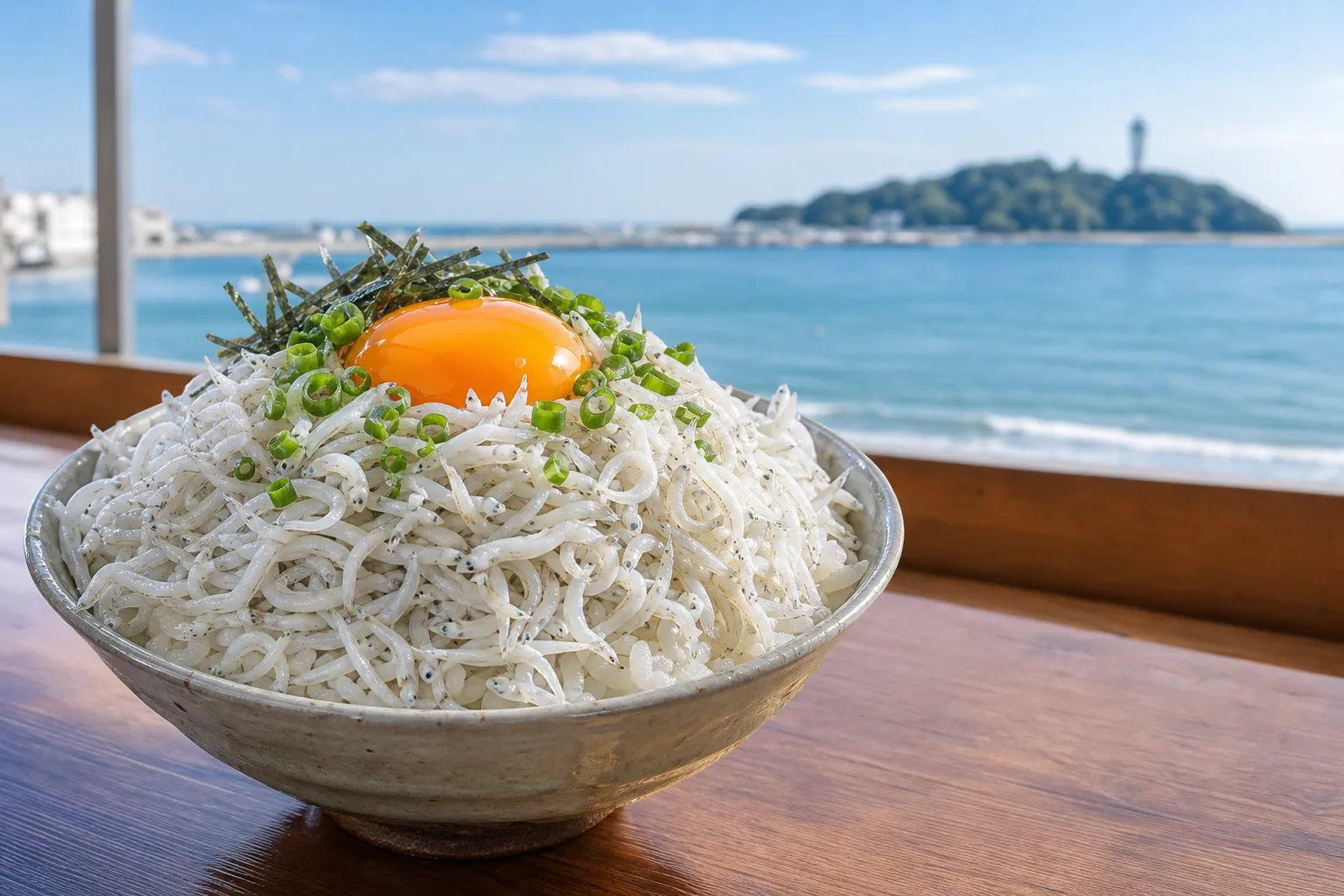
Local FoodEnoshima / Shonan, Kanagawa
Shirasu Don (しらす丼)
A mountain of tiny, glistening baby fish piled so high it eclipses the rice underneath — and somehow that's the appeal.
July 4, 2026