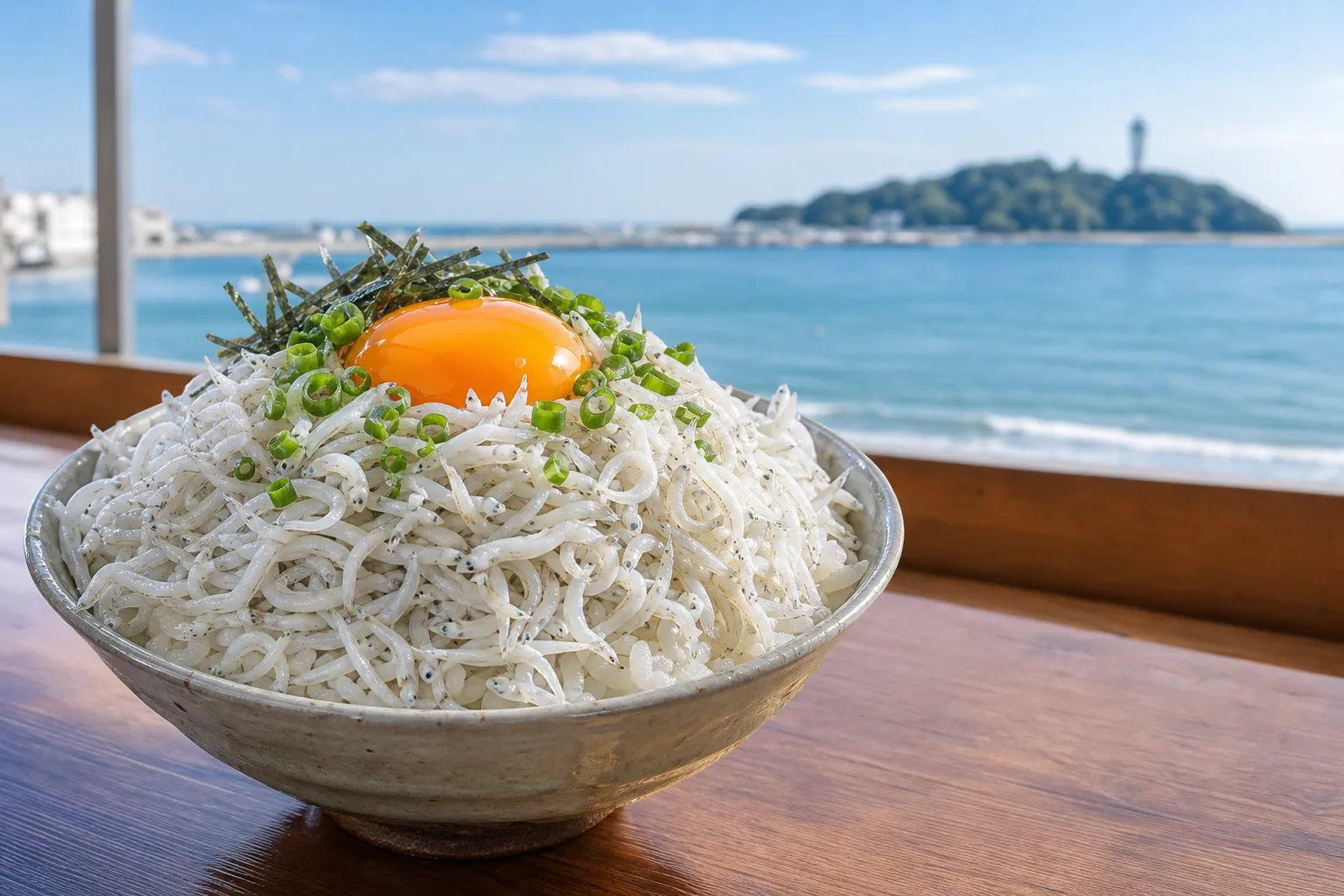
Hundreds of tiny black eyes. Looking back at me. From my breakfast.
Share this dish


A mountain of tiny, glistening baby fish piled so high it eclipses the rice underneath — and somehow that's the appeal.
🍜 Planning a food trip to Kanagawa?Add this dish to my Food Trip →
 Add this dish to my Food Trip →
I want to be upfront about that first impression, because it's real and you're going to have it too. A proper bowl of shirasu-don doesn't ease you in — it's a full, glistening dome of baby fish, so densely packed you genuinely cannot see the rice underneath, each one maybe two centimeters long and translucent enough to see its own tiny spine. And then, if you're brave (or hungry, same thing), the raw version has a faint sheen and a slight jiggle that tells you nothing has been cooked at all. I stared at mine for a good ten seconds. Then I ate it in about ninety, and I have thought about it regularly ever since.
Shirasu are baby sardines and anchovies, harvested while still juvenile and nearly see-through, and the stretch of coast around Enoshima and Kamakura in Kanagawa's Shonan region has built its entire local food identity around them. Boats go out at dawn, and if the catch is good, restaurants along the beach will have nama-shirasu — raw, glossy, faintly sweet — on the menu that same afternoon. It doesn't travel and it doesn't keep, so eating it here, freshly landed, is genuinely different from the boiled shirasu you might have had sprinkled on rice somewhere else in Japan.
Why a coastline built a cuisine around a fish this small
Shirasu fishing off Shonan goes back generations, tied to the warm currents that bring the juvenile fish close to shore each spring through autumn. For most of that history, the catch was boiled and dried almost immediately, because raw shirasu spoils within hours and simply couldn't be transported. That's shirasu-boshi, the dried version you'll find in supermarkets nationwide.
The raw version — nama-shirasu — only became a local specialty once refrigeration and same-day service let restaurants right on the coast serve it hours off the boat. That's the whole reason this dish is regional rather than nationwide: you genuinely cannot get the fresh, raw experience anywhere the fish didn't just get pulled out of the water. I find that kind of geographic honesty rare in food, and it's a big part of why I made the trip out to Enoshima specifically for this bowl.
What you're actually tasting
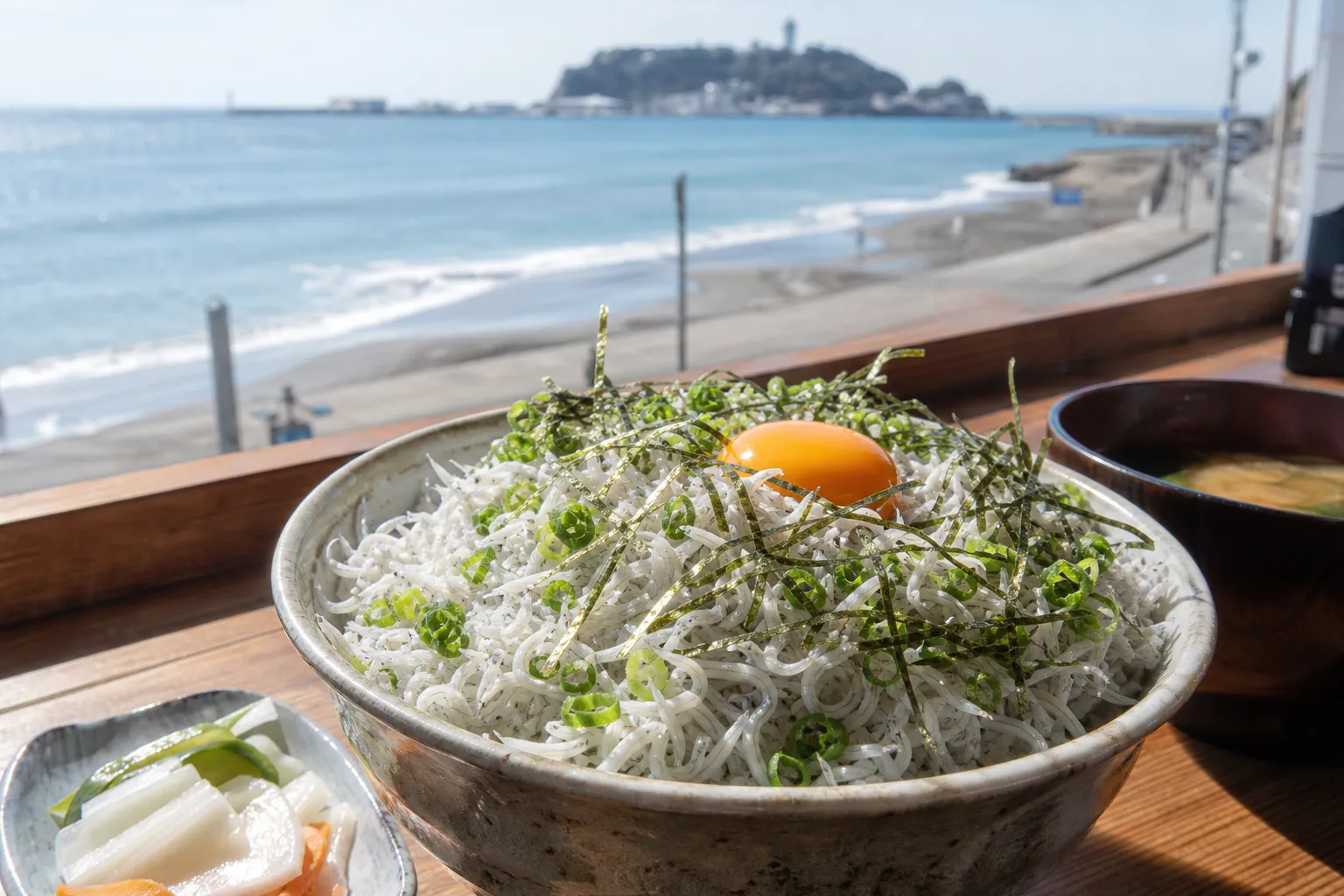
Raw shirasu is startlingly mild — a clean, faintly sweet ocean flavor with almost no fishiness, and a texture that's soft and slightly slippery rather than chewy. It's less "eating fish" and more "eating the idea of the sea," which sounds pretentious until you actually try it and understand exactly what I mean. Boiled shirasu, by contrast, firms up and turns bright white, with a gentler, rounder flavor — the safer on-ramp if raw seafood isn't your thing yet.
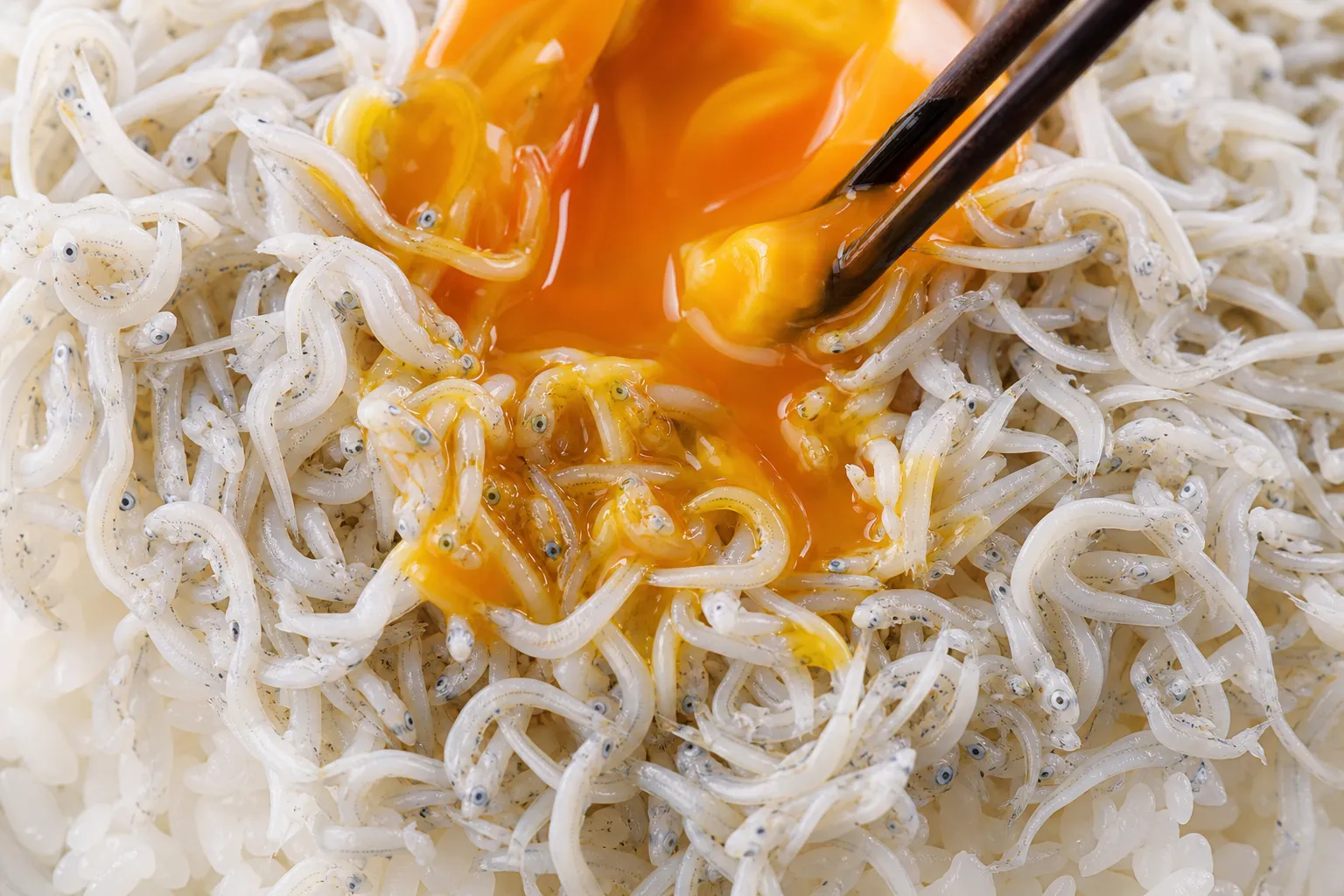
Crack a raw egg yolk into the center — most shops do this for you, or hand you an egg to do it yourself — and stir it through. The yolk turns everything glossy and rich, rounding out the mild fish with a silky, savory coating that ties the whole bowl to the rice underneath. A few threads of nori and a scatter of green onion on top add just enough sharpness that you don't get palate fatigue three bites in. It's a dish that rewards mixing it up properly rather than eating politely from the top down.
How it gets from boat to bowl this fast
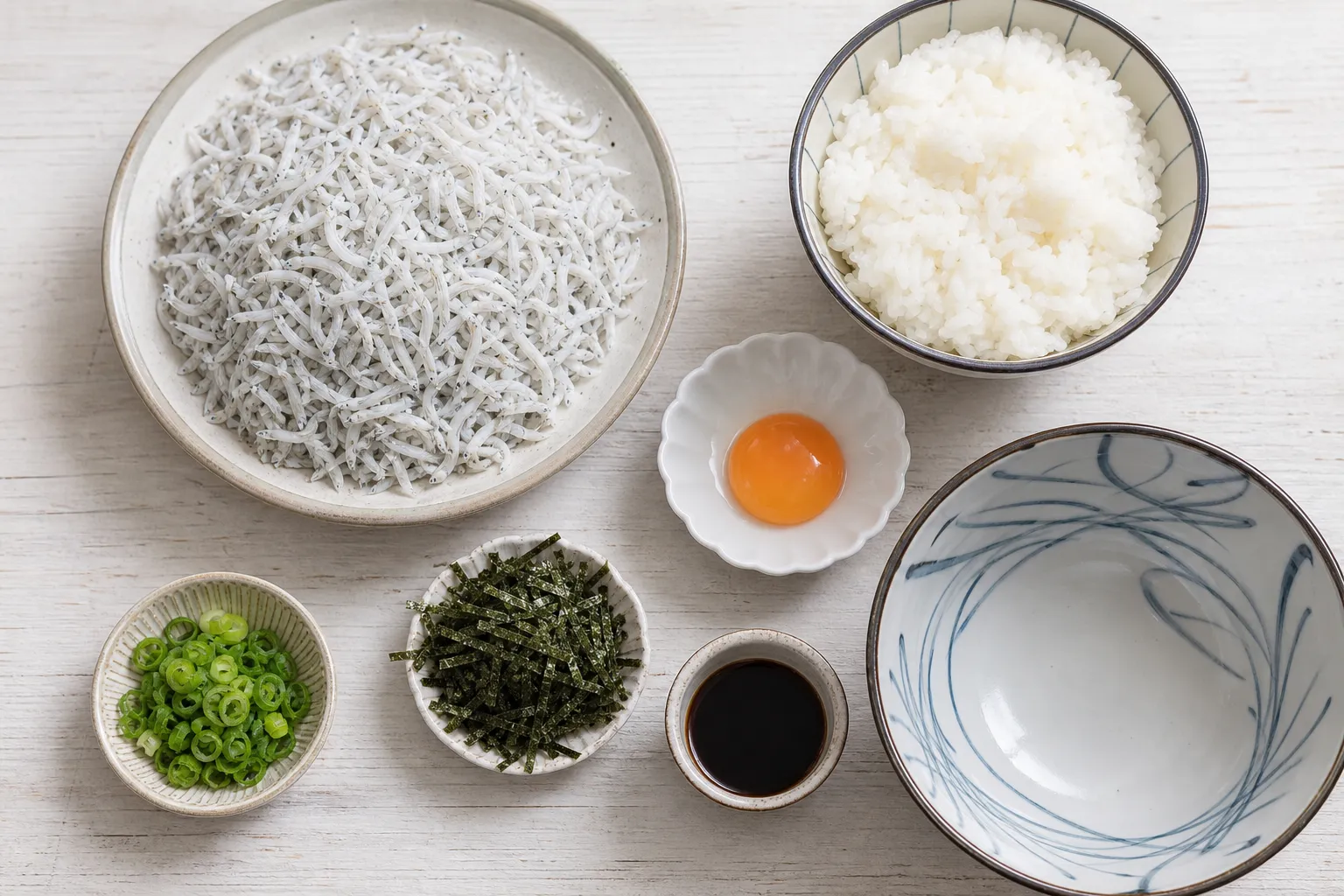
- Boats head out before dawn and net shirasu close to shore, where the young fish gather in the warm shallows
- The catch is landed and sorted at the port within hours — speed is everything for the raw version
- Raw shirasu goes straight to nearby restaurants chilled, untouched; boiled shirasu is briefly blanched in salted water and cooled
- A bowl of hot rice is piled generously with the shirasu — raw, boiled, or a "half and half" mix, which is the local favorite
- Topped with a raw egg yolk, shredded nori, chopped green onion, and a drizzle of soy sauce
That's it. No long simmer, no marinade — the entire dish depends on how good the fish was that morning, which is exactly why the fishing schedule (and season) matters so much to whether you get the good stuff.
Before you go — the stuff that actually matters
Your questions, answered honestly
"Is raw shirasu safe to eat?" — Yes, at reputable restaurants near the fishing ports it's handled and served same-day specifically because it's raw. If you're pregnant or immunocompromised, the boiled version is the safer call, same logic as any raw seafood.
"Raw or boiled — which should I get?" — If it's your first time, get the "half" (hanbun) option many shops offer — raw on one side, boiled on the other. You get the full spectrum in one bowl and can decide which you actually prefer.
"Is raw shirasu even in season when I'm visiting?" — Nama-shirasu is seasonal and weather-dependent — rough seas some days simply mean no raw catch. If it's off the boat that morning it'll usually be flagged on the menu or a board outside; if not, boiled is always available.
"Do I mix everything together?" — Yes, please. Break the yolk and stir it through before you dig in — that's how the dish is meant to come together.
"Does it taste fishy?" — Less than you'd expect — it's mild and slightly sweet, not the strong oily flavor of a full-grown sardine. The nori and soy sauce are there to season it, not mask it.
What the staff will ask you
| You'll hear | Romaji | Meaning | Just say |
|---|---|---|---|
| 生と釜揚げ、どちらにしますか? | Nama to kamaage, dochira ni shimasu ka? | "Raw or boiled?" | Hanbun de (half and half, please) |
| 卵はつけますか? | Tamago wa tsukemasu ka? | "Add an egg yolk?" | Hai, onegaishimasu (yes, please) |
| 今日は生しらすあります | Kyō wa nama-shirasu arimasu | "We have raw shirasu today" | Yokatta! Sore de onegaishimasu (great, I'll take that) |
| ご飯は大盛りにできます | Gohan wa ōmori ni dekimasu | "We can do extra rice" | Futsū de daijōbu desu (regular is fine) |
| お味噌汁つけますか? | Omisoshiru tsukemasu ka? | "Add miso soup?" | Onegaishimasu (yes, please) |
To order, just say "Shirasu-don kudasai" (しらす丼ください) — "Shirasu rice bowl, please."
Where to eat it
- Enoshima island and its harbor-front restaurants — the classic spot, many with views straight out over the water where the shirasu was caught that morning.
- Katase and Koshigoe, on the Kamakura side of the coast near the fishing port — several long-running shirasu specialists cluster here.
- Kamakura itself, a short trip inland, has plenty of restaurants serving shirasu-don if you're combining it with temple-hopping.
Raw shirasu availability depends on the day's catch and the weather, so don't be surprised if it's boiled-only on a rough-sea day — check a shop's board before sitting down if you have your heart set on raw.
Soul Score
Local Roots4/5
First-Timer Friendly3/5
Adventure Level4/5
Comfort Level4/5
Travel Worthy4/5
These scores are one obsessed eater's gut feeling — not a verdict. A low number isn't a bad mark, just a different kind of adventure.
Know someone planning Japan?
← All Articles
Local Food · Enoshima / Shonan, Kanagawa
Still hungry?
Eat more from Kanagawa
Local FoodYokohama, Kanagawa
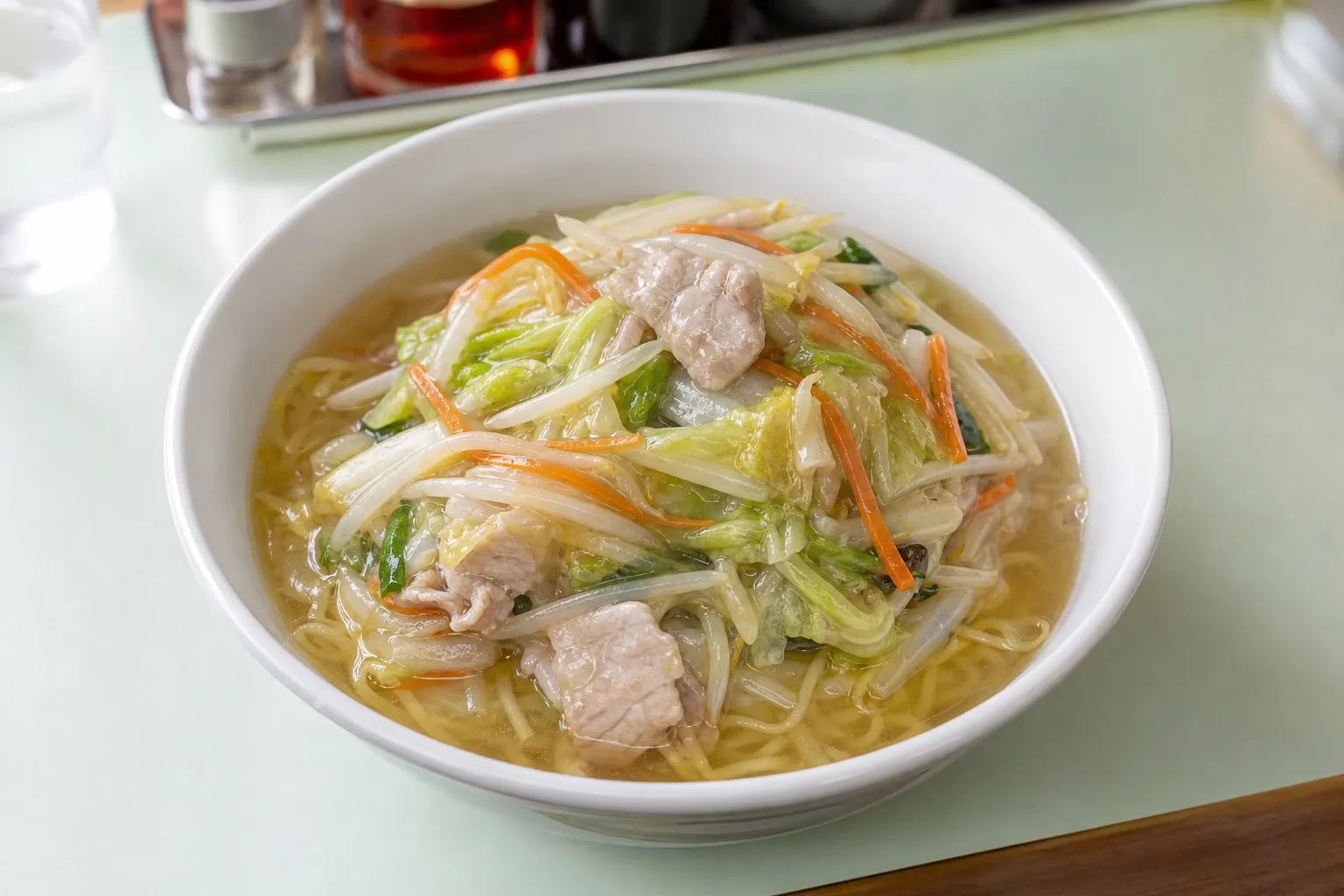
Yokohama Sanma-men (サンマー麺)
No, it's not the fish. Yes, everyone asks. And once you get past that, this is the noodle bowl I quietly crave more than the famous ones.
August 2, 2026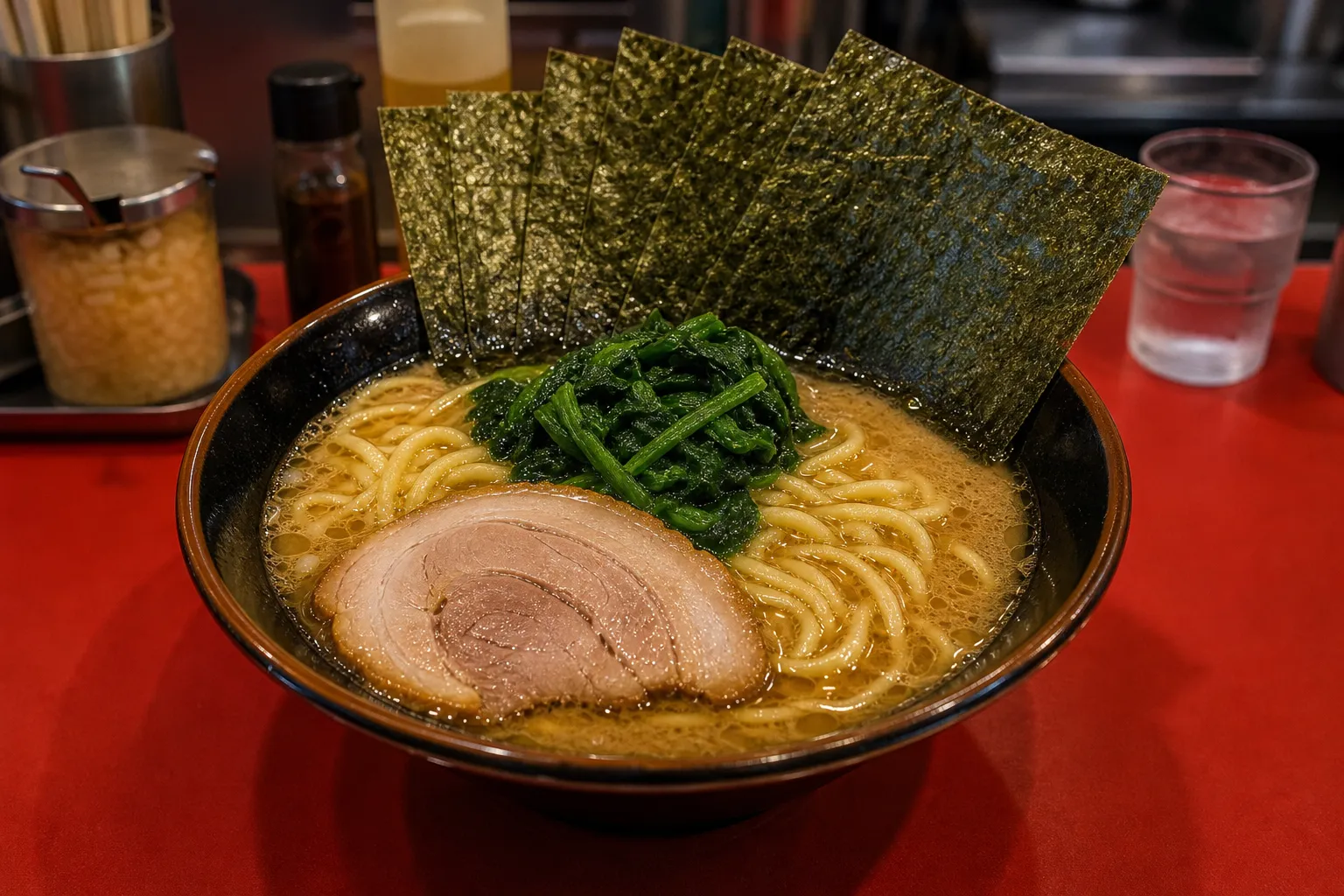
Local FoodYokohama, Kanagawa
Iekei Ramen (家系ラーメン)
Thick noodles in a pork-and-soy powerhouse, crowned with spinach and giant sheets of nori — and a bowl of white rice standing by as its secret weapon. Yokohama's build-it-your-way monster.
July 9, 2026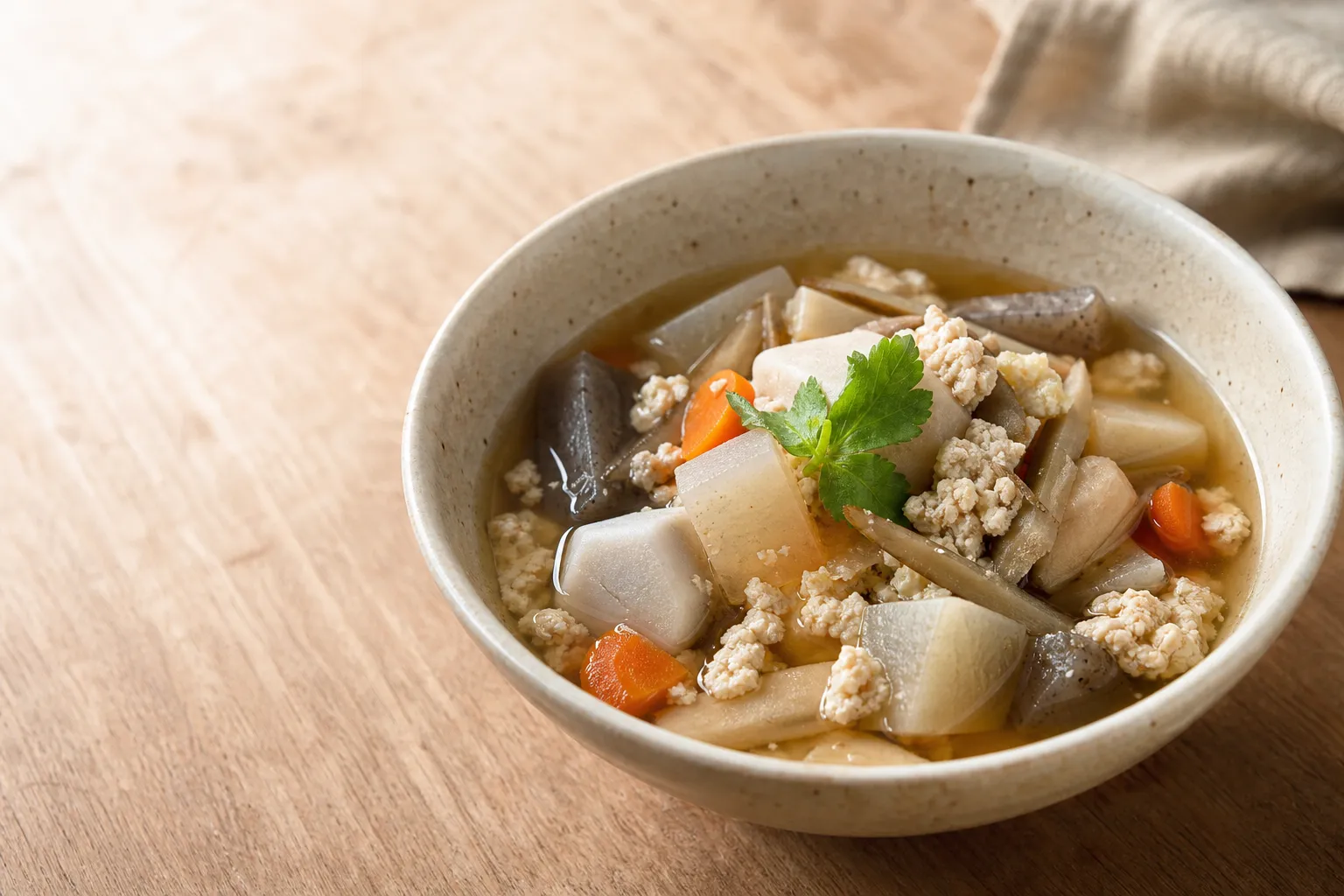
Local FoodKamakura, Kanagawa
Kenchin-jiru (けんちん汁)
A monk broke a block of tofu apart with his bare hands instead of throwing it away, sautéed it with root vegetables, and accidentally invented one of Japan's most comforting soups.
July 5, 2026