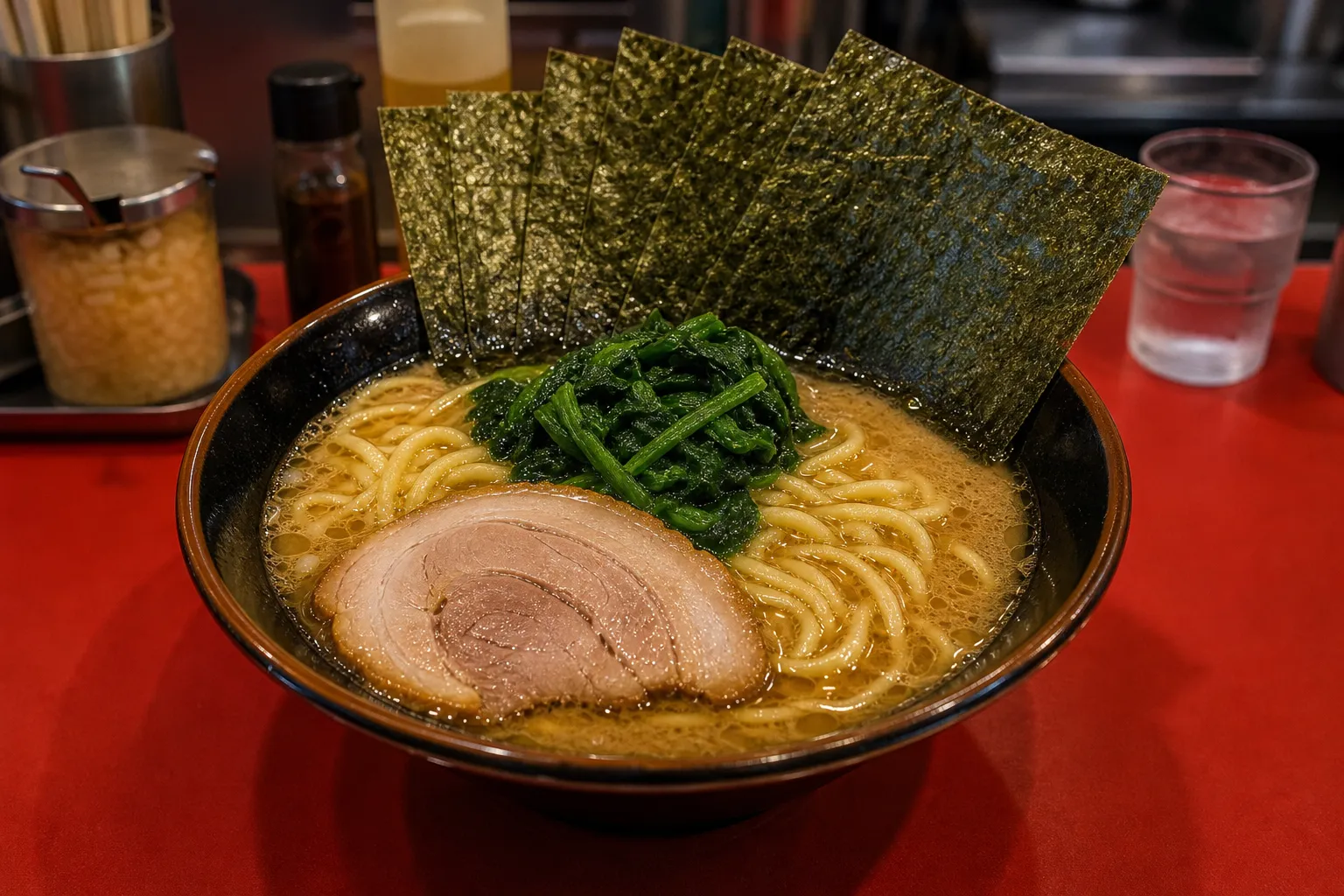
Nobody warned me about the nori move, and it changed how I eat ramen forever. You take one of those big sheets of seaweed off the top, dunk it into the thick pork-and-soy broth until it goes soft and drippy, drape it over a spoonful of white rice, and eat that. I made a small involuntary noise. The couple next to me nodded like they'd initiated a new member. In a way, they had.
Share this dish


Thick noodles in a pork-and-soy powerhouse, crowned with spinach and giant sheets of nori — and a bowl of white rice standing by as its secret weapon. Yokohama's build-it-your-way monster.
🍜 Planning a food trip to Kanagawa?Add this dish to my Food Trip →
 Add this dish to my Food Trip →
That's the genius of iekei (家系, "house style") ramen: a rich, glossy hybrid of pork-bone tonkotsu and soy shoyu, poured over thick straight noodles and topped with spinach, big sheets of nori, and chashu. You dial in the richness, the oiliness, and the noodle firmness to your exact taste, and — crucially — you order a bowl of rice on the side, because half the fun happens on the rice. It was born in Yokohama in 1974, and it has since eaten Japan alive.
Born at Yoshimuraya, 1974
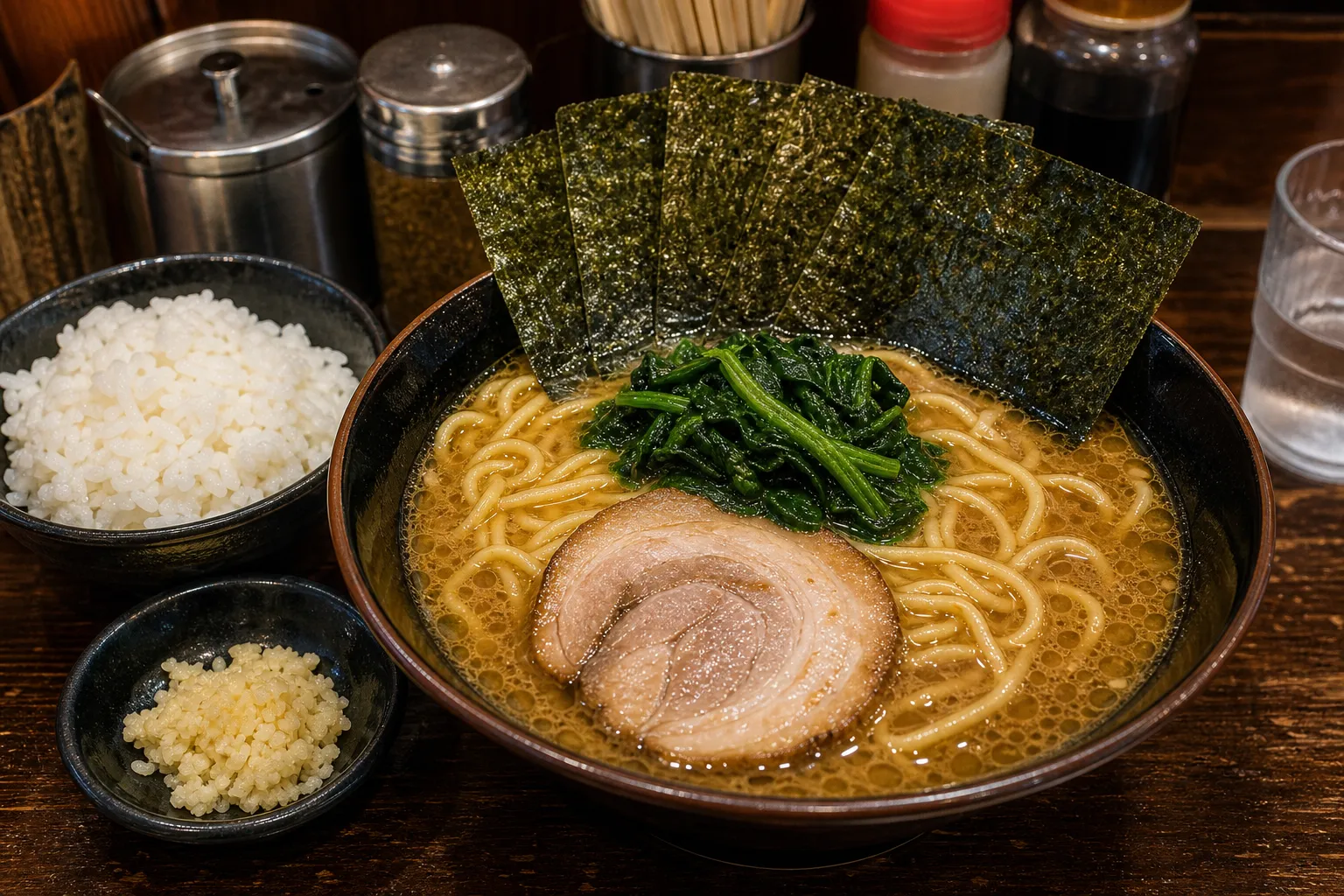
The whole thing traces back to one shop: Yoshimuraya, which opened in Yokohama in 1974 and fused two ideas that usually stay in their lanes — the rich pork-bone body of tonkotsu and the savory backbone of soy shoyu — into a single bowl. It caught on hard. Shops that trained there, or copied the formula, started adding "-ya" (家, "house") to their names, and the whole lineage got nicknamed iekei — "the house family." I think that's a lovely detail: the style is literally named after the idea of belonging to a house.
From that one Yokohama shop, iekei spread into a nationwide phenomenon — you'll now find iekei shops in Tokyo, across Japan, and increasingly abroad, many still tracing their pedigree back to Yoshimuraya. And unlike a lot of regional ramen that stays proudly local, iekei went out and conquered. It's Yokohama's gift to the entire country, and it did not ask permission.
Why it's built for you
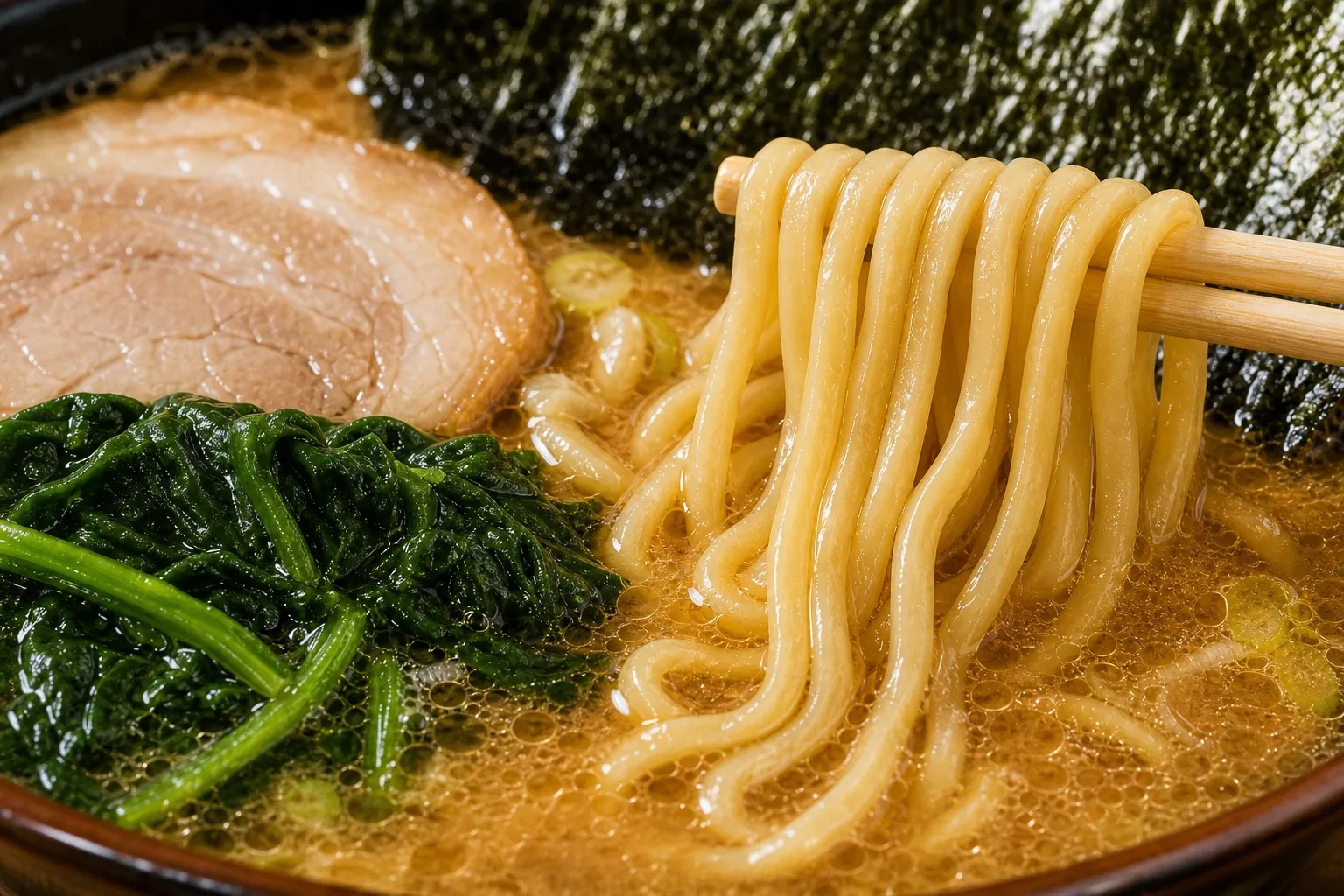
The broth is a proper powerhouse: rich pork-bone tonkotsu married to soy shoyu, coming out thick, glossy, deeply savory, and satisfying — the muscle of tonkotsu with the sharpness of soy. It clings to everything, which is exactly why the noodles are thick and straight — strong enough to carry a heavy soup without going soft on you. The toppings are iconic and functional: earthy spinach for balance, chashu for richness, and those big sheets of nori that are basically edible spoons for the rice trick.
But the real magic is the customization. Most iekei shops let you choose your broth richness (kotteri rich / assari light), your oil level, and your noodle firmness, so the same menu bowl becomes your bowl. And then there's the rice, which I will keep evangelizing: soak the nori, load your chashu and broth-soaked bites onto white rice, and you've basically turned one bowl of ramen into two meals. It's approachable, hearty, endlessly adjustable — the friendliest heavyweight in ramen.
How it's made
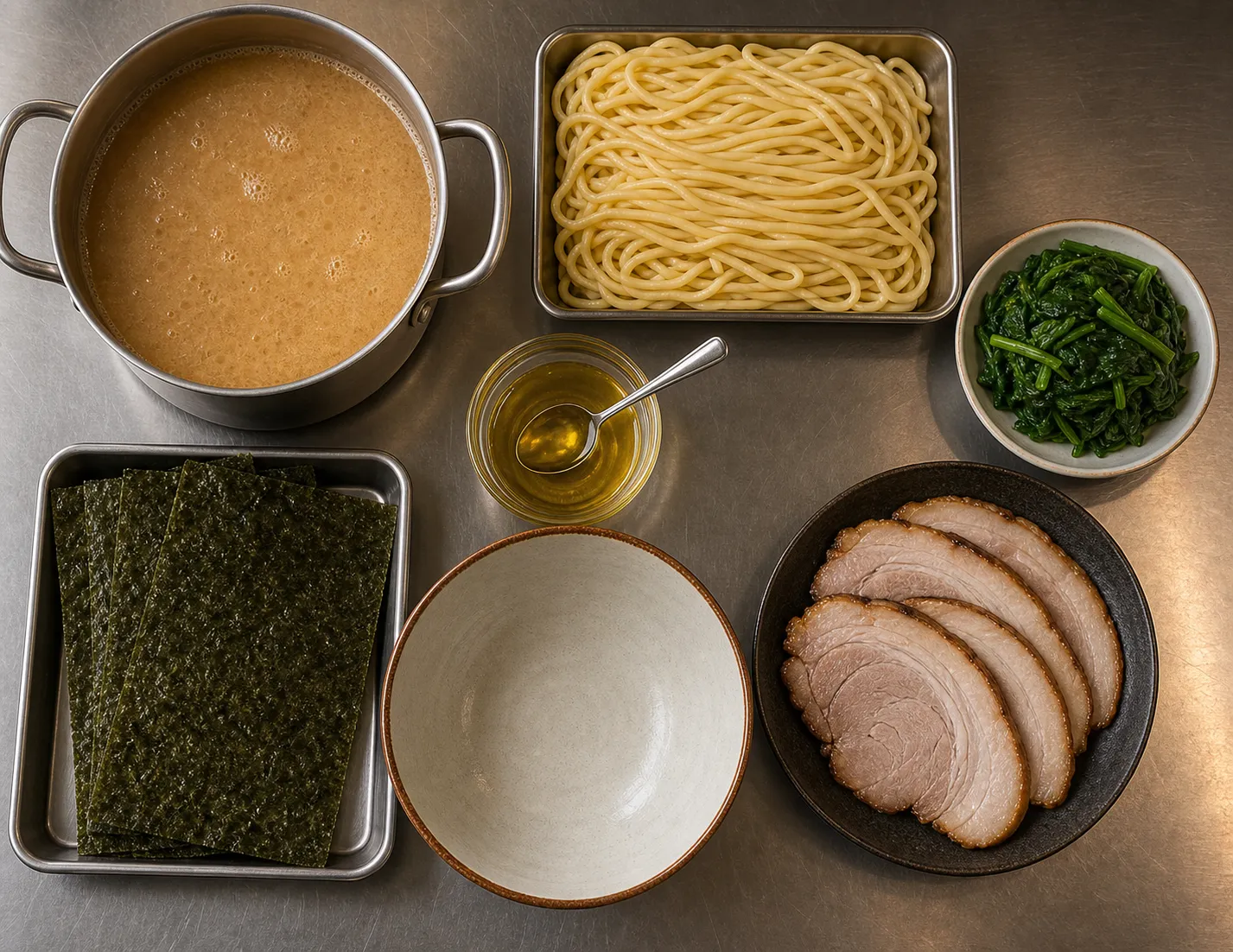
- Simmer pork bones into a rich tonkotsu base, then blend with a soy (shoyu) tare for the signature thick, savory hybrid broth — often finished with chicken oil on top
- Adjust to the customer's chosen richness, oil level, and noodle firmness
- Cook thick, straight noodles built to hold a heavy soup
- Combine broth and noodles; top with spinach, large sheets of nori, and chashu
- Serve with a bowl of white rice on the side — the essential partner — for dipping nori and building rice bites
Before you go — order the rice, no exceptions
Your questions, answered honestly
"Why does everyone order rice with it?" — Because iekei is designed to be eaten with rice. You dip the nori in the broth, lay it on the rice, spoon over chashu and soup-soaked bites, and eat that alongside the noodles. Skipping the rice is skipping half the experience — get it.
"What can I customize?" — Usually three things: broth richness (kotteri rich / assari lighter), oil amount (more/less/normal), and noodle firmness (katame firm / futsū normal / yawarakame soft). First time, "normal on all three" is a great, honest bowl.
"How is this different from Hakata tonkotsu?" — Hakata is pure pork-bone with hair-thin noodles. Iekei is a pork-bone and soy hybrid with thick noodles, spinach, and big nori — richer-tasting, chewier, and built around the rice trick. Different animal.
"Is it good for a ramen beginner?" — Surprisingly yes. It's rich but not challenging or funky, it's not spicy, and the customization means you can order it as bold or as mellow as you like. Very easy to love on the first try.
What the staff will ask you
| You'll hear | Romaji | Meaning | Just say |
|---|---|---|---|
| 味の濃さ・油・麺は? | Aji no kosa, abura, men wa? | "Broth strength, oil, noodle firmness?" | Zenbu futsū de (all normal) |
| 麺の硬さは? | Men no katasa wa? | "How firm do you want the noodles?" | Futsū de (normal) / Katame de (firm) |
| ライスは付けますか? | Raisu wa tsukemasu ka? | "Add a bowl of rice?" | Onegaishimasu (yes please) |
To order, just say "Rāmen kudasai, futsū de" (ラーメンください、普通で) — "Ramen, please — normal on everything."
Where to eat it
- Yoshimuraya (吉村家), Yokohama — the 1974 birthplace and the original of the whole iekei family; the pilgrimage spot for the style. Expect a line.
- Yokohama iekei shops — the city where the style was born is packed with iekei shops tracing their lineage back to Yoshimuraya; the home turf.
- Iekei shops nationwide — the style went national, so you'll find solid iekei in Tokyo and across Japan if you can't make it to Yokohama.
Shops and hours change and the famous originals draw long lines, so check before you go — and whatever you do, order the rice.
Soul Score
Local Roots5/5
First-Timer Friendly5/5
Adventure Level3/5
Comfort Level5/5
Travel Worthy4/5
These scores are one obsessed eater's gut feeling — not a verdict. A low number isn't a bad mark, just a different kind of adventure.
Know someone planning Japan?
← All Articles
Local Food · Yokohama, Kanagawa
Still hungry?
Eat more from Kanagawa
Local FoodYokohama, Kanagawa
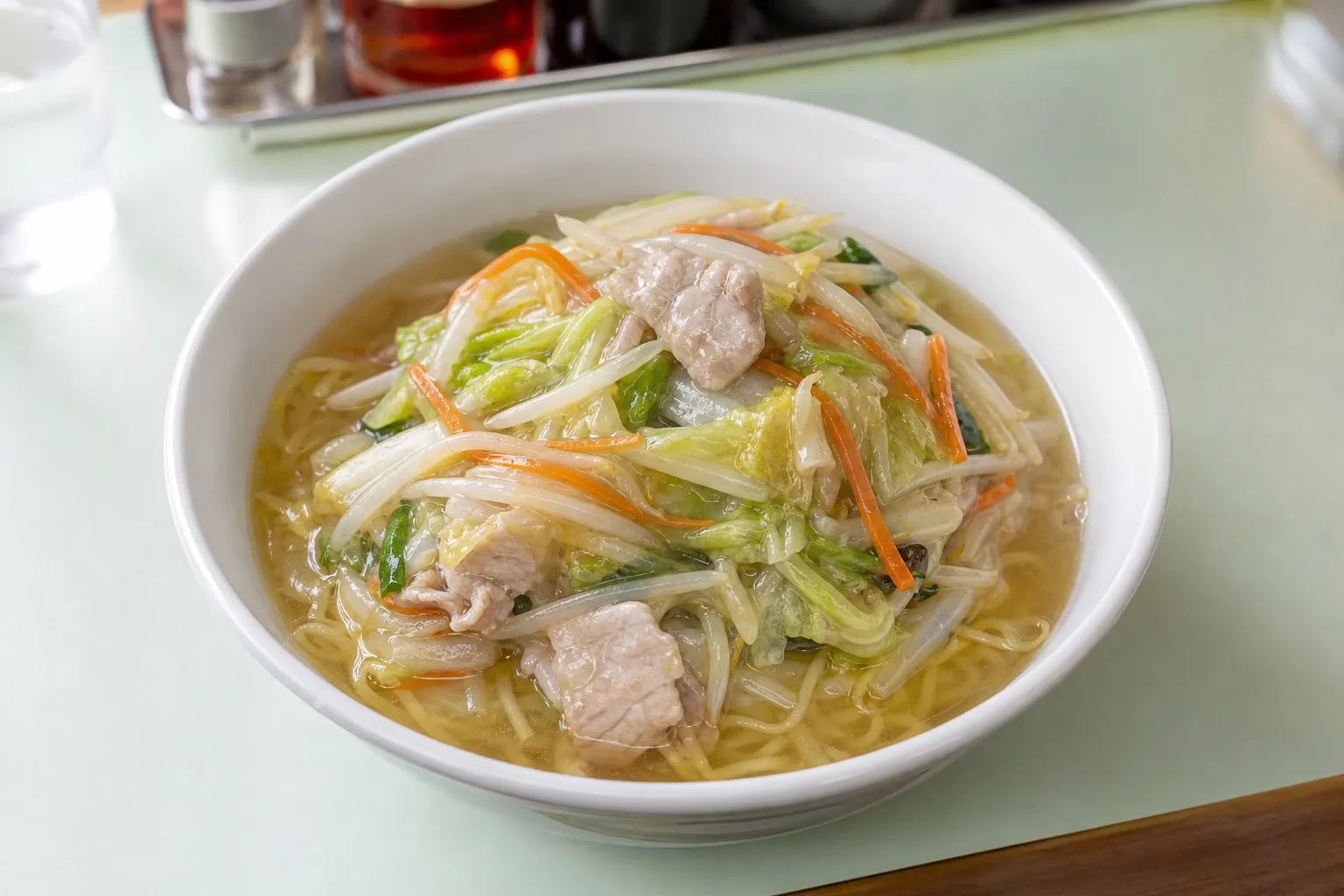
Yokohama Sanma-men (サンマー麺)
No, it's not the fish. Yes, everyone asks. And once you get past that, this is the noodle bowl I quietly crave more than the famous ones.
August 2, 2026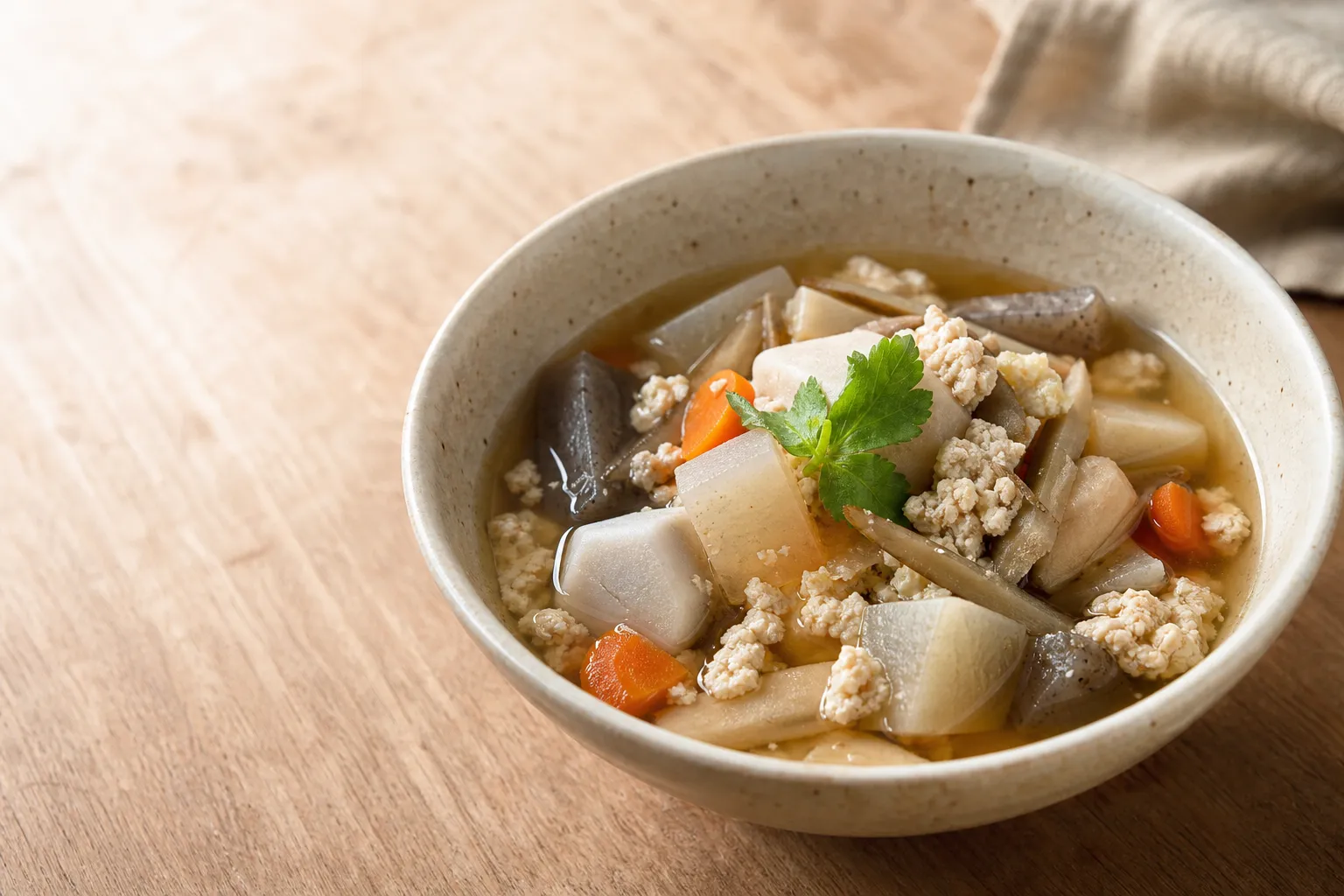
Local FoodKamakura, Kanagawa
Kenchin-jiru (けんちん汁)
A monk broke a block of tofu apart with his bare hands instead of throwing it away, sautéed it with root vegetables, and accidentally invented one of Japan's most comforting soups.
July 5, 2026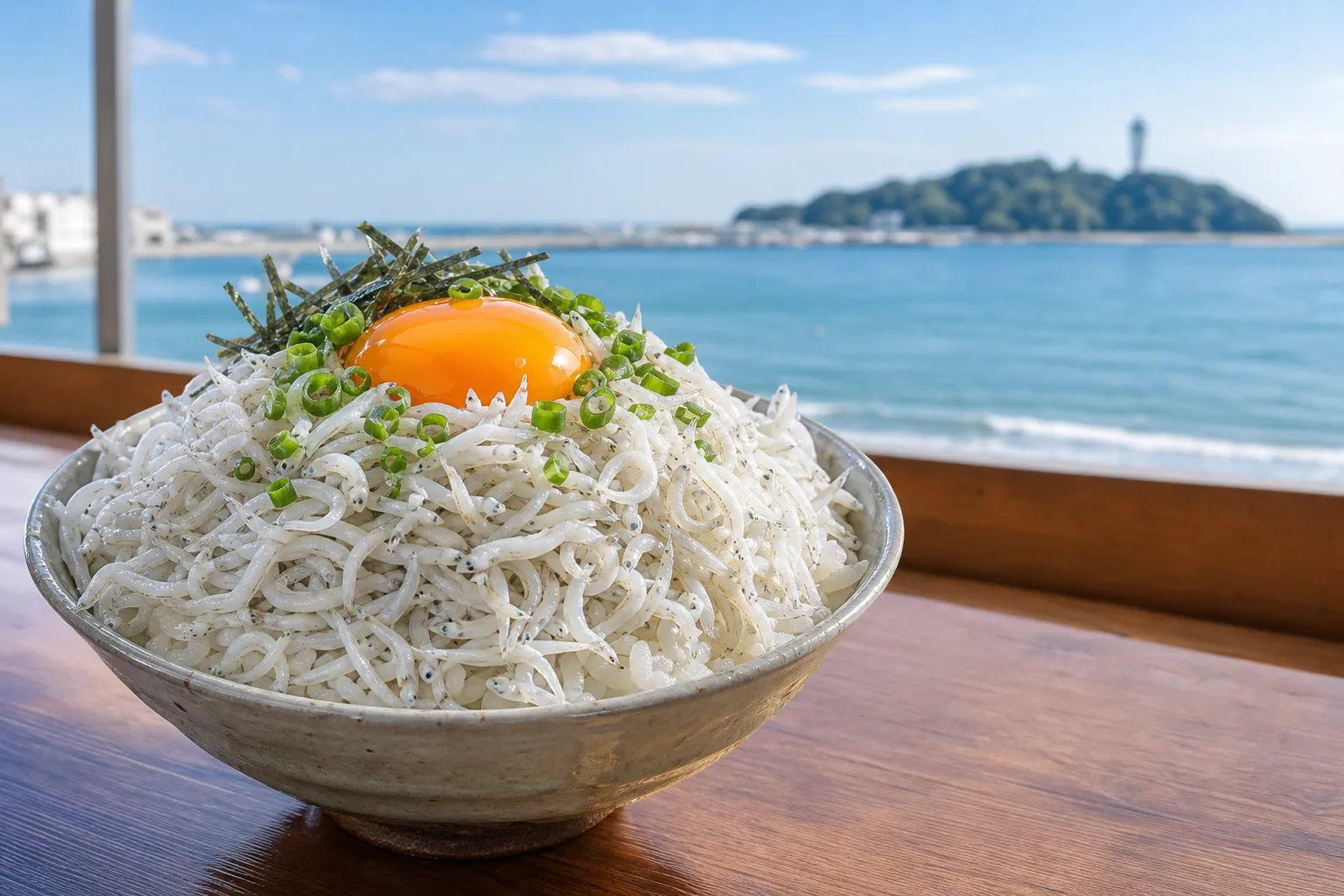
Local FoodEnoshima / Shonan, Kanagawa
Shirasu Don (しらす丼)
A mountain of tiny, glistening baby fish piled so high it eclipses the rice underneath — and somehow that's the appeal.
July 4, 2026