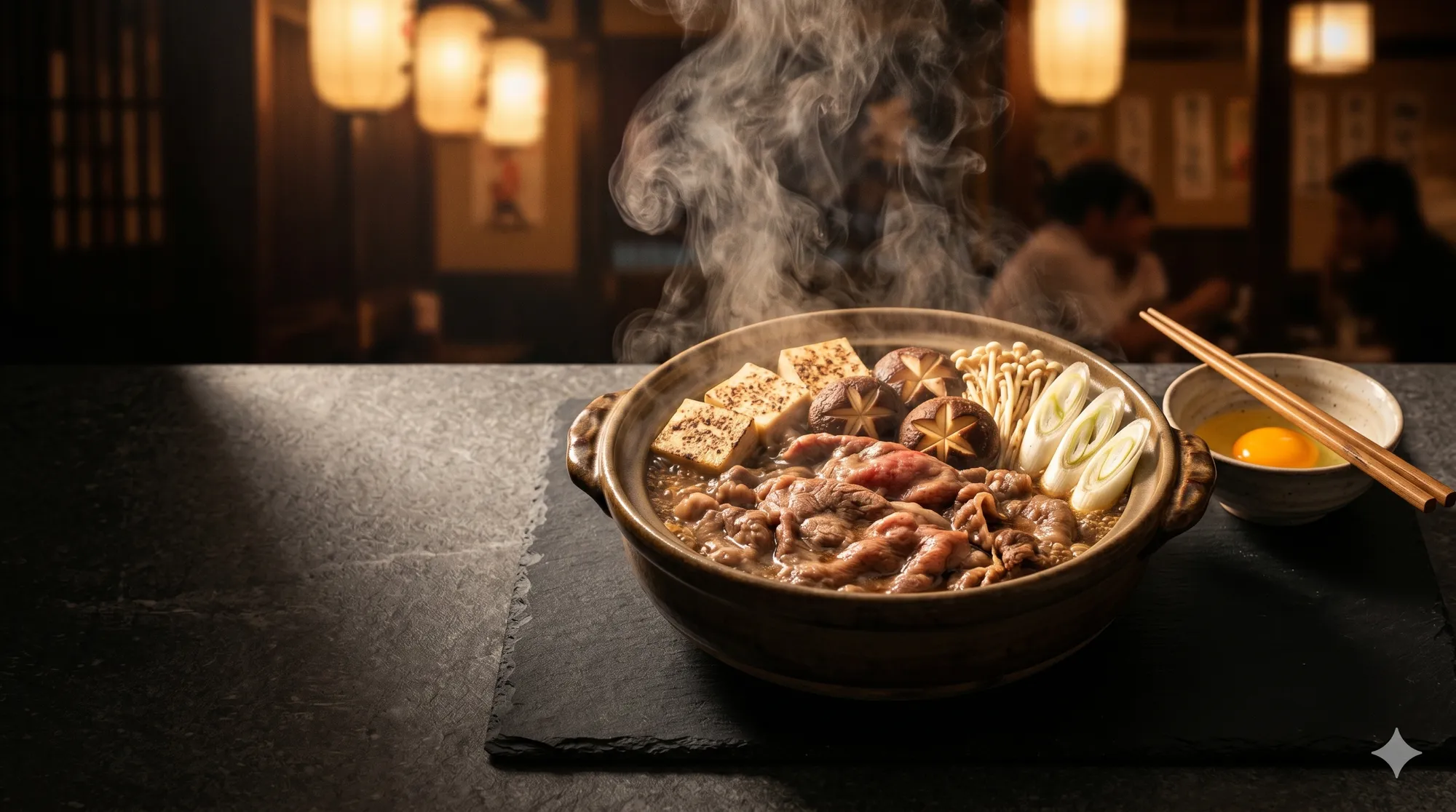
If shabu-shabu is an elegant everyday pleasure, sukiyaki is the one you make when something good has happened.
Share this dish


Marbled wagyu in a sweet-savory broth, swiped through cold raw egg. The hot pot Japan saves for the moments that matter — birthdays, New Year, good news.
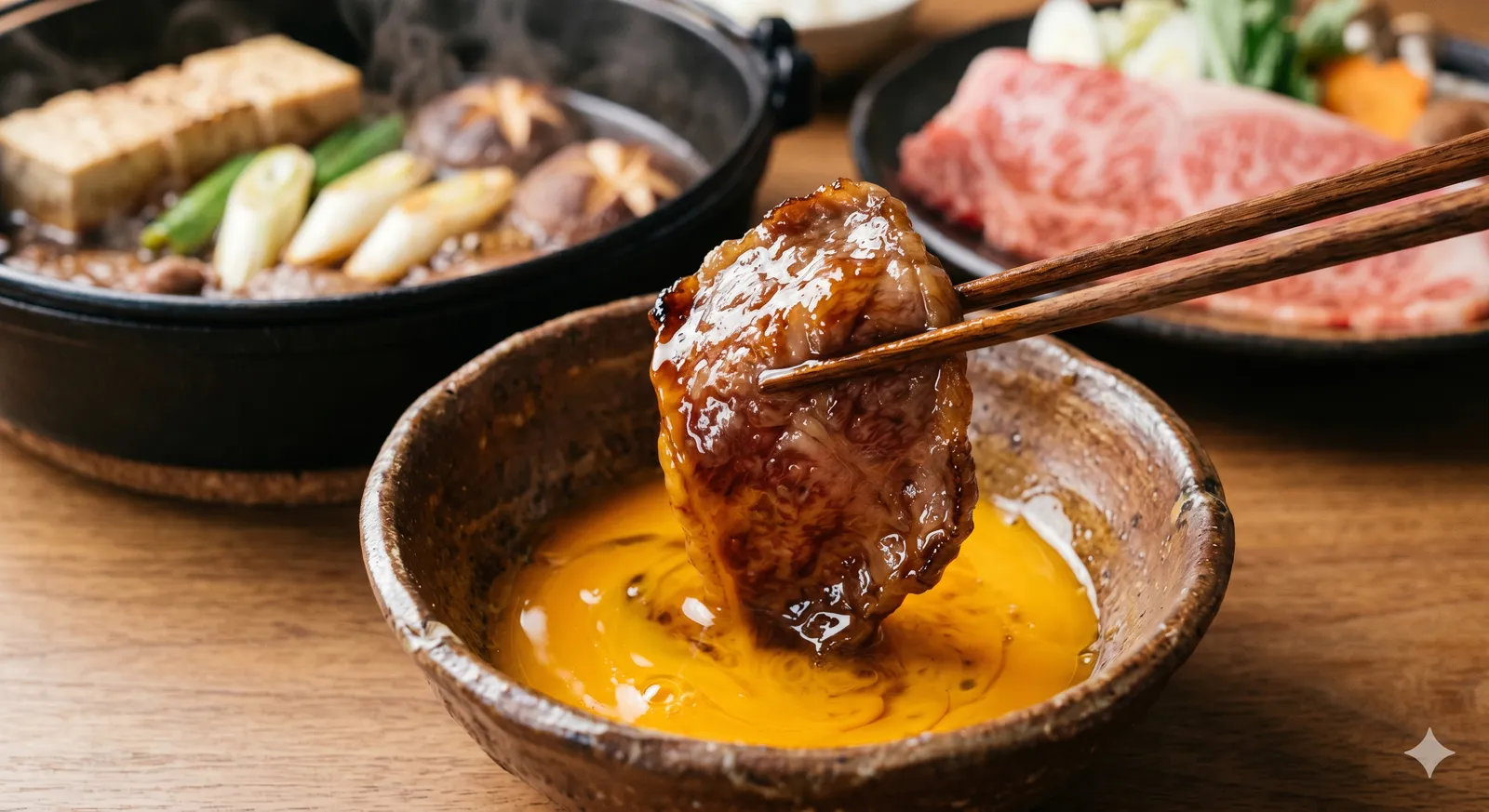
This is the celebration pot — marbled wagyu sizzling in a sweet, dark, soy-sugar broth, cooked right at the table, then dragged through a bowl of silky raw egg before it hits your mouth. The beef is expensive, the smell is intoxicating, and that first bite — sweet, savory, rich, the cold egg softening the whole thing into something almost custardy — is the taste of a good day. My family made sukiyaki for birthdays and New Year, and to this day the sizzle of beef in that pan smells like something wonderful is about to happen.
From a farmer's spade to the celebration table
Sukiyaki's roots reach back to the Edo period, when early versions (sugiyaki) cooked seafood and vegetables over wood or iron. The word suki may even refer to a spade or hoe — legend says farmers once grilled on their tools over open fires. For centuries Japan's meat taboo kept beef off the menu, but when that lifted in the Meiji era, beef became the star, and sukiyaki became a symbol of a modernizing, meat-loving Japan.
What makes it sing
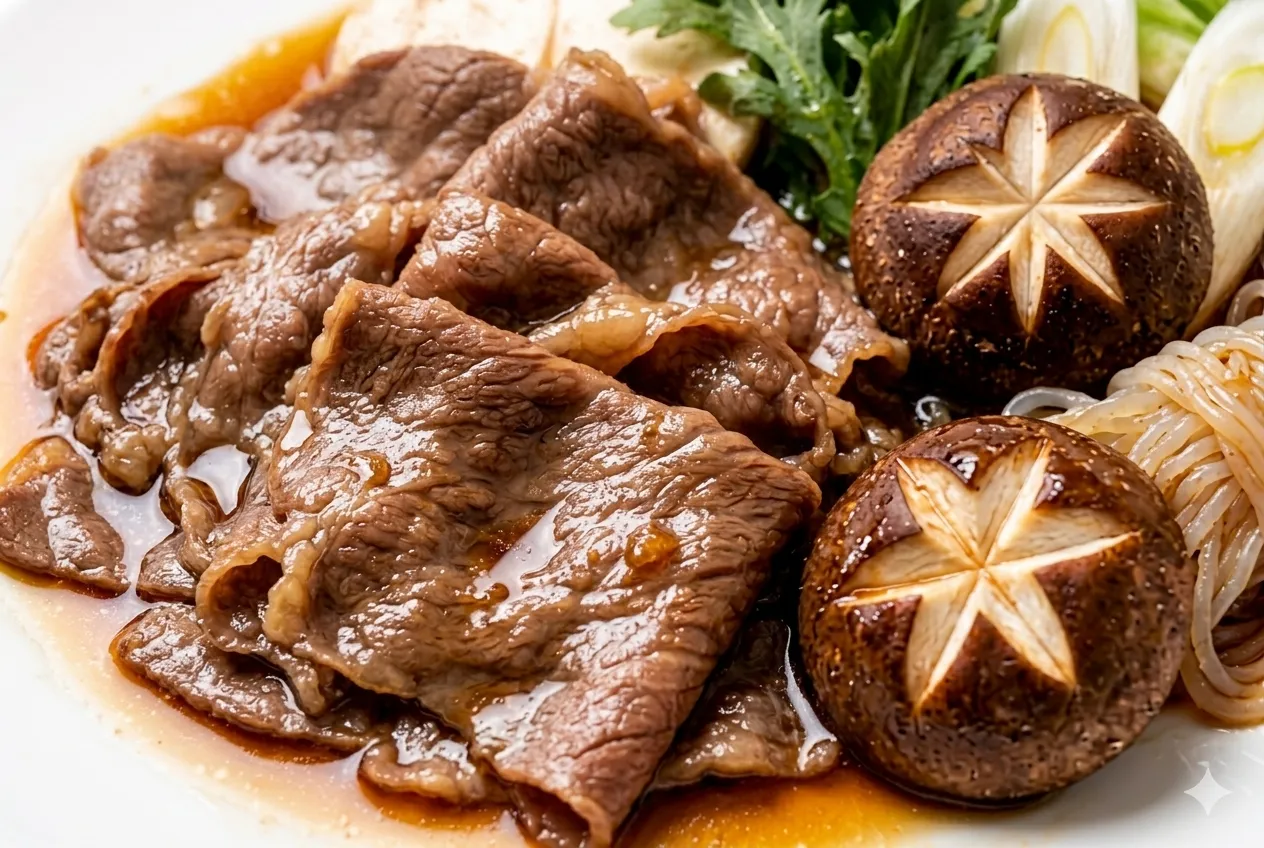
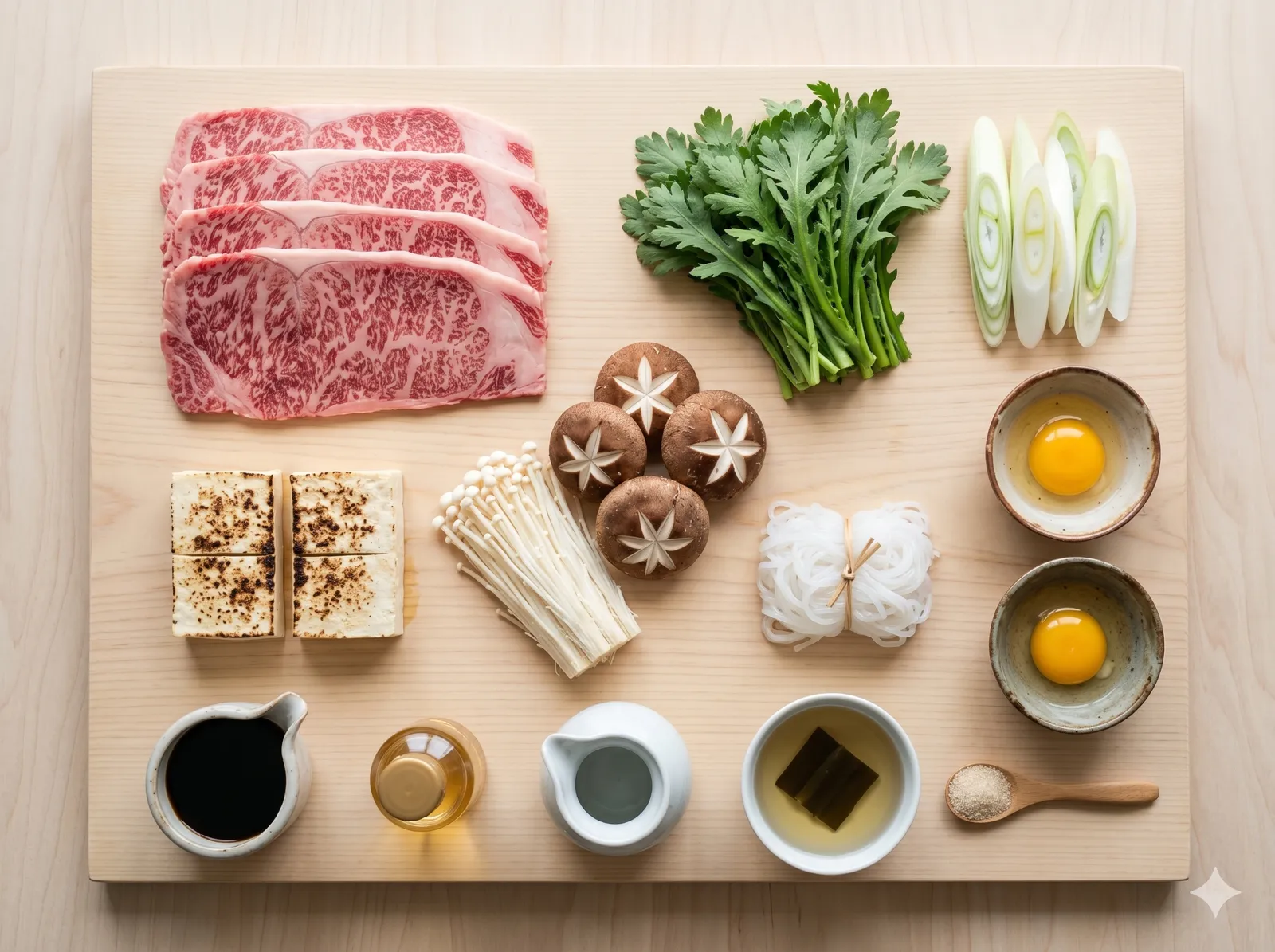
The heart of it is thinly sliced, well-marbled beef seared (not boiled) in a shallow cast-iron pan with warishita — a punchy sauce of soy, mirin, sake, and sugar. This is no thin broth; it's more sauce than soup, deep and glossy and a little sweet.
Around the beef go tofu, shirataki noodles, chrysanthemum greens (shungiku), shiitake, thick negi, Chinese cabbage, and onion — all soaking up that warishita. And the finishing move, the part that surprises every first-timer: you dip each hot bite in cold raw egg, which cools it, coats it, and makes it unbelievably rich.
How it's made — pick your region
Kanto style (Tokyo): the warishita is mixed and poured in from the start; everything simmers together.
Kansai style (Osaka): beef is seared first in the dry pan with beef fat, seasoned right there with soy and sugar, and the broth builds as you go.
Both are correct. Both are delicious. Do not pick this fight with someone from the other region.
Before you go — don't fear the raw egg
Your questions, answered honestly
"Do I really dip the beef in raw egg?" — Yes, and don't skip it — it's the whole magic. Japanese eggs are produced to very high safety standards for exactly this. The egg cools the hot beef and wraps it in silky richness. Trust it.
"Beef in raw egg sounds risky to me, though." — If you'd genuinely rather not, you can eat sukiyaki without it — but you'll be missing the signature experience. Your call, no judgment.
"What's the cooking order?" — Beef first, while the pan's clean and hot, then add vegetables and tofu to soak up the broth. Keep going in rounds. Don't crowd the pan.
"How does it end?" — The shime: cook udon or rice in the rich leftover broth at the end. Some places offer it — say yes.
What the staff will ask you
| You'll hear | Romaji | Meaning | Just say |
|---|---|---|---|
| お肉から焼きますね | Oniku kara yakimasu ne | "I'll start with the beef" | Onegaishimasu (yes, please) |
| 生卵はお付けしますか? | Namatamago wa otsuke shimasu ka? | "Raw egg for dipping?" | Hai, onegaishimasu (yes) / Nashi de (without) |
| 〆はうどんとごはん、どちら? | Shime wa udon to gohan, dochira? | "Finish with udon or rice?" | Udon de / Gohan de |
To order, just say "Sukiyaki o onegaishimasu" (すき焼きをお願いします) — "Sukiyaki, please."
Where to eat it
- Old-guard sukiyaki houses in Tokyo — names like Ningyocho Imahan and Asakusa Imahan have served it for over a century, beef sliced tableside.
- Kyoto's Mishima-tei — a beautiful Meiji-era sukiyaki institution.
- A celebration-worthy meal, so reservations help — and yes, the dish shares its name with Kyu Sakamoto's 1963 song that hit #1 on the US Billboard chart, the only Japanese-language song ever to do so.
Hours and reservations change, so check before you go — and bring someone you want to celebrate with.
Soul Score
Local Roots4/5
First-Timer Friendly3/5
Adventure Level4/5
Comfort Level5/5
Travel Worthy3/5
These scores are one obsessed eater's gut feeling — not a verdict. A low number isn't a bad mark, just a different kind of adventure.
Know someone planning Japan?
← All Articles
Japanese Food · Nationwide
Still hungry?
You might also like
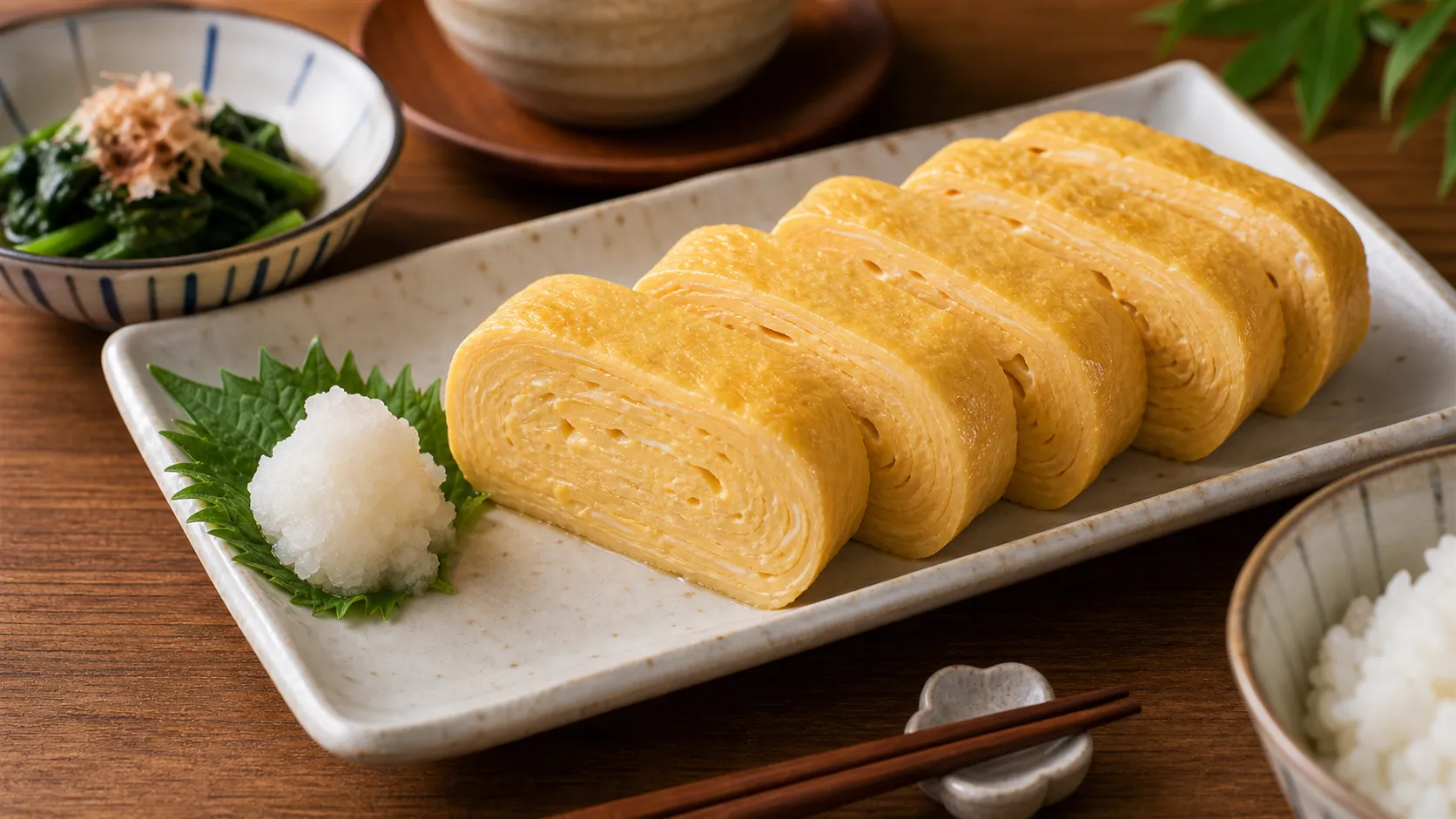
Japanese FoodNationwide
Dashimaki-tamago (だし巻き卵)
A rolled omelette so soft it almost trembles, layered fold over fold and soaked with dashi so that biting in releases a little warm rush of savory broth — the deceptively simple egg dish that Japanese chefs spend years perfecting.
July 11, 2026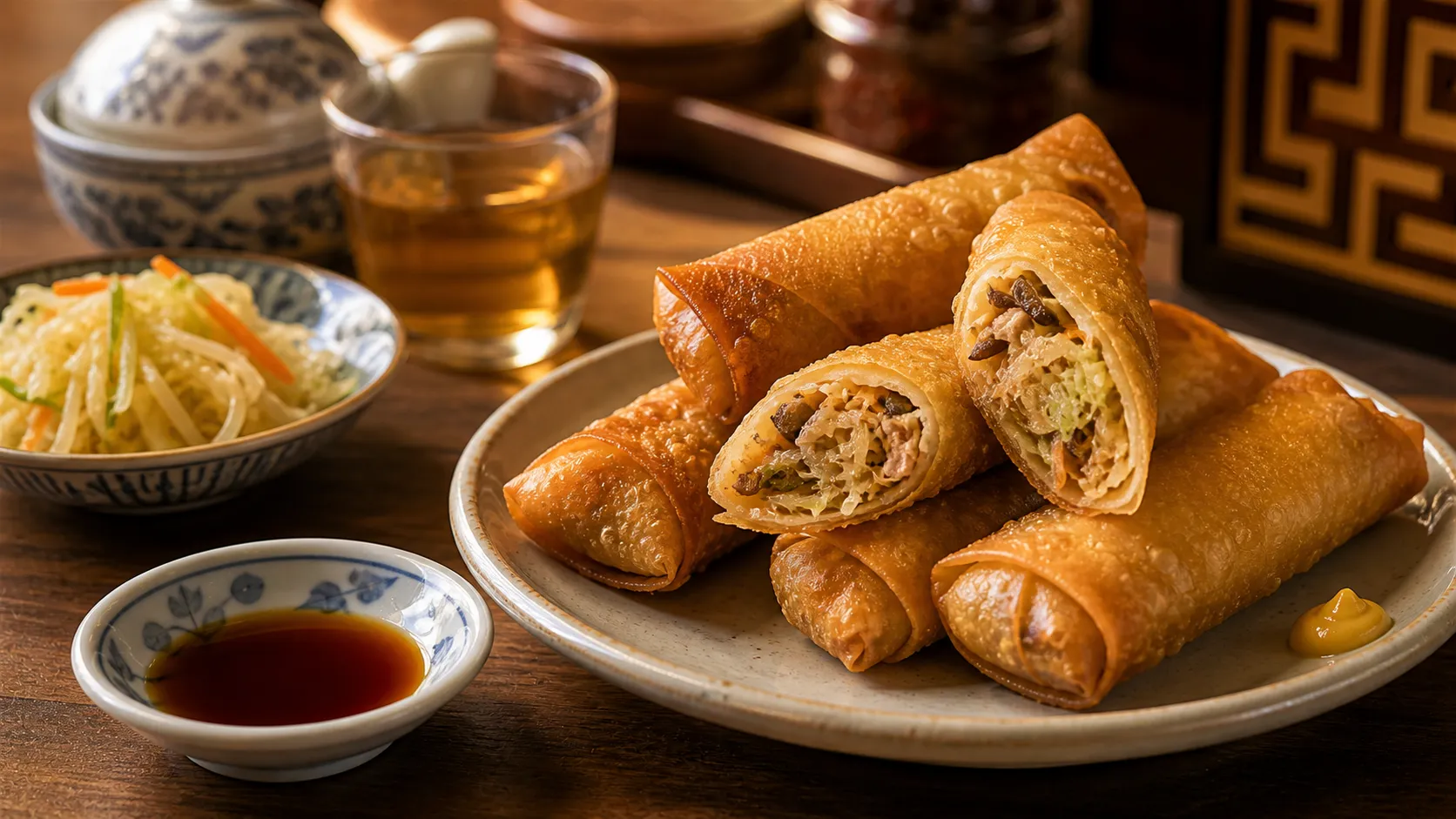
Japanese FoodNationwide
Harumaki (春巻き)
The Japanese spring roll — a shatteringly crisp golden tube that gives way to a hot, savory tangle of pork, cabbage and bamboo shoot, best eaten the second it's cool enough not to burn your mouth (you will not wait that long).
July 11, 2026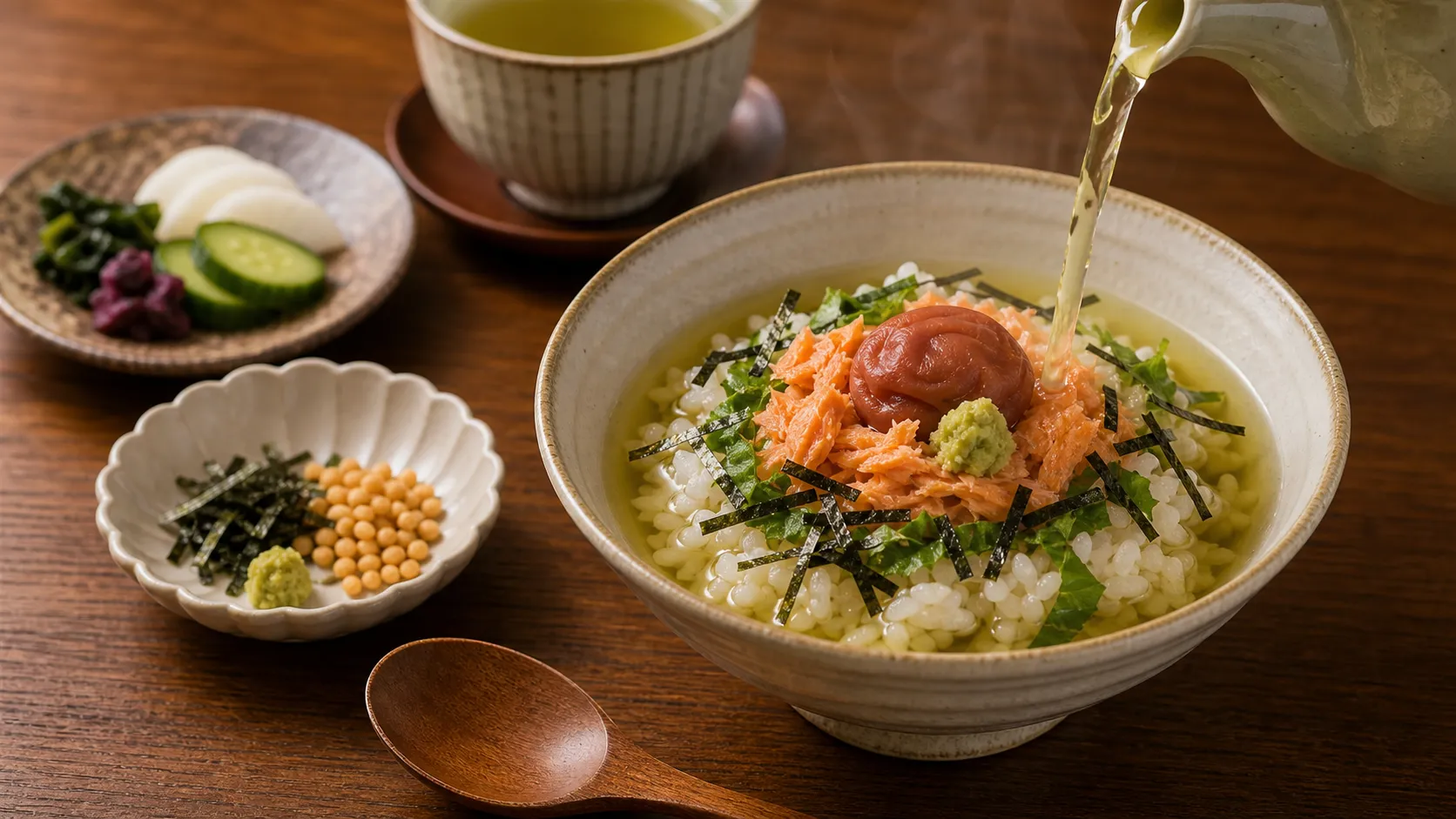
Japanese FoodNationwide
Ochazuke (お茶漬け)
Pour hot green tea or dashi over a bowl of rice, scatter something savory on top, and eat — the gentlest, most quietly restorative dish in Japan, the one you reach for late at night when you just need a warm bowl to make everything okay.
July 11, 2026