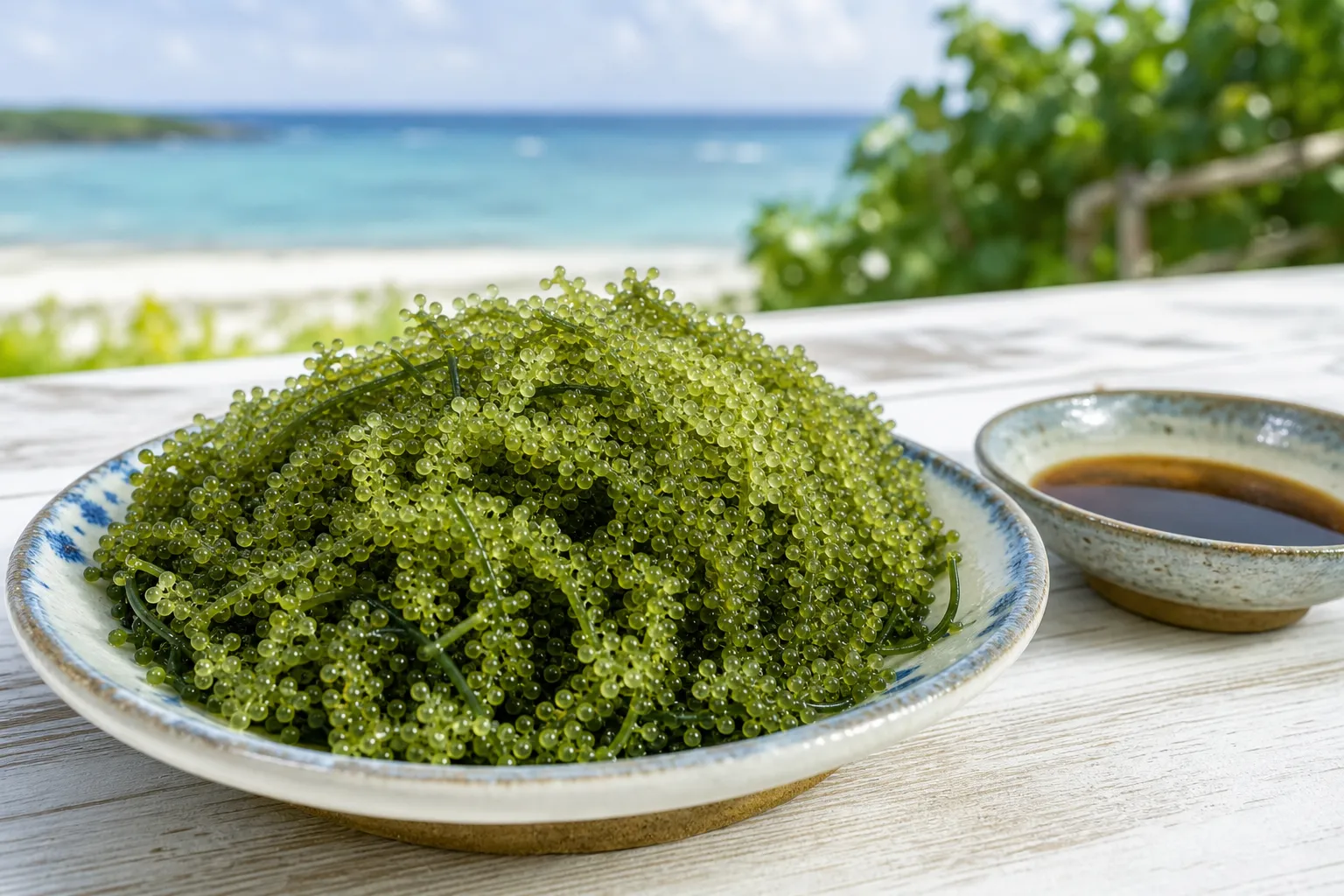
Pop. Then another. Pop, pop. I wasn't even chewing so much as letting my teeth find each little bead and press until it burst — a tiny, cold, briny release of seawater flavor, over and over, string after string of it draped over my chopsticks. I've eaten a lot of things that claimed to be like caviar. This is the first one that actually delivered on that promise, and it isn't fish at all.
Share this dish


Tiny green beads burst between my teeth, one after another, like the ocean somehow figured out how to make caviar out of a salad.
🍜 Planning a food trip to Okinawa?Add this dish to my Food Trip →
 Add this dish to my Food Trip →
Meet umibudo (海ぶどう), "sea grapes" — a bright green seaweed native to Okinawa's reefs, made of thin stalks lined with clusters of tiny, translucent, bead-like sacs that genuinely do look like a miniature bunch of grapes. It's served raw, chilled, glistening, usually alongside a small dish of ponzu for dipping. No cooking, no seasoning baked in — the whole appeal is texture. Bite down and each little sphere pops individually, releasing a clean, mild, faintly salty ocean flavor. It is not fish roe, it is not tobiko, and it is absolutely not a bunch of actual fruit — it's a plant that decided to have the mouthfeel of caviar, and Okinawa built a whole appetizer around that fact.
A reef plant that Okinawa turned into a delicacy
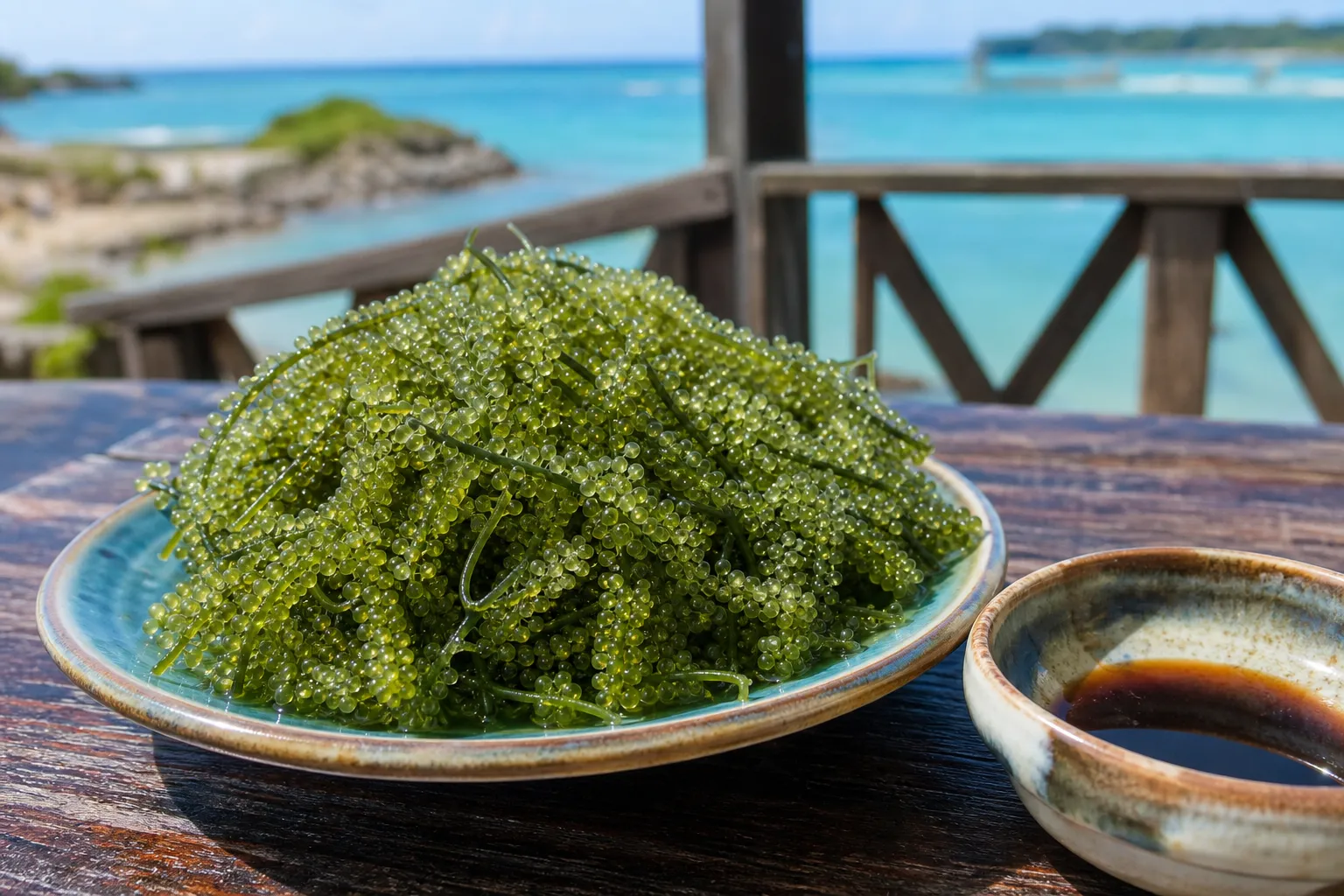
Umibudo has grown wild on Okinawa's shallow reefs for as long as anyone can remember, gathered by coastal communities as a simple, free, briny side to go with rice and fish. What's changed more recently is the scale: Okinawa now farms umibudo commercially in coastal aquaculture ponds, because demand — both on the islands and from mainland Japan — outgrew what divers could hand-harvest from the reef. It's one of the rare "local specialty" foods that genuinely tastes like the specific ocean it came from; the flavor is subtle enough that you're really tasting mineral, salt, and a bit of that reef itself.
I like that this dish resists a big dramatic origin story. There's no legendary chef, no single invention moment — just generations of people living next to a reef, noticing something delicious growing in it, and eating it. Sometimes the best food stories are the quiet ones.
Why the texture is the entire event
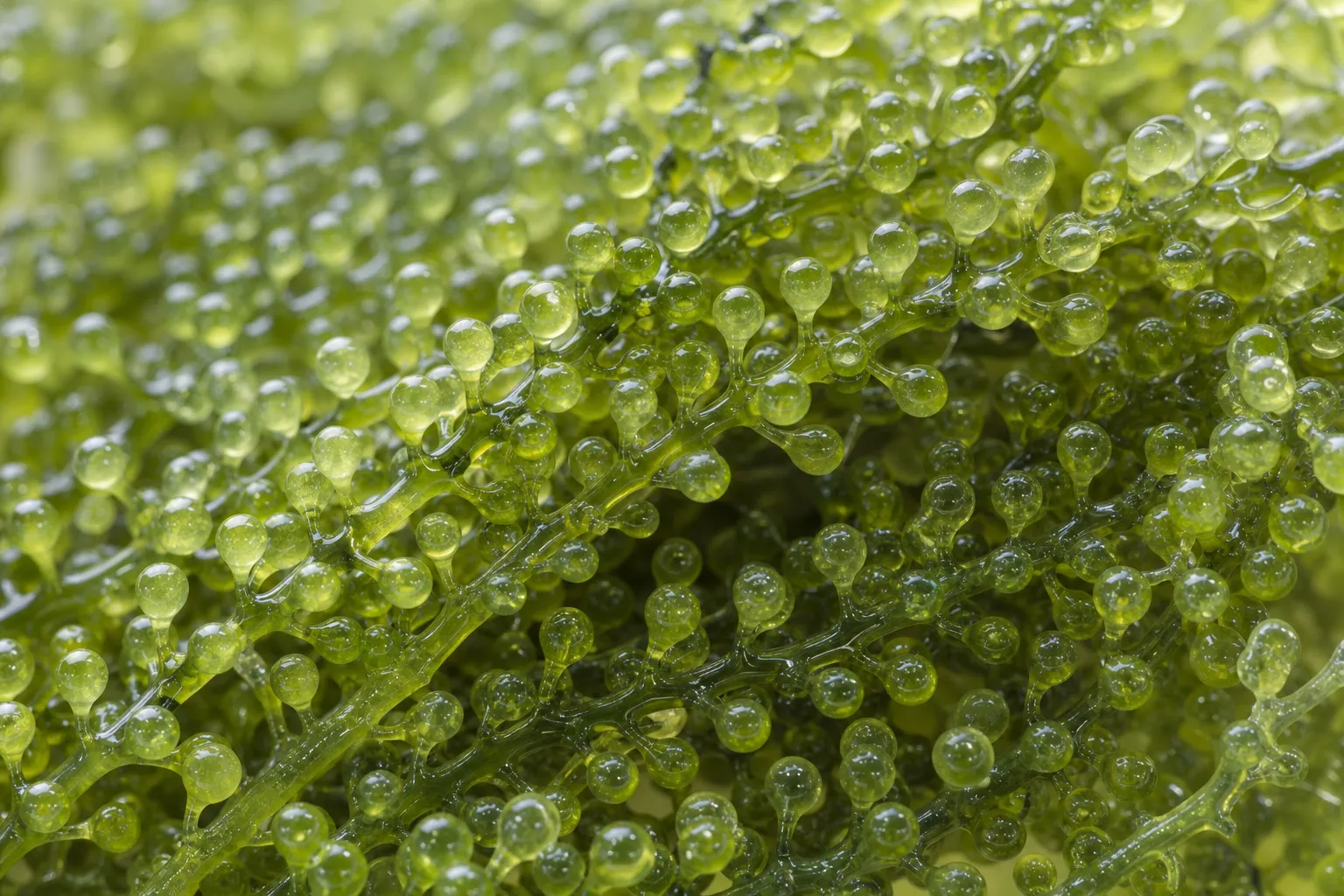
Flavor-wise, umibudo is gentle — a clean, mineral, seawater taste with barely any of the fishy or heavily "seaweedy" quality you might expect from something that grows in the ocean. It is nowhere near as assertive as the leafy wakame you've probably had in a seaweed salad; umibudo is milder, cleaner, and built entirely around its texture rather than its taste. Each little bead holds a tiny reservoir of liquid, and they burst independently as you chew, one little pop leading into the next, which is a genuinely strange and delightful sensation the first few times you experience it.
Ponzu is the classic dip, and it's the right call — its bright citrus-soy tang gives the mild sea grapes something to play against without drowning them out. Dip lightly. Drown the beads in sauce and you lose the point of the dish, which is that pop, repeated, for as long as your plate lasts.
How it's prepared
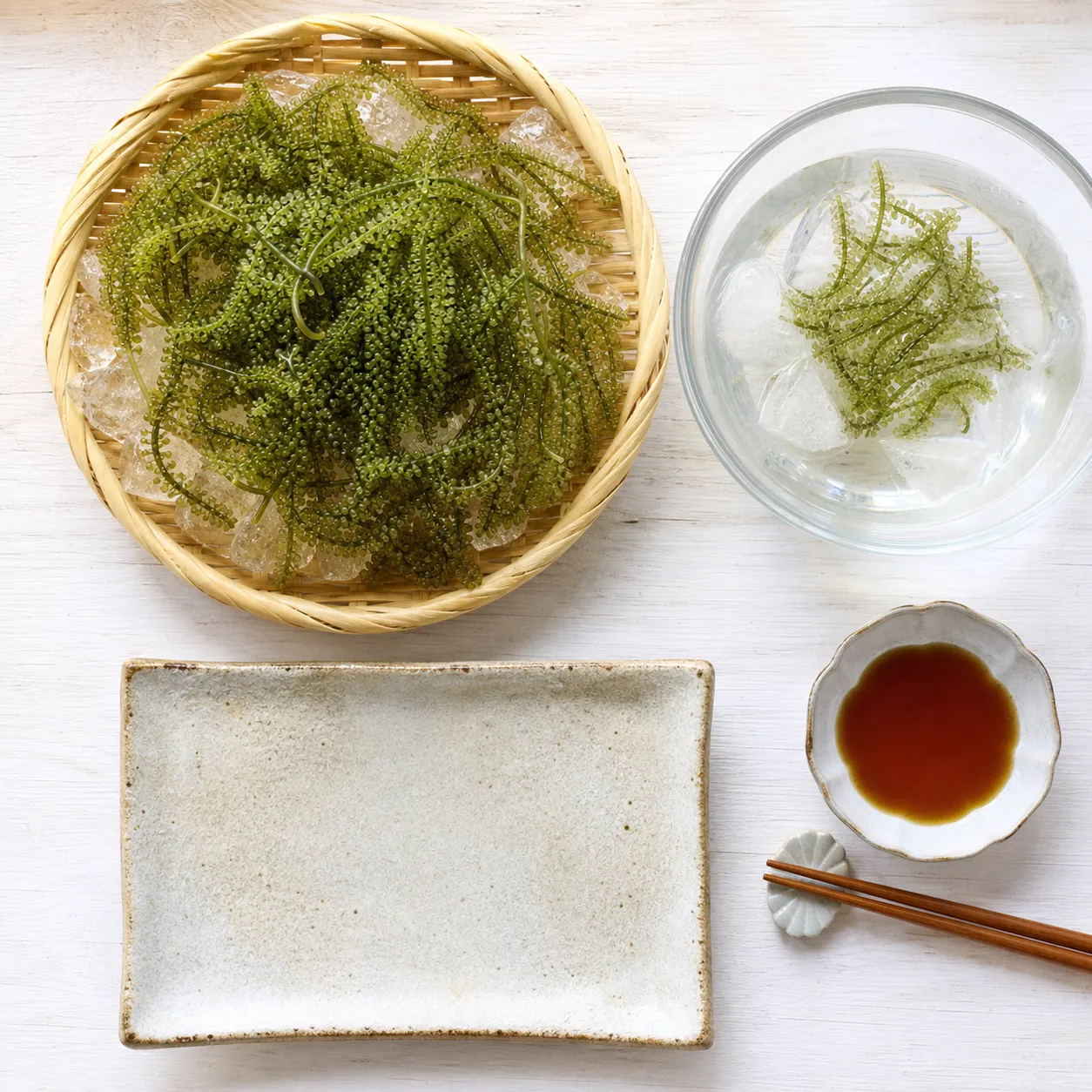
- Harvest fresh umibudo from coastal ponds or reef beds, keeping the strands intact
- Rinse gently in cold water — the beads are delicate and easily crushed
- Chill thoroughly; umibudo is always served cold, never cooked
- Arrange the strands loosely on a plate so the beads stay plump and separated
- Serve with a small side of ponzu sauce for dipping, and eat promptly — the texture degrades if it sits too long, especially at room temperature
Before you go — for the texture-curious
Your questions, answered honestly
"Is this fish roe?" — No, not at all — it's a seaweed. It just mimics the burst-in-the-mouth texture of roe like ikura or tobiko, which is exactly why it surprises people.
"How do I eat it — dip everything, or straight?" — A light dip in the ponzu on the side is standard. Don't soak it; the sauce is meant to accent the mild flavor, not replace it.
"Does it taste fishy?" — No — it's mild and mineral, more "clean ocean" than "fish." If you don't love strong seaweed flavors, umibudo is actually a gentle entry point.
"Why does it feel like it's melting on my plate?" — The beads are fragile and lose their pop if left out too long or refrigerated too cold/too long after harvest — eat it promptly and fresh for the best texture.
"Is it healthy?" — Yes, it's low-calorie and rich in minerals, which is part of why it's popular as a light starter or side in Okinawa.
What the staff will ask you
| You'll hear | Romaji | Meaning | Just say |
|---|---|---|---|
| ポン酢でよろしいですか? | Ponzu de yoroshii desu ka? | "Ponzu dipping sauce okay?" | Hai, onegaishimasu (yes, please) |
| 単品にしますか、セットにしますか? | Tanpin ni shimasu ka, setto ni shimasu ka? | "As a single dish, or part of a set?" | Tanpin de onegaishimasu (as a single dish, please) |
| 冷たいままお召し上がりください | Tsumetai mama omeshiagari kudasai | "Please eat it while it's cold" | Hai, wakarimashita (understood, thank you) |
To order, just say "Umibudo kudasai" (海ぶどうください) — "Sea grapes, please."
Where to eat it
- Naha's Makishi Public Market and nearby izakayas — a near-universal starter on Okinawan restaurant menus in central Naha.
- Coastal towns and dive resort areas (Onna, Kouri Island, Ishigaki) — many restaurants near the coast serve it especially fresh, sometimes sourced from local aquaculture ponds you can see nearby.
- Okinawan izakayas and home-style (Okinawa ryori) restaurants island-wide — a standard part of the classic Okinawan small-plates lineup alongside things like goya champuru.
- Check before you go — freshness genuinely matters here more than at most restaurants; if a plate looks limp or watery rather than plump and glistening, it's not at its best.
Soul Score
Local Roots4/5
First-Timer Friendly4/5
Adventure Level3/5
Comfort Level3/5
Travel Worthy4/5
These scores are one obsessed eater's gut feeling — not a verdict. A low number isn't a bad mark, just a different kind of adventure.
Planning what to eat in Okinawa?🌺 Okinawa Food Guide: Soba, Taco Rice, Chanpuru, Sweets, and Island Comfort Food →
Know someone planning Japan?
← All Articles
Local Food · Okinawa
Still hungry?
Eat more from Okinawa
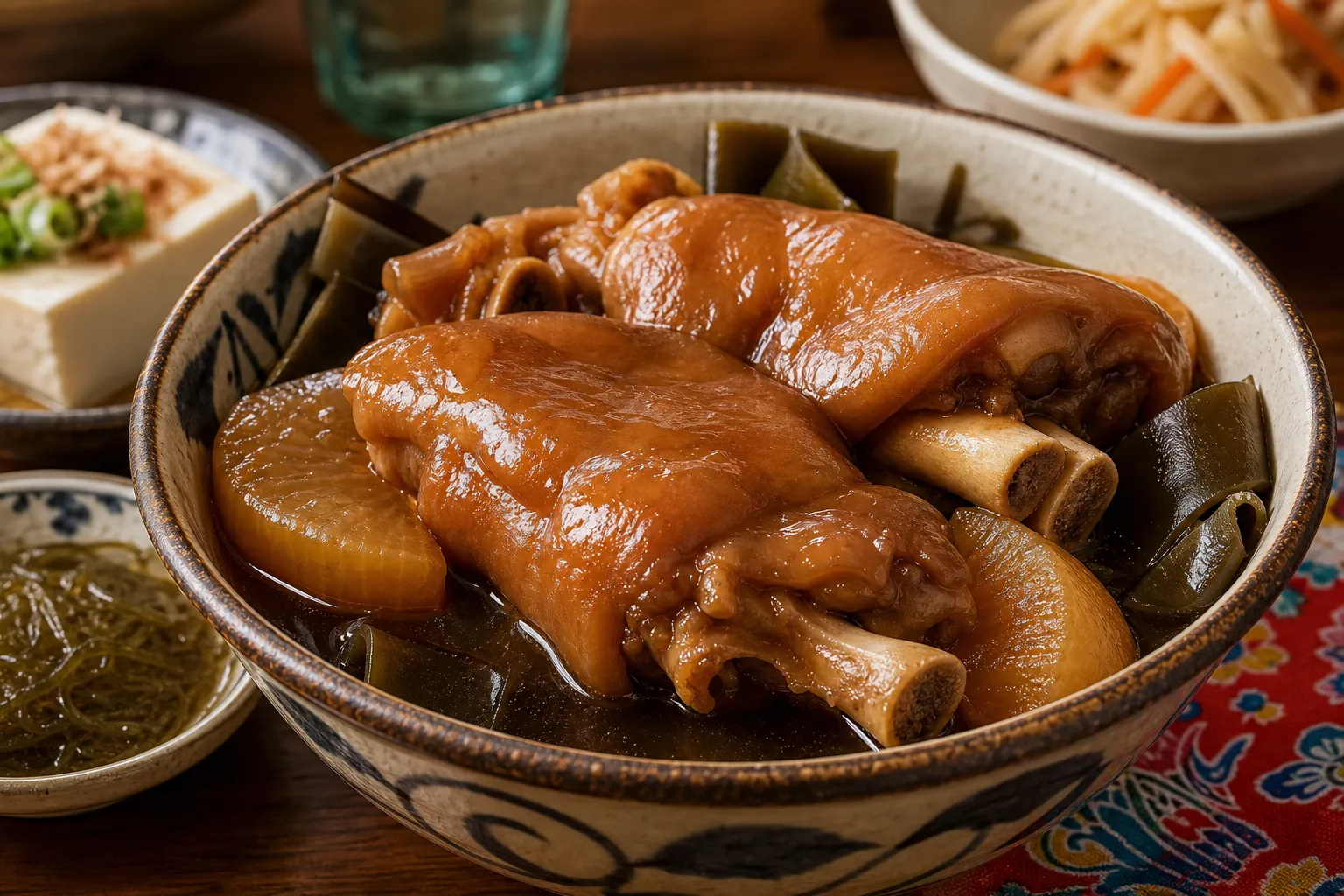
Local FoodOkinawa
Tebichi (てびち)
It wobbled when the bowl hit the table — actually jiggled — and I hesitated for one honest second before the first bite dissolved into warm, savory collagen and I understood why Okinawans swear by it.
July 5, 2026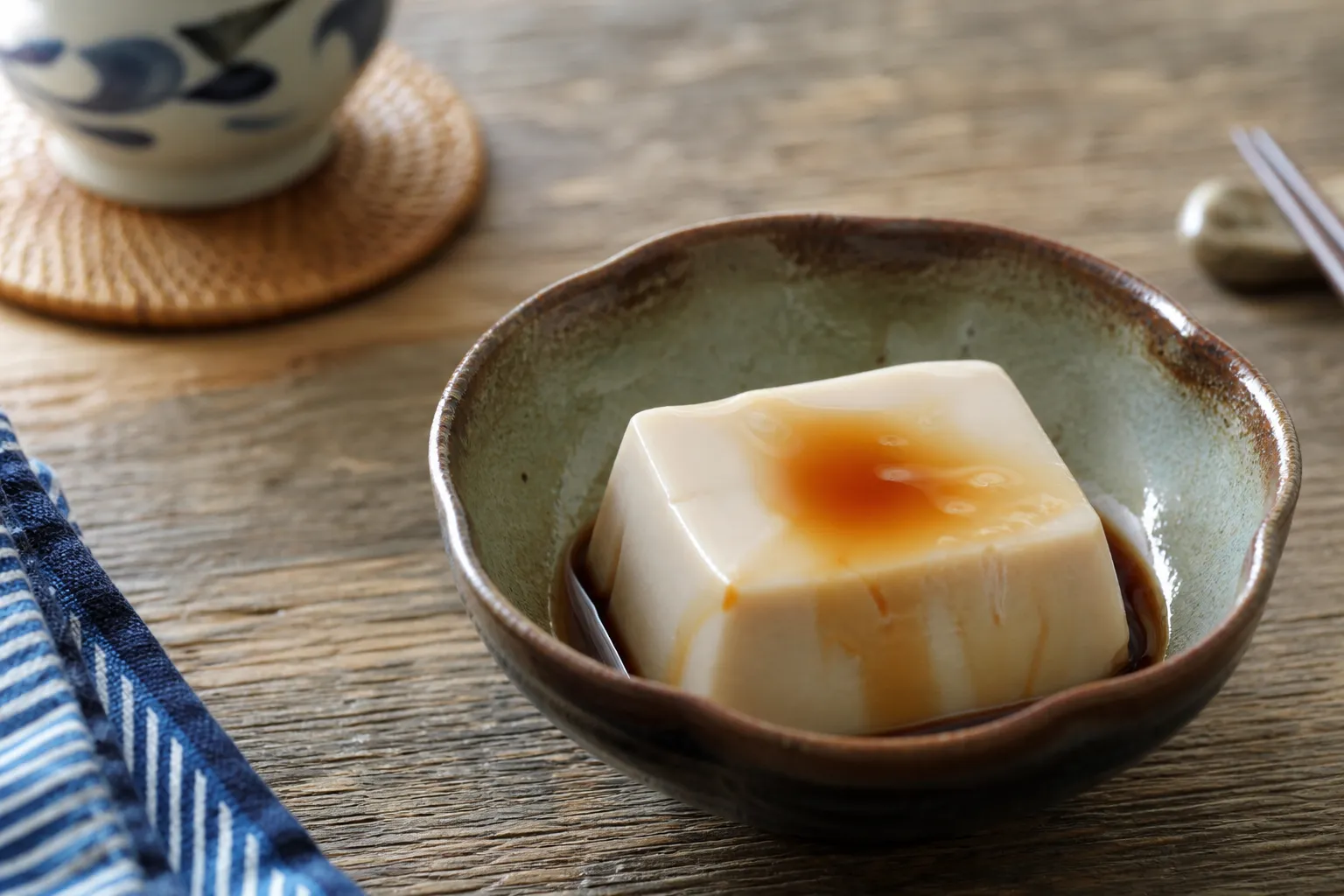
Local FoodOkinawa
Jimami Tofu (じーまーみ豆腐)
It jiggles like tofu, it tastes like peanuts, and it took me three spoonfuls to accept that both of those things were happening in my mouth at the same time.
July 4, 2026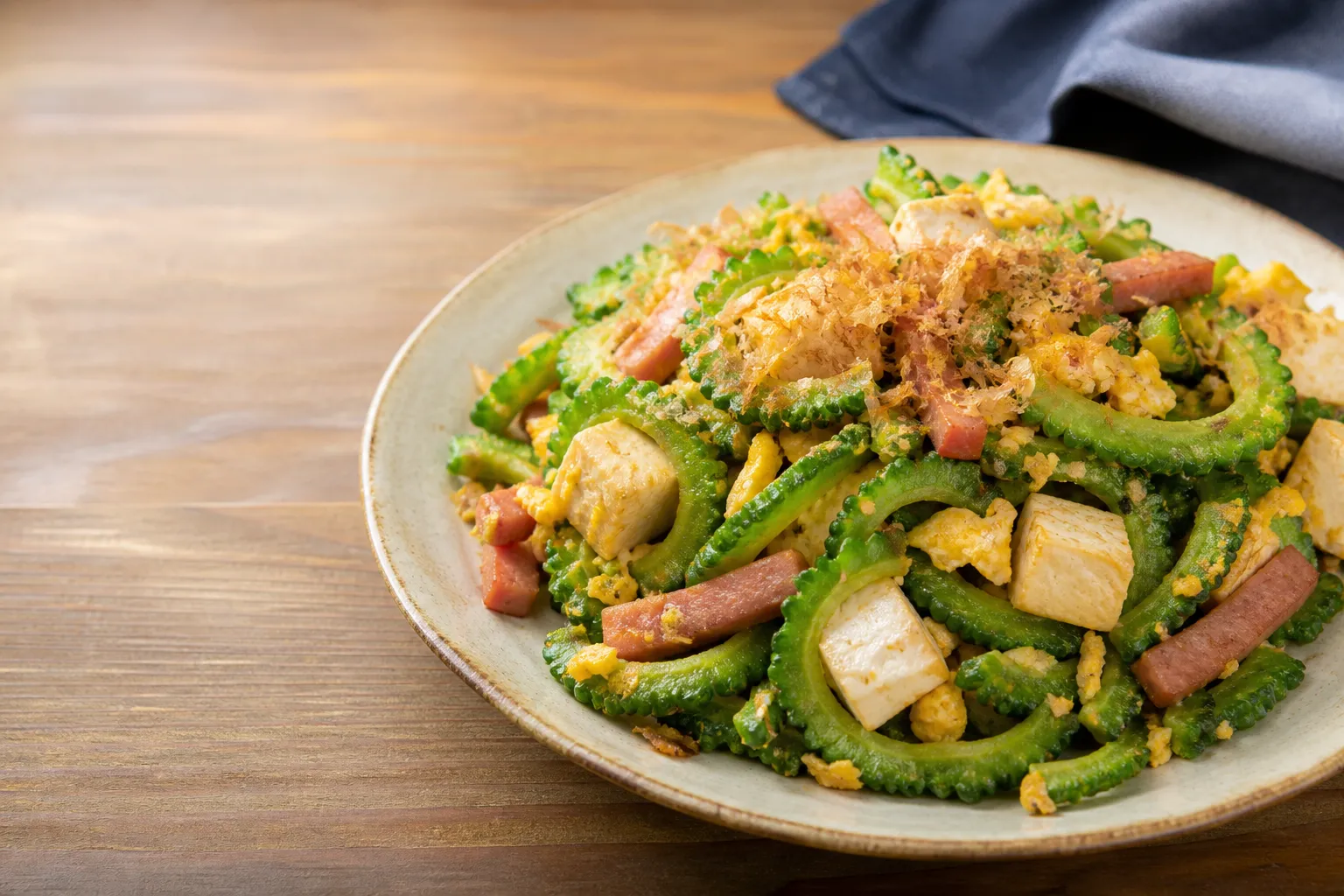
Local FoodOkinawa
Goya Chanpuru (ゴーヤチャンプルー)
The first bite is bitter — properly, defiantly bitter — and then, somehow, you want another. Okinawa's home-style stir-fry is an acquired love that doesn't take long to acquire.
July 1, 2026