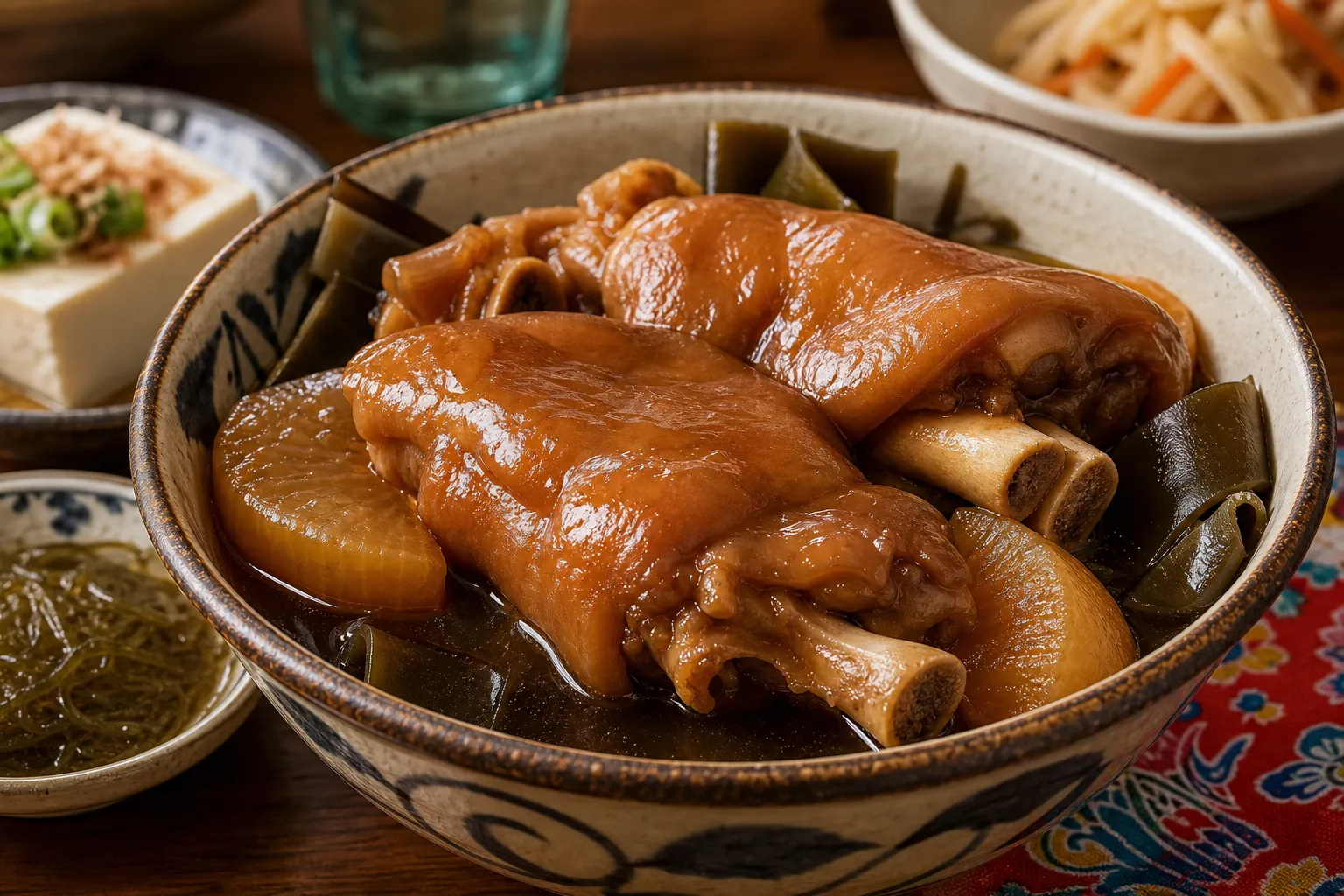
The bowl arrived and it moved. Not a lot — but the pieces of trotter had this glossy, trembling wobble, the skin gone translucent, and I'll be honest, I hesitated. One full second of what am I doing while an Okinawan grandmother at the next table watched me with quiet amusement. Then I bit in, and the whole thing basically dissolved — warm, savory, unbelievably rich collagen sliding apart at the lightest pressure, the skin soft as pudding, the flavor deep and soy-sweet. The hesitation was gone. I looked over at the grandmother. She nodded once, like there it is.
Share this dish


It wobbled when the bowl hit the table — actually jiggled — and I hesitated for one honest second before the first bite dissolved into warm, savory collagen and I understood why Okinawans swear by it.
🍜 Planning a food trip to Okinawa?Add this dish to my Food Trip →
 Add this dish to my Food Trip →
This is tebichi (てびち), Okinawa's beloved slow-braised pig's trotters. Okinawa famously uses "every part of the pig but the squeal," and tebichi is that philosophy at its most unapologetic: whole pig's feet, simmered low and slow for hours with kombu and daikon in a soy-based broth until every bit of tough skin, tendon, and connective tissue surrenders into something meltingly tender and lush. It is collagen made delicious. It is not, to be clear, for everyone on the first try — but for the people it's for, it's everything.
Every part of the pig, and no apologies
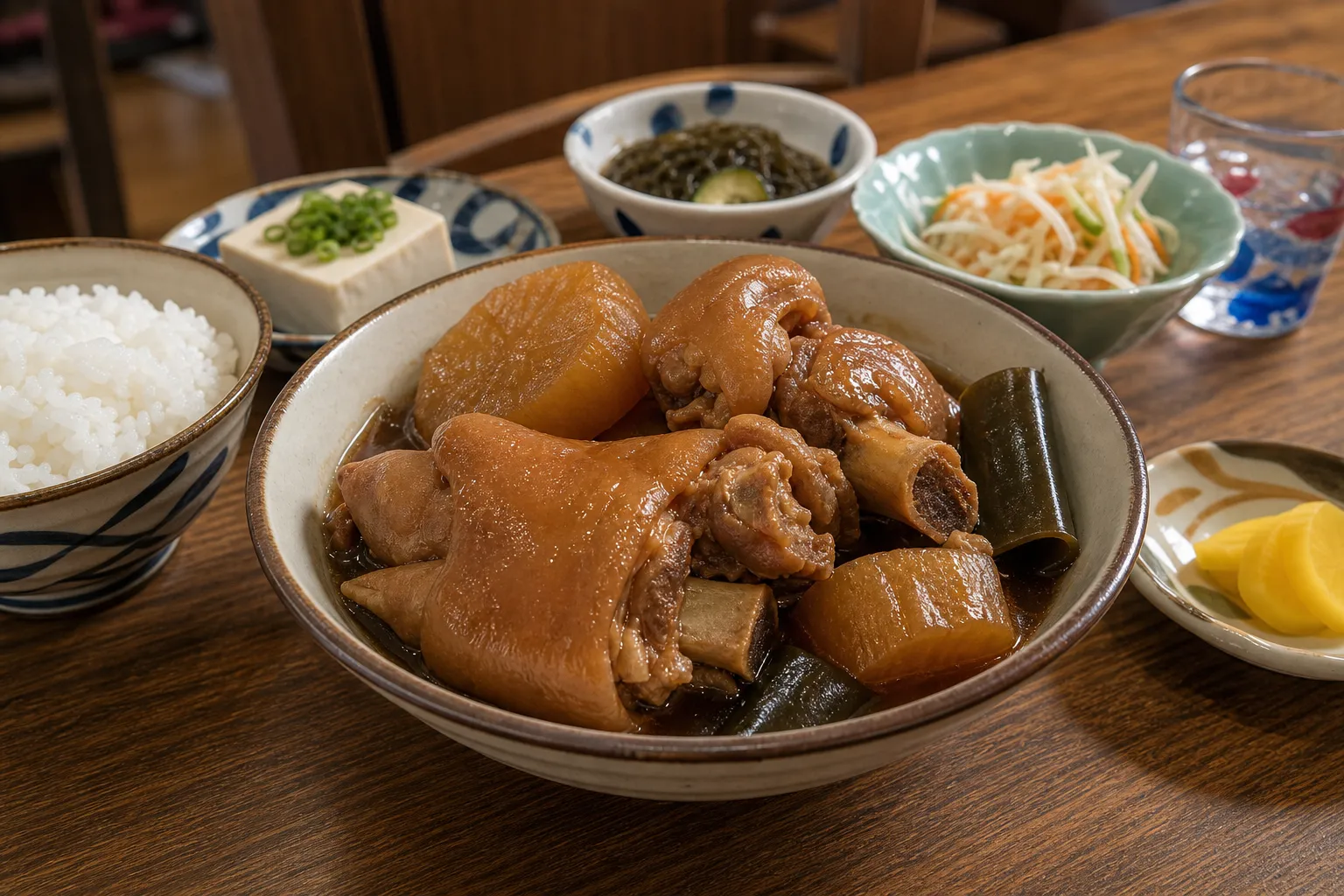
Okinawa's pork culture runs deep — pigs have been central to island cooking for centuries, and the local ethic of wasting nothing turned the humble, cheap, hard-to-cook parts into treasured dishes. Trotters are almost all skin, bone, tendon, and collagen, with very little actual muscle meat. Most cuisines would toss them or grind them up. Okinawa said: give us six hours and a pot, and we'll make them the best thing on the table.
I find that deeply admirable — it's cooking as patience, as respect, as refusal to waste. Tebichi is also wrapped up in Okinawa's famous longevity culture; collagen-rich pork dishes are eaten as nourishing, restorative, good-for-you food, the kind of thing served to warm you up and set you right. Whether or not the collagen does anything for your skin (the claim you'll hear constantly), the dish absolutely does something for your soul. This is old-island soul food, and it knows exactly what it is.
Why the wobble is the whole point
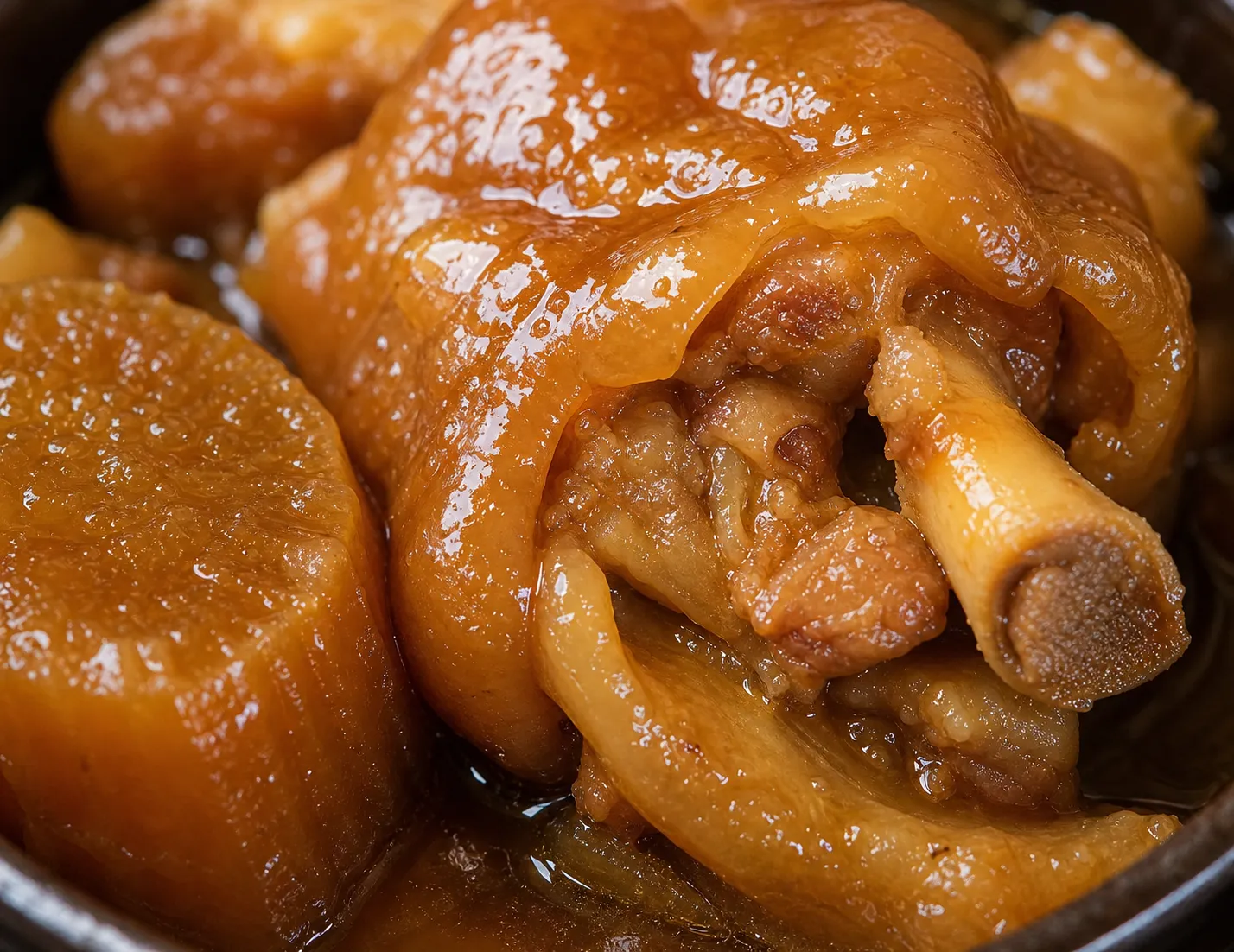
Let's be real about the texture, because it's the make-or-break of tebichi. This is not lean, chewy meat. It's soft, gelatinous, and yielding — the skin turns silky and translucent, the tendon goes tender-springy, and the collagen practically melts, giving the whole braise that lip-sticking, unctuous richness. If you go in expecting a pork chop, it'll surprise you. If you go in ready for something soft and rich and a little wild, it'll floor you.
The braise is what makes it sing. Hours in a soy-based broth — often with kombu seaweed and daikon radish simmered alongside — build a deep, savory-sweet sauce that soaks into every gelatinous fold. The daikon goes soft and drinks up the flavor; the kombu adds umami and its own tender bite. Served over rice, in a bowl of Okinawa soba, or on its own with the braising liquid, it's warming, deeply satisfying comfort food. I ate a whole bowl, sauce and all, and briefly considered a second. The grandmother would have approved.
How tebichi gets made
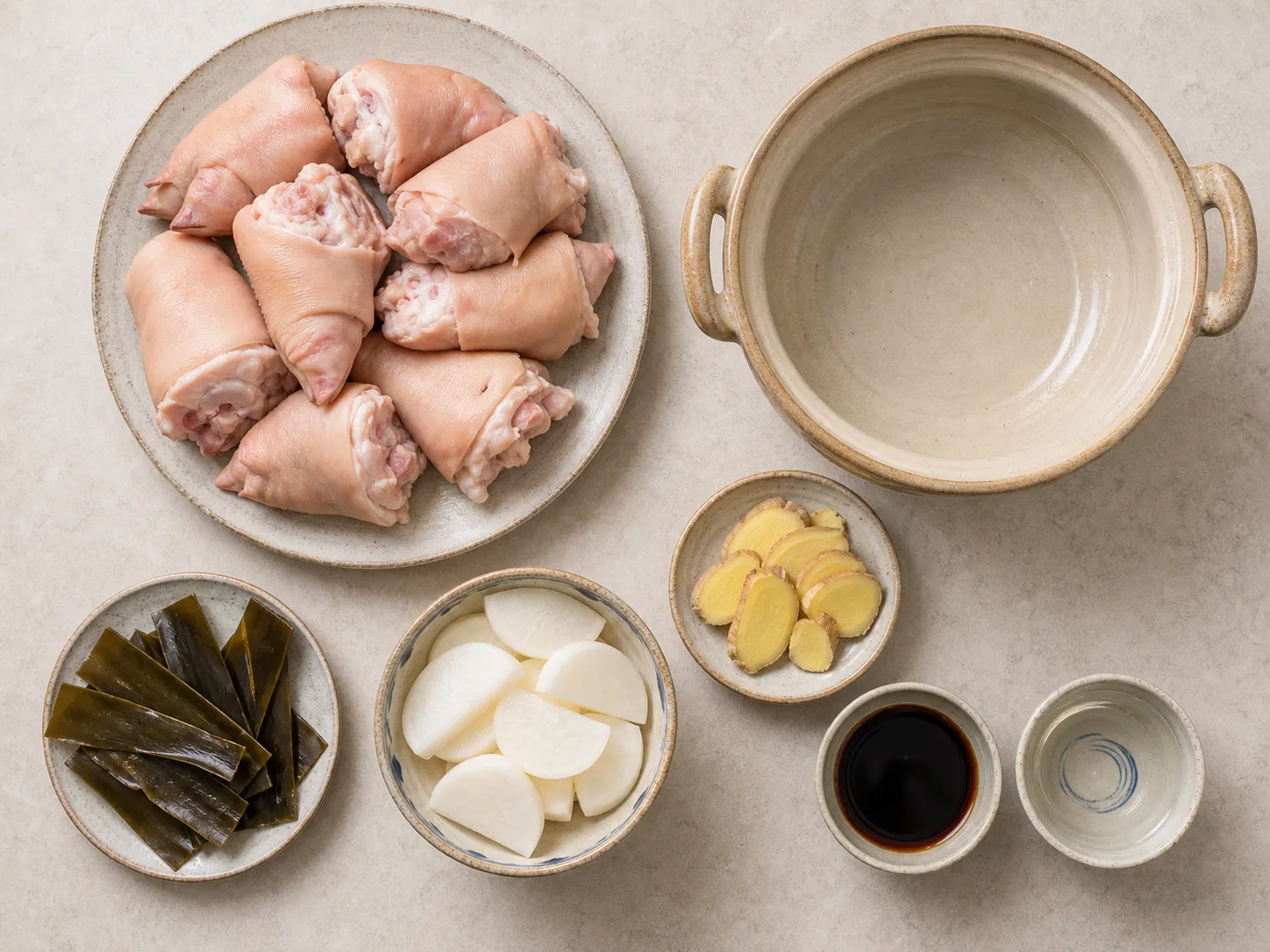
- Pig's trotters are cut into pieces, then cleaned and parboiled to remove excess fat and any strong smell — an important first step
- They're transferred to a fresh pot with a soy-based braising liquid (soy sauce, often awamori or sake, sugar or mirin, ginger)
- Kombu seaweed and chunks of daikon are added to simmer alongside the trotters, building umami and soaking up flavor
- Everything braises low and slow for several hours, until the skin turns glossy and translucent and the collagen goes meltingly soft
- It's served hot — over rice, in a bowl of Okinawa soba as tebichi soba, or plated with the daikon, kombu, and reduced braising sauce
Before you go — how to order it right
Your questions, answered honestly
"Is this the same as rafute?" — No. Rafute is braised pork belly — square blocks of meat and fat, closer to what you might expect from braised pork. Tebichi is the trotters — skin, tendon, collagen, bone. Both are Okinawan, both braised, totally different textures. Don't confuse them.
"There's barely any meat — is that normal?" — Completely normal. Tebichi is mostly skin, tendon, and collagen around the bone, with little muscle meat. That gelatinous texture is the dish, not a mistake. Eat around the bones and enjoy the soft parts.
"How should I try it my first time?" — Tebichi soba — the trotters served in a bowl of Okinawa soba — is the gentlest introduction, because the noodles and broth give you context and something familiar to lean on. Ease in that way before committing to a big bowl of pure trotter.
"Is it gamey or heavy?" — Properly made tebichi is cleaned and parboiled so it's not gamey — it's savory-sweet and clean-tasting. It is rich, though; the collagen is intense. Pair it with rice, pickles, or tea and you're set.
What the staff will ask you
| You'll hear | Romaji | Meaning | Just say |
|---|---|---|---|
| そばに入れますか、単品にしますか? | Soba ni iremasu ka, tanpin ni shimasu ka? | "In soba, or on its own?" | Soba ni onegaishimasu (in soba, please) |
| ご飯もつけますか? | Gohan mo tsukemasu ka? | "Add rice too?" | Onegaishimasu (yes, please) |
| 初めてですか? | Hajimete desu ka? | "Is this your first time?" | Hai, hajimete desu (yes, first time) |
To order, just say "Tebichi o kudasai" (てびちをください) — "Tebichi, please."
Where to eat it
- Okinawa (Naha and across the main island) — home-style eateries (shokudo), Okinawa soba shops, and izakaya throughout Okinawa serve tebichi, often as both a set and a soba topping.
- Okinawa soba specialists — many soba shops offer tebichi soba, the most approachable way in for first-timers.
- Naha's Kokusai-dori area and public-market eateries — a practical, tourist-friendly place to find it on menus in town.
Preparation, richness, and whether it's served as soba, a set, or à la carte vary by shop, so check current details before you go — and if it's your first time, start with tebichi soba.
Soul Score
Local Roots5/5
First-Timer Friendly2/5
Adventure Level4/5
Comfort Level5/5
Travel Worthy4/5
These scores are one obsessed eater's gut feeling — not a verdict. A low number isn't a bad mark, just a different kind of adventure.
Know someone planning Japan?
← All Articles
Local Food · Okinawa
Still hungry?
Eat more from Okinawa
Local FoodOkinawa
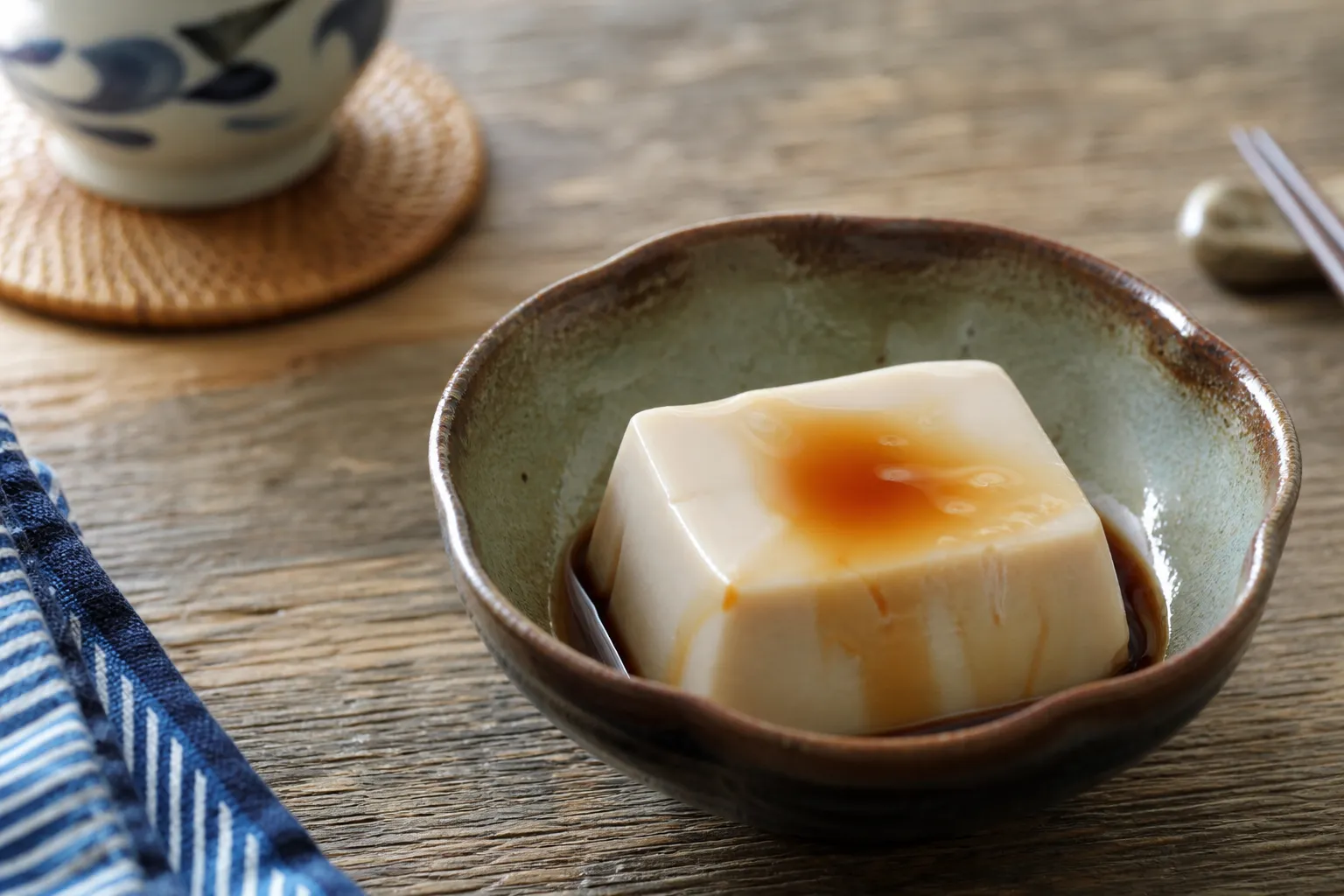
Jimami Tofu (じーまーみ豆腐)
It jiggles like tofu, it tastes like peanuts, and it took me three spoonfuls to accept that both of those things were happening in my mouth at the same time.
July 4, 2026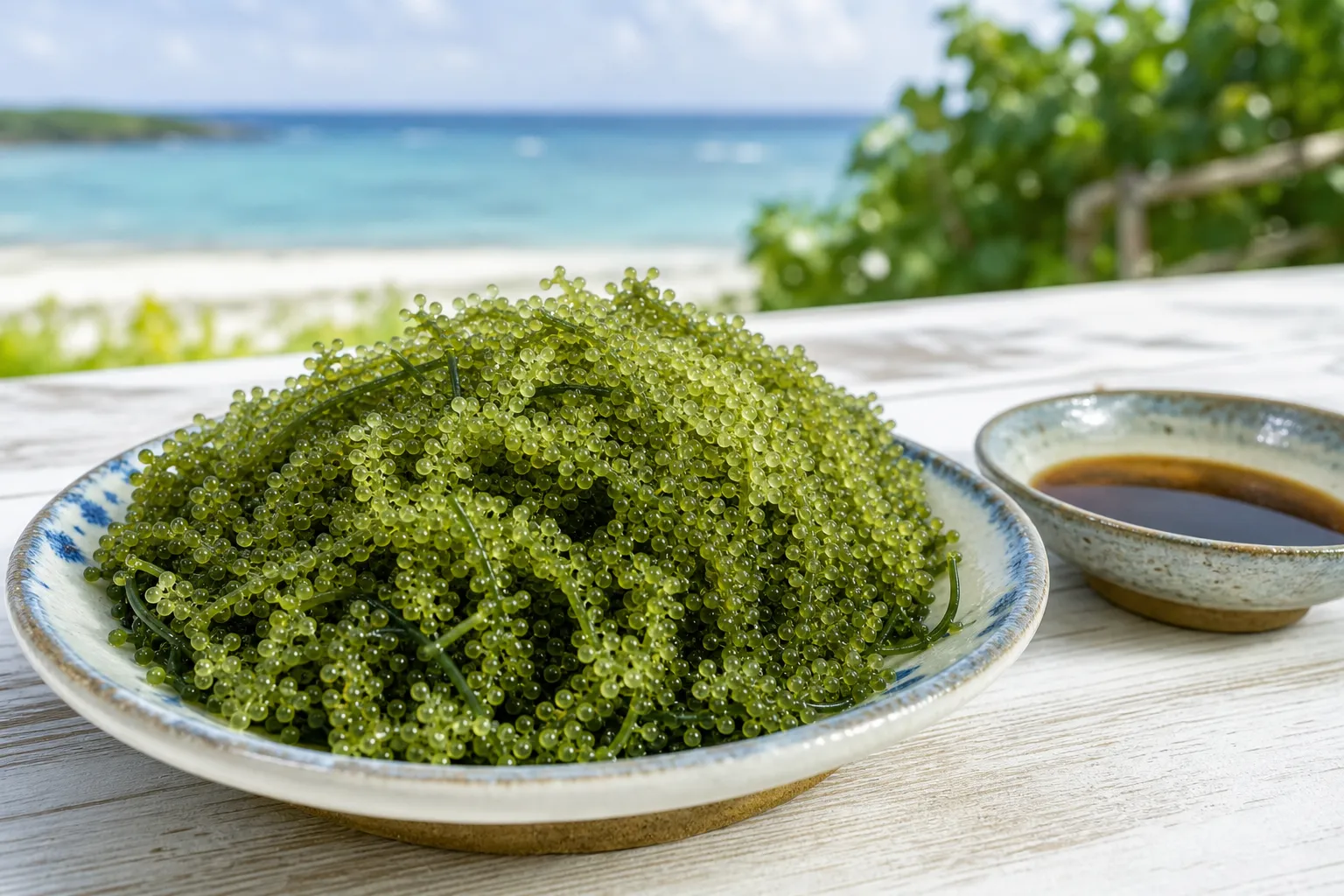
Local FoodOkinawa
Umibudo (海ぶどう)
Tiny green beads burst between my teeth, one after another, like the ocean somehow figured out how to make caviar out of a salad.
July 4, 2026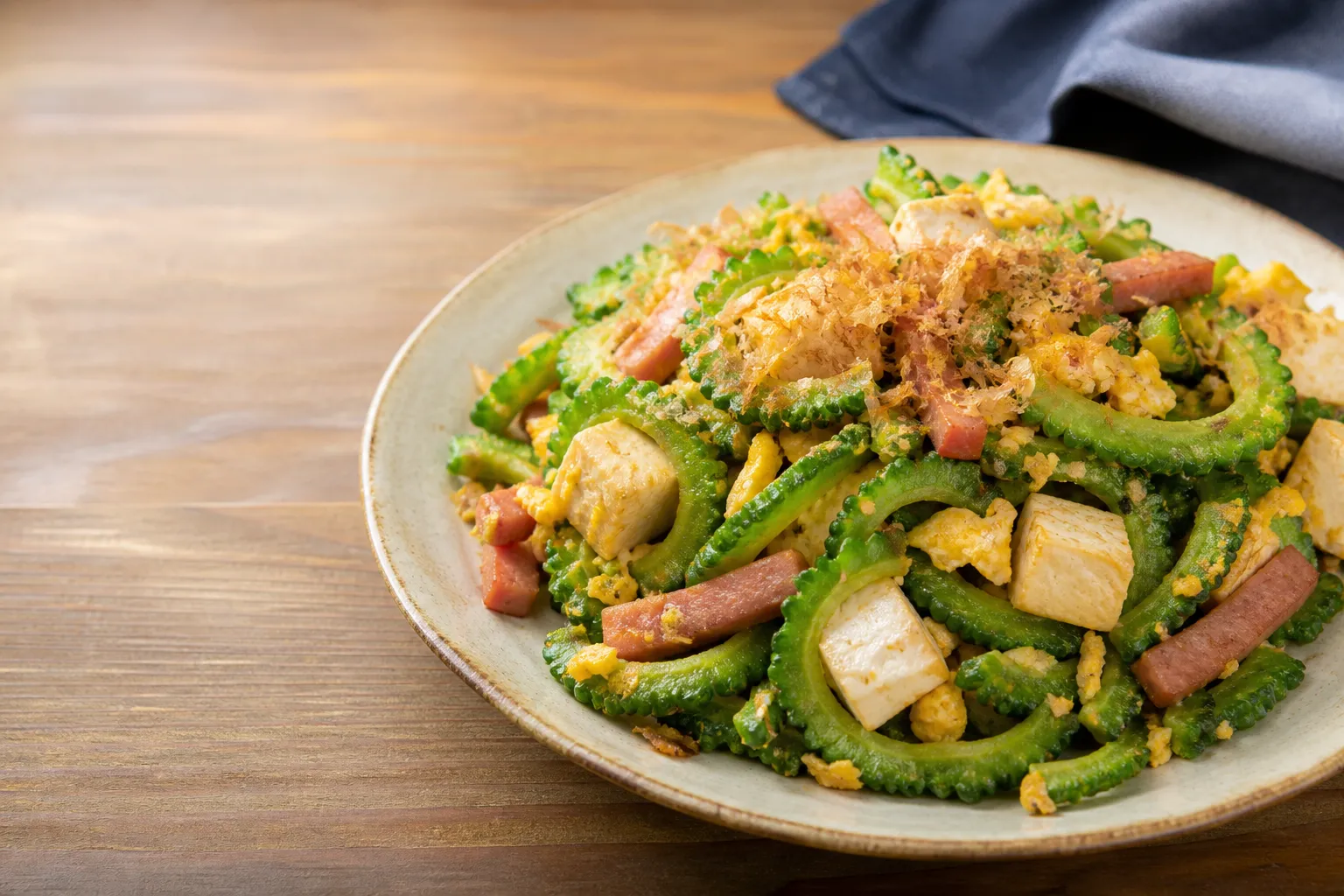
Local FoodOkinawa
Goya Chanpuru (ゴーヤチャンプルー)
The first bite is bitter — properly, defiantly bitter — and then, somehow, you want another. Okinawa's home-style stir-fry is an acquired love that doesn't take long to acquire.
July 1, 2026