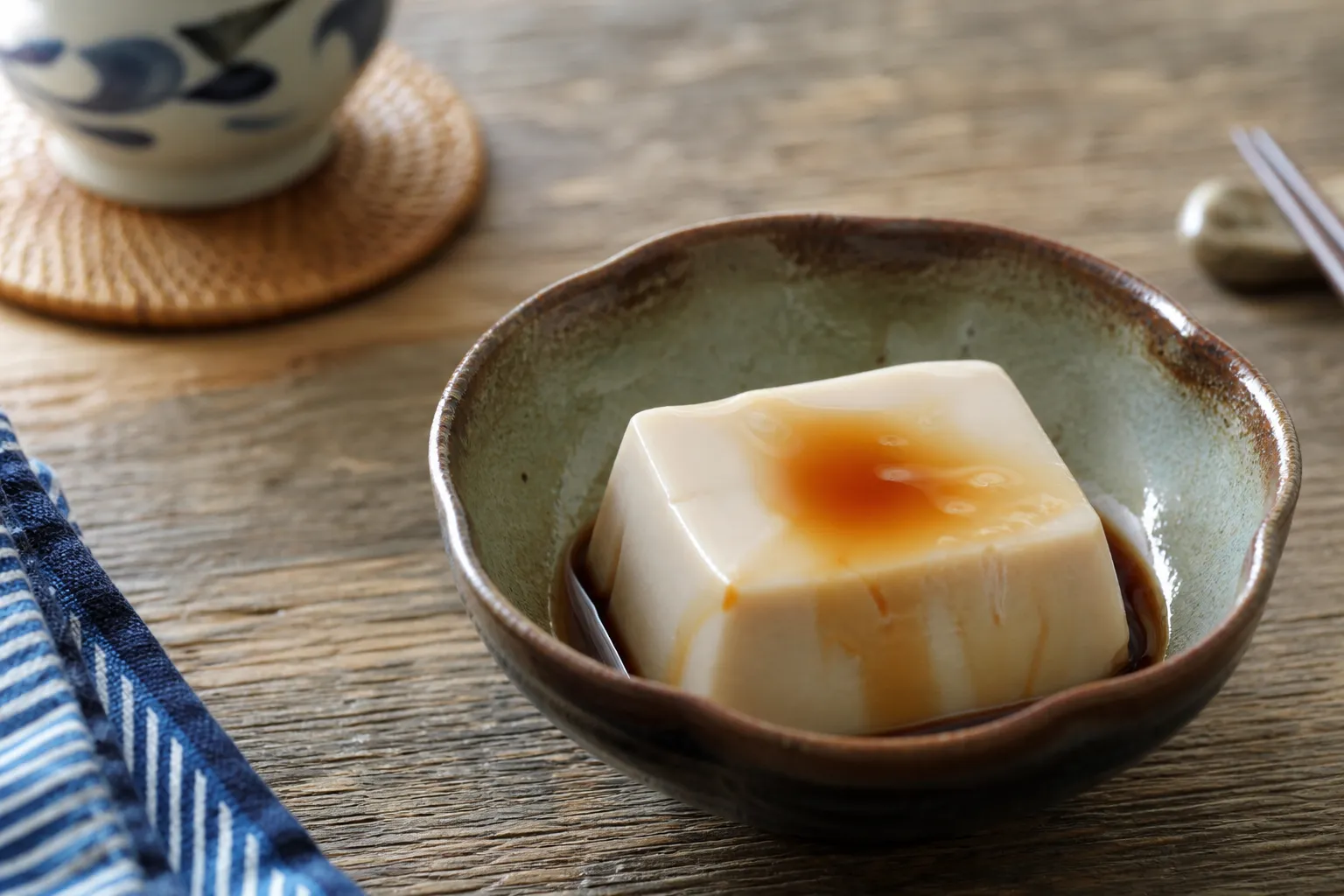
I poked it with my spoon first, the way you'd poke anything called "tofu." It wobbled — properly wobbled, that same soft jiggle you know from regular tofu — and then it stuck to the spoon a little, which regular tofu absolutely does not do. I took a bite expecting bland and soy-forward. I got something faintly sweet, nutty, and almost dessert-adjacent, glazed in a dark, glossy sauce. My brain short-circuited for a second trying to reconcile the texture with the flavor. Then I just went with it, and honestly, I could've eaten three of these.
Share this dish


It jiggles like tofu, it tastes like peanuts, and it took me three spoonfuls to accept that both of those things were happening in my mouth at the same time.
🍜 Planning a food trip to Okinawa?Add this dish to my Food Trip →
 Add this dish to my Food Trip →
That confusion is basically the whole point of jimami tofu (じーまーみ豆腐), an Okinawan specialty that borrows tofu's name and jiggle but has nothing to do with soybeans. It's made from peanut milk — jīmāmi is Okinawan dialect for peanut — thickened with starch instead of coagulated the way real tofu is. The result is a soft, chewy, custardy block, pale beige, faintly sweet on its own, usually crowned with a glossy sweet-soy sauce and a pinch of something green. It's technically not tofu at all. Nobody in Okinawa seems bothered by that, and after one bite, neither was I.
An island dish born from what actually grows there
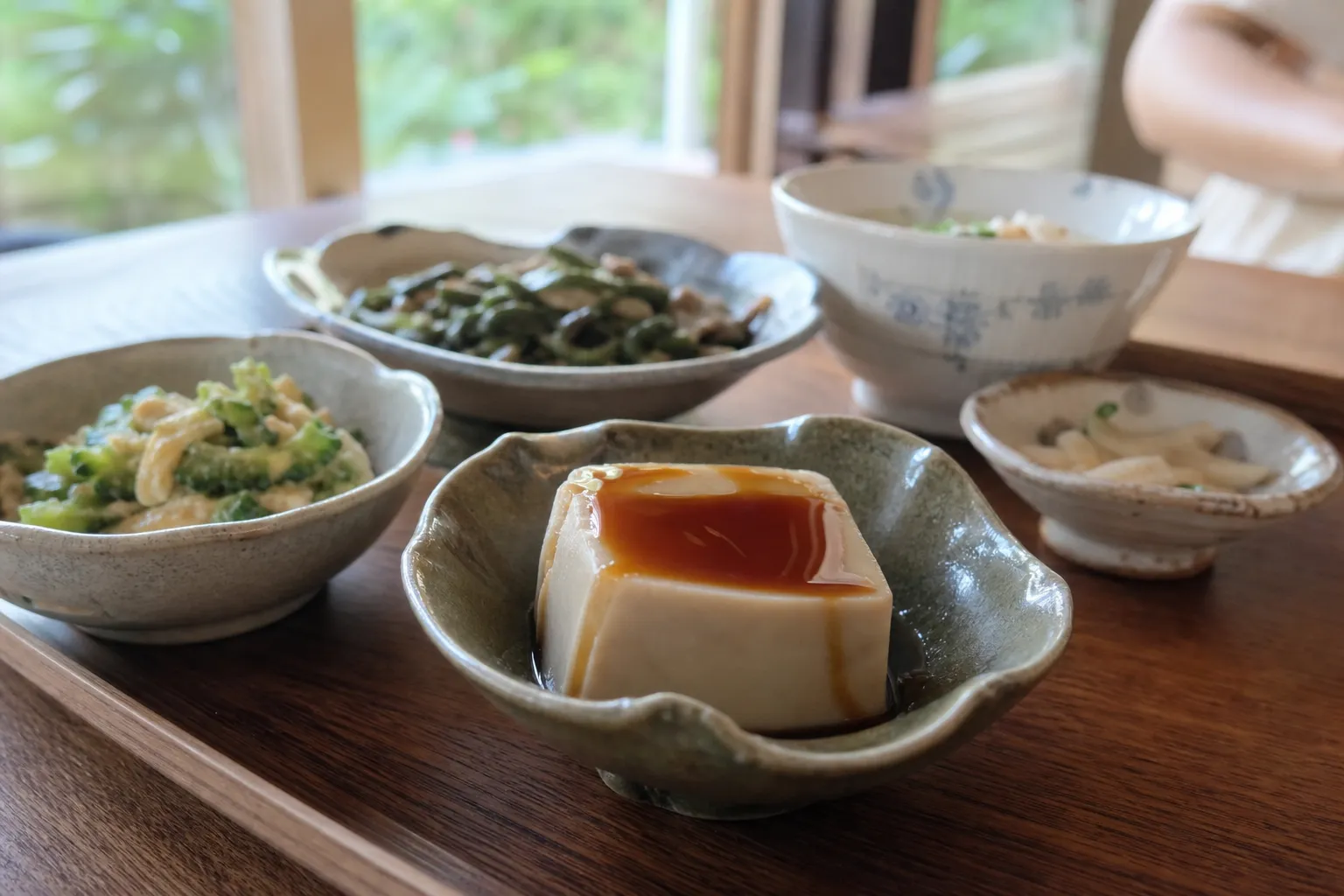
Okinawa's climate and soil have long favored peanuts over soybeans, and jimami tofu grew out of that simple agricultural fact — home cooks turning local peanuts into peanut milk, then thickening it with sweet potato starch (another Okinawan staple) into something that resembled the tofu everyone already knew and loved, using ingredients that were actually on hand. It reads, to me, like one of the most quietly clever pieces of regional cooking in Japan: nobody imported soybeans to force the "correct" version, they just made tofu logic work with what the island grew.
I find that kind of resourcefulness genuinely moving, in a small way. It's the opposite of a fusion gimmick — it's what happens when a place just cooks with what it has, confidently, for generations, until the substitute becomes the original.
Why the texture is the whole argument
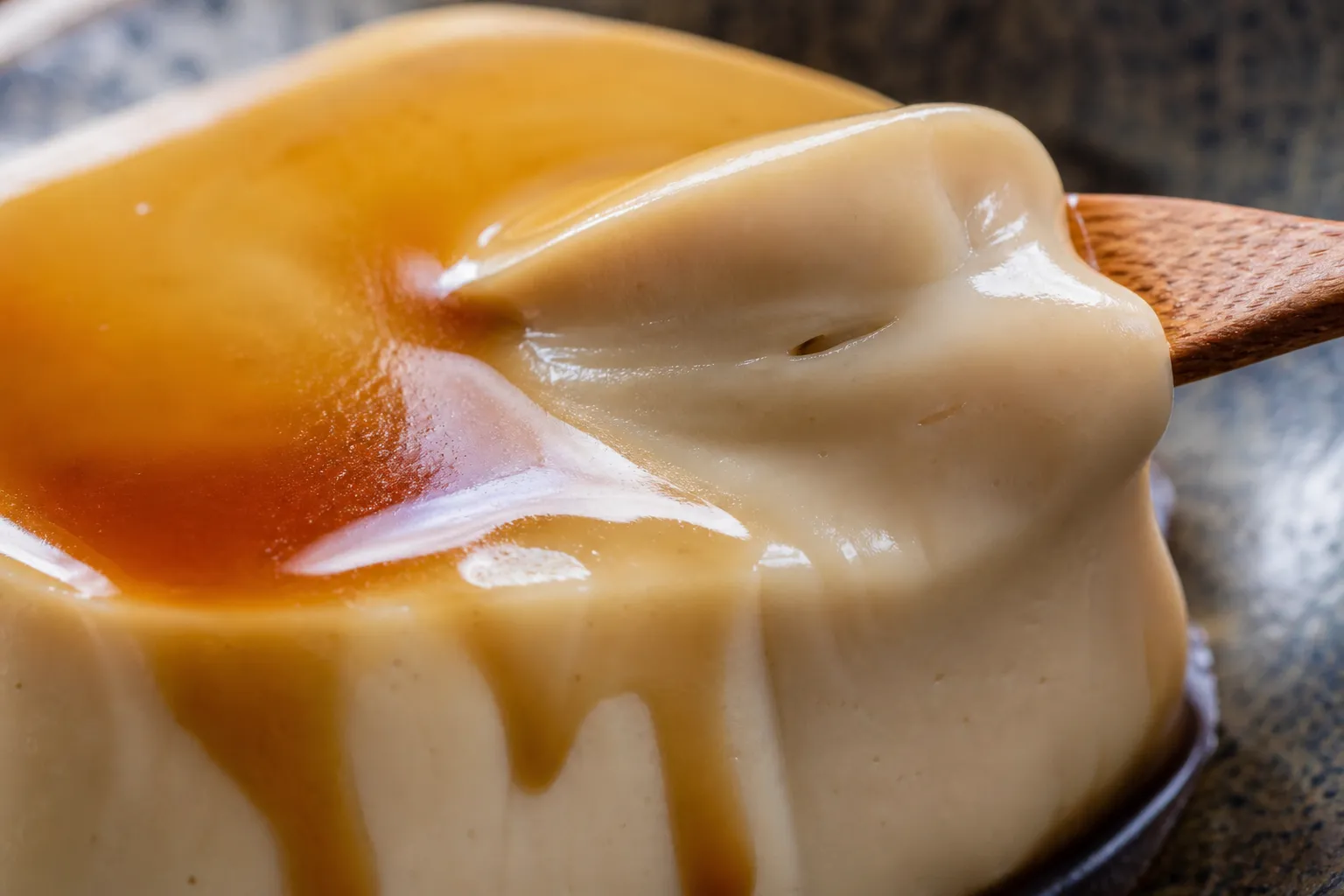
Good jimami tofu has a texture unlike anything else on an Okinawan table — softer than panna cotta, chewier than pudding, with a very faint elastic pull when you cut into it with a spoon. That's the starch at work, and it's the reason texture-obsessed eaters (myself very much included) tend to fall hard for this dish. The peanut flavor itself is subtle, more of a warm background note than a punch, faintly sweet and a little roasted, and it gets amplified by the glossy sweet soy sauce poured over the top, which brings a caramel-adjacent depth that makes the whole thing taste more like a dessert than a savory side — even though it's usually served as one.
The first bite is confusing in a good way. By the third, you stop comparing it to tofu altogether and just accept it as its own thing. That's when it really clicks.
How it's made
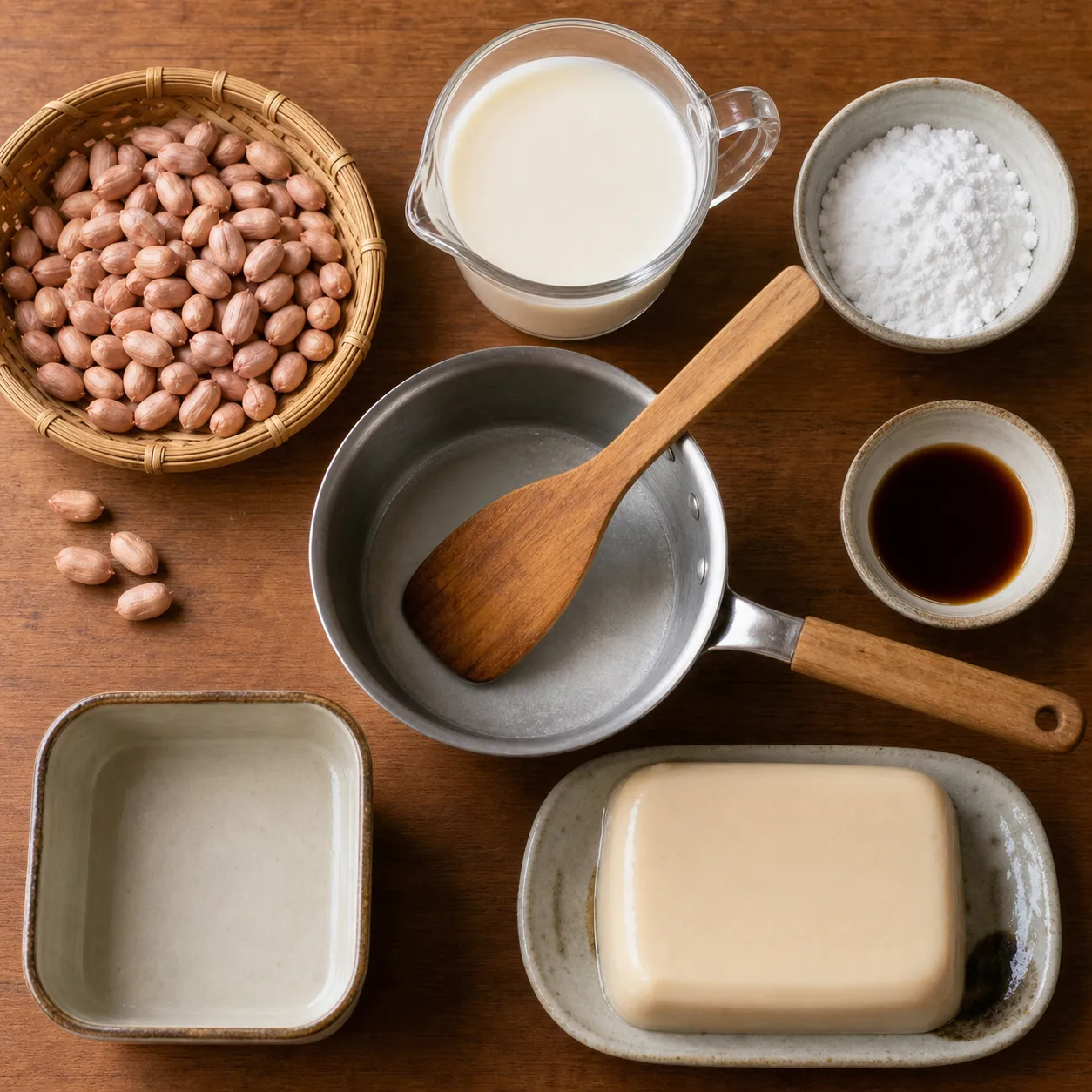
- Soak raw peanuts, then grind and strain them into fresh peanut milk
- Combine the peanut milk with sweet potato starch (or another starch) and a little sugar
- Cook the mixture in a pot over low heat, stirring constantly, until it thickens into a smooth, glossy paste
- Pour into molds and chill until fully set and jiggly
- Unmold, slice into blocks, and top with a sweet soy-based sauce (and sometimes grated ginger or peanuts) before serving cold
Before you go — for the peanut-curious
Your questions, answered honestly
"Is this actually tofu?" — No, not botanically or technically — it's peanut milk thickened with starch, not soybean curd. It just shares tofu's name, shape, and jiggle because of the resemblance.
"Is it sweet or savory?" — Both, gently. The base itself is only faintly sweet; the soy-based sauce on top adds a savory-sweet glaze. Overall it reads more like a savory-leaning dessert than a side dish.
"Is it a dessert or a meal course?" — Traditionally an appetizer or small side at an Okinawan izakaya meal, though its sweetness means plenty of people happily eat it as a light dessert too.
"Does it contain peanut allergens?" — Yes, unambiguously — it's made almost entirely from peanuts. Skip it if you have a peanut allergy.
"Is the texture supposed to be this sticky?" — Yes, that light stickiness/chew is correct and expected — it comes from the starch, not a sign anything's wrong.
What the staff will ask you
| You'll hear | Romaji | Meaning | Just say |
|---|---|---|---|
| お飲み物と一緒にお持ちしますか? | Onomimono to issho ni omochi shimasu ka? | "Bring it out with your drink order?" | Hai, onegaishimasu (yes, please) |
| 一つでよろしいですか? | Hitotsu de yoroshii desu ka? | "Just one order?" | Hai, hitotsu de (yes, just one) — or Futatsu onegaishimasu for two |
| ジーマーミ豆腐、初めてですか? | Jīmāmi tōfu, hajimete desu ka? | "First time trying jimami tofu?" | Hai, hajimete desu (yes, first time) |
To order, just say "Jimami tofu kudasai" (じーまーみ豆腐ください) — "Peanut tofu, please."
Where to eat it
- Naha's Makishi Public Market and Kokusai-dori area — izakayas and food stalls around central Naha almost universally carry jimami tofu as a starter.
- Okinawan home-style (Okinawa ryori) restaurants island-wide — any restaurant specializing in traditional Okinawan cuisine will have it, often made in-house.
- Local supermarkets and roadside stands — pre-packaged jimami tofu is sold as a grab-and-go snack across Okinawa, a good way to try it outside a restaurant setting.
- Check before you go — quality and sweetness level vary a lot between makers; if the first one you try feels too sweet or too plain, it's worth trying a second shop's version before deciding you don't like it.
Soul Score
Local Roots5/5
First-Timer Friendly4/5
Adventure Level3/5
Comfort Level5/5
Travel Worthy3/5
These scores are one obsessed eater's gut feeling — not a verdict. A low number isn't a bad mark, just a different kind of adventure.
Planning what to eat in Okinawa?🌺 Okinawa Food Guide: Soba, Taco Rice, Chanpuru, Sweets, and Island Comfort Food →
Know someone planning Japan?
← All Articles
Local Food · Okinawa
Still hungry?
Eat more from Okinawa
Local FoodOkinawa
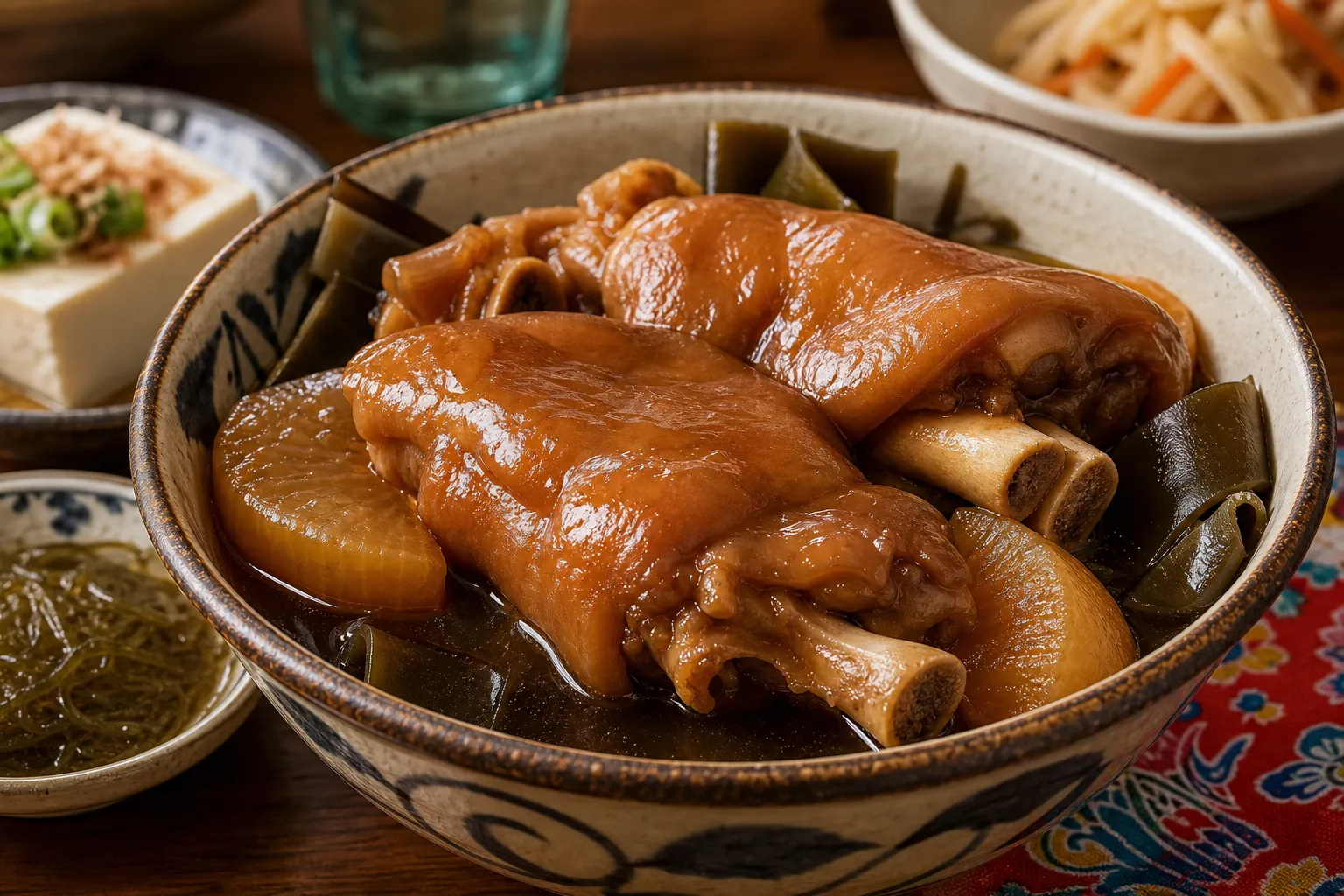
Tebichi (てびち)
It wobbled when the bowl hit the table — actually jiggled — and I hesitated for one honest second before the first bite dissolved into warm, savory collagen and I understood why Okinawans swear by it.
July 5, 2026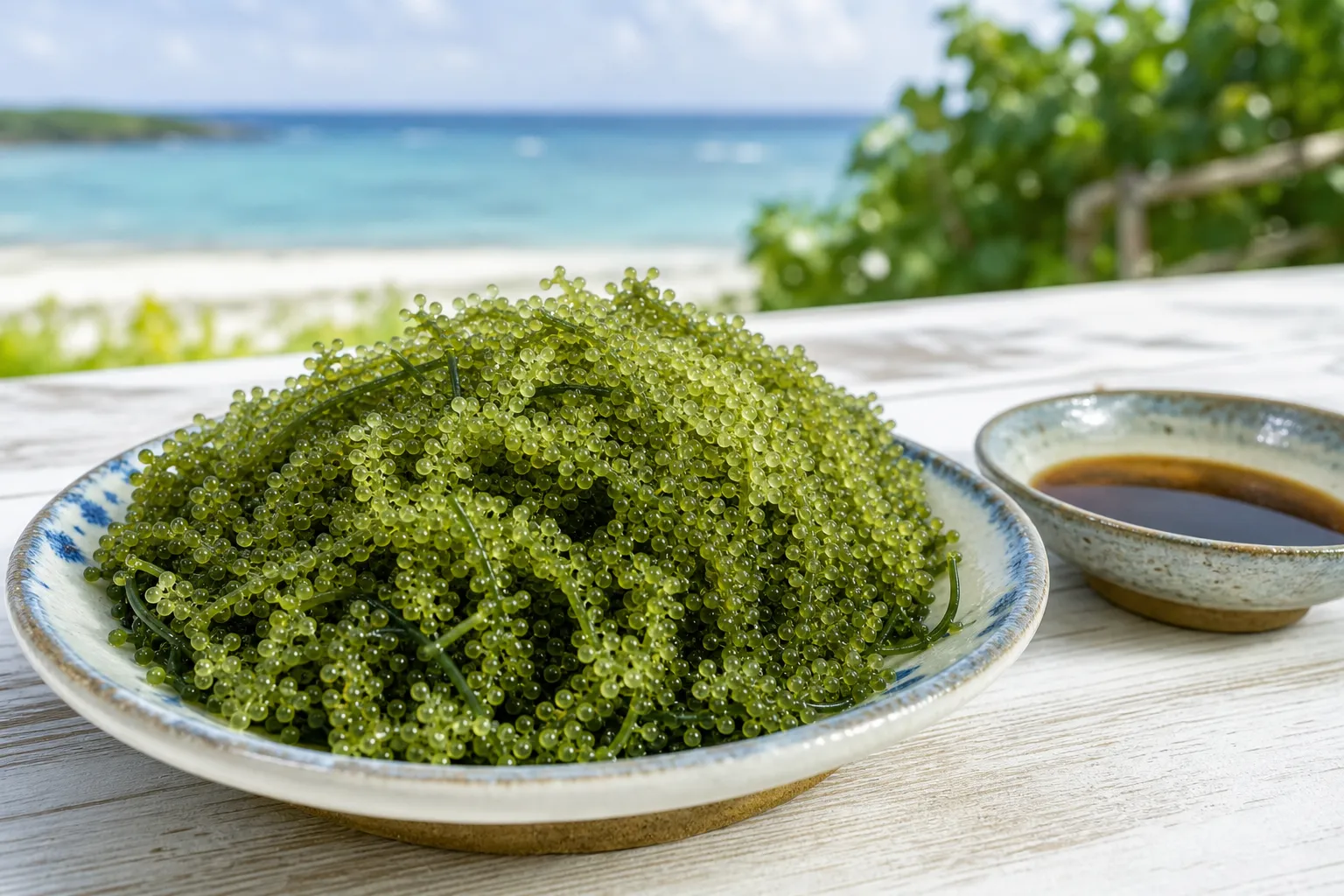
Local FoodOkinawa
Umibudo (海ぶどう)
Tiny green beads burst between my teeth, one after another, like the ocean somehow figured out how to make caviar out of a salad.
July 4, 2026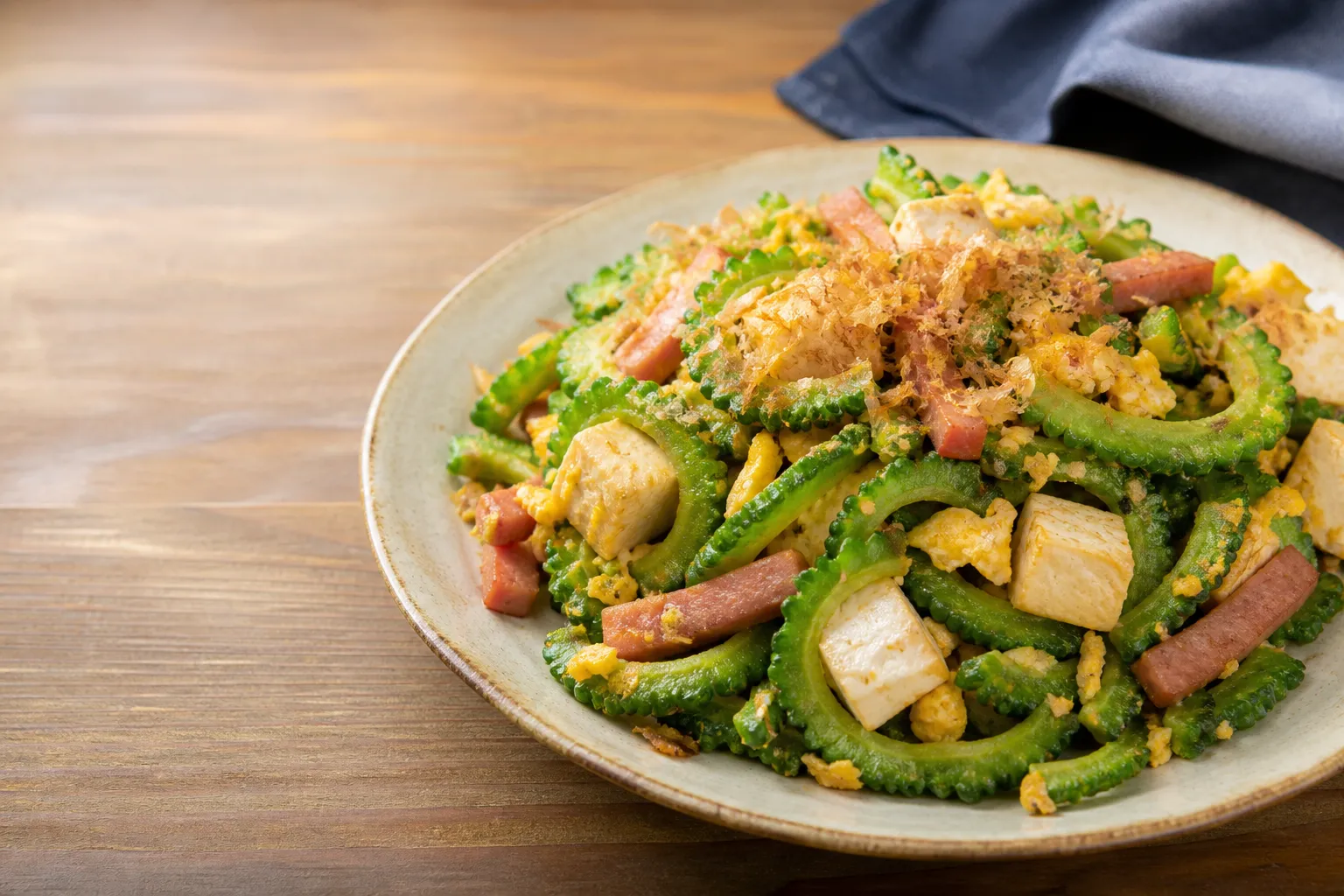
Local FoodOkinawa
Goya Chanpuru (ゴーヤチャンプルー)
The first bite is bitter — properly, defiantly bitter — and then, somehow, you want another. Okinawa's home-style stir-fry is an acquired love that doesn't take long to acquire.
July 1, 2026