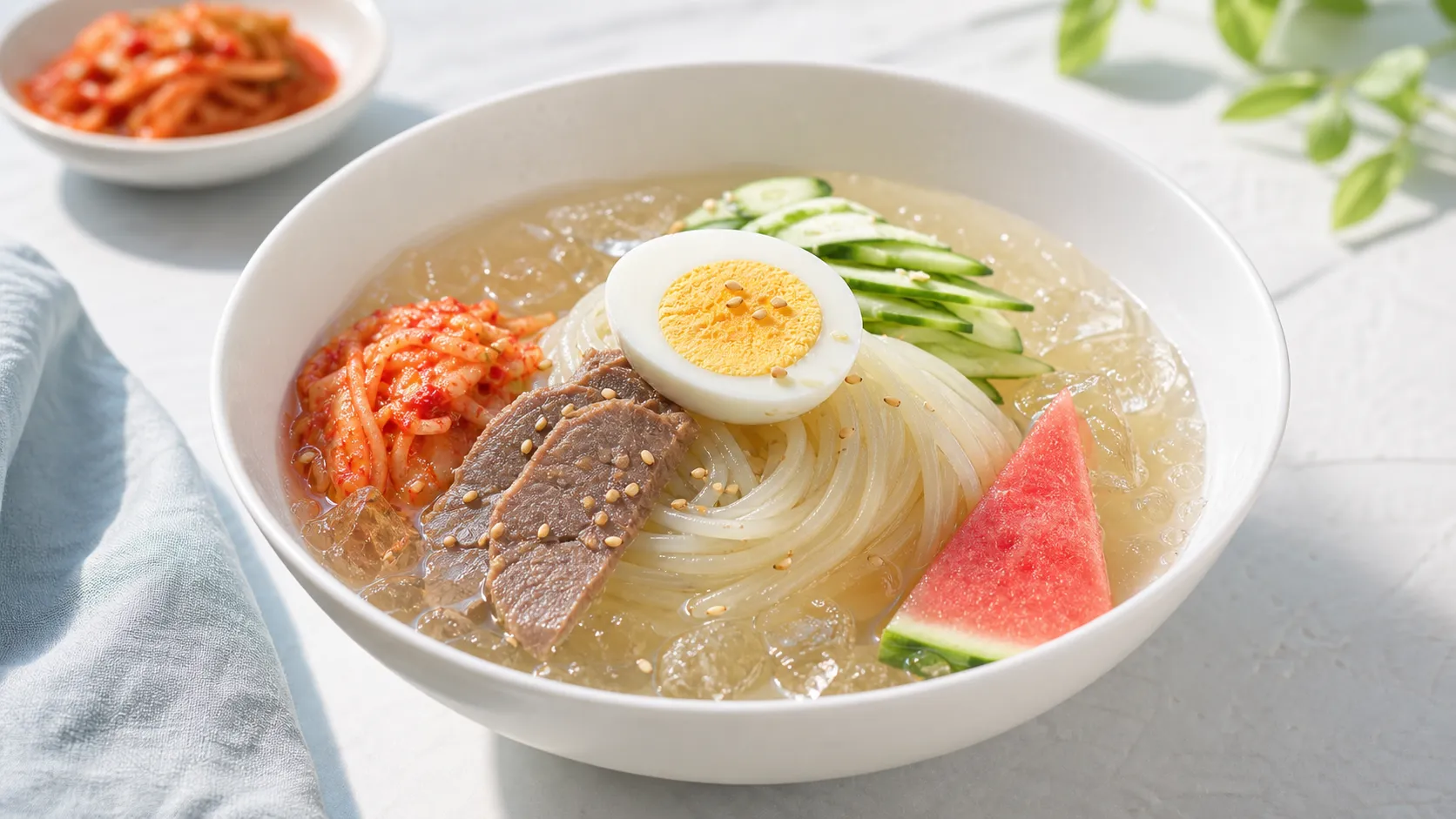
There is watermelon in this bowl.
Share this dish


Morioka's cold noodles: gloriously chewy, translucent, sitting in an icy beef broth with kimchi and a slice of watermelon. Yes, watermelon. It works. Trust the noodle.
🍜 Planning a food trip to Iwate?Add this dish to my Food Trip →
 Add this dish to my Food Trip →
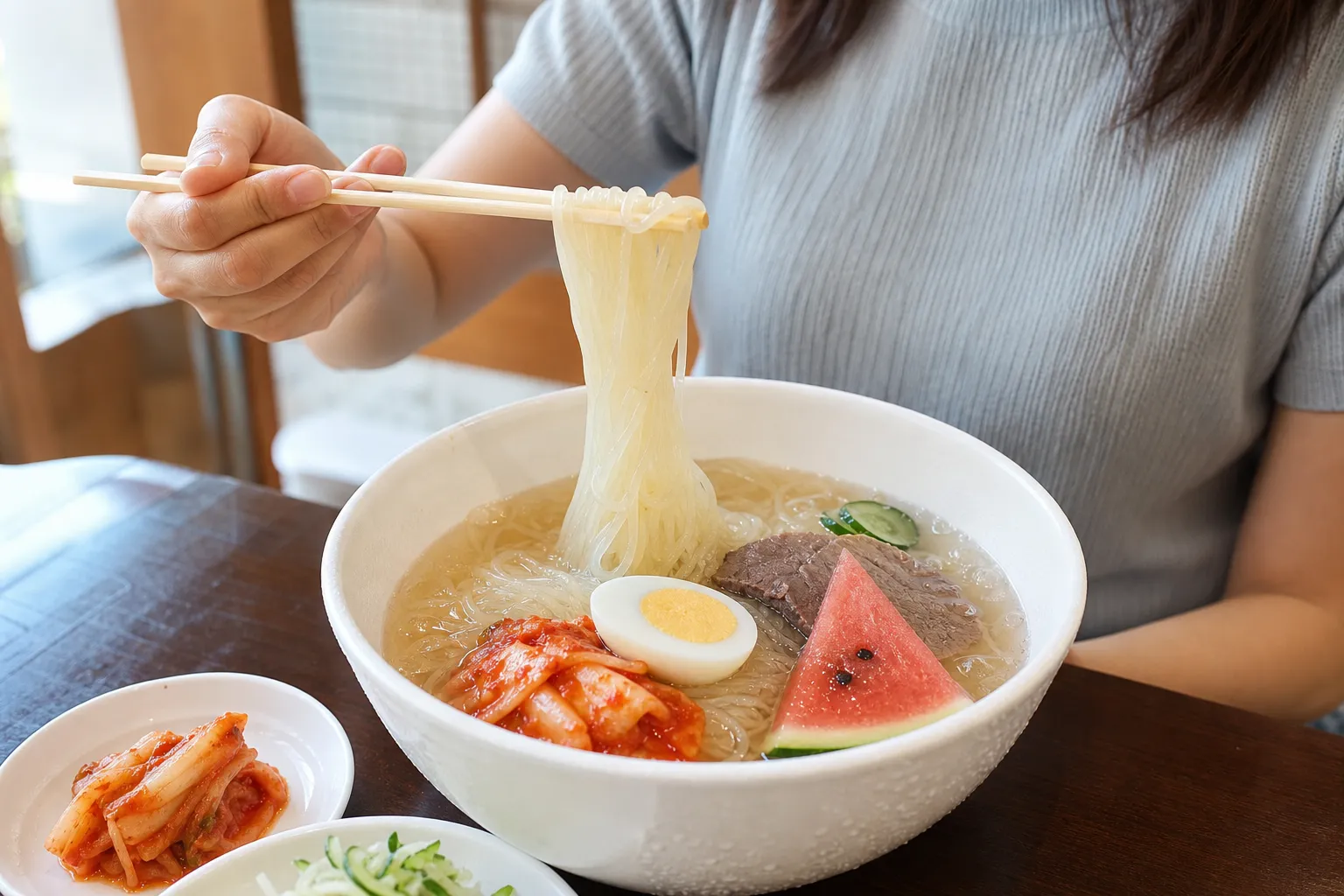
I need a second to tell you how not-okay I was when I first saw this. Cold noodles, crystal-clear broth, kimchi, boiled egg — and a wedge of fresh watermelon just sitting there, cold and green-rimmed and completely unbothered, sharing a bowl with everything else like it belonged there. Because it belongs there. The watermelon is not a mistake. The watermelon is mandatory. In Morioka they will look at you gently if you seem surprised by this.
Morioka reimen (盛岡冷麺) is one of the three great noodles of Morioka, Iwate — alongside wanko soba and jajamen — and the most visually spectacular of the three. The noodles are semi-translucent, made from wheat and potato starch, and the texture is something Japan doesn't really have elsewhere: thick, springy, powerfully, almost aggressively chewy. You pick them up and they resist. They are dense. They want you to work for it. The broth is crystal-clear and ice-cold, a refined beef stock that sits in total contrast to the noodle's density. The kimchi brings heat. The watermelon brings cold sweetness that resets your palate. The whole thing shouldn't make sense and hasn't failed to make sense a single time I've eaten it.
How a Korean noodle became Morioka's icon
Morioka reimen arrived in 1954 with Yang Yong-chul (梁龍哲), a Korean-born cook who opened Pyongyang (平壌) restaurant in Morioka and adapted his homeland's cold noodle (naengmyeon) tradition to the local palate. He developed new noodles — more wheat, more potato starch, a different ratio that produced the distinctive powerful chew Morioka is now known for. The fruit garnish, probably inspired by Korean practice, settled into watermelon in summer and Asian pear in other seasons. The dish spread slowly, then completely. Specialty reimen shops multiplied. The city now has a Reimen Festival. What Yang Yong-chul started in one restaurant in 1954 is now inseparable from Morioka identity.
The chew. The broth. The watermelon.
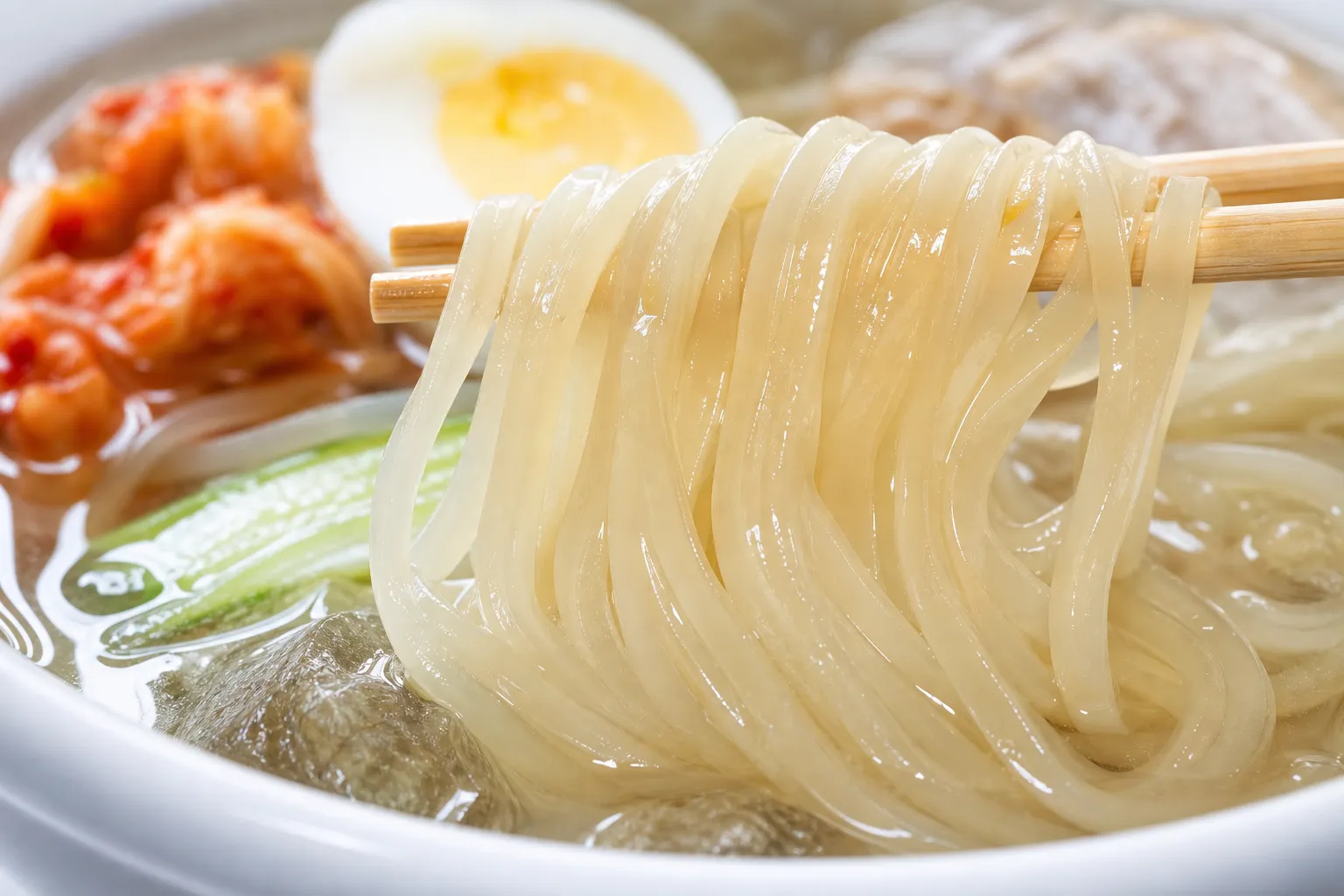
Let me be specific about the chew because it's the thing nobody warns you about. These noodles don't break easily with chopsticks. You pick up a bundle and the whole thing comes with you, taut and springy. You bite through and feel real resistance, then a clean snap. It is one of the most satisfying textures in Japanese noodle culture and I think about it more than is probably reasonable.
The broth is everything the noodle isn't: light, clear, delicate. A clean beef stock, chilled until it's nearly at ice temperature. The contrast — dense noodle, ethereal broth — is the point. Then the kimchi provides the heat, sour-spicy and bright against the cold. Then, at the end of a spicy mouthful, you eat a piece of watermelon. Cold, sweet, juicy. Your mouth resets. You go again.
How it's made
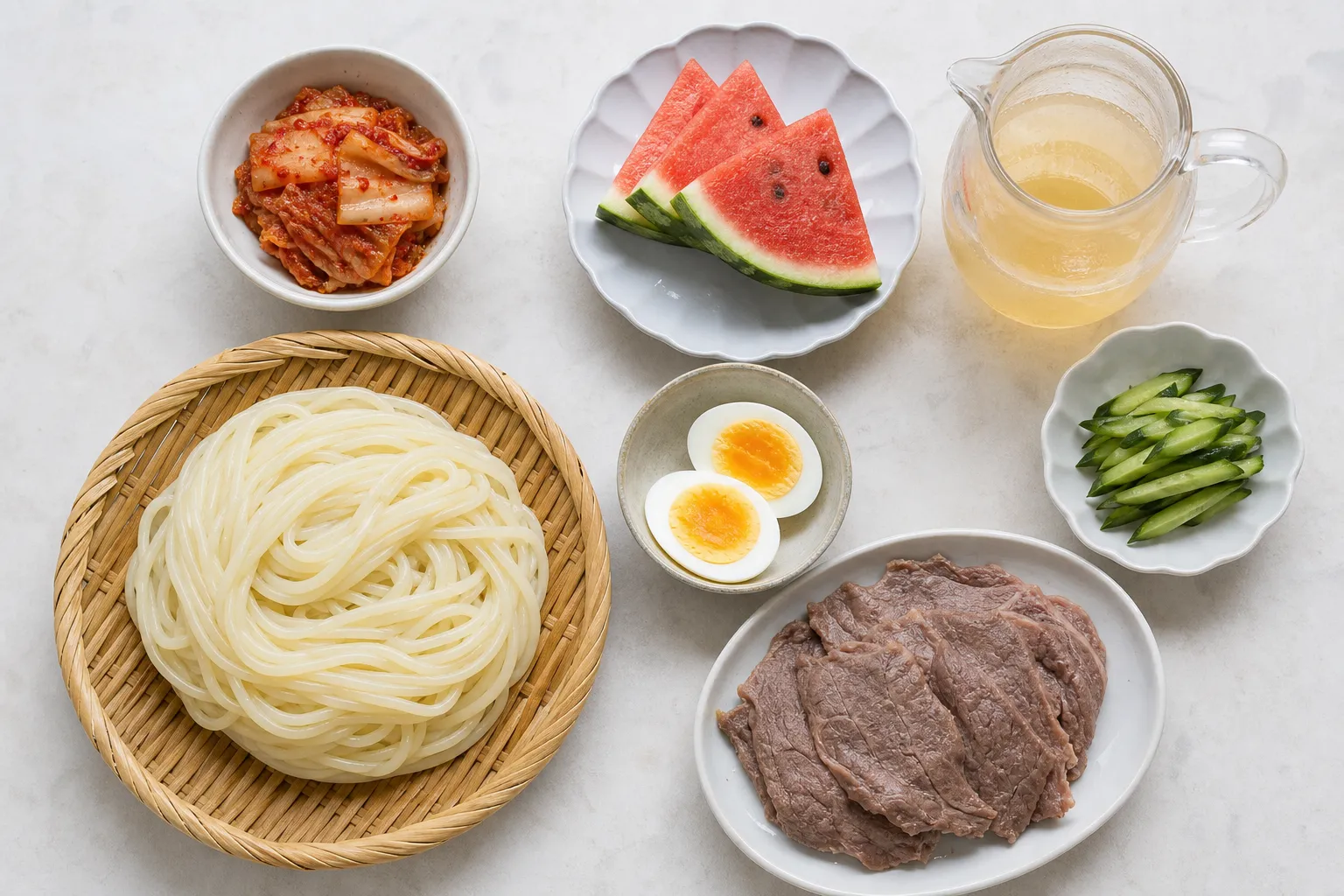
- Make the dough from wheat flour and potato starch in a specific ratio that produces the distinctive chew
- Boil noodles, then immediately shock in ice water to firm the texture — temperature control is critical
- Prepare the beef broth: long-simmered clear stock, chilled overnight until cold through
- Build the bowl: cold noodles, cold broth, kimchi, cucumber, sliced beef, boiled egg
- Add watermelon (summer) or Asian pear (other seasons) — this step is not optional
- Serve as cold as possible; the bowl should sweat in your hand
Before you go — start mild on the kimchi
Your questions, answered honestly
"The watermelon — do I eat it with the noodles or separate?" — Together. Pick up a noodle bundle, eat some kimchi, then eat the watermelon. The sequence is the experience. Don't save the watermelon for the end like a reward; use it as the palate-reset it was designed to be.
"How spicy?" — The base dish isn't spicy. The kimchi level determines the heat, and you can almost always specify at ordering. Start mild (amakuchi) on your first time so you can taste the broth properly, then go up from there.
"The noodles feel almost hard to cut — is that right?" — Completely right. Reimen noodles are meant to be worked for. They don't fall apart. Some shops provide scissors; most don't. Bite through with confidence.
"Is this different from Korean naengmyeon?" — Related but distinct. The noodle has a different composition and is chewier. The broth is lighter and more Japanese in style. The watermelon is more consistently present. Worth trying side by side if you ever get the chance.
What the staff will ask you
| You'll hear | Romaji | Meaning | Just say |
|---|---|---|---|
| 辛さはどうしますか? | Karasa wa dō shimasu ka? | "How spicy?" | Amakuchi de onegaishimasu (mild please) first time |
| 並・大どちらにしますか? | Nami / dai dochira ni shimasu ka? | "Regular or large?" | Nami de onegaishimasu (regular) |
| キムチは多めにしますか? | Kimchi wa ōme ni shimasu ka? | "Extra kimchi?" | Futsū de onegaishimasu (normal is fine) |
To order, just say "Reimen kudasai" (冷麺ください) — "Cold noodles, please."
Where to eat it
- Pyongyang (平壌) — Morioka. The original since 1954. Historically essential and still excellent.
- Pyon Pyon Sha (ぴょんぴょん舎) — Morioka and beyond. The most famous reimen chain; the accessible, reliable version. Morioka Station location is convenient.
- Specialty shops throughout central Morioka — the city is dense with them. Walking in and picking one you like is completely valid.
Reimen peaks in summer when the watermelon is in season and the heat makes cold noodles feel urgent. If you're doing Morioka's three great noodles, save this one for the hottest day.
Soul Score
Local Roots5/5
First-Timer Friendly4/5
Adventure Level4/5
Comfort Level4/5
Travel Worthy4/5
These scores are one obsessed eater's gut feeling — not a verdict. A low number isn't a bad mark, just a different kind of adventure.
Know someone planning Japan?
← All Articles
Local Food · Morioka, Iwate
Still hungry?
Eat more from Iwate
Local FoodIwate
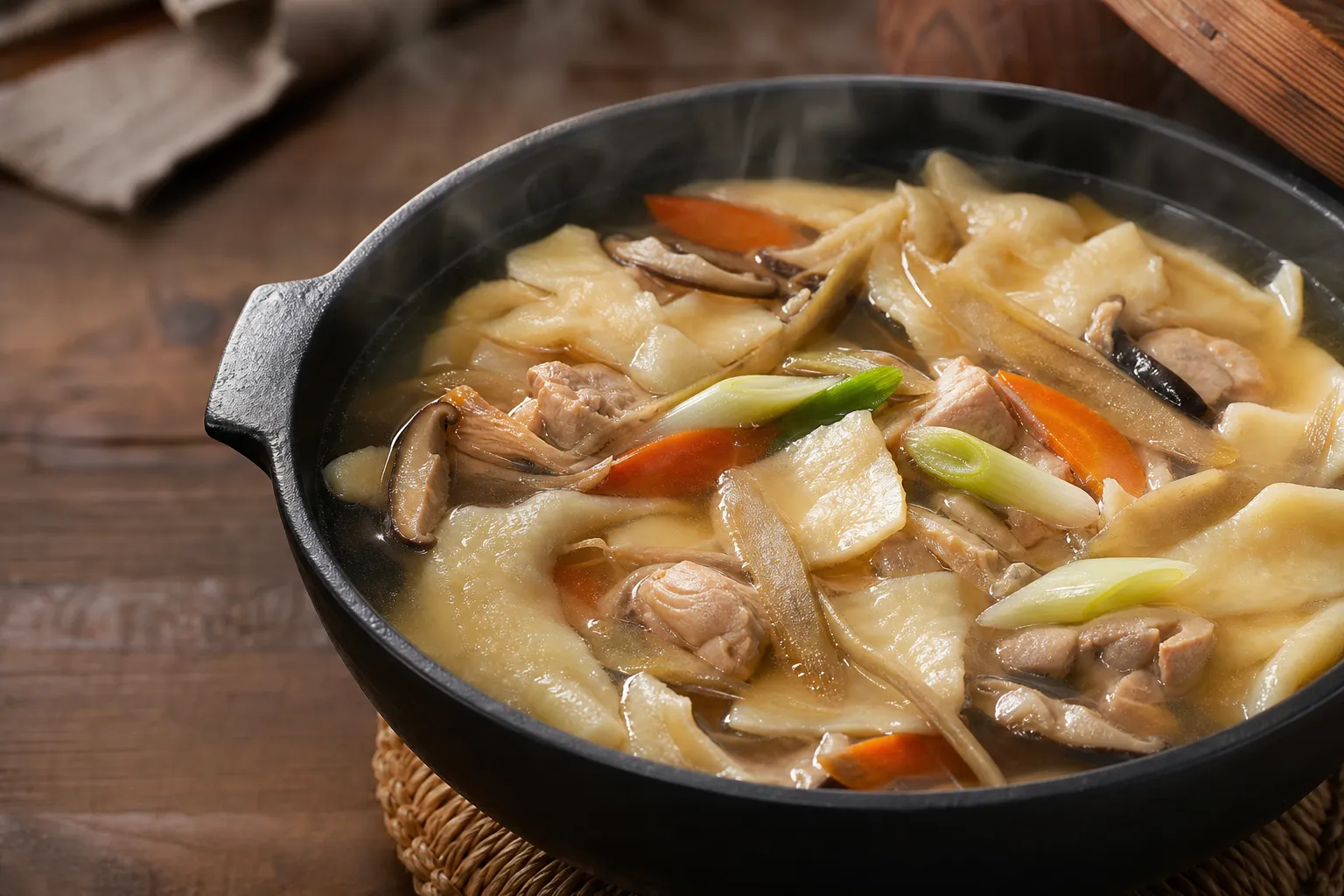
Hittsumi (ひっつみ)
Torn scraps of wheat dough, pinched off by hand and dropped straight into a clear chicken-and-soy dashi thick with burdock and mushrooms — Iwate's answer to a freezing winter, chewy and slippery and made to fill you up.
July 12, 2026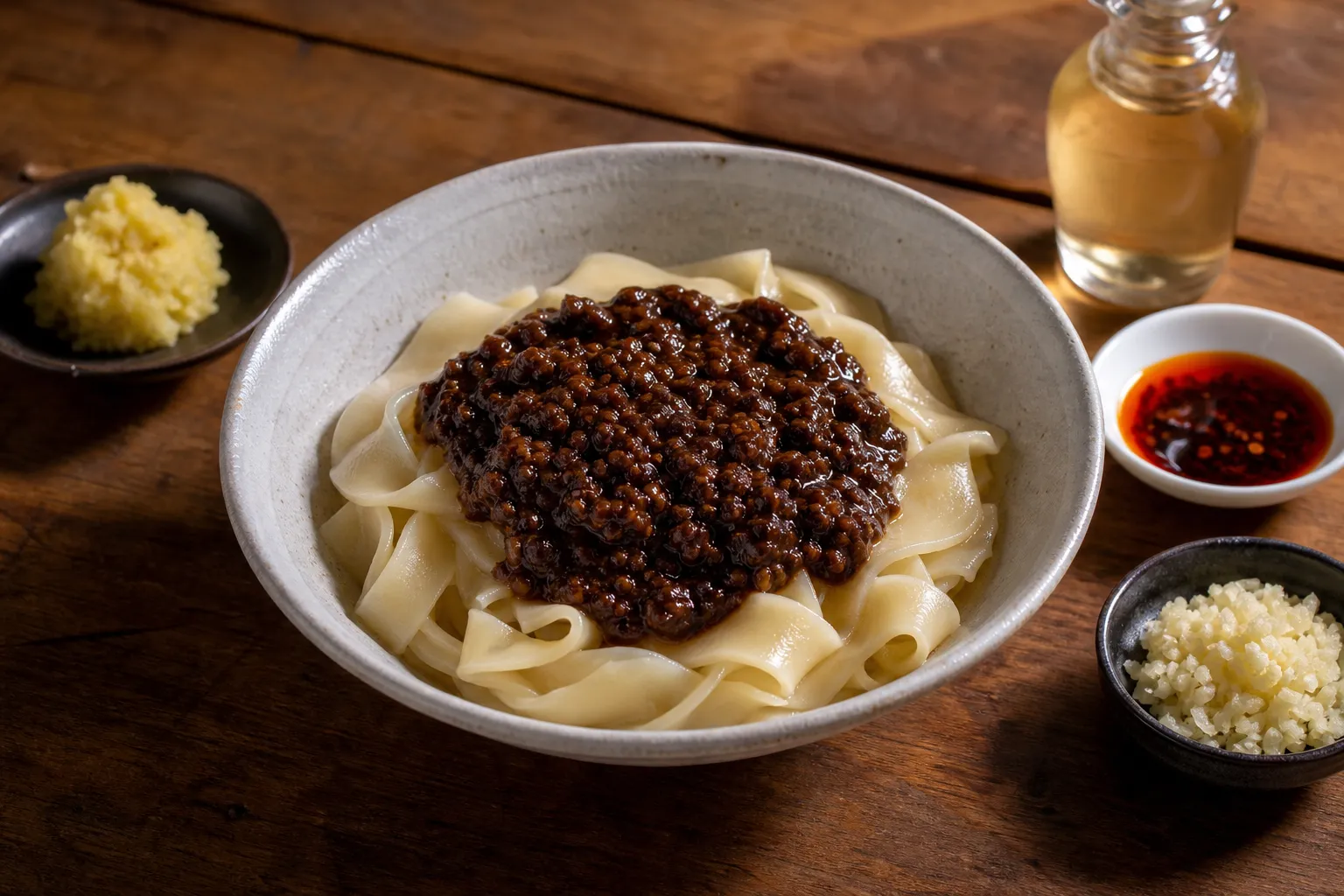
Local FoodMorioka, Iwate
Jajamen (じゃじゃ麺)
Morioka's strangest noodle: flat udon topped with a miso-meat paste you stir yourself, eaten down to the last noodle, then you crack a raw egg into the remaining sauce and the kitchen pours broth over it. That's the real ending.
June 25, 2026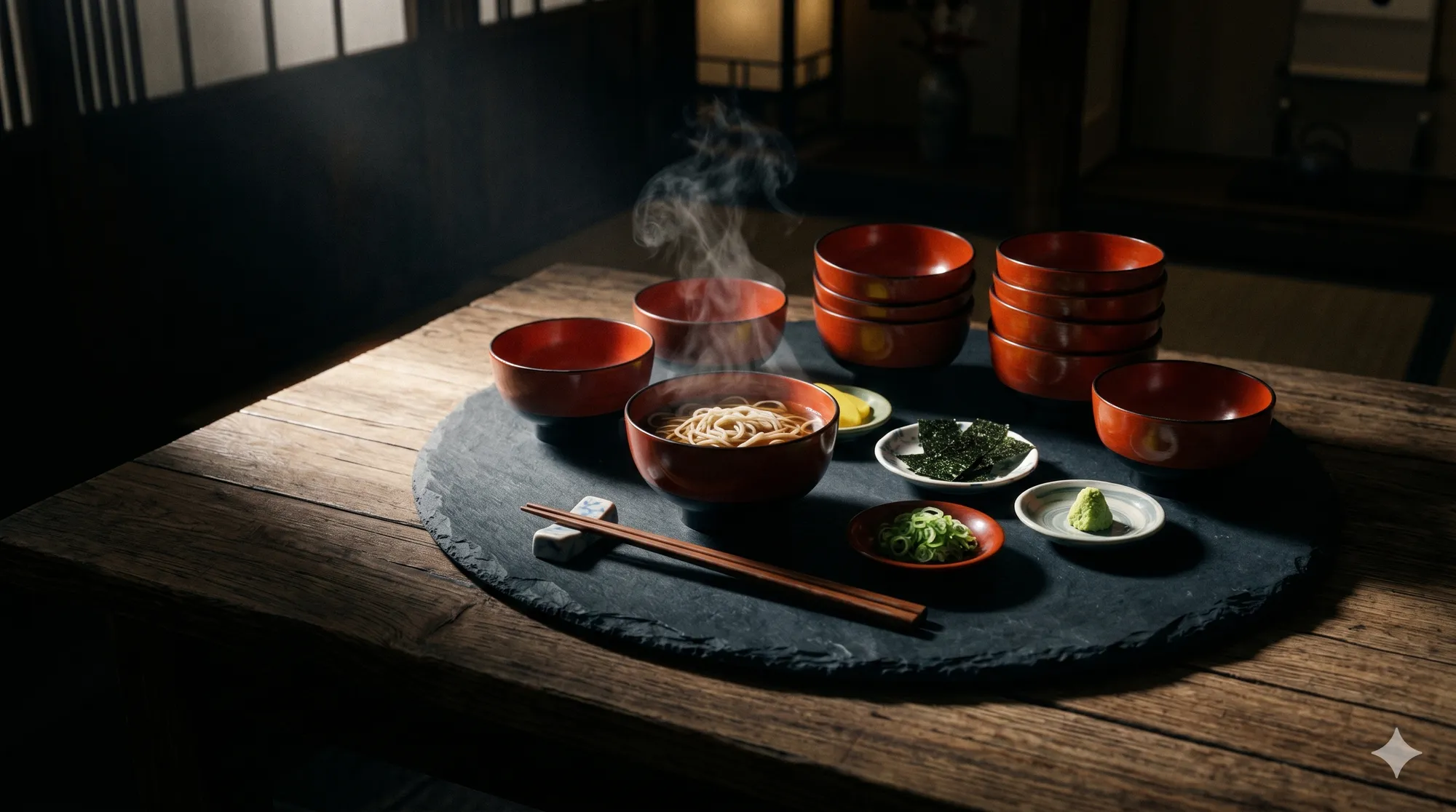
Local FoodIwate
Wanko Soba (わんこそば)
Tiny bowls of soba refilled the instant you empty them, a server cheering you on, and only one way to make it stop. Iwate turned dinner into a sport — and it's the most fun you'll have eating.
June 15, 2026