The noodles are gone. You scraped the bowl. Normal meal? Done. Check please.
Share this dish


Morioka's strangest noodle: flat udon topped with a miso-meat paste you stir yourself, eaten down to the last noodle, then you crack a raw egg into the remaining sauce and the kitchen pours broth over it. That's the real ending.
🍜 Planning a food trip to Iwate?Add this dish to my Food Trip →
 Add this dish to my Food Trip →
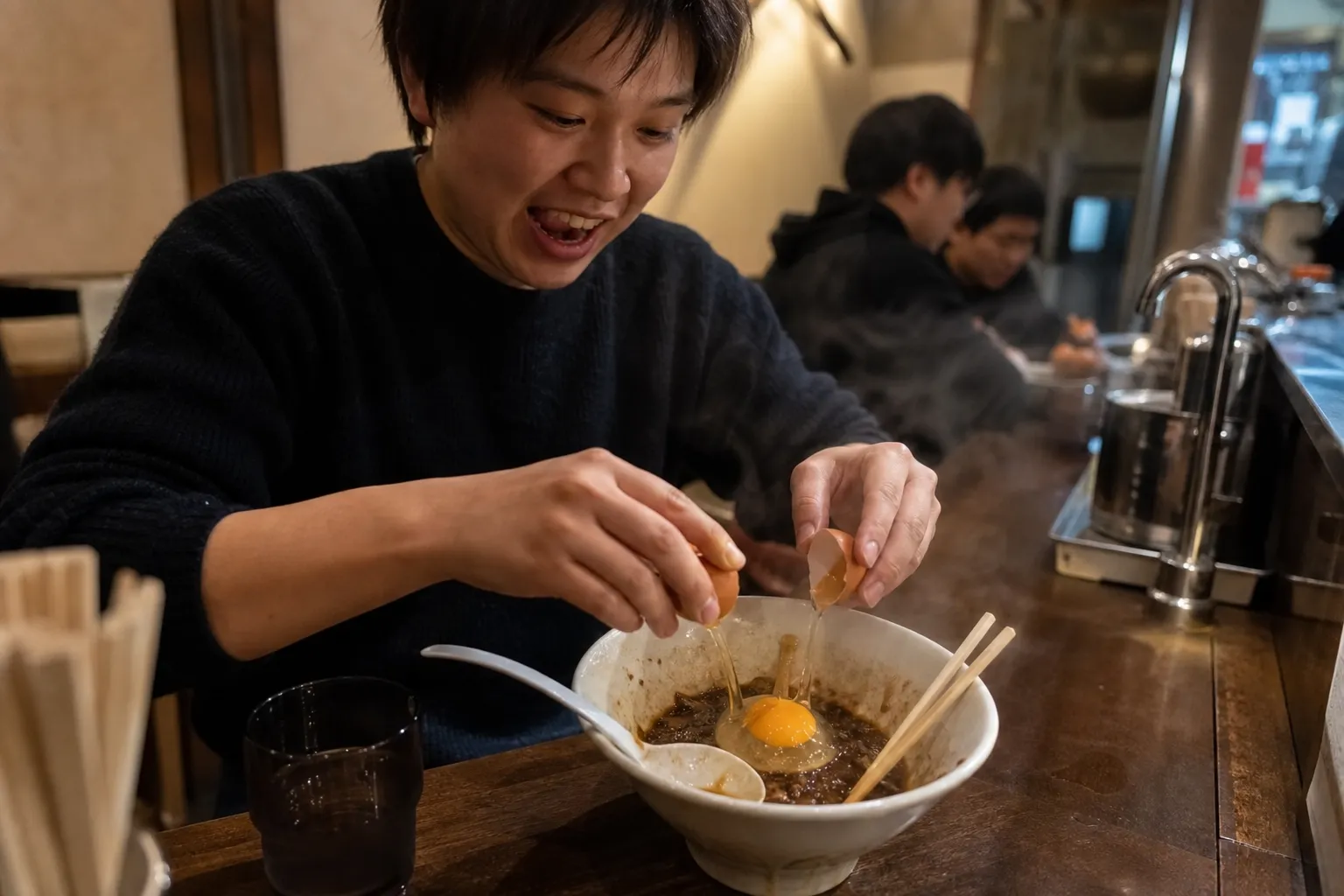
Not here. You crack a raw egg into the remnants of dark meat-miso still clinging to the bowl. You look toward the kitchen. You say it out loud, in a real restaurant, to a real cook: "Chītan!" The cook comes with a ladle of hot broth. Pours it over the egg. The egg sets softly in the heat. A second dish appears, made entirely from the ghost of your first dish. You drink it. Now you're done.
This is jajamen (じゃじゃ麺), and chītan (ちーたん) is the ending that turns eating into ceremony.
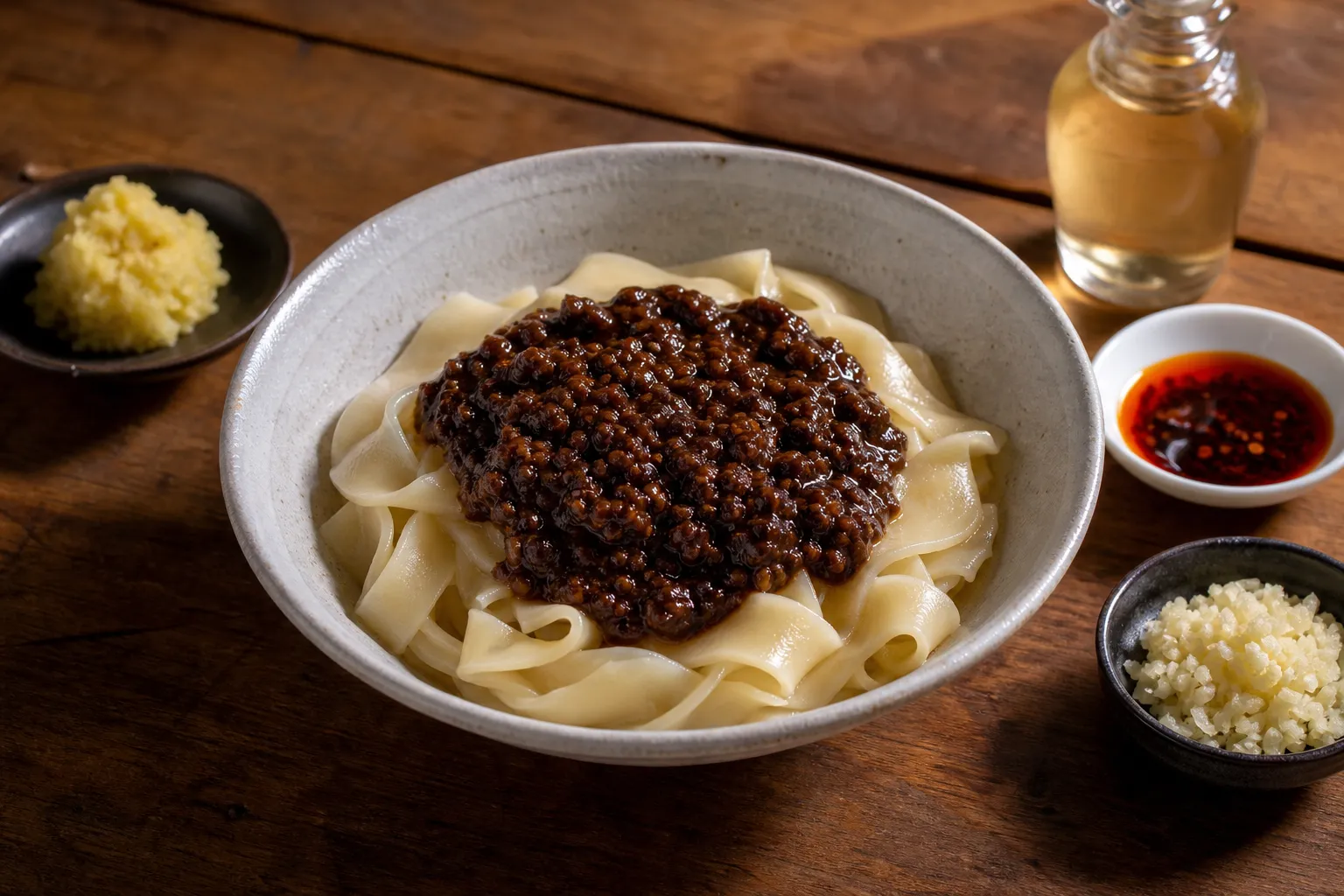
Morioka's most eccentric noodle is, on the surface, a simple thing: wide, flat udon-style noodles — no broth, cooked soft — topped with a mound of niku-miso (肉味噌), a dark, concentrated ground pork paste cooked down with miso, ginger, and garlic until it's dense and fragrant and just slightly frightening in the best way. On the side: a lineup of condiments — raw garlic, fresh ginger, vinegar, chili oil, sesame — that you add yourself, in whatever quantities you need. You mix it all together aggressively. You eat the noodles. You scrape. You yell "chītan." You finish with the egg soup. This is a ritual. This is Morioka.
From Morioka to Morioka (it stayed here on purpose)
Jajamen's ancestor is Chinese zhajiangmian (炸醤麺) — noodles with fermented bean paste and meat — brought to Morioka and transformed by Sato Chūken, who opened Shirokuya (白龍) in 1953. He replaced the Chinese soybean paste with a Japanese miso-based niku-miso, adjusted the noodles, and invented the chītan ending as a way to make use of every last bit of flavor in the bowl. The dish grew slowly and locally. It never became a national phenomenon, which is exactly why eating it in Morioka feels like discovering something that belongs specifically to this city and hasn't been exported and diluted. Shirokuya still operates. Eating there is the correct first jajamen experience.
The niku-miso and the mixing
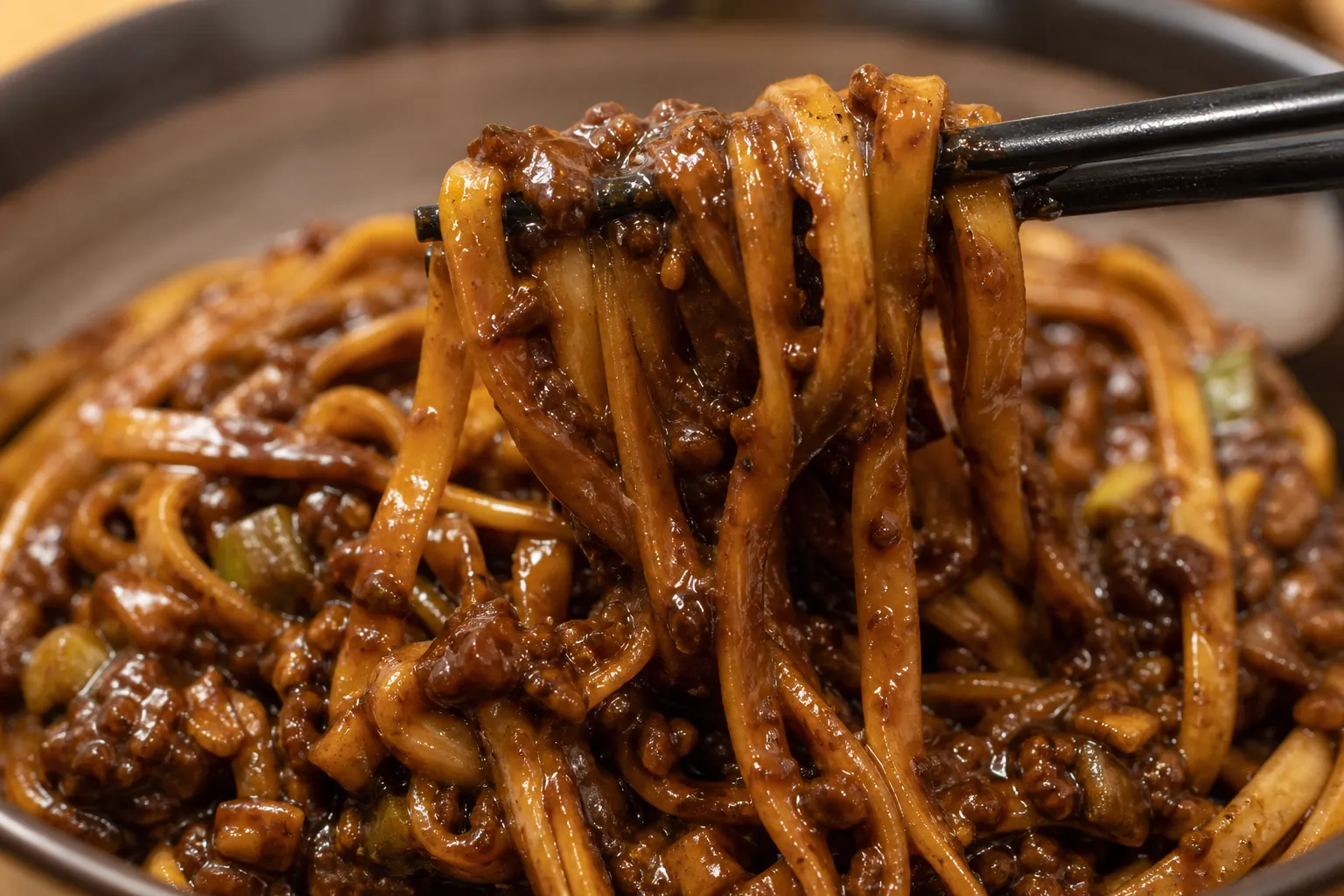
The niku-miso is the dish. Ground pork, miso, sake, ginger, garlic, a touch of sweetness — cooked down until the paste is dark and concentrated and smells like the kind of thing you'd eat every day if you lived here. Plopped on top of the noodles, it looks almost dry. It is not dry. You mix it from the bottom up, pull everything together, and it coats every noodle completely.
Then you customize. Raw garlic for punch. Fresh ginger for brightness. Vinegar for acid that cuts through the richness. Chili oil for heat. Sesame for nuttiness. Most people start conservatively and add more as they go. By the time you finish the noodles, you'll have a clear idea of exactly how you like it — and you'll want to do it again immediately.
The noodles are flat and soft, made for carrying niku-miso rather than standing on their own. They're not the point. The paste is the point. The ritual is the point. The chītan is the point.
How it's made
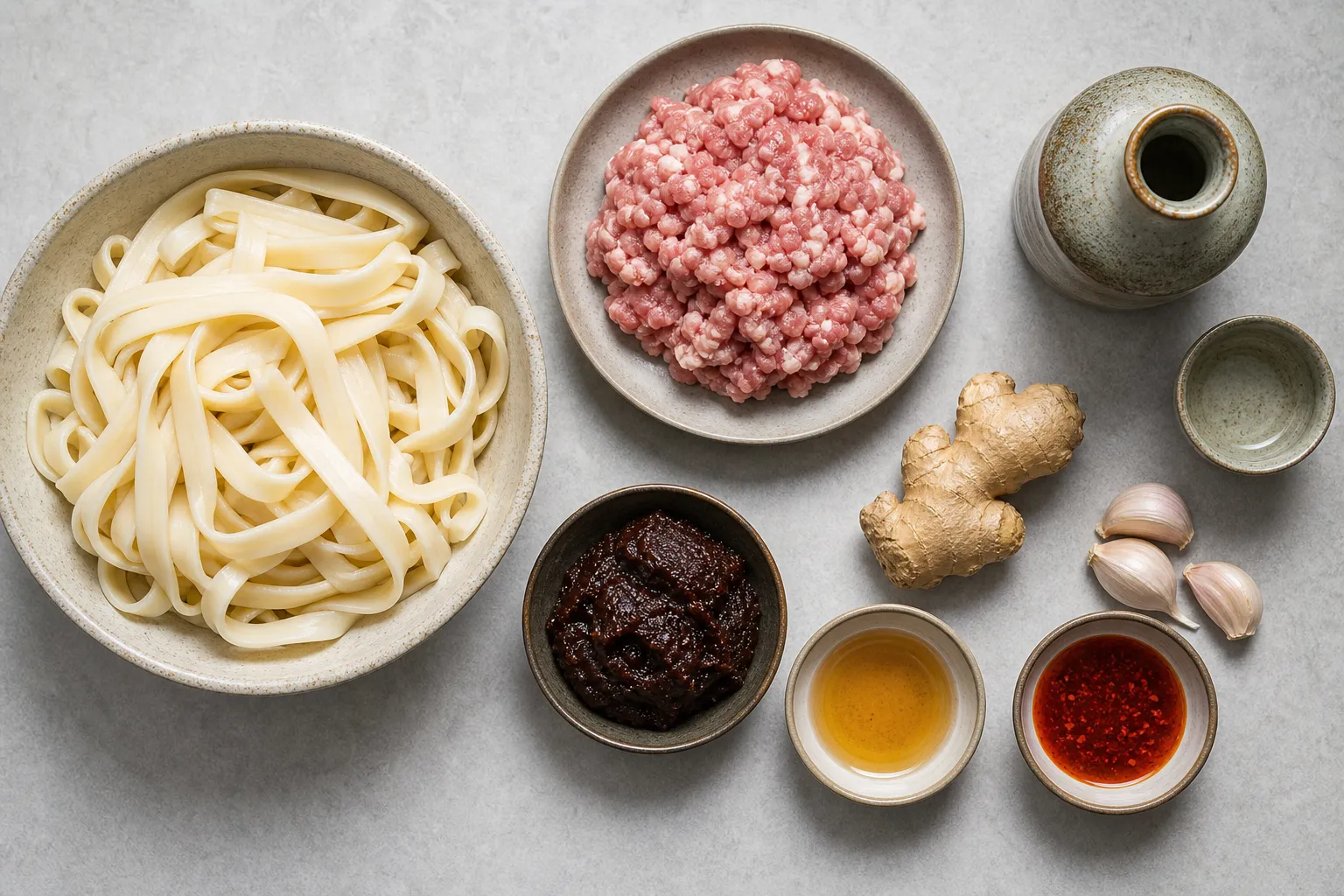
- Cook ground pork with miso, sake, ginger, garlic, sugar over medium heat — reduce until thick, dark, and fragrant (this is the niku-miso, and it's everything)
- Boil flat udon-style noodles until fully soft; drain well
- Noodles in bowl; generous spoonful of niku-miso on top; condiments on the side
- Mix aggressively, add condiments to taste, eat the noodles completely
- Chītan: crack an egg into the bowl remnants, call to the kitchen, receive hot broth poured over, stir gently, drink
Before you go — don't skip the ending
Your questions, answered honestly
"What exactly is chītan and why should I care?" — Chītan is the egg soup you make from your bowl's remains. You crack a raw egg into the residual niku-miso, say "chītan" to the staff, and they pour hot broth over it. The egg sets softly. You drink warm, savory, slightly eggy soup made from everything you just ate. It's the best possible ending and skipping it would be like leaving a concert before the encore. Don't do it.
"How do I mix it?" — With real commitment. Chopsticks, from the bottom, until every noodle is coated. Then taste and add condiments. There's no subtle way to do this. The bowl will look like a scene from a cooking show gone right.
"Is this spicy?" — Not by default. The spice comes from however much chili oil and garlic you add. Full control is yours. Start moderate.
"The noodles feel softer than ramen — is that correct?" — Correct and intentional. Salt-free dough, cooked until soft. They're a vehicle for niku-miso, not a texture experience on their own.
What the staff will ask you
| You'll hear | Romaji | Meaning | Just say |
|---|---|---|---|
| 大きさはどうしますか? | Ōkisa wa dō shimasu ka? | "What size?" | Nami de onegaishimasu (regular please) |
| 辛味は? | Karami wa? | "Spice?" | Sukoshi de onegaishimasu (a little please) |
| ちーたんはどうしますか? | Chītan wa dō shimasu ka? | "Chītan soup?" | Onegaishimasu (yes — always yes) |
To order, just say "Jajamen kudasai" (じゃじゃ麺ください) — "Jajamen, please."
When you're ready for the finale: crack the egg in, look toward the kitchen, and say "Chītan!" with the confidence of someone who has done this before. (You haven't. Say it anyway.)
Where to eat it
- Shirokuya (白龍) — Morioka. The original since 1953. The definitive jajamen. Go here first, always.
- Pairon (パイロン) — Morioka. A long-running beloved alternative with devoted regulars.
- Jajamen shops in central Morioka — clustered near the city center and station. The city is small enough to walk between them.
Jajamen is Morioka. It barely exists anywhere else and that's correct. If you're doing the three great Morioka noodles — wanko soba, reimen, jajamen — end with this one. The chītan sends you off right.
Soul Score
Local Roots5/5
First-Timer Friendly3/5
Adventure Level5/5
Comfort Level4/5
Travel Worthy4/5
These scores are one obsessed eater's gut feeling — not a verdict. A low number isn't a bad mark, just a different kind of adventure.
Know someone planning Japan?
← All Articles
Local Food · Morioka, Iwate
Still hungry?
Eat more from Iwate
Local FoodIwate
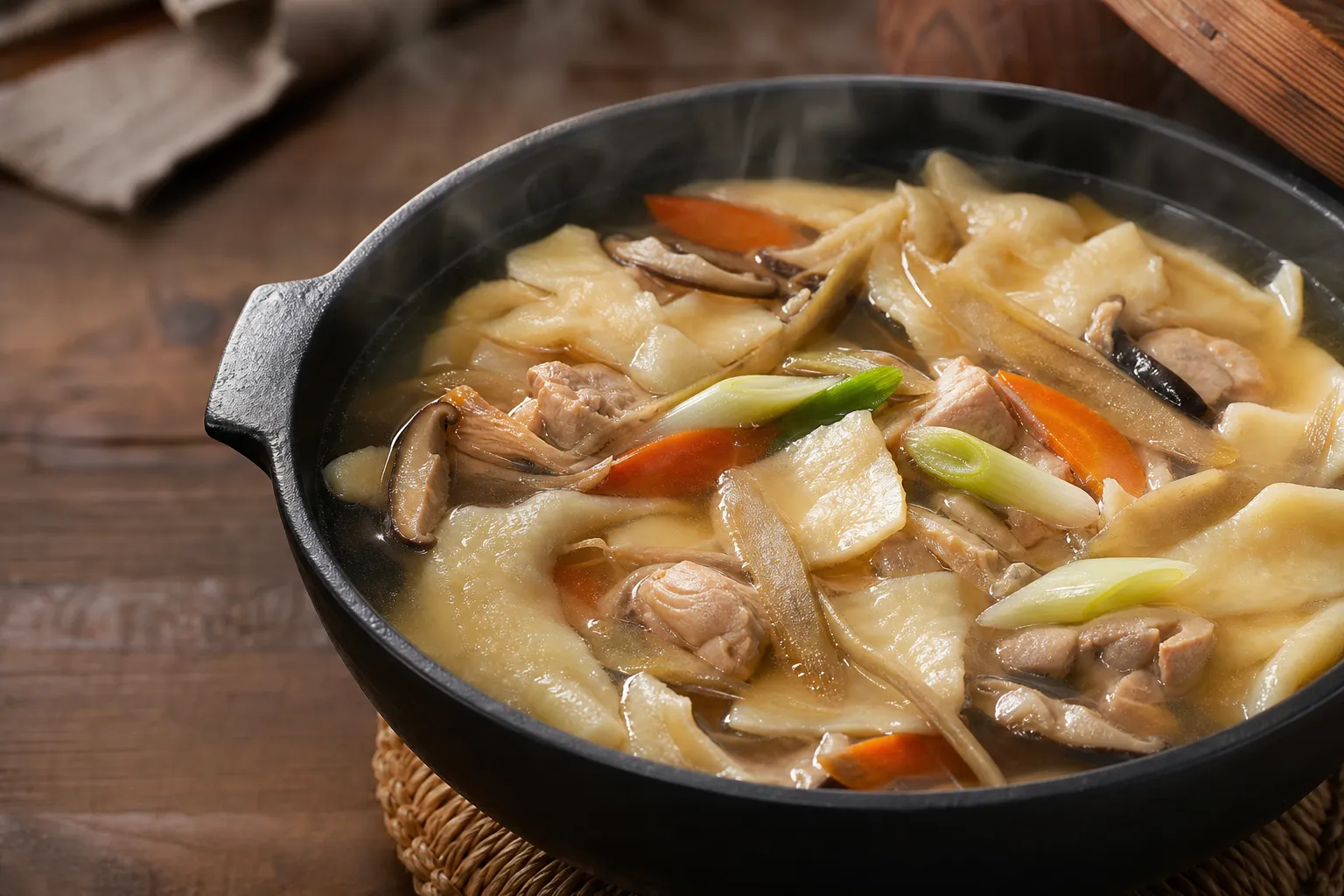
Hittsumi (ひっつみ)
Torn scraps of wheat dough, pinched off by hand and dropped straight into a clear chicken-and-soy dashi thick with burdock and mushrooms — Iwate's answer to a freezing winter, chewy and slippery and made to fill you up.
July 12, 2026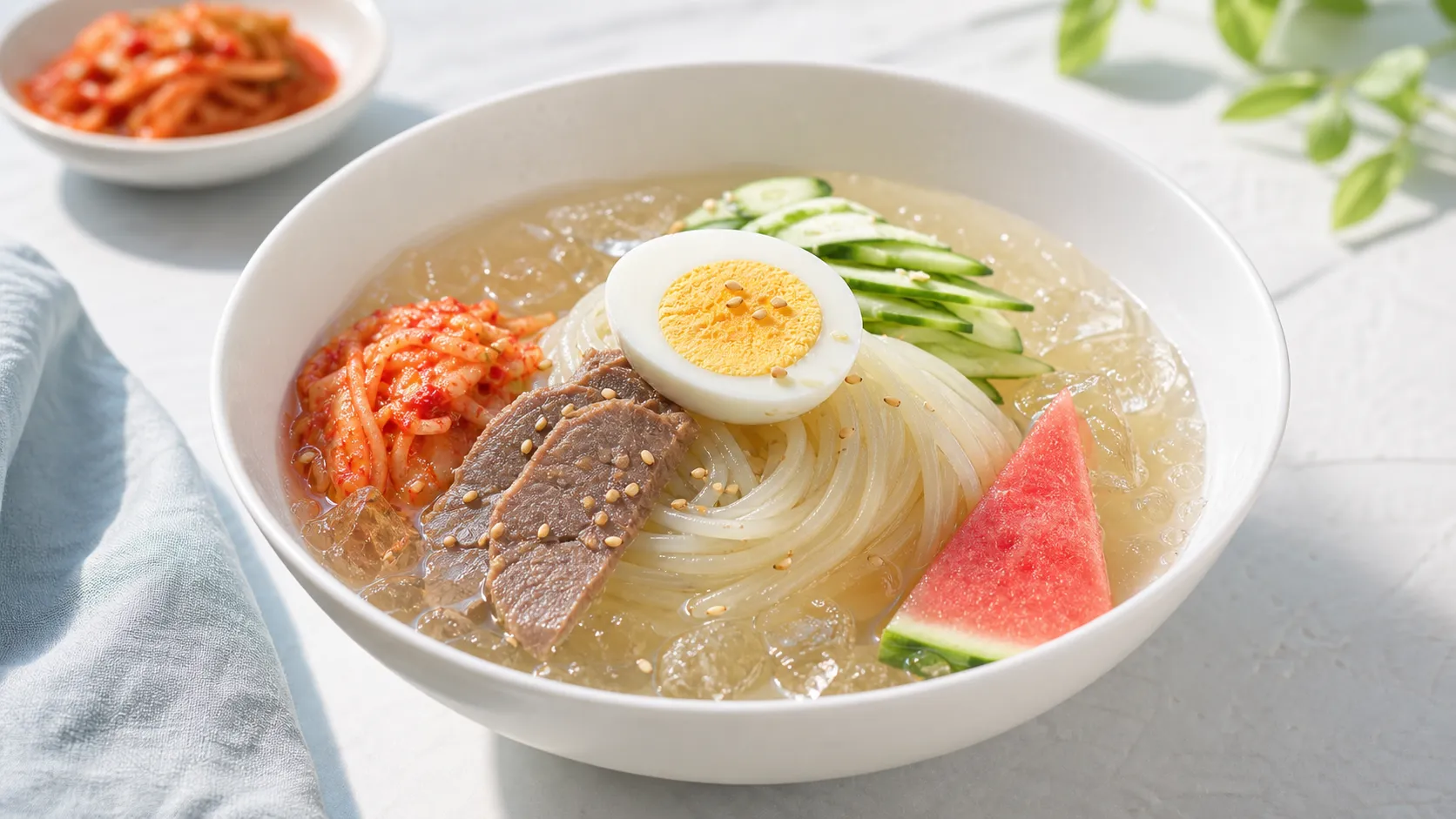
Local FoodMorioka, Iwate
Morioka Reimen (盛岡冷麺)
Morioka's cold noodles: gloriously chewy, translucent, sitting in an icy beef broth with kimchi and a slice of watermelon. Yes, watermelon. It works. Trust the noodle.
June 25, 2026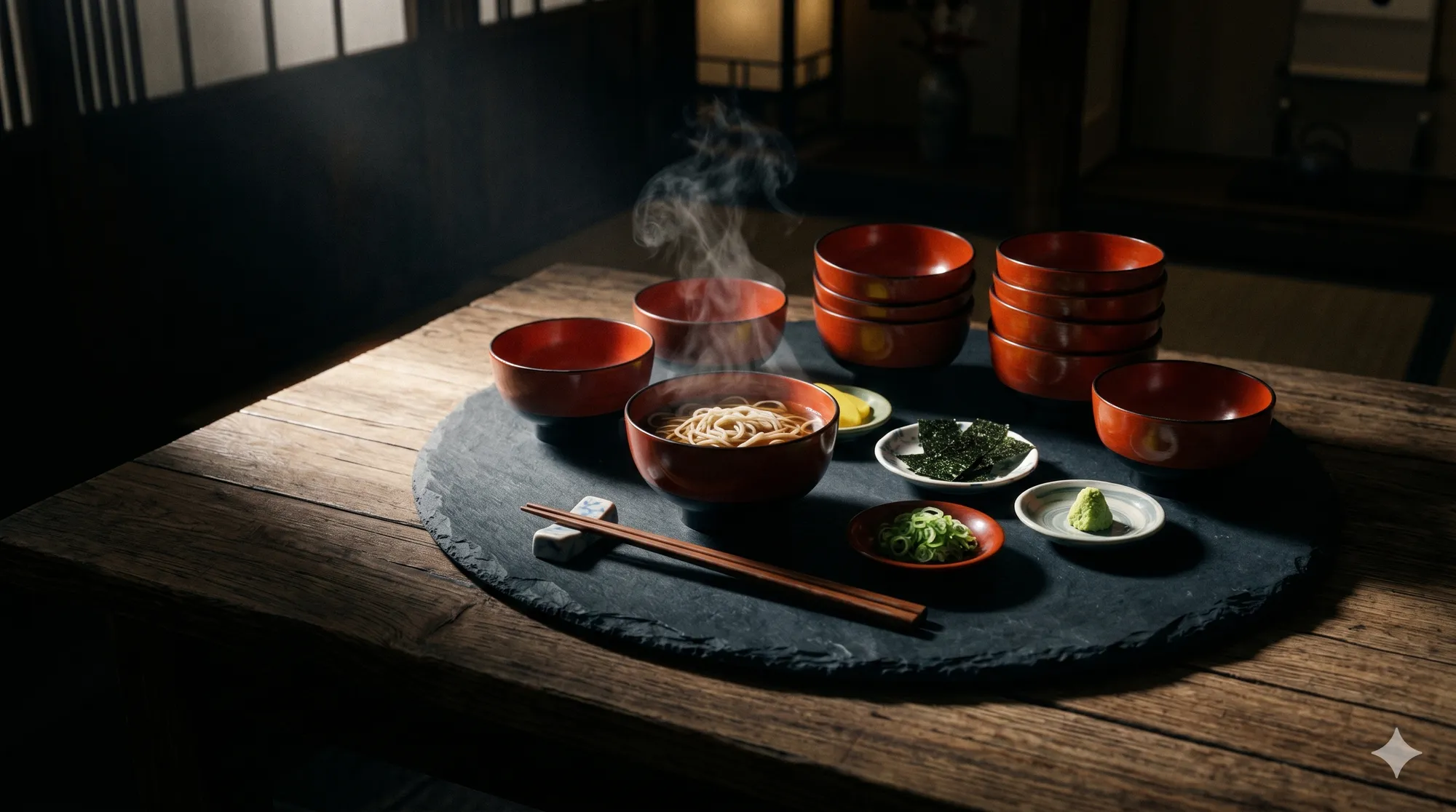
Local FoodIwate
Wanko Soba (わんこそば)
Tiny bowls of soba refilled the instant you empty them, a server cheering you on, and only one way to make it stop. Iwate turned dinner into a sport — and it's the most fun you'll have eating.
June 15, 2026