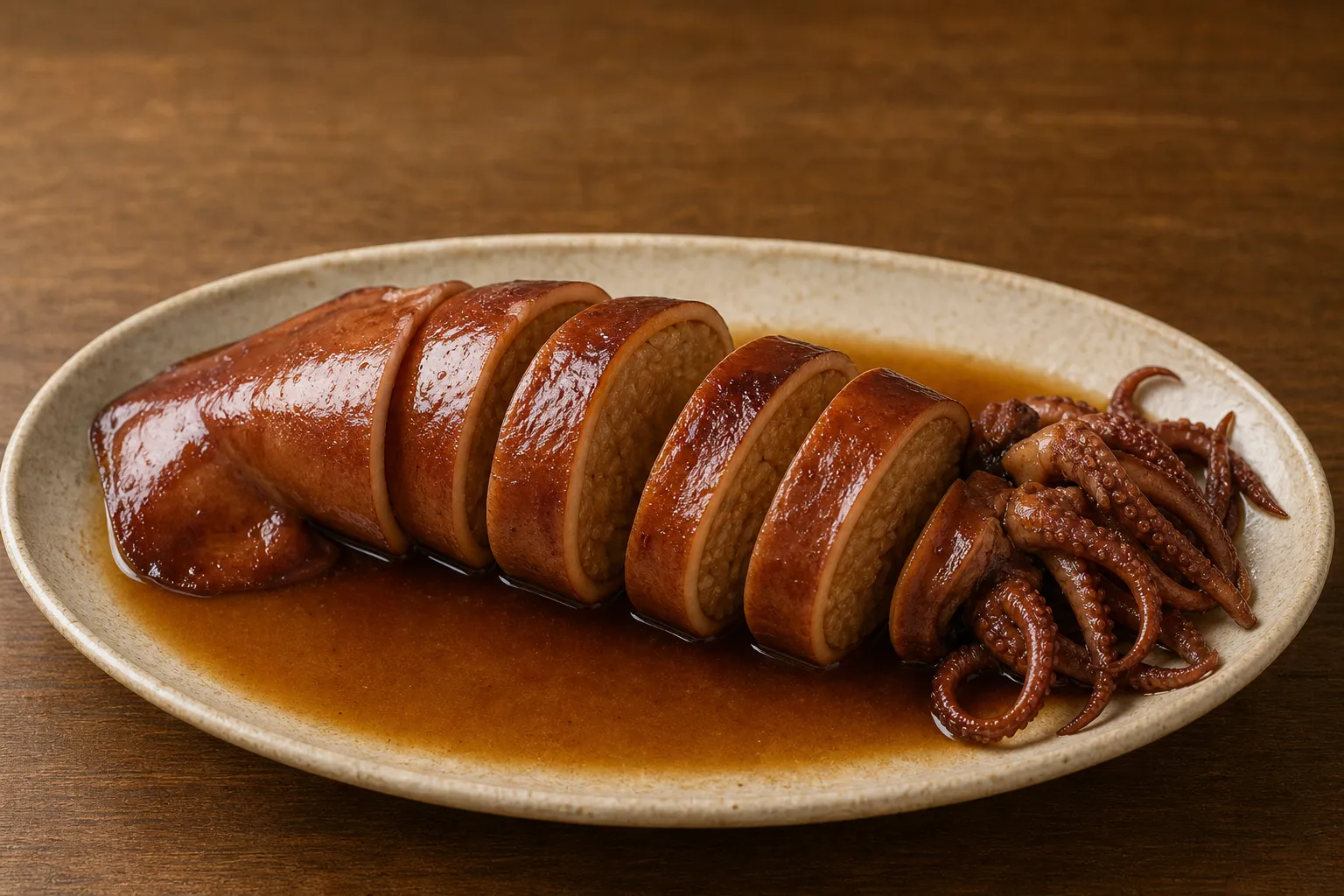
The first time, I bought it because it was the cheapest thing on the station platform and I was cold. Then I cut into it, and there it was — a whole squid, sliced clean through, and inside was rice. Glossy, brown, packed in so tight it held the shape of the squid. I stood there on the platform holding a plastic tray, genuinely a little moved by a train-station lunch. That has never happened to me before or since.
Share this dish


A whole squid, stuffed to bursting with sweet-soy rice and sliced into glossy rings — proof that the best meal in the station might be the cheap one in the box.
🍜 Planning a food trip to Hokkaido?Add this dish to my Food Trip →
 Add this dish to my Food Trip →
This is ikameshi (いかめし), and here's what it actually is: a whole squid, cleaned out, stuffed with a mix of glutinous (mochigome) and regular rice, then simmered slowly in a sweet, dark soy broth until the whole thing turns deep amber and the rice swells to fill every millimeter of the body. Then it's cut crosswise into rounds, so each slice shows a ring of tender squid wrapped around a solid core of soy-soaked rice. It is the opposite of fussy. It is the definition of humble. And it comes from Mori, a small town in southern Hokkaido, where it was born not as a delicacy but as a way to stretch a little rice a long way.
Why a wartime bento became a legend
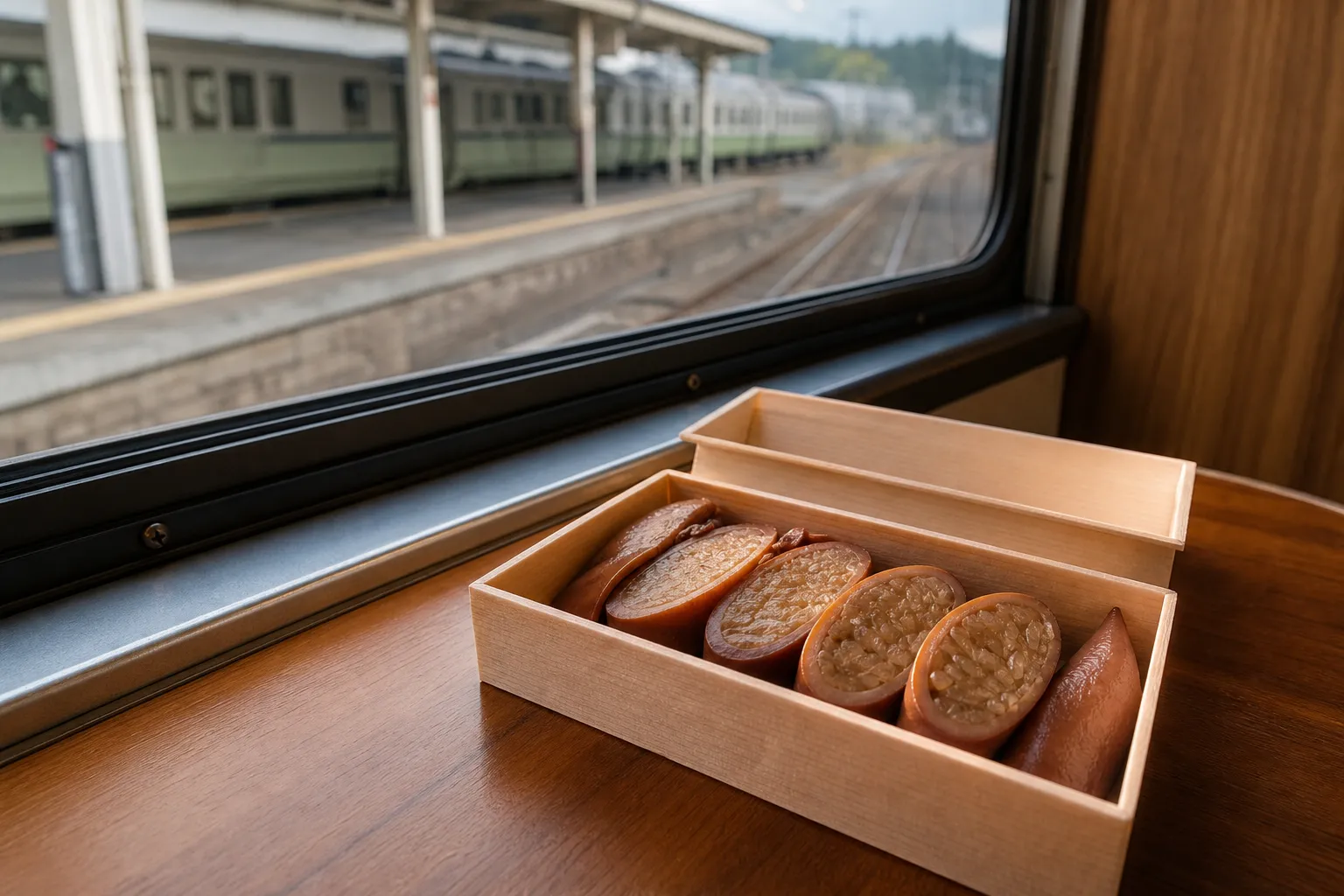
Ikameshi was invented in 1941 at Mori Station, during the war, when rice was scarce and squid was not. The idea was brilliant in its thrift: use two small squid and a modest handful of rice to make a filling, sellable box lunch. Necessity, basically, wearing an apron. I find that genuinely stirring — this dish exists because someone had to feed people with almost nothing, and made something people would later travel to eat.
And travel they do. The Mori-Station ikameshi became one of the most famous ekiben (train-station bento) in all of Japan, to the point where it regularly tops "best ekiben in the country" rankings and gets sold at department-store food fairs in Tokyo and Osaka where people line up for a box made hundreds of kilometers away. A wartime economy measure turned into a beloved national souvenir. I ate my second one standing up because I couldn't wait to find a bench. No regrets.
What makes it so good
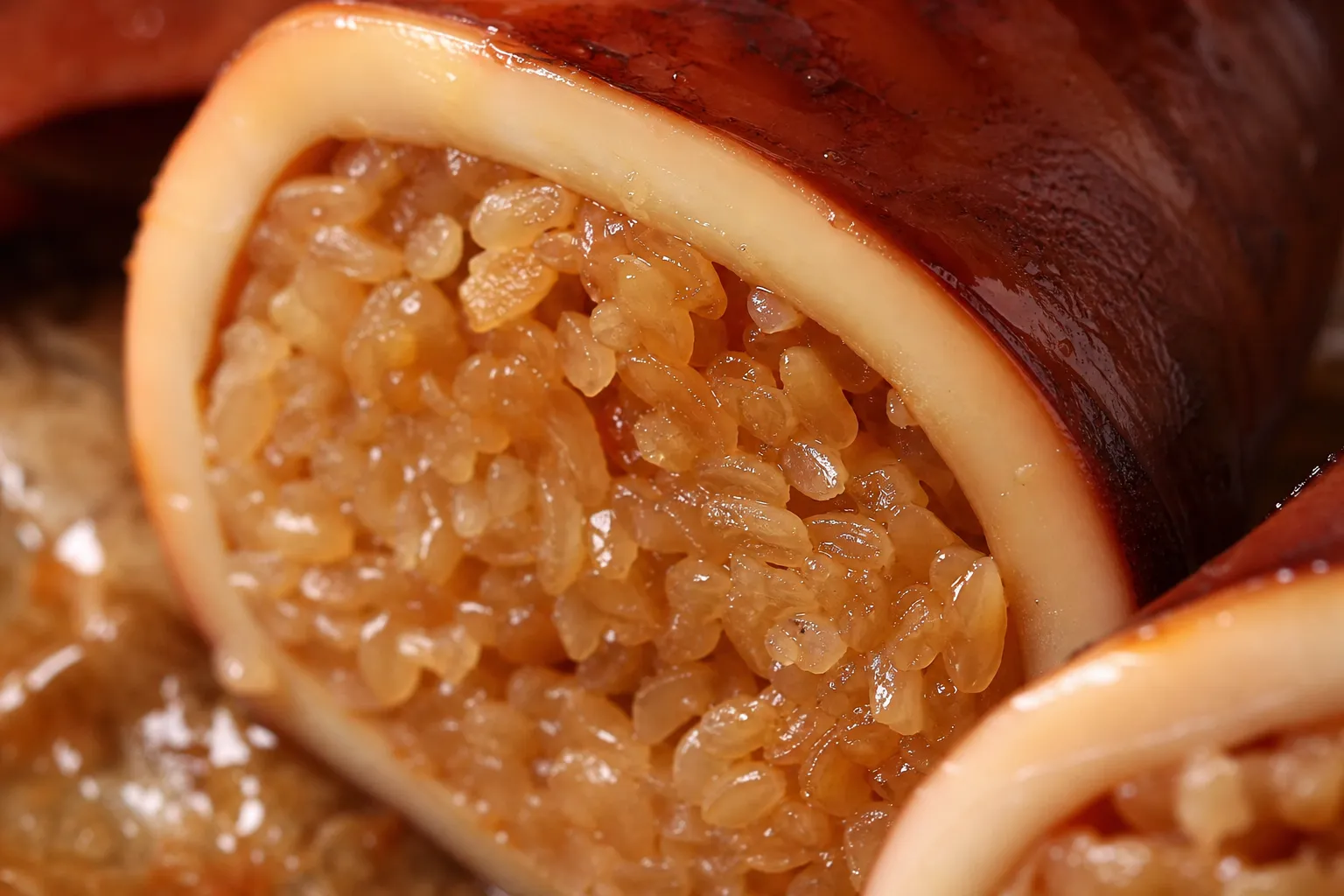
The magic is the rice, not the squid — or rather, what the squid does to the rice. As it simmers, the squid releases its own briny sweetness into the broth, and the rice drinks all of it in. So you get this dense, chewy, savory-sweet rice that tastes faintly of the sea, wrapped in a ring of squid that's gone tender and yielding from the long simmer. Mochigome in the mix gives it that satisfying, sticky chew that regular rice alone can't.
It's served at room temperature, which is exactly right for a bento and also means nothing is lost by the time you eat it on a train two hours later. Sweet, salty, chewy, a little oceanic. One squid does not look like much on the tray. Then you eat it and realize you are, in fact, completely full. It sneaks up on you. Pace yourself.
How it's made
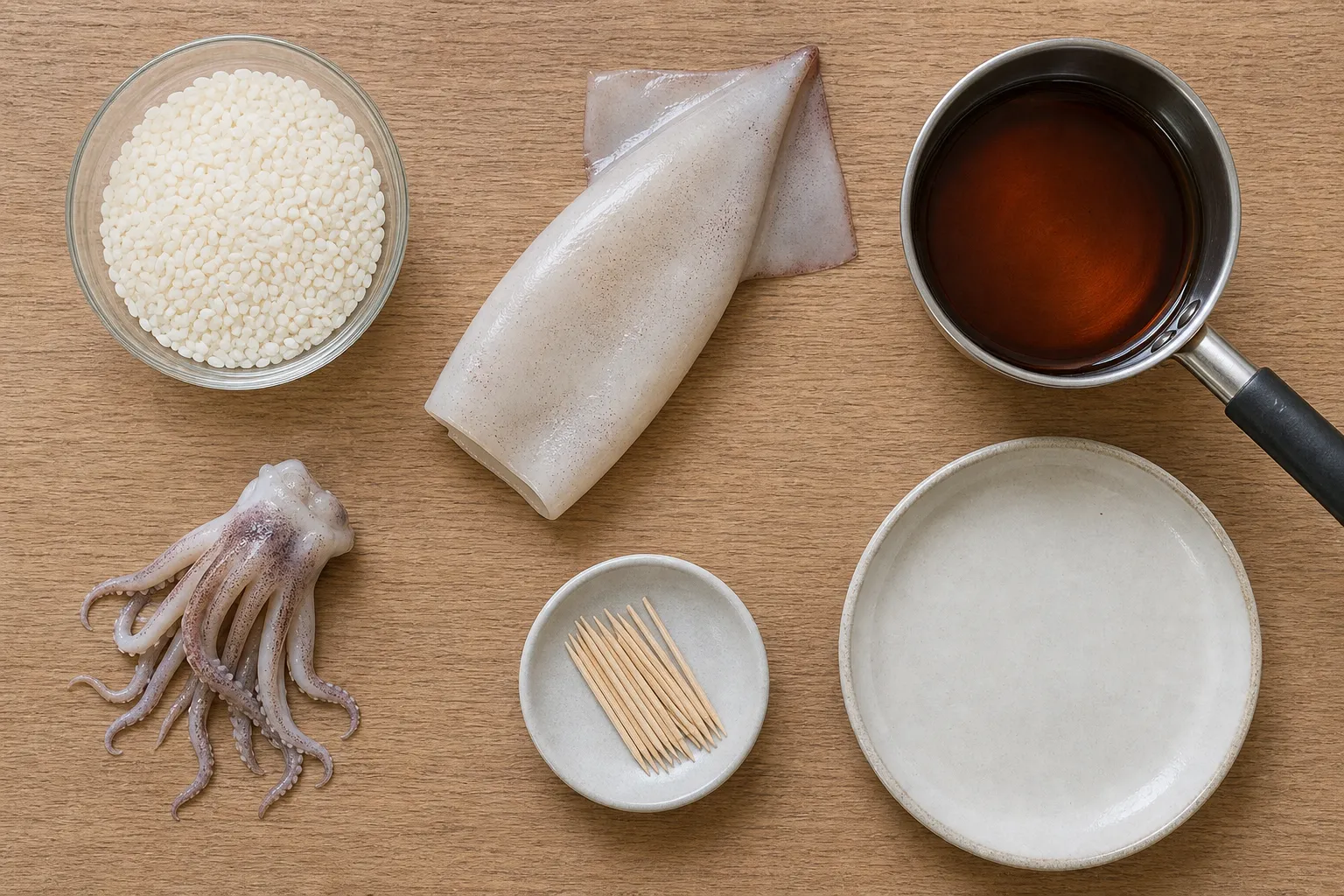
- Small squid are cleaned — the innards removed, the body left whole as a pocket
- A mix of glutinous and regular rice is rinsed and packed into each squid body, leaving room for the rice to swell
- The opening is closed with a toothpick so the rice stays inside during cooking
- The stuffed squid are simmered slowly in a sweet-soy broth (soy sauce, sugar, mirin, sake) until deep brown and glossy and the rice is fully cooked through
- Each squid is sliced crosswise into rounds, revealing the rice-filled cross-section, and boxed simply
Before you go — how to actually eat it
Your questions, answered honestly
"Is this like grilled squid (ikayaki)?" — No, and this is the mix-up to avoid. Ikayaki is squid grilled over flame with a brush of sauce — smoky, chewy, eaten off a stick. Ikameshi is squid stuffed with rice and simmered whole, then sliced. Same animal, completely different dish. If it isn't full of rice, it isn't ikameshi.
"Is it eaten hot or cold?" — Room temperature, and that's on purpose — it's a bento built to be eaten later, on a train or a bench. You can warm it, but you genuinely don't need to.
"Is one squid enough for a meal?" — Honestly, yes. The rice is dense and the mochigome makes it filling. It looks small; it eats big. Buy one, be surprised, buy a second next time.
"Where's the real one from?" — Mori Station in Hokkaido is the original and the benchmark. But its fame means you can find good ikameshi at department-store food halls (depachika) and regional-food fairs across Japan without going north.
What the staff will ask you
| You'll hear | Romaji | Meaning | Just say |
|---|---|---|---|
| いくつになさいますか? | Ikutsu ni nasaimasu ka? | "How many would you like?" | Hitotsu de onegaishimasu (one, please) |
| 温めますか? | Atatamemasu ka? | "Shall I warm it up?" | Sono mama de daijōbu desu (as-is is fine) |
| お箸はご入用ですか? | Ohashi wa goiriyō desu ka? | "Do you need chopsticks?" | Onegaishimasu (yes, please) |
| 袋にお入れしますか? | Fukuro ni oire shimasu ka? | "Would you like a bag?" | Onegaishimasu (yes, please) |
To order, just say "Ikameshi o kudasai" (いかめしください) — "Ikameshi, please."
Where to eat it
- Mori Station, Hokkaido — the birthplace and the gold standard; the Mori-Station ikameshi is the one every ranking talks about. It's sold on and around the station.
- Department-store food halls (depachika) in Tokyo and Osaka — during regional-food fairs (bussanten), the famous Mori ikameshi is often flown in and sold by the box; lines form.
- Hokkaido souvenir shops and station kiosks — vacuum-packed and boxed versions turn up widely across the prefecture.
Availability, especially at mainland food fairs, is seasonal and event-based, and famous batches sell out early — check current schedules and get there before midday if you can.
Soul Score
Local Roots5/5
First-Timer Friendly4/5
Adventure Level4/5
Comfort Level5/5
Travel Worthy4/5
These scores are one obsessed eater's gut feeling — not a verdict. A low number isn't a bad mark, just a different kind of adventure.
Know someone planning Japan?
← All Articles
Local Food · Mori, Hokkaido
Still hungry?
Eat more from Hokkaido
Local FoodFurano, Hokkaido
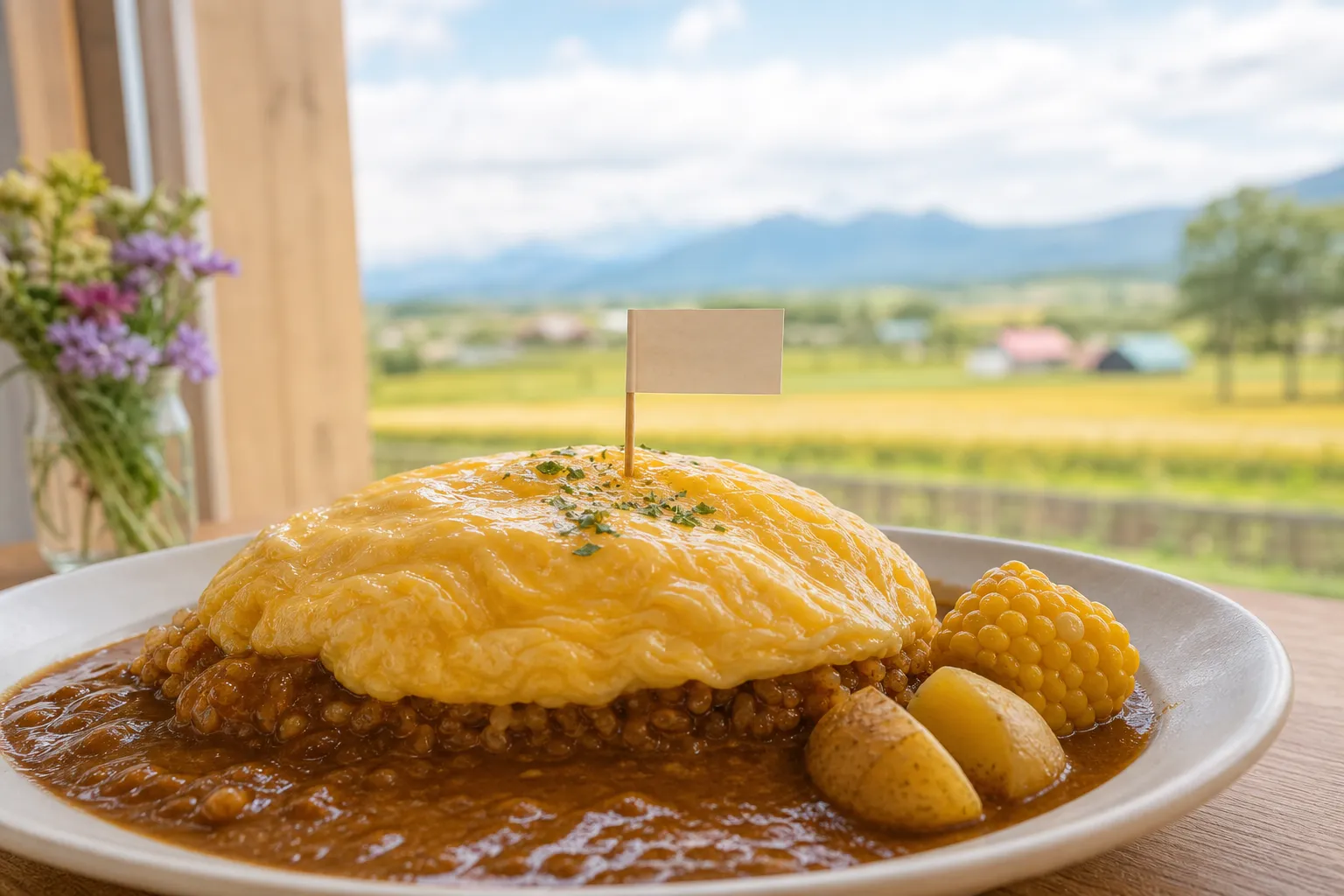
Furano Omu-Curry (富良野オムカレー)
Cut into the omelette and curry sauce comes flooding out like it's been waiting all morning for permission — with a lavender field in the window behind it.
August 2, 2026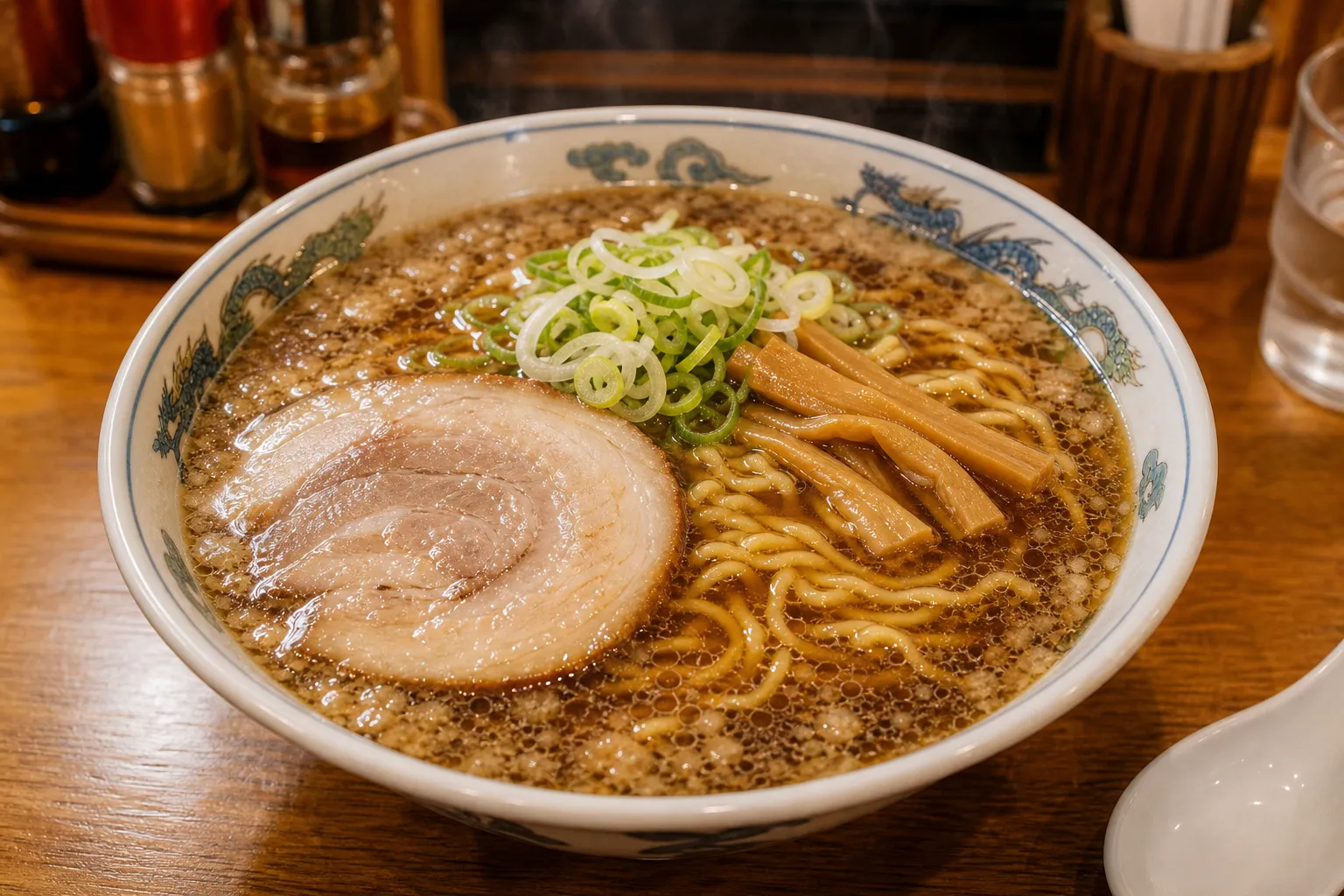
Local FoodAsahikawa, Hokkaido
Asahikawa Ramen (旭川ラーメン)
A slick of lard traps the heat so your soy broth stays scalding to the last drop — because in Asahikawa, the cold outside is trying to kill your ramen. It loses.
July 9, 2026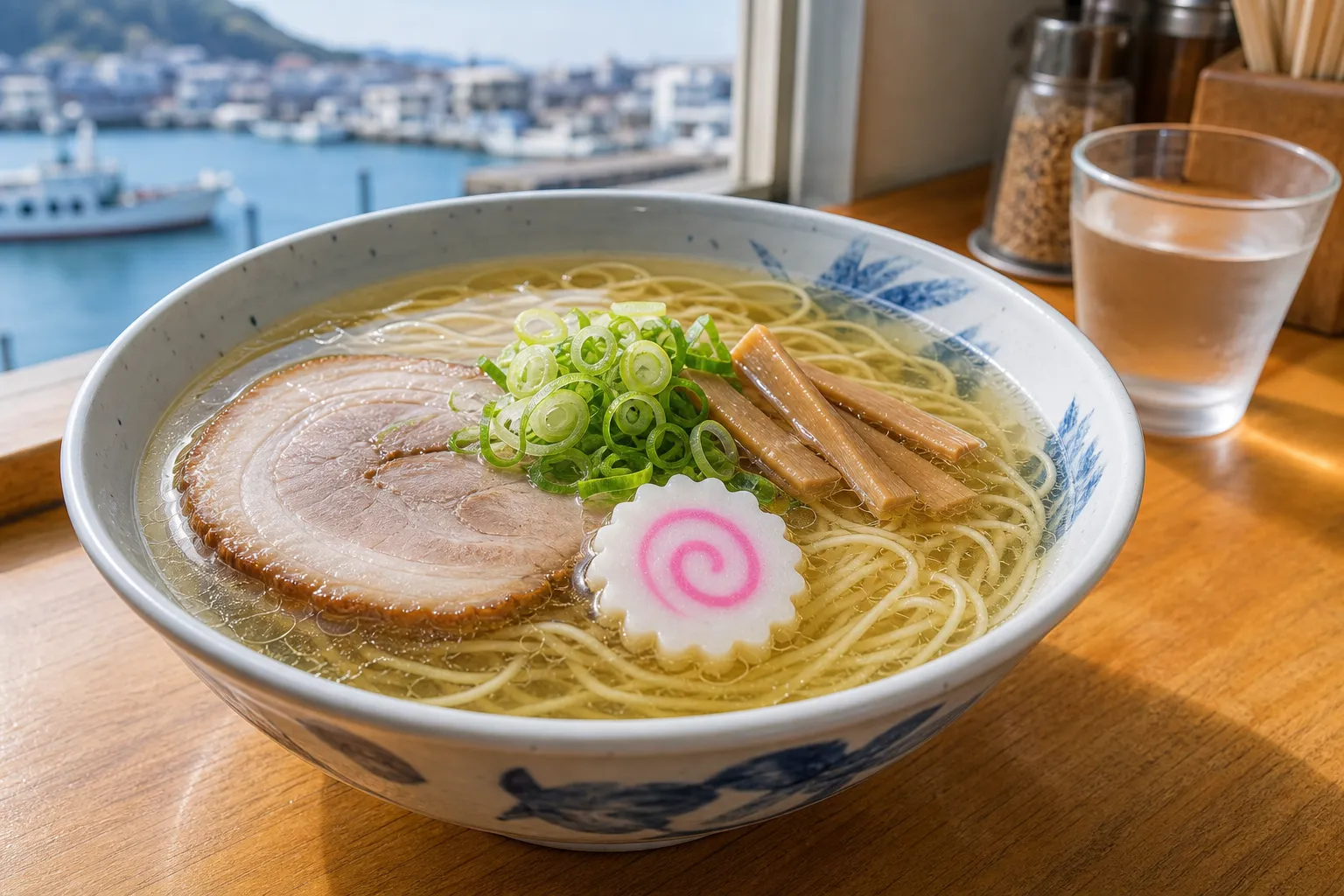
Local FoodHakodate, Hokkaido
Hakodate Shio Ramen (函館塩ラーメン)
Clear as tea, gold as morning light, quiet as a held breath — this is the ramen that proves subtraction is a flavor. Hokkaido's gentle bowl, and my hangover's best friend.
July 9, 2026