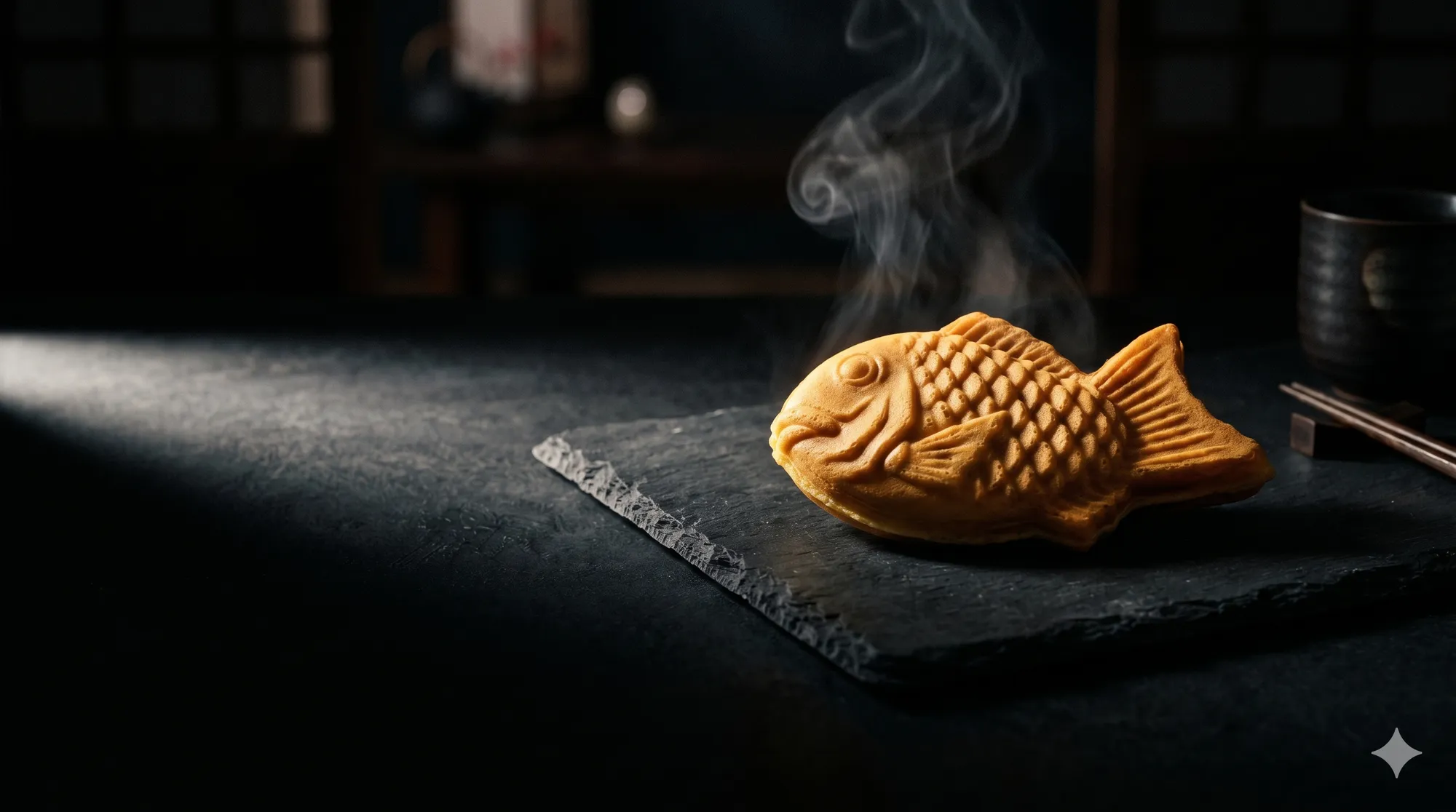
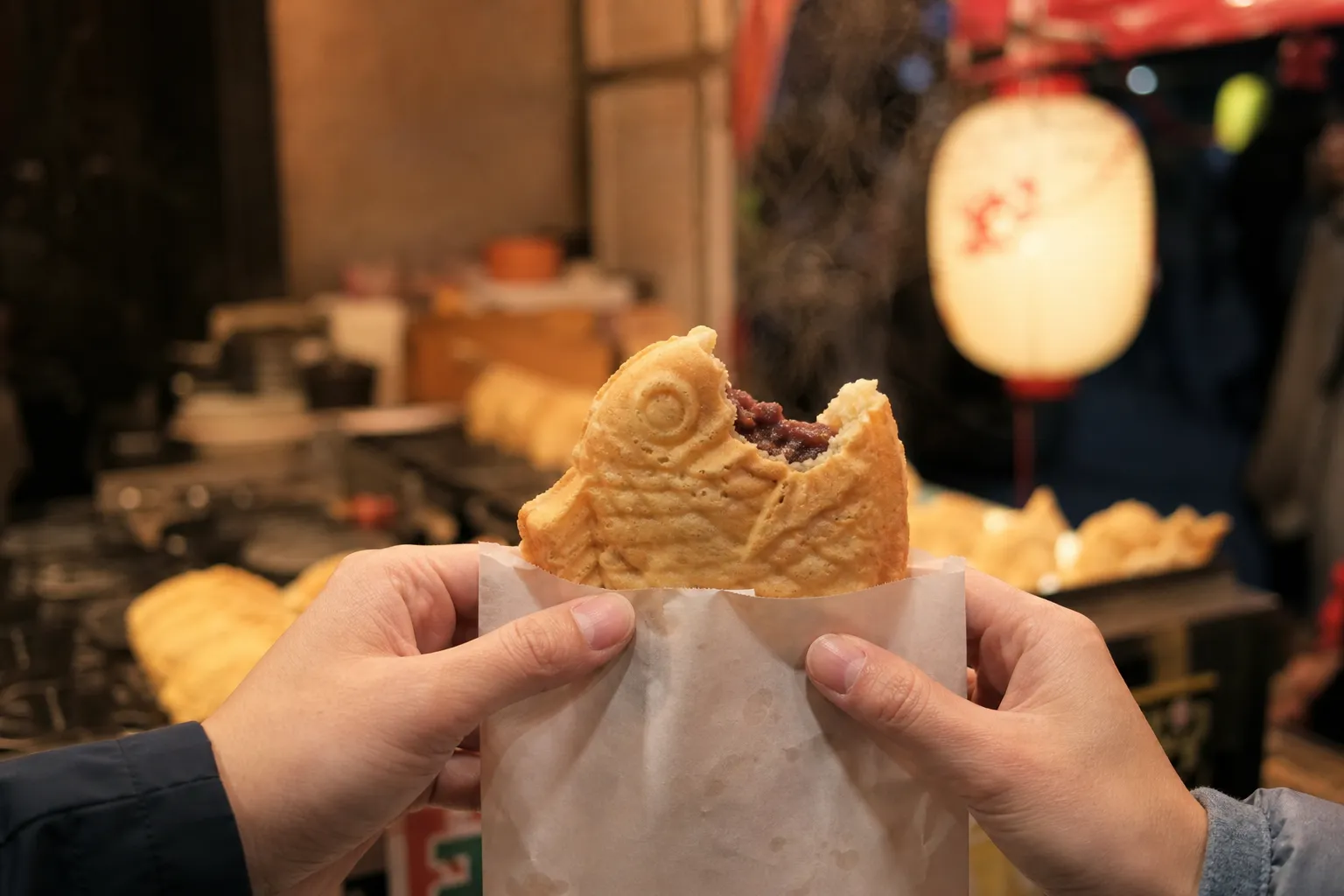
You bite the tail off first. Everyone does — it's the crispiest part, it's cooler than the molten middle, and there's something deeply satisfying about it on a cold night, the steam curling up into your face as you work your way toward the warm pocket of bean paste in the belly. A small, perfect joy, and it costs about a dollar.
Share this dish


A fish-shaped cake, crisp at the edges and fluffy inside, stuffed with sweet red bean paste. Japan's most charming street snack — warm in your hand on a cold day, and impossible not to smile at.
🍜 Planning a food trip to Japan?Add this dish to my Food Trip →
 Add this dish to my Food Trip →
Taiyaki (たい焼き) is the most charming street snack in Japan: a golden, fish-shaped cake, crisp around the fins and soft in the belly, filled with sweet anko (red bean paste) and handed to you warm from an iron mold. It's the platonic ideal of street food — cheap, portable, comforting — and it's shaped like a sea bream (tai) because the fish symbolizes good luck and celebration in Japan.
The classic filling is red bean, but modern shops stuff them with custard, chocolate, sweet potato, even cheese or savory fillings. The shell can be thick and cakey or thin and pari-pari crisp. However it's made, it's a hug in fish form.
A lucky fish you can eat
Taiyaki was born in Tokyo around the early 1900s, evolving from imagawayaki (round filled cakes). A shop reshaped the mold into a tai (sea bream) — an auspicious fish associated with celebration and the saying "medetai" (joyous) — and the cute, lucky shape made it an instant hit. It's been a beloved street and festival snack ever since.
Two crusts define the styles: tennen-mono (cooked one fish at a time in individual irons, for a thin, crisp shell) and yōshoku-mono (cooked in a multi-fish mold, softer and fluffier). Fans have strong opinions.
Why the tail-vs-head debate is real
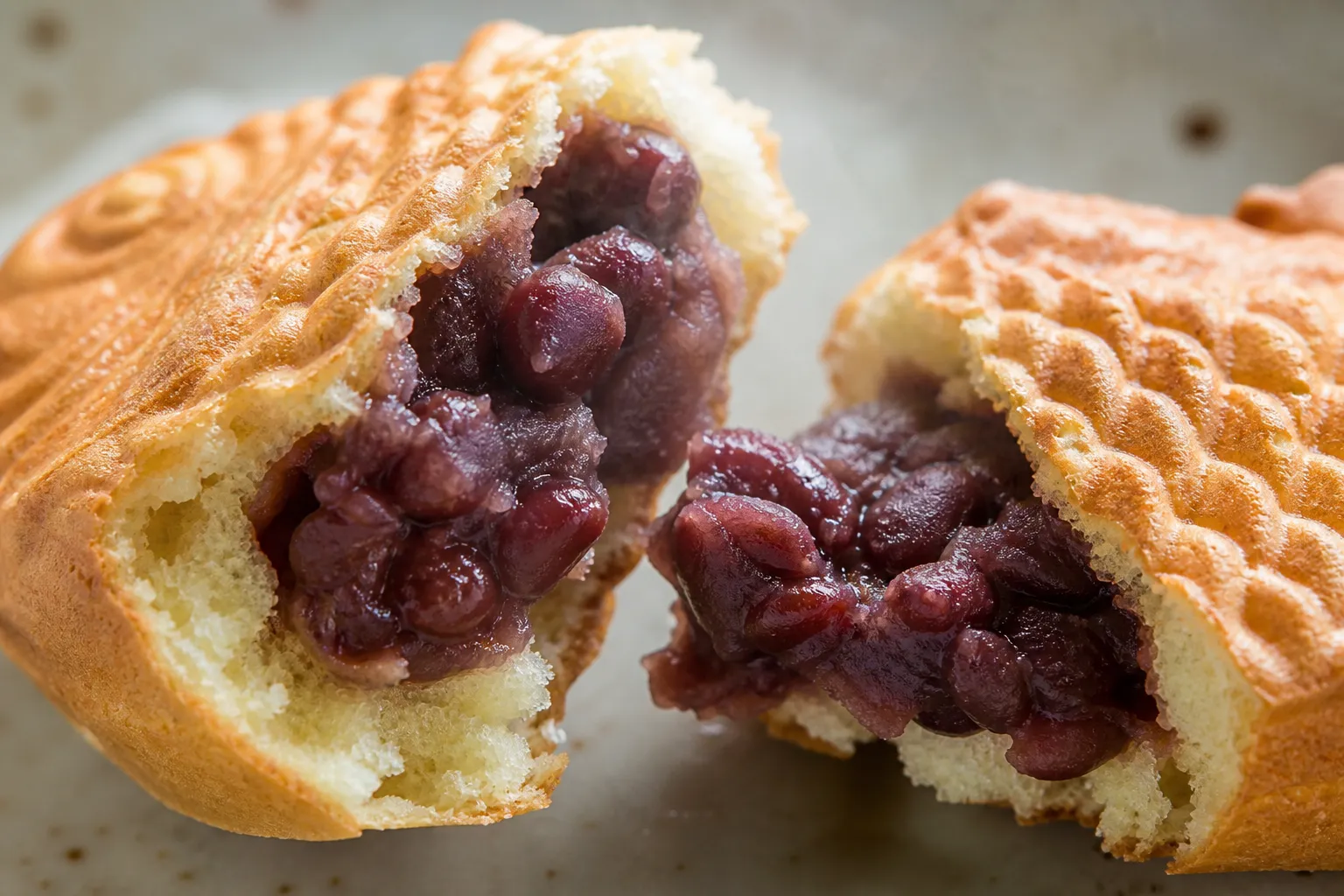
The genuine national debate: do you eat taiyaki from the head or the tail? It's a lighthearted argument with no right answer — but it tells you how seriously (and affectionately) people take this snack. The other key question is whether the anko reaches all the way into the tail (a sign of a generous shop).
The pleasure is in the contrast: a thin, slightly crisp, faintly sweet shell against a warm, smooth, not-too-sweet bean filling. Fresh and hot is non-negotiable.
How it's made
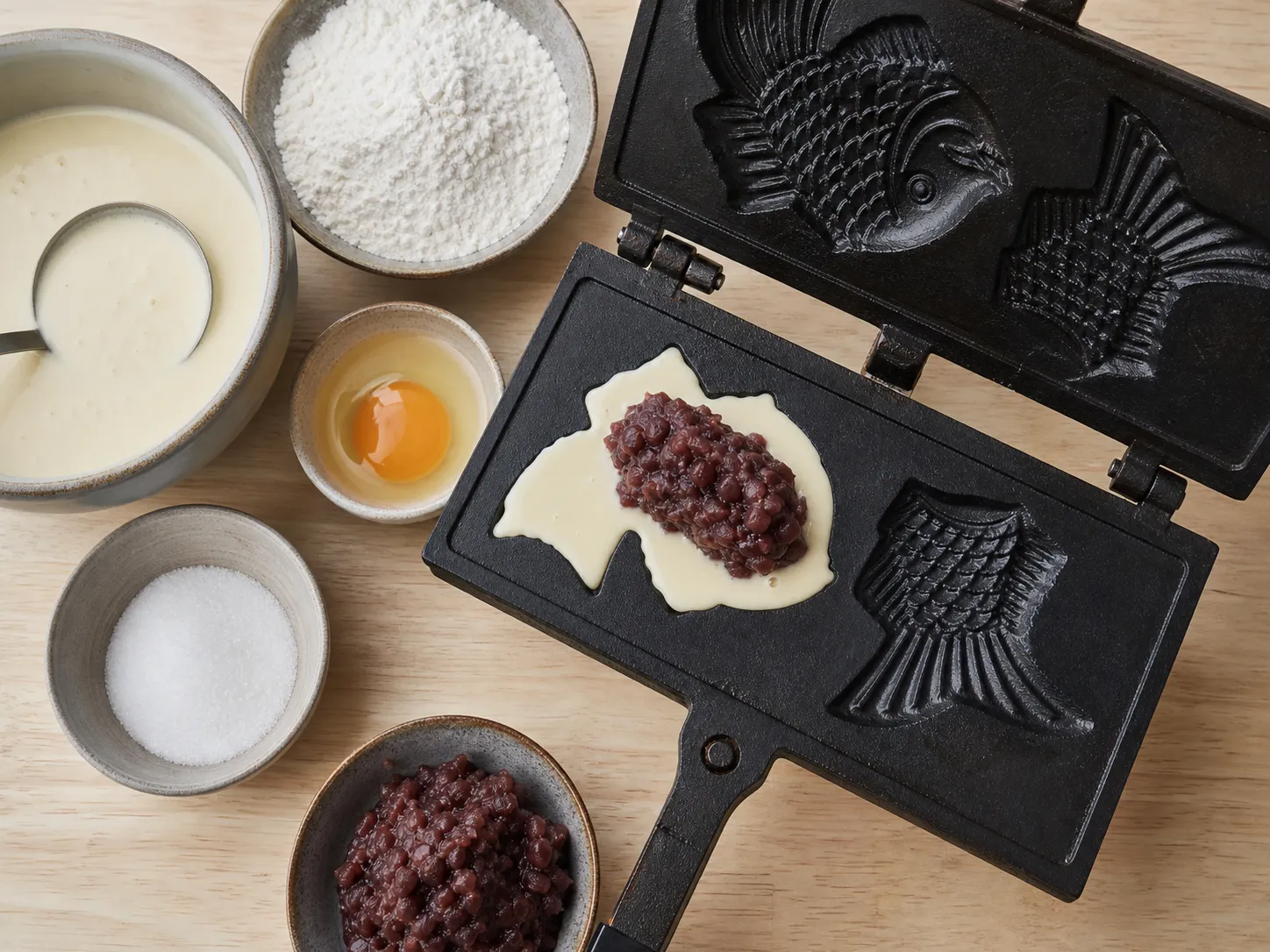
- Make a thin pancake-like batter (flour, egg, sugar, leavening)
- Pour batter into a fish-shaped iron mold
- Add a generous spoon of anko (or custard, etc.) and top with more batter
- Close the mold and cook both sides until golden and crisp at the edges
- Pop out and serve immediately, piping hot
Before you go — eat it hot
Your questions, answered honestly
"Head first or tail first?" — There's no correct answer — it's a fun national debate. Tail-first lets you check if the filling reaches the end; head-first is most common. Pick a side and commit.
"What filling should I try?" — Classic anko (red bean) first — it's the soul of the snack. Then branch out to custard (kasutādo) or sweet potato.
"Thin or thick crust?" — Pari-pari (thin, crisp, cooked one-by-one) is the connoisseur's choice; the fluffier mold-cooked version is cozier. Both are great.
"When's it best?" — Hot and fresh, immediately. A warm taiyaki on a cold day is the entire point.
What the staff will ask you
| You'll hear | Romaji | Meaning | Just say |
|---|---|---|---|
| 何個にしますか? | Nan-ko ni shimasu ka? | "How many?" | Ni-ko kudasai (two, please) |
| 餡は何にしますか? | An wa nani ni shimasu ka? | "Which filling?" | Tsubu-an de (chunky red bean) / Kasutādo (custard) |
| 温かいうちにどうぞ | Atatakai uchi ni dōzo | "Enjoy while it's warm" | Arigatō! (eat it now) |
To order, just say "Taiyaki futatsu kudasai" (たい焼き二つください) — "two taiyaki, please."
Where to eat it
- Festival stalls (matsuri) and shopping streets (shōtengai) — the natural habitat of a fresh taiyaki.
- Specialist taiyaki shops in Tokyo (several famous tennen-mono one-at-a-time shops) — the crisp-shell purist's pick.
- Department-store food halls for premium versions.
Always eat it hot off the iron — a cold taiyaki is a sad taiyaki.
Soul Score
Local Roots4/5
First-Timer Friendly5/5
Adventure Level3/5
Comfort Level5/5
Travel Worthy3/5
These scores are one obsessed eater's gut feeling — not a verdict. A low number isn't a bad mark, just a different kind of adventure.
More food guides
Know someone planning Japan?
← All Articles
Sweets & Snacks · Nationwide
Still hungry?
You might also like
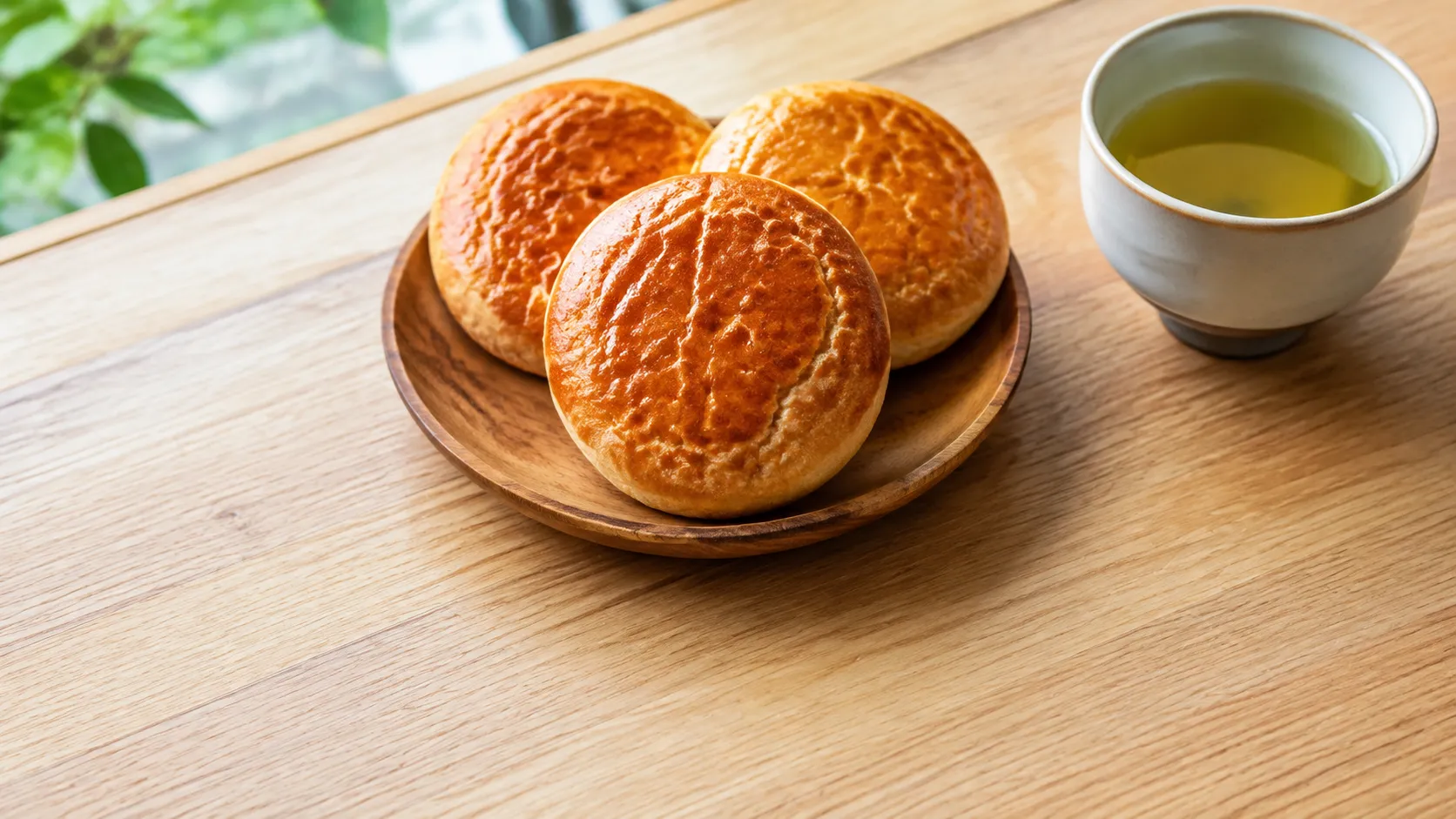
Sweets & SnacksSaga
Maruboro (丸ぼうろ)
It looks like the most boring biscuit in Japan. Then you bite it and it's soft, and honey-warm, and about four hundred years of Portuguese sailors arrive all at once.
September 2, 2026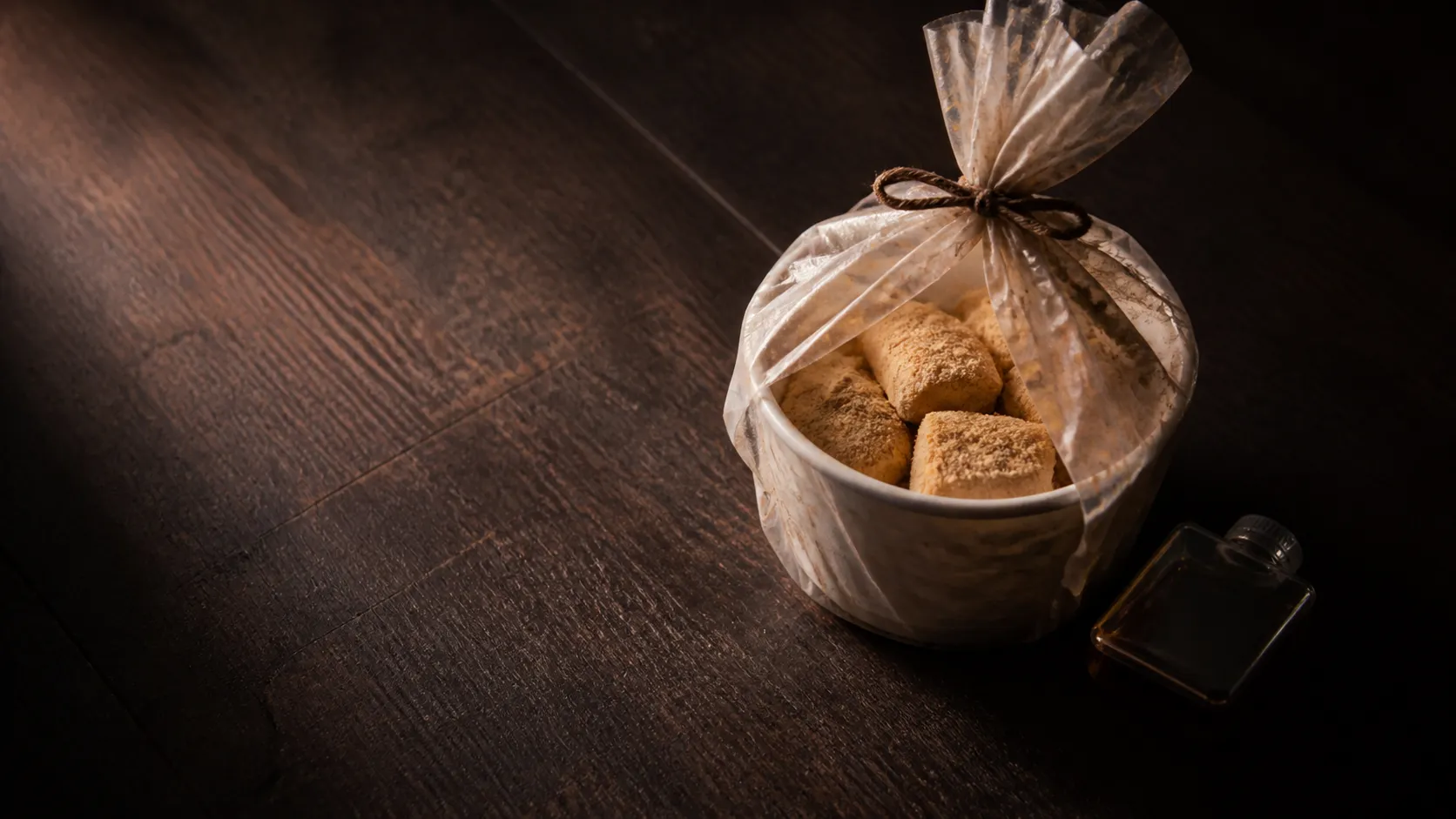
Sweets & SnacksYamanashi
Shingen Mochi (信玄餅)
There is a correct way to eat this and I did not know it, so I made a mess in front of several Yamanashi locals who were extremely kind about it and absolutely watching.
September 2, 2026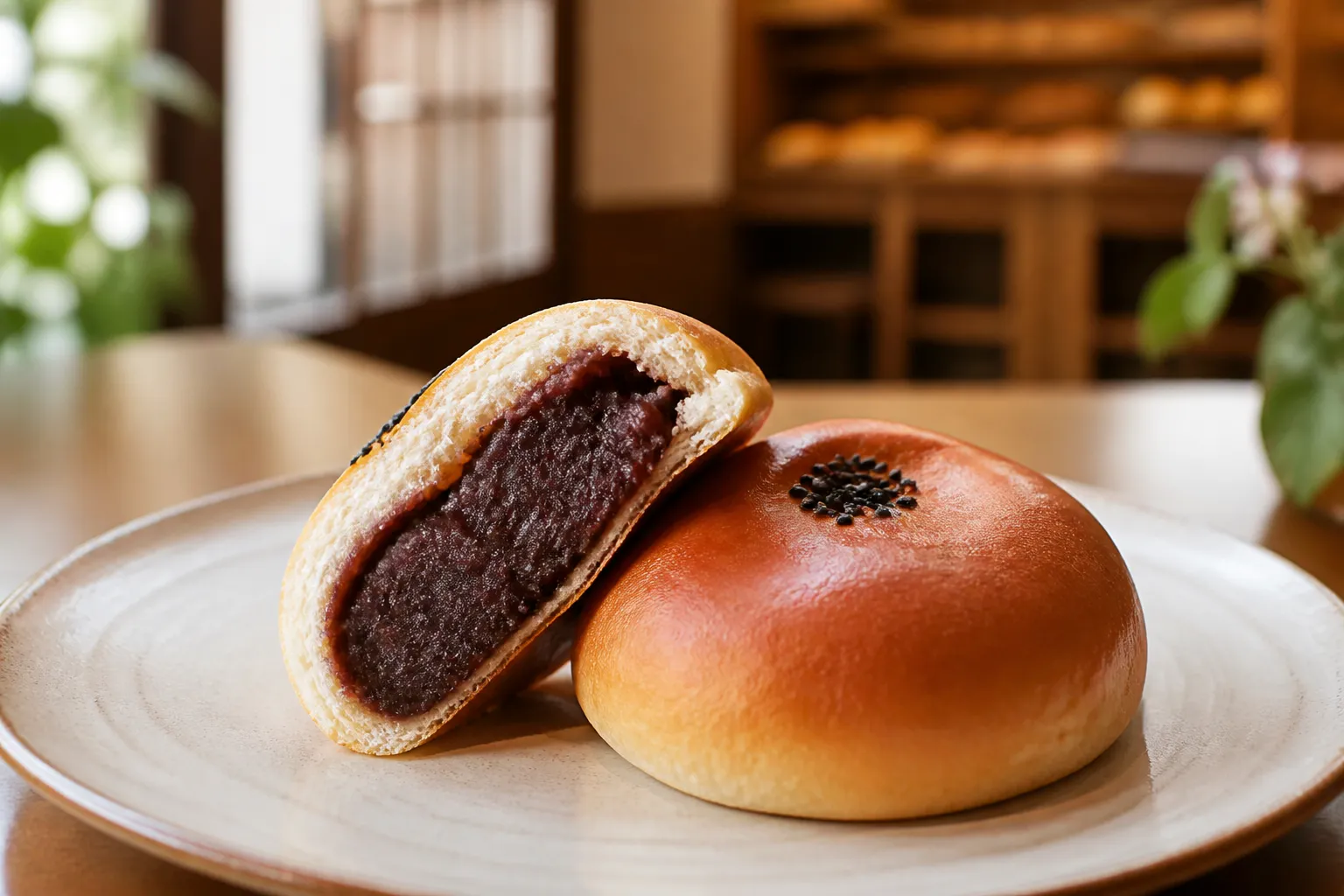
Sweets & SnacksTokyo
Anpan (あんパン)
A soft little bun, one bite in, and suddenly it's dense, dark, sweet red bean all the way through — the bread that talked 1870s Japan into eating Western-style bread at all.
July 27, 2026