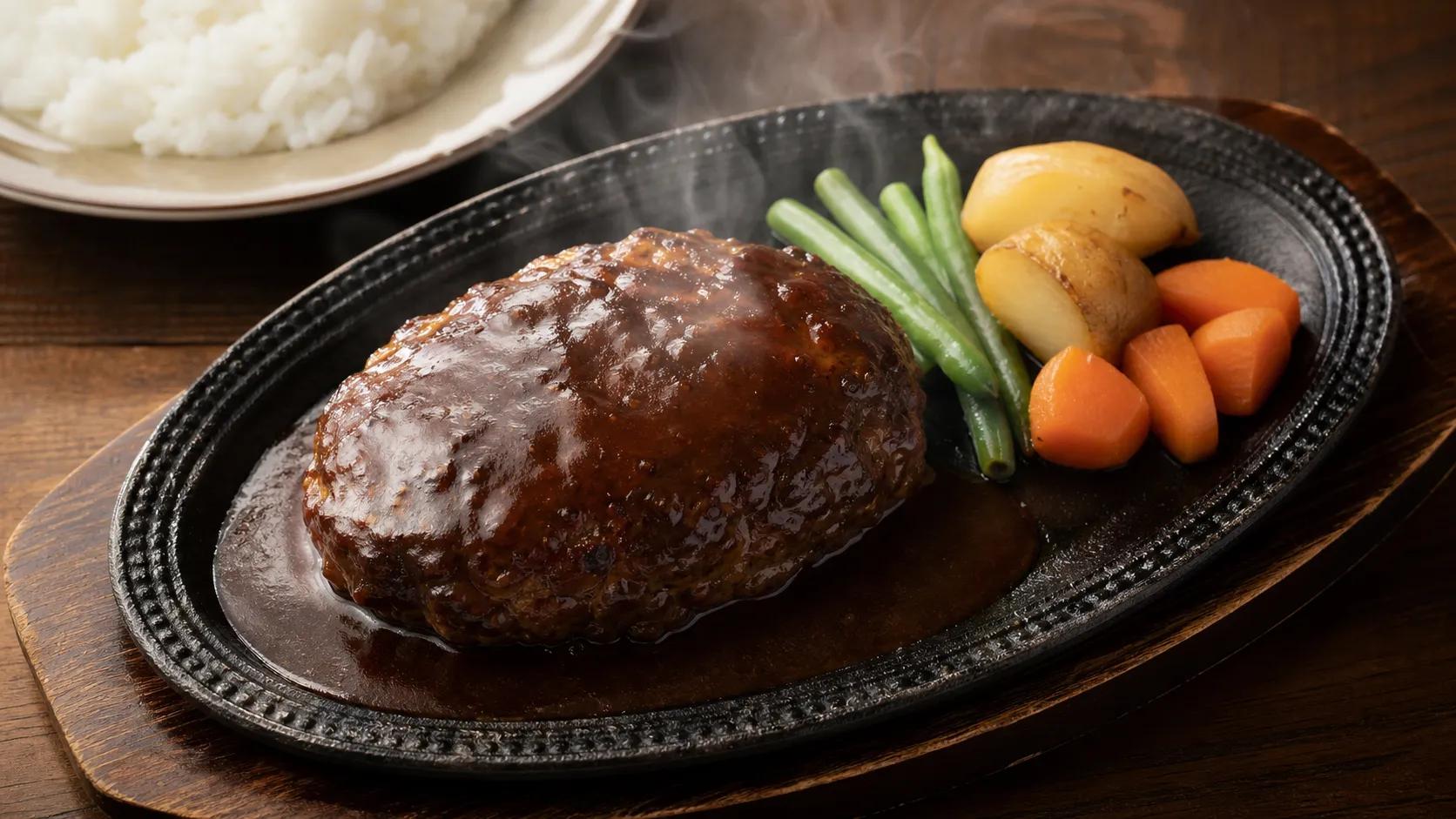
You press your fork in and the juice runs out across the plate, mixing into the dark glossy sauce, a little plume of steam rising — and for a second you forget there was ever supposed to be a bun anywhere near this. There wasn't. There shouldn't be. This is so much better than a burger, and Japan figured that out a long time ago.
Share this dish


A juicy seasoned beef-and-pork patty — no bun — served on a plate with rice and a glossy demi-glace or sauce. Japan's beloved yoshoku comfort dish, and a kid's-menu hero adults never outgrow.
Hambāgu (ハンバーグ) is a dish in its own right here, and one of the most beloved comfort foods in the country: a plump, juicy patty of seasoned ground beef and pork, pan-seared until browned, then served on a plate (not a bun) with a glossy sauce — usually a rich demi-glace, sometimes a soy-butter or grated-daikon oroshi sauce — alongside rice, vegetables, and maybe a fried egg. Cut into it and the juices run; this is steakhouse satisfaction at diner prices.
It's classic yoshoku — Japanese-style Western food — and it lives everywhere from kids' menus and family restaurants to specialist shops where they sear it tableside on a sizzling iron plate. Adults love it just as much as children, and nobody pretends otherwise.
Western food, Japanese soul
Hamburg steak descends from the German "Hamburg steak" / Salisbury steak, which arrived as Japan opened to the West and embraced yoshoku in the late 1800s and 1900s. Japan made it tender, juicy, and saucy — bound with sautéed onion, egg, and breadcrumbs, and crowned with a glossy demi-glace — and it became a staple of family restaurants (famiresu) and home kitchens alike.
The sizzling-iron-plate version (teppan hambāgu), arriving at your table popping and steaming, is a particular joy — and shops like Bikkuri Donkey and countless local yoshoku diners made it a national favorite.
Why it's juicier than a burger
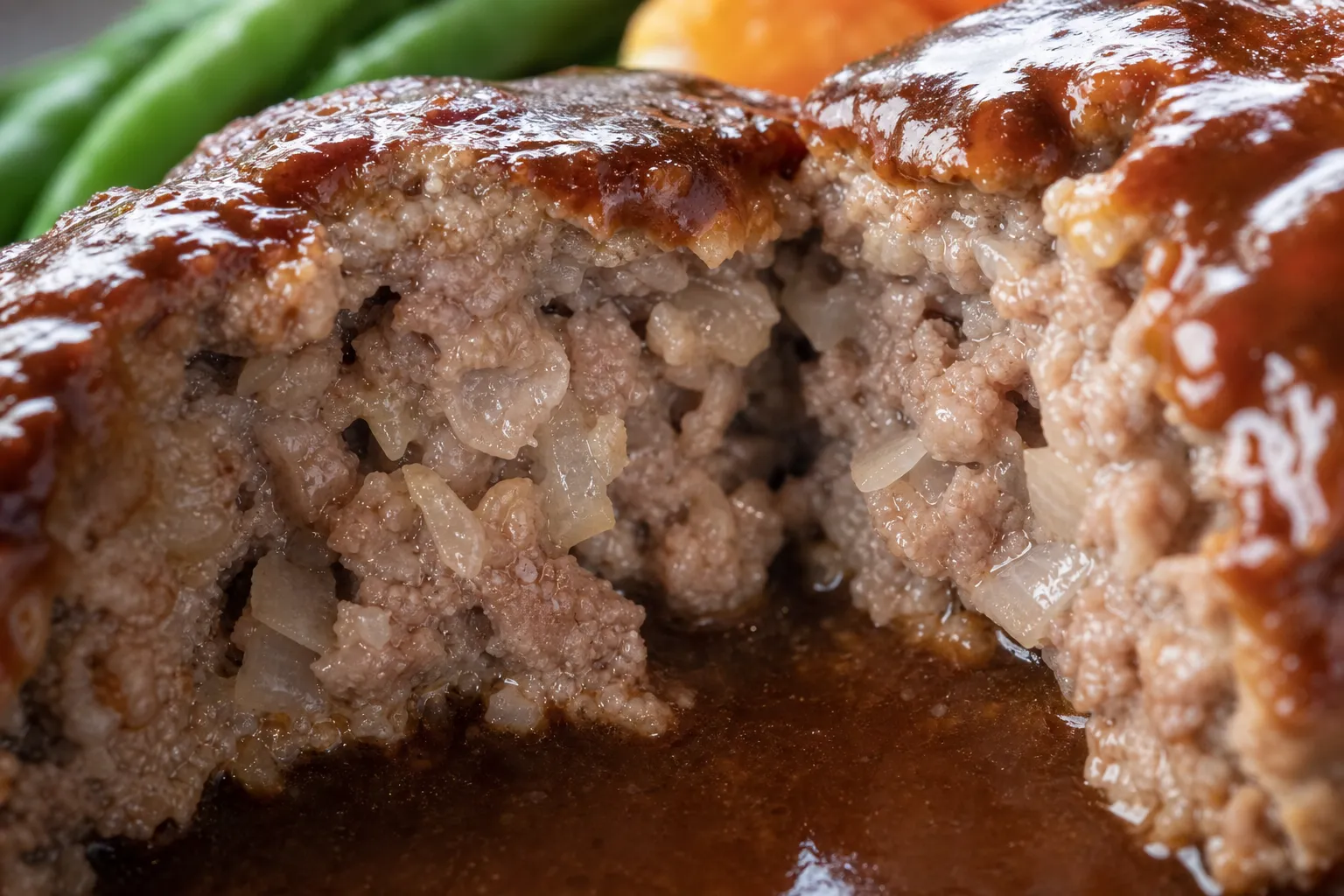
The secret is in the mix and the technique. The patty blends beef and pork (the pork adds juiciness), bound with sautéed onion, egg, and panko soaked in milk, which keeps it tender and moist. It's shaped, the air knocked out, and seared to brown the outside before finishing through so the center stays juicy.
Then the sauce: a deep, glossy demi-glace is the classic, but wafū (Japanese-style) versions with grated daikon and ponzu, or a soy-butter glaze, are equally loved. A pat of butter, a fried egg, melted cheese — endless happy variations.
How it's made
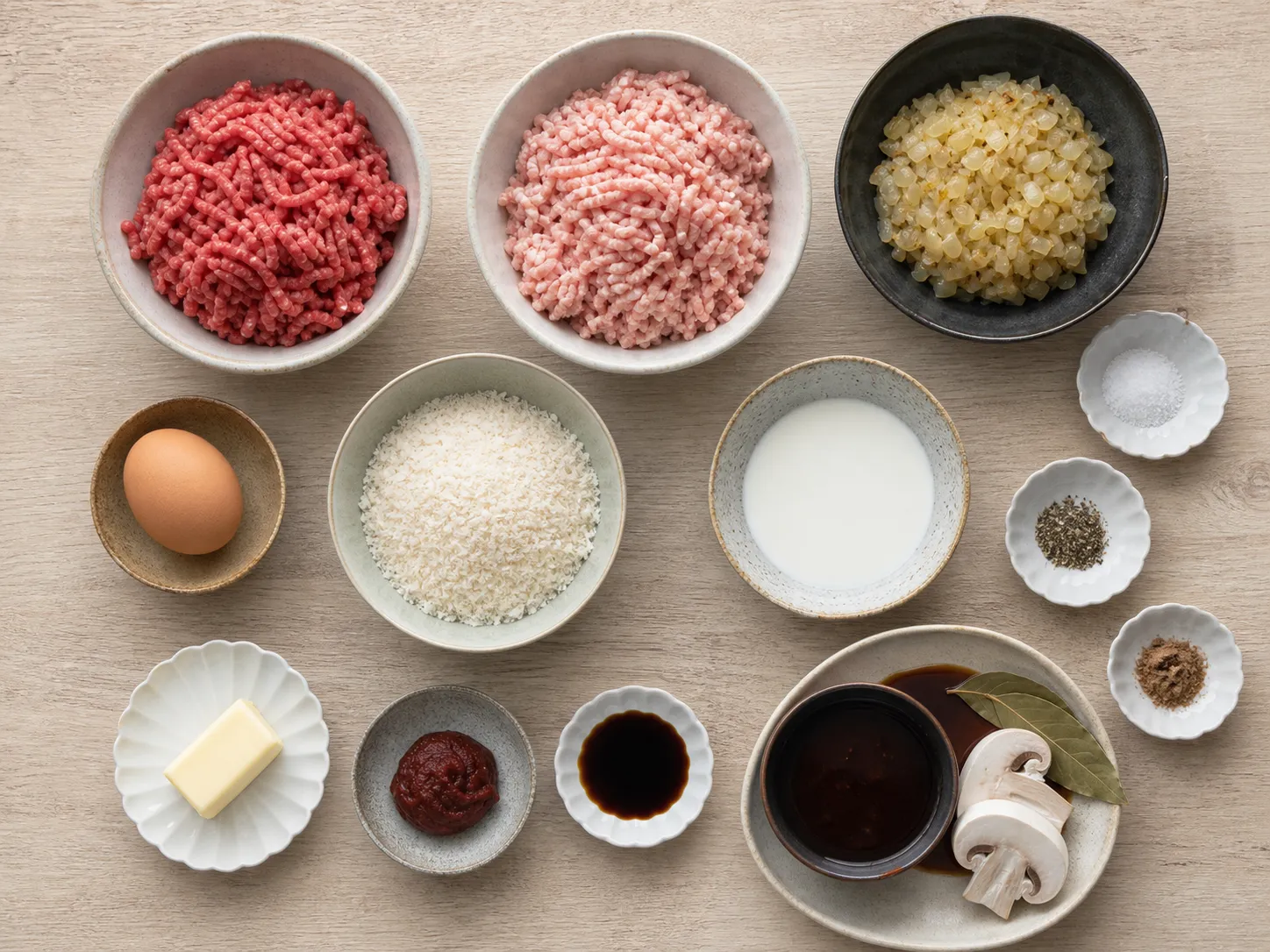
- Sauté chopped onion and let it cool
- Mix ground beef and pork with the onion, egg, milk-soaked panko, salt, pepper, and nutmeg
- Knead until sticky, shape into an oval patty, and press out the air
- Sear both sides to brown, then cook through (often covered) so the center stays juicy
- Plate with a demi-glace or wafū sauce, rice, and vegetables
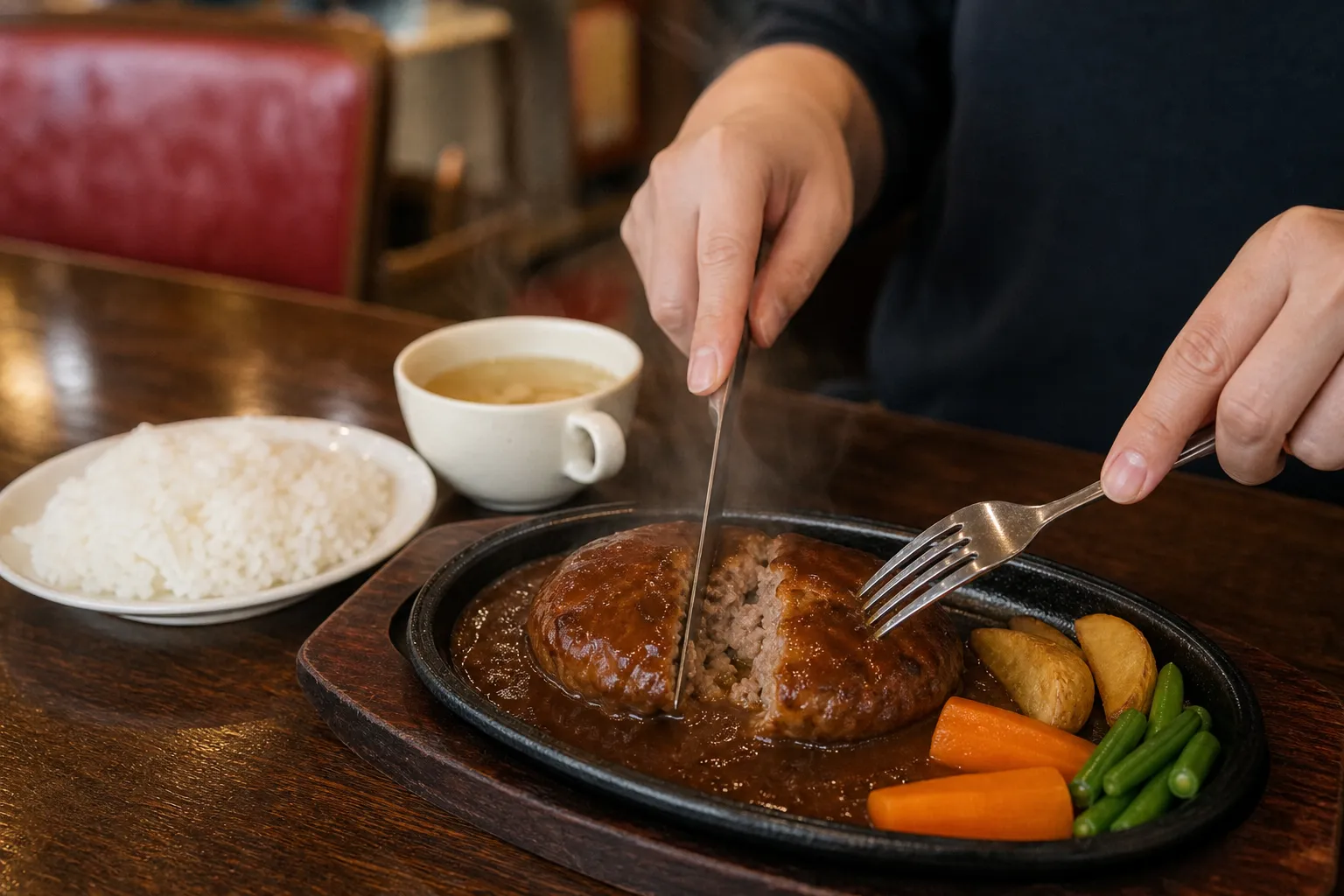
Before you go — order it sizzling
Your questions, answered honestly
"What sauce should I get?" — Demi-glace is the rich, classic choice. If you want something lighter and more Japanese, try wafū (grated daikon + ponzu) — refreshing and great with rice. Cheese or soy-butter are crowd-pleasers too.
"Rice or bread?" — Both are offered; rice is the classic yoshoku pairing. Many sets come with rice, soup, and salad.
"Is it a hamburger?" — No bun! It's a standalone patty on a plate with sauce — closer to Salisbury steak than a burger. Eat it with knife/fork or chopsticks.
"What's the sizzling plate?" — Teppan hambāgu arrives on a hot iron plate, still cooking. Sometimes you finish cooking the center yourself by pressing it down — fun and theatrical.
What the staff will ask you
| You'll hear | Romaji | Meaning | Just say |
|---|---|---|---|
| ソースはどれにしますか? | Sōsu wa dore ni shimasu ka? | "Which sauce?" | Demi-gurasu de (demi-glace) / Wafū de (Japanese-style) |
| ライスかパン、どちらに? | Raisu ka pan, dochira ni? | "Rice or bread?" | Raisu de (rice) |
| 焼き加減はいかがしますか? | Yaki-kagen wa ikaga shimasu ka? | "How well done?" | Futsū de (normal) |
To order, just say "Hambāgu setto hitotsu kudasai" (ハンバーグセット一つください) — "one hamburg steak set, please."
Where to eat it
- Family restaurants (Bikkuri Donkey, Gusto, Saizeriya) — affordable, reliable, everywhere.
- Yoshoku specialists — old-school Western-style diners that take hambāgu seriously, often with a superb demi-glace.
- Teppan hambāgu shops — for the sizzling-iron-plate experience.
A foolproof, kid-friendly, wallet-friendly meal — and a perfect intro to Japanese yoshoku.
Soul Score
Local Roots3/5
First-Timer Friendly5/5
Adventure Level3/5
Comfort Level5/5
Travel Worthy3/5
These scores are one obsessed eater's gut feeling — not a verdict. A low number isn't a bad mark, just a different kind of adventure.
Know someone planning Japan?
← All Articles
Japanese Food · Nationwide
Still hungry?
You might also like
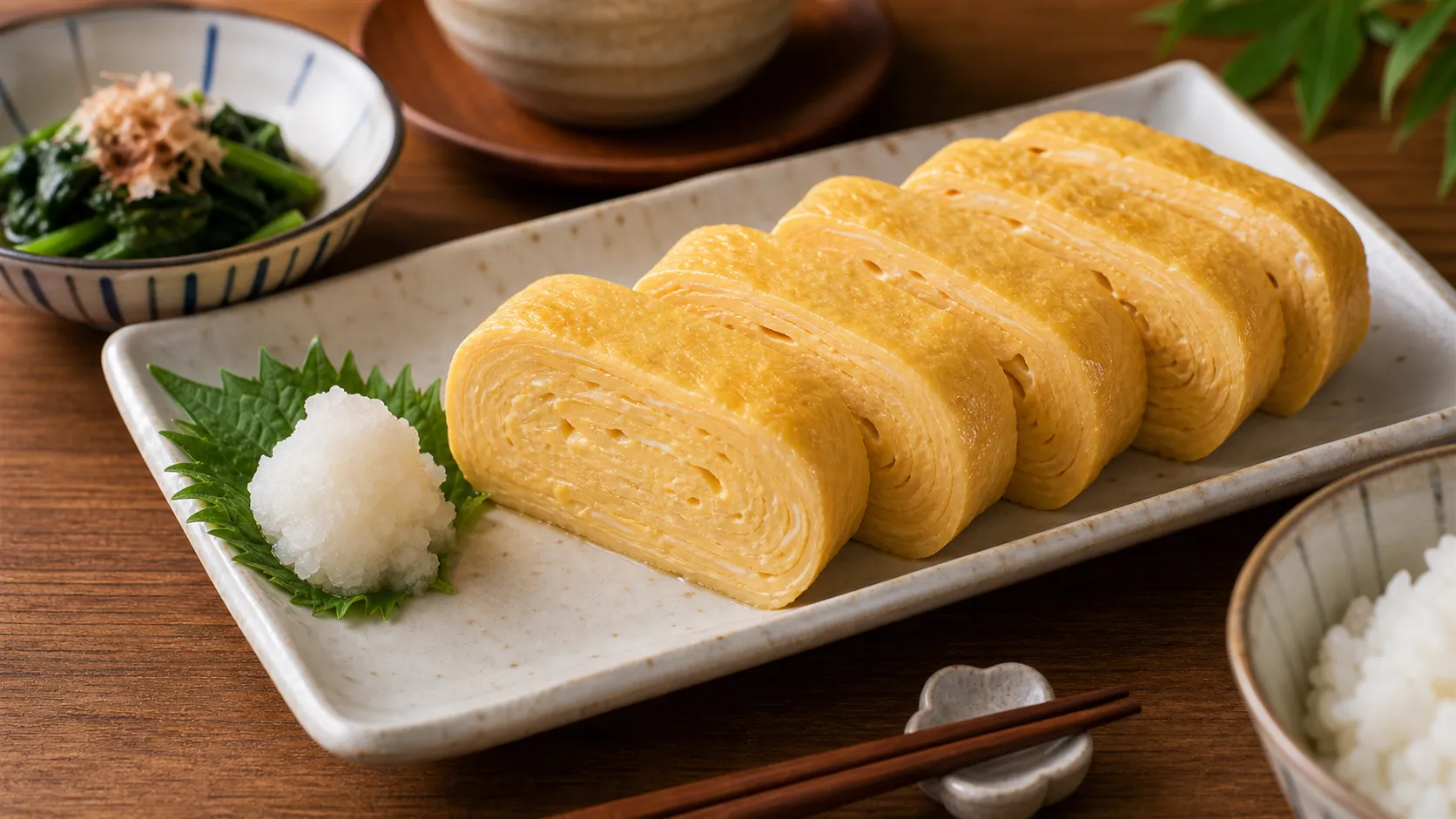
Japanese FoodNationwide
Dashimaki-tamago (だし巻き卵)
A rolled omelette so soft it almost trembles, layered fold over fold and soaked with dashi so that biting in releases a little warm rush of savory broth — the deceptively simple egg dish that Japanese chefs spend years perfecting.
July 11, 2026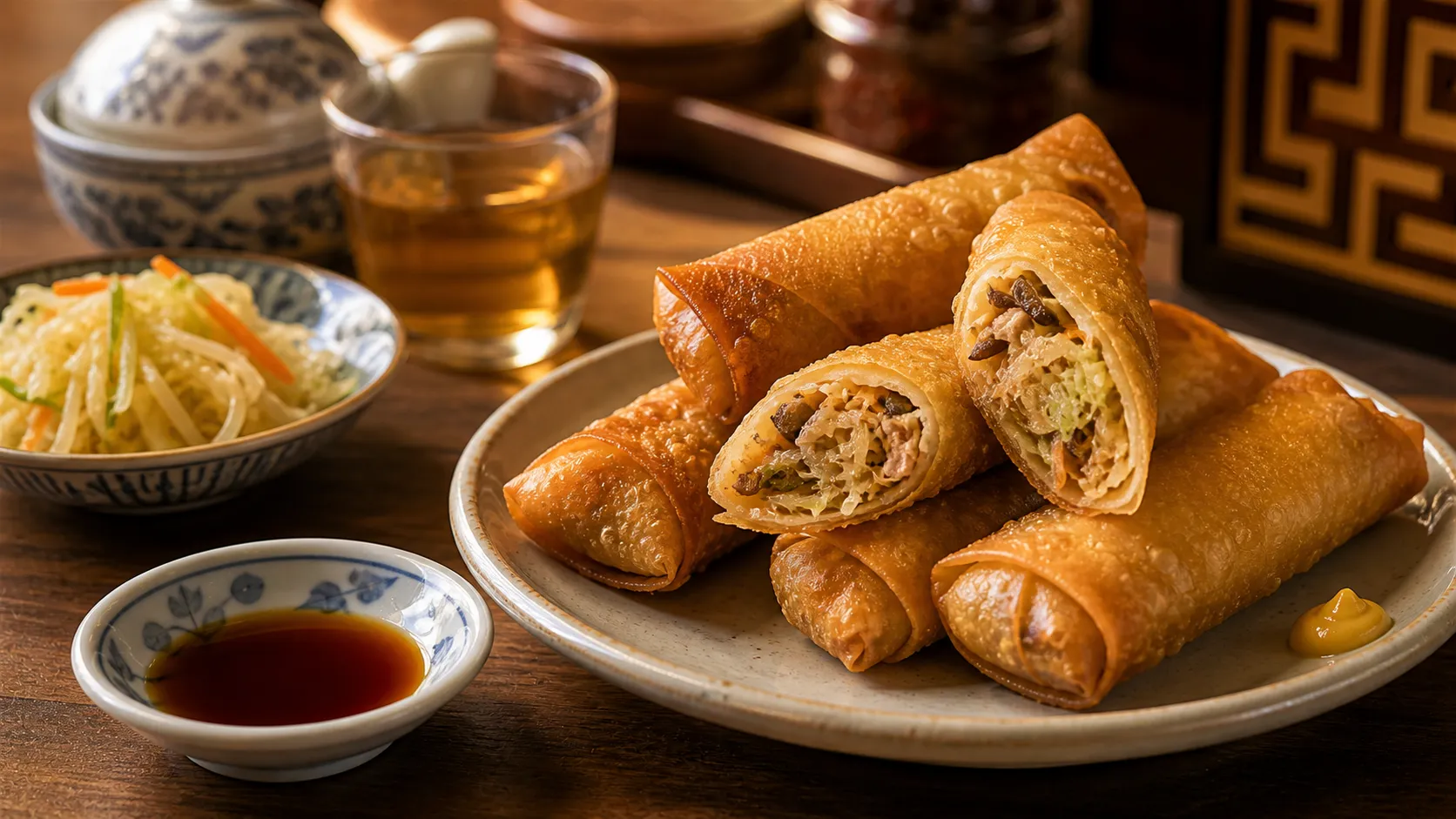
Japanese FoodNationwide
Harumaki (春巻き)
The Japanese spring roll — a shatteringly crisp golden tube that gives way to a hot, savory tangle of pork, cabbage and bamboo shoot, best eaten the second it's cool enough not to burn your mouth (you will not wait that long).
July 11, 2026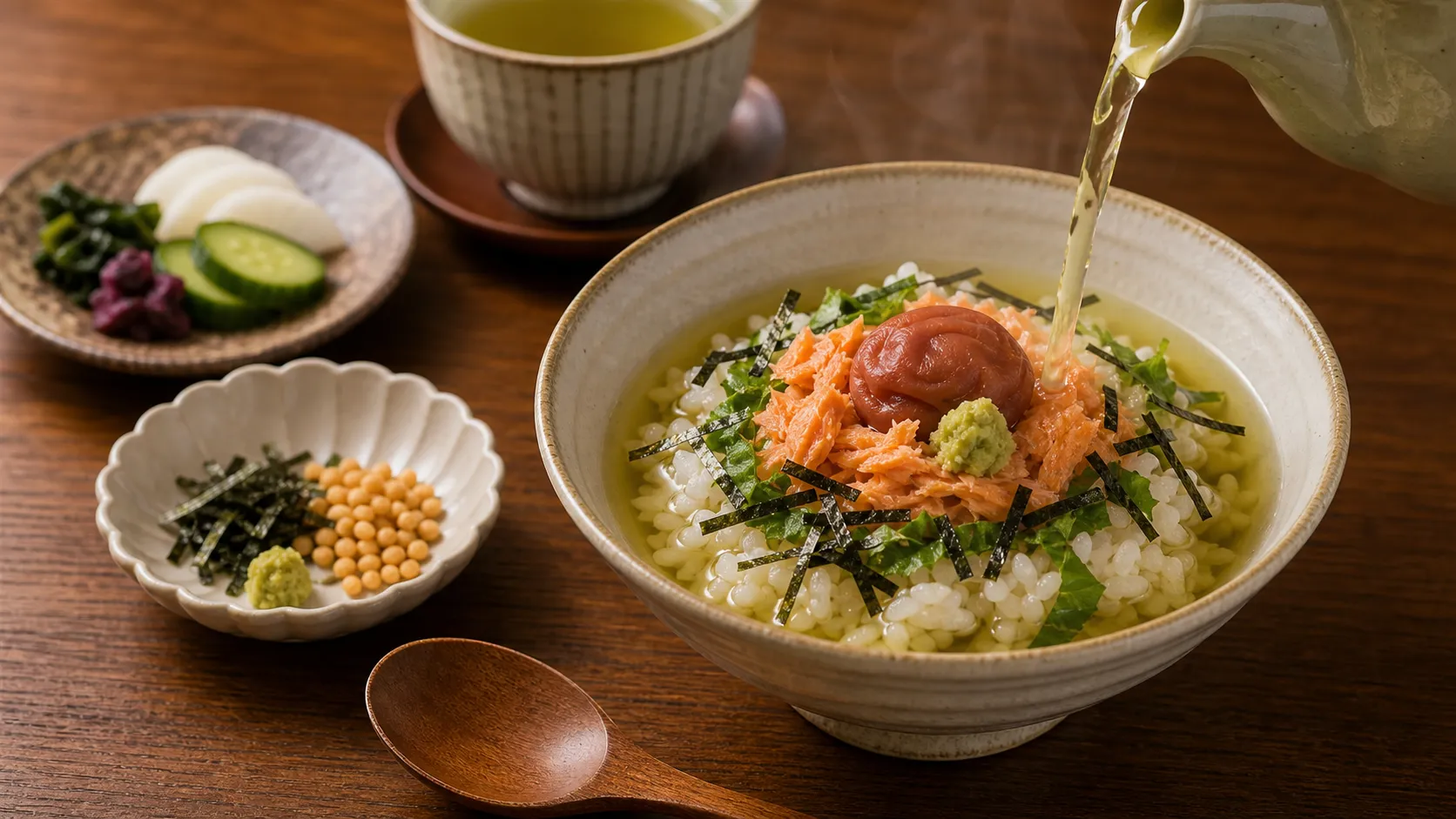
Japanese FoodNationwide
Ochazuke (お茶漬け)
Pour hot green tea or dashi over a bowl of rice, scatter something savory on top, and eat — the gentlest, most quietly restorative dish in Japan, the one you reach for late at night when you just need a warm bowl to make everything okay.
July 11, 2026