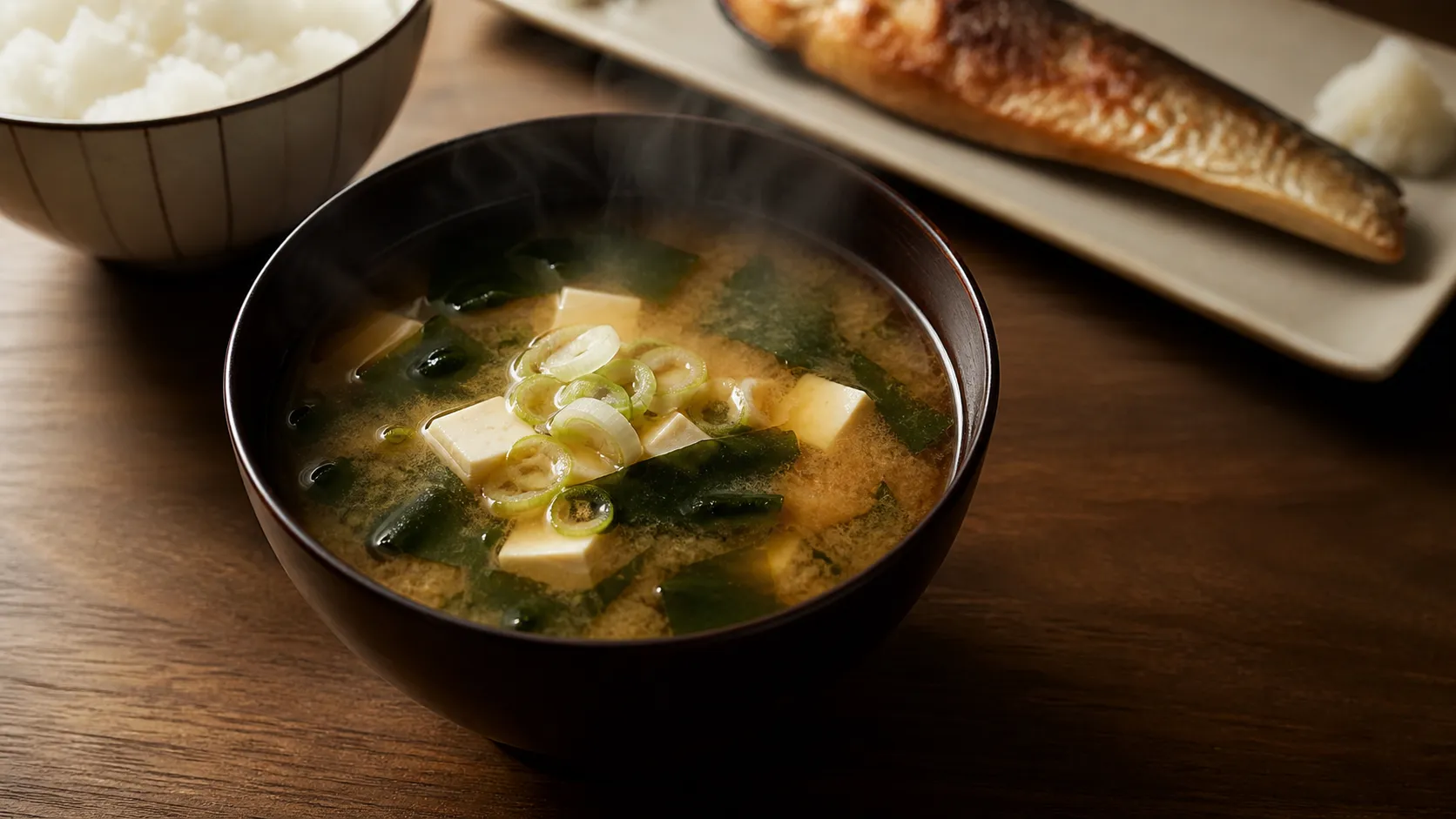
The bowl shows up so often you stop seeing it. Breakfast, the side of a set meal, tucked next to your rice at a counter you'll forget by tomorrow — and then one day you taste it on purpose, really taste it, and that quiet salty-savory warmth lands and you think: oh. This has been carrying the whole meal the entire time.
Share this dish


Fermented soybean paste dissolved in dashi, with tofu and seaweed bobbing inside — the warm, savory, umami-rich bowl that anchors nearly every Japanese meal. Quiet, ancient, and essential.
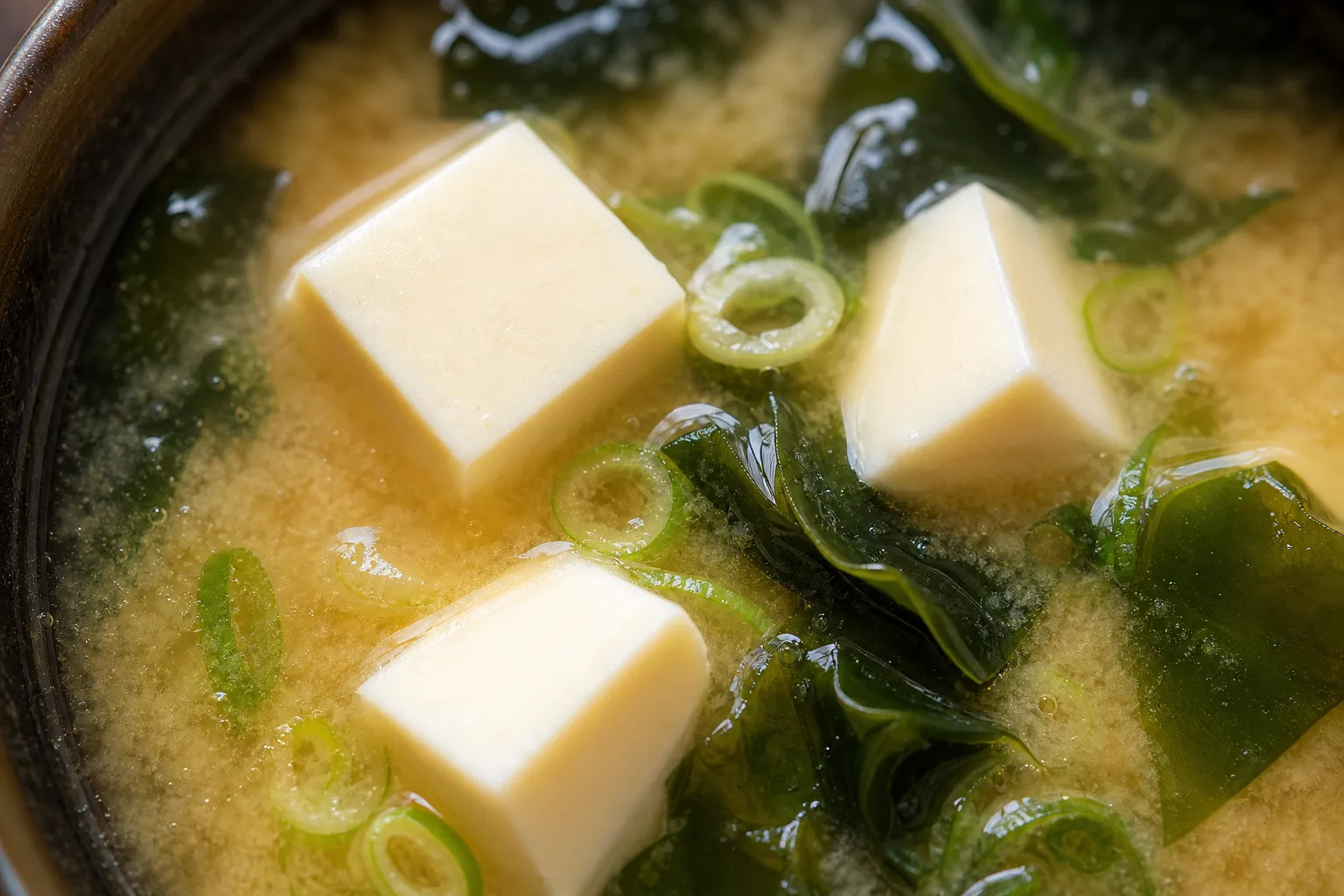
Don't take it for granted. Miso soup (味噌汁) is fermented soybean paste dissolved in dashi broth, with cubes of tofu and ribbons of seaweed drifting inside — one of the quiet pillars of Japanese cooking: warm, deeply savory, gently salty, and packed with that elusive fifth taste, umami. It's the bowl that makes a meal feel complete.
It's also endlessly variable. The miso can be light or dark, the ingredients can be anything from clams to pork and vegetables (tonjiru), and every household and region has its own version. But at its core it's simple, ancient, and essential.
A thousand years in a bowl
Miso — fermented soybean paste — has been made in Japan for over a thousand years, and miso soup became a daily staple from the medieval period onward, especially among samurai for whom ichiju-issai ("one soup, one dish") plus rice was the model meal. That template — rice, miso soup, and a dish or two — still defines the Japanese set meal today.
Regions developed distinct misos: sweeter, lighter white miso (shiro miso) in Kyoto/Kansai; robust, salty red miso (aka miso) around Nagoya; and countless local blends. The soup is a window into Japan's deep fermentation culture.
Why dashi makes or breaks it
The soul of miso soup isn't the miso alone — it's the dashi. This foundational stock, usually made from kombu (kelp) and katsuobushi (bonito flakes), delivers the deep umami backbone that the miso seasons. Good dashi makes a transcendent bowl; skip it and the soup falls flat.
The crucial technique: never boil the miso. It's dissolved into hot (not boiling) dashi right at the end, because boiling kills the aroma and the beneficial qualities of the live, fermented paste. That's why it always tastes freshest made to order.
How it's made
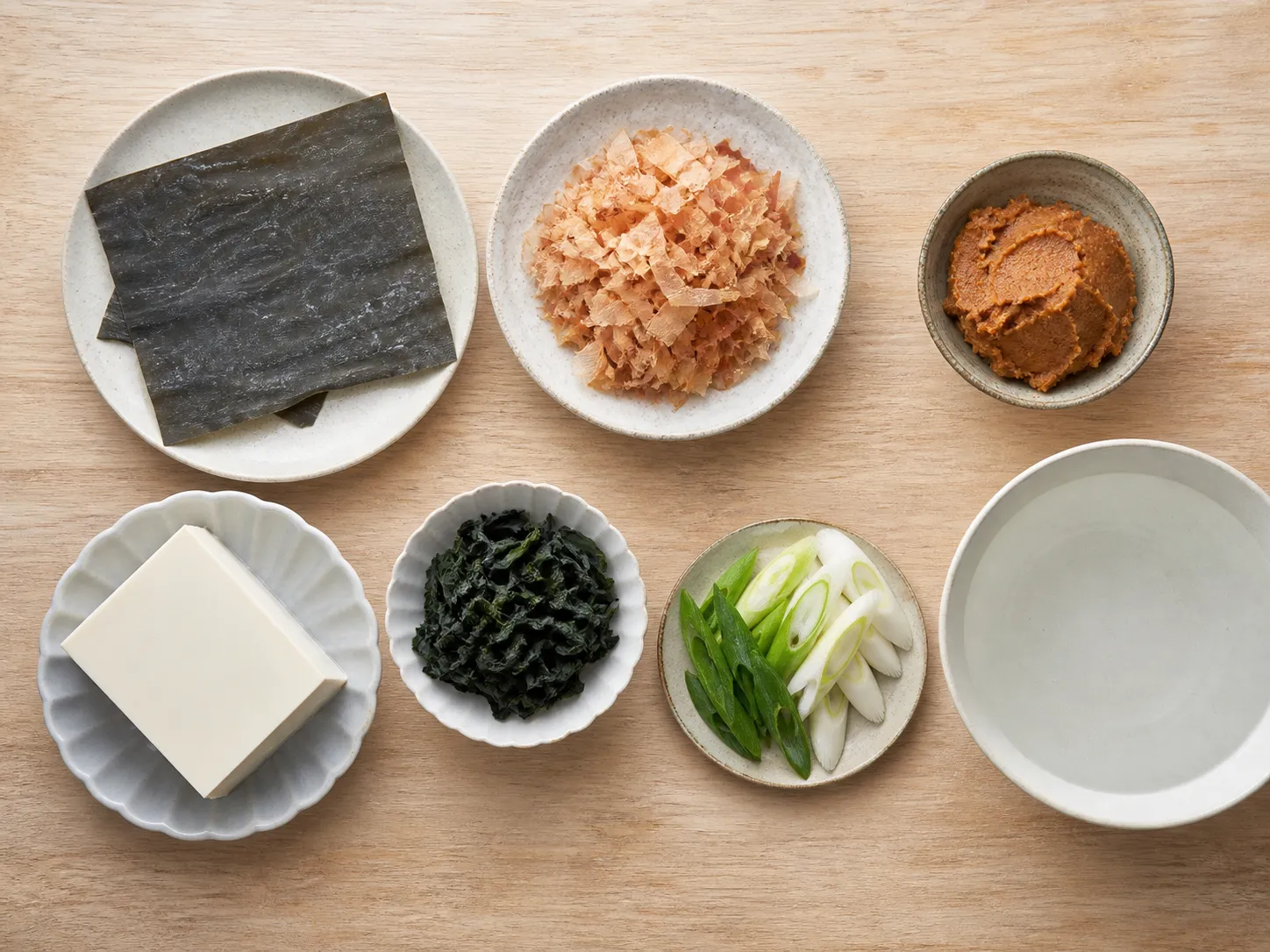
- Make dashi by steeping kombu and katsuobushi in hot water, then straining
- Add ingredients — cubed tofu, wakame seaweed, sliced negi, etc. — and warm through
- Lower the heat so the dashi is hot but not boiling
- Dissolve miso paste into the broth (a little at a time, tasting as you go)
- Serve immediately, garnished with scallion — do not let it boil
Before you go — sip it right
Your questions, answered honestly
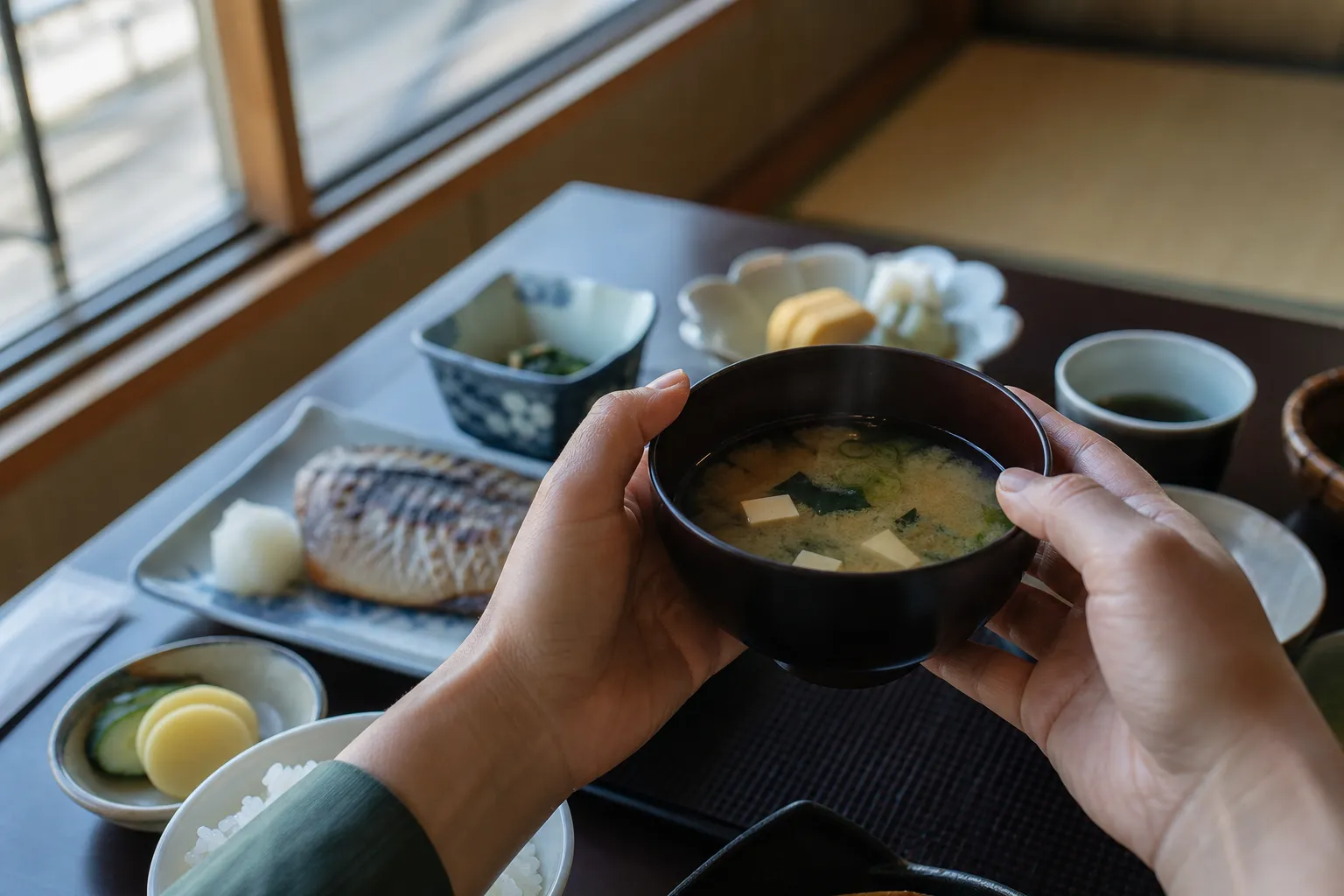
"Spoon or no spoon?" — Usually no spoon. Lift the bowl with both hands and sip the broth directly, using your chopsticks to eat the tofu and solids. Totally normal and correct.
"When do I drink it?" — Throughout the meal, not just at the start — alternate sips with bites of rice and food. It's a companion to the whole meal.
"White or red miso?" — Shiro (white) is sweeter and milder; aka (red) is saltier and stronger; awase is a blend. Try different ones — Kyoto white miso and Nagoya red miso are notably different experiences.
"What's tonjiru?" — Tonjiru (豚汁) is a heartier miso soup loaded with pork and root vegetables — practically a meal on its own. Order it if you see it; it's fantastic.
What the staff will ask you
| You'll hear | Romaji | Meaning | Just say |
|---|---|---|---|
| お味噌汁は付けますか? | Omisoshiru wa tsukemasu ka? | "Add miso soup?" | Hai, onegaishimasu (yes please) |
| 赤だしにしますか? | Aka-dashi ni shimasu ka? | "Want red-miso style?" | Hai (yes) / Futsū de (regular) |
It usually comes free with a set meal, but to order one say "Omisoshiru hitotsu kudasai" (味噌汁一つください) — "one miso soup, please."
Where to eat it
- Any set-meal (teishoku) restaurant — miso soup comes standard with the rice.
- Traditional breakfast spots & ryokan inns — a proper Japanese breakfast built around rice, fish, and miso soup.
- Nagoya for rich aka-dashi red miso; Kyoto for delicate white miso.
You'll drink a lot of it — pay attention, and you'll start noticing how different a great bowl really is.
Soul Score
Local Roots5/5
First-Timer Friendly5/5
Adventure Level3/5
Comfort Level5/5
Travel Worthy3/5
These scores are one obsessed eater's gut feeling — not a verdict. A low number isn't a bad mark, just a different kind of adventure.
Know someone planning Japan?
← All Articles
Japanese Food · Nationwide
Still hungry?
You might also like
Japanese FoodNationwide
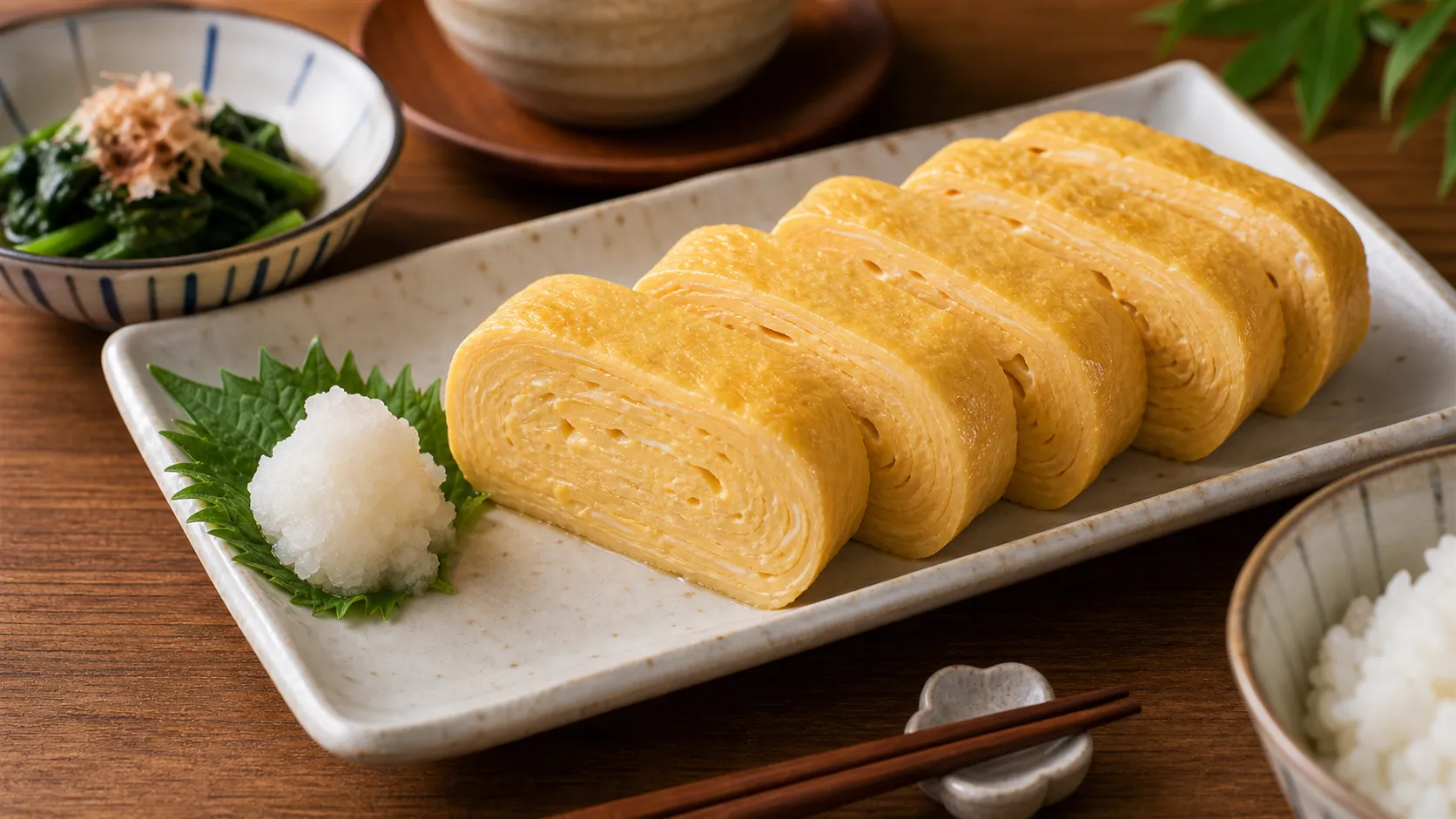
Dashimaki-tamago (だし巻き卵)
A rolled omelette so soft it almost trembles, layered fold over fold and soaked with dashi so that biting in releases a little warm rush of savory broth — the deceptively simple egg dish that Japanese chefs spend years perfecting.
July 11, 2026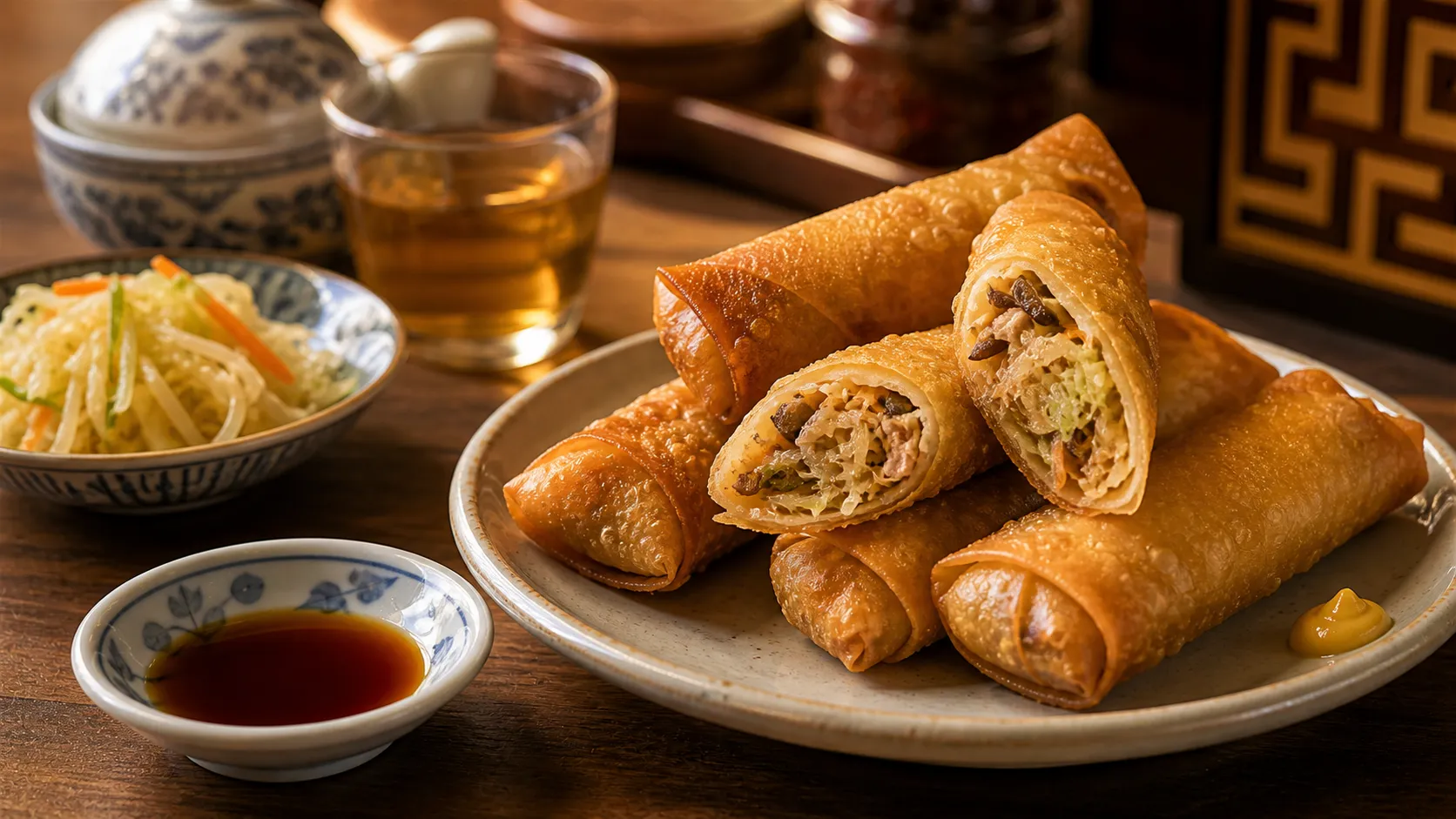
Japanese FoodNationwide
Harumaki (春巻き)
The Japanese spring roll — a shatteringly crisp golden tube that gives way to a hot, savory tangle of pork, cabbage and bamboo shoot, best eaten the second it's cool enough not to burn your mouth (you will not wait that long).
July 11, 2026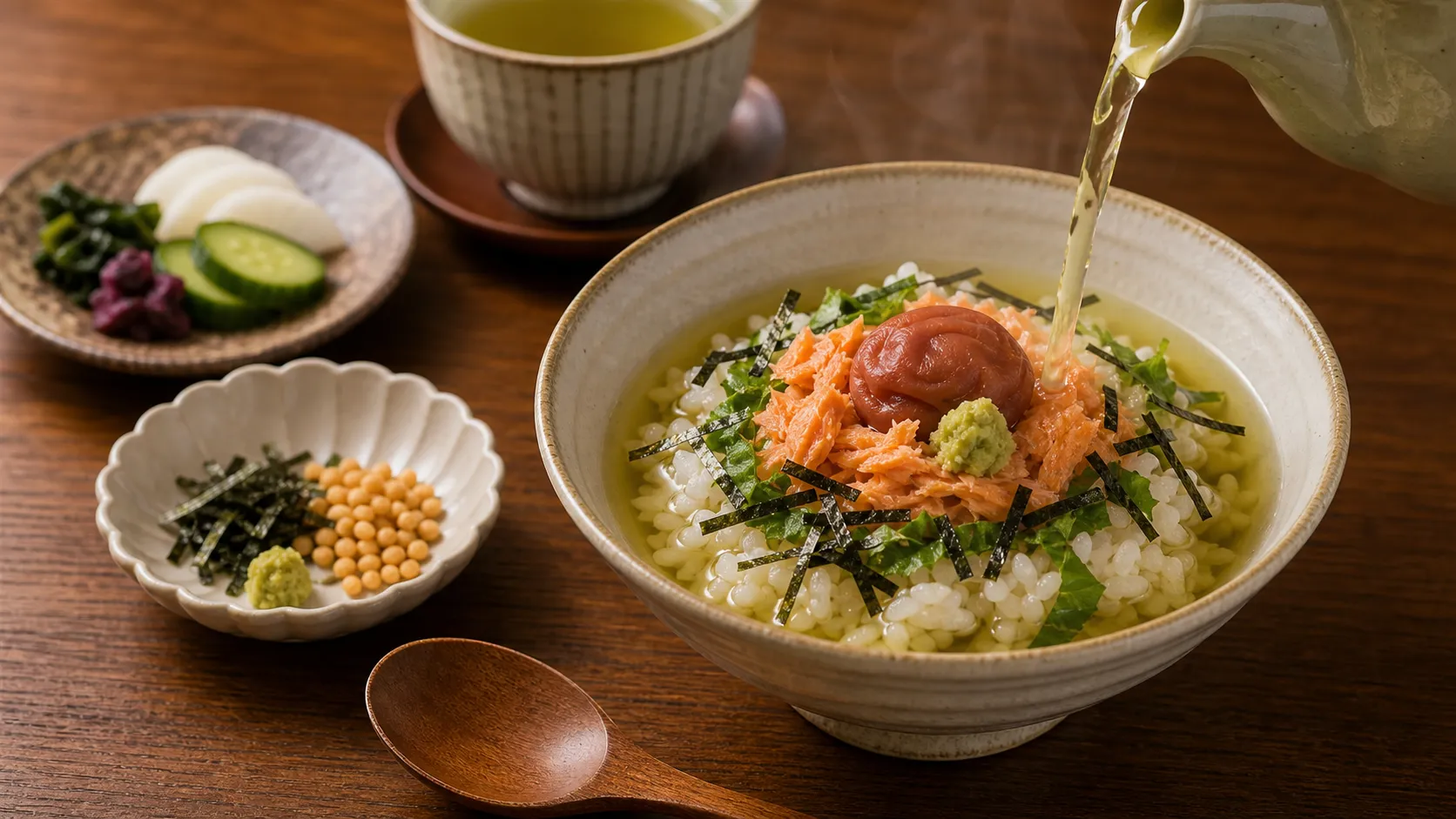
Japanese FoodNationwide
Ochazuke (お茶漬け)
Pour hot green tea or dashi over a bowl of rice, scatter something savory on top, and eat — the gentlest, most quietly restorative dish in Japan, the one you reach for late at night when you just need a warm bowl to make everything okay.
July 11, 2026