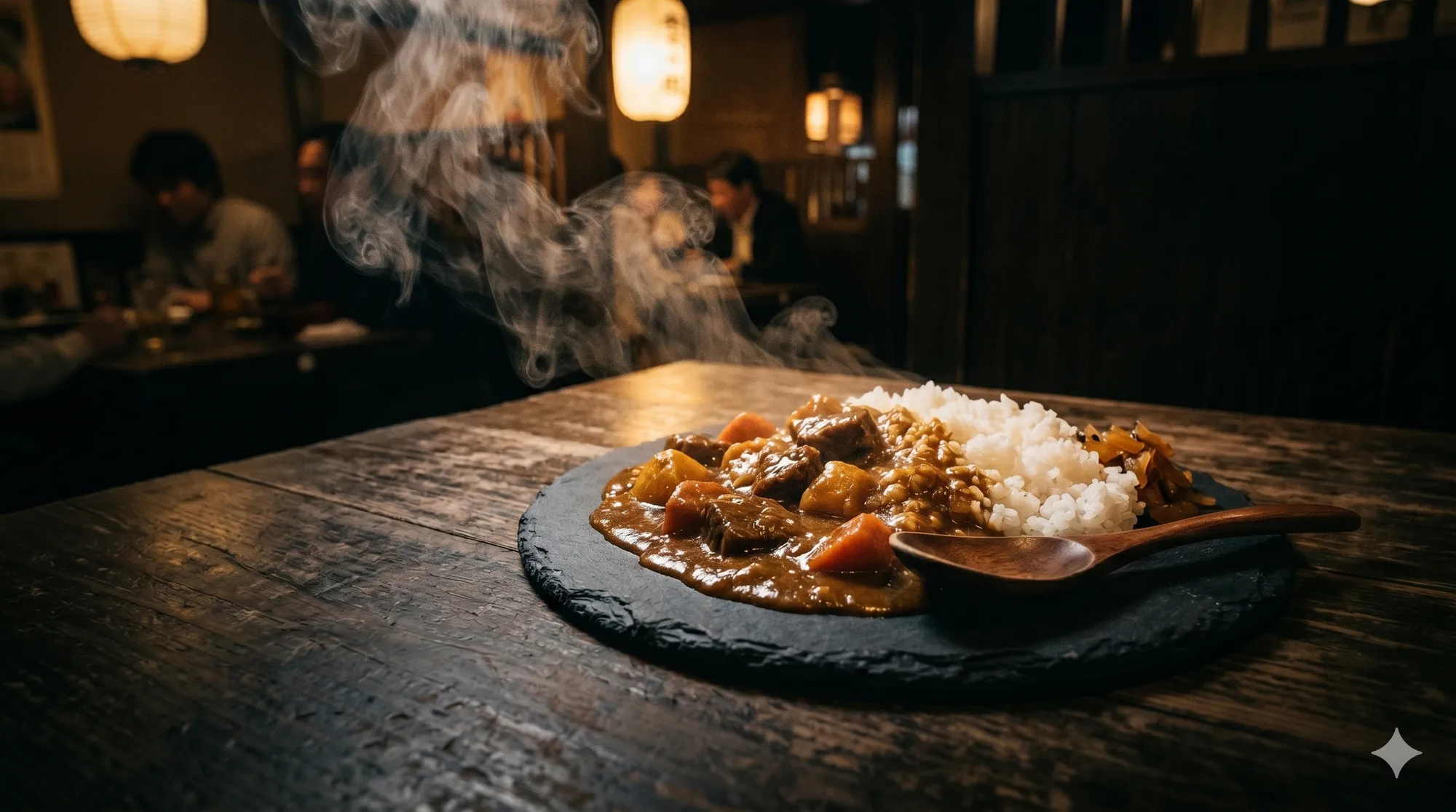
Every country has a smell that means home. In Japan, a strong contender is curry simmering on the stove on a Friday evening.
Share this dish


Not Indian. Not British. Thoroughly, lovingly Japanese — thick, sweet-savory, mild, and the smell of home on a Friday night. The nation's true comfort food.
🍜 Planning a food trip to Japan?Add this dish to my Food Trip →
 Add this dish to my Food Trip →
Japanese curry isn't Indian curry, and it isn't British curry, even though it came from both — it's thick, glossy, gently sweet, mild, and rich, poured over a bed of fluffy white rice. It's the first "real" dish a lot of kids learn to cook. It's the school lunch everyone remembers. It's what you make a big pot of and eat for two days because it tastes even better the next morning. Ask people their favorite home food and curry rice keeps winning — not because it's fancy, but because it's love in a bowl.
A spice route that ran through the Navy
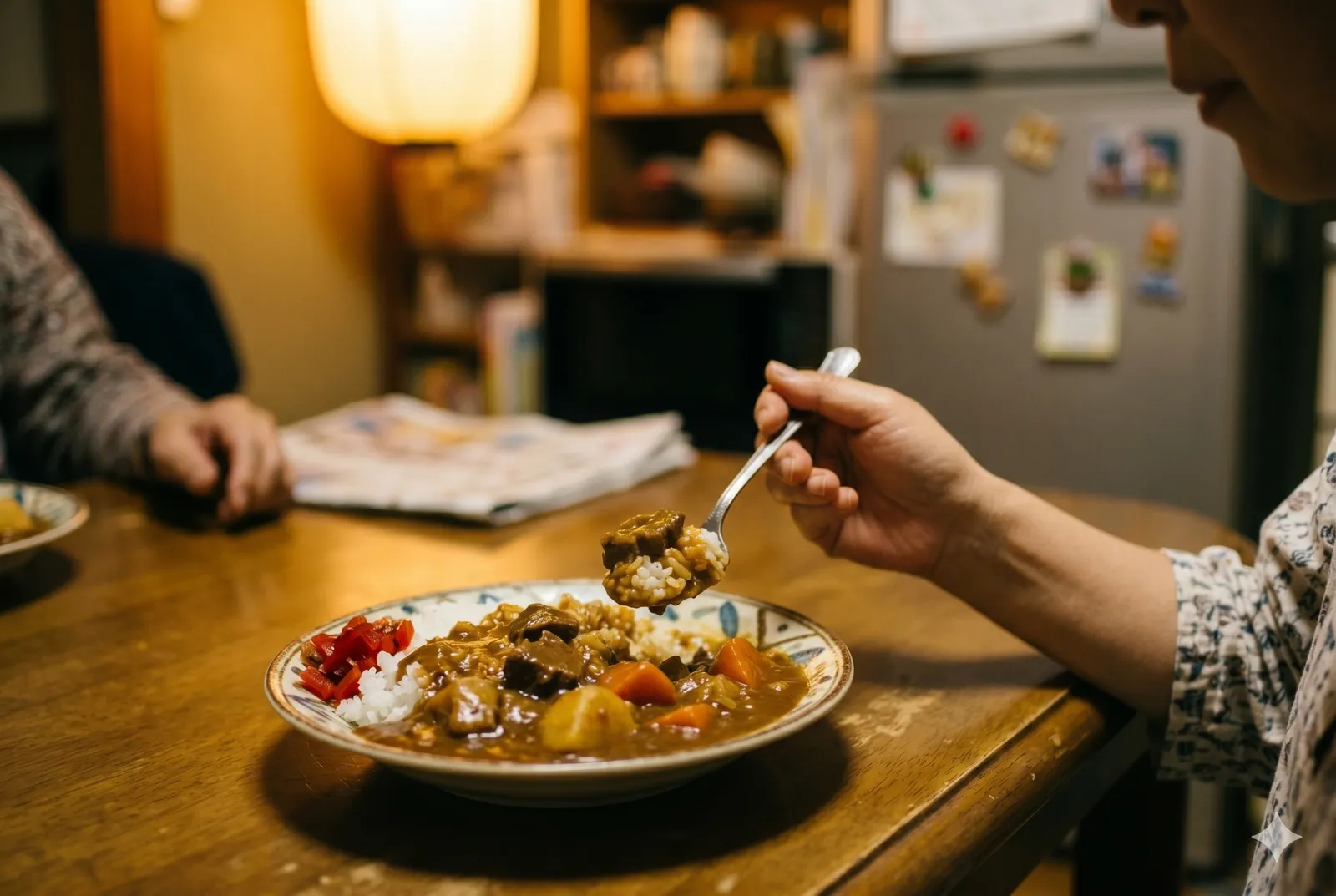
Curry came to Japan in the Meiji era — not from India directly, but via Britain, who'd already given it their own spin. Japan adapted it to local tastes, and crucially, the Imperial Navy adopted it as a hearty, nutritious meal that was easy to cook for a crew. Sailors carried the habit home, and curry rice spread into school cafeterias and family kitchens across the entire country.
Why it's so comforting
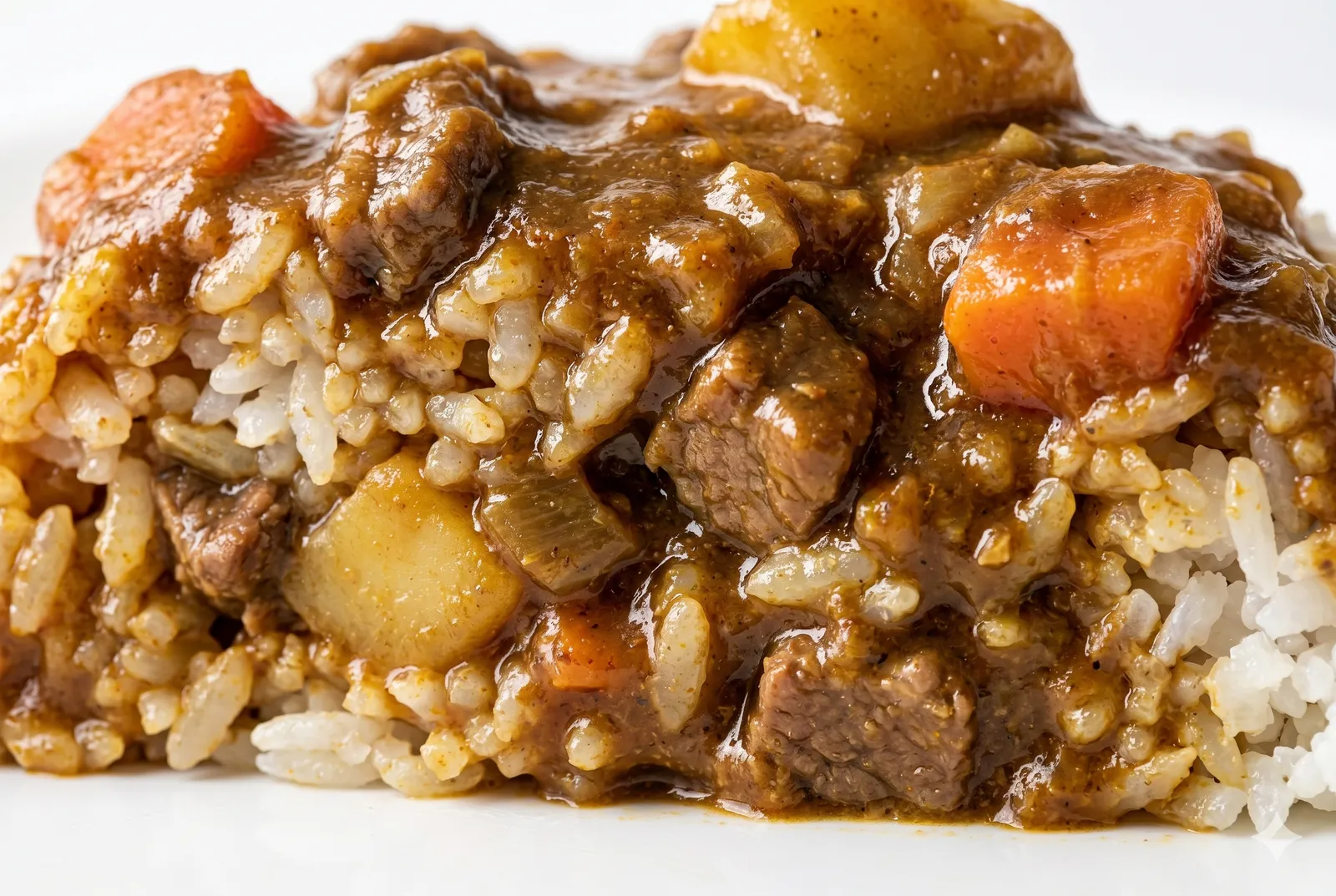
The magic is deep, mild richness rather than fiery heat. A spice-packed roux melts into the umami of slow-cooked onions, carrots, potatoes, and meat, until everything turns thick and glossy. You can dial the spice from "child-friendly" to "why are you doing this to yourself," but classic Japanese curry leans warm and gentle.
And every family has a secret: a grated apple, a square of chocolate, a spoon of yogurt, a hit of instant coffee — little tricks to deepen the pot.
How it's made
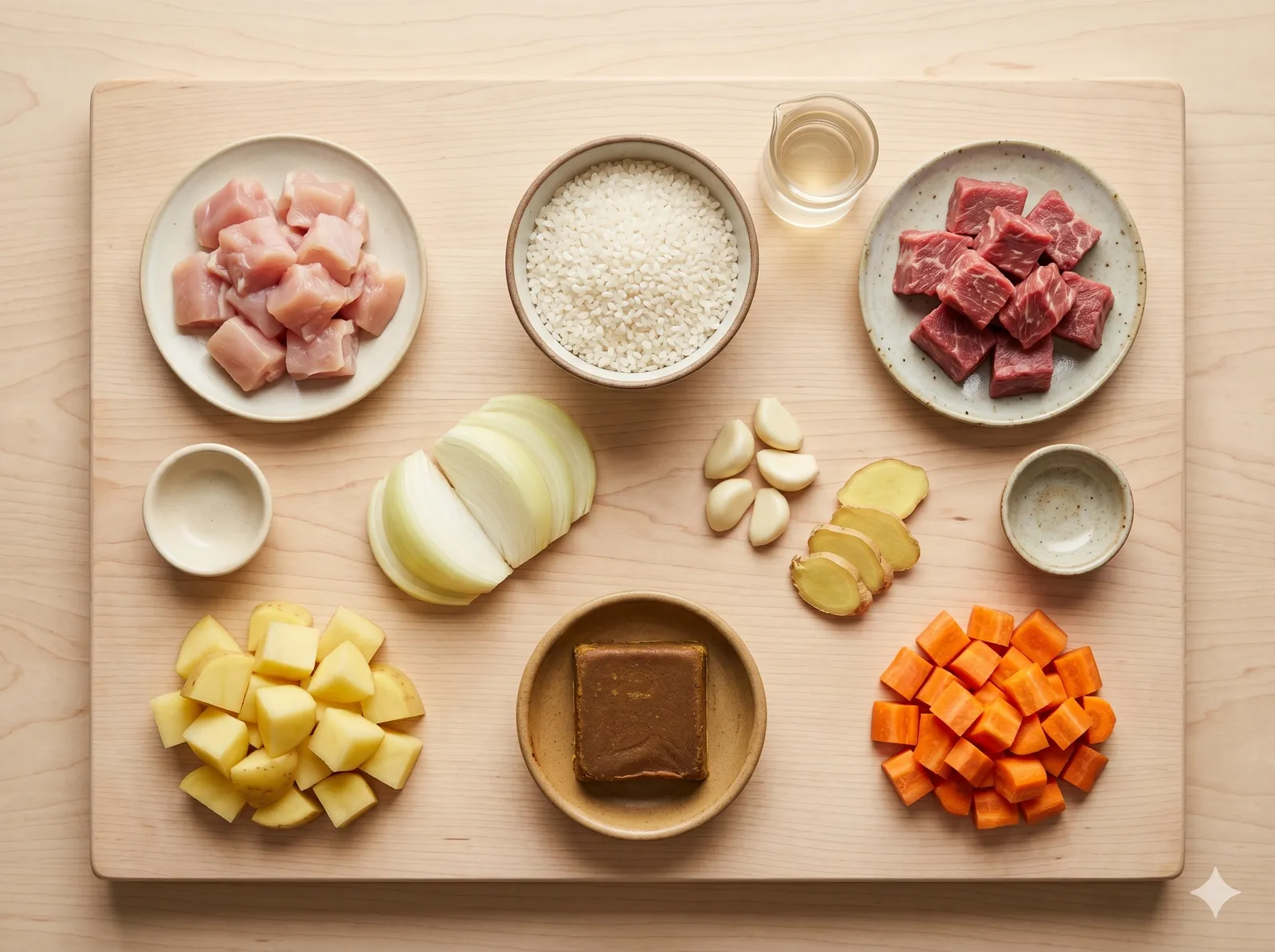
- Sauté onions until deeply golden (this is where the soul lives)
- Add carrots, potatoes, and meat; stir-fry briefly
- Add water and simmer until the vegetables are tender
- Melt in blocks of store-bought curry roux
- Simmer until thick and glossy, then ladle over hot white rice
Before you go — build your perfect plate
Your questions, answered honestly
"How spicy should I go?" — At a shop like CoCo Ichibanya you literally pick a number. First time, get level 2 or 3 — Japanese curry is mild by design, and you can always climb the ladder next visit. Level 10 is a personality test, not a meal.
"What topping should I add?" — Katsu (a breaded pork cutlet) is the all-time champion — katsu curry is the move. Other greats: a soft-fried egg, fried chicken, or a pile of cheese.
"Spoon or fork?" — Spoon. Always. Curry rice is a spoon dish, full stop.
"Why does next-day curry taste better?" — Resting lets the flavors meld and the spices mellow into the sauce. Make extra on purpose. This is ancient wisdom.
What the staff will ask you (at a curry chain)
| You'll hear | Romaji | Meaning | Just say |
|---|---|---|---|
| 辛さはどうしますか? | Karasa wa dō shimasu ka? | "How spicy?" | Ni-banme de (level 2) / Futsū de (normal) |
| ごはんの量は? | Gohan no ryō wa? | "How much rice?" | Futsū de (normal) / Sukuname de (less) |
| トッピングは? | Toppingu wa? | "Any toppings?" | Katsu de (a cutlet) |
To order, just say "Karē raisu kudasai" (カレーライスください) — "Curry rice, please."
Where to eat it
- CoCo Ichibanya (ココイチ) — the nationwide chain where you customize spice, rice, and toppings to the gram. The reliable classic.
- Soup Curry in Hokkaido — a thinner, spiced, soup-style cousin with big roasted vegetables. Sapporo is the place.
- Nakamuraya (Shinjuku) — a historic, more refined take on Japanese curry.
Menus and hours change, so check before you go — and seriously, make extra for tomorrow.
Soul Score
Local Roots4/5
First-Timer Friendly5/5
Adventure Level3/5
Comfort Level5/5
Travel Worthy3/5
These scores are one obsessed eater's gut feeling — not a verdict. A low number isn't a bad mark, just a different kind of adventure.
Know someone planning Japan?
← All Articles
Japanese Food · Nationwide
Still hungry?
Start with the classics
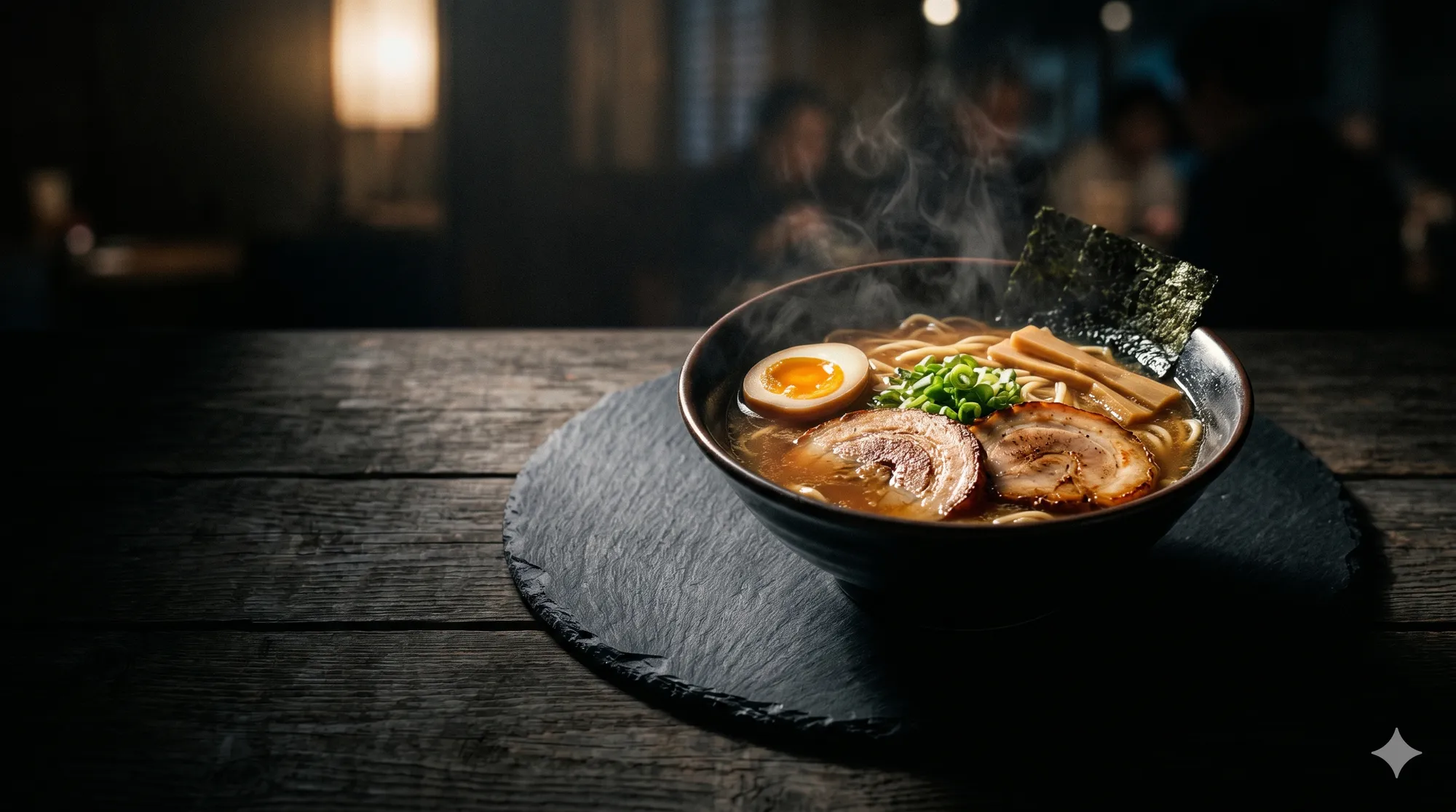
Japanese FoodNationwide
Ramen (ラーメン)
A bowl of noodles in soup — and somehow one of the most obsessed-over foods on the planet. Shoyu, miso, shio, tonkotsu: here's how to read a ramen menu and slurp like you mean it.
June 20, 2026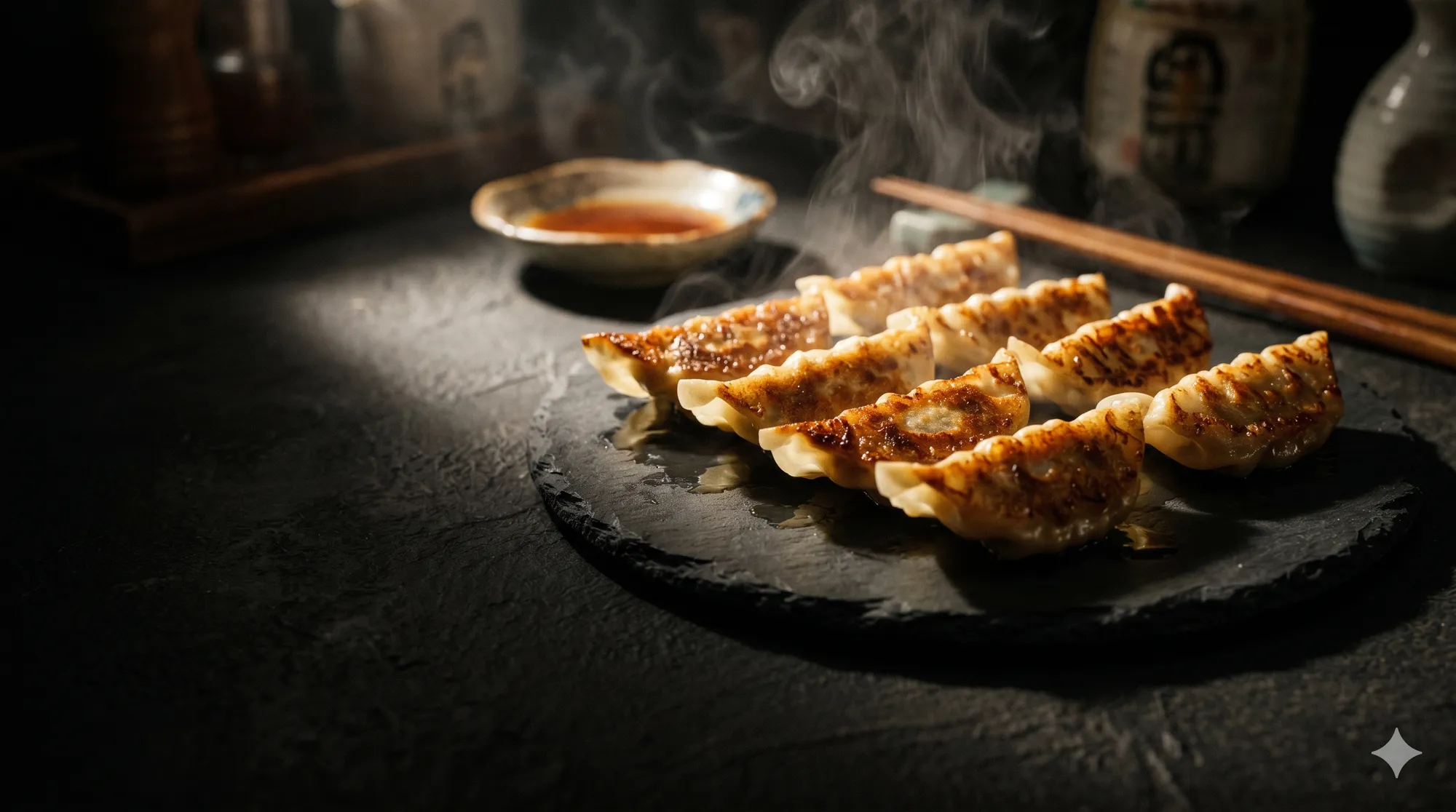
Japanese FoodNationwide
Gyoza (餃子)
Pan-fried dumplings with a crispy bottom and a juicy pork-and-cabbage filling, dunked in vinegar-soy-chili. The ultimate ramen sidekick, the izakaya staple, and the snack nobody can stop eating.
June 20, 2026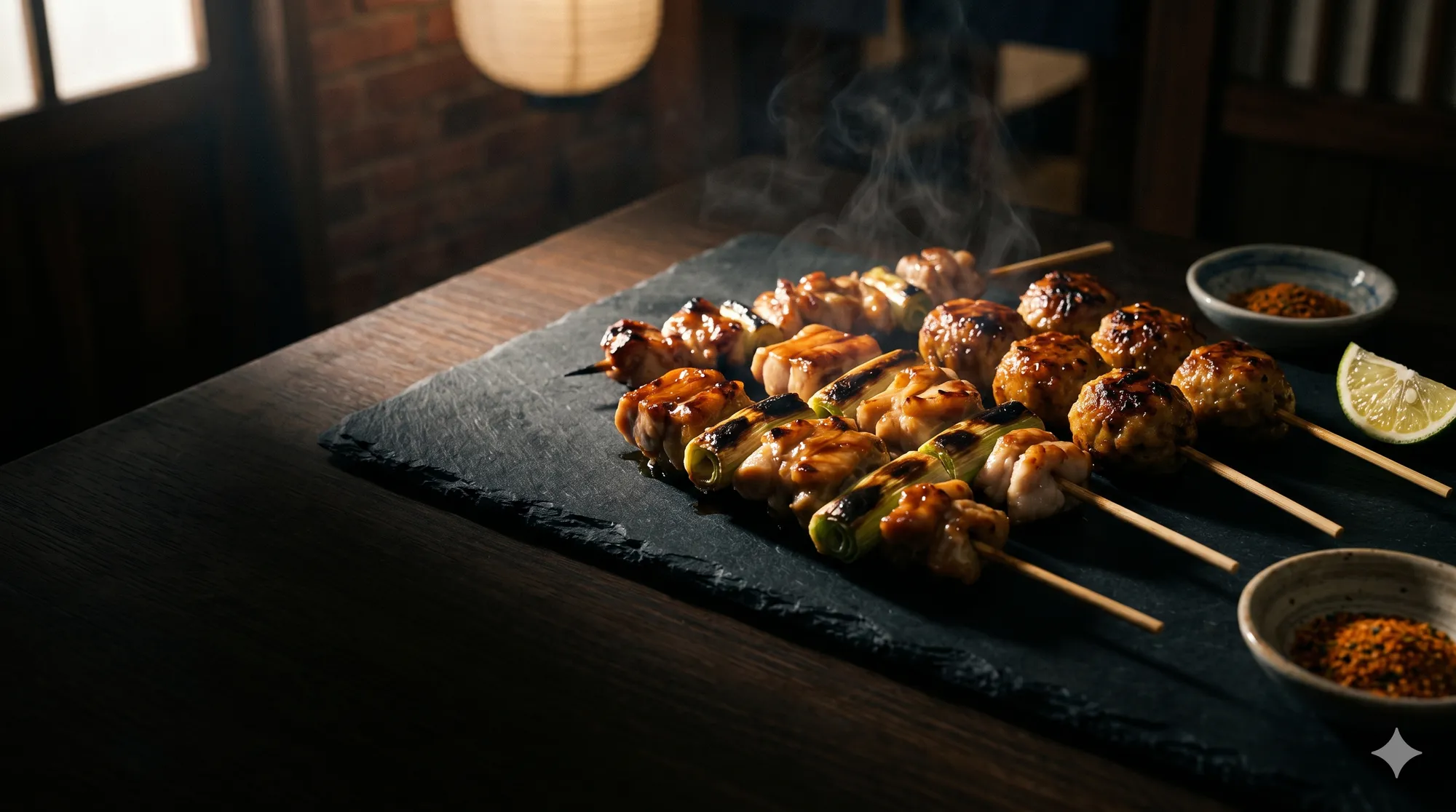
Japanese FoodNationwide
Yakitori (焼き鳥)
Bite-sized skewers of chicken grilled over blazing charcoal, seasoned with just salt or a sweet-savory tare. The beating heart of the izakaya, smoke and beer included. Nose-to-tail, and all of it good.
June 20, 2026