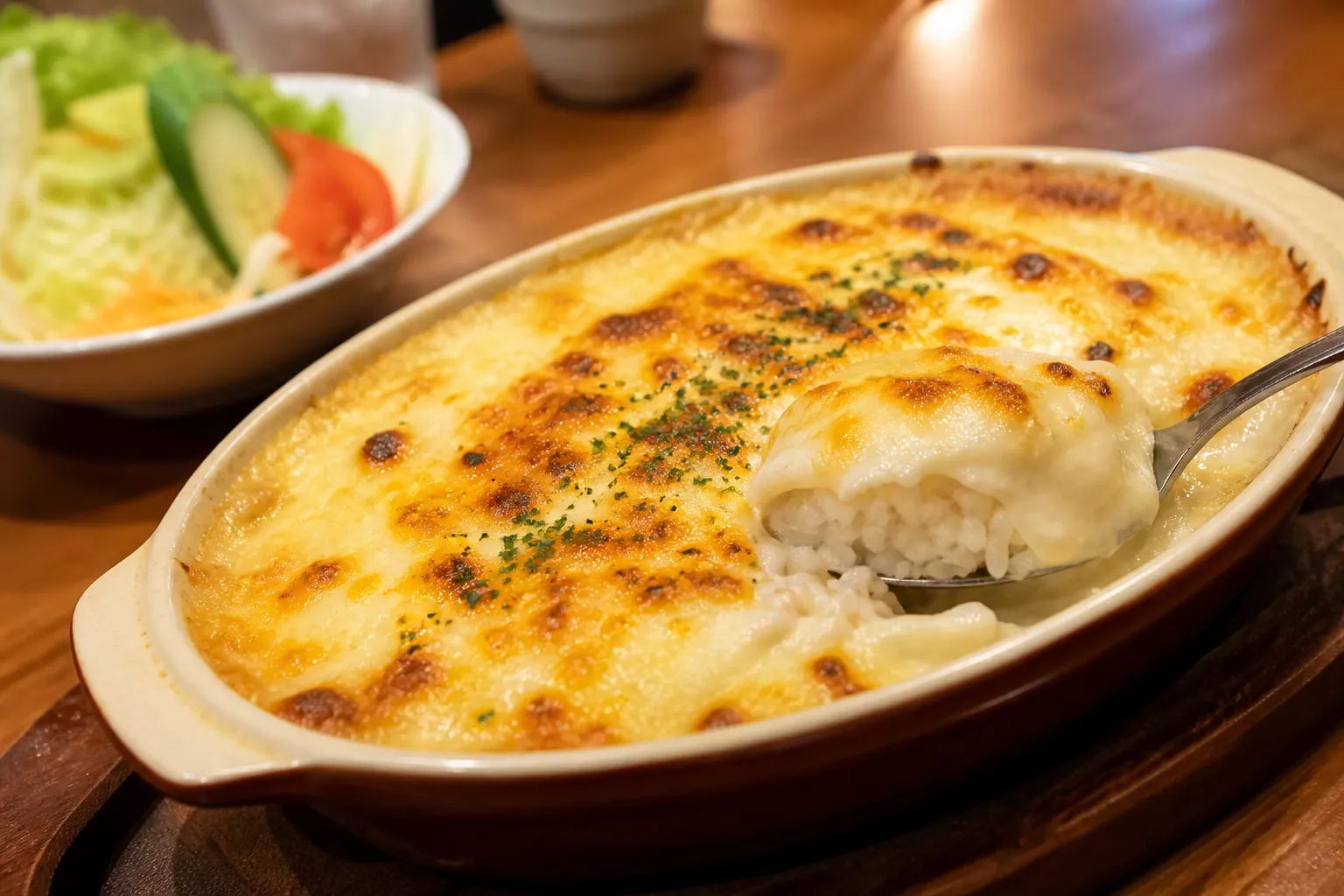
It arrives in an oval dish still faintly hissing, the top a landscape of browned, blistered cheese, and I know — I know from a lifetime of experience — that the inside is roughly the temperature of the sun. And I dig in immediately anyway, because who could wait, and the spoon comes up loaded with creamy béchamel and buttery rice and a string of molten cheese, and I burn the roof of my mouth, and it is completely, gloriously worth it. That's doria, the baked rice gratin that Japan invented and the West somehow never thought of.
Share this dish


Buttered rice under a blanket of creamy béchamel and browned cheese, baked until it's bubbling at the edges — a Japanese invention that sounds like it shouldn't work and is, in fact, pure molten comfort.
Here's the build: doria (ドリア) is buttered rice (often a pilaf) laid in a gratin dish, covered with a rich white béchamel sauce and a layer of cheese, then baked until the top is golden and bubbling. Rice + béchamel + browned cheese, out of the oven: that's what makes it doria, and not a macaroni gratin (no rice) or a risotto (not baked, not cheese-blanketed). It's a Japanese yoshoku dish through and through — and, like napolitan, it was born in Yokohama.
The Swiss chef, the sick guest, and a Yokohama hotel
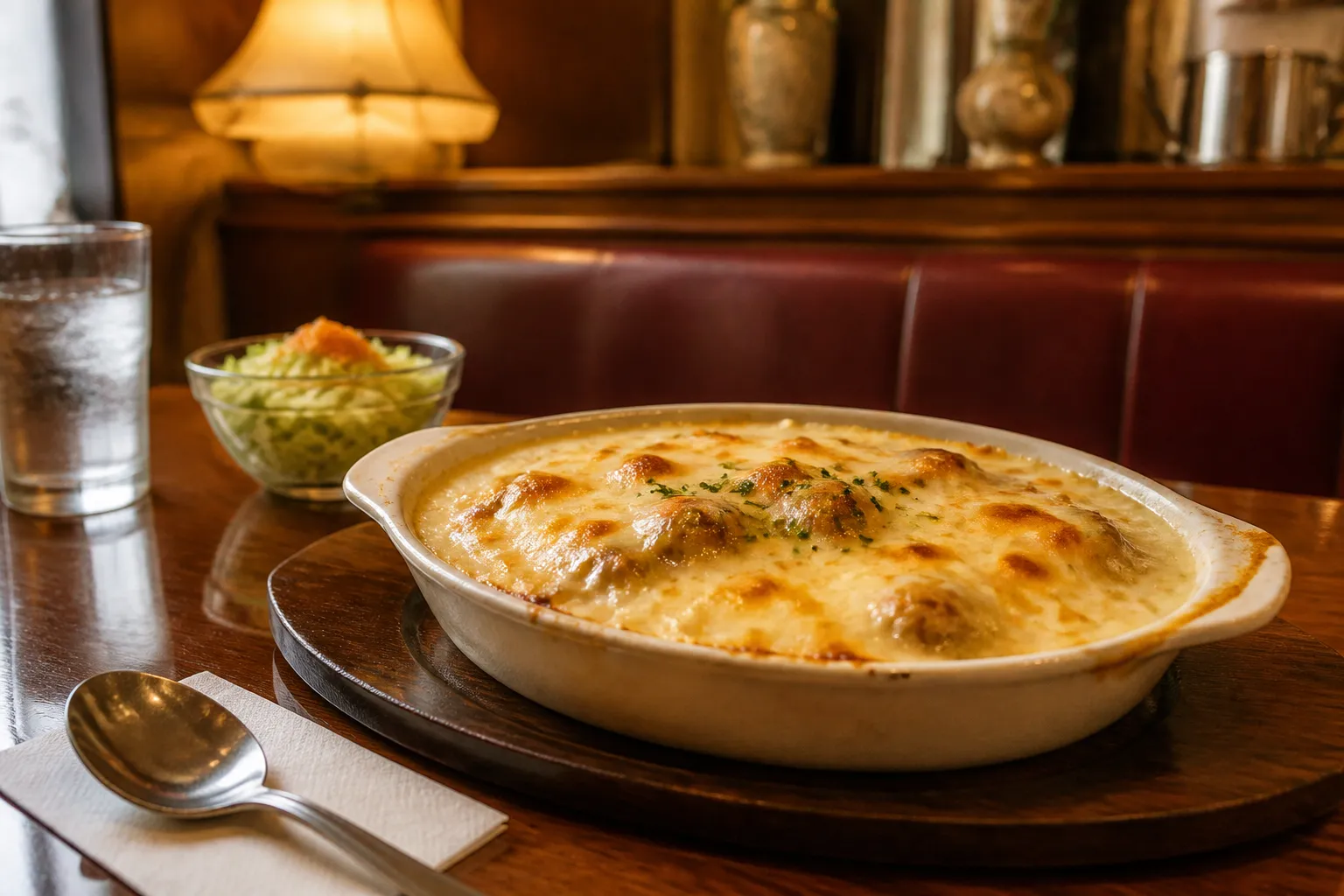
The origin is a lovely little piece of hotel lore. At the Hotel New Grand in Yokohama in the 1930s, the Swiss head chef Saly Weil is said to have improvised a dish for a guest who wasn't feeling well and wanted something gentle — a plate of buttered rice napped with shrimp and béchamel, then baked. That comforting, invalid-friendly plate became doria, and it spread out across Japan into every yoshoku diner and family restaurant in the country.
I find that beginning perfect, honestly — doria is still the dish you want when you're a little tired, a little cold, a little in need of being taken care of. It's the culinary equivalent of a blanket. It was designed to comfort a sick guest, and nearly a century later it's still doing exactly that, one bubbling oval dish at a time.
What makes the eating experience so comforting
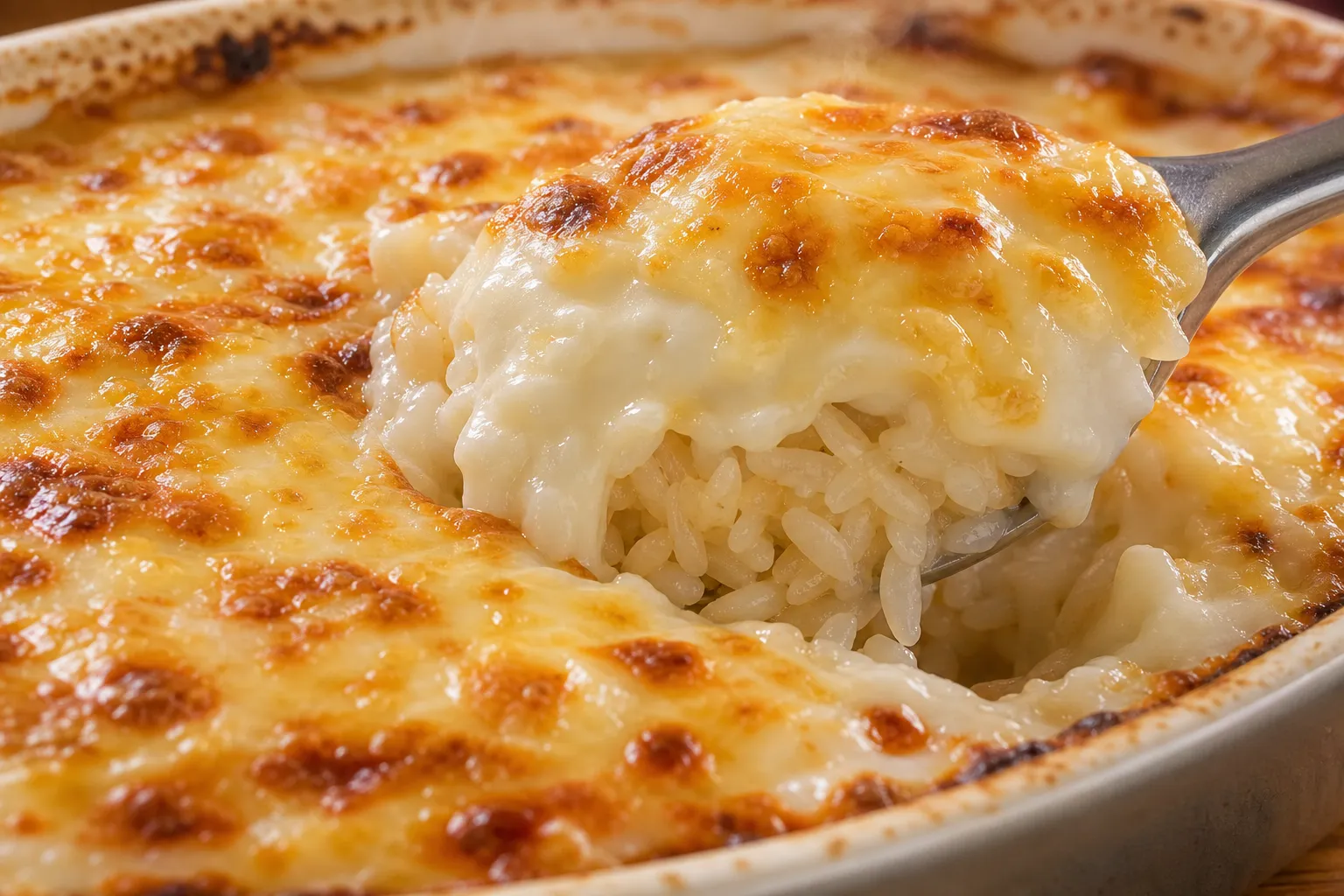
- Three textures in one spoonful: crisp-browned cheese on top, silky béchamel in the middle, buttery rice underneath
- The béchamel is rich but mild, so it comforts rather than overwhelms — this is gentle food
- The baked cheese crust gives little nutty, chewy edges that are the best bites in the dish
- It stays hot for ages in its dish, so every spoonful is warming right to the end
- Endlessly variable: seafood doria, chicken doria, and the beloved curry doria (with a layer of curry) all riff on the same molten-comfort template
How it's made
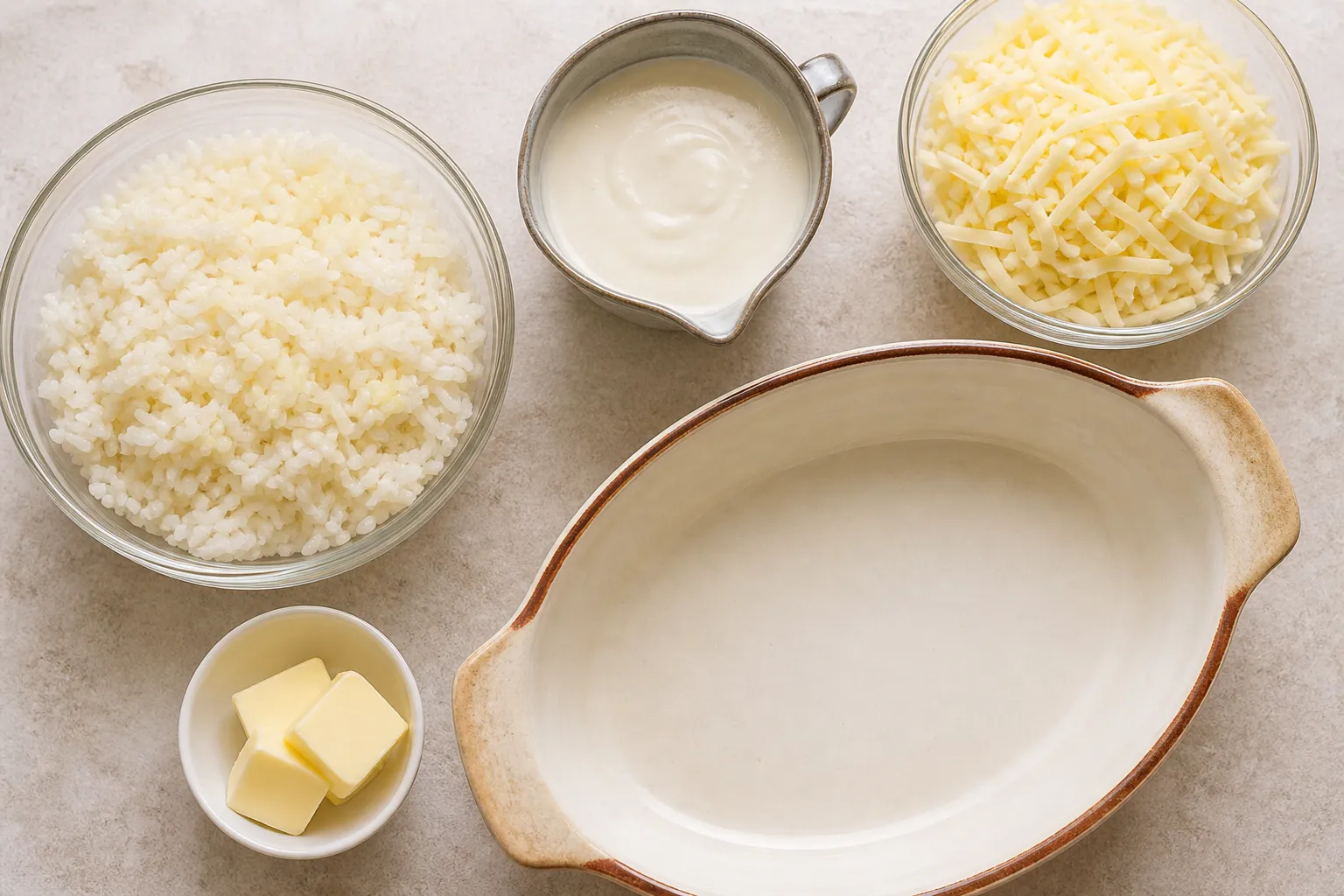
- Make buttered rice. Cook rice with butter (and often onion, mushroom, chicken or shrimp) into a light pilaf, and spread it in a gratin dish.
- Make the béchamel. Cook butter and flour into a roux, whisk in milk, and season into a smooth, rich white sauce.
- Layer it up. Pour the béchamel over the rice, then scatter cheese generously on top.
- Bake. Into a hot oven (or under a salamander) until the cheese is melted, golden, and blistered at the edges.
- Serve molten. It comes out bubbling; a warning about the heat is a kindness. So is a minute of patience you probably won't take.
The two components — the buttered rice and the béchamel — are each simple, but the magic is in the baking: that browned cheese top is what turns two humble parts into something you'd cross town for.
Before you go — order it when you need comforting
Your questions, answered honestly
"How is this different from risotto or a gratin?" — Risotto is stovetop rice cooked in broth; a macaroni gratin is pasta, no rice. Doria is specifically baked rice under béchamel and cheese — the rice on the bottom is the whole identity. It's crispier on top and more casserole-like than either.
"What flavor should I get?" — Plain/seafood doria is the classic, but if you see curry doria (a layer of Japanese curry under the cheese), it's spectacular — the mild béchamel and the savory curry together are a genuinely great combination. Chicken and mushroom versions are also common and lovely.
"Is it heavy?" — Rich, yes, but not enormous — it's usually a single, contained oval dish, more cozy than gut-busting. It's the definition of a comfort lunch or a warming dinner on a cold day.
"Will I burn myself?" — Almost certainly, if you're anything like me. It comes out of the oven properly molten. Give it a minute. (You won't. Neither do I.)
What the staff will ask you
| You'll hear | Romaji | Meaning | Just say |
|---|---|---|---|
| ご注文はお決まりですか? | Go-chūmon wa o-kimari desu ka? | "Ready to order?" | Doria o kudasai (doria, please) |
| セットのドリンクはいかがですか? | Setto no dorinku wa ikaga desu ka? | "A set drink with that?" | Onegaishimasu (yes, please) / Daijōbu desu (no thanks) |
| 熱いのでお気をつけください | Atsui node o-ki o tsukete kudasai | "Careful, it's hot" | Hai, arigatō (yes, thanks) |
To order, just say "Doria o kudasai" (ドリアをください) — "Doria, please."
Where to eat it
- Yoshoku diners and family restaurants nationwide — doria is a staple of Western-style Japanese eateries; family-restaurant chains almost always have a version (often including curry doria).
- Yokohama — the dish's birthplace; the Hotel New Grand still serves its classic shrimp doria, the direct descendant of the original.
- Kissaten and casual cafés — many old-school coffee shops offer a bubbling doria alongside their napolitan as a warm lunch option.
Doria fillings and prices vary by shop, and it's served oven-hot — check the current menu (and let it cool a moment) before diving in.
Soul Score
Local Roots4/5
First-Timer Friendly5/5
Adventure Level3/5
Comfort Level5/5
Travel Worthy3/5
These scores are one obsessed eater's gut feeling — not a verdict. A low number isn't a bad mark, just a different kind of adventure.
Know someone planning Japan?
← All Articles
Japanese Food · Nationwide
Still hungry?
You might also like
Japanese FoodNationwide
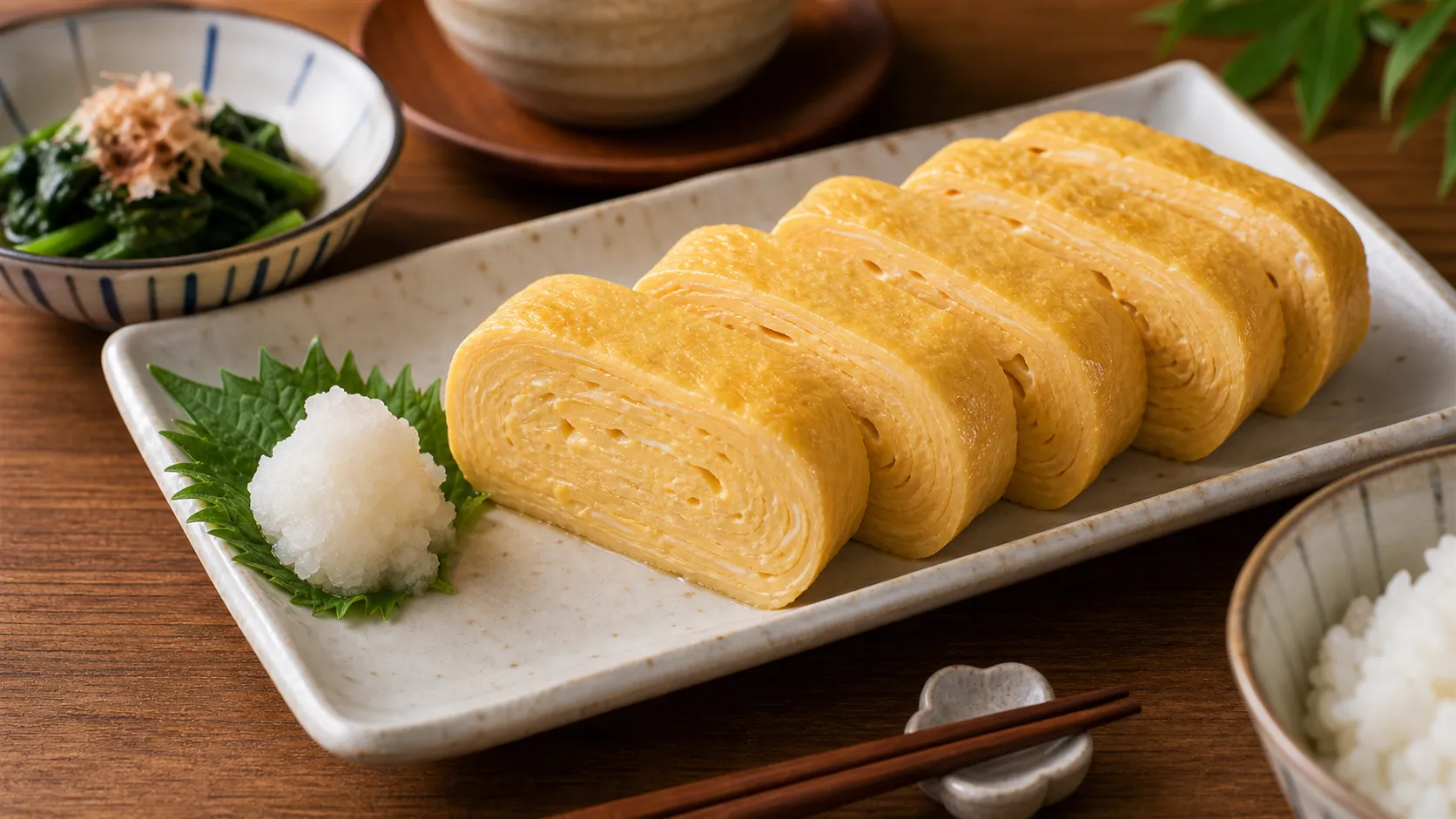
Dashimaki-tamago (だし巻き卵)
A rolled omelette so soft it almost trembles, layered fold over fold and soaked with dashi so that biting in releases a little warm rush of savory broth — the deceptively simple egg dish that Japanese chefs spend years perfecting.
July 11, 2026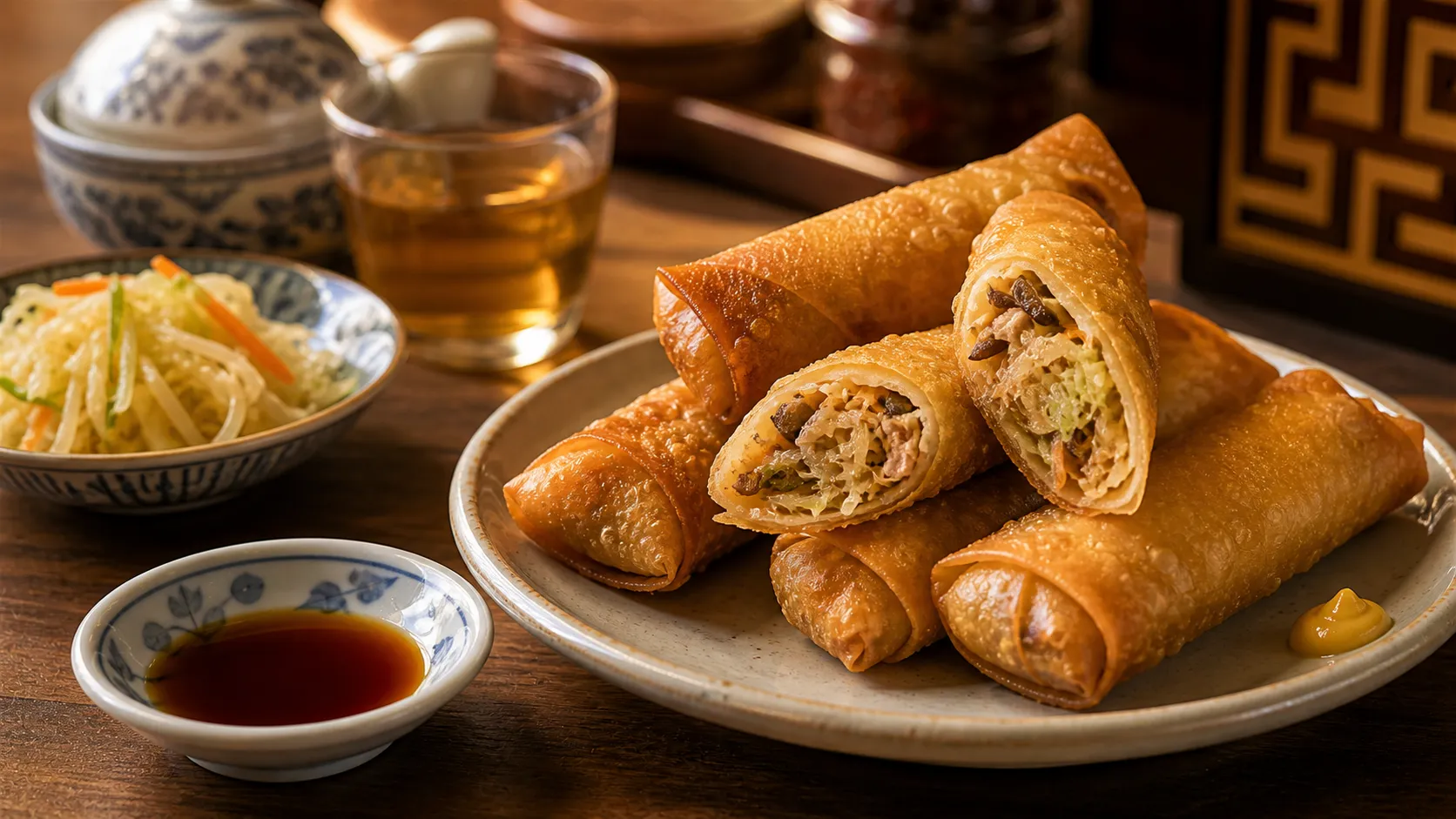
Japanese FoodNationwide
Harumaki (春巻き)
The Japanese spring roll — a shatteringly crisp golden tube that gives way to a hot, savory tangle of pork, cabbage and bamboo shoot, best eaten the second it's cool enough not to burn your mouth (you will not wait that long).
July 11, 2026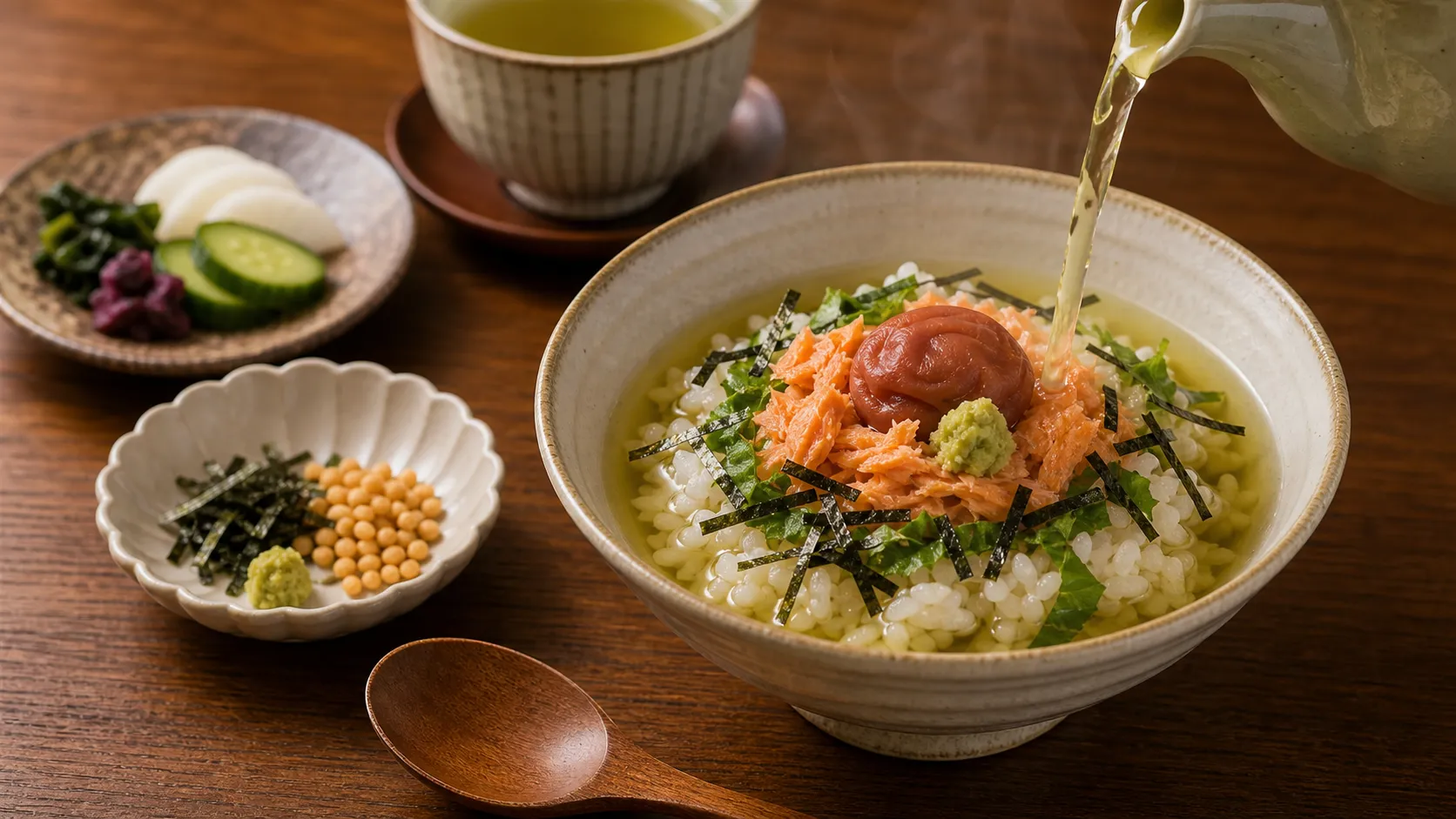
Japanese FoodNationwide
Ochazuke (お茶漬け)
Pour hot green tea or dashi over a bowl of rice, scatter something savory on top, and eat — the gentlest, most quietly restorative dish in Japan, the one you reach for late at night when you just need a warm bowl to make everything okay.
July 11, 2026