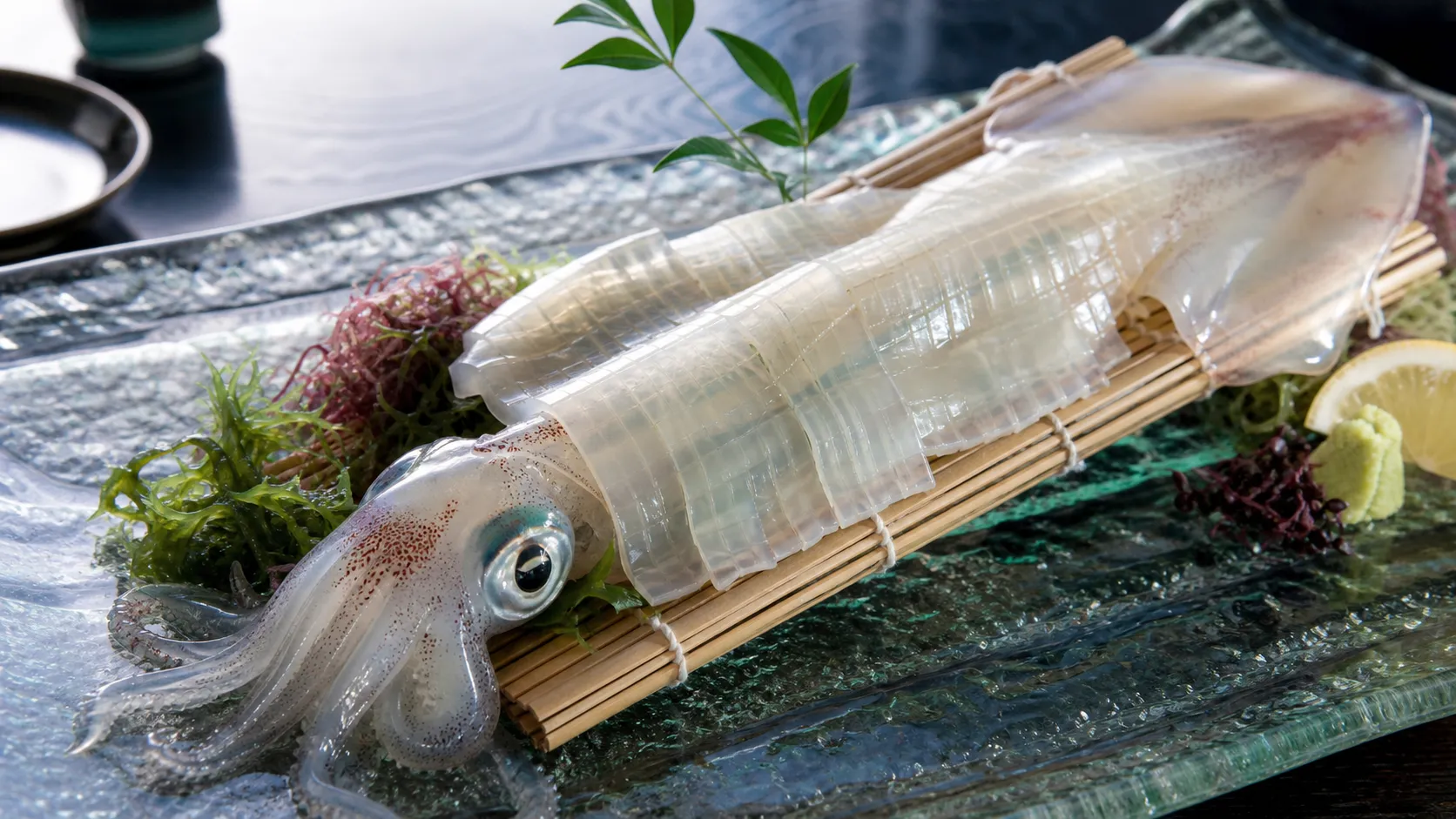
The legs were still moving. I'm not going to pretend they weren't — the squid arrives on the plate practically see-through, glassy and gleaming, and the tentacles are curling like they haven't gotten the news yet. And I know how that reads. But then I dipped a slice, and it was sweet — cool, faintly briny, snapping-crisp then melting — nothing like the chewy rubber I'd braced for, and I sat there at the edge of the harbor completely rearranged about what squid can be.
Share this dish


Squid so fresh the body is still glassy-clear and the legs are still moving when it reaches your table — sweeter and cleaner than any squid you thought you knew, at the little port that made it famous.
🍜 Planning a food trip to Saga?Add this dish to my Food Trip →
 Add this dish to my Food Trip →
Here's what it is: Yobuko no ika ikizukuri (呼子のイカ活造り) is squid served ikizukuri — prepared live and plated within moments of leaving the tank — at Yobuko, a small fishing port in Karatsu, Saga. Because it's that fresh, the flesh is still transparent and gleaming rather than the usual milky white, and the flavor is clean and sweet with a crisp-then-tender bite. This is not cooked ikayaki off a griddle, and it's not battered fried calamari — it's the raw, glass-clear, at-the-source version, the one you basically have to travel to a specific harbor to get right. And when you're done with the body, the kitchen usually takes the legs back and returns them grilled or as tempura.
Why a tiny port became squid heaven
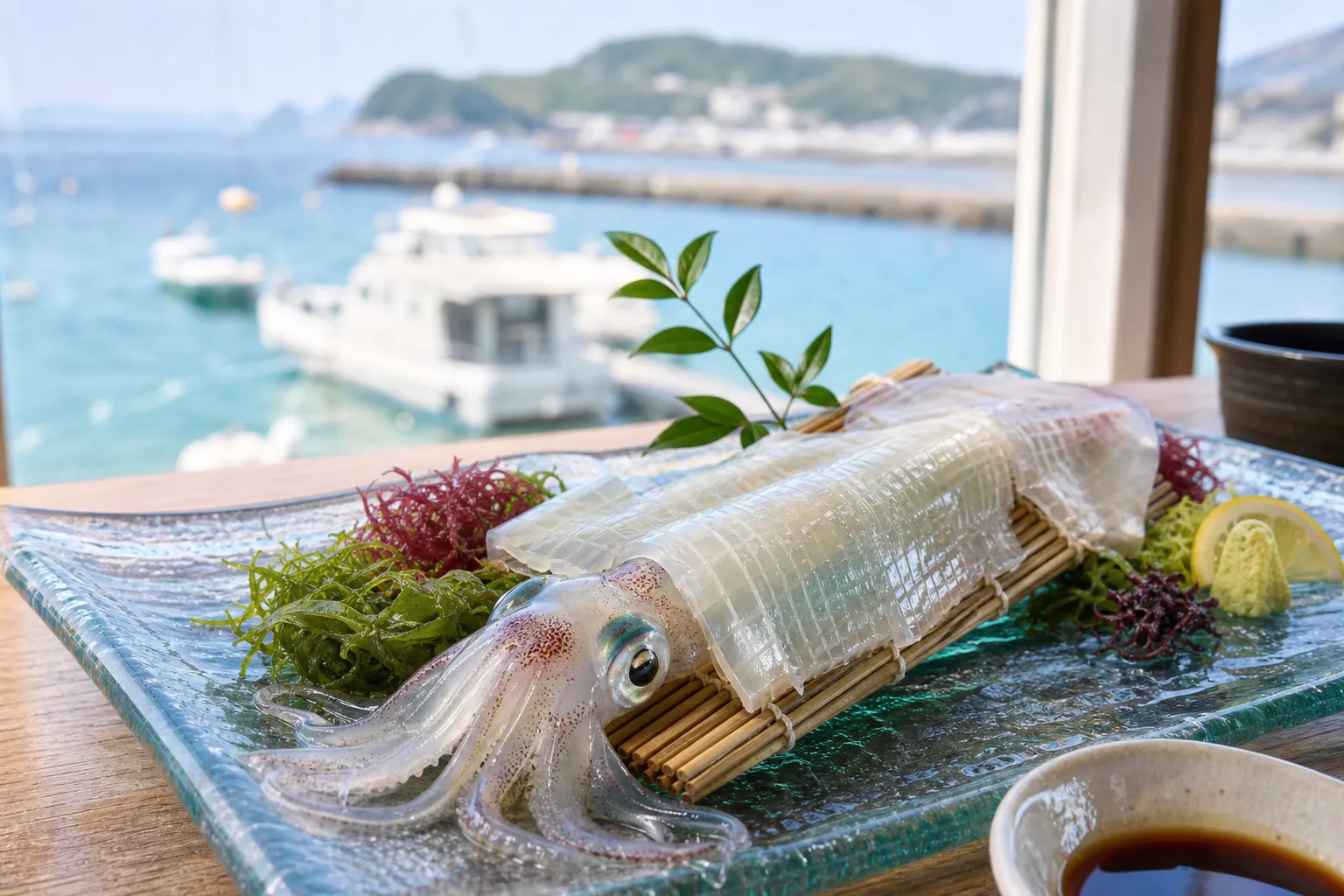
Yobuko sits on the northwest tip of Kyushu, where cold and warm currents meet over clean water — good squid country, and the town leaned into it completely. The catch here is prized enough that restaurants keep the squid alive in seawater tanks right up until you order, because the entire appeal is time: squid loses its transparency and its sweetness fast, so the only way to eat it truly glass-clear is to be standing near the boats. That's why this dish is tied to a place. You can't really ship the experience; you go to it.
I find that honest in a way I love. There's no clever sauce, no secret technique — the whole dish is a flex about distance and minutes. The restaurants line the harbor, many with their own tanks, and half the drama is watching your squid go from tank to knife to plate faster than you can finish your first sip. It's a town that turned "we're closer to the boats than you are" into a genuine destination, and honestly, they earned it.
What makes it unforgettable
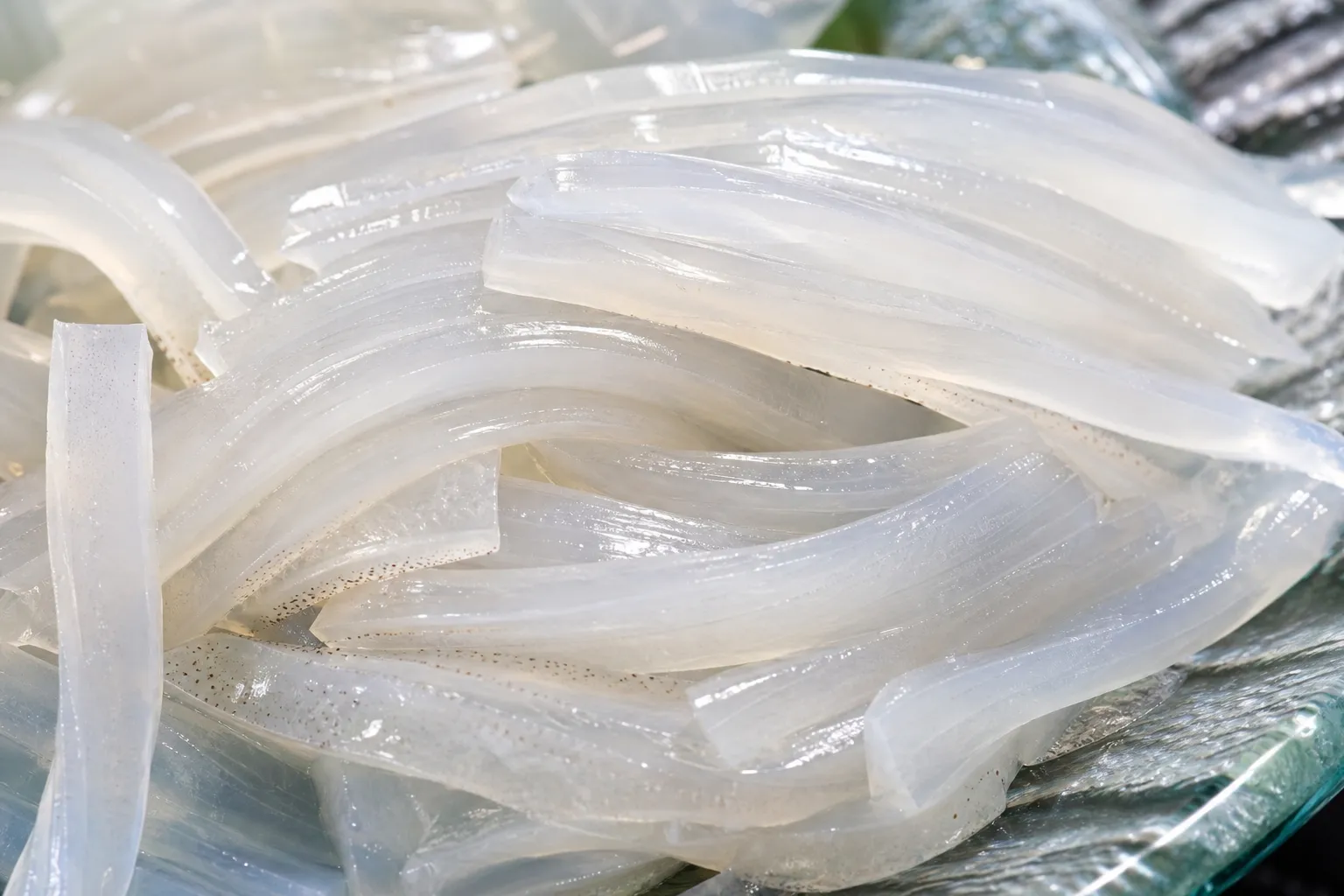
- It's transparent — genuinely see-through and glossy on the plate, a visual you only get at this level of freshness
- The flavor is sweet and clean, briny in the best way, with none of the fishiness people brace for
- The texture is the surprise — crisp and snapping at first, then tender and melting, not the rubbery chew of ordinary squid
- It's a two-act meal: the body as clear sashimi first, then the legs returned grilled or as tempura, sweet and hot
- It's utterly place-bound — this exact experience really only exists near the boats, which is what makes going worth it
How it's served
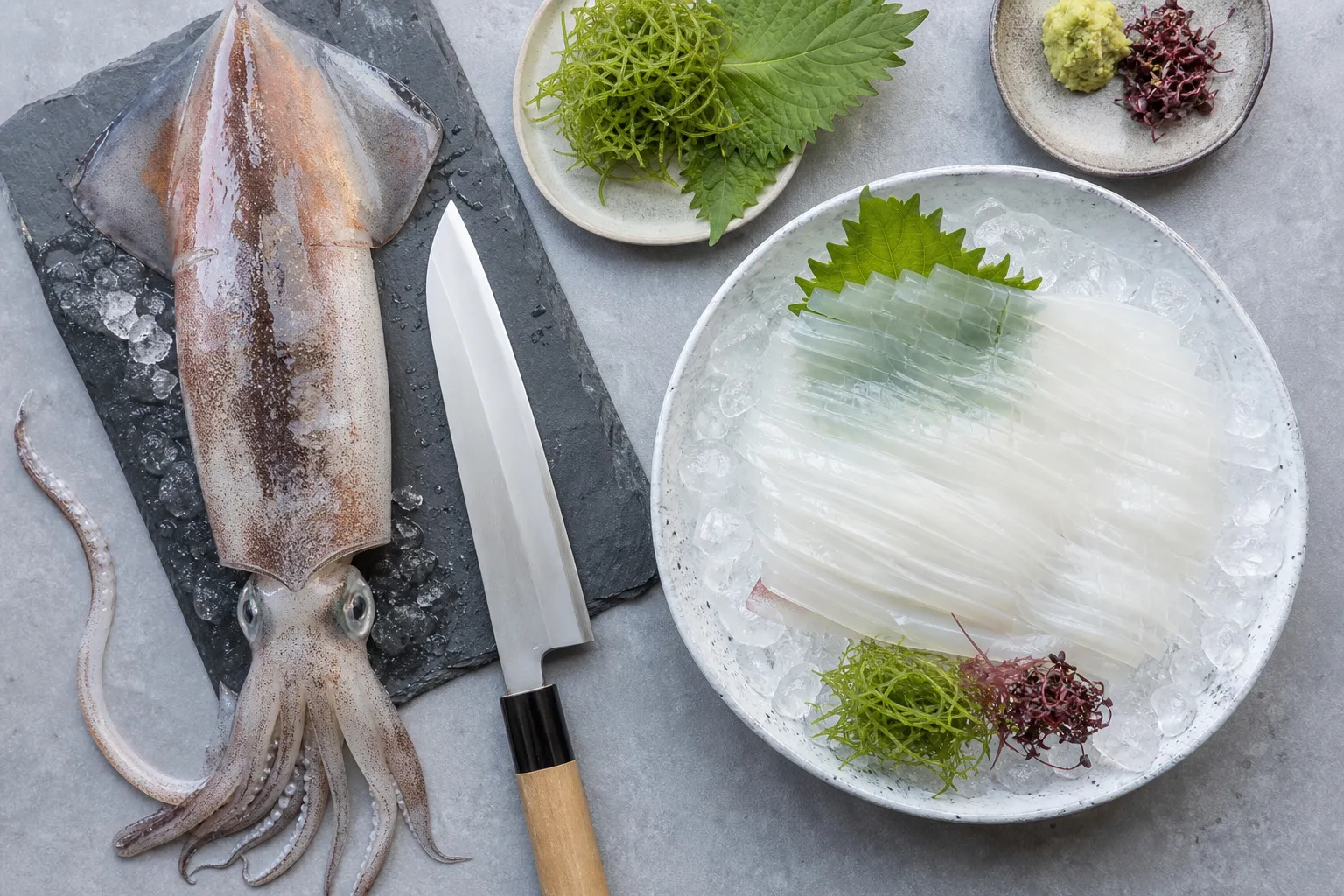
- Kept alive. The squid swim in seawater tanks in the restaurant until the moment you order — freshness is preserved by simply not preparing it in advance.
- Netted to order. When you order, a squid is taken straight from the tank so only minutes pass before it's on your plate.
- Cleaned and sliced fast. The chef quickly cleans the body and slices the mantle into fine sashimi strips, working quickly to keep it clear and glossy.
- Plated whole. It's arranged so the transparent body sits with the head and legs, often still visibly moving, served with soy, ginger and wasabi.
- Legs, act two. After you finish the raw body, you hand the legs back and the kitchen returns them grilled (shioyaki) or as tempura — a hot, sweet second course.
The whole "technique" is really logistics and speed: keep it alive, prepare it the instant it's ordered, and don't let time dull the sweetness. Everything else is just a sharp knife and a nearby harbor.
Before you go — sit by the water, eat it fast
Your questions, answered honestly
"The legs are still moving. Is that normal — is it okay?" — Yes, that's the ikizukuri style and it's the sign of how fresh it is; the muscle still reacts even as it's served. If that's a lot for you, it's completely fine to say so — ask them to prepare it as regular sashimi (o-tsukuri), and you'll still get that clean sweetness.
"Do I have to eat the whole thing raw?" — No — and you're not meant to. You eat the transparent body as sashimi while it's at its best, then hand the legs back to be grilled or tempura-fried. Two textures, two courses, one squid. Eat the raw part promptly while it's still clear.
"What do I dip it in?" — Soy sauce with a little ginger or wasabi. The squid is delicately sweet, so go light — you want to taste the squid, not the soy. Many locals rate ginger over wasabi for this one.
"Is it worth traveling all the way to Yobuko for?" — Honestly, yes, and that's rather the point — this is a destination dish. The transparency and sweetness genuinely fade with distance and time, so eating it at the port is a different thing from eating "squid sashimi" anywhere else. Build a trip around it.
What the staff will ask you
| You'll hear | Romaji | Meaning | Just say |
|---|---|---|---|
| 活きイカにしますか? | Iki-ika ni shimasu ka? | "Would you like the live squid?" | Hai, onegai shimasu (yes, please) |
| ゲソは焼きと天ぷら、どちらにしますか? | Geso wa yaki to tenpura, dochira ni shimasu ka? | "The legs — grilled or tempura?" | Tenpura de (tempura, please) |
| セットになさいますか? | Setto ni nasaimasu ka? | "Would you like it as a set meal?" | Onegai shimasu (yes, please) |
To order, just say "Ika no ikizukuri o kudasai" (イカの活造りをください) — "The live-prepared squid, please."
Where to eat it
- Yobuko port, Karatsu, Saga — the waterfront is lined with squid restaurants, many keeping their own live tanks; the long-running Kawataro (河太郎) is one of the names most associated with Yobuko ika.
- Yobuko morning market (呼子朝市) — one of Japan's well-known morning markets, a great place to soak up the port's squid culture before or after a meal (mornings only).
- Karatsu city and along the coast — some restaurants in greater Karatsu serve Yobuko-style squid too, useful if you're based in the city rather than at the port.
Live squid depends on the day's catch and weather and can sell out or be unavailable; popular restaurants take reservations and draw waits at peak times, so check hours and availability and consider booking ahead.
Soul Score
Local Roots4/5
First-Timer Friendly3/5
Adventure Level4/5
Comfort Level4/5
Travel Worthy5/5
These scores are one obsessed eater's gut feeling — not a verdict. A low number isn't a bad mark, just a different kind of adventure.
Know someone planning Japan?
← All Articles
Local Food · Yobuko, Saga
Still hungry?
Eat more from Saga
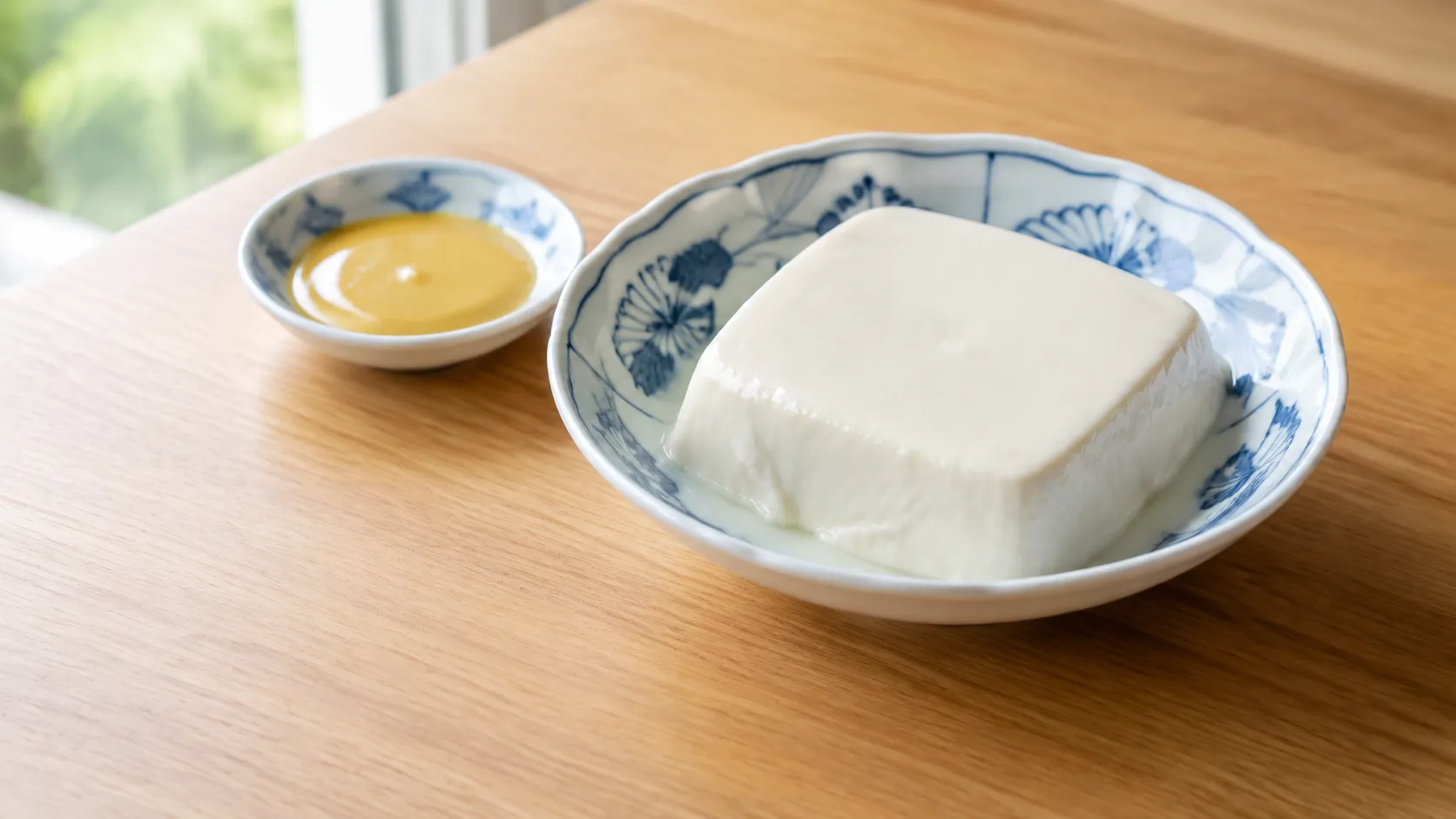
Local FoodArita, Saga
Godofu (ごどうふ)
I tried to pick it up with chopsticks and it sagged, stretched, and very nearly escaped — which is when the shop owner started laughing at me from behind the counter.
September 2, 2026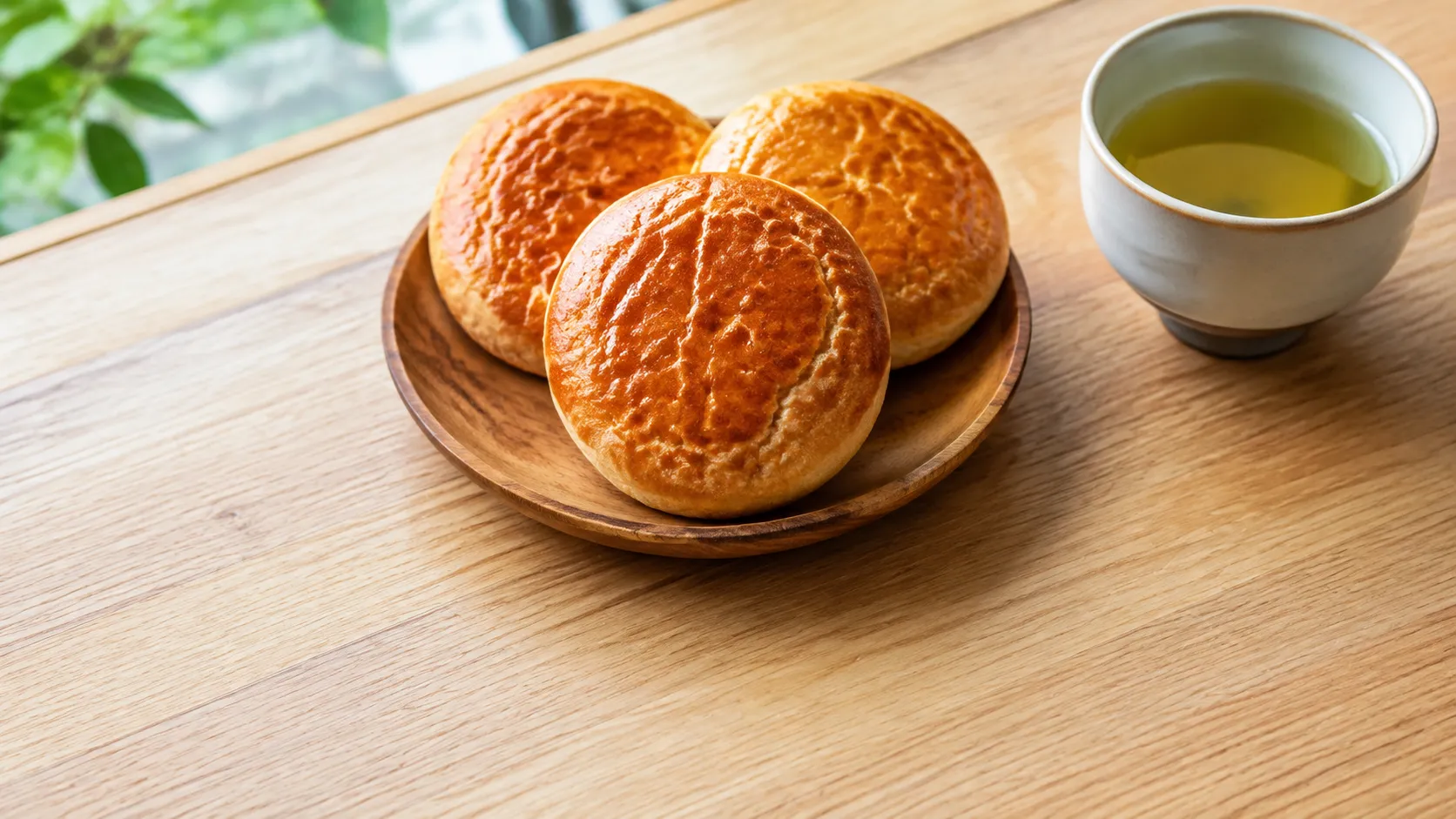
Sweets & SnacksSaga
Maruboro (丸ぼうろ)
It looks like the most boring biscuit in Japan. Then you bite it and it's soft, and honey-warm, and about four hundred years of Portuguese sailors arrive all at once.
September 2, 2026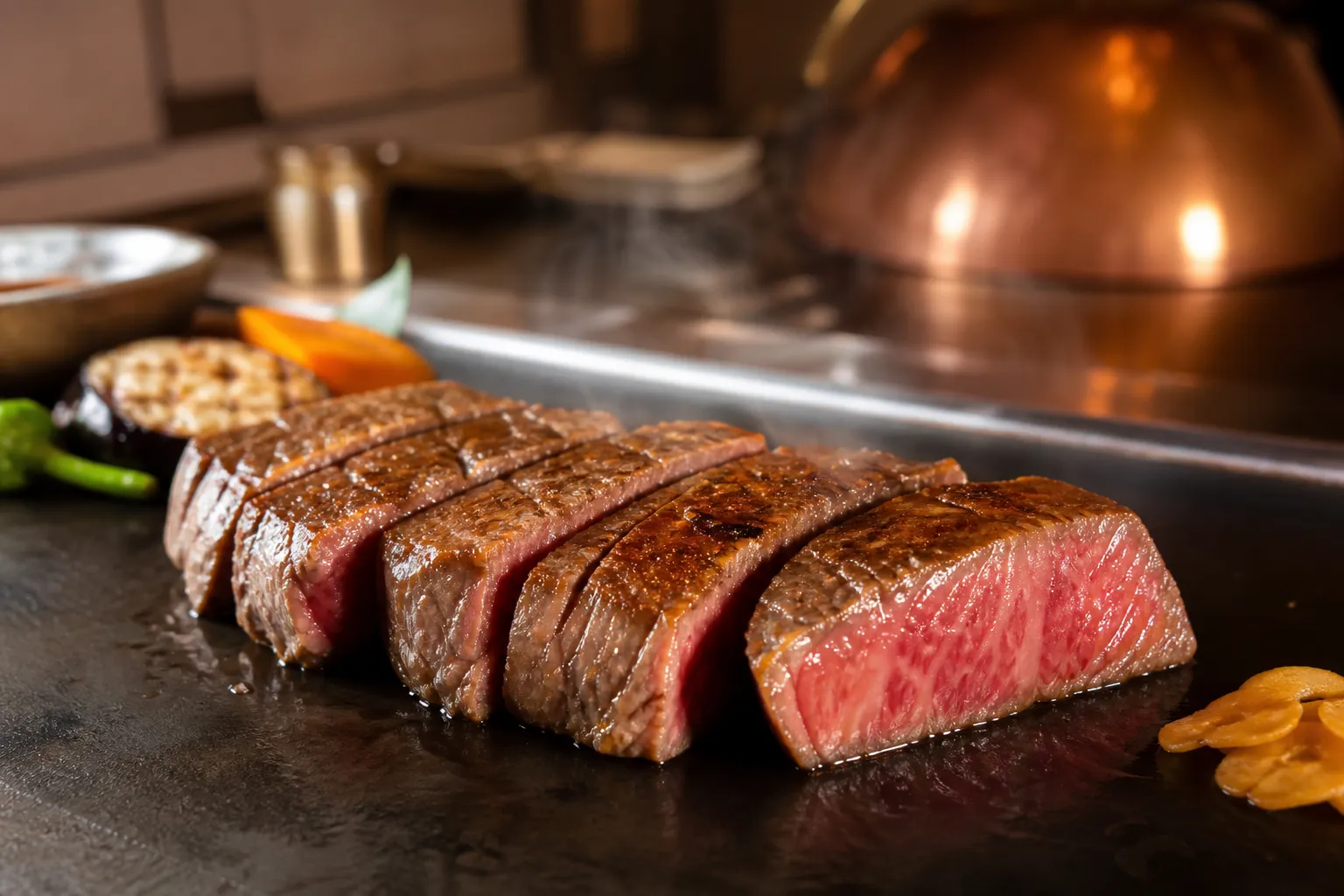
Local FoodSaga
Saga Beef (佐賀牛)
Marbled Kyushu wagyu seared on a screaming-hot iron plate until the fat crackles and the crust goes brown — Saga's strictly-graded beef, and the best steak reason to stop in Japan's quietest prefecture.
July 12, 2026