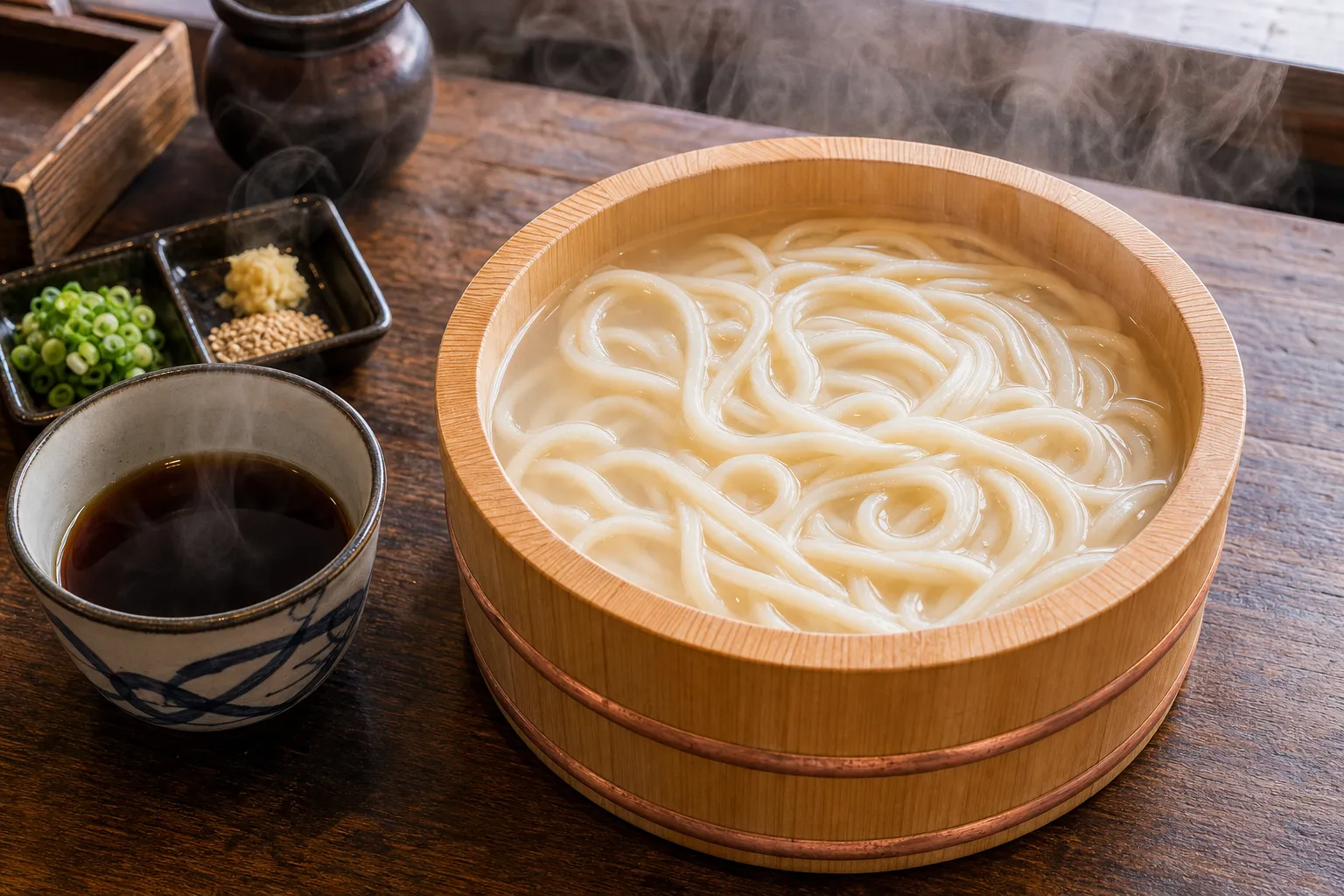
Steam first. Before I saw the noodles I got the steam, rising off a wooden tub the size of a small bucket, and then the smell of plain hot wheat — and I thought, that's it? Water and noodles? Reader, I have rarely been so happily wrong.
Share this dish


Straight from the pot to your tub, still swimming in its own cloudy cooking water, steam curling up — no cold rinse, no soup, nothing hiding the noodle. Kagawa serves udon at its softest, warmest, most naked, and it's a revelation.
🍜 Planning a food trip to Kagawa?Add this dish to my Food Trip →
 Add this dish to my Food Trip →
What arrived was kamaage udon: freshly boiled Sanuki udon lifted straight from the pot and served still sitting in its own cloudy, starchy cooking water, with a separate little cup of hot, concentrated tsuyu dipping sauce on the side. No cold-water rinse, no broth poured over, no clever toppings to distract you. Because nothing is hiding the noodle, the noodle had better be extraordinary — and in Kagawa, it is.
Born in Japan's udon kingdom
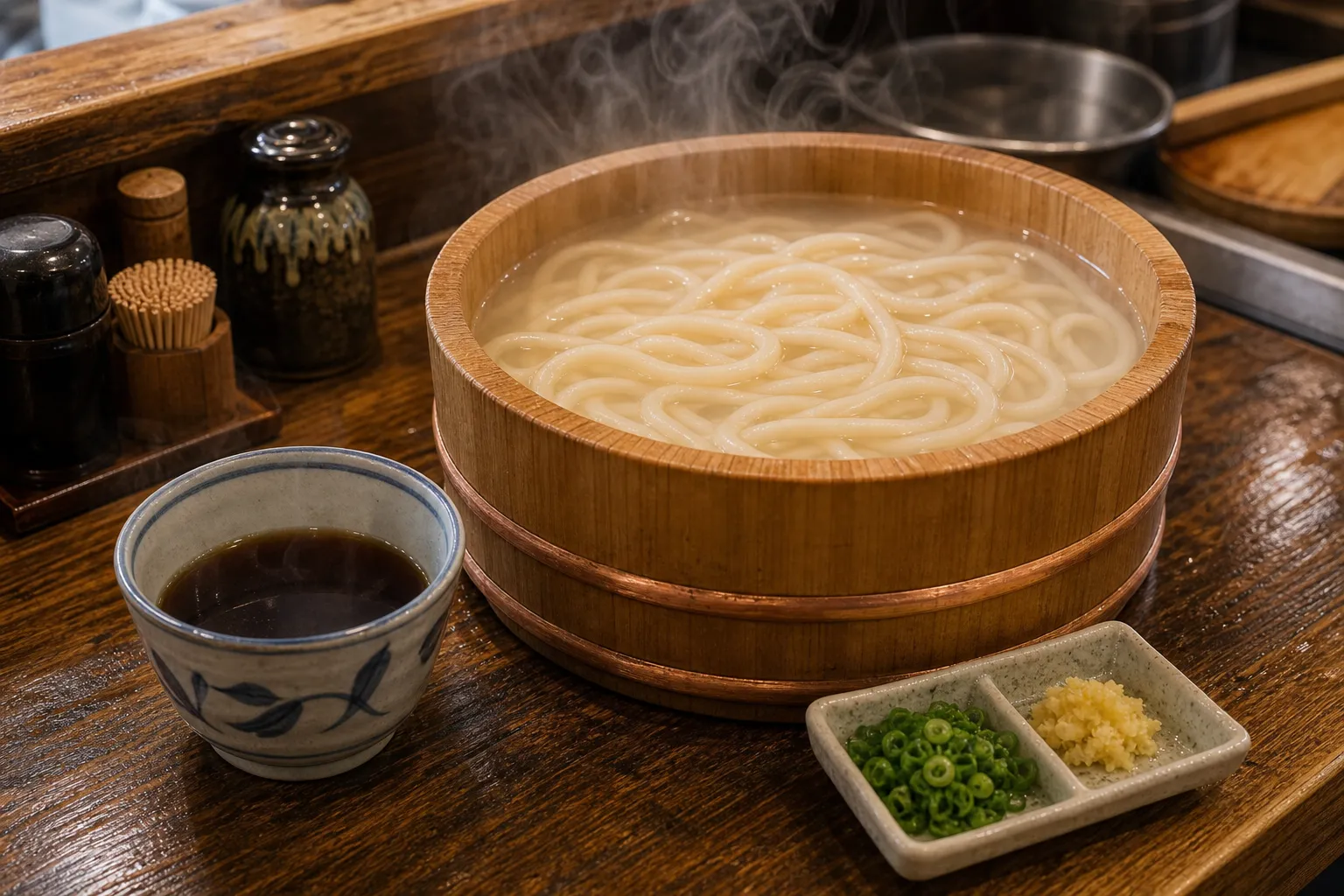
This is Kagawa's home cooking, and Kagawa is not modest about udon — the prefecture cheerfully calls itself "Udon Prefecture" and eats more of it per person than anywhere in Japan. Kamaage literally means "lifted from the pot" (kama, the cauldron; age, pulled up), and that's the whole philosophy: catch the noodle at the exact moment it's done, before it ever touches cold water, and serve it that instant. It's the udon dish that shows the most faith in the noodle-maker — there's simply nowhere to hide. I find something quietly moving about a regional specialty whose big idea is do less. Every other udon style adds; this one takes away, and dares you to notice what's left.
Why the naked noodle wins
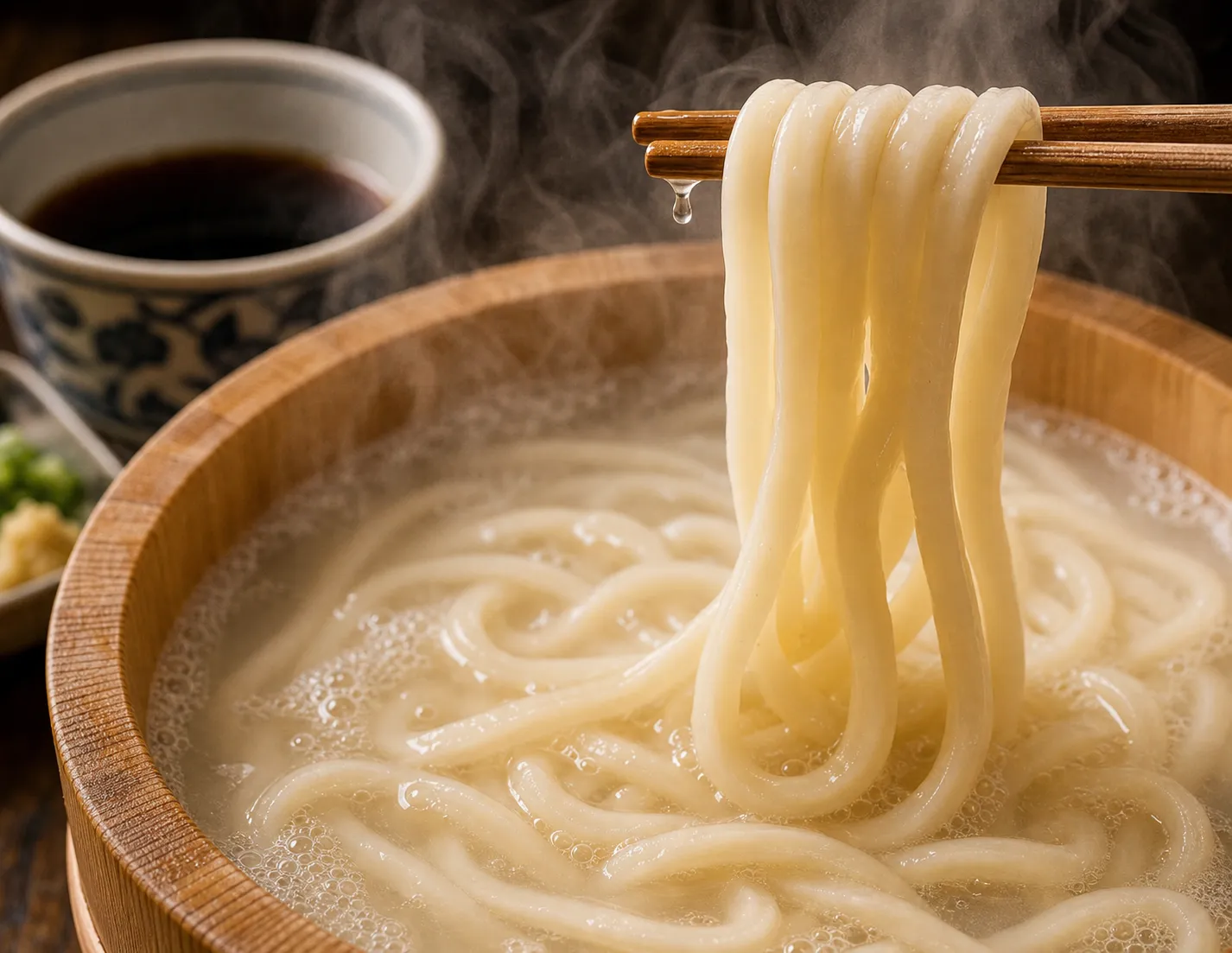
Most Sanuki udon gets shocked in cold water after boiling, which tightens it into that famous firm, glassy koshi chew. Kamaage skips that step — so the texture goes the other way: softer, looser, more tender, warm all the way through, with the pure just-cooked flavor of the wheat still on it. It's a completely different pleasure from cold zaru udon. You lift a few strands out of the hot water with your chopsticks, swirl them once in the warm tsuyu (usually with a little grated ginger and chopped green onion stirred in), and eat before the steam quits. It tastes like comfort in its most undecorated form. I ordered a second tub. I regret nothing.
How it's served
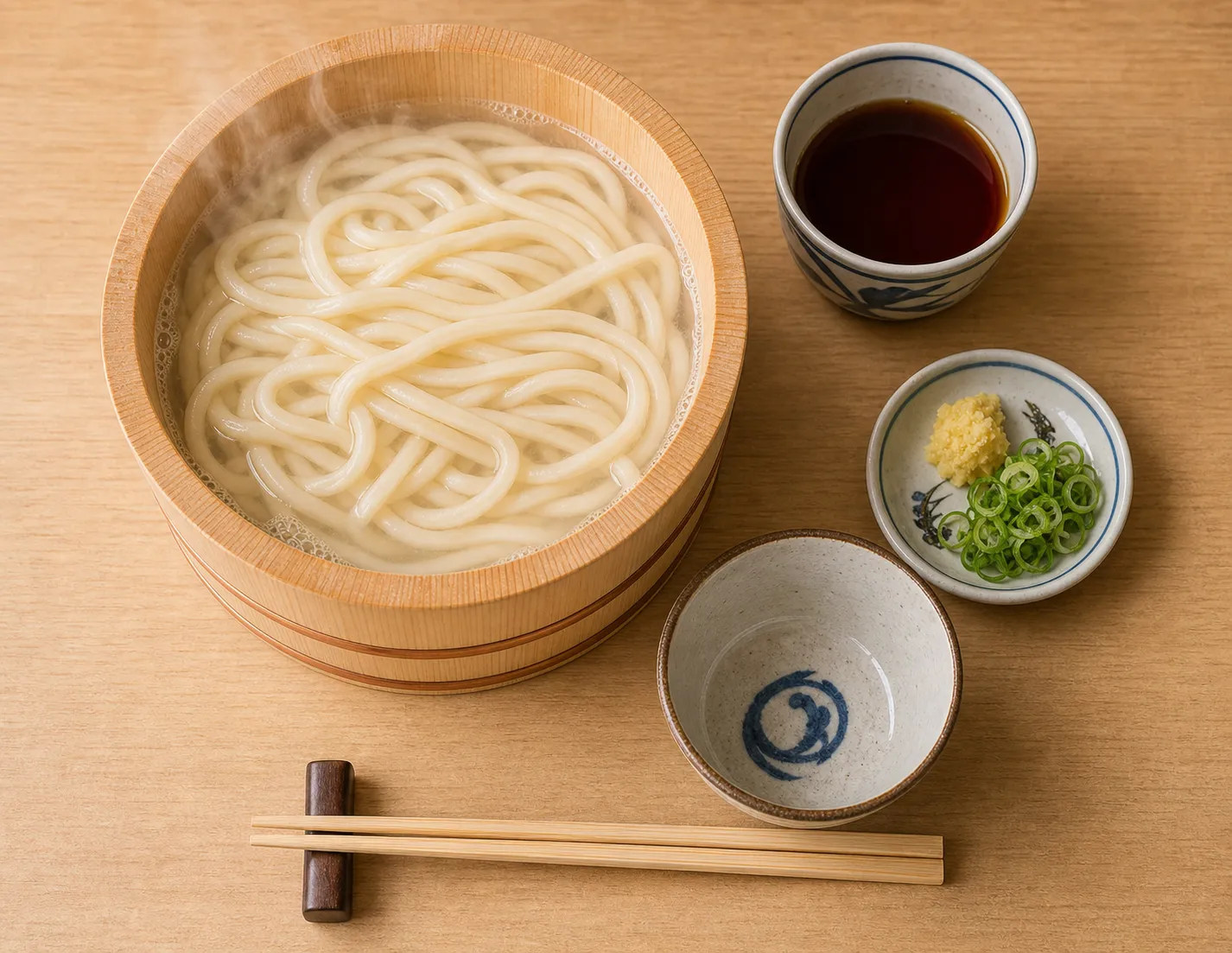
- Boil fresh Sanuki udon in lots of water until springy and just done
- Instead of rinsing, lift the noodles straight into a wooden tub or bowl with some of the hot cooking water
- Serve immediately, steam and all, with a separate cup of hot concentrated tsuyu
- Add grated ginger and chopped negi to your tsuyu cup to taste
- Pull a few noodles from the hot water, dip briefly in the tsuyu, and eat fast while it's hot
Before you go — dip, don't drink
Your questions, answered honestly
"Wait — is the water in the tub soup? Do I drink it?" — No. That cloudy hot water is just the cooking water keeping the noodles warm; you don't drink it. Fish noodles out of it and dip them in the little tsuyu cup. (Some shops will offer you sobayu-style, but as a rule: tub = keep-warm bath, cup = flavor.)
"How is this different from all the other udon?" — Kake comes in seasoned hot broth; zaru is cold noodles you dip; bukkake has a little strong sauce poured over. Kamaage is the only one served hot but un-rinsed, in its own cooking water, with dip on the side. Softest, warmest, purest.
"Is it a good beginner udon?" — Yes — it's mild, gentle, and unintimidating. The only "skill" is the dip-don't-drink thing, and now you know it.
"Best season for it?" — Any, but it's heaven in cold weather, when a steaming tub in front of you is its own kind of heater.
What the staff will ask you
| You'll hear | Romaji | Meaning | Just say |
|---|---|---|---|
| サイズは? | Saizu wa? | "What size?" | Futsū de (regular) / Ō-mori de (large) |
| 何玉ですか? | Nan-dama desu ka? | "How many portions of noodles?" | Ichi-dama de (one) / Ni-dama de (two) |
| 薬味は入れますか? | Yakumi wa iremasu ka? | "Add the ginger & green onion?" | Onegaishimasu (yes, please) |
To order, just say "Kamaage udon kudasai" (釜揚げうどんください) — "Kamaage udon, please."
Where to eat it
- Kagawa Prefecture (Sanuki udon country) — the whole point of the pilgrimage. Udon specialists all over Takamatsu and the countryside serve it; the rural ones are legendary.
- Sanuki-style udon specialists elsewhere in Japan — dedicated Sanuki shops in big cities often have kamaage on the menu, though the best of it really does taste better where the water and the noodle-makers are.
The great rural Kagawa shops keep short hours and close the moment the day's noodles run out, so go early and go hungry — and remember, the tub is a warm bath for the noodles, not a soup to drink.
Soul Score
Local Roots5/5
First-Timer Friendly4/5
Adventure Level3/5
Comfort Level5/5
Travel Worthy4/5
These scores are one obsessed eater's gut feeling — not a verdict. A low number isn't a bad mark, just a different kind of adventure.
Know someone planning Japan?
← All Articles
Local Food · Kagawa
Still hungry?
Eat more from Kagawa
Local FoodKagawa
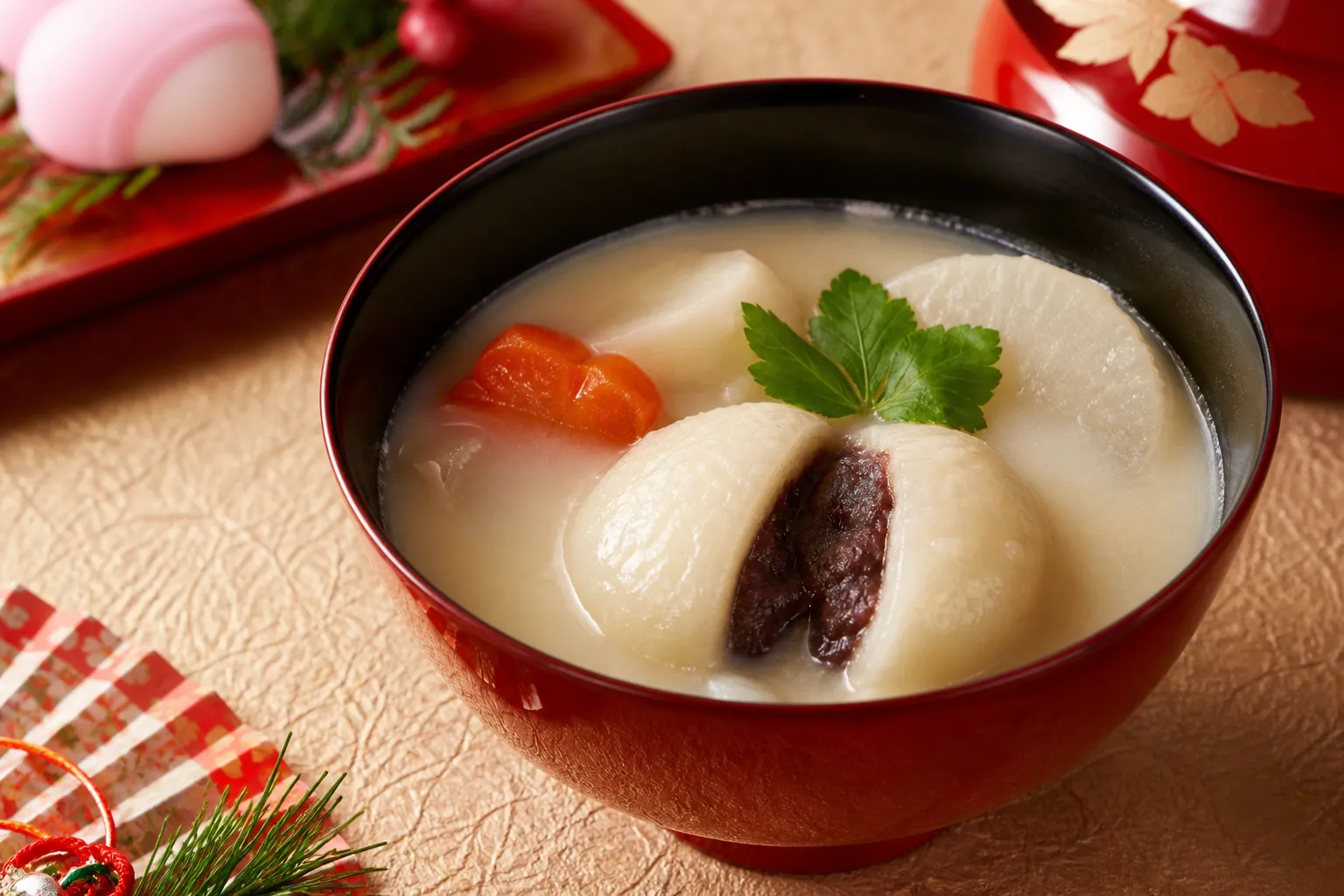
An-mochi Zoni (あん餅雑煮)
You bite into the mochi in your New Year soup and — wait — it's full of sweet red-bean paste, in a savory white-miso broth. Kagawa's gloriously confusing New Year bowl, born from a secret history of sugar.
July 12, 2026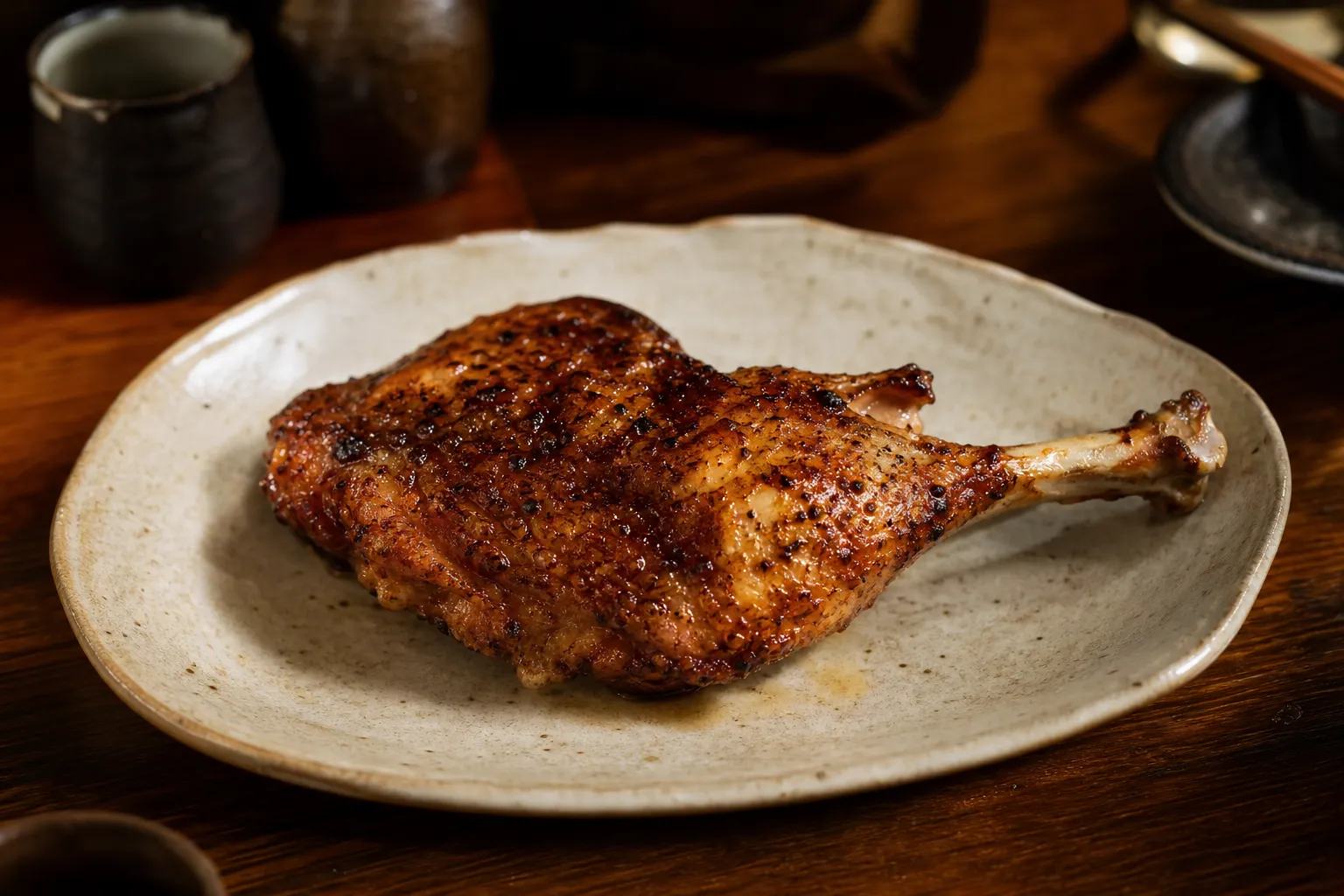
Local FoodMarugame, Kagawa
Honetsuki-dori (骨付鳥)
You don't cut it, you don't fork it — you grab the bone with a napkin and bite, and the first thing that hits you is the black pepper, hard, before you've even tasted the chicken.
July 5, 2026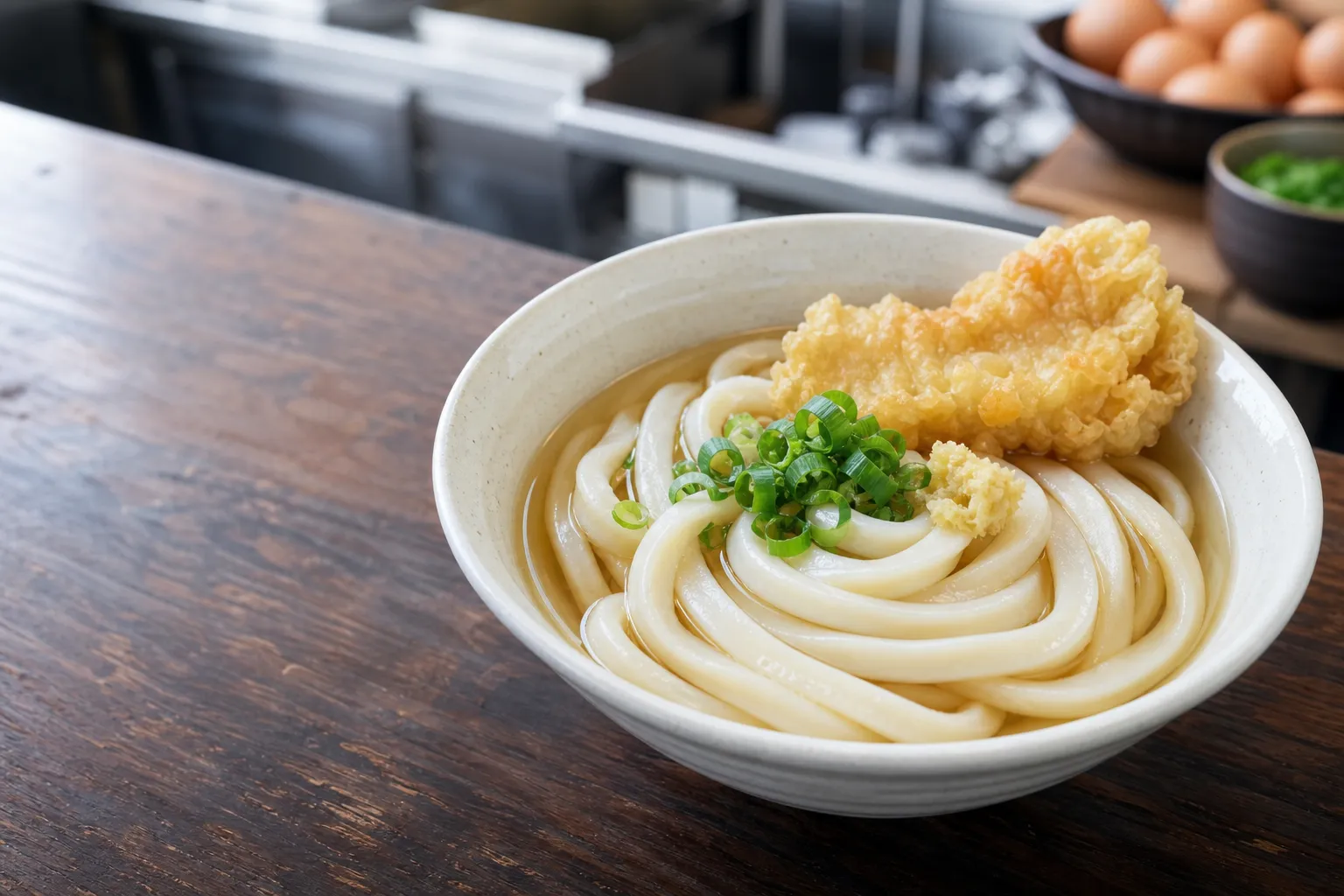
Local FoodTakamatsu, Kagawa
Sanuki Udon (讃岐うどん)
Thick, square-edged, defiantly chewy udon in a clear dashi — so good that a whole prefecture rebranded itself 'Udon Prefecture.' You grab a tray, you slurp, you leave changed.
June 27, 2026