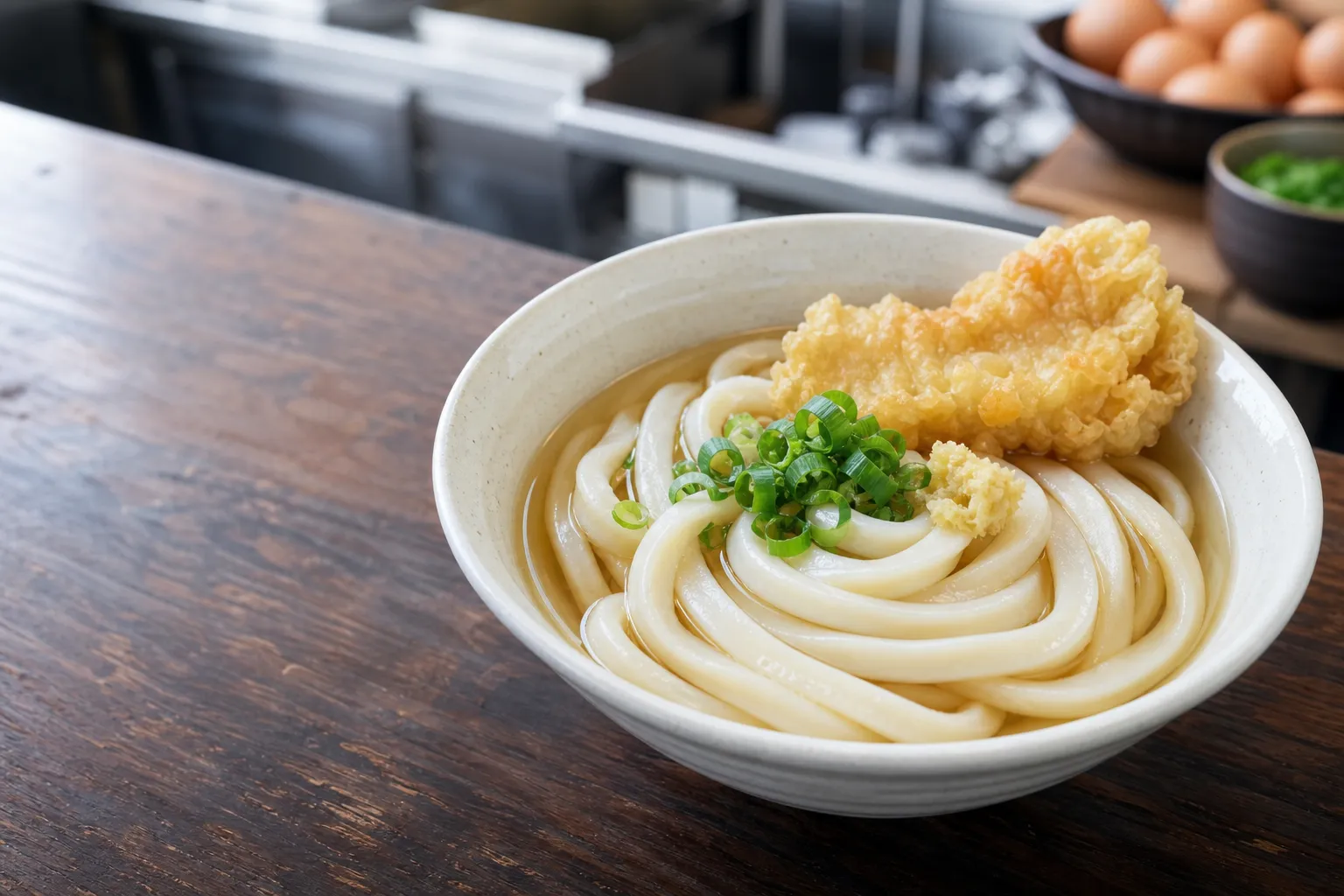
I bit down and the noodle bit back. That's the only way I can put it. Thick, glossy, square at the edges, with a springy resistance that made me actually stop and look at it mid-chew like it had said something. Then I slurped the rest of the bundle and got it: this is why people fly to a small island just to eat lunch.
Share this dish


Thick, square-edged, defiantly chewy udon in a clear dashi — so good that a whole prefecture rebranded itself 'Udon Prefecture.' You grab a tray, you slurp, you leave changed.
🍜 Planning a food trip to Kagawa?Add this dish to my Food Trip →
 Add this dish to my Food Trip →
This is Sanuki udon from Kagawa — and if your mental image of udon is something soft and mild, prepare to be corrected. Sanuki is all about koshi: that firm, chewy, almost defiant bite. Kagawa loves it so much it semi-officially renamed itself "Udon Prefecture." Not a slogan. A whole identity, built on noodles.
The smallest prefecture, the biggest udon obsession
Kagawa is the smallest prefecture in Japan, and it grew into the udon capital for a very practical reason: this corner of Shikoku has the right wheat, good salt from the Seto Inland Sea, and iriko — dried sardines that make a clean, savory dashi. Put wheat, salt, and great stock in one place for a few centuries and you get a population that takes udon personally.
How personally? Kagawa has the highest udon consumption in the country by a mile. There are self-service udon shops that open at dawn for construction workers. There are udon taxis that drive you between legendary spots. There's an "udon bus." I find this genuinely delightful — an entire region that decided one cheap, humble noodle was worth organizing daily life around, and then just... did that. Honestly, respect.
The cult of koshi
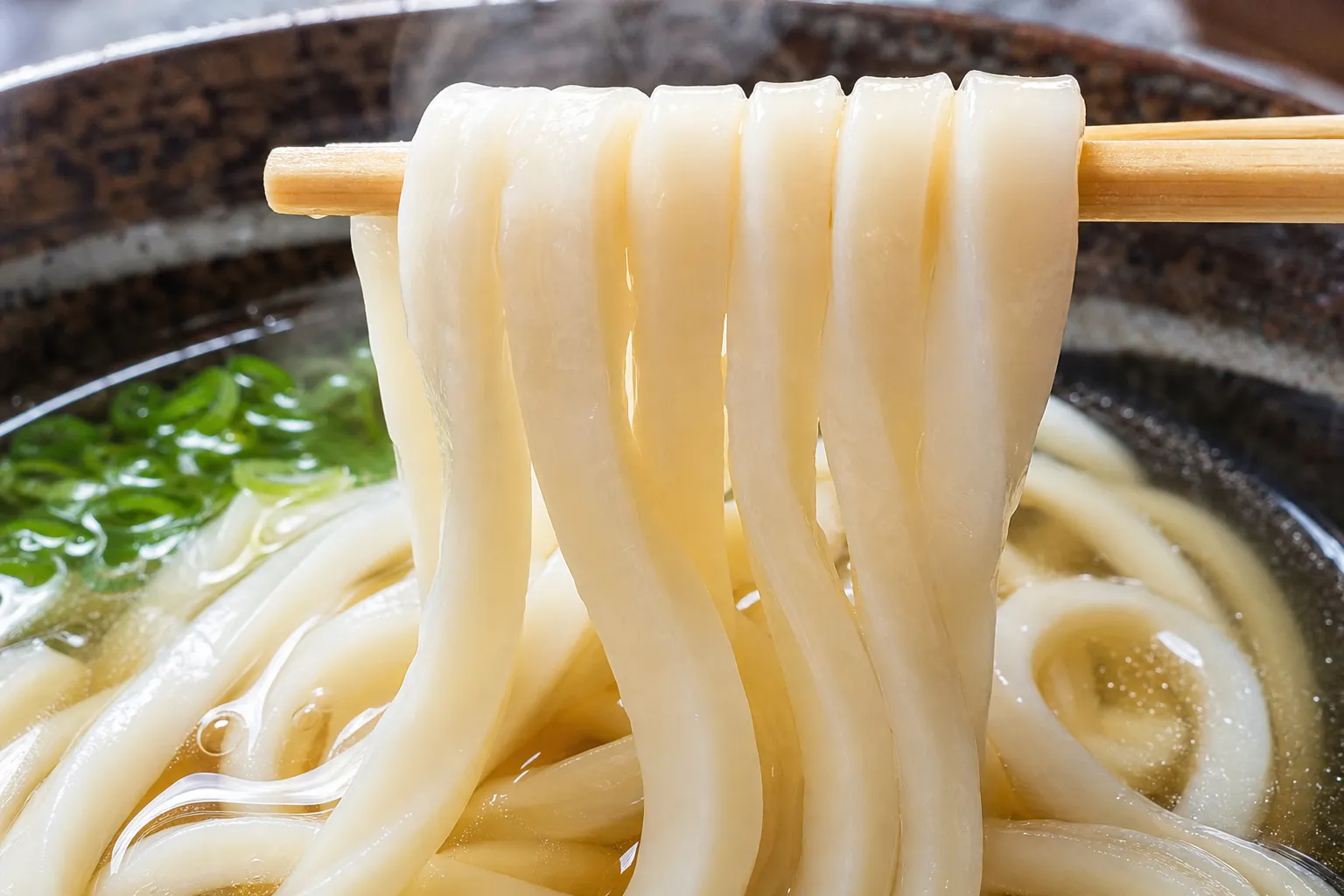
Everything about Sanuki udon serves the bite. The dough is kneaded hard — traditionally foot-kneaded, stepped on under cloth to develop the gluten — then rested and cut thick with squared-off edges. Boiled right, it comes out smooth and glossy on the surface with a dense, springy, chewy core. That's koshi, and Kagawa people will judge a shop on it alone.
The serving styles are a choose-your-own-adventure, and you should try a few:
- Kake — in hot dashi broth, simple and pure
- Bukkake — a small pour of concentrated tsuyu straight over the noodles, with condiments
- Zaru — cold, dipped in tsuyu, where the chew shows off hardest
- Kamatama — hot noodles straight from the pot tossed with raw egg and a splash of soy, like a Japanese carbonara, and yes it is as good as that sounds
I had kamatama first and nearly didn't try anything else. Then I had three more bowls across one day, because in Kagawa that's just a normal thing to do.
How it's made
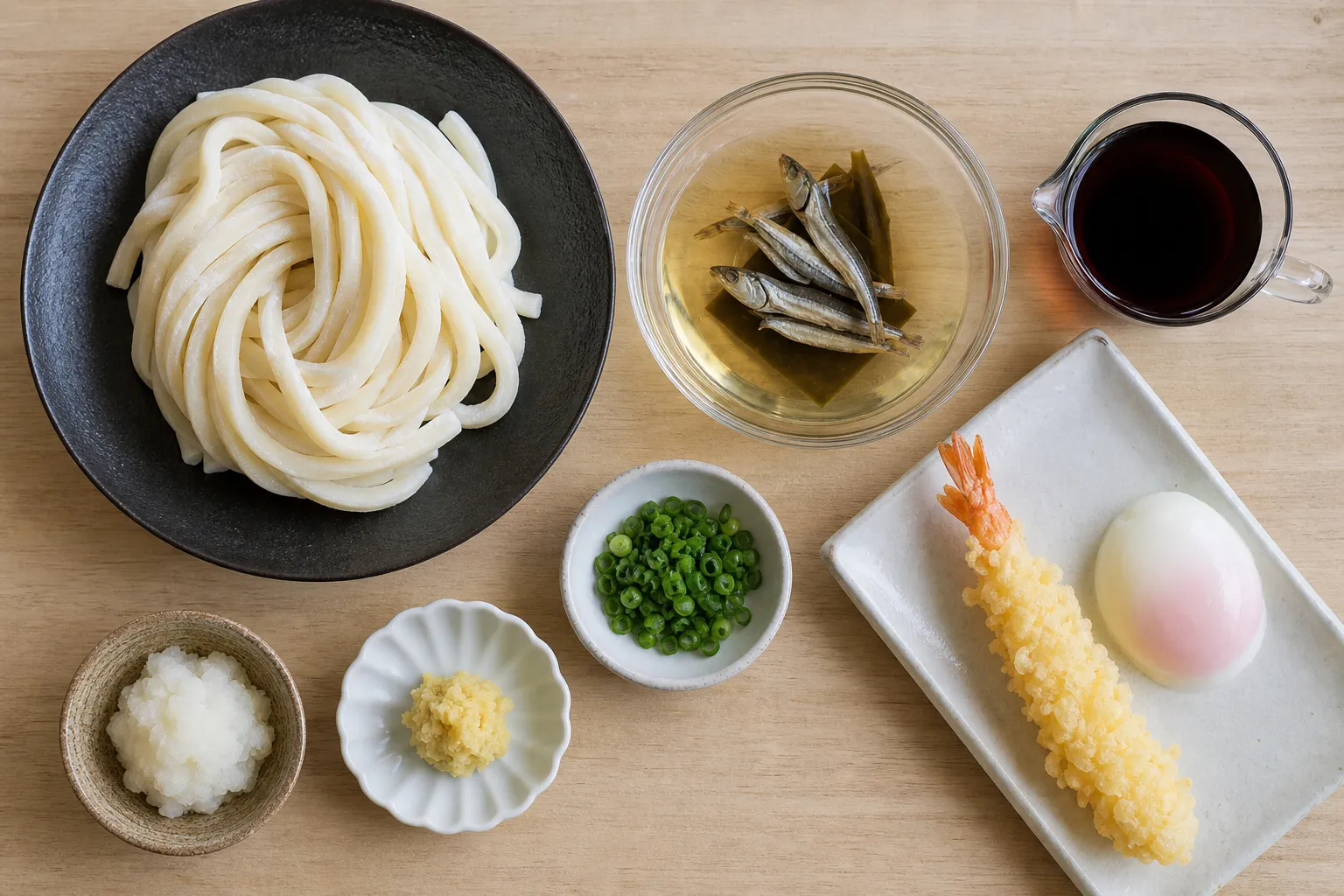
- Mix wheat flour, salt, and water into a stiff dough
- Knead it hard — traditionally by foot, under cloth — to build the gluten that gives koshi
- Rest the dough, then roll it out and cut into thick noodles with square edges
- Boil in lots of water until smooth-surfaced and springy at the core, then rinse (for cold styles) or serve straight (for hot)
- Build a clean dashi from iriko (dried sardines) and kombu for the broth or dipping tsuyu
- Serve your way — kake, bukkake, zaru, or kamatama with raw egg — and add condiments to taste
Before you go — survive your first self-service shop
Your questions, answered honestly
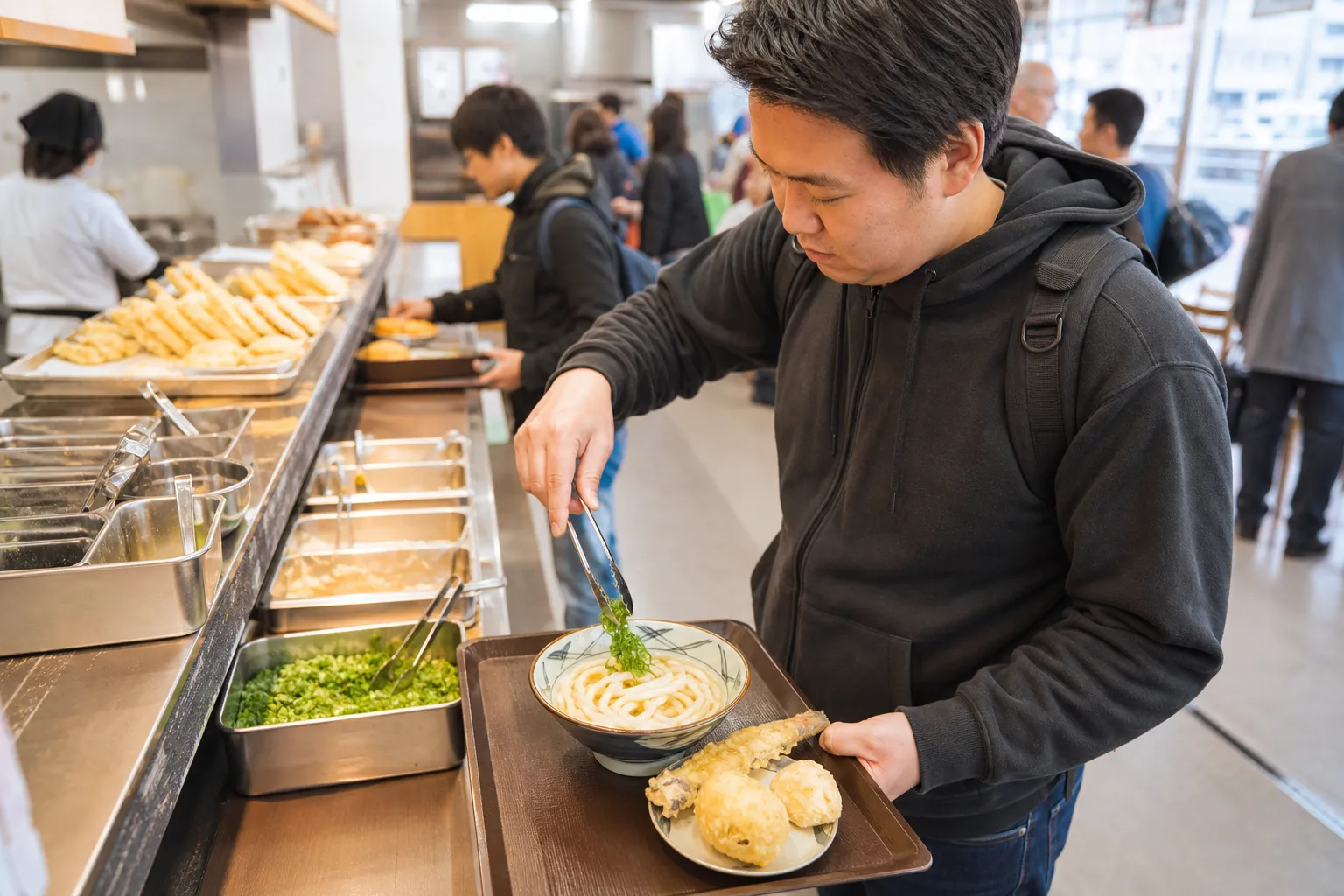
"A lot of shops look like cafeterias. How does that work?" — That's self-service (セルフ), and it's the real Kagawa experience. You grab a tray, tell them the noodle size, get your bowl, add your own toppings (tempura, etc.), pour your own broth or tsuyu, pay at the end, and bus your own table. It's fast, cheap, and fantastic. Watch one local first, then copy.
"What size do I order?" — Usually kake-ichi-dama (one portion) or ni-dama (two). The noodles are filling, but they're so good you'll want two. I always wanted two.
"Which style should a first-timer get?" — Kamatama (hot noodles + raw egg + soy) for maximum joy, or plain kake to taste the noodle and dashi cleanly. Both are easy and forgiving.
"Is the raw egg in kamatama safe?" — Yes — Japanese eggs are produced and graded for safe raw eating, and it's a standard, beloved way to eat udon here. If you'd rather not, order kake or bukkake instead.
What the staff will ask you
| You'll hear | Romaji | Meaning | Just say |
|---|---|---|---|
| 何玉にしますか? | Nan-dama ni shimasu ka? | "How many portions of noodles?" | Ichi-dama (one) or ni-dama (two) |
| 温かいのと冷たいの、どちらですか? | Atatakai no to tsumetai no, dochira desu ka? | "Hot or cold?" | Atatakai de (hot) / tsumetai de (cold) |
| 天ぷらはお取りください | Tenpura wa otori kudasai | "Help yourself to the tempura" | Hai, arigatō gozaimasu — and grab one |
To order, just say "Kake udon kudasai" (かけうどんください) — "Udon in broth, please."
Where to eat it
- Takamatsu & across Kagawa — the udon heartland; famous self-service shops are scattered through the city and countryside, some opening early morning. Many close when the day's noodles run out, so go earlier rather than later.
- Rural "udon pilgrimage" spots — legendary shops sit out among the rice fields; an udon taxi or rental car helps you reach the cult favorites. Check current hours and days off before you set out.
- Kagawa-themed udon shops nationwide — chains and specialists in Tokyo, Osaka, and beyond serve respectable Sanuki-style udon if you can't get to Shikoku. Good, though the on-island self-service ritual is the real magic.
Soul Score
Local Roots5/5
First-Timer Friendly5/5
Adventure Level3/5
Comfort Level5/5
Travel Worthy4/5
These scores are one obsessed eater's gut feeling — not a verdict. A low number isn't a bad mark, just a different kind of adventure.
Know someone planning Japan?
← All Articles
Local Food · Takamatsu, Kagawa
Still hungry?
Eat more from Kagawa
Local FoodKagawa
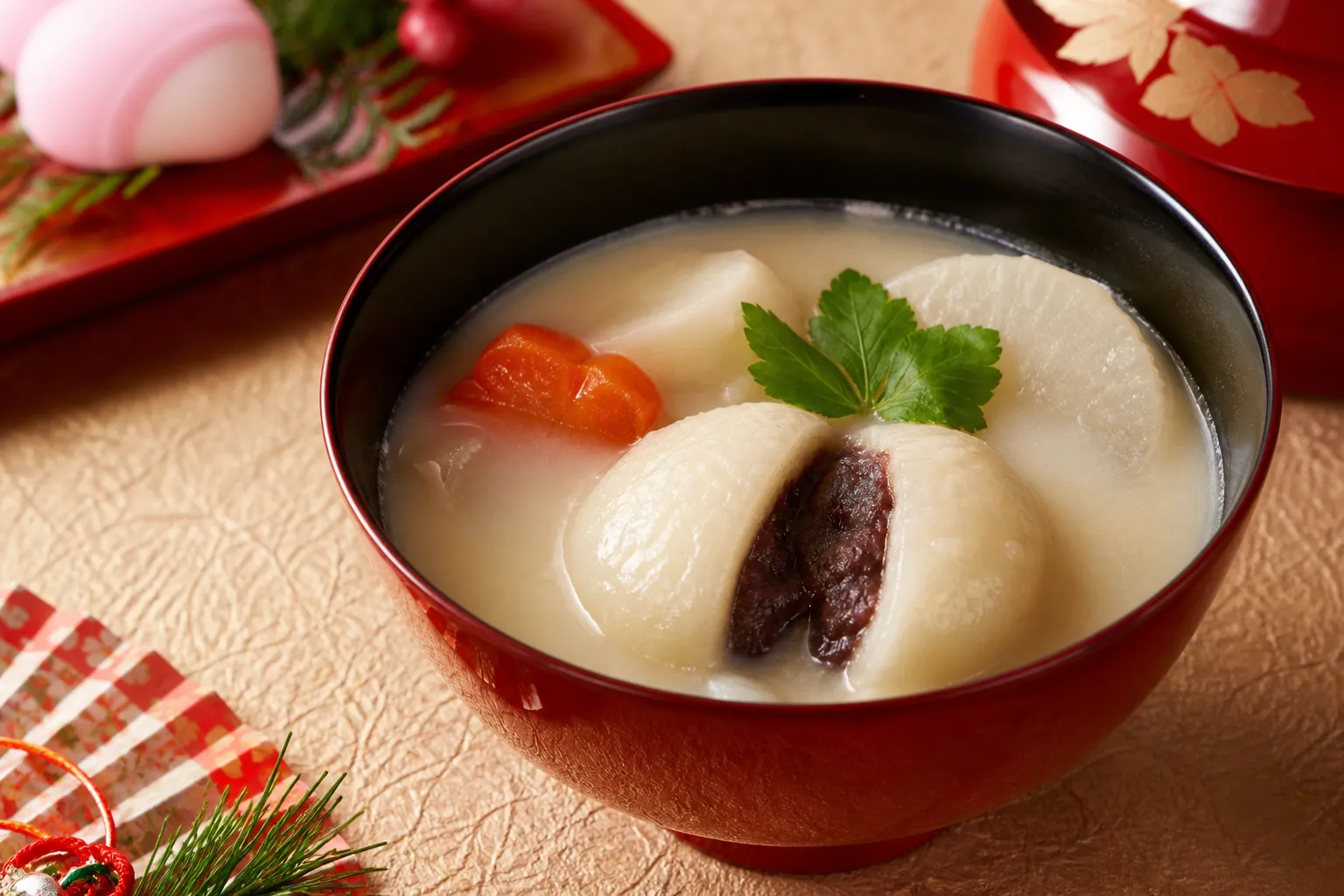
An-mochi Zoni (あん餅雑煮)
You bite into the mochi in your New Year soup and — wait — it's full of sweet red-bean paste, in a savory white-miso broth. Kagawa's gloriously confusing New Year bowl, born from a secret history of sugar.
July 12, 2026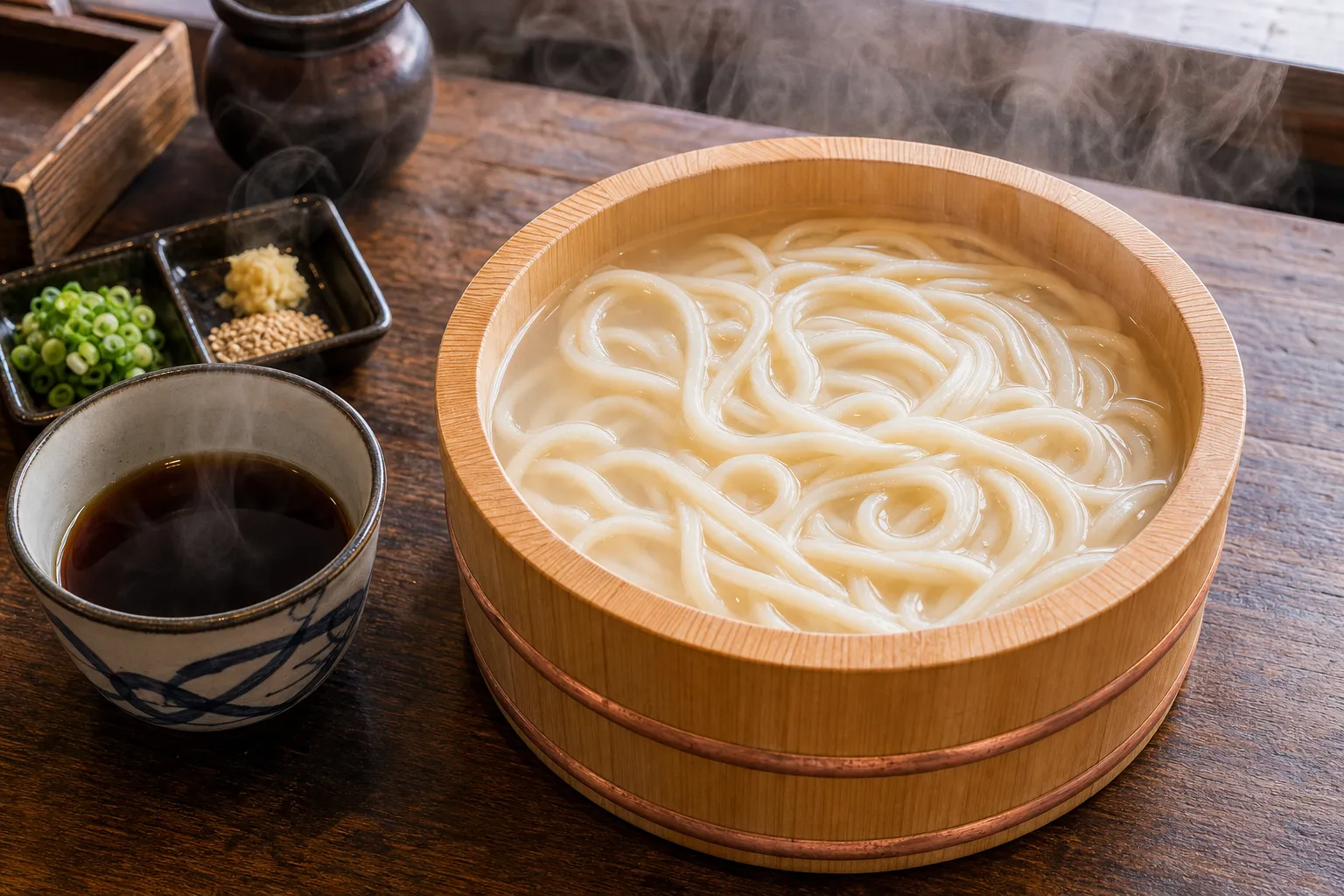
Local FoodKagawa
Kamaage Udon (釜揚げうどん)
Straight from the pot to your tub, still swimming in its own cloudy cooking water, steam curling up — no cold rinse, no soup, nothing hiding the noodle. Kagawa serves udon at its softest, warmest, most naked, and it's a revelation.
July 9, 2026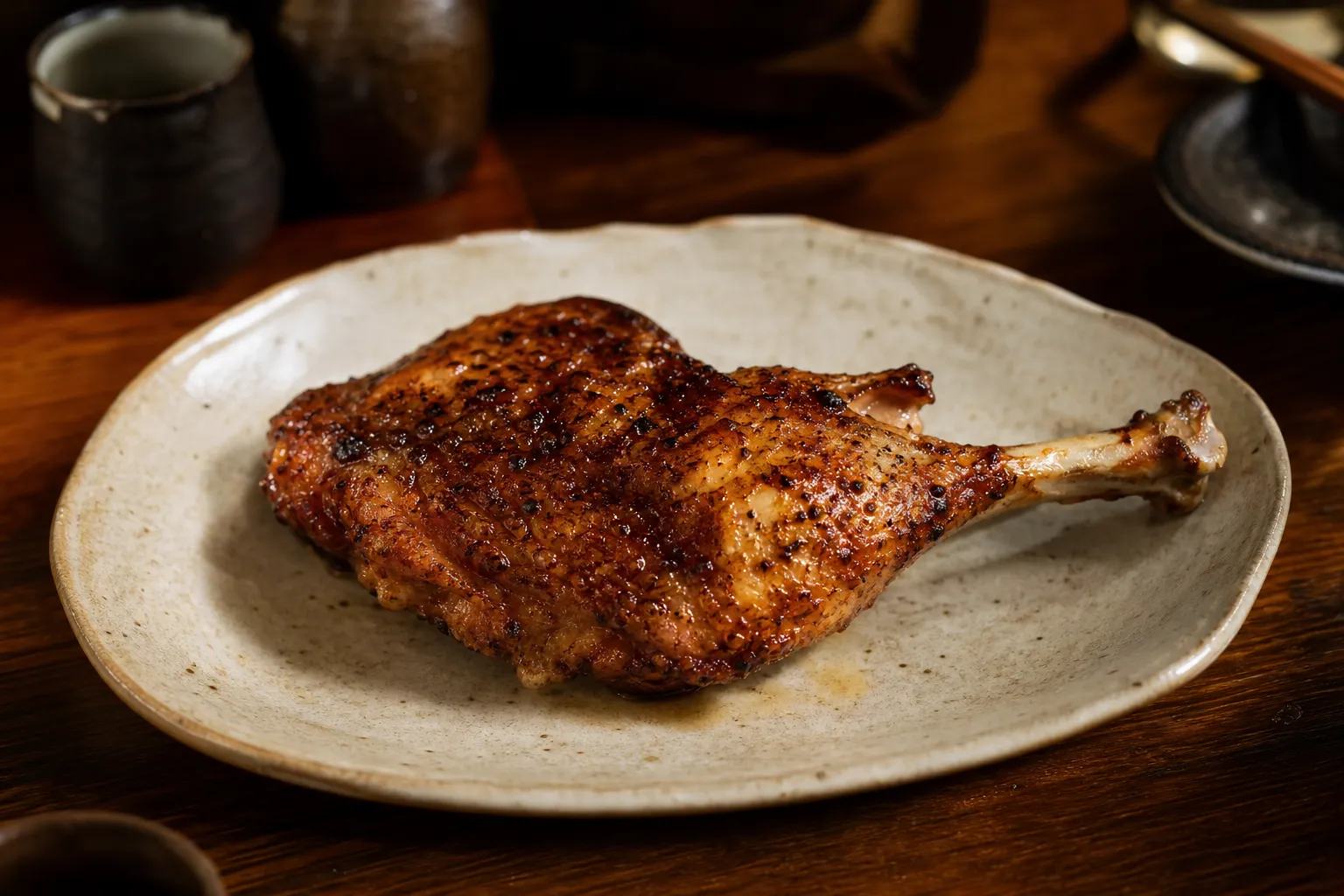
Local FoodMarugame, Kagawa
Honetsuki-dori (骨付鳥)
You don't cut it, you don't fork it — you grab the bone with a napkin and bite, and the first thing that hits you is the black pepper, hard, before you've even tasted the chicken.
July 5, 2026