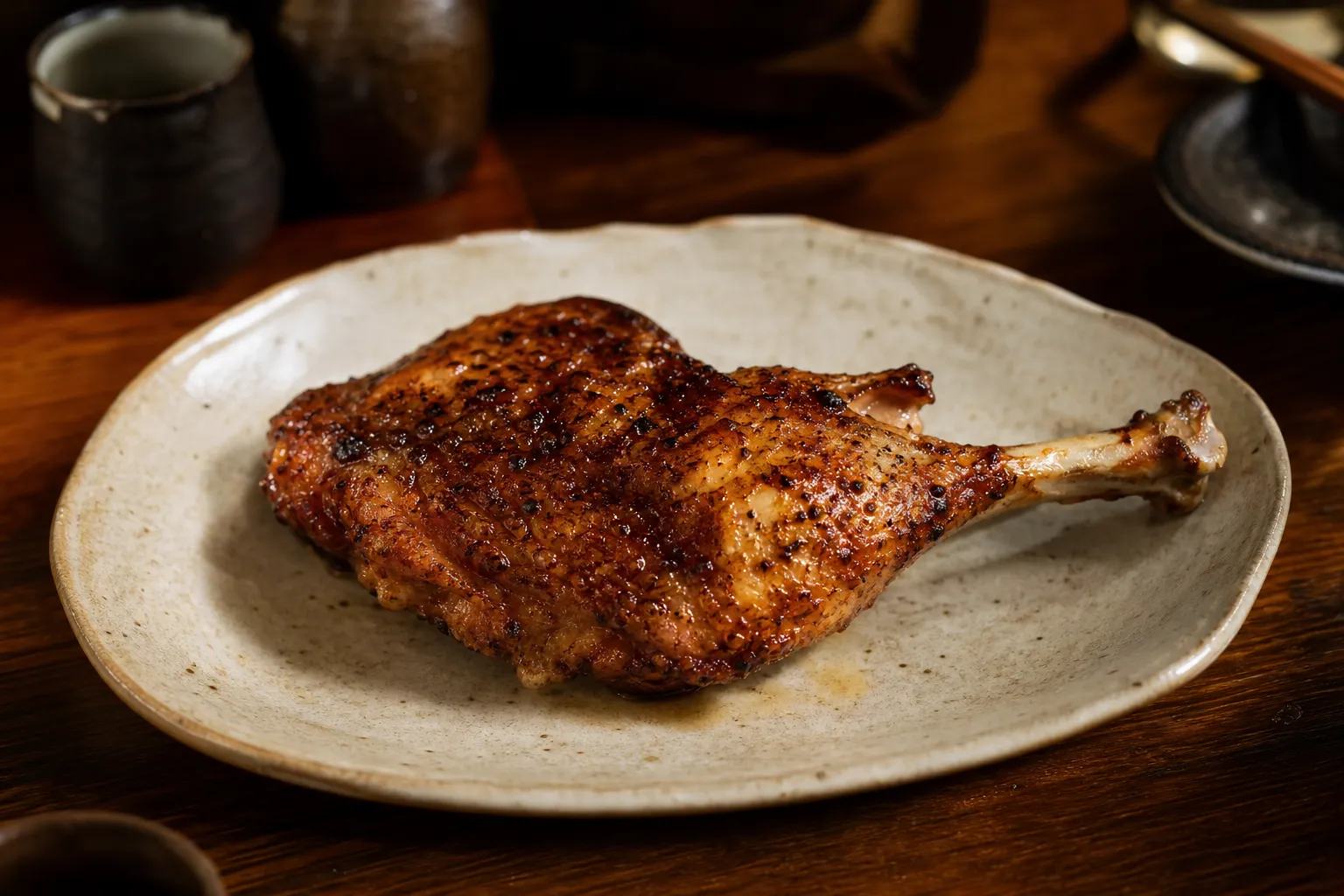
The grease is already running down toward my wrist and I do not care. There is black pepper at the back of my throat, garlic in the air, and a whole chicken leg gripped in my fist like I'm a medieval baron who just conquered something. I bite. It fights back a little — good — and then it gives, dark skin and hot juice and pepper, pepper, pepper. I made a noise. The people next to me did not react, because in Kagawa this is just Tuesday.
Share this dish


You don't cut it, you don't fork it — you grab the bone with a napkin and bite, and the first thing that hits you is the black pepper, hard, before you've even tasted the chicken.
🍜 Planning a food trip to Kagawa?Add this dish to my Food Trip →
 Add this dish to my Food Trip →
This is honetsuki-dori (骨付鳥, "bone-attached bird"): a single whole chicken leg-and-thigh, seasoned hard with garlic and black pepper, roasted until the skin goes glossy and near-black, and served with zero pretense — no sauce swirl, no garnish, just the bird, its own dripping juices, and often a little cabbage to mop things up. It's the signature of Marugame, in Kagawa Prefecture, the same small prefecture that's already famous for udon. Locals eat it with their hands, elbows out, over beer. There is no elegant way to do this. That's the entire point.
How a Marugame restaurant turned one chicken leg into a regional identity
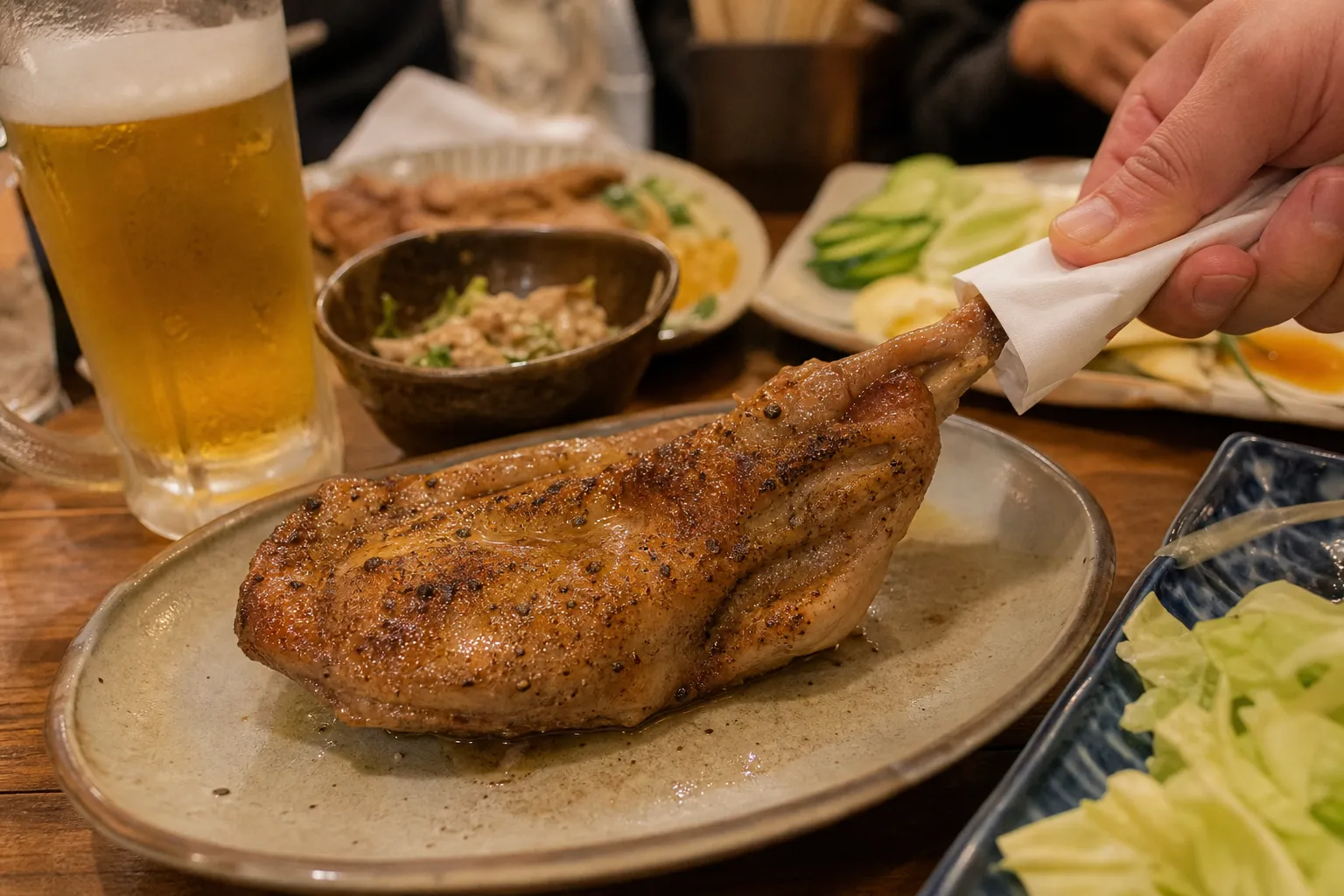
Honetsuki-dori isn't some centuries-old court dish — and honestly I love that. It was born in postwar Marugame, in the early 1950s, at a restaurant that started roasting whole seasoned chicken legs and watching them fly out the door. The idea spread, other shops picked it up, and within a generation this hand-held, pepper-slicked chicken leg had become a full-blown local identity. Kagawa is Japan's smallest prefecture and it punches absurdly above its weight on food — udon in the daytime, honetsuki-dori at night.
What gets me is how unfancy the origin is. No emperor, no temple, no thousand-year legend. Just a shop, a good idea, and a town that decided this was theirs now. I find that kind of moving, actually. Soul food doesn't need a pedigree. It needs a town that shows up for it, and Marugame shows up.
Oya vs hina — the one choice that changes everything
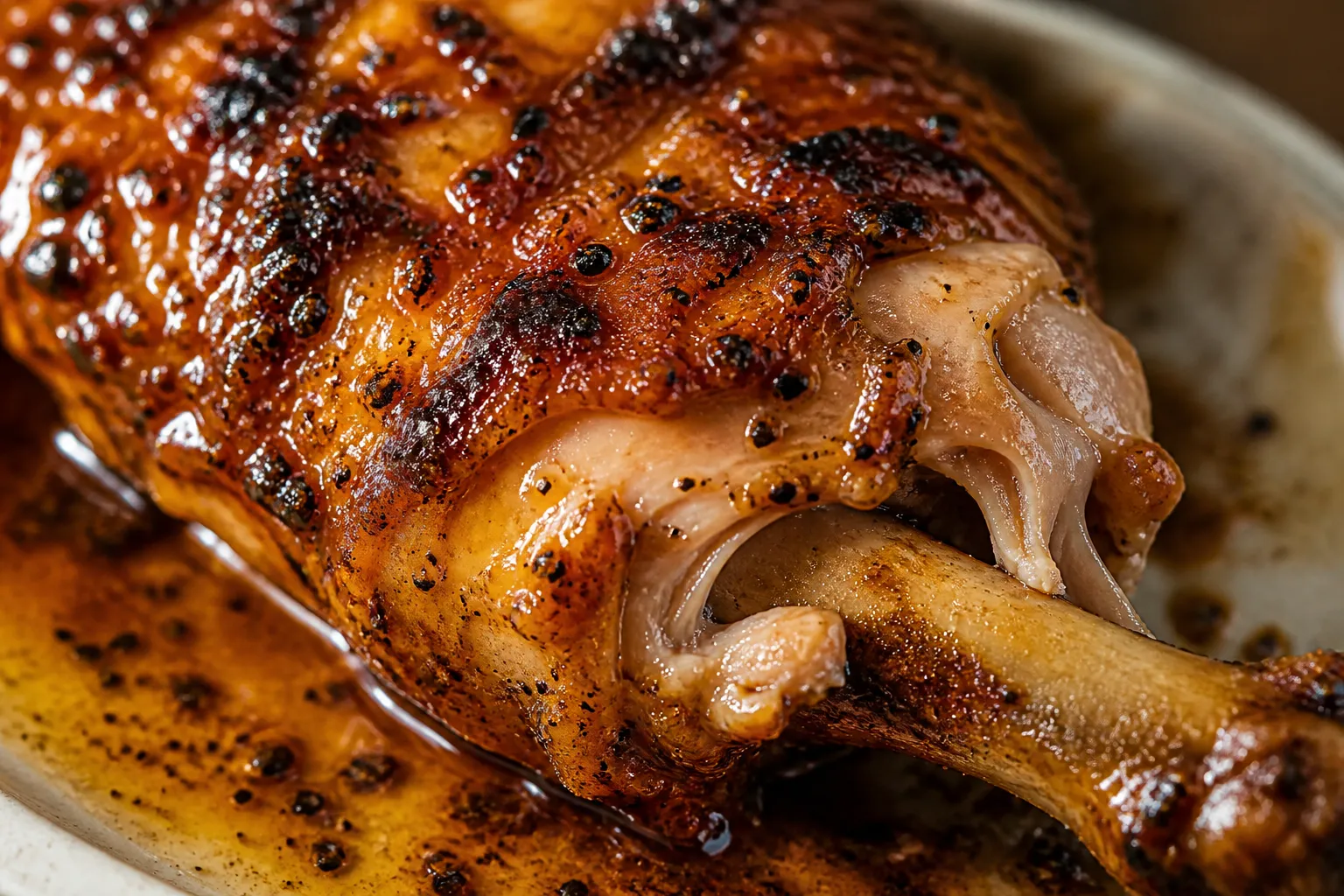
Here's the fork in the road, and it matters more than the sauce ever could: you're usually asked to pick oya (親, "parent") or hina (雛, "chick"). Oya is older chicken — chewier, denser, with a deep, almost gamey intensity you have to work for; regulars swear by it and their jaws are stronger than mine. Hina is young chicken — tender, juicy, the skin crisping easily, the easy first-timer's yes.
The seasoning is the constant: a lot of garlic, a serious amount of coarse black pepper, salt, and the chicken's own rendered fat basting it as it roasts. The result isn't spicy the way chili is spicy. It's peppery — warm, prickling, insistent, the kind of heat that makes the cold beer beside it feel less like a drink and more like a necessity. I ordered hina first, loved it, then ordered oya to be a purist, and spent the rest of the meal quietly respecting the locals with the stronger jaws.
How honetsuki-dori is made
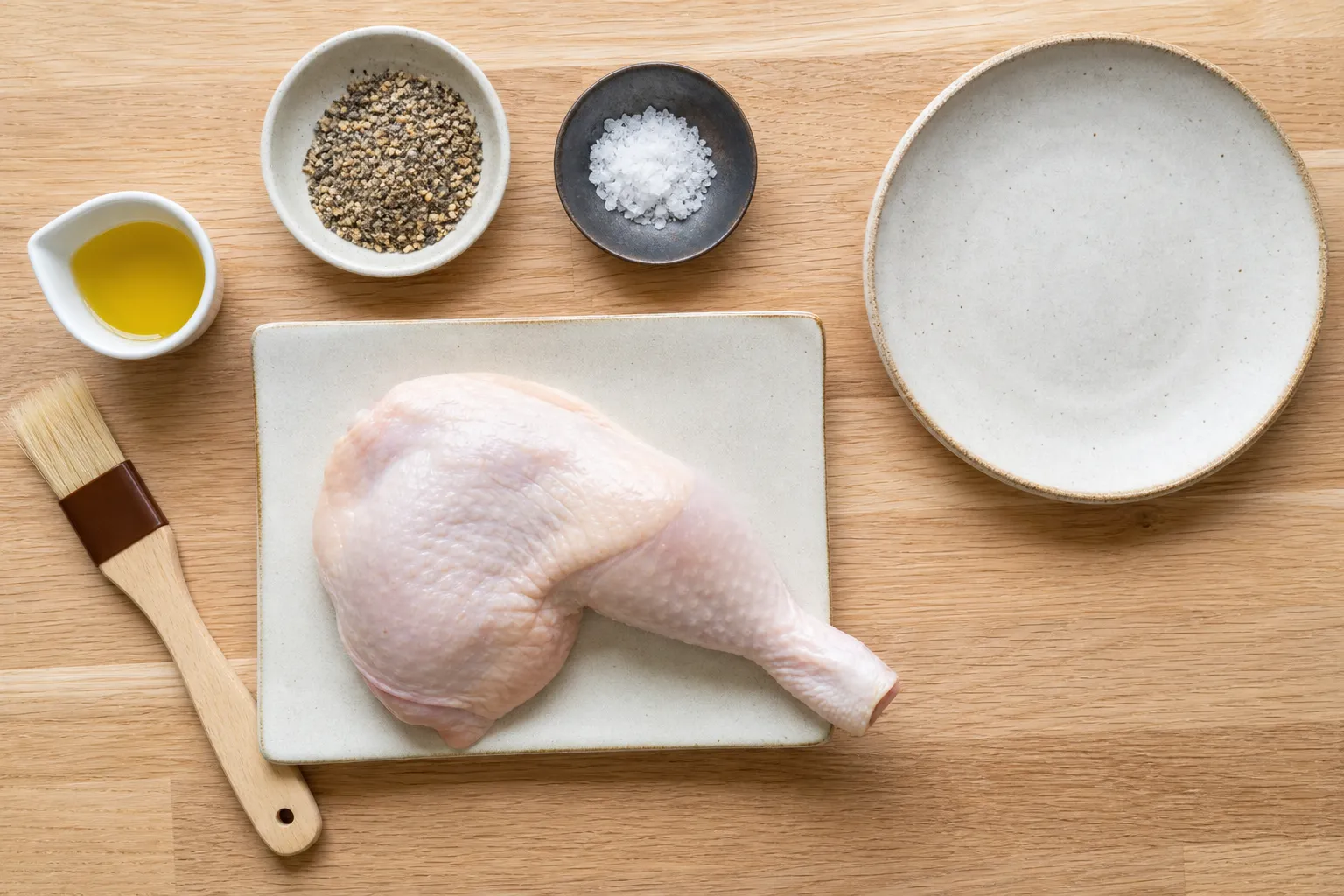
- A whole bone-in chicken leg (thigh plus drumstick, kept as one piece) is selected — oya for chew, hina for tenderness
- It's seasoned aggressively with garlic, salt, and a heavy hand of coarse black pepper
- The leg roasts whole in a hot oven or grill, its own fat rendering and basting the skin until it turns dark and glossy
- The rendered, peppery drippings are kept — many shops let you dip cabbage or bread into that liquid gold
- It arrives whole and near-black on a plain plate, meant to be picked up by the bone and eaten with your hands
Before you go — get your hands dirty
Your questions, answered honestly
"Oya or hina — which do I get?" — First time, get hina. It's tender, juicy, and forgiving. Oya is the connoisseur's pick: intense, chewy, genuinely a workout. Get oya on your second leg once you know you're in.
"How do I eat this without wearing it?" — You don't, entirely. Grab the bone (there's usually a napkin or wrapper around it), bite directly, and accept that your fingers are now part of the meal. Wet wipes are your friend. Do not order this on a first date in white.
"Is it actually spicy?" — It's peppery, not chili-hot. Big garlic, big black pepper, warm and prickling rather than burning. If you can handle a well-peppered steak, you're completely fine.
"What do I get on the side?" — Cabbage, to dip in the drippings. Rice or a rice ball to soak up the rest. And a cold beer, which is less a suggestion than a law of physics here.
What the staff will ask you
| You'll hear | Romaji | Meaning | Just say |
|---|---|---|---|
| 親と雛、どちらになさいますか? | Oya to hina, dochira ni nasaimasu ka? | "Oya (older, chewy) or hina (young, tender)?" | Hina de onegaishimasu (hina, please) |
| おにぎりはお付けしますか? | Onigiri wa otsuke shimasu ka? | "Would you like a rice ball with it?" | Onegaishimasu (yes, please) |
| お飲み物はいかがですか? | Onomimono wa ikaga desu ka? | "Anything to drink?" | Nama biiru o kudasai (a draft beer, please) |
To order, just say "Honetsuki-dori o kudasai" (骨付鳥をください) — "A bone-in chicken leg, please."
Where to eat it
- Marugame, Kagawa — the birthplace; the city has both the long-running originator-style restaurants and plenty of izakaya that treat honetsuki-dori as the house specialty.
- Takamatsu — Kagawa's biggest city and easiest base for travelers; several dedicated honetsuki-dori restaurants cluster around the central and station areas.
- Across Kagawa generally — because it's a regional identity, you'll find it on izakaya menus prefecture-wide, often listed simply as 骨付鳥.
Shops, hours, and the oya/hina lineup vary place to place, so check current details before you go — and bring more napkins than you think you need.
Soul Score
Local Roots4/5
First-Timer Friendly4/5
Adventure Level3/5
Comfort Level5/5
Travel Worthy4/5
These scores are one obsessed eater's gut feeling — not a verdict. A low number isn't a bad mark, just a different kind of adventure.
Know someone planning Japan?
← All Articles
Local Food · Marugame, Kagawa
Still hungry?
Eat more from Kagawa
Local FoodKagawa
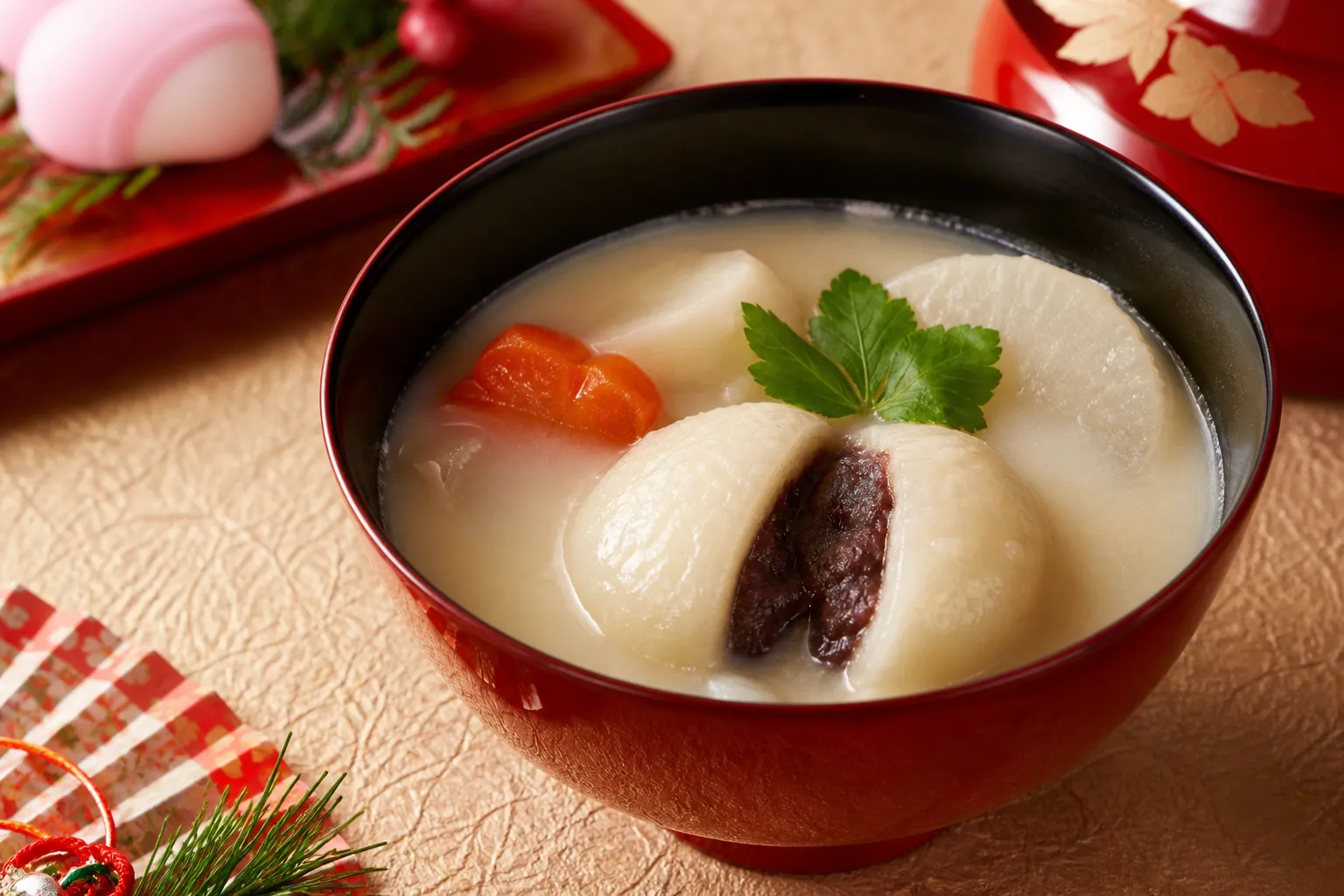
An-mochi Zoni (あん餅雑煮)
You bite into the mochi in your New Year soup and — wait — it's full of sweet red-bean paste, in a savory white-miso broth. Kagawa's gloriously confusing New Year bowl, born from a secret history of sugar.
July 12, 2026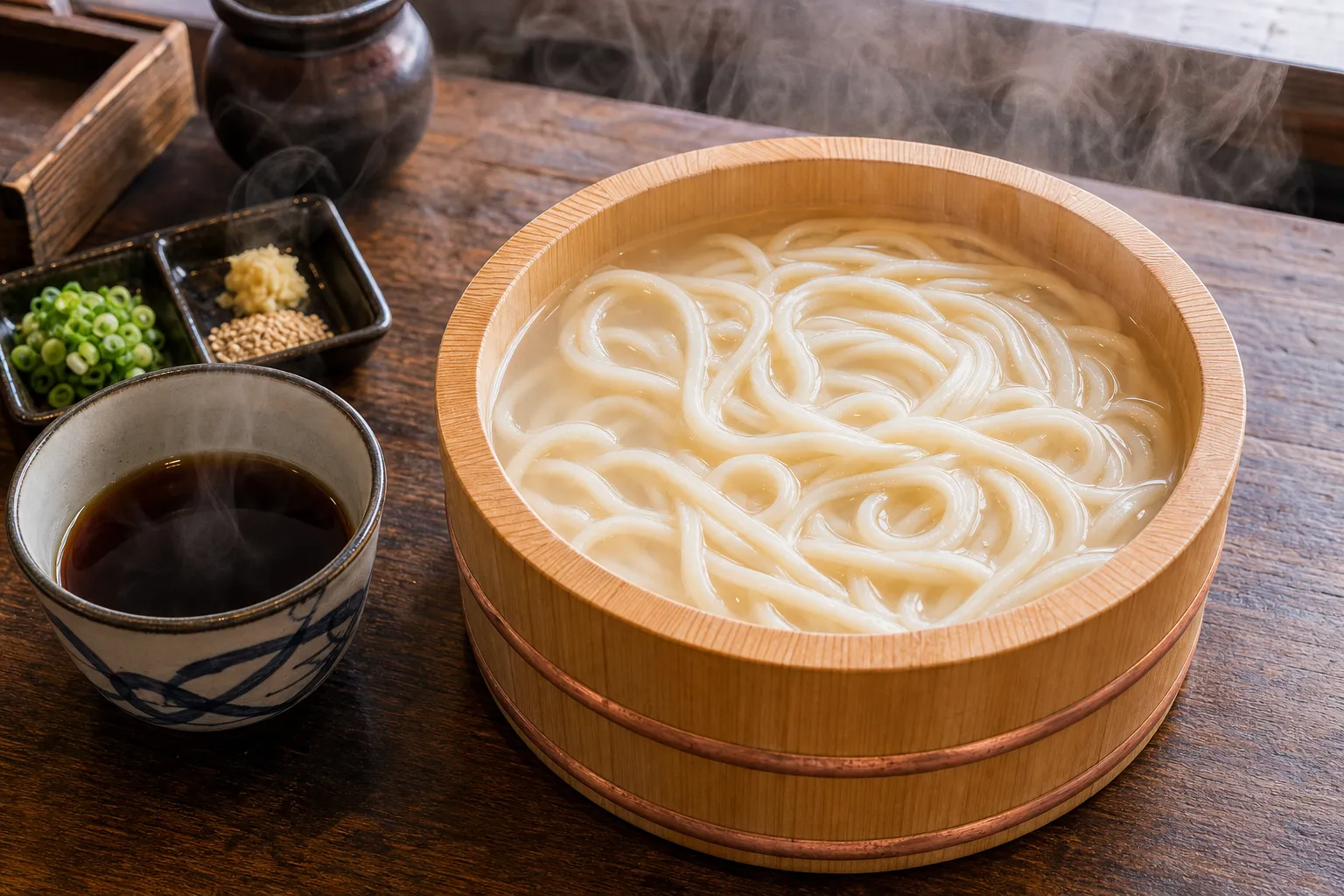
Local FoodKagawa
Kamaage Udon (釜揚げうどん)
Straight from the pot to your tub, still swimming in its own cloudy cooking water, steam curling up — no cold rinse, no soup, nothing hiding the noodle. Kagawa serves udon at its softest, warmest, most naked, and it's a revelation.
July 9, 2026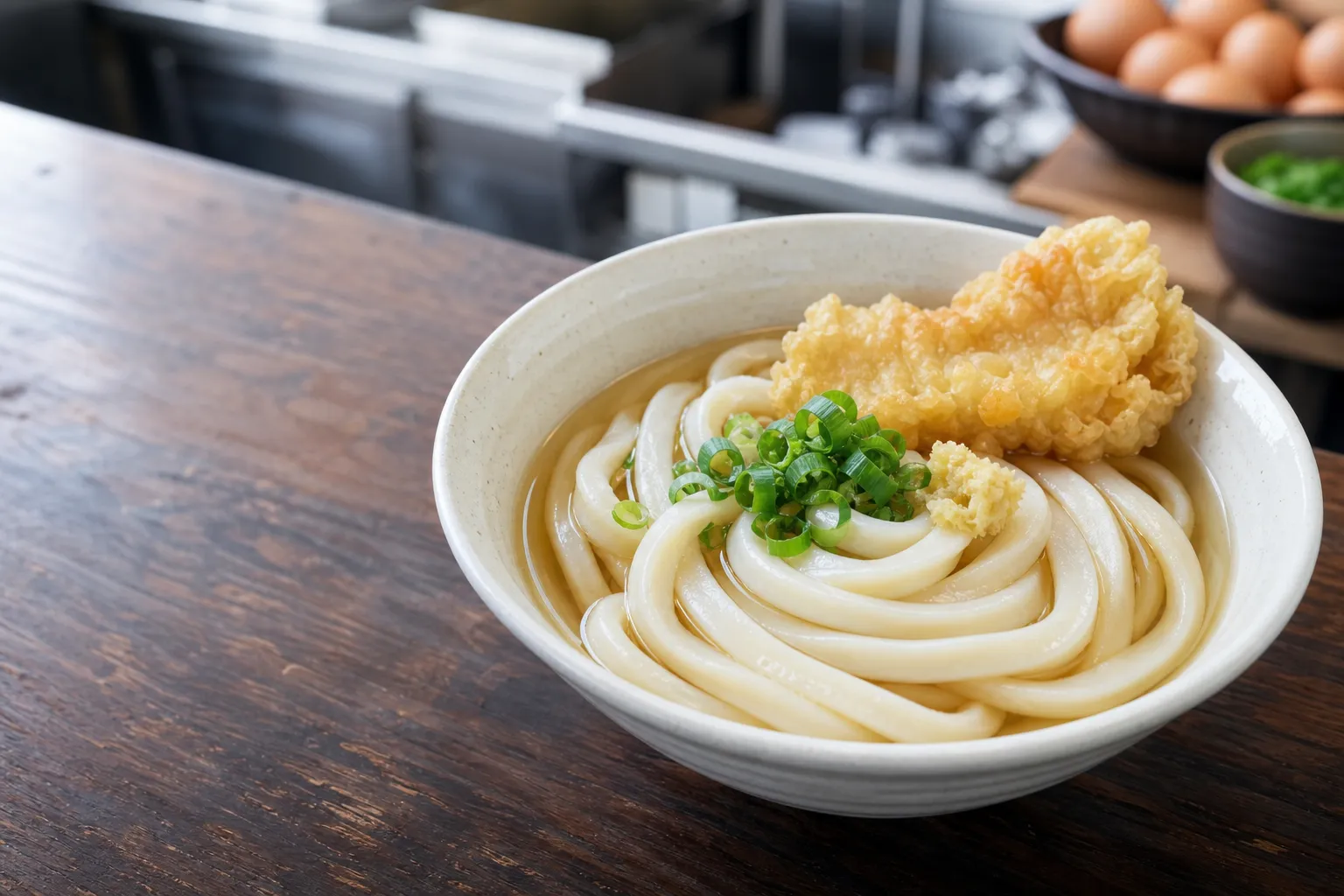
Local FoodTakamatsu, Kagawa
Sanuki Udon (讃岐うどん)
Thick, square-edged, defiantly chewy udon in a clear dashi — so good that a whole prefecture rebranded itself 'Udon Prefecture.' You grab a tray, you slurp, you leave changed.
June 27, 2026