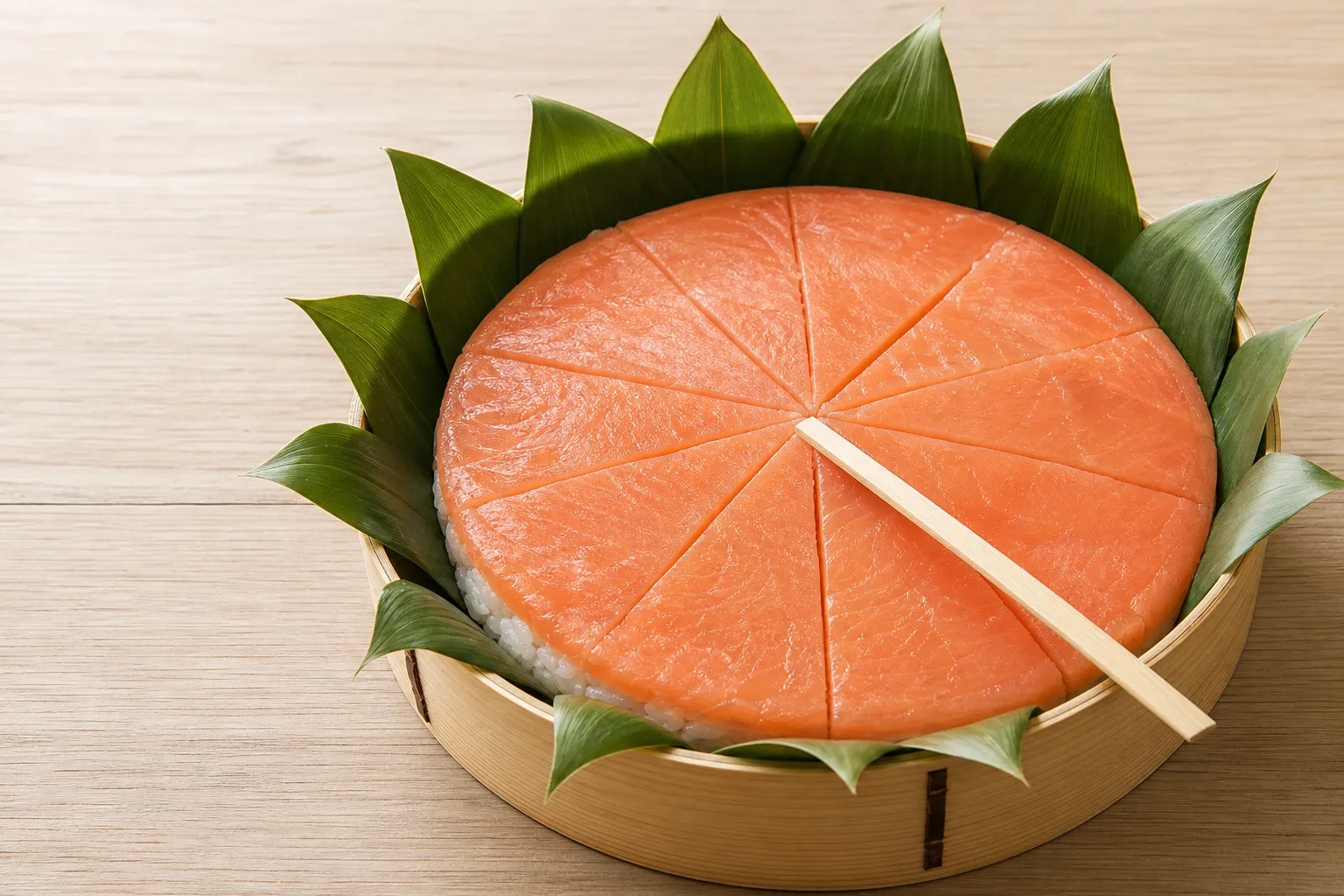
You unwrap it like a present. A flat wooden lid, then a bamboo cord you loosen, then big green bamboo leaves folding back one by one — and there it is: a perfect pink wheel of pressed sushi, glossy cured trout laid in a tidy spiral over vinegared rice, packed so tight and round it honestly looks like someone made a cake out of the sea. I just sat there for a second before cutting it. It felt rude to wreck something that pretty. (I got over it. Quickly.)
Share this dish


A pink wheel of pressed trout sushi, packed tight in a round wooden box and wrapped in bamboo leaves. You unwrap it like a present and cut it like a cake. Toyama's most beautiful lunch.
🍜 Planning a food trip to Toyama?Add this dish to my Food Trip →
 Add this dish to my Food Trip →
This is masu no sushi, Toyama's most famous food and one of Japan's most beloved ekiben (station lunch boxes). It's a pressed sushi — oshizushi — of vinegared rice topped with marinated masu (trout), packed into a round wooden box lined with bamboo leaves and weighted until it sets into a firm, sliceable wheel. You cut it into wedges, like a pink, fishy birthday cake, and eat it with your hands or chopsticks.
Toyama's river-trout tribute
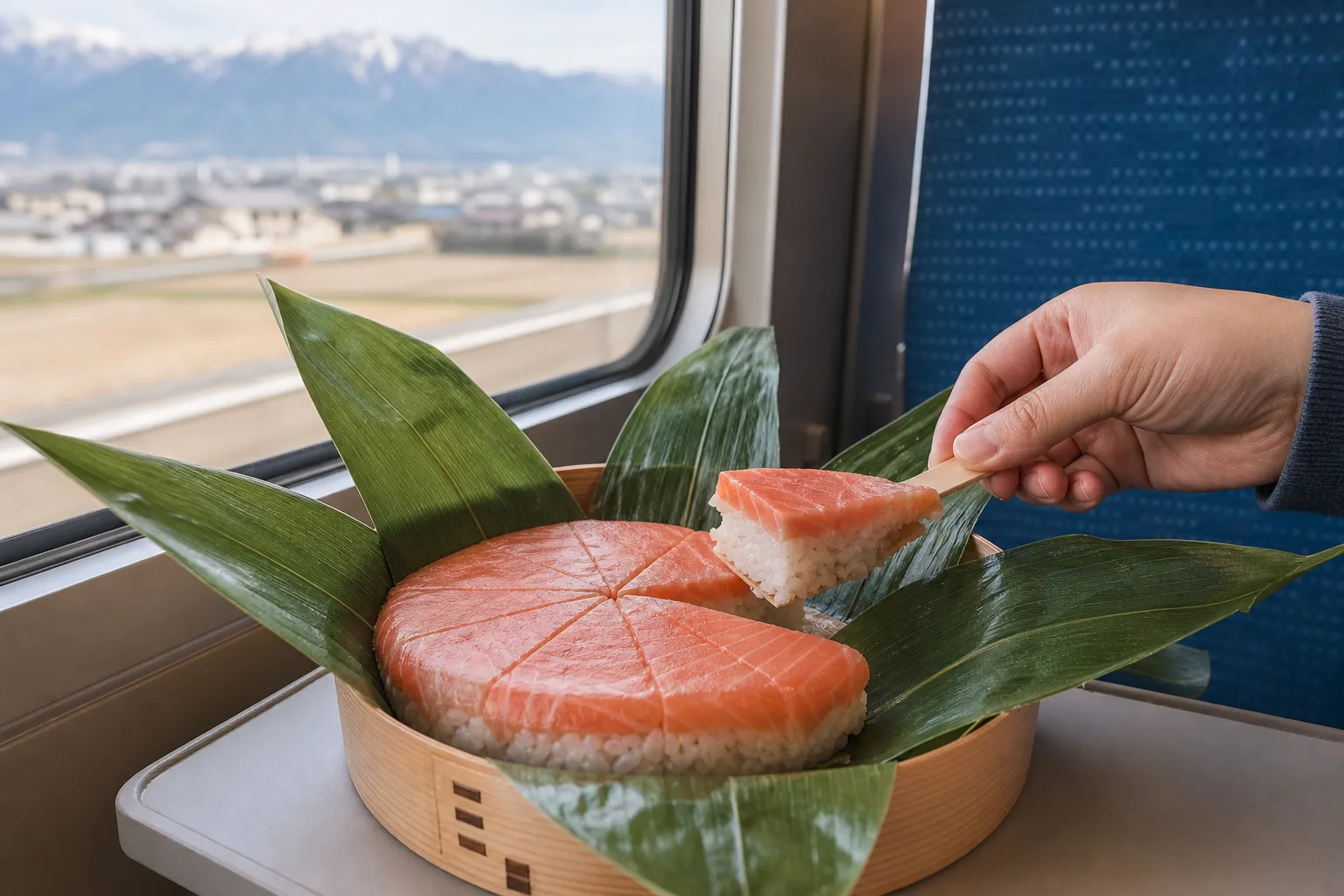
Toyama sits where cold, clean rivers like the Jinzū pour down from the mountains into the bay, and those rivers once ran thick with trout. Preserving the catch with vinegared rice, pressed and wrapped in bamboo leaves, gave you a sushi that kept and travelled — and the dish became famous enough that, by the Edo period, it was presented as a local tribute, with stories of Toyama's lord offering trout sushi to the shogun. When the railways came, it found its true calling as an ekiben, sold on platforms and carried all over Japan.
I find the bamboo leaves quietly genius. They're not just pretty — they're natural wrapping, mild antibacterial protection, and a faint grassy aroma all at once, perfumed into the rice by the time you open the box. It's the kind of low-tech brilliance that makes you respect how thoroughly people thought these things through, long before refrigeration. A beautiful object that is also, underneath, ruthlessly practical.
Pink, pressed, and gently tangy
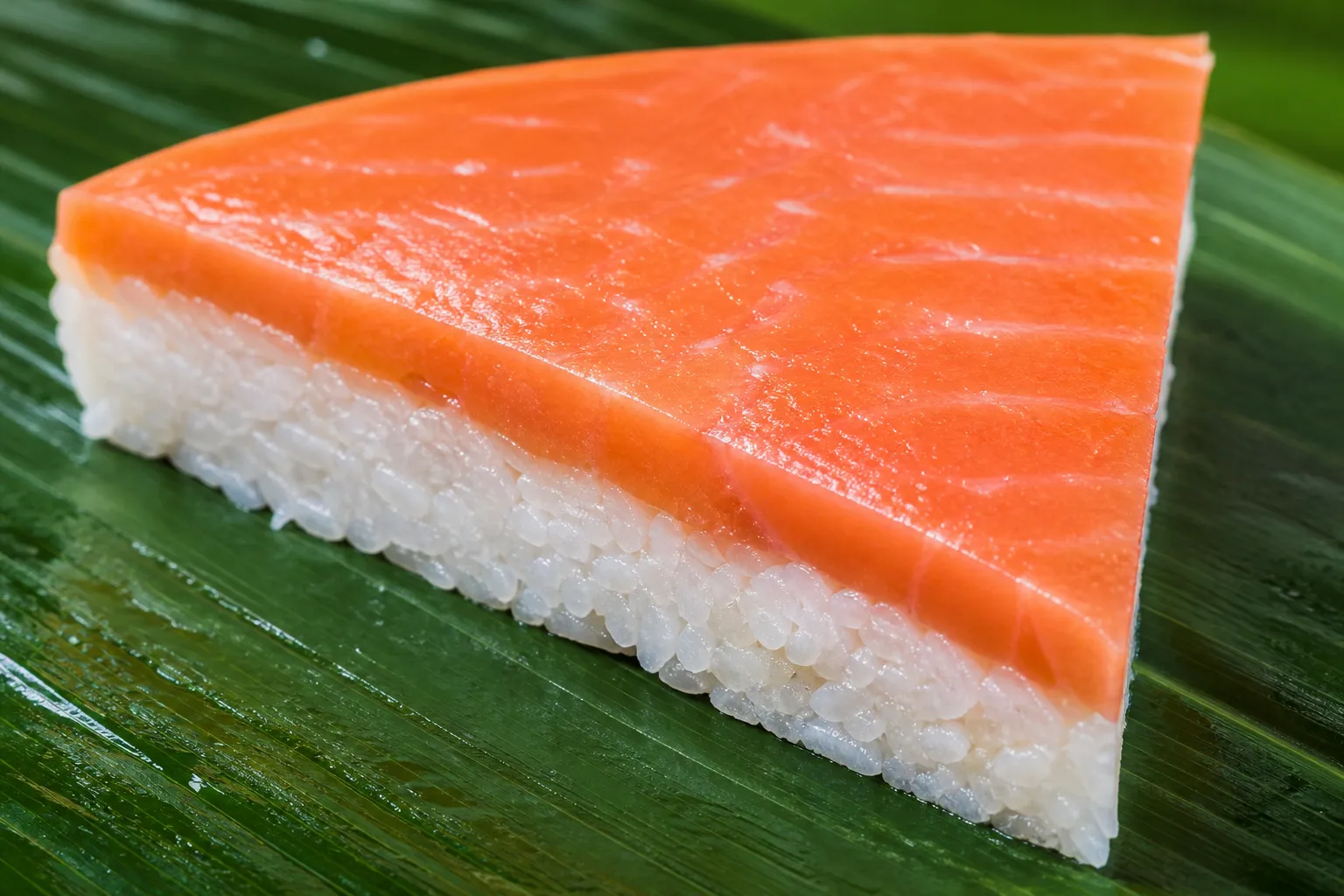
Cut a wedge and you see the construction: a clean layer of rosy, lightly cured trout pressed firmly onto a dense bed of vinegared rice, the whole thing holding its shape like a slice of terrine. The trout is silky and mild — less rich than salmon, gently salty-sweet from its marinade — and the rice is firm, tangy, and faintly perfumed by the bamboo. Because it's pressed, the texture is denser and more cohesive than loose nigiri; every bite is compact and satisfying.
The balance is the point: tart rice against mild fish, soft against firm, with that grassy bamboo note tying it together. Some boxes come single-layer, some double for the hungry. Squeeze the little wedge of sudachi or lemon if it's tucked in, and eat. I bought one as a train lunch and finished it before the train had even left the platform. Then I wished I'd bought two.
How it's made
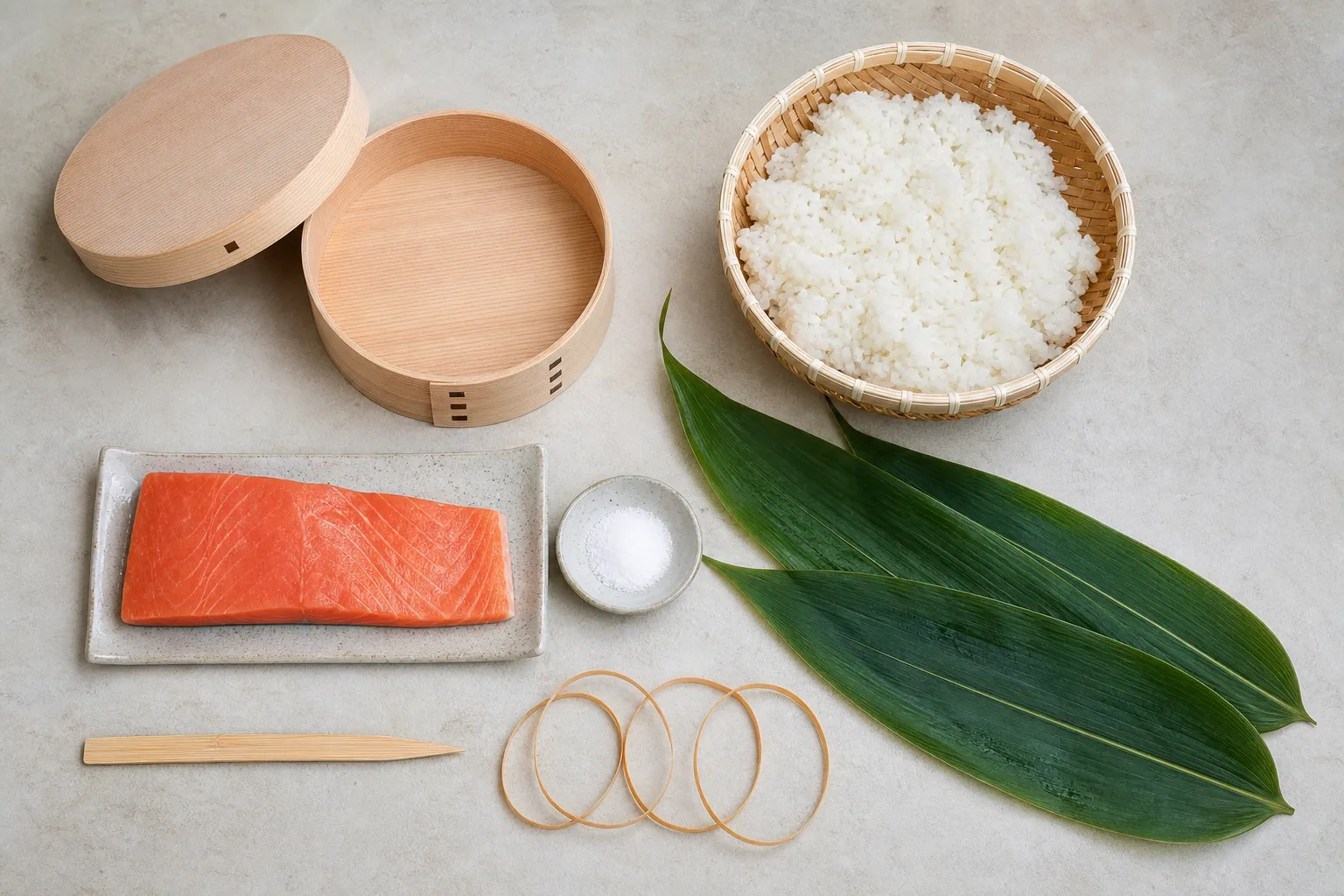
- Fillet and lightly cure trout (masu) in salt and vinegar until silky and mildly tangy
- Line a round wooden box (magewappa) with green bamboo leaves, points fanning out
- Lay the trout in a neat spiral against the leaves
- Pack vinegared sushi rice firmly on top
- Fold the bamboo leaves over, close the lid, and press with a weight until it sets into a firm wheel
- Unwrap, cut into wedges, and eat — ideally the same day
Before you go — for the sushi-curious
Your questions, answered honestly
"Is the trout raw?" — It's cured (salted and vinegar-marinated), not served raw like sashimi, which firms it up and mellows the flavor. Mild, silky, and very approachable — a gentle introduction to pressed fish.
"How do I eat a whole round box?" — Cut it into wedges like a cake (some boxes even include a little plastic knife or come pre-scored) and eat the wedges by hand or with chopsticks. It's made for sharing — or for one very happy person.
"Will it keep?" — It's best eaten the same day. It travels well as a train lunch but isn't meant to sit for long, so buy it close to when you'll eat it and don't leave it in a hot bag.
"One layer or two?" — Single-layer boxes are the standard; double-layer ones exist for bigger appetites or sharing. Pick by hunger.
What the staff will ask you
| You'll hear | Romaji | Meaning | Just say |
|---|---|---|---|
| 一段と二段、どちらにしますか? | Ichidan to nidan, dochira ni shimasu ka? | "One layer or two?" | Ichidan de onegaishimasu (one layer, please) |
| 保冷剤はお付けしますか? | Horeizai wa otsuke shimasu ka? | "Add an ice pack?" | Hai, onegaishimasu (yes please) |
| お召し上がりはいつ頃ですか? | Omeshiagari wa itsu-goro desu ka? | "When will you eat it?" | Kyō-jū desu (today) |
To order, just say "Masu no sushi kudasai" (ます寿司ください) — "Trout sushi, please."
Where to eat it
- Toyama Station & the city — the home of masu no sushi, where station kiosks, dedicated makers, and department-store food halls sell freshly pressed boxes. The obvious first stop, and a perfect train lunch.
- Specialty masuzushi makers around Toyama — many long-running shops press their own daily, each with a slightly different cure and rice balance; trying a couple is half the fun. Hours vary, so check before you go.
- Ekiben counters & department stores beyond Toyama — as one of Japan's most famous station lunches, masu no sushi often appears at major-city ekiben fairs and food halls. Availability changes, so confirm before making a trip for it.
Soul Score
Local Roots5/5
First-Timer Friendly4/5
Adventure Level3/5
Comfort Level4/5
Travel Worthy4/5
These scores are one obsessed eater's gut feeling — not a verdict. A low number isn't a bad mark, just a different kind of adventure.
Know someone planning Japan?
← All Articles
Local Food · Toyama, Toyama
Still hungry?
Eat more from Toyama
Local FoodToyama
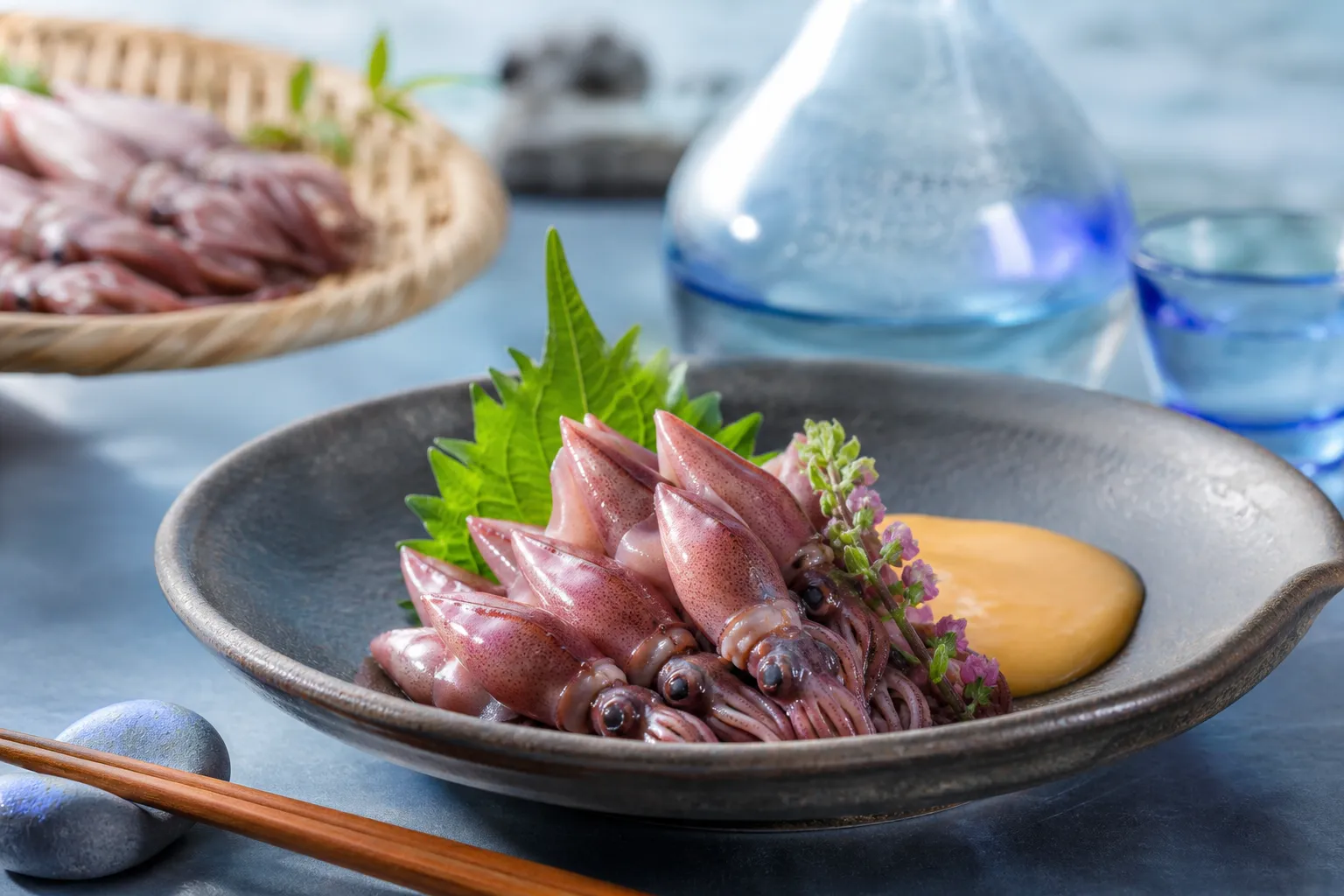
Hotaruika, Firefly Squid (ホタルイカ)
Squid the size of your thumb that glow electric blue in Toyama Bay, then arrive on your plate whole — boiled, curled, and dressed in sweet-tart vinegar-miso. Spring in one tiny, briny, burst-in-your-mouth bite.
July 12, 2026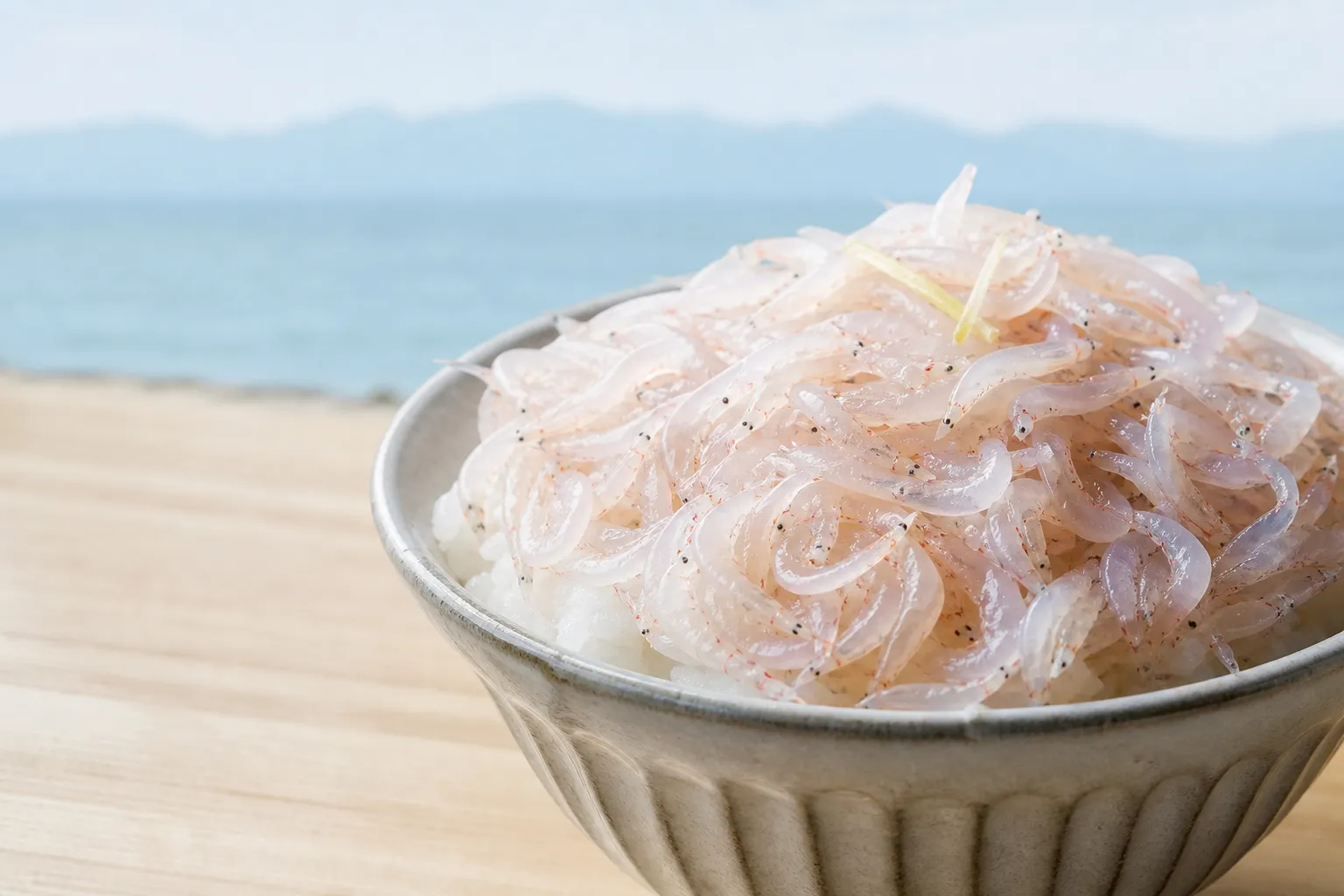
Local FoodToyama
Shiroebi-don (白えび丼)
A whole bowl piled with hundreds of tiny, ghost-pink shrimp so delicate they barely hold their shape — and then they dissolve into pure sweetness before you can even chew.
July 5, 2026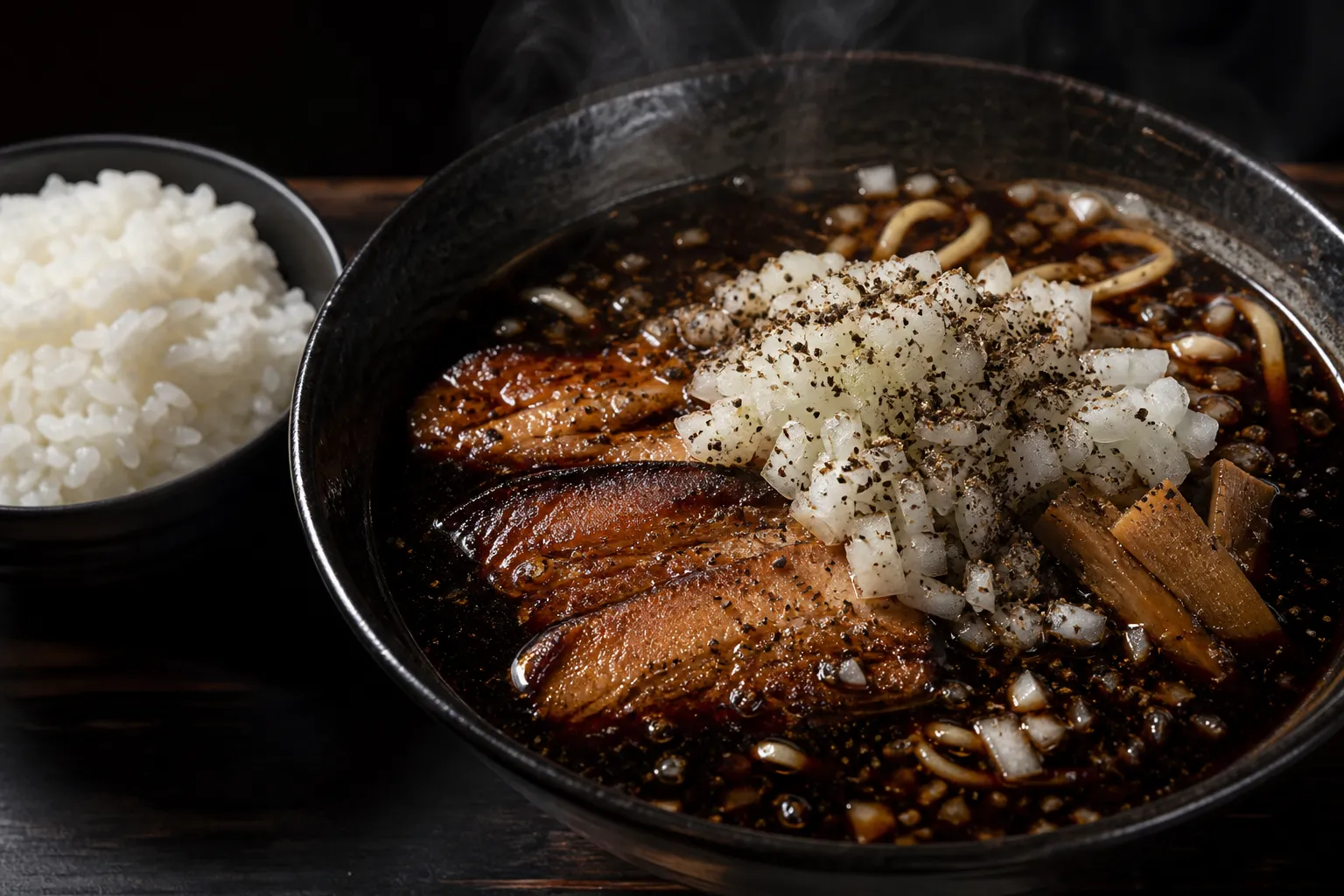
Local FoodToyama City, Toyama
Toyama Black Ramen (富山ブラックラーメン)
A bowl of ramen so dark it looks like ink, so salty it was built to be eaten with a side of rice. Toyama's black-broth monster isn't subtle — and that's the entire point.
June 26, 2026