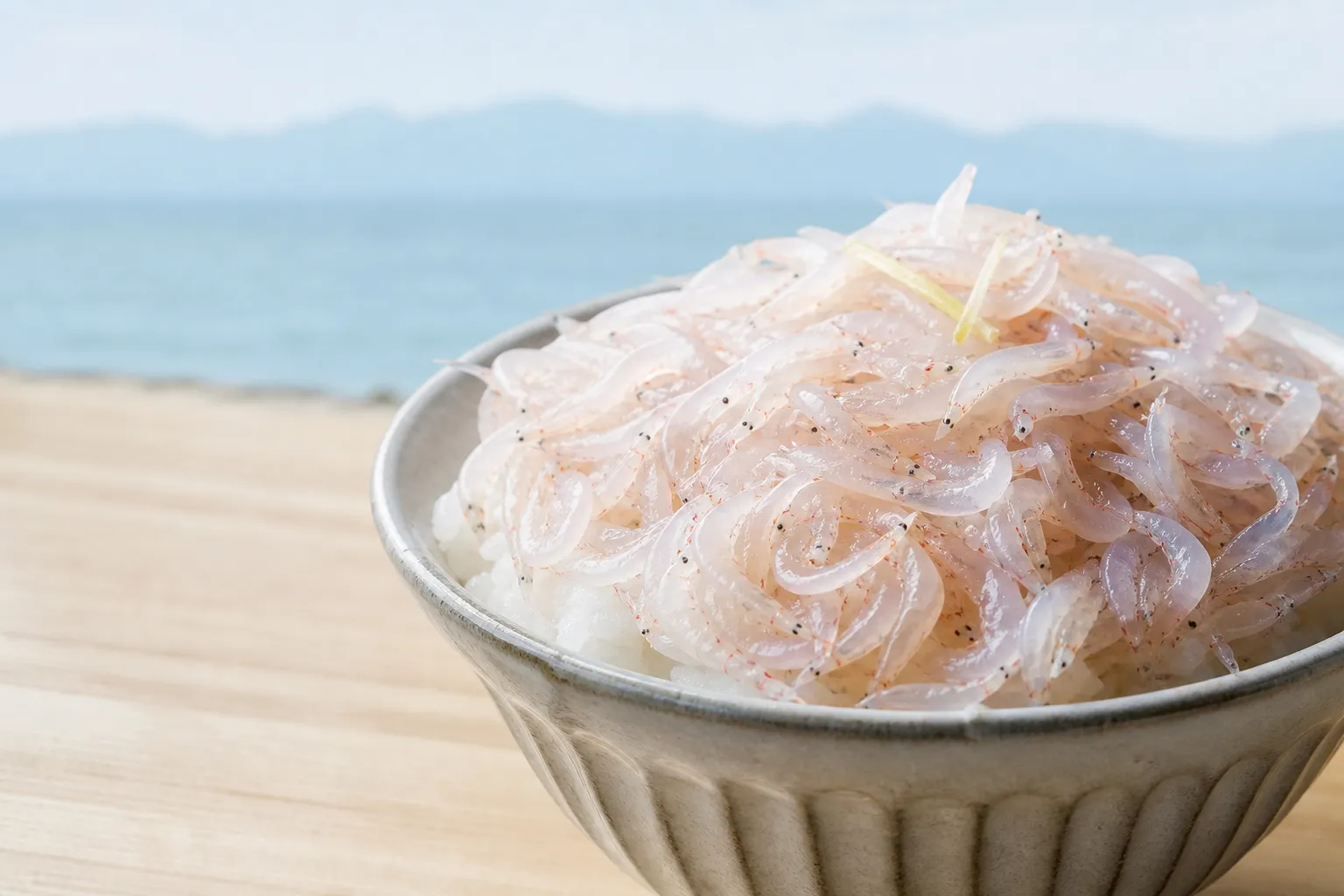
The bowl arrived and I almost laughed — it looked like someone had spilled a handful of tiny pink glass beads across the rice, hundreds of them, each one smaller than my pinky nail and so translucent I could see the grains of rice glowing through them. Then I took a mouthful, and the whole pile just… melted. No snap, no chew, no resistance. Just a soft, clean, almost sugary sweetness that spread out and then vanished, like the shrimp had never been solid to begin with. I sat there holding an empty spoon, a little stunned.
Share this dish


A whole bowl piled with hundreds of tiny, ghost-pink shrimp so delicate they barely hold their shape — and then they dissolve into pure sweetness before you can even chew.
🍜 Planning a food trip to Toyama?Add this dish to my Food Trip →
 Add this dish to my Food Trip →
This is shiroebi-don (白えび丼), a rice bowl heaped with shiro-ebi — the tiny, translucent, pale-pink "white shrimp" of Toyama Bay, served raw as glistening sashimi over warm rice. And I need to head off the most common mix-up right now: these are not the bright-red sakura-ebi from Shizuoka, and they're not the bigger, meatier ama-ebi (sweet shrimp) you get at sushi counters everywhere. Shiro-ebi are their own creature — smaller, paler, more delicate, and caught almost nowhere else in Japan in any real quantity. Toyama Bay is famous for them precisely because it's one of the only places on earth where they're landed commercially. So this isn't "shrimp on rice." This is a specific, local, kind of miraculous thing.
Why Toyama Bay, and basically nowhere else
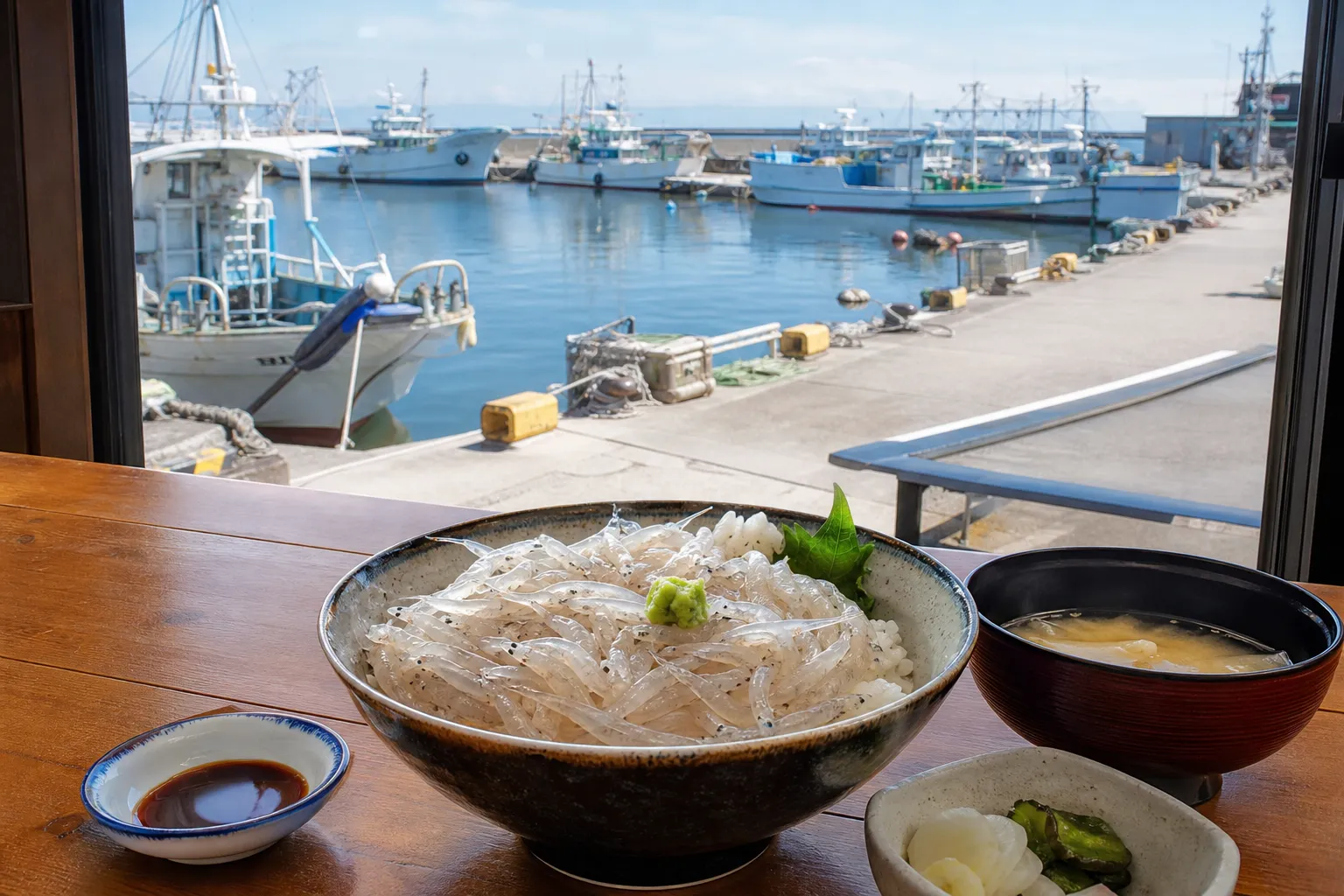
Toyama Bay is weird in the best way. It's deep — a steep underwater canyon comes almost right up to the shore — and that rare geography creates the exact conditions where shiro-ebi thrive in numbers worth fishing. Locals call the bay a "natural fish tank," and shiro-ebi are one of its signature treasures, alongside firefly squid. Because the shrimp are so fragile and spoil so fast, they were historically eaten close to where they landed and rarely traveled far. That's still basically true, which is why this bowl feels less like a menu item and more like a reason to physically go to Toyama.
Peeling them is the part nobody warns you about. These shrimp are minuscule and soft, and every single one served as sashimi is shelled — often by hand, often by people who've done it for decades. When I found that out, the bowl in front of me suddenly looked like an act of patience rather than a lunch. I find that quietly humbling. Somebody peeled every one of these, and I inhaled them in ninety seconds.
Why they taste the way they taste
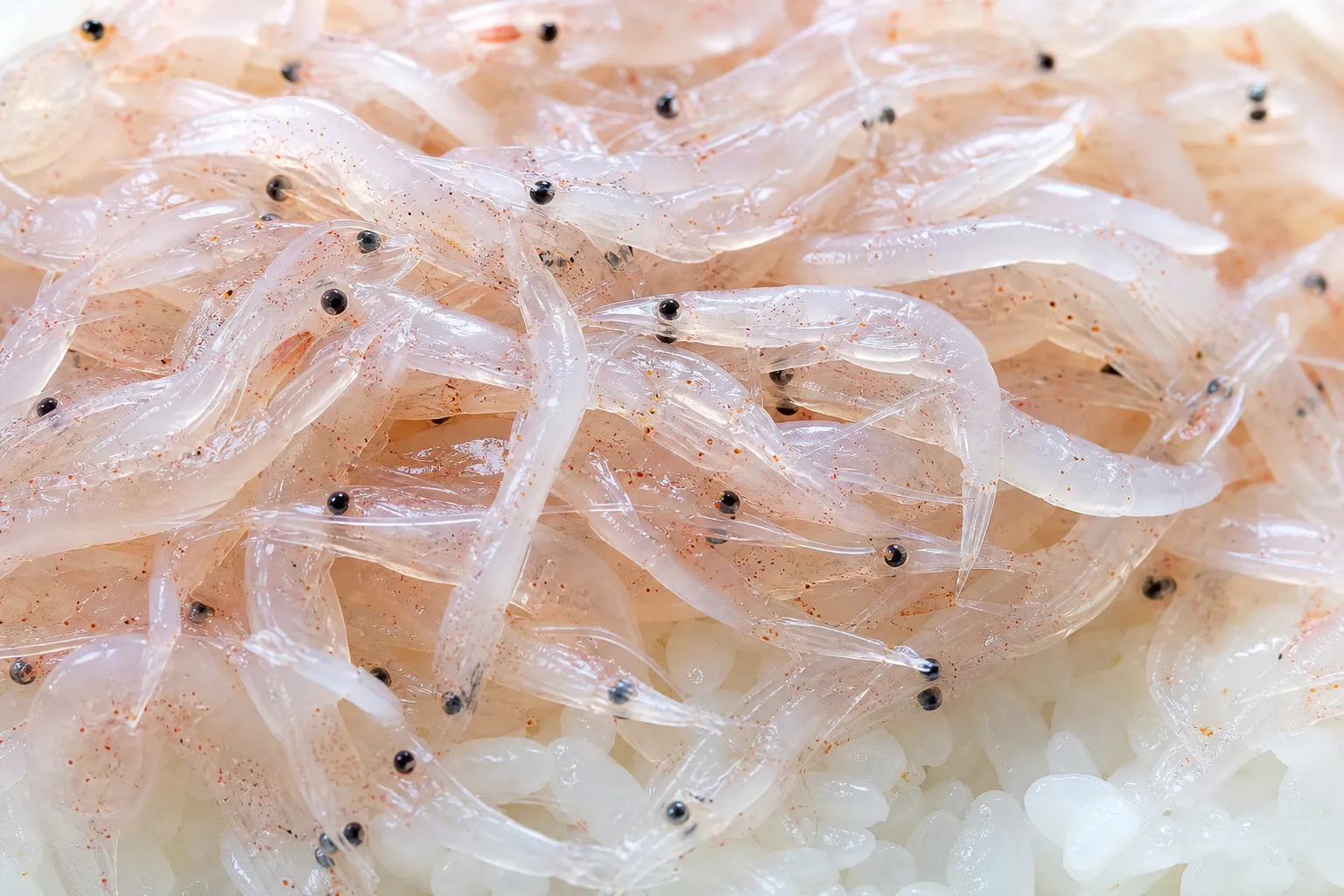
The flavor is almost embarrassingly gentle — clean, sweet, faintly of the sea, with none of the briny bite you might expect from shrimp. Toyama people sometimes call shiro-ebi the "jewel of the bay," and once you taste them you stop rolling your eyes at that. It's a subtle, high-end sweetness, closer to sweet raw scallop than to a cooked shrimp.
But the texture is the real event. Because they're tiny and raw, they don't give you the springy snap of a normal prawn — they're soft, almost creamy, and they collapse the instant they warm against your tongue. Piled by the hundred on rice, they turn into this cohesive, glistening, melting layer. A little wasabi and soy, a bit of shiso, and that's genuinely all it needs. Drown it in sauce and you've missed the point entirely. Let the shrimp talk.
How the bowl comes together
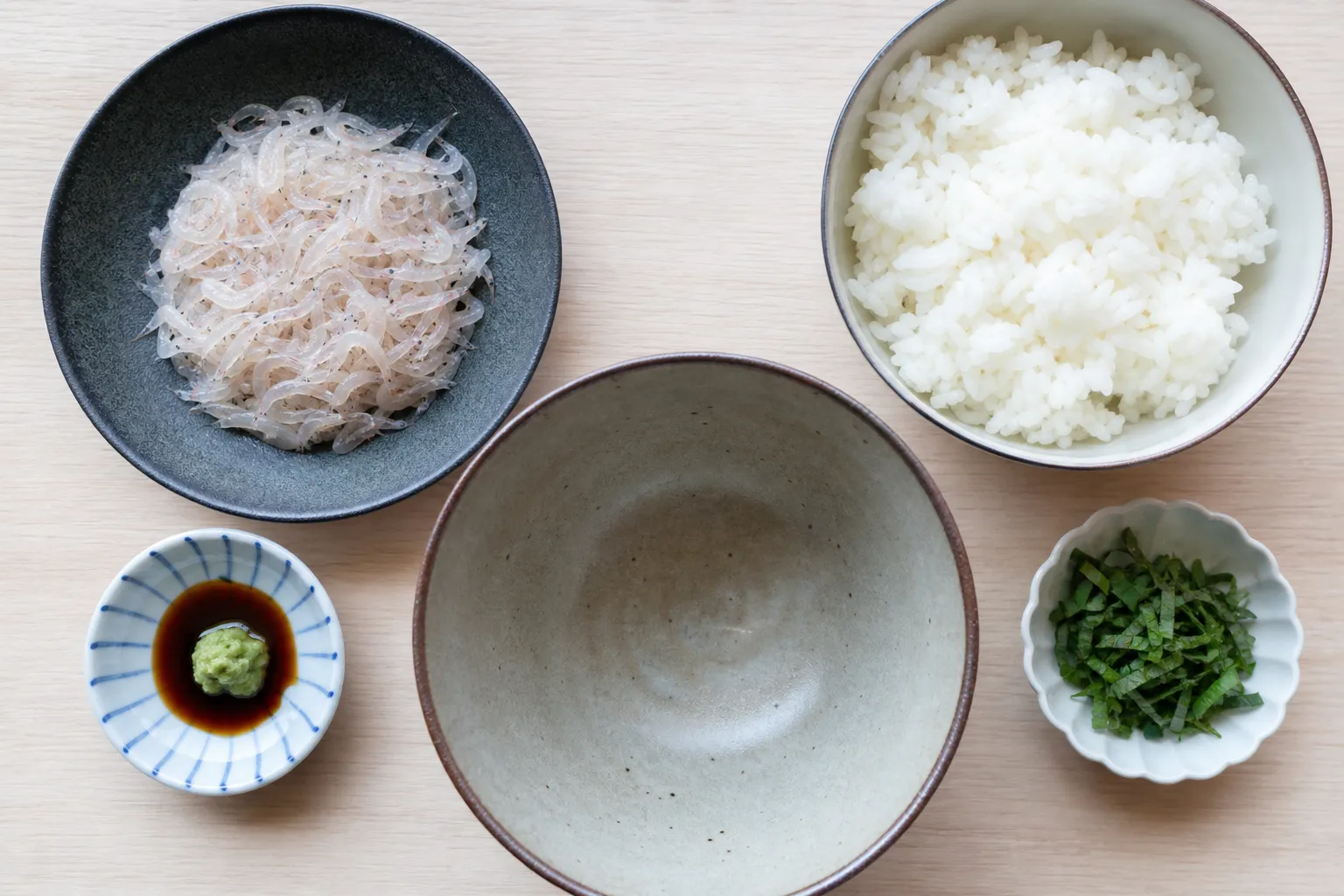
- Fresh shiro-ebi are landed from Toyama Bay and kept cold — freshness is non-negotiable
- Each tiny shrimp is peeled by hand, shell removed, kept whole and raw
- A donburi bowl is filled with warm steamed white rice
- The peeled raw shiro-ebi are heaped generously over the rice in a glistening mound
- Finished simply — a little wasabi, soy sauce, sometimes shiso or grated ginger on the side — and eaten right away
Before you go — eat it where it lands
Your questions, answered honestly
"Is it raw?" — Yes, the classic shiroebi-don is raw sashimi shrimp over rice, and that's how you want it — it's where the melting sweetness lives. You'll also see shiro-ebi kakiage (golden tempura fritters), which is delicious in a totally different, crispy way. Both are worth it. Just know they're different dishes.
"Isn't this the same as sakura-ebi?" — No, and locals will gently correct you. Sakura-ebi are red and from Shizuoka; shiro-ebi are pale, translucent, smaller, and from Toyama. Different shrimp, different place, different everything.
"Is it worth going to Toyama for?" — Honestly, yes. Because the shrimp are so fragile and so local, this is one of those dishes that's genuinely better — and often only truly available fresh — at the source. It's a reason to route through Toyama, not an afterthought.
"When's the best time?" — Shiro-ebi are seasonal (the main fishing season runs roughly spring into summer). Frozen versions exist year-round, but if you can time a visit to the fresh season, do.
What the staff will ask you
| You'll hear | Romaji | Meaning | Just say |
|---|---|---|---|
| 生とかき揚げ、どちらになさいますか? | Nama to kakiage, dochira ni nasaimasu ka? | "Raw or tempura fritter?" | Nama de onegaishimasu (raw, please) |
| わさびは付けますか? | Wasabi wa tsukemasu ka? | "Would you like wasabi?" | Hai, onegaishimasu (yes, please) |
| 大盛りにできますが、どうしますか? | Ōmori ni dekimasu ga, dō shimasu ka? | "We can do a large portion — want it?" | Futsū de onegaishimasu (regular is fine, thanks) |
To order, just say "Shiroebi-don o kudasai" (白えび丼をください) — "Shiro-ebi rice bowl, please."
Where to eat it
- Toyama Bay seaside eateries and harbor restaurants — spots near the fishing ports serve the freshest shiroebi-don, often with a view of the water it came from.
- Toyama Station area — several restaurants and sushi spots near the station offer shiro-ebi bowls, convenient if you're passing through by rail.
- Shinminato / Iwase fishing-port neighborhoods — the old port districts around Toyama Bay are a strong bet for shiro-ebi close to the source.
Availability is seasonal and freshness depends on the day's catch, so check current details before you go — and ask whether it's the fresh raw version or frozen.
Soul Score
Local Roots5/5
First-Timer Friendly4/5
Adventure Level3/5
Comfort Level4/5
Travel Worthy5/5
These scores are one obsessed eater's gut feeling — not a verdict. A low number isn't a bad mark, just a different kind of adventure.
Know someone planning Japan?
← All Articles
Local Food · Toyama
Still hungry?
Eat more from Toyama
Local FoodToyama
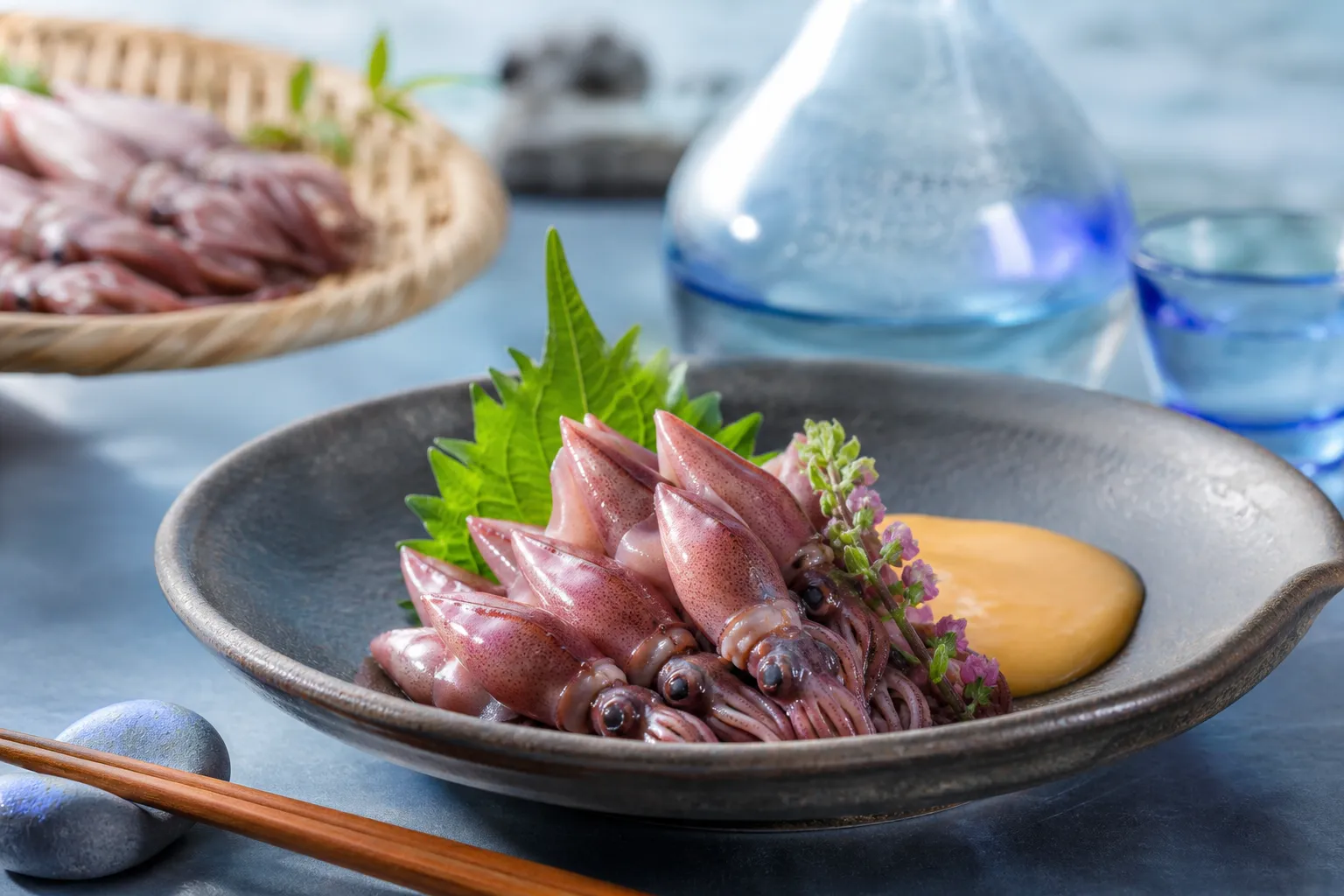
Hotaruika, Firefly Squid (ホタルイカ)
Squid the size of your thumb that glow electric blue in Toyama Bay, then arrive on your plate whole — boiled, curled, and dressed in sweet-tart vinegar-miso. Spring in one tiny, briny, burst-in-your-mouth bite.
July 12, 2026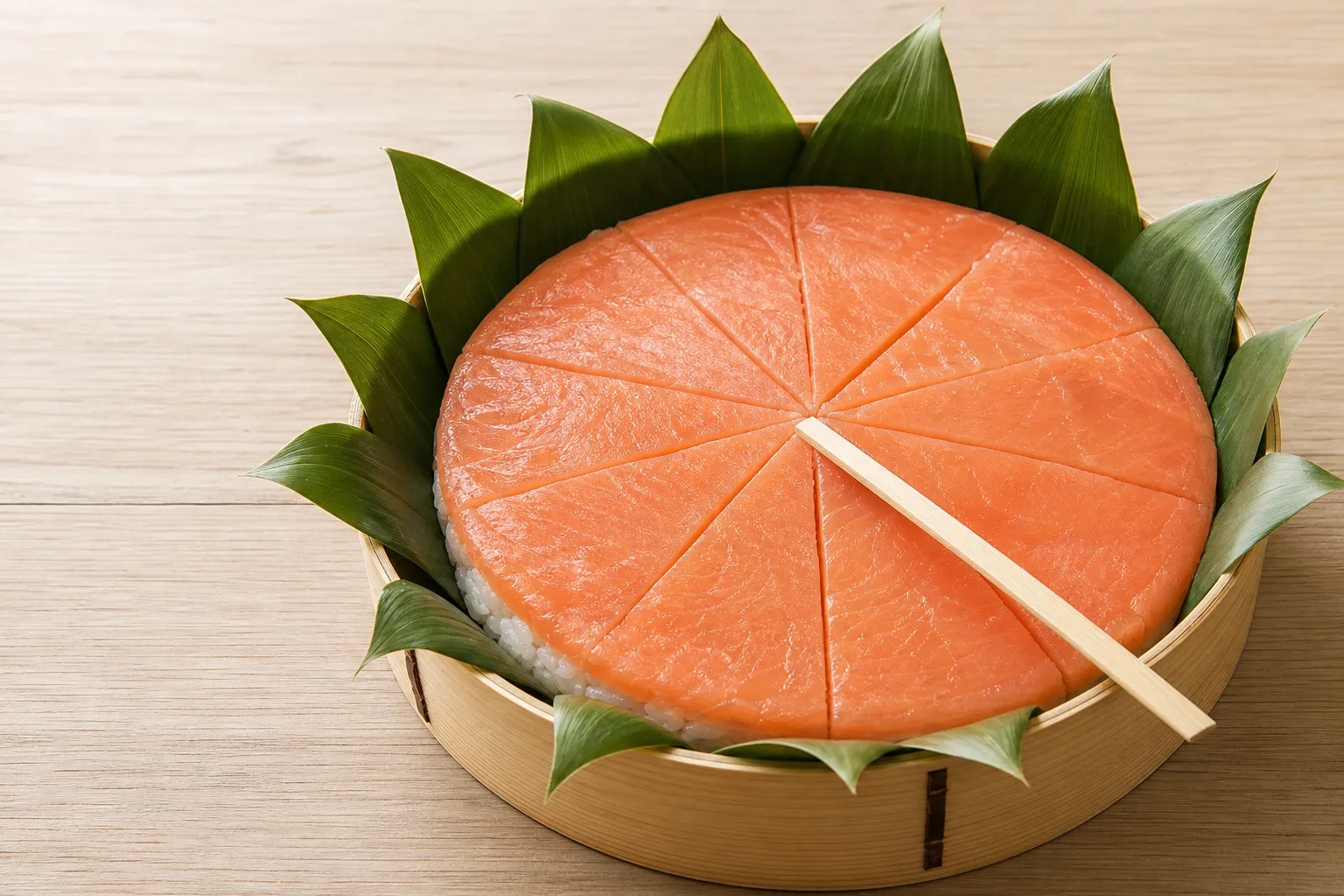
Local FoodToyama, Toyama
Masu no Sushi (ます寿司)
A pink wheel of pressed trout sushi, packed tight in a round wooden box and wrapped in bamboo leaves. You unwrap it like a present and cut it like a cake. Toyama's most beautiful lunch.
June 27, 2026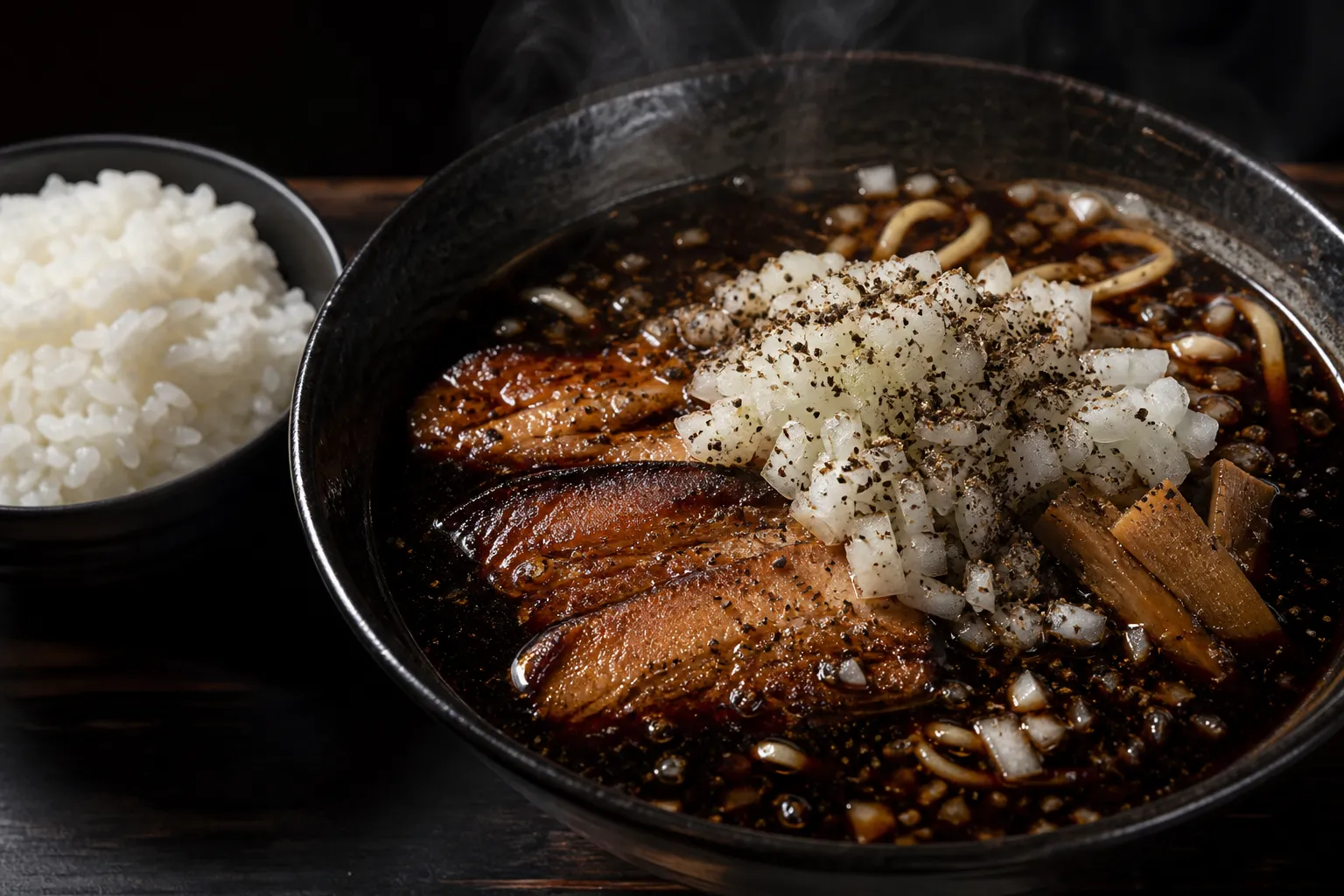
Local FoodToyama City, Toyama
Toyama Black Ramen (富山ブラックラーメン)
A bowl of ramen so dark it looks like ink, so salty it was built to be eaten with a side of rice. Toyama's black-broth monster isn't subtle — and that's the entire point.
June 26, 2026