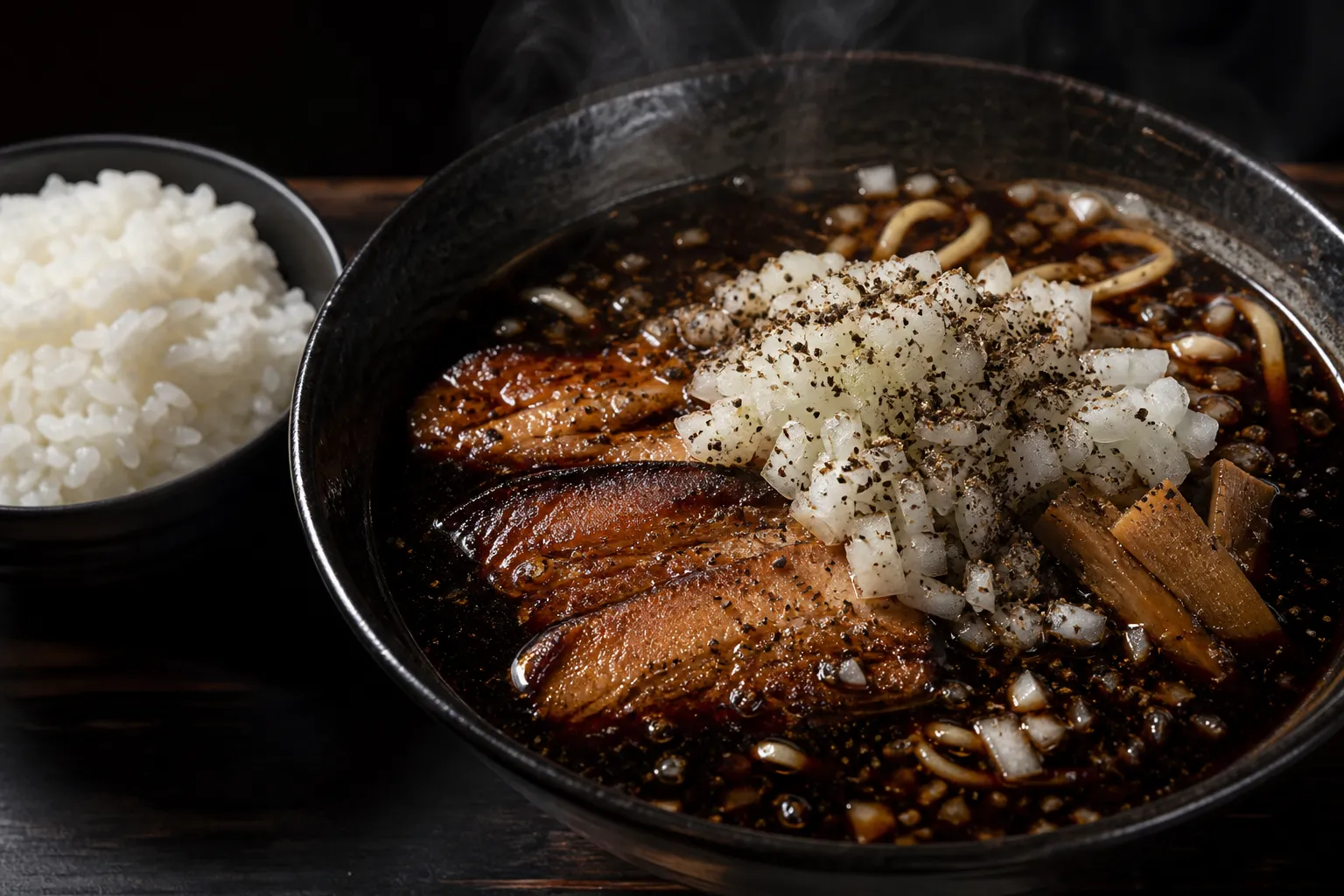
The broth is black. Not dark brown. Not a deep soy amber. Black — the color of ink, the color of a road at night — and the first sip lands like a slap: salt, soy, and a fist of coarse black pepper that goes straight up the back of your nose. I actually laughed out loud. Then I reached for the rice, because that's the secret nobody tells you until you're already in it.
Share this dish


A bowl of ramen so dark it looks like ink, so salty it was built to be eaten with a side of rice. Toyama's black-broth monster isn't subtle — and that's the entire point.
🍜 Planning a food trip to Toyama?Add this dish to my Food Trip →
 Add this dish to my Food Trip →
This bowl was never meant to be eaten alone. It's a salt-delivery system with noodles in it, and once you understand why, the whole strange, aggressive, wonderful thing clicks into place.
Built for men who'd been sweating all day
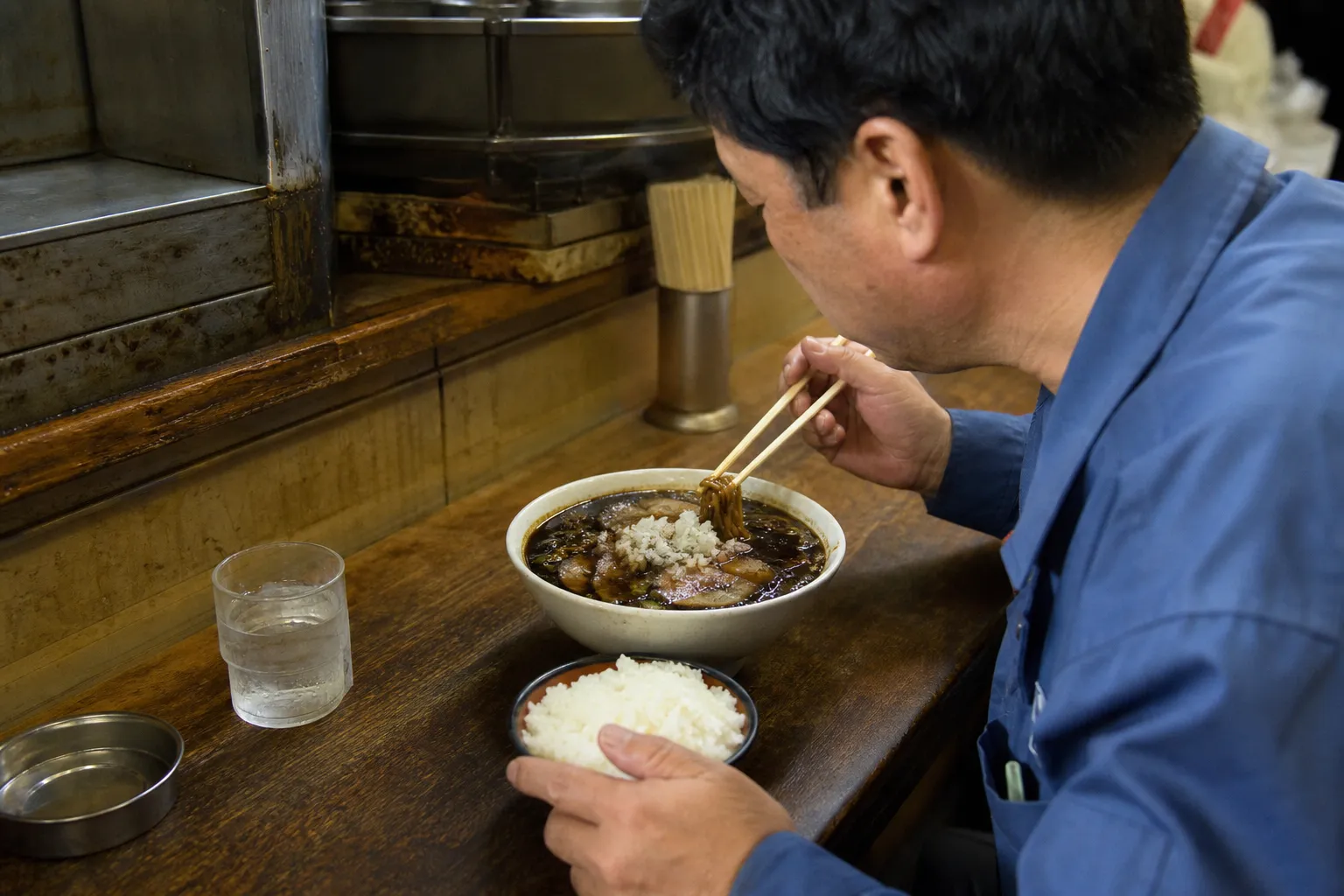
Toyama Black was born around 1955, in the rebuilding years after the war, at a shop generally credited as Taiki (大喜) in Toyama City. The story makes total sense once you taste it: the city was full of laborers and young workers doing hard physical jobs, sweating out salt all day, and they needed to put it back. So the ramen was made intentionally salty and heavily peppered — dark, punchy, almost violent — and served with a bowl of plain white rice on the side. The ramen was less a meal than a savage, salty topping for the rice.
I find this genuinely great. Most famous dishes were designed to be delicious. This one was designed to keep working men upright, and it became a regional icon almost by accident. It tastes like the postwar grit it came from — unfussy, unapologetic, and weirdly moving once you know the backstory.
A warning, kindly meant: this is the saltiest ramen you will likely ever eat. That is not a flaw. It is the design specification.
What that black broth actually is
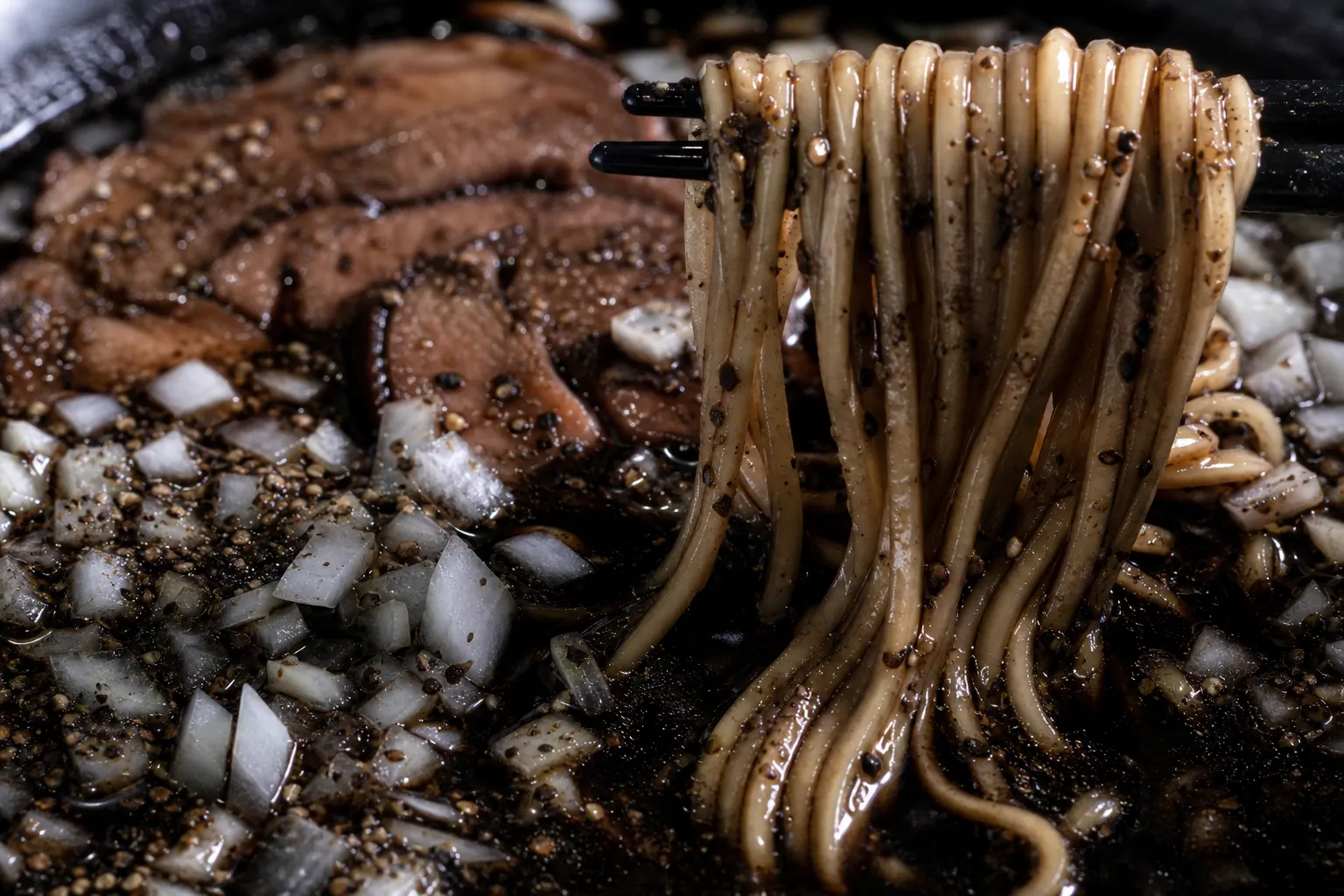
The color comes from a very dark, very concentrated soy tare — not from squid ink or anything exotic, just soy sauce taken to its boldest extreme. Floating on top: a heavy storm of coarse-ground black pepper, a generous pile of raw chopped white onion (sharp, crunchy, cutting through the salt), coarse menma, and thick slices of dark braised chashu. The noodles are straight and medium-thick, built to drag that intense broth up to your mouth.
The raw onion is doing real work — it's the bright, sharp counterpoint that keeps the salt from flattening everything. And the rice on the side isn't optional decoration. You eat a few bites of intensely seasoned ramen, then a mouthful of plain rice to reset, back and forth. That rhythm is the dish.
How it's made
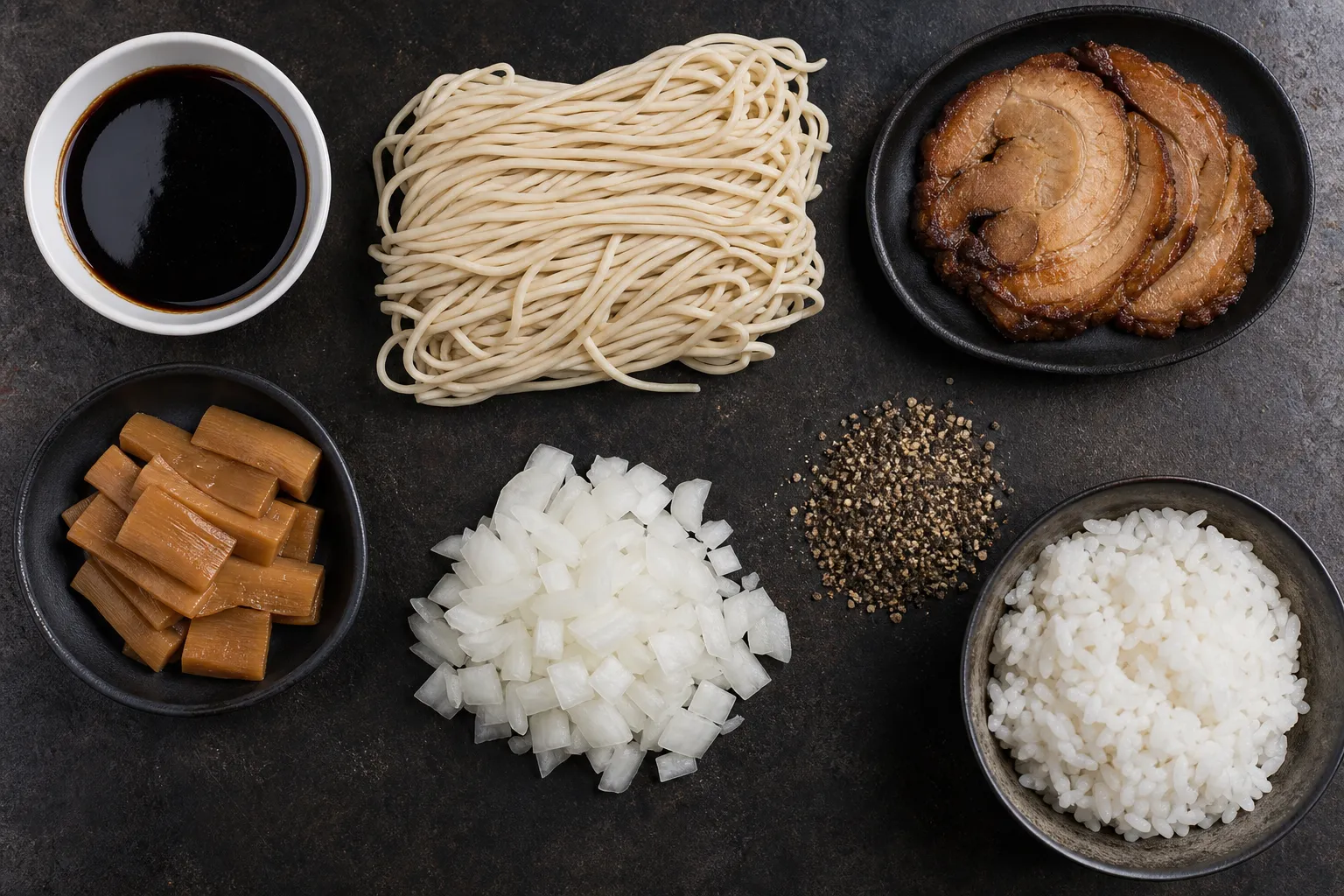
- Make a very dark, concentrated soy-based tare — salty and deep, the heart of the bowl
- Cook straight medium-thick ramen noodles
- Combine tare with hot broth in the bowl (the ratio leans hard toward the tare — this is a salty bowl on purpose)
- Top with thick braised chashu, coarse menma, and a generous pile of raw chopped white onion
- Finish with an aggressive shower of coarse black pepper
- Serve with a bowl of plain white rice on the side — non-negotiable
Before you go — order the rice
Your questions, answered honestly
"Is it really that salty?" — Yes. Genuinely. It's the defining feature, not an accident. Get the side of rice, alternate bites, and don't feel obligated to drink the broth (locals usually don't finish it).
"Do I have to drink all the soup?" — No, and please don't try to as a salt-tolerance flex. The broth is a seasoning for the noodles and rice, not a soup to drain.
"Is it spicy?" — Not chili-spicy — it's peppery. The heat is all coarse black pepper, which hits sharp and aromatic rather than burning.
"What's the raw onion for?" — It's essential. The sharp, crunchy onion cuts the salt and keeps every bite bright. Don't push it aside.
What the staff will ask you
| You'll hear | Romaji | Meaning | Just say |
|---|---|---|---|
| ライスはつけますか? | Raisu wa tsukemasu ka? | "Want a side of rice?" | Hai, onegaishimasu — say yes |
| 麺の硬さは? | Men no katasa wa? | "How firm should the noodles be?" | Futsū de — "regular" |
| 味は濃いですよ、大丈夫ですか? | Aji wa koi desu yo, daijōbu desu ka? | "It's strongly flavored — is that okay?" | Hai, daijōbu desu |
To order, just say "Toyama black ramen kudasai" (富山ブラックラーメンください) — "Toyama Black ramen, please."
Where to eat it
- Taiki (大喜), Toyama City — the shop most often credited with originating Toyama Black; the benchmark bowl. Check current hours before you go.
- Ramen shops across Toyama City — Toyama Black is the city's signature; many local shops serve their own version, from the original-style intense bowls to milder modern takes.
- Toyama-specialty ramen shops in Tokyo — a handful of shops nationwide serve a Toyama Black style if you can't make it to Toyama itself.
Soul Score
Local Roots4/5
First-Timer Friendly3/5
Adventure Level4/5
Comfort Level4/5
Travel Worthy4/5
These scores are one obsessed eater's gut feeling — not a verdict. A low number isn't a bad mark, just a different kind of adventure.
Know someone planning Japan?
← All Articles
Local Food · Toyama City, Toyama
Still hungry?
Eat more from Toyama
Local FoodToyama
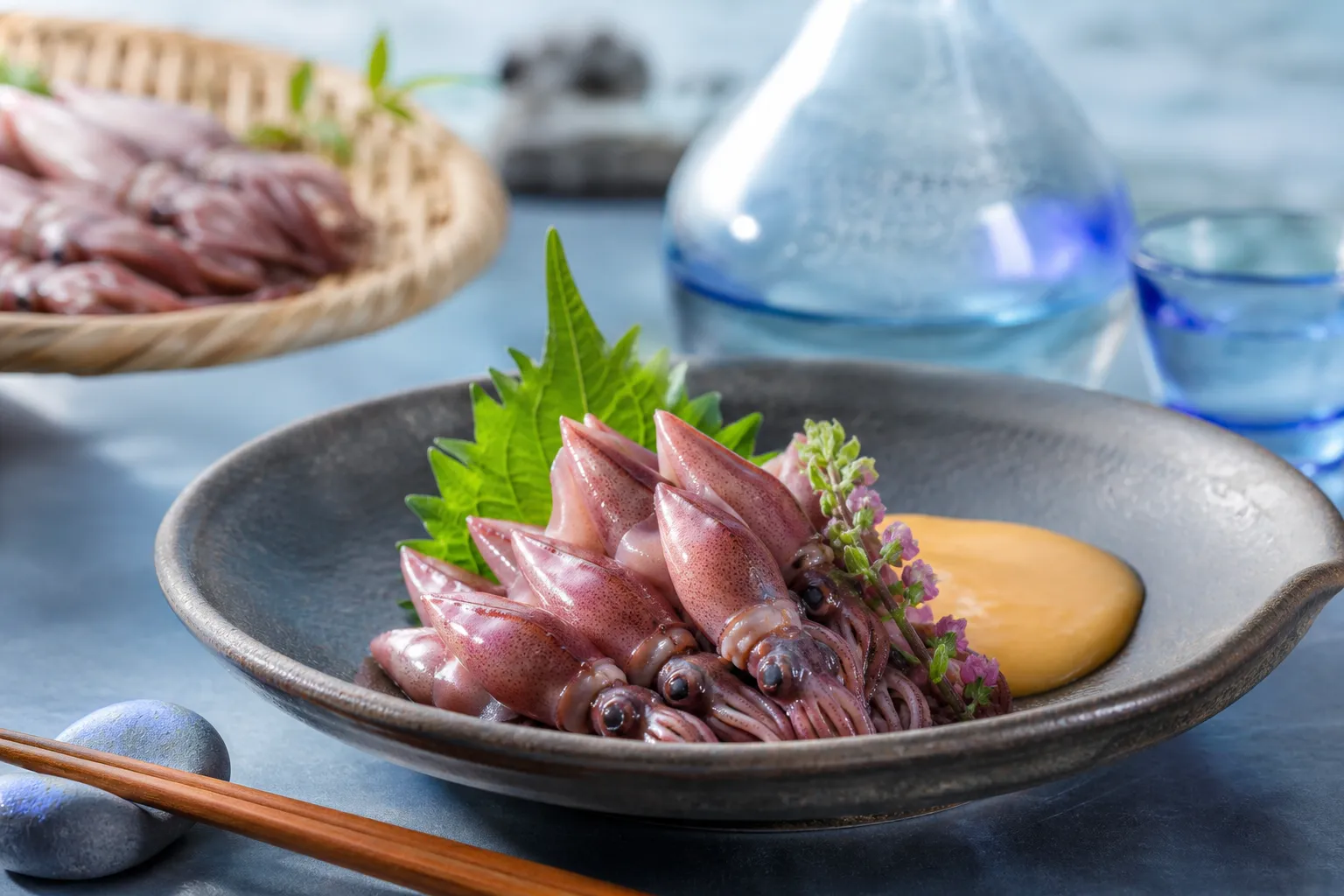
Hotaruika, Firefly Squid (ホタルイカ)
Squid the size of your thumb that glow electric blue in Toyama Bay, then arrive on your plate whole — boiled, curled, and dressed in sweet-tart vinegar-miso. Spring in one tiny, briny, burst-in-your-mouth bite.
July 12, 2026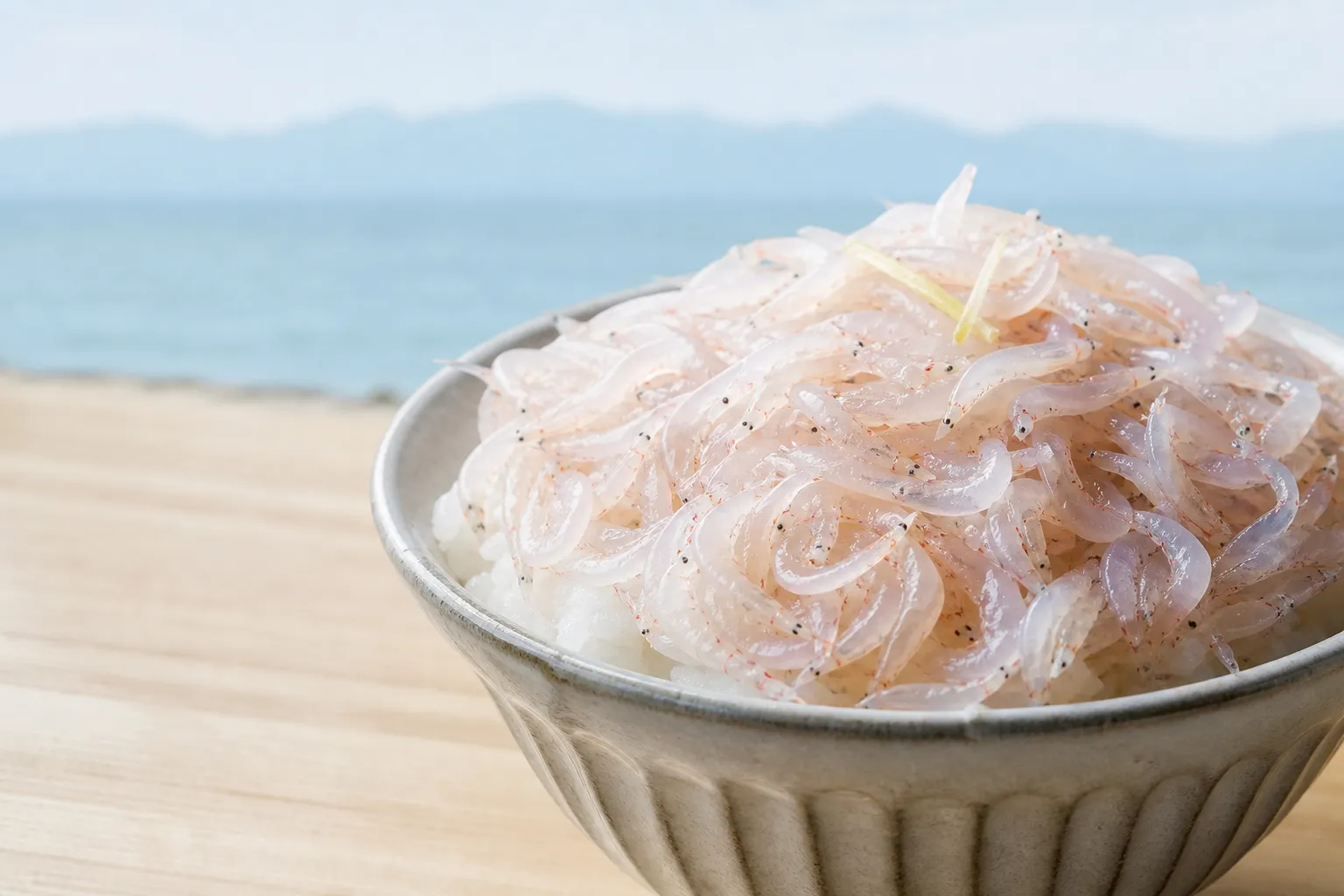
Local FoodToyama
Shiroebi-don (白えび丼)
A whole bowl piled with hundreds of tiny, ghost-pink shrimp so delicate they barely hold their shape — and then they dissolve into pure sweetness before you can even chew.
July 5, 2026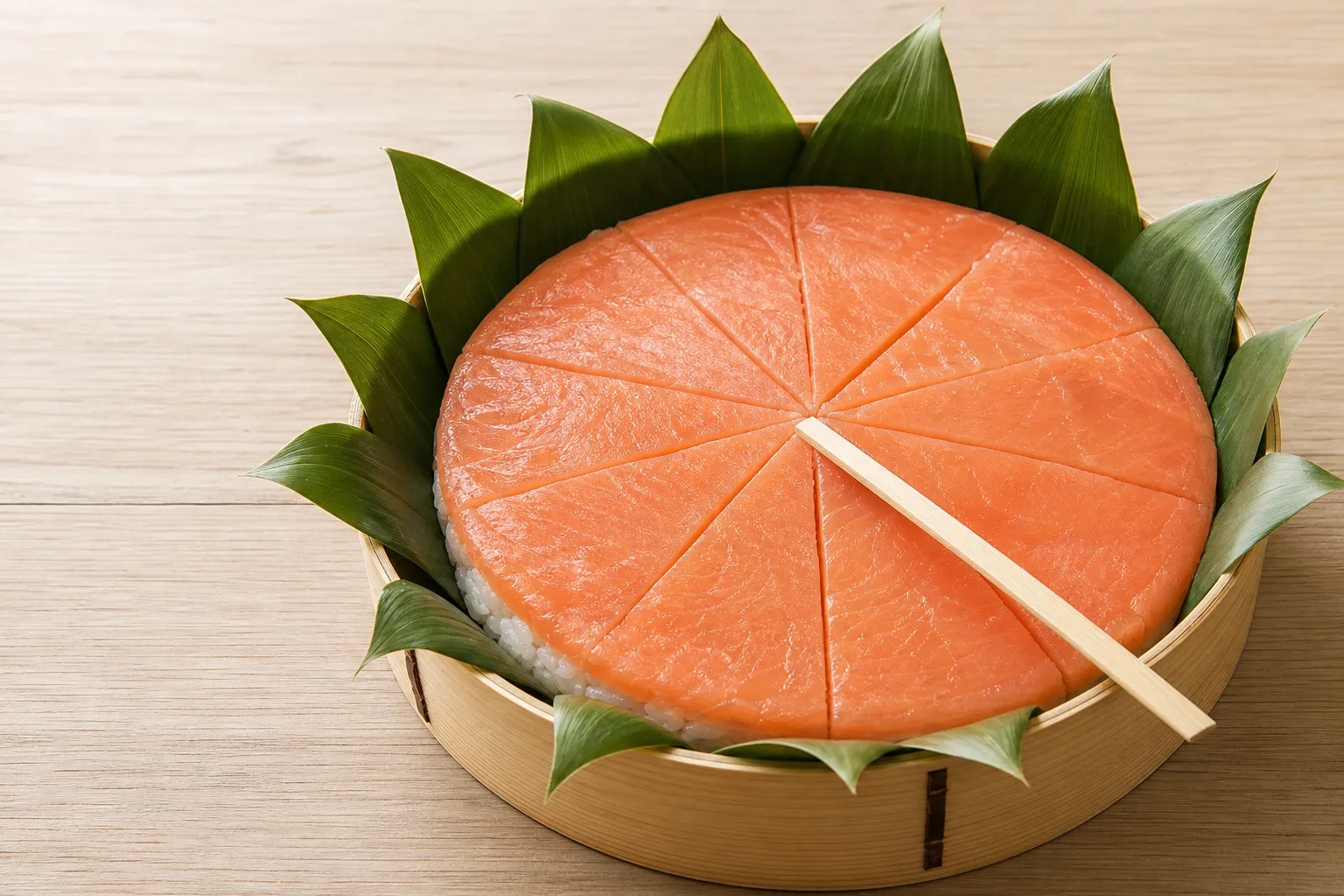
Local FoodToyama, Toyama
Masu no Sushi (ます寿司)
A pink wheel of pressed trout sushi, packed tight in a round wooden box and wrapped in bamboo leaves. You unwrap it like a present and cut it like a cake. Toyama's most beautiful lunch.
June 27, 2026Keep slurping the ramen trail
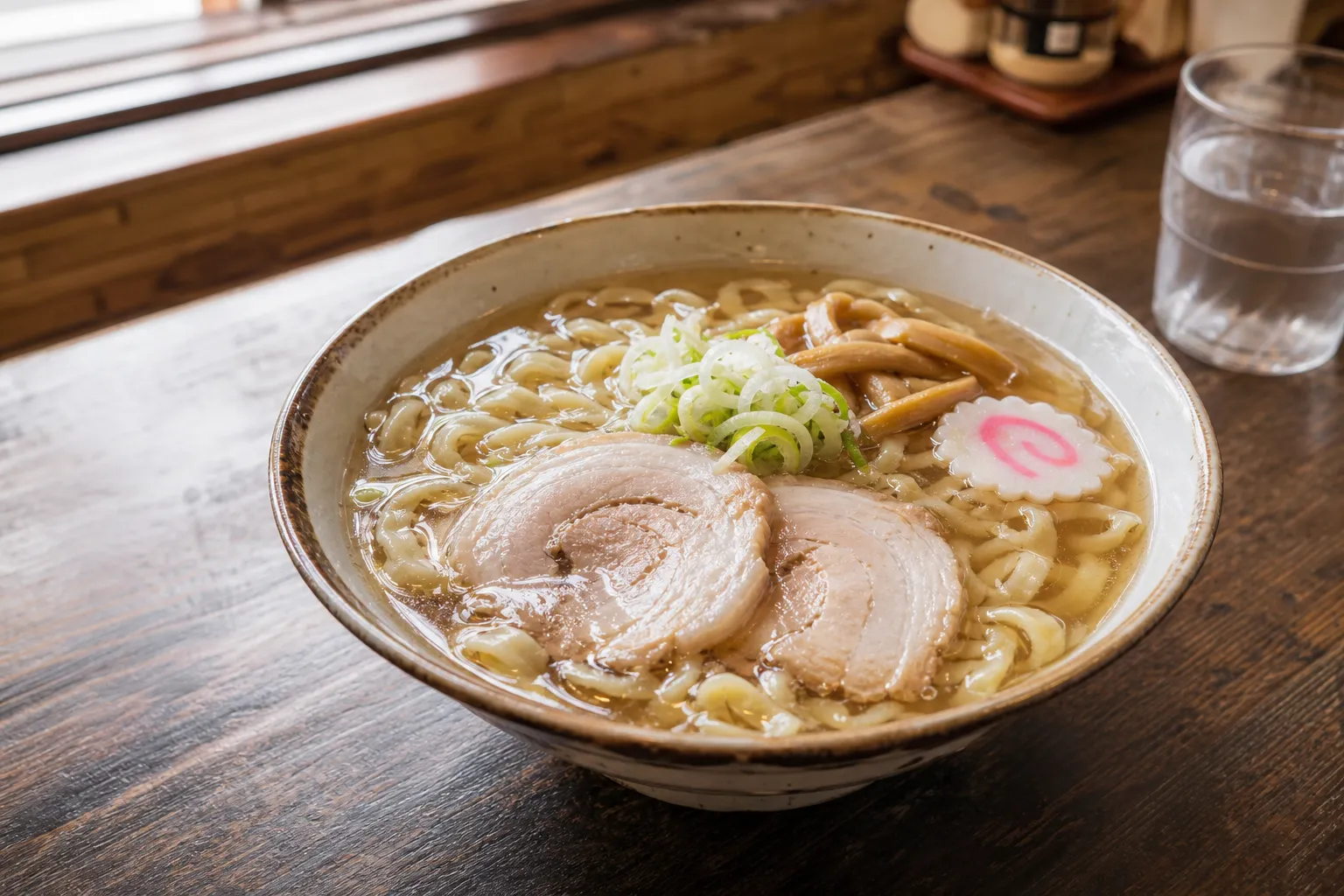
Local FoodKitakata, Fukushima
Kitakata Ramen (喜多方ラーメン)
Flat, wide, curly noodles in a clear soy broth so clean you can see the bottom of the bowl — and a town so obsessed it eats ramen for breakfast. This is comfort with the volume turned down, on purpose.
June 26, 2026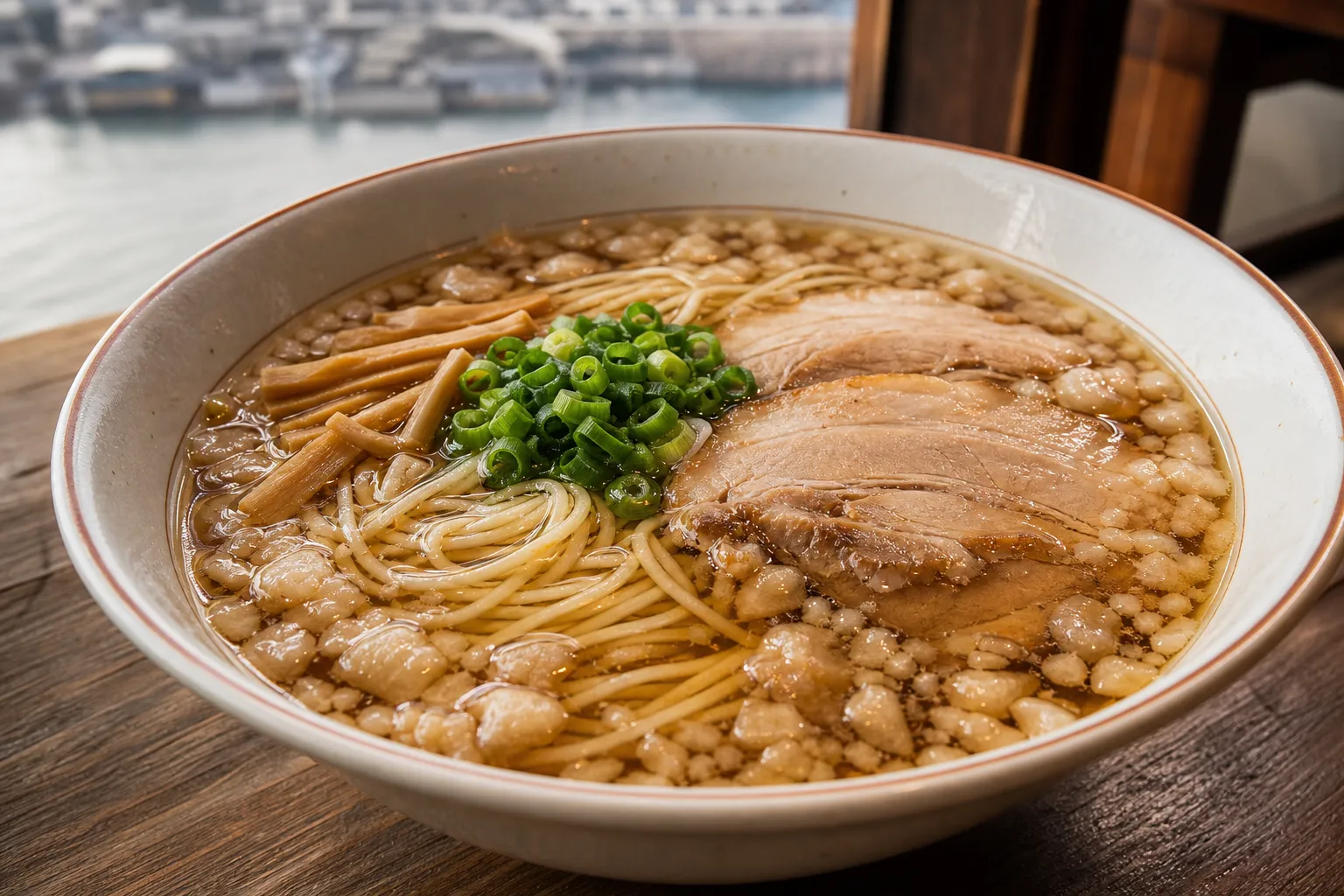
Local FoodOnomichi, Hiroshima
Onomichi Ramen (尾道ラーメン)
Clear soy broth from the Seto Inland Sea, studded with little pillows of melting pork fat that change everything. A hillside port town's bowl — light and deep at the same time, which shouldn't be possible.
June 26, 2026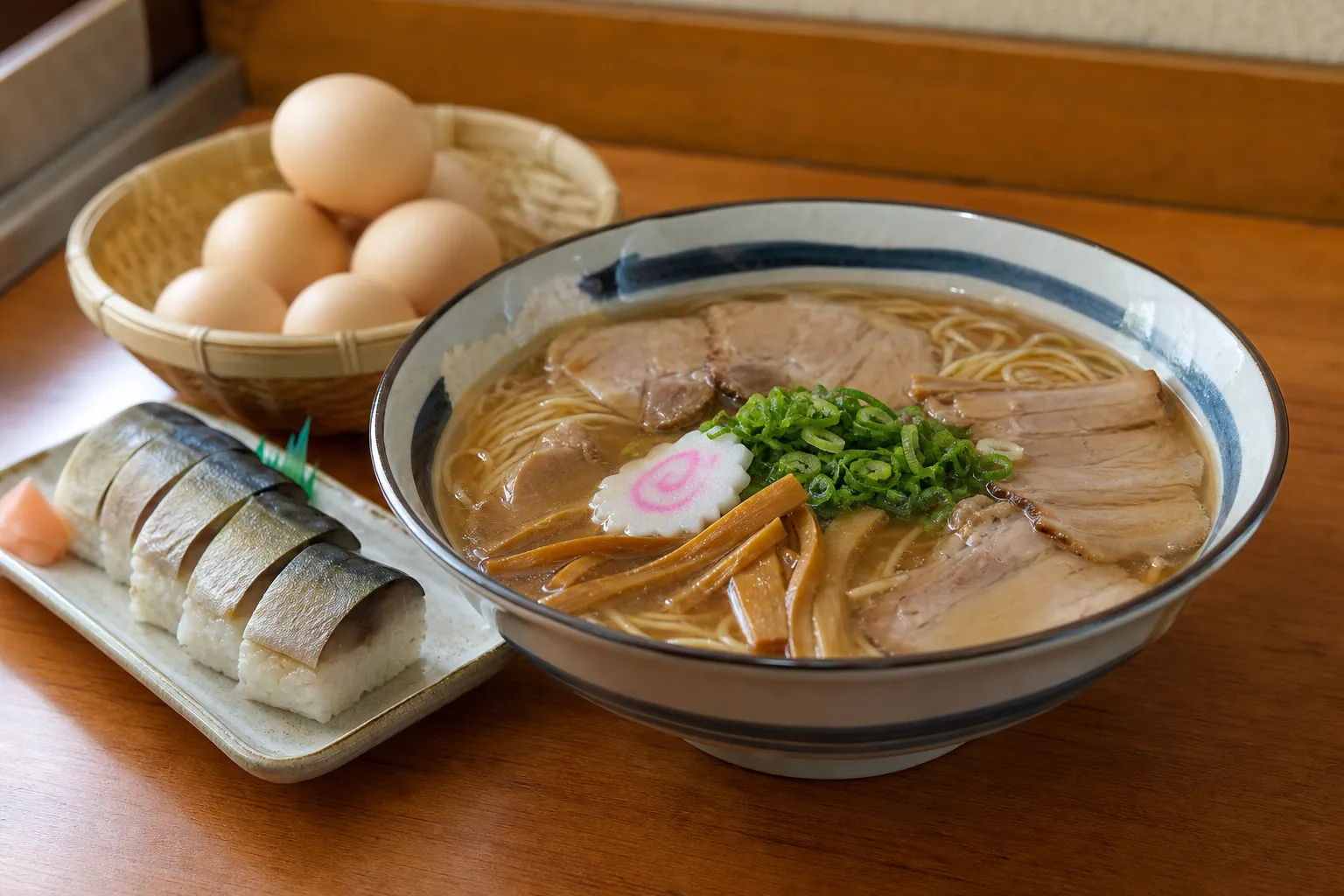
Local FoodWakayama, Wakayama
Wakayama Ramen (和歌山ラーメン)
Pork-bone-meets-soy broth, thin springy noodles — and a self-serve table loaded with pressed mackerel sushi and boiled eggs you grab while you wait. Locals don't even call it ramen. They call it the good stuff.
June 26, 2026