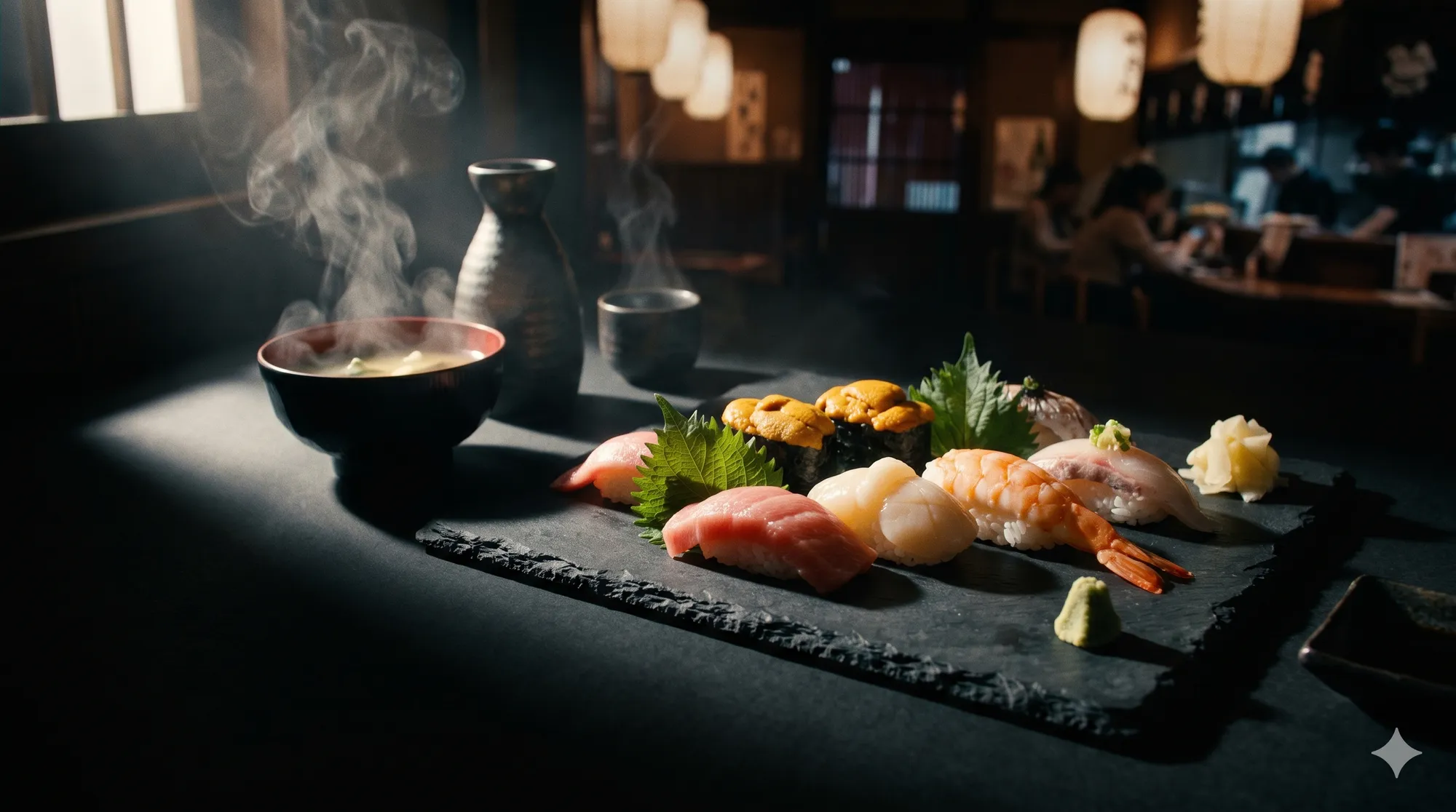
Let's clear something up: sushi is not raw fish. Sashimi is raw fish. Sushi is the rice — seasoned, body-temperature, pressed into a little pillow — and whatever rides on top is just the encore. Once you understand that, the whole thing opens up, and you stop being nervous and start being hungry. I promise you this is the most over-thought, easy-to-love food in Japan.
Share this dish


Vinegared rice, a slice of something perfect on top, and decades of obsession behind every piece. Forget the conveyor-belt clichés — real sushi is one of the great food experiences on earth, and it's easier to enjoy than you think.
🍜 Planning a food trip to Japan?Add this dish to my Food Trip →
 Add this dish to my Food Trip →
At its heart sushi is shari (vinegared rice) plus neta (the topping): a slice of tuna, a sweet prawn, a ribbon of egg, a glossy curl of salmon. It can be a hand-pressed nigiri, a rolled maki, a scattered bowl of chirashi. It ranges from a hundred-yen plate spinning past you on a belt to a hushed counter where a master hands you each piece by hand. All of it counts. All of it is sushi.
From fast food for fishermen to an art form
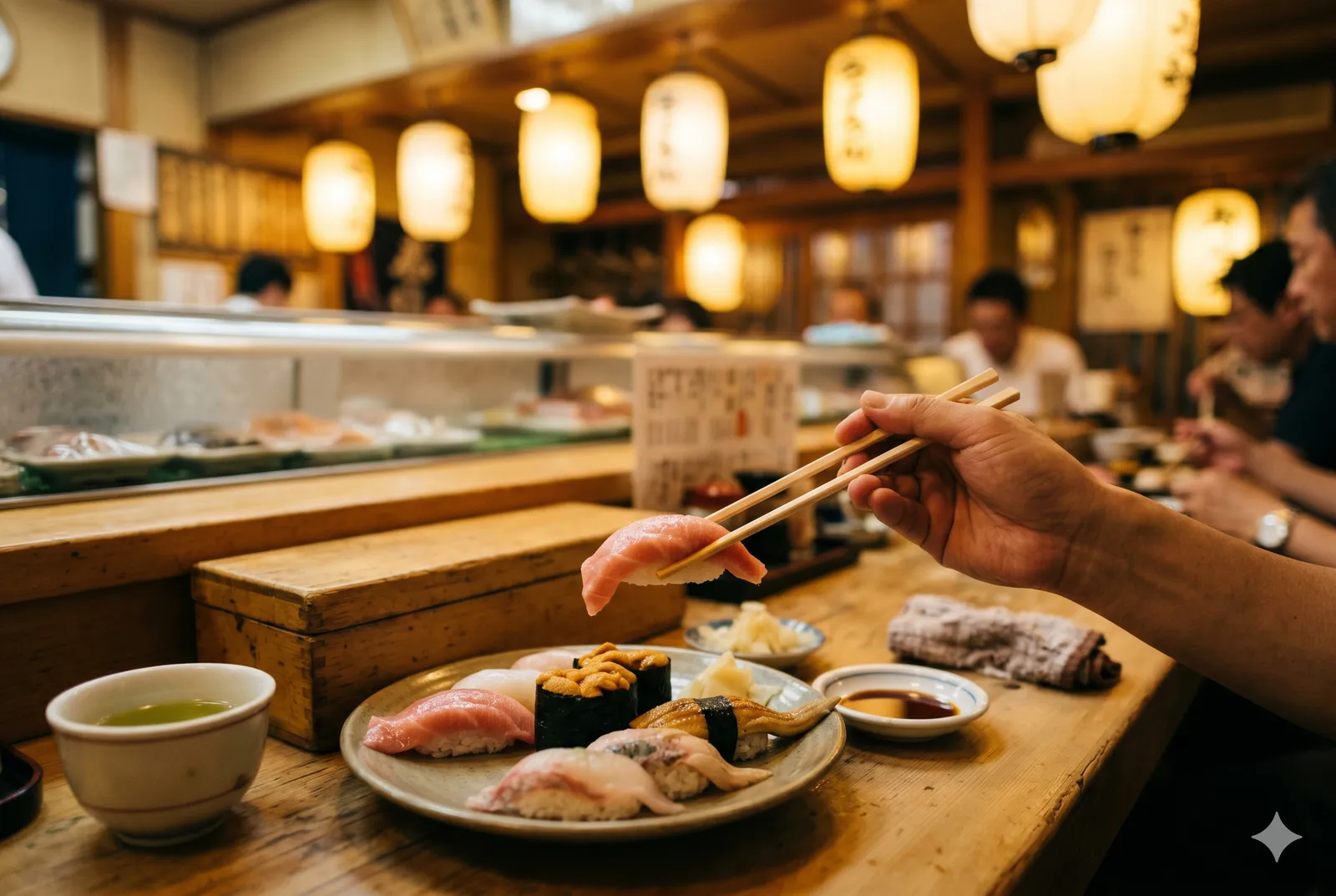
Sushi started life as cheap, fast street food. In the Edo period (1800s Tokyo), nigiri was invented as a quick snack — fresh fish slapped on vinegared rice and eaten standing up at a stall, the fast food of its day. The vinegar and the cool rice were practical: they preserved the fish before refrigeration existed.
From those grubby beginnings it climbed all the way to fine dining, where a great itamae (sushi chef) trains for a decade just to cook the rice properly. That whole range — convenience-store roll to Michelin counter — is what makes sushi so fun. You can eat it however your wallet and mood allow.
Why the rice is the whole game
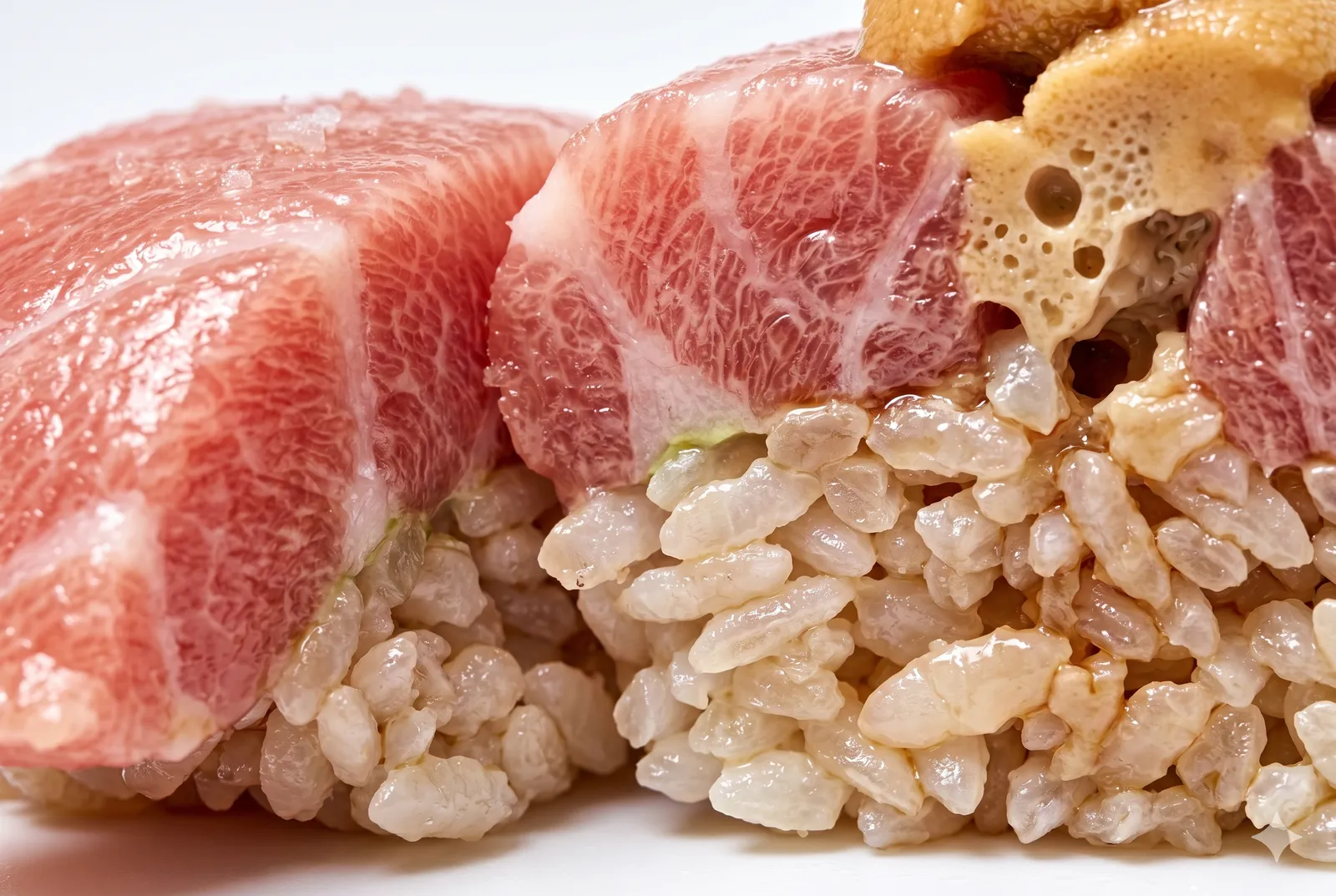
Ask any serious chef and they'll tell you the fish is the easy part. The rice is everything. Good shari is seasoned with rice vinegar, a little sugar and salt, served warm (not cold!), and loosely packed so it falls apart the second it hits your tongue. The fish should be fresh and cut with the grain in mind, but it's the temperature and texture of the rice that separates a transcendent piece from a sad one.
The other secret is balance — the chef has already seasoned each piece for you. That's why pros say not to drown it in soy sauce. Trust the person who trained ten years to get it right.
How it's made
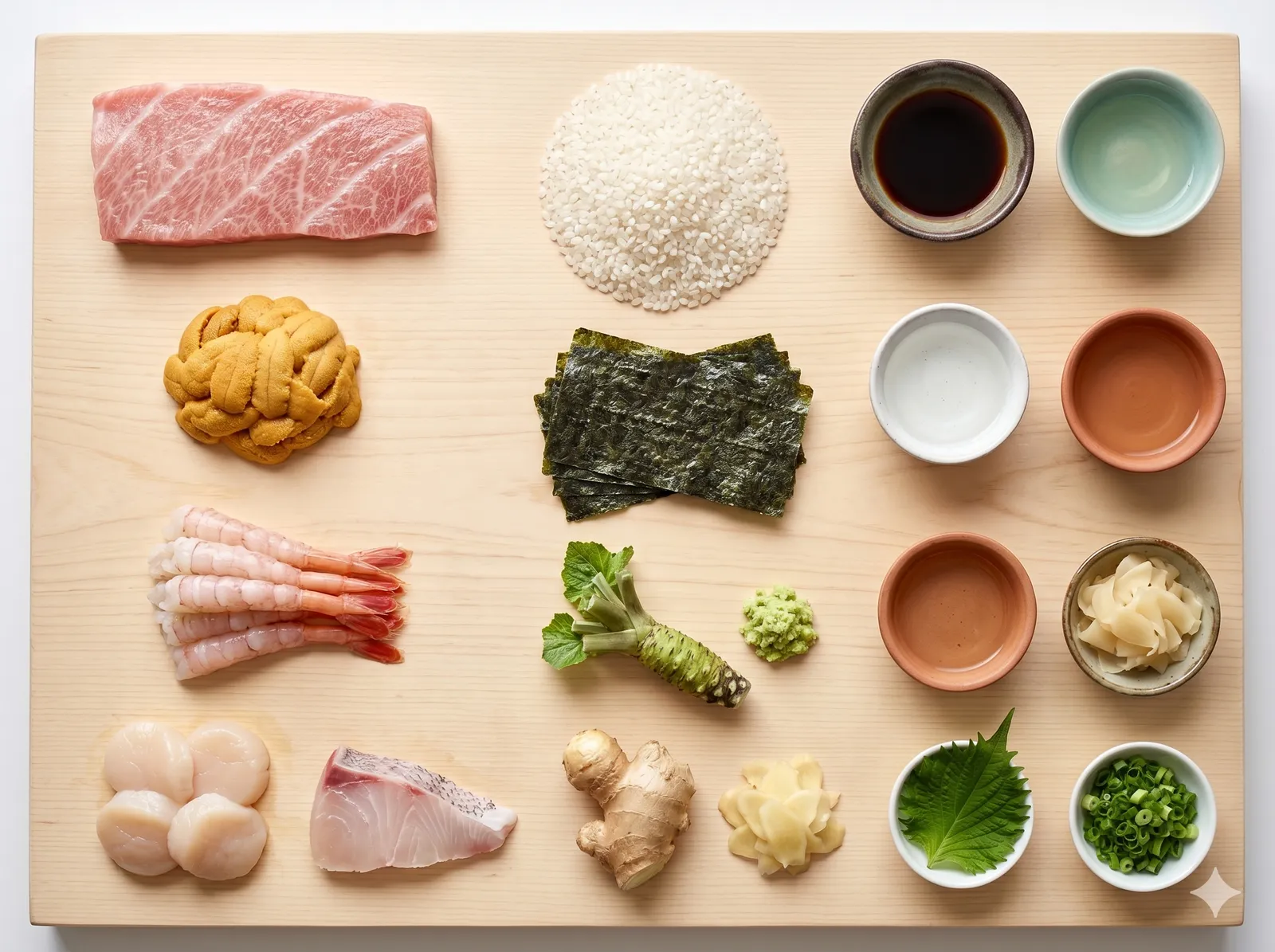
- Cook short-grain rice, then fold in a seasoning of rice vinegar, sugar, and salt while fanning it to a glossy sheen
- Keep the rice warm, around body temperature
- Slice the fish (neta) cleanly against the grain
- Hand-press a small oval of rice, add a dab of wasabi, and lay the fish on top — that's nigiri
- For maki, roll rice and fillings in nori seaweed; for chirashi, scatter toppings over a bowl of rice
Before you go — eat it like you belong
Your questions, answered honestly
"Fingers or chopsticks?" — Either is correct for nigiri. Traditionally it's finger food. Use chopsticks for sashimi and rolls if you prefer.
"How much soy sauce?" — Dip the fish side lightly, never the rice (the rice soaks it up and falls apart). At good places the chef may pre-season it — then you don't dip at all. Less is more.
"Do I eat the ginger on top?" — No — the pickled ginger (gari) is a palate cleanser between pieces, not a topping. And eat each piece in one bite if you can.
"Conveyor belt or counter?" — Both are great. Kaitenzushi (conveyor belt) is cheap, fun, and totally legit for a first timer. A counter (omakase, chef's choice) is the splurge experience — you eat what the chef hands you, in order, and it's magic.
"Wasabi?" — At traditional places it's already tucked between rice and fish — taste before adding more. Mixing wasabi into your soy sauce is frowned upon at serious shops (fine at casual ones).
What the staff will ask you
| You'll hear | Romaji | Meaning | Just say |
|---|---|---|---|
| 何名様ですか? | Nanmei-sama desu ka? | "How many people?" | Futari desu (two) / hold up fingers |
| お飲み物は? | Onomimono wa? | "Anything to drink?" | Ocha de (green tea) / biiru (beer) |
| わさび、大丈夫ですか? | Wasabi, daijōbu desu ka? | "Is wasabi okay?" | Hai (yes) / Sabi-nuki de (without, please) |
| おまかせにしますか? | Omakase ni shimasu ka? | "Chef's choice?" | Hai, onegaishimasu (yes please) |
At a belt place, just take what you like and they count the plates. To order at a counter, the simplest move is to say "Omakase de" (おまかせで) — "Chef's choice, please."
Where to eat it
- Conveyor-belt chains (Sushiro, Kura Sushi, Hama Sushi) — cheap, reliable, everywhere, with English touch-screens. The perfect low-stress start.
- Toyosu Market area (Tokyo) — the famous fish market's sushi spots serve some of the freshest breakfast sushi in the world.
- Any local counter with a queue of locals — trust the line.
Quality and prices vary wildly, so check reviews before a splurge — and remember, the rice tells you everything.
Soul Score
Local Roots5/5
First-Timer Friendly4/5
Adventure Level4/5
Comfort Level4/5
Travel Worthy4/5
These scores are one obsessed eater's gut feeling — not a verdict. A low number isn't a bad mark, just a different kind of adventure.
More food guides
Know someone planning Japan?
← All Articles
Japanese Food · Nationwide
Still hungry?
Start with the classics
Japanese FoodNationwide
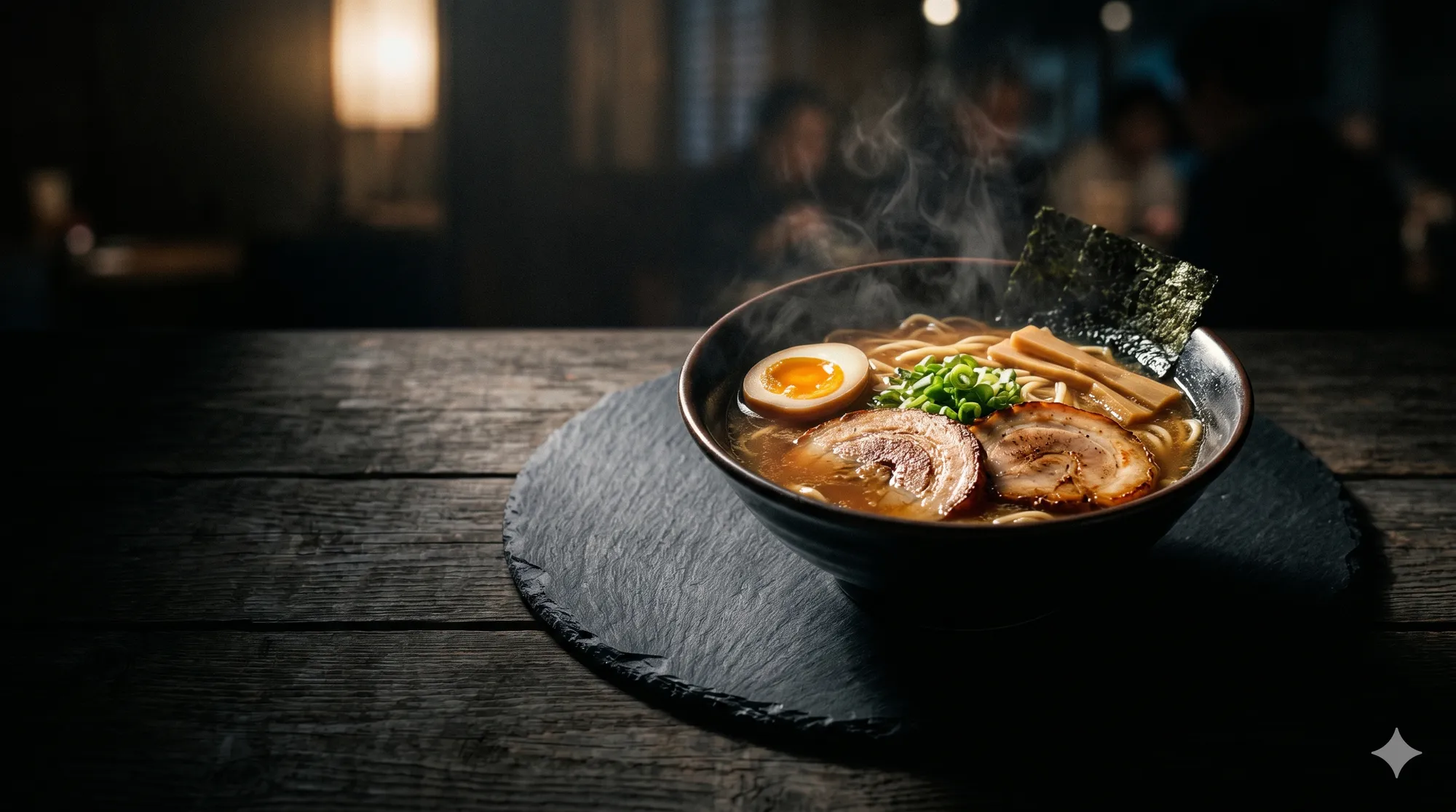
Ramen (ラーメン)
A bowl of noodles in soup — and somehow one of the most obsessed-over foods on the planet. Shoyu, miso, shio, tonkotsu: here's how to read a ramen menu and slurp like you mean it.
June 20, 2026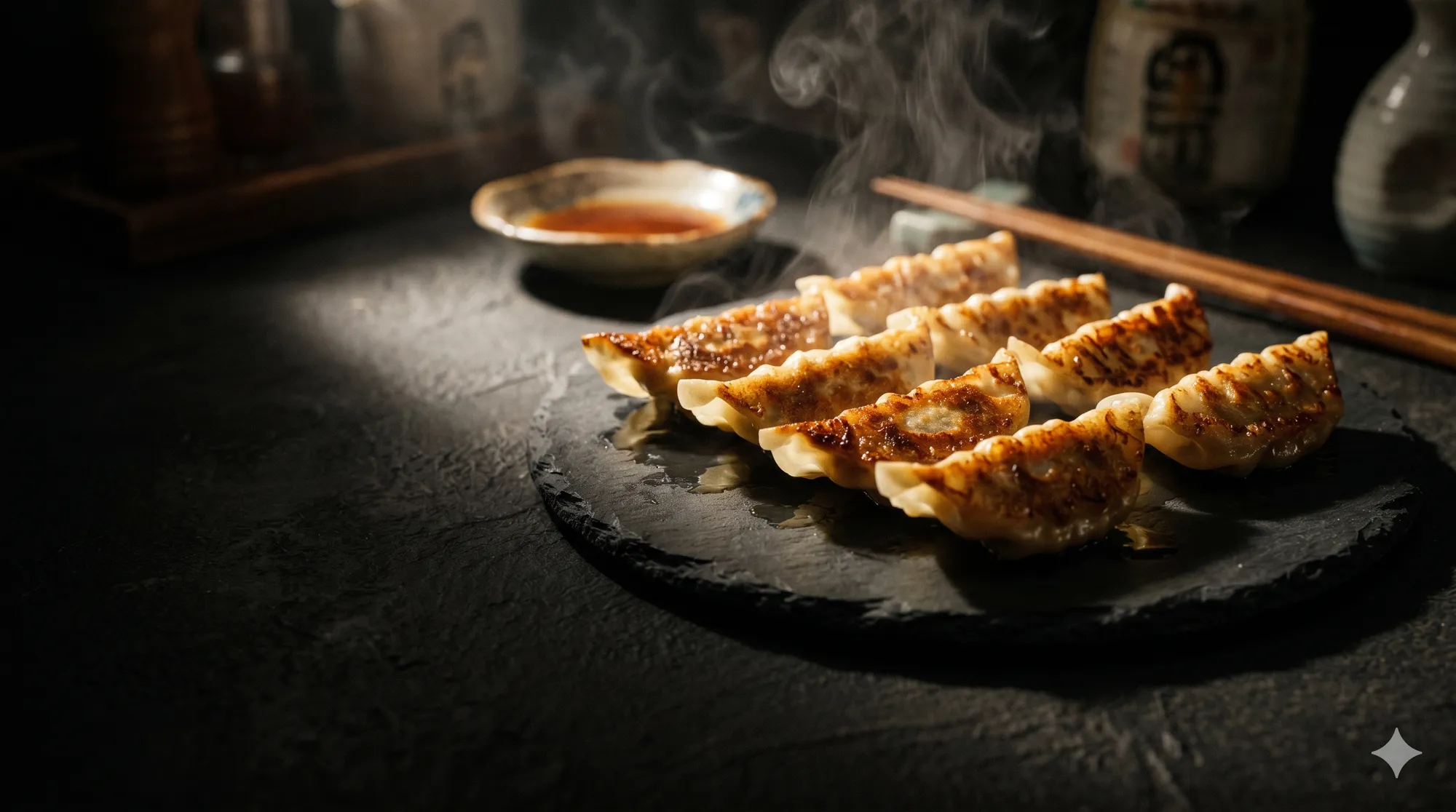
Japanese FoodNationwide
Gyoza (餃子)
Pan-fried dumplings with a crispy bottom and a juicy pork-and-cabbage filling, dunked in vinegar-soy-chili. The ultimate ramen sidekick, the izakaya staple, and the snack nobody can stop eating.
June 20, 2026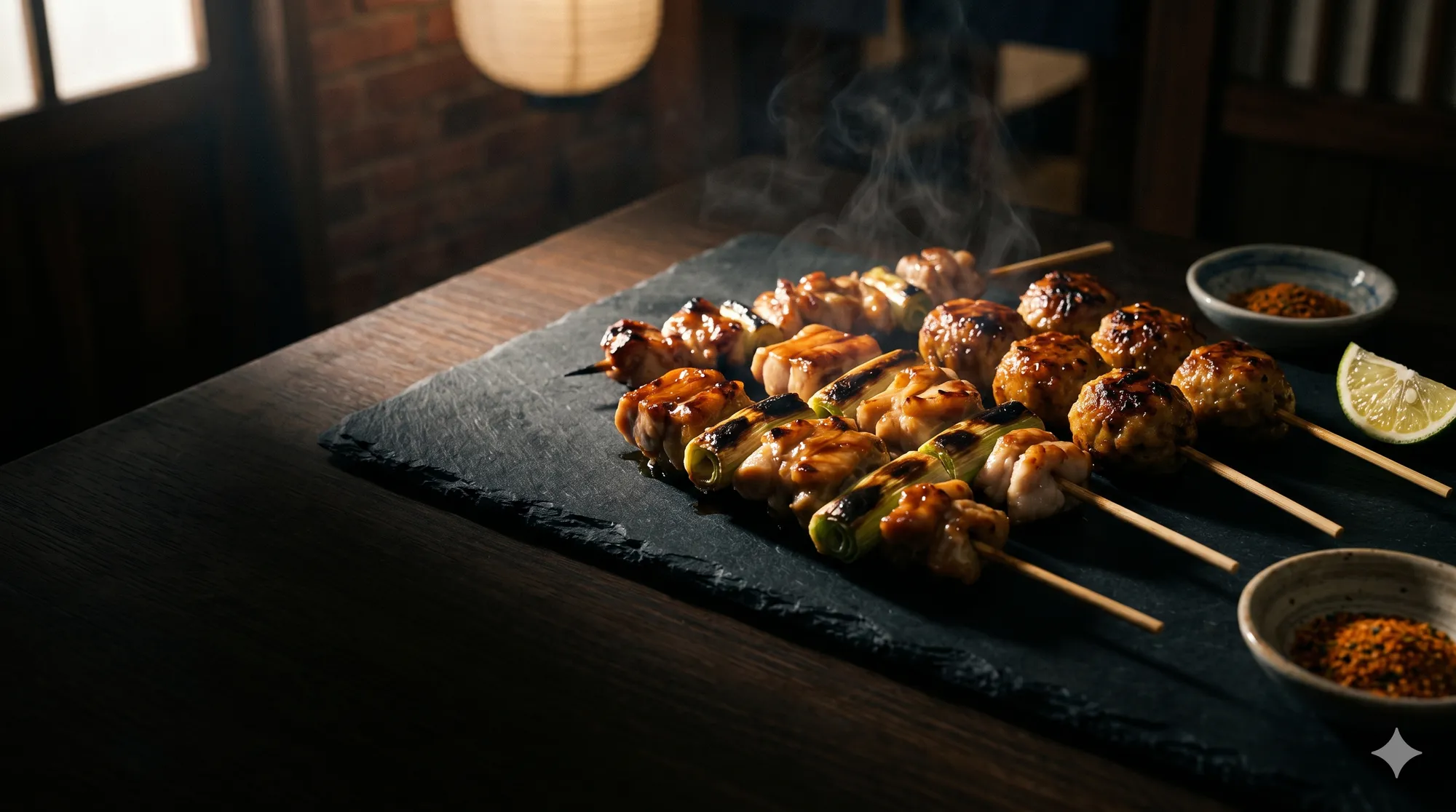
Japanese FoodNationwide
Yakitori (焼き鳥)
Bite-sized skewers of chicken grilled over blazing charcoal, seasoned with just salt or a sweet-savory tare. The beating heart of the izakaya, smoke and beer included. Nose-to-tail, and all of it good.
June 20, 2026