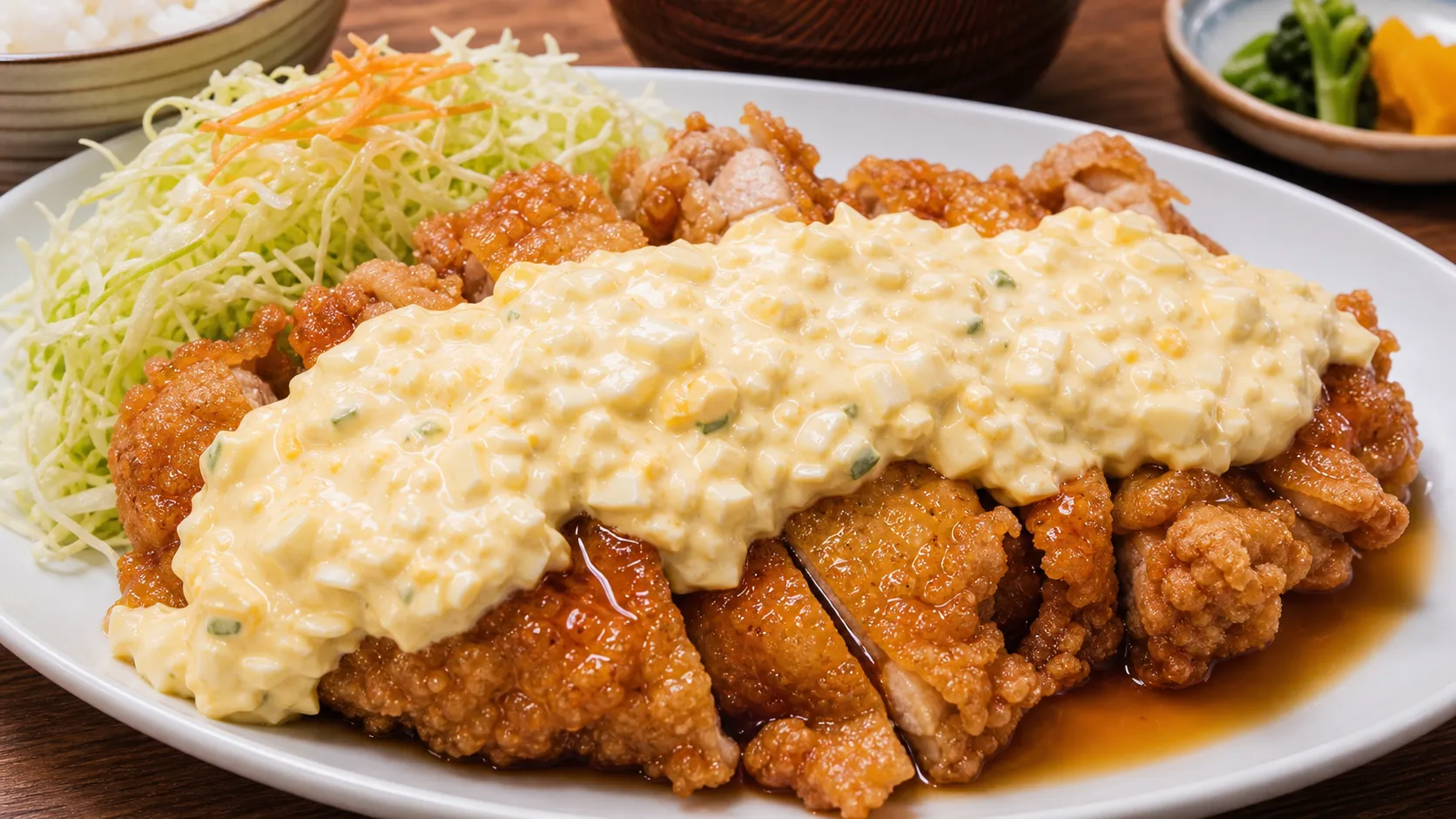
The tartar sauce situation was not what I expected.
Share this dish


Deep-fried chicken soaked in sweet vinegar sauce, then buried under a snowdrift of homemade tartar. Miyazaki's greatest contribution to the art of fried chicken, and it's not even close.
🍜 Planning a food trip to Miyazaki?Add this dish to my Food Trip →
 Add this dish to my Food Trip →
I expected a drizzle. A polite zigzag across the top, the way you get on a nice piece of fish. What arrived was a snowdrift. A generous, heaped, frankly excessive mound of thick, egg-rich, slightly sweet homemade tartar sauce that covered the chicken almost completely. I stared at it for a second. Then I ate it. Then I ordered another one before I was halfway through the first.
Chikin nanban (チキン南蛮) is Miyazaki's fried chicken: thigh meat, battered and deep-fried until properly golden, then immediately dunked in nanban sauce — a sharp-sweet blend of soy, vinegar, and sugar — and finished under that legendary tartar. The combination sounds like too much. It is exactly enough. The vinegar cuts through the fat, the tartar adds richness and body, and the chicken stays crispy under it all because you eat it immediately and you do not stop.
The restaurant war that made this dish famous
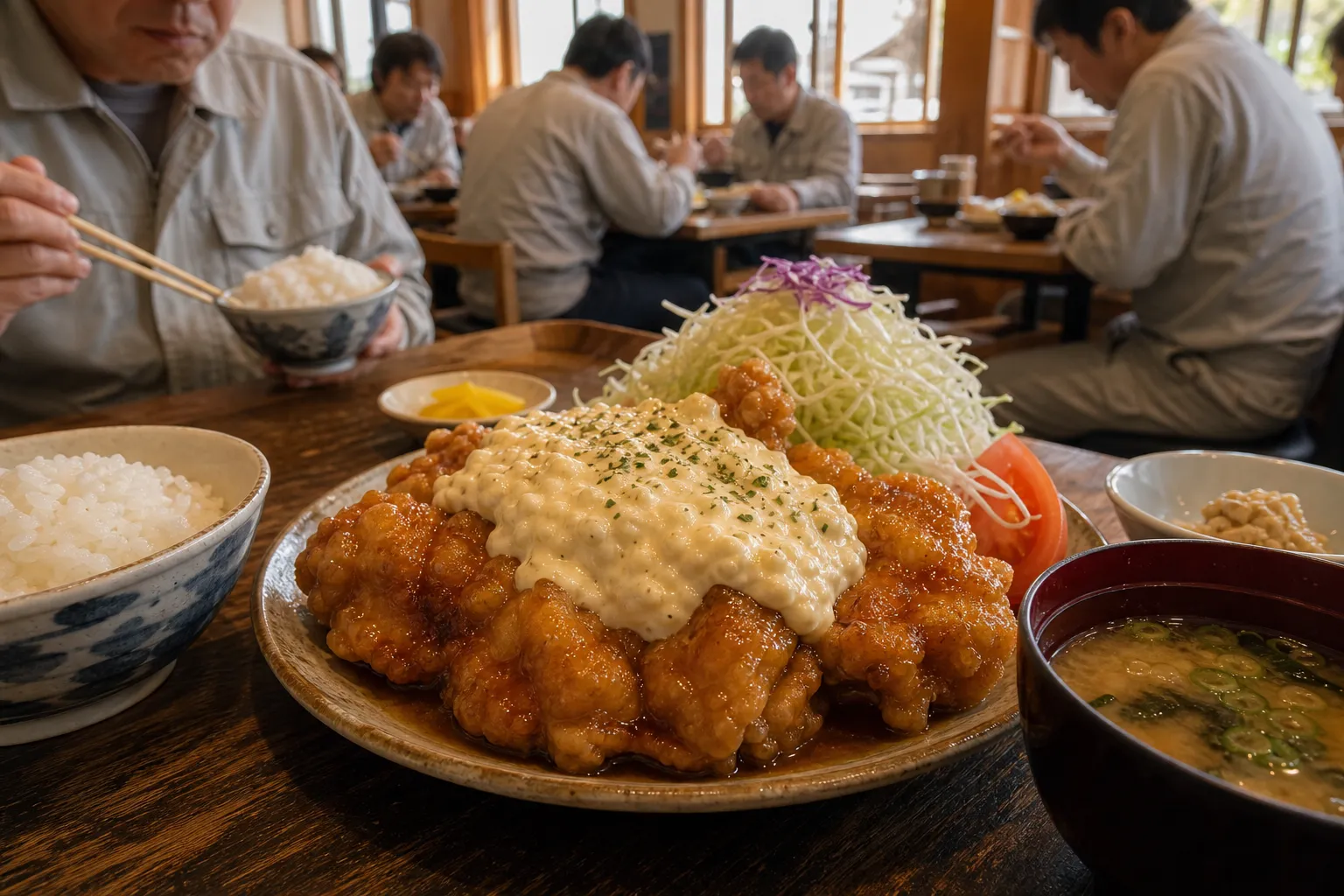
Chikin nanban was invented in Nobeoka, Miyazaki in the 1960s — and the origin story is a genuine local dispute that has never been resolved. Two restaurants, Nakatsu-ya and Ogura, both claim to have created the dish, and their versions are meaningfully different. Nakatsu-ya serves the original: sweet vinegar sauce only, no tartar. Ogura added the tartar sauce and spread that version across Miyazaki as a chain. Japan chose sides. Ogura's tartar version became the standard, the one that spread nationwide and defined what "chicken nanban" means to most people. Nakatsu-ya's purists maintain that the original is the real thing.
Both are worth eating. Both are excellent. The argument gives the dish a mythology it deserves.
The name nanban (南蛮, "southern barbarian") refers to the Portuguese and Spanish traders who introduced vinegar-based preparations to Japan in the 16th century. The same word appears in nanban-zuke (vinegar-pickled fish) and tōgarashi nanban (chili pepper). The connection is the sharp, foreign-influenced vinegar hit.
What makes the tartar different
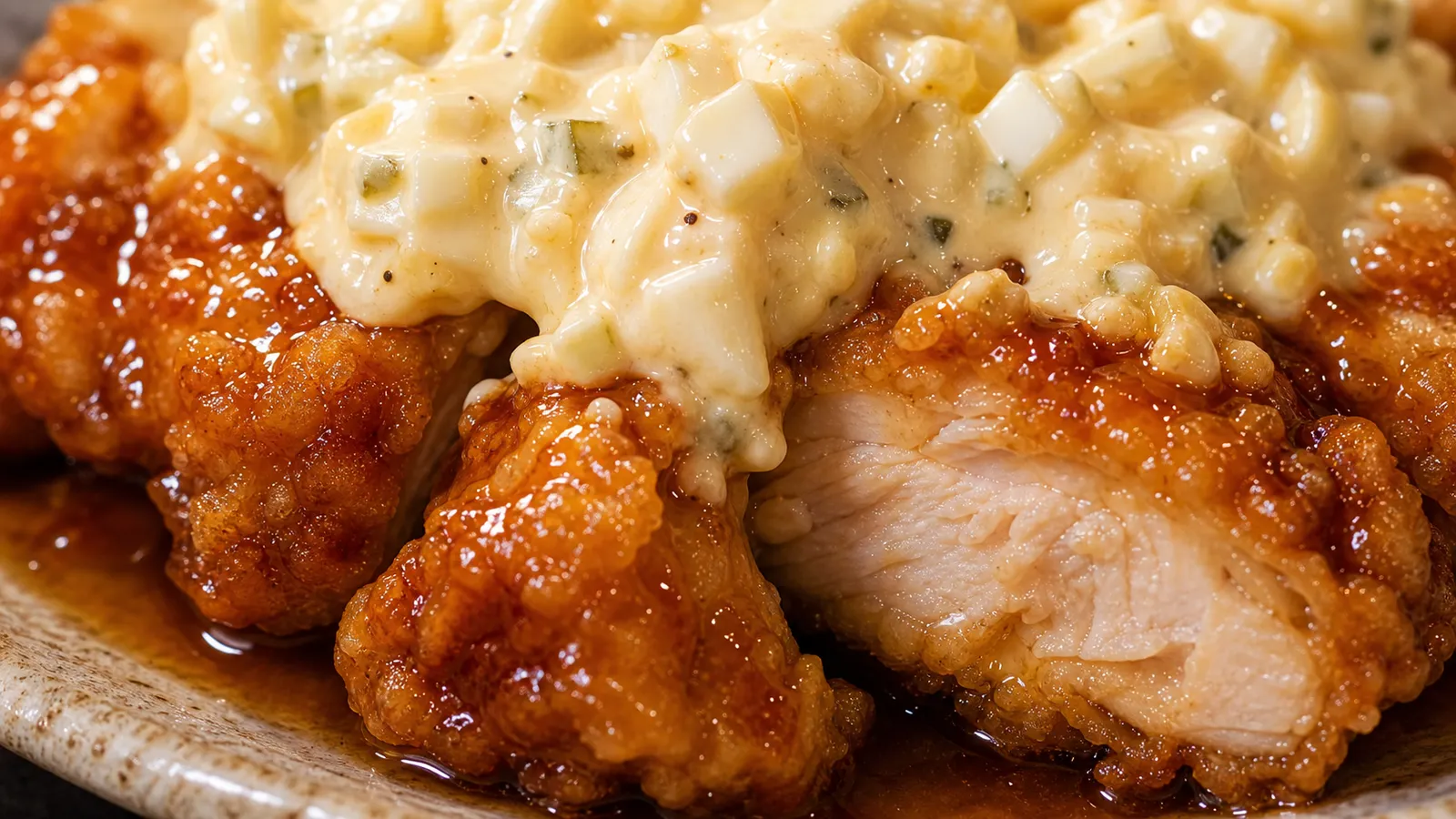
Miyazaki chicken nanban tartar is not mayonnaise with relish. It's made fresh — hard-boiled egg chopped rough, pickles, sometimes onion, sometimes parsley, bound with mayonnaise but not drowned in it. The result is thick, textured, slightly sweet, and genuinely rich rather than just fatty. Every shop has its own recipe and guards it accordingly.
The chicken itself matters too: thigh over breast, always. Thigh stays juicy through the fry and the nanban soak. The batter is light — just enough to give the vinegar something to cling to. The sequence is critical: fry → soak while hot → tartar → serve immediately. The vinegar penetrates when the chicken is still steaming. By the time it hits your table, the flavors have already married.
How it's made
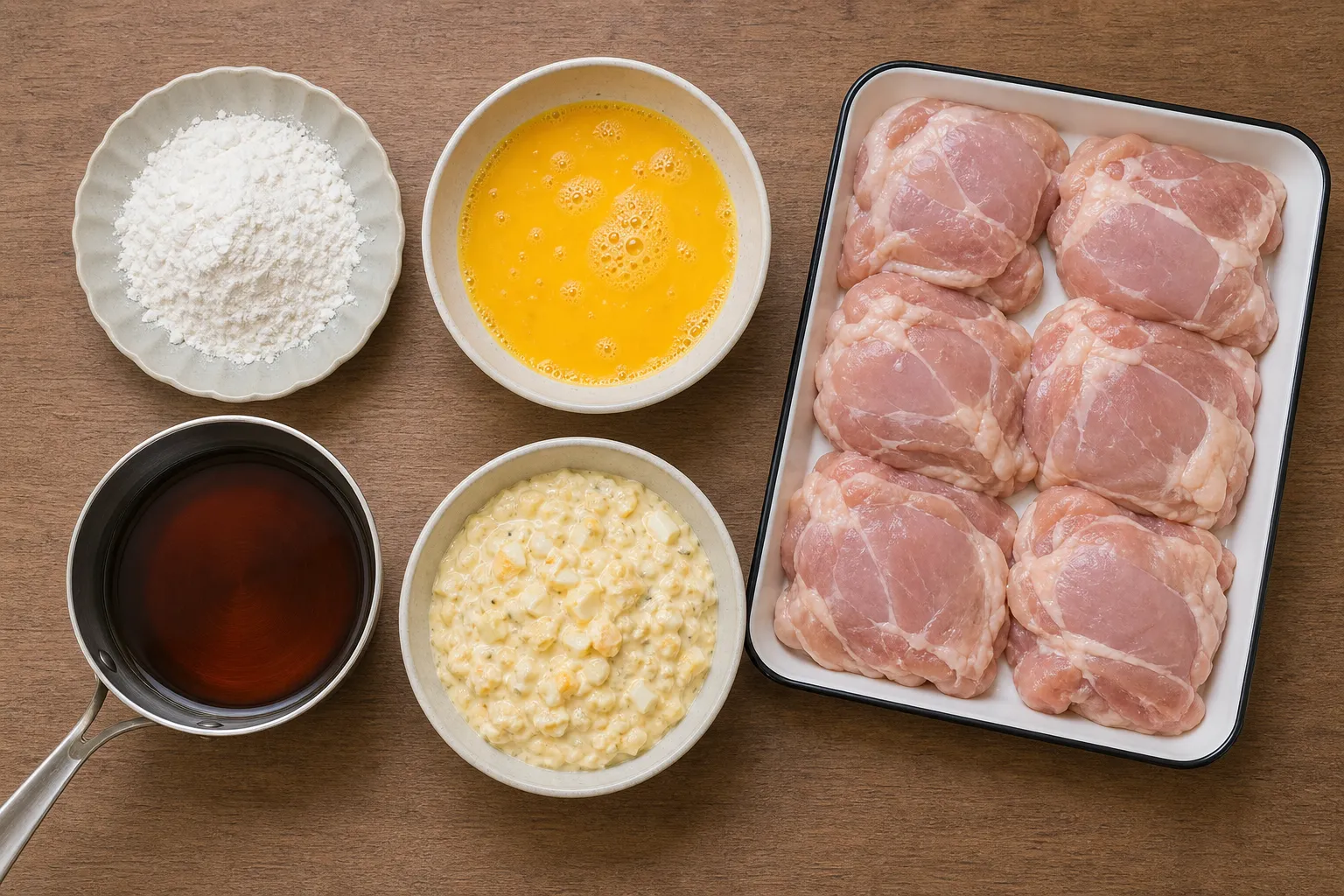
- Marinate chicken thigh in soy and sake briefly; coat lightly in flour and egg
- Deep-fry until deep golden — fully cooked through, proper crust
- While still hot, transfer directly to nanban sauce (soy, rice vinegar, sugar, mirin) and soak for 30 seconds to a minute
- Plate and immediately pile tartar sauce on top — generously
- Serve at once; do not let it sit
Before you go — get the thigh
Your questions, answered honestly
"Is it spicy?" — Not typically. Nanban in the name refers to the vinegar preparation, not chili heat. Some shops add a little shichimi on the tartar, but base chicken nanban is sweet-sour-rich, not spicy.
"Which version is better — tartar or no tartar?" — This is a Miyazaki debate you're now part of. The tartar version is what most people know and love. Try both if you're in Nobeoka. Everywhere else, tartar is the default and it's wonderful.
"Can I find this in Tokyo?" — Yes — Miyazaki has dedicated izakayas in major cities. But nothing matches eating it in Miyazaki itself where the chicken is local, the tartar is housemade, and the portions are frankly unreasonable.
"What's in the tartar sauce?" — Hard-boiled egg, pickles (usually sweet), onion, mayo. Every shop's recipe differs. The house tartar is the point of pride.
What the staff will ask you
| You'll hear | Romaji | Meaning | Just say |
|---|---|---|---|
| タルタルはおつけしますか? | Tarutaru wa otsuke shimasu ka? | "Want tartar sauce?" | Hai, onegaishimasu — always yes |
| ご飯はおかわりできますよ | Gohan wa okawari dekimasu yo | "Rice refills are free" | Arigatō gozaimasu 😭 |
| もも肉でよろしいですか? | Momoniku de yoroshii desu ka? | "Thigh meat, is that okay?" | Hai, onegaishimasu |
To order, just say "Chikin nanban kudasai" (チキン南蛮ください) — "Chicken nanban, please."
Where to eat it
- Ogura (おぐら) — the chain that made tartar-style chicken nanban famous. Multiple locations across Miyazaki.
- Nakatsu-ya (直ちゃん) — Nobeoka. The original, no-tartar version. Worth the pilgrimage for context.
- Miyazaki izakayas, nationwide — any Miyazaki-specialty izakaya in Tokyo or Osaka will have a solid version; it's the dish they lead with.
Soul Score
Local Roots5/5
First-Timer Friendly5/5
Adventure Level3/5
Comfort Level5/5
Travel Worthy4/5
These scores are one obsessed eater's gut feeling — not a verdict. A low number isn't a bad mark, just a different kind of adventure.
Know someone planning Japan?
← All Articles
Local Food · Nobeoka / Miyazaki
Still hungry?
Eat more from Miyazaki
Local FoodNobeoka, Miyazaki
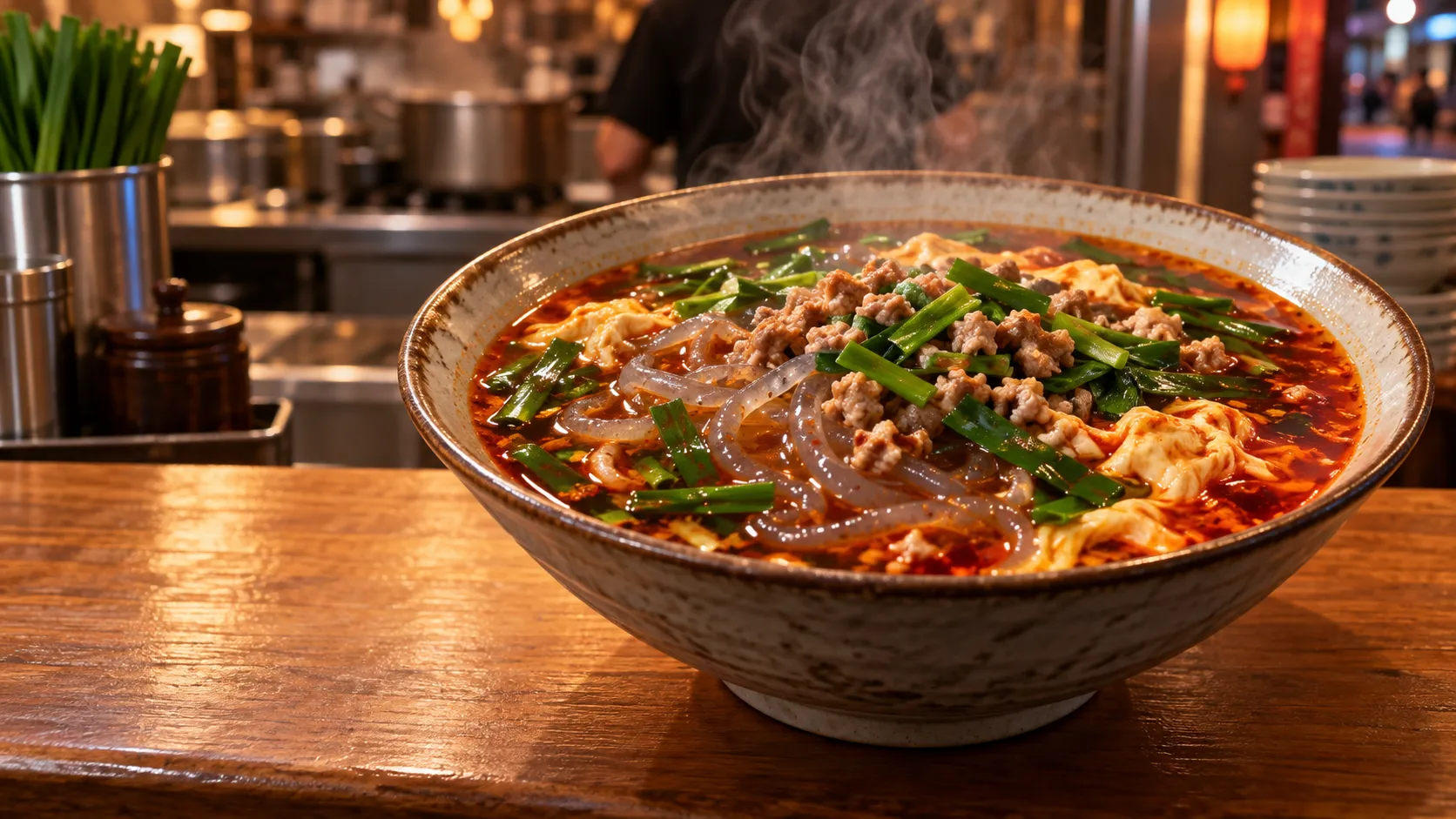
Karamen (辛麺)
They ask you for a number before they ask you for anything else. I said five like an idiot, and Nobeoka taught me something about myself that afternoon.
September 26, 2026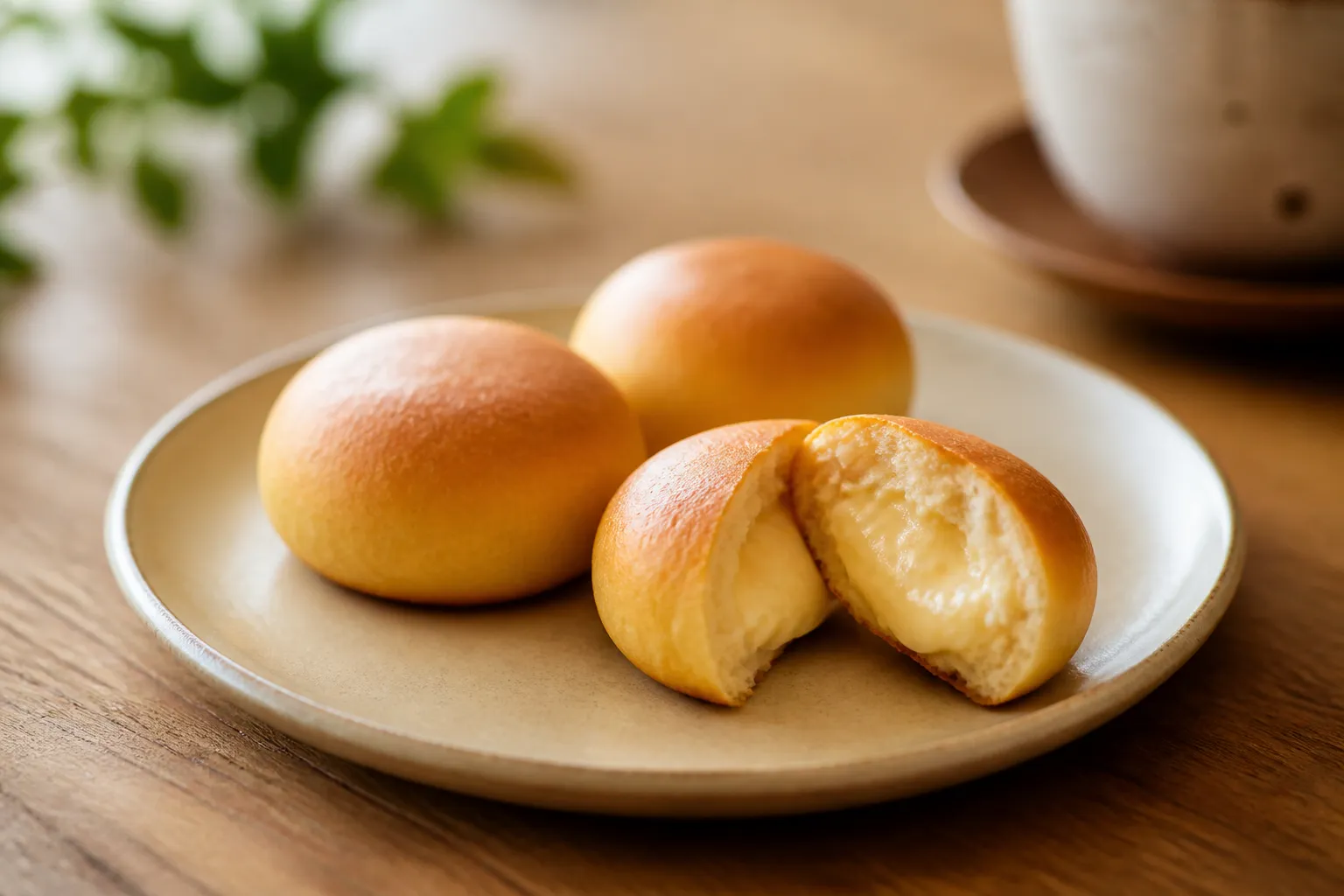
Local FoodMiyazaki
Cheese Manju (チーズ饅頭)
A warm golden bun that looks like a plain cookie until you bite in and hit a molten pocket of cream cheese — Miyazaki's sneaky-brilliant souvenir that ruined me for regular manju.
July 12, 2026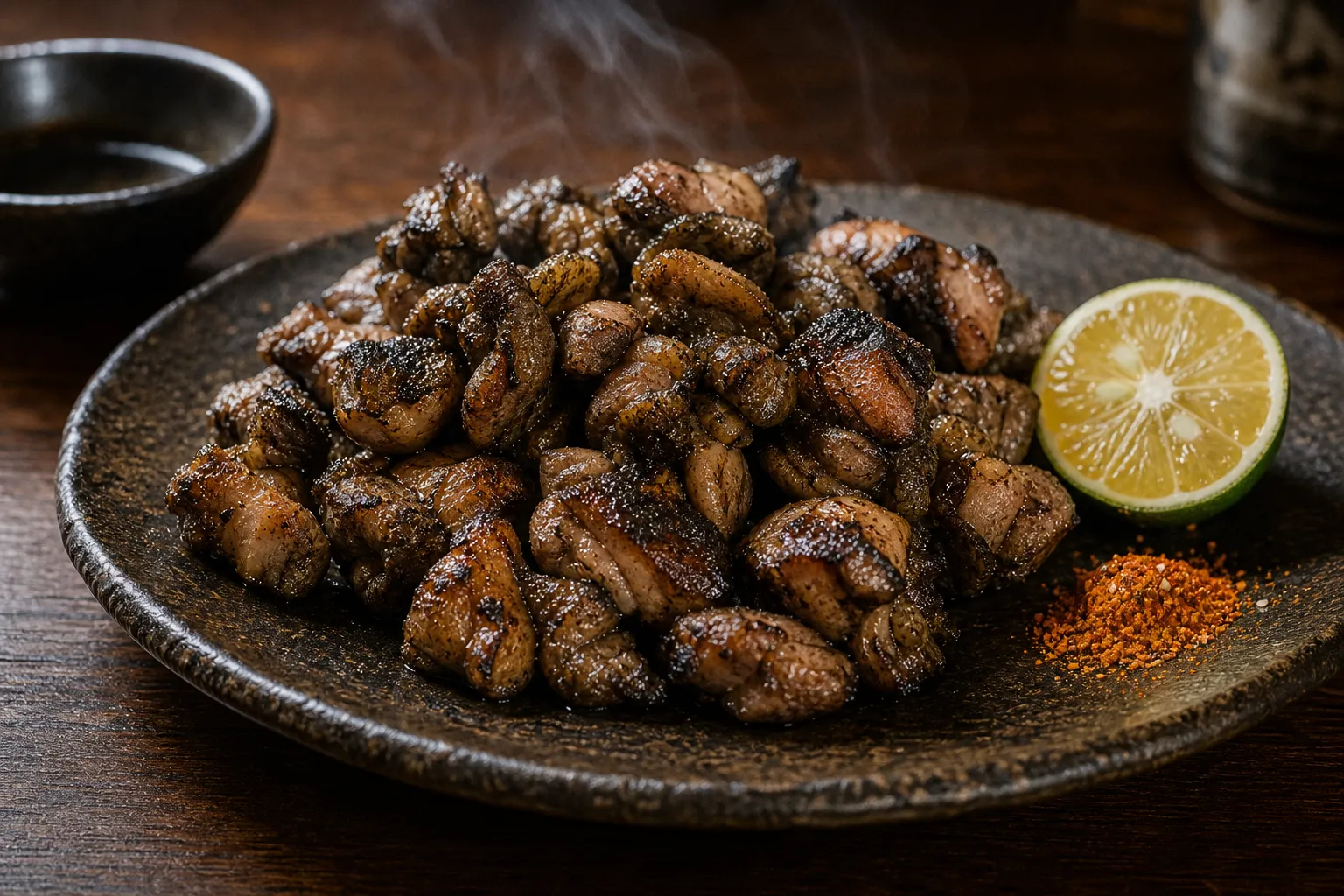
Local FoodMiyazaki
Charcoal-grilled Jidori Chicken (炭火焼地鶏)
Chunks of local jidori thigh thrown over furious charcoal until they're blackened, smoky and impossibly juicy. It looks burnt. It is not burnt. It is the best thing Miyazaki will put in front of you.
July 12, 2026More crispy things worth chasing
Japanese FoodNationwide
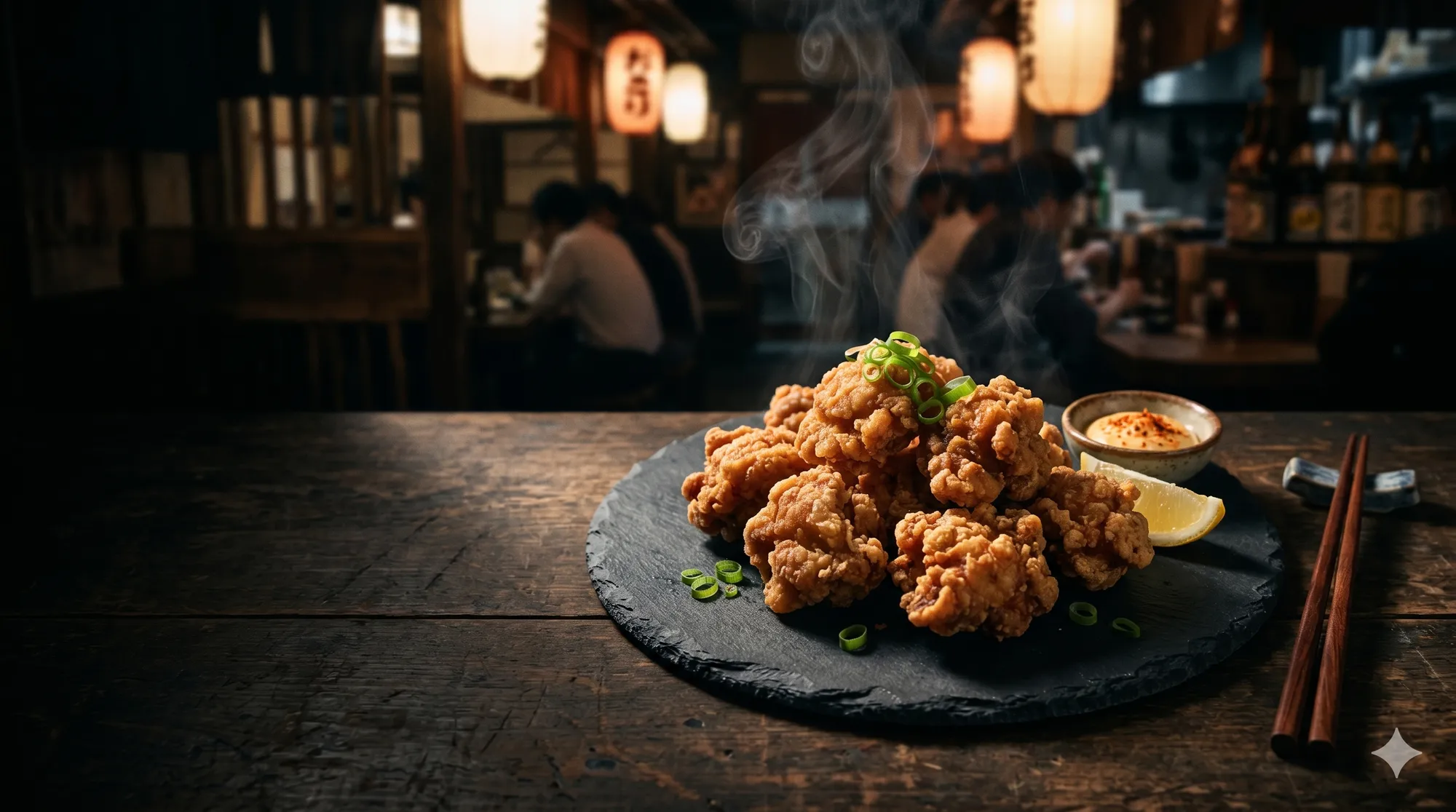
Karaage (からあげ)
Japan's fried chicken: crackling-crisp outside, gushing-juicy inside, marinated in soy and ginger and garlic. The bento hero, the izakaya MVP, the snack worth fighting over.
July 13, 2024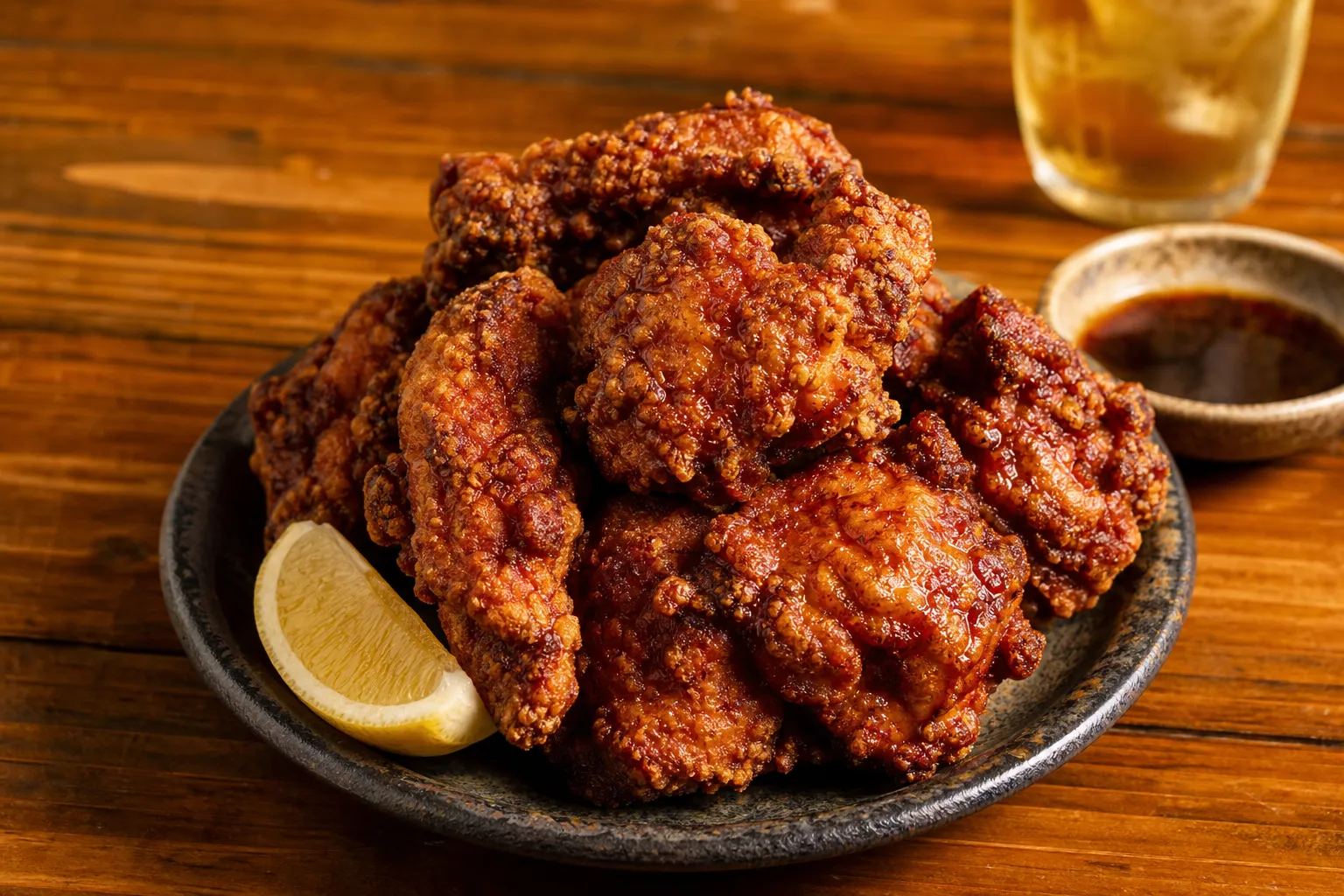
Local FoodKushiro, Hokkaido
Zangi (ザンギ)
Hokkaido's fried chicken — bigger, darker, and more deeply marinated than karaage, with a craggy soy-garlic crust and juice that runs when you tear it open. Don't call it karaage up here.
June 26, 2026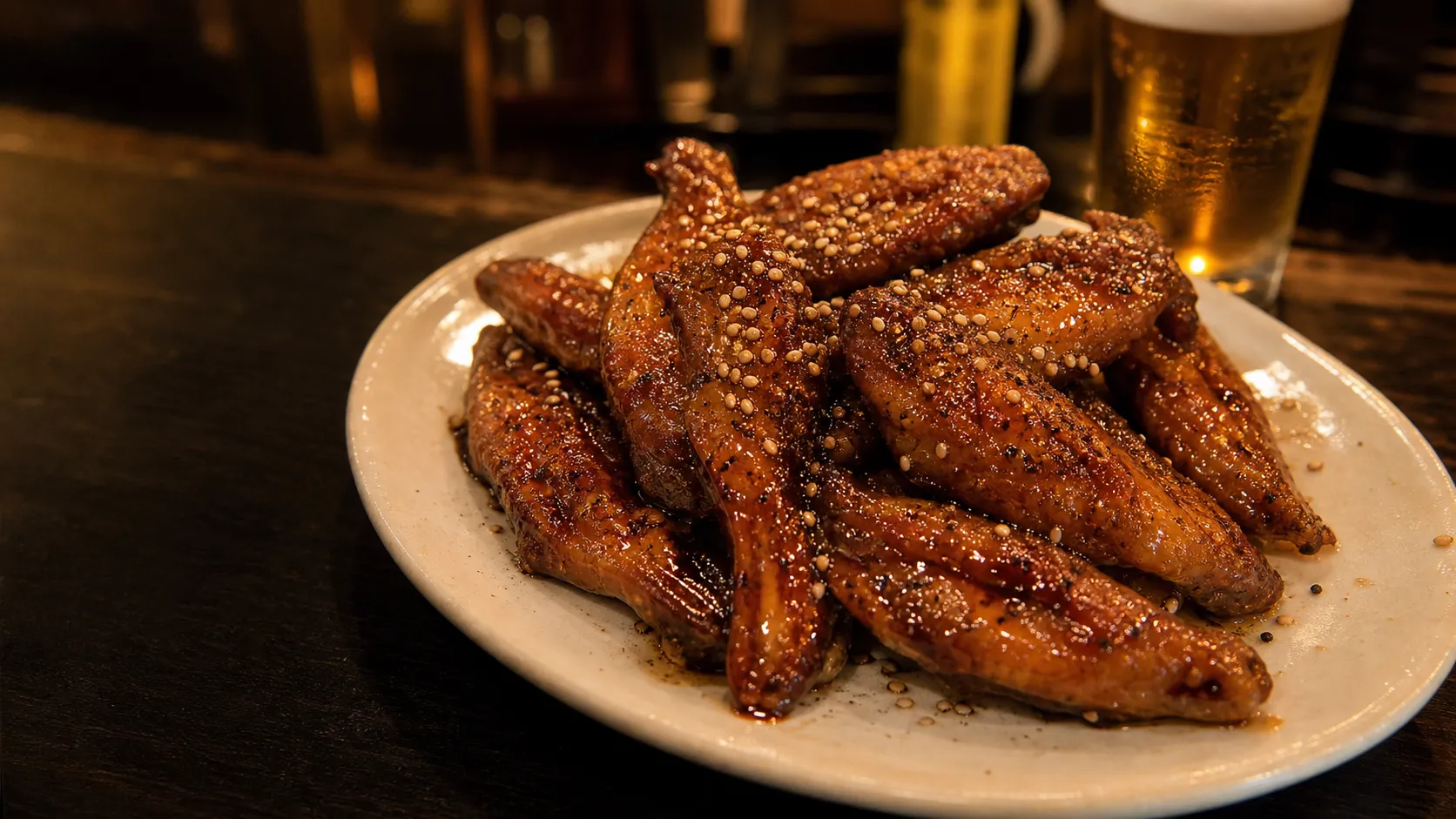
Local FoodNagoya, Aichi
Tebasaki (手羽先)
Nagoya's famous chicken wings: fried twice until they shatter, then glazed with sweet soy and coated in sesame and black pepper. You will eat ten before you realize you're doing it.
June 25, 2026