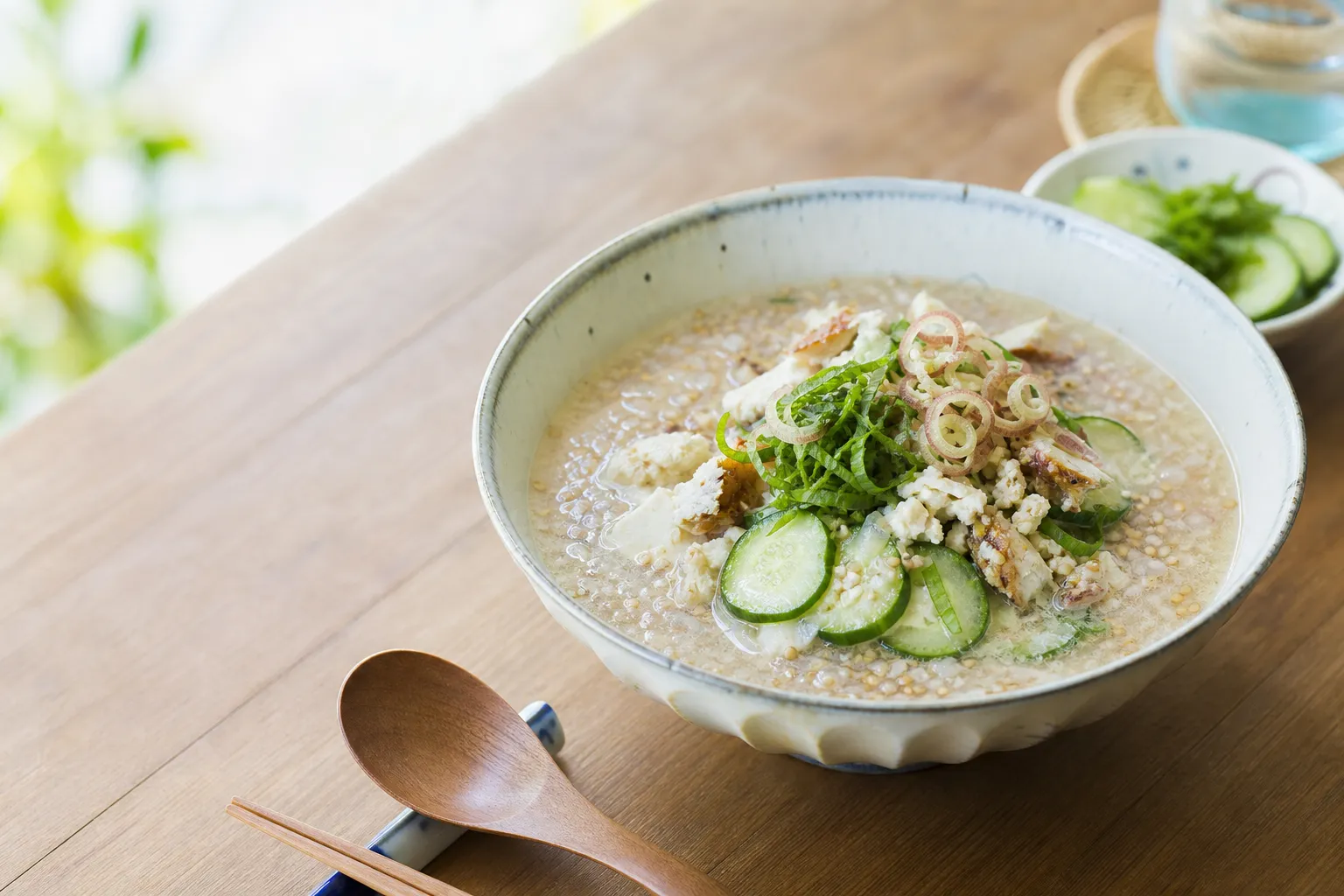
Cold miso soup. Poured over hot rice. In the summer. I want to be honest: when it was described to me, my whole face did something skeptical. Soup is hot. Rice is hot. Why would you chill the soup. Then it was a genuinely punishing August afternoon in Miyazaki, sweat in my eyes, appetite long gone — and someone handed me a bowl of this, cold and nutty and faintly fishy and cucumber-fresh, and I ate the entire thing in about ninety seconds and asked for more. Oh. That's why.
Share this dish


Cold miso soup. Poured over hot rice. In summer. I know how that sounds — I thought the same thing. Then I ate it on a brutal August afternoon in Miyazaki and understood exactly why farmers have been making it for centuries.
🍜 Planning a food trip to Miyazaki?Add this dish to my Food Trip →
 Add this dish to my Food Trip →
This is hiyajiru (冷や汁), Miyazaki's great summer survival dish: a chilled soup of miso and dashi loaded with toasted sesame and grilled flaked white fish, poured cold over hot rice and topped with thin cucumber, shredded shiso, myoga and crumbled tofu. It is exactly as strange as it sounds and exactly as right as the heat demands.
Farmer food, born from heat and hurry
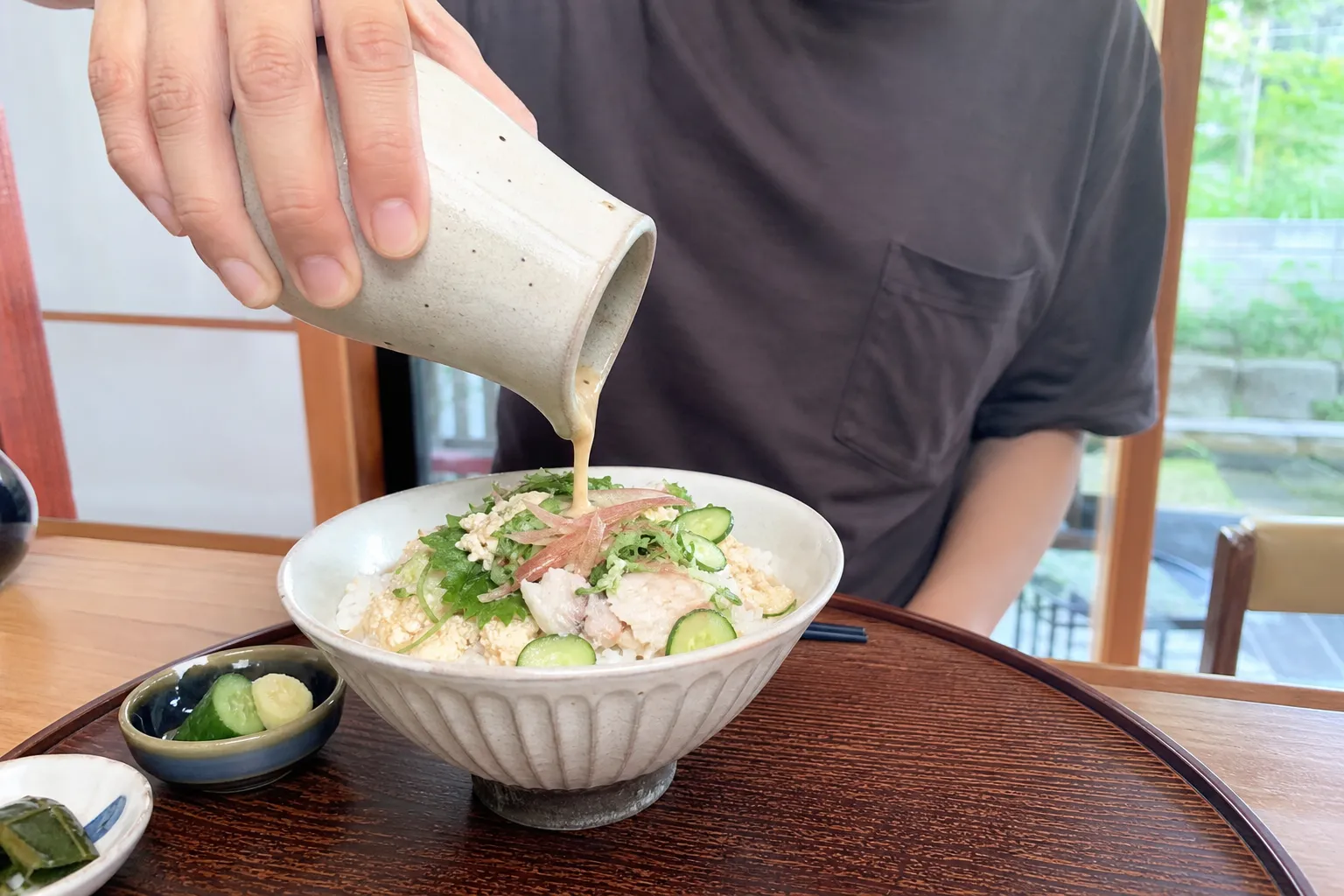
Hiyajiru is old, humble, working food. The roots run back centuries to the farmers and fishermen of the Miyazaki region, who needed something they could eat fast in brutal Kyushu summer heat — when no one wants to stand over a fire or face another hot meal. So they ground toasted sesame into miso, sometimes seared it for a smoky edge, thinned it with cold dashi, flaked in grilled fish, and poured it over rice. No cooking at the moment of eating. Cool, salty, protein-rich, ready in seconds. Fuel for a body that's already overheated.
I find that deeply practical and a little beautiful. It's not a dish someone invented to impress — it's a dish someone invented to keep going. And it works so well that it long outlived its necessity: people in Miyazaki eat it now because they love it, not because they have to. That's the highest praise a piece of survival food can earn.
Why cold soup is the right answer
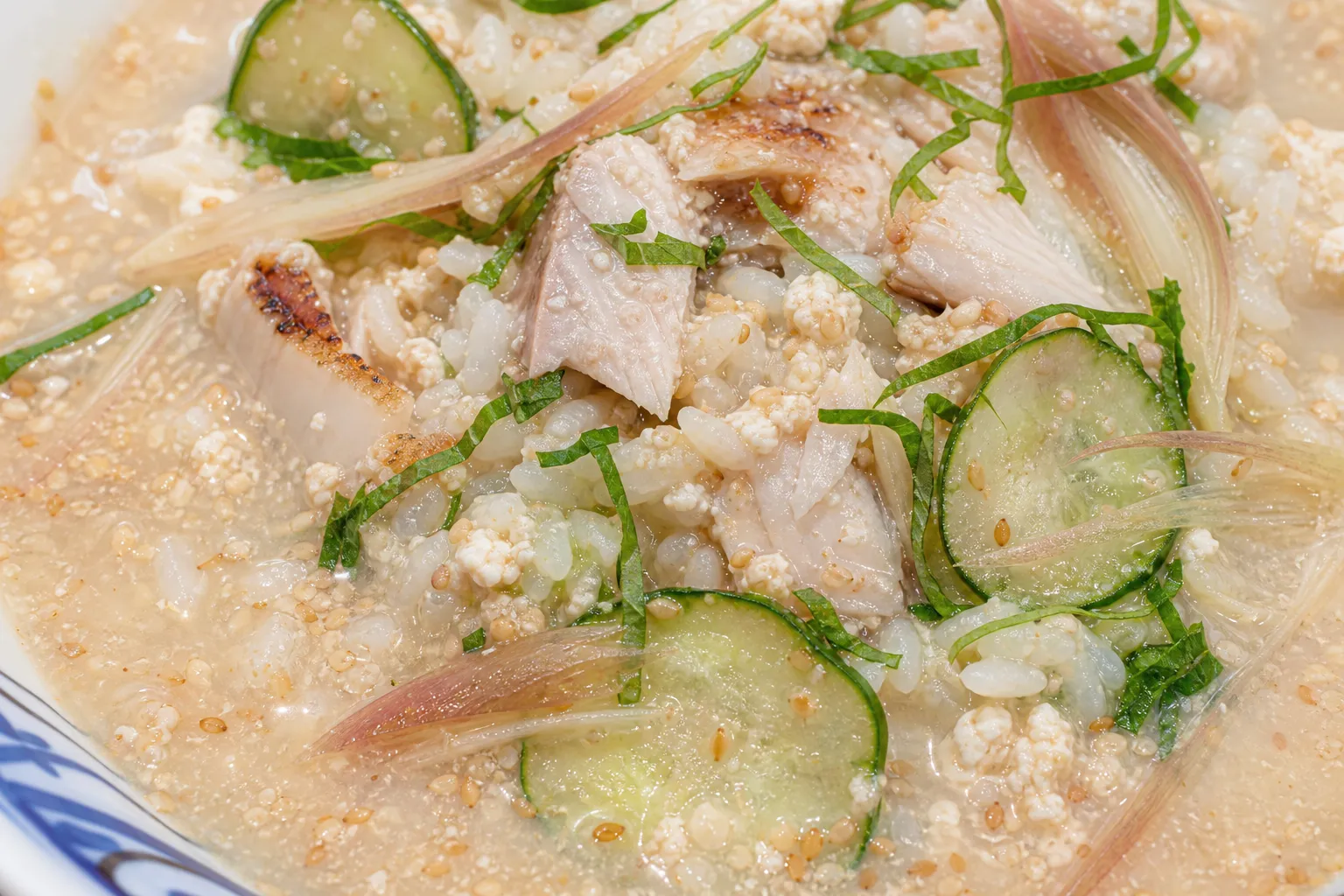
The flavor is the surprise. The base is nutty and savory — all that toasted sesame ground into miso gives it a rich, almost creamy depth — while the cold dashi keeps it light and the grilled fish adds a gentle smoky umami. Then the toppings do the cooling work: crisp cucumber, fragrant shiso, sharp myoga, soft crumbled tofu. Every spoonful is savory and refreshing at once, which your overheated brain registers as pure relief.
And the temperature contrast is the trick. Cold soup over warm rice means the bowl is never icy, never bland — just cool enough to revive you, with the rice giving it body. You drink it, chew it, slurp it, done. On a hot day it goes down like nothing else, and I went from skeptic to evangelist in a single bowl. Trust Miyazaki on this one.
How it's made
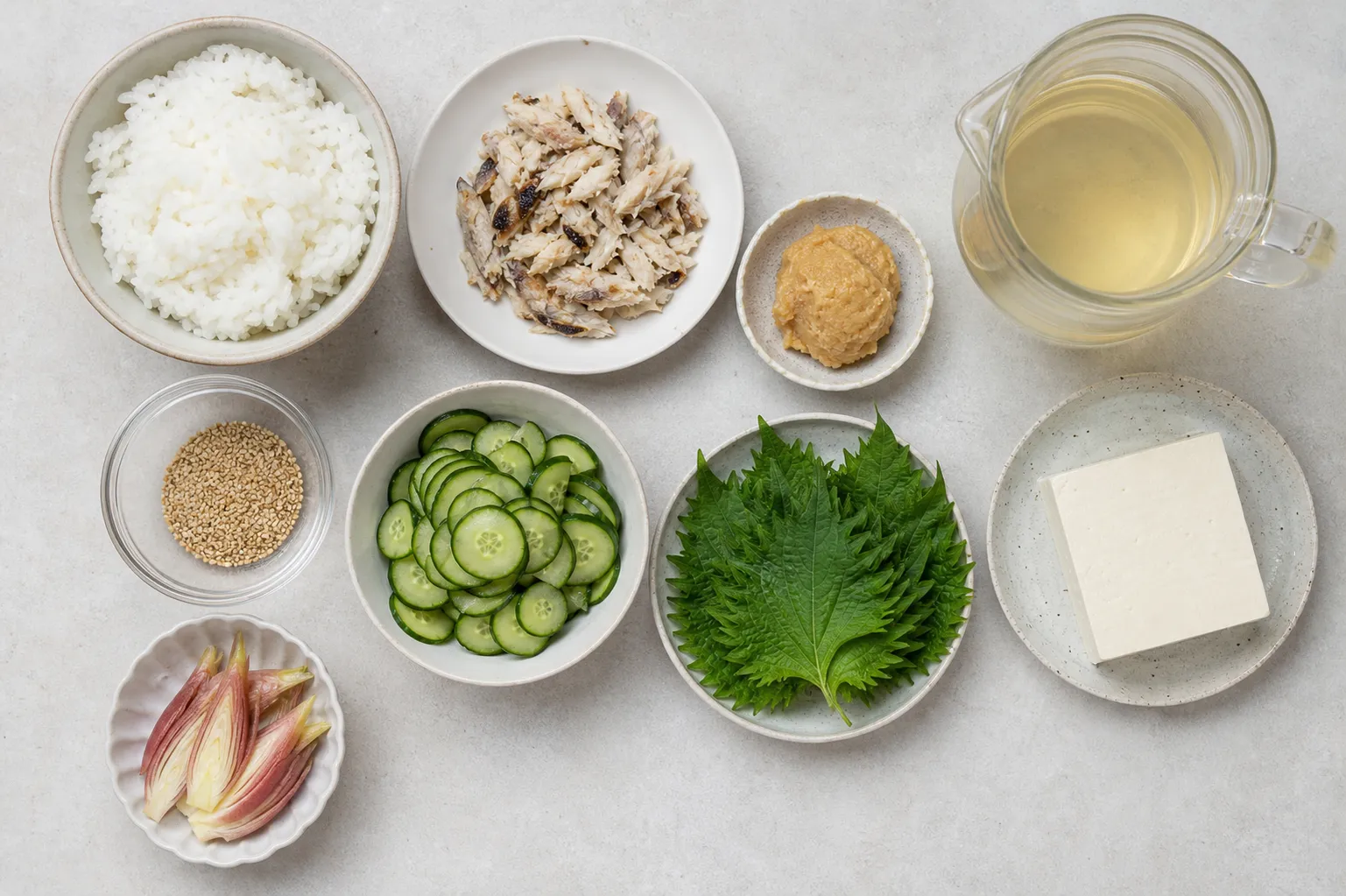
- Toast and grind sesame seeds, and mix into miso
- Grill white fish (often aji or similar), then flake it and mix it in — some cooks sear the miso paste for a smoky note
- Thin the sesame-miso with cold dashi until it's a drinkable, slightly grainy soup
- Chill it thoroughly
- Slice cucumber thin; prep shredded shiso, myoga and crumbled tofu
- Pour the cold soup over hot rice, add the toppings, and eat at once
Before you go — for the hiyajiru-curious
Your questions, answered honestly
"Wait — the soup is really served cold?" — Really. That's the entire point. Hiyajiru is a chilled summer dish, designed to revive you in the heat. Cold soup, hot rice. It's not a mistake or a mishandled order.
"Is it fishy?" — Gently. The grilled flaked fish adds smoky umami more than a strong fish flavor, balanced by all that nutty sesame-miso. It's savory and rounded, not pungent.
"Do I drink it or eat it with rice?" — Both. It's poured over rice, so you eat it like a soupy rice bowl — spoon or slurp, chew the cucumber and tofu, get the cool broth and warm rice together.
"Is it a summer-only thing?" — Mostly. It shines in hot weather and you'll see it most in summer (in restaurants and on supermarket shelves), though some places serve it year-round.
What the staff will ask you
| You'll hear | Romaji | Meaning | Just say |
|---|---|---|---|
| 定食でいいですか? | Teishoku de ii desu ka? | "The set meal (with rice etc.)?" | Hai, onegaishimasu (yes please) |
| ご飯にかけますか? | Gohan ni kakemasu ka? | "Shall we pour it over the rice?" | Hai, kakete kudasai (yes, pour it over) |
| 薬味は全部のせますか? | Yakumi wa zenbu nosemasu ka? | "All the garnishes on top?" | Hai, zenbu de (yes, all of them) |
To order, just say "Hiyajiru kudasai" (冷や汁ください) — "Hiyajiru, please."
Where to eat it
- Across Miyazaki Prefecture — hiyajiru is a prefecture-wide summer staple, served at teishoku restaurants and izakaya throughout Miyazaki, especially in the warmer months. The obvious place to eat it in its element.
- Miyazaki supermarkets & home tables — it's deeply a home dish, so in summer you'll also find ready versions and hiyajiru miso in local supermarkets if you're self-catering.
- Check before you go — it's strongly seasonal, so outside summer you may need to confirm a restaurant is serving it before you go.
Soul Score
Local Roots5/5
First-Timer Friendly4/5
Adventure Level3/5
Comfort Level4/5
Travel Worthy4/5
These scores are one obsessed eater's gut feeling — not a verdict. A low number isn't a bad mark, just a different kind of adventure.
Know someone planning Japan?
← All Articles
Local Food · Miyazaki, Miyazaki
Still hungry?
Eat more from Miyazaki
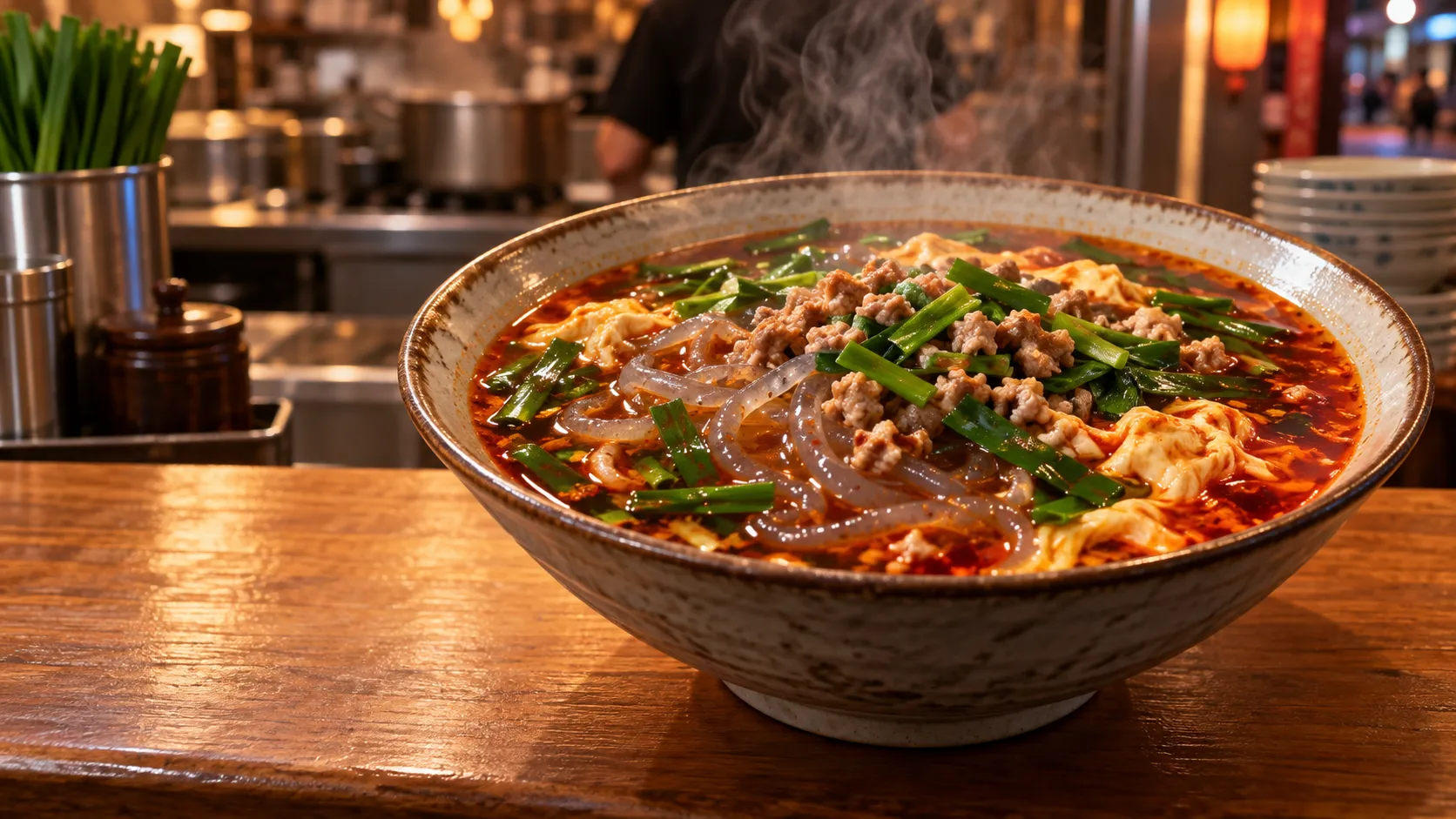
Local FoodNobeoka, Miyazaki
Karamen (辛麺)
They ask you for a number before they ask you for anything else. I said five like an idiot, and Nobeoka taught me something about myself that afternoon.
September 26, 2026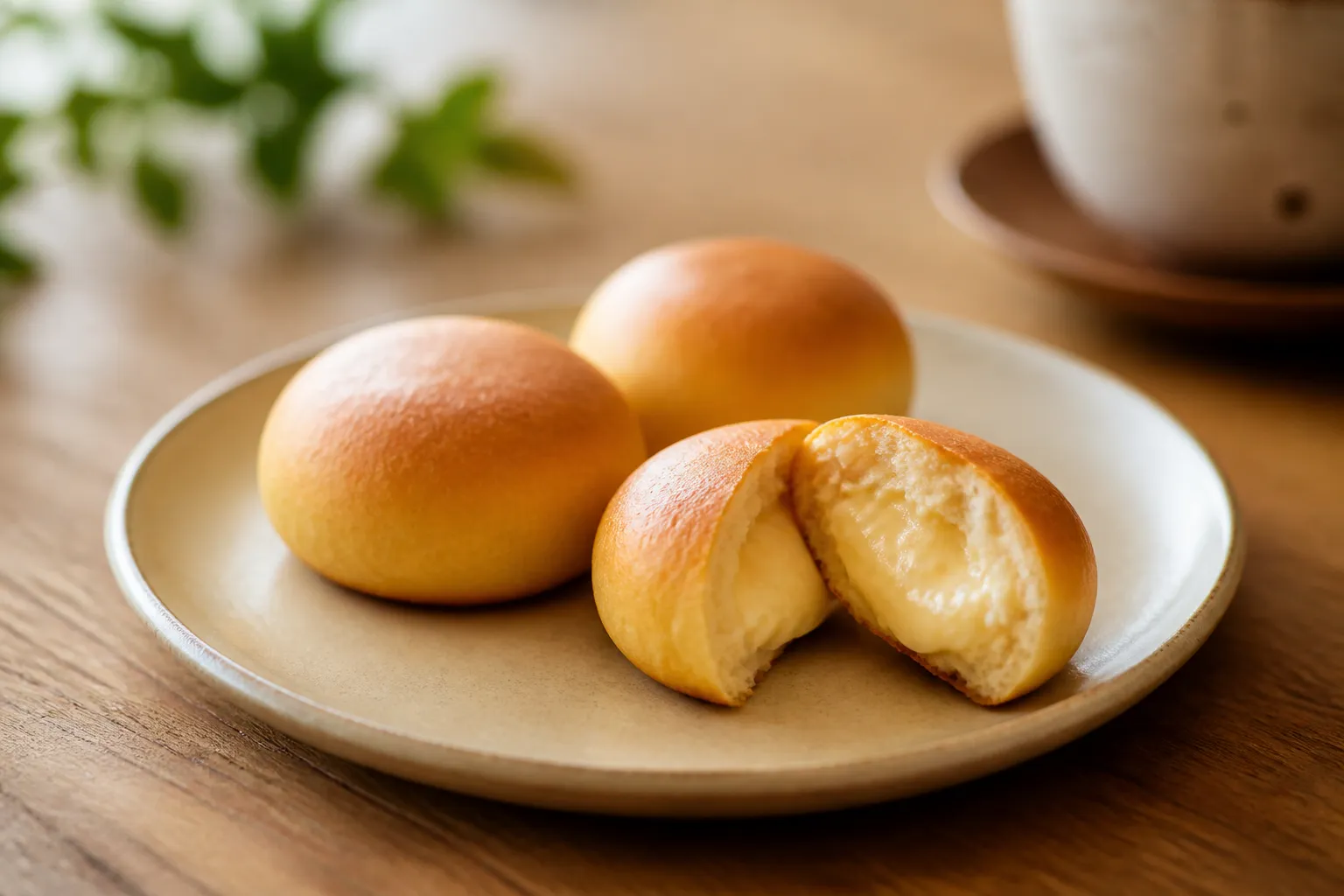
Local FoodMiyazaki
Cheese Manju (チーズ饅頭)
A warm golden bun that looks like a plain cookie until you bite in and hit a molten pocket of cream cheese — Miyazaki's sneaky-brilliant souvenir that ruined me for regular manju.
July 12, 2026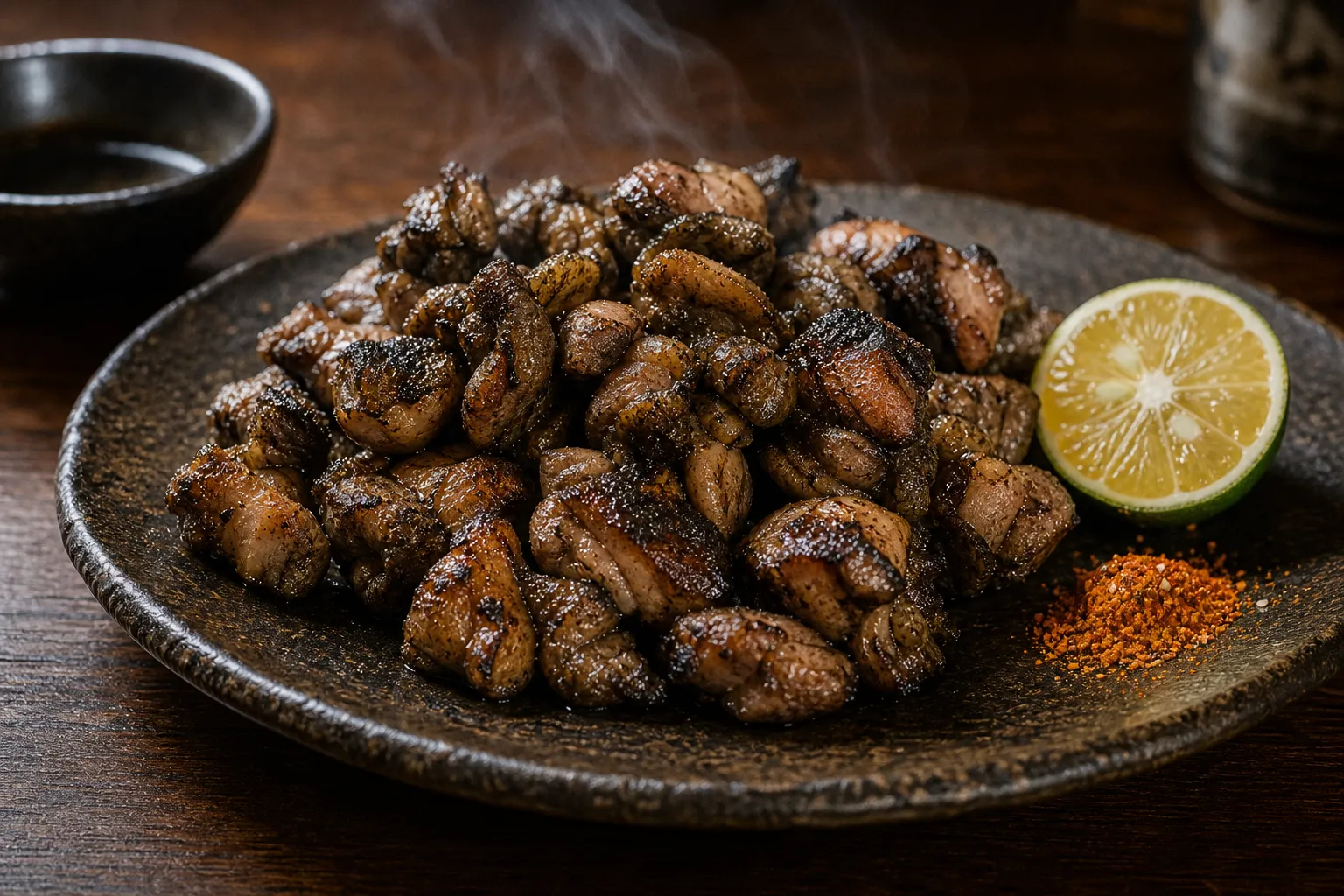
Local FoodMiyazaki
Charcoal-grilled Jidori Chicken (炭火焼地鶏)
Chunks of local jidori thigh thrown over furious charcoal until they're blackened, smoky and impossibly juicy. It looks burnt. It is not burnt. It is the best thing Miyazaki will put in front of you.
July 12, 2026