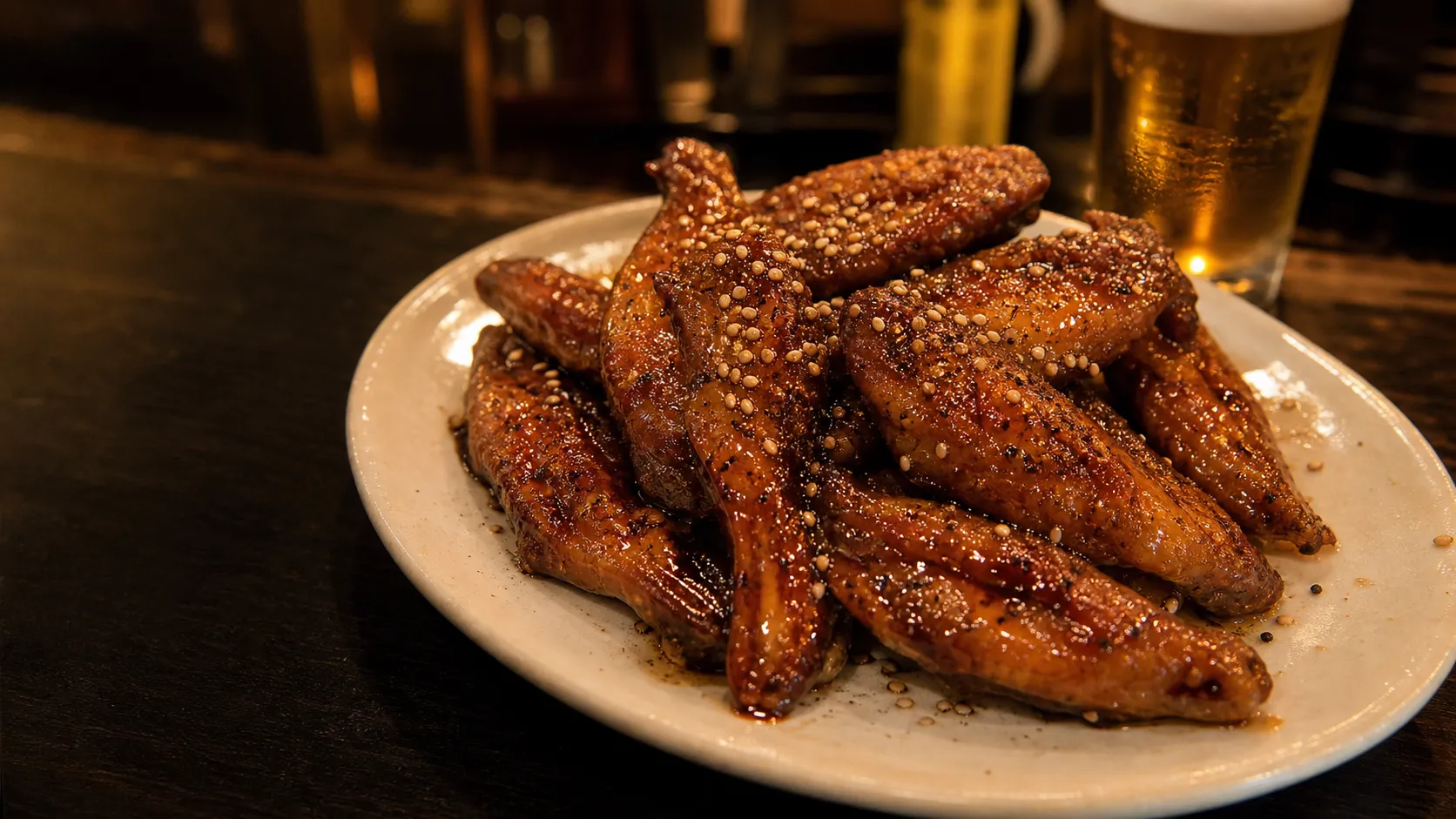
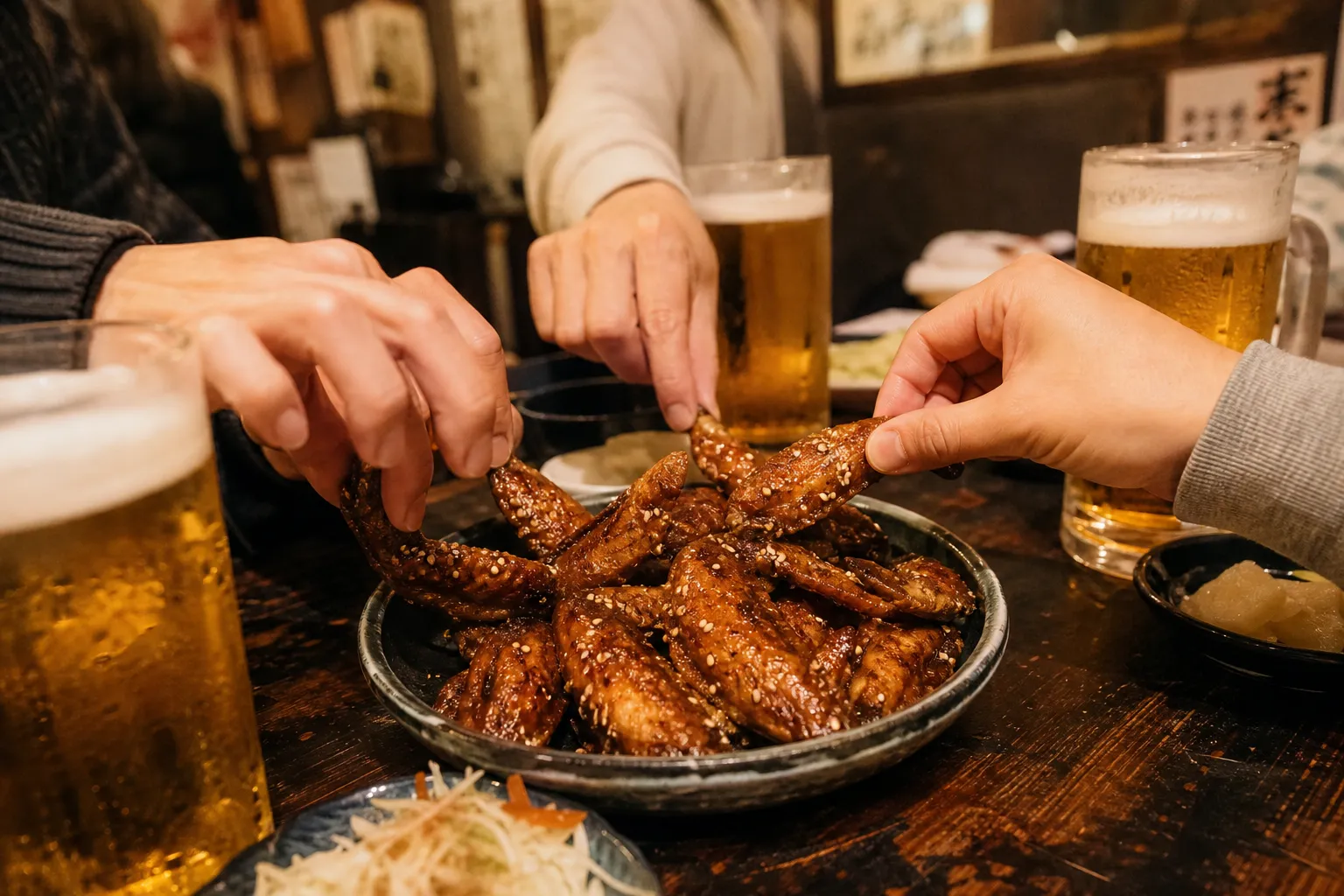
There's a move Nagoya people do without thinking. They pick up a tebasaki wing with two fingers, twist the bones in opposite directions in one clean pull, and the entire wing slides off as a single piece of perfect flesh. It's over in two seconds. It's mesmerizing. It took me four attempts on my first visit and I practiced on the walk back to the hotel.
Share this dish


Nagoya's famous chicken wings: fried twice until they shatter, then glazed with sweet soy and coated in sesame and black pepper. You will eat ten before you realize you're doing it.
🍜 Planning a food trip to Aichi?Add this dish to my Food Trip →
 Add this dish to my Food Trip →
I'm telling you this because tebasaki is that kind of food — the kind where you learn a new skill just to eat it better.
Tebasaki (手羽先) is Nagoya's landmark chicken wing: deep-fried twice until the skin shatters like the thinnest possible cracker, then tossed in a sticky-sweet soy glaze and buried in white sesame and cracked black pepper. They come out small and impossibly addictive. A plate of five disappears before your beer is half gone. You order another plate before fully deciding to. Nagoya did this on purpose.
How a throwaway cut became a cult
The story goes like this: in the 1960s, a Nagoya yakitori shop called Furaibo (風来坊) ran out of the popular cuts and was left with a mountain of wings nobody wanted. Instead of folding, they experimented — double-fry for real crunch, hit them with soy-based tare, load up the black pepper, coat in sesame. The result became its own category of food, and another Nagoya chain, Sekai no Yamachan (世界の山ちゃん), turned it into a phenomenon in the 1980s.
It's the underdog-cut story Japan keeps running. The cheap part. The overlooked part. The part everyone else threw away. That's the part Nagoya turned into a destination.
Why the double-fry is everything
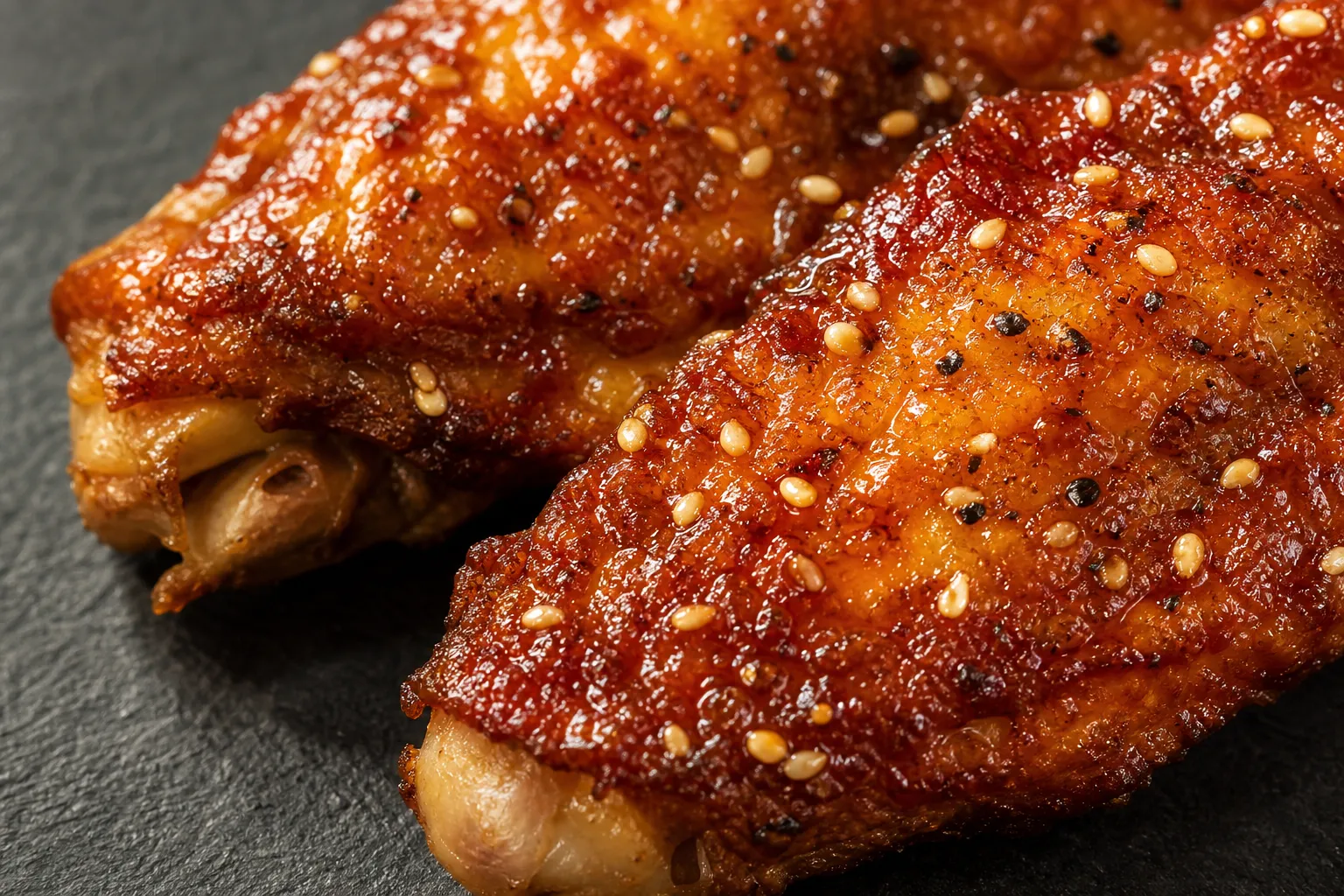
One fry cooks the wing. Two fries do something different — they blast the skin into a structure so thin and crisp it crackles when you look at it. Then the glaze goes on: a sweet-salty soy reduction with sake and mirin that caramelizes on contact with the hot skin. Then the sesame and pepper hit immediately, before it sets, so they're locked in. The pepper is not shy. The pepper is load-bearing. It's the whole reason you reach for the next wing before you've finished chewing the current one.
I have ordered tebasaki in other cities. I have been disappointed in other cities. There is no substitute for eating it in Nagoya, fresh off a screaming-hot izakaya grill, with a cold Nagoya draft beer sweating in your other hand.
How it's made
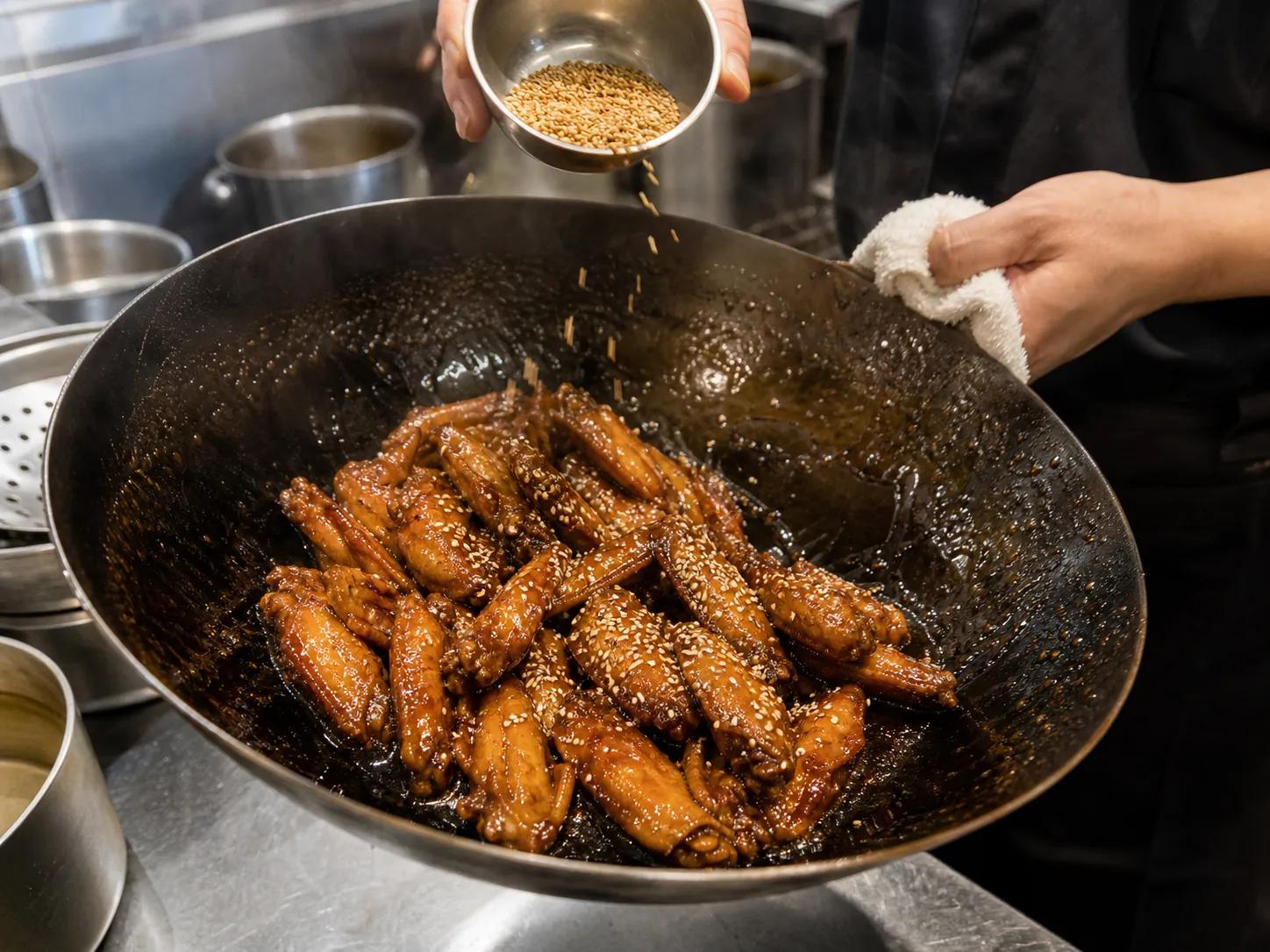
- Dry the wings well — moisture is the enemy of crunch, and crunch is the whole point
- First fry at around 160°C until cooked through, about 8 minutes
- Pull out, rest briefly, then second fry at 190°C for 2–3 minutes until the skin blisters and cracks
- Drain and immediately toss in sweet soy glaze — the heat does the caramelizing for you
- Coat in white sesame and cracked black pepper while hot so they stick
Before you go — order double
Your questions, answered honestly
"How spicy are they?" — The pepper is noticeable. It bites. Not painfully, but enough to make you drink your beer and immediately pick up another wing, which is exactly what Nagoya intended.
"Five wings per order — is that enough?" — No. Never. Order two plates minimum. You'll know this about yourself by the third wing.
"Are they messy?" — Completely, joyfully yes. There will be oshibori (wet towels) on the table. Use them constantly. There is no graceful way to eat tebasaki and no one present wants you to try.
"How do I eat them the Nagoya way?" — Grab the two bones at each end, twist in opposite directions, pull apart, slide the meat off in one piece. There are YouTube videos. You will require at least three attempts. Gnawing works fine in the meantime.
What the staff will ask you
| You'll hear | Romaji | Meaning | Just say |
|---|---|---|---|
| 何人前にしますか? | Nannin-mae ni shimasu ka? | "How many portions?" | Ninin-mae kudasai (two portions please) |
| お飲み物は? | Onomimono wa? | "What to drink?" | Nama biiru kudasai (draft beer please) |
| 辛さはどうしますか? | Karasa wa dō shimasu ka? | "Spice level?" (some shops) | Futsū de onegaishimasu (normal is fine) |
To order, just say "Tebasaki kudasai" (手羽先ください) — "Chicken wings, please."
Where to eat it
- Furaibo (風来坊) — Nagoya. The originator. Multiple locations. The "before everything else" tebasaki.
- Sekai no Yamachan (世界の山ちゃん) — Nagoya and beyond. The chain that made tebasaki famous nationwide; unmissable yellow signs.
- Any izakaya in Nagoya — tebasaki is as automatic as edamame here. You do not have to hunt.
Locations change. Order more than you think you need. Learn the bone-twist before you go.
Soul Score
Local Roots5/5
First-Timer Friendly5/5
Adventure Level3/5
Comfort Level5/5
Travel Worthy4/5
These scores are one obsessed eater's gut feeling — not a verdict. A low number isn't a bad mark, just a different kind of adventure.
Planning what to eat in Nagoya?🍤 Nagoya Food Guide: What to Eat, Where to Start, and How to Order →
Know someone planning Japan?
← All Articles
Local Food · Nagoya, Aichi
Still hungry?
Eat more from Aichi
Sweets & SnacksNagoya, Aichi
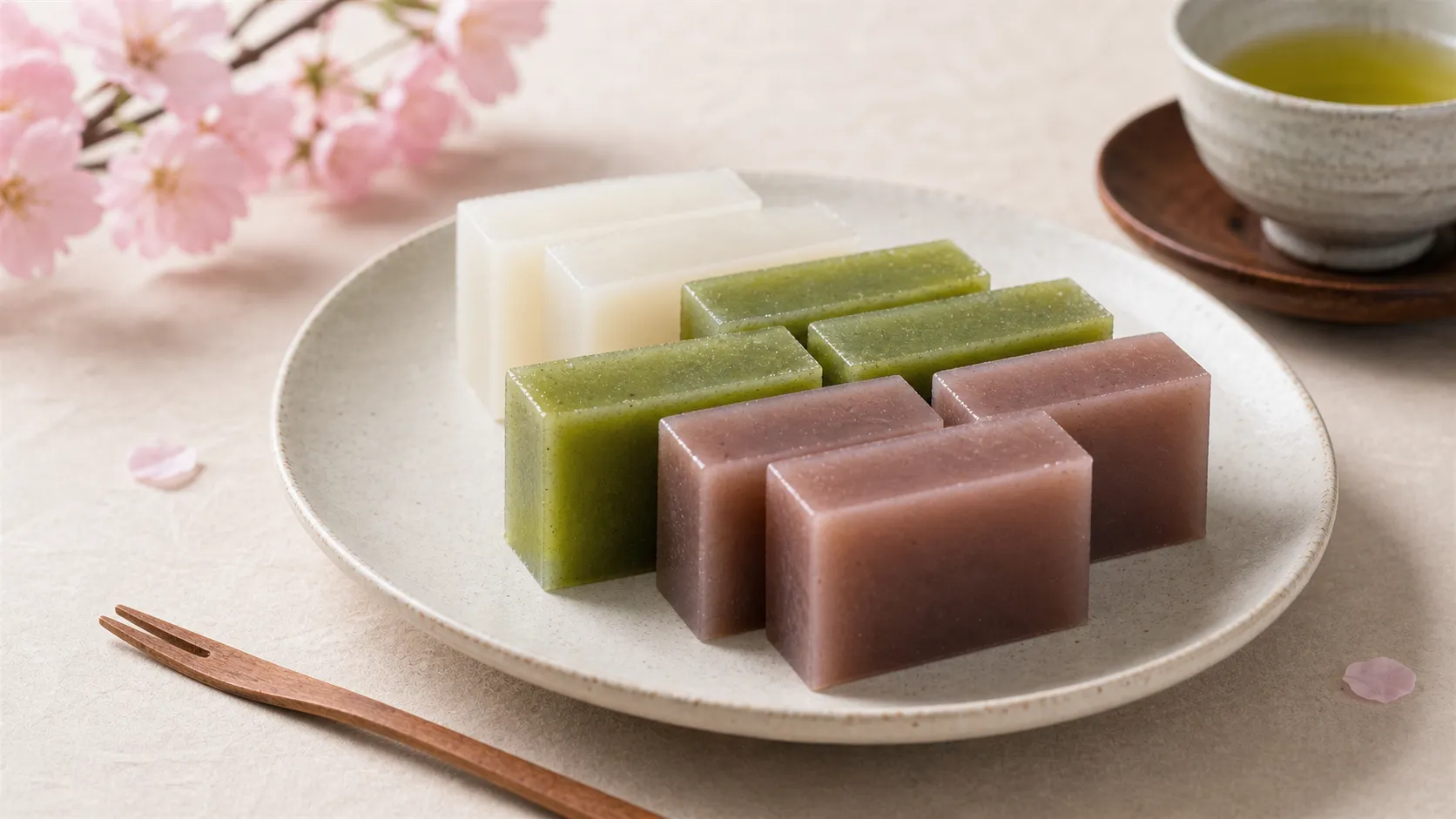
Uiro (ういろう)
A steamed cake of rice flour and sugar that's somehow both chewy and clean, mild and moreish — Nagoya's understated, faintly wobbly sweet that grows on you until you can't stop buying it at the station.
July 10, 2026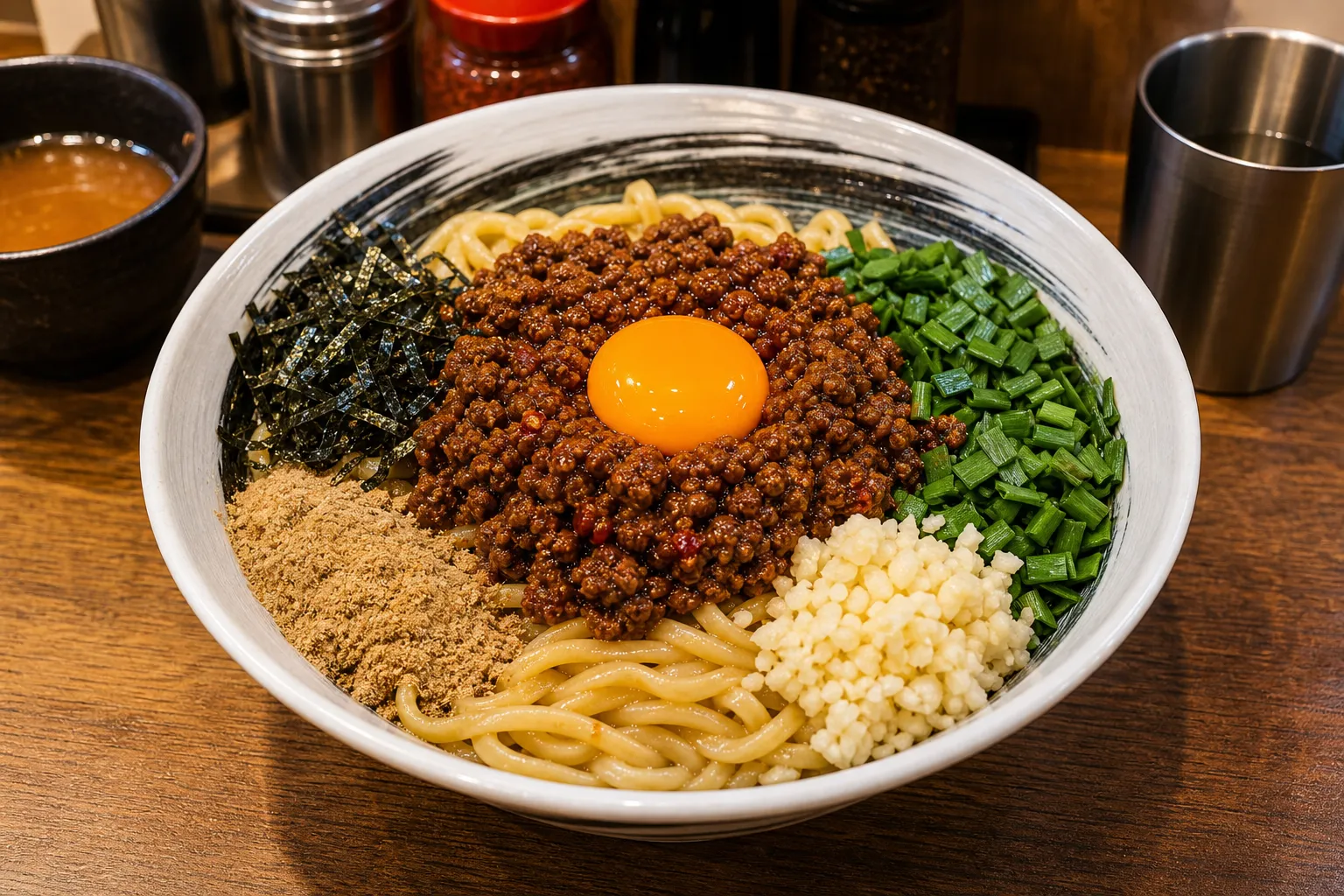
Local FoodNagoya
Taiwan Mazesoba (台湾まぜそば)
Break the egg yolk, plunge in, and mix like you're furious — this brothless Nagoya bomb of spicy pork, raw garlic and chives doesn't reveal itself until it's a chaotic, glorious mess.
July 9, 2026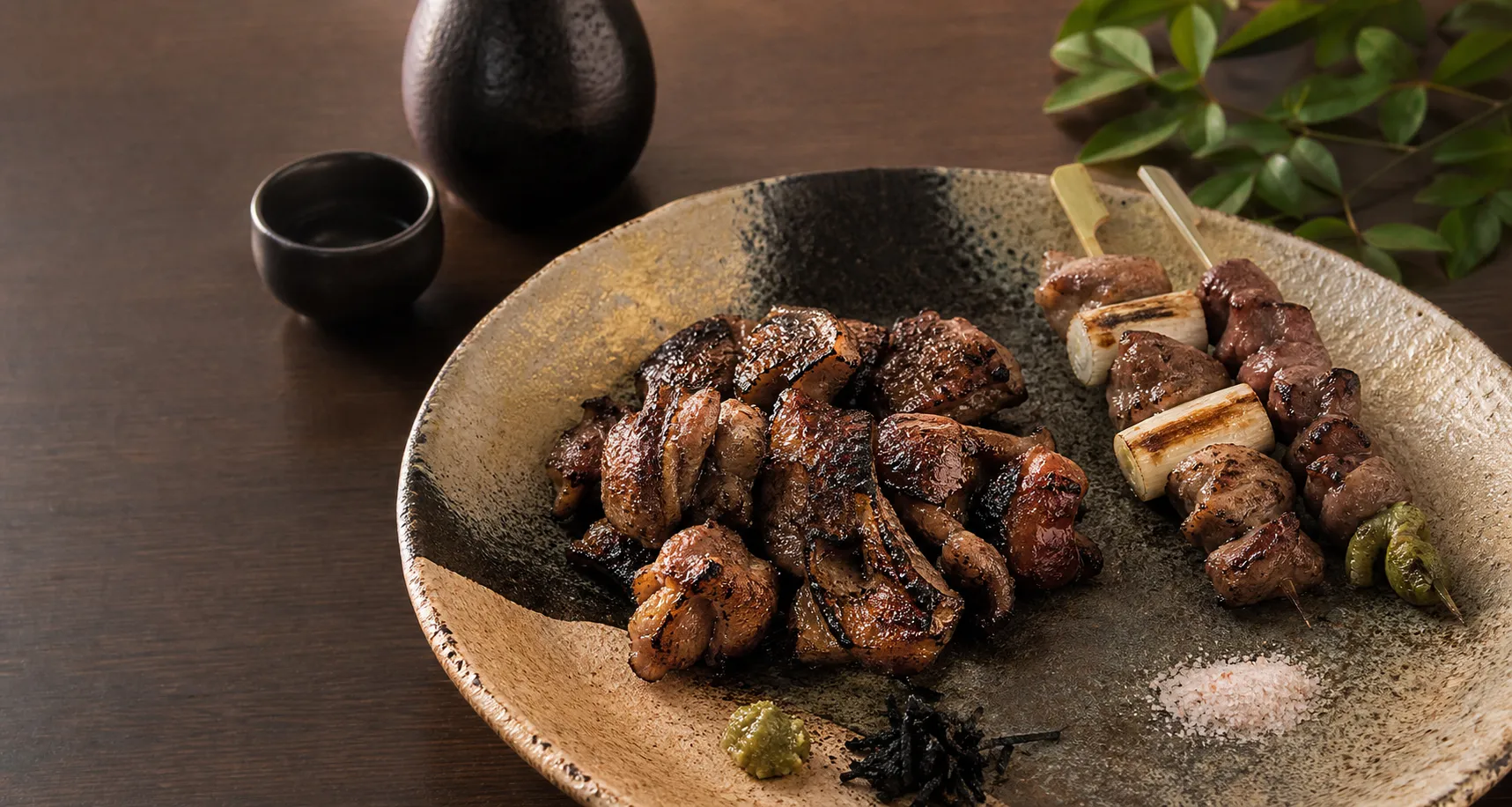
Local FoodNagoya, Aichi
Nagoya Cochin (名古屋コーチン)
Everyone warns you about the chewiness like it's a flaw — but that first spring-back bite of charcoal-grilled thigh is exactly the point, and I get it now.
July 5, 2026More crispy things worth chasing
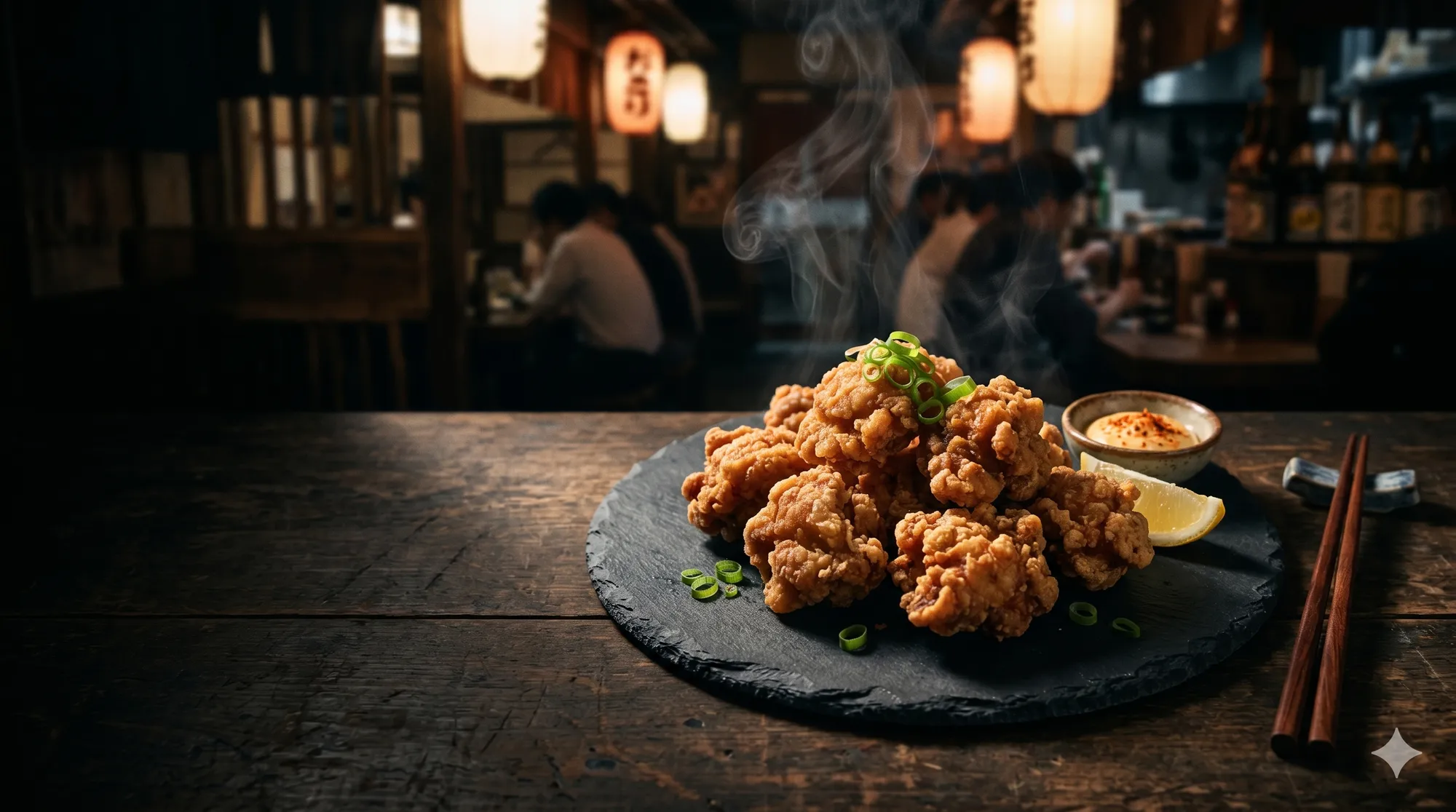
Japanese FoodNationwide
Karaage (からあげ)
Japan's fried chicken: crackling-crisp outside, gushing-juicy inside, marinated in soy and ginger and garlic. The bento hero, the izakaya MVP, the snack worth fighting over.
July 13, 2024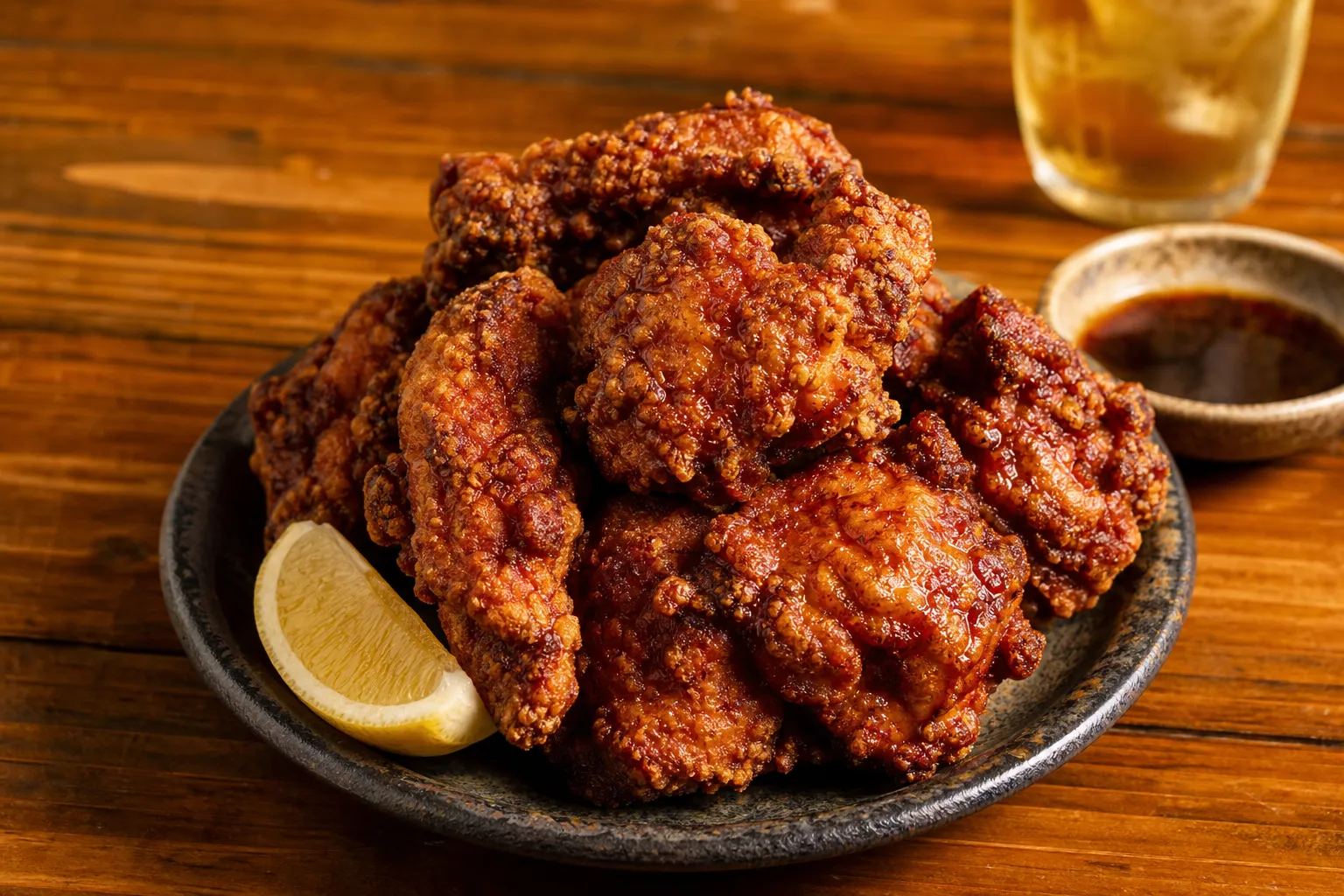
Local FoodKushiro, Hokkaido
Zangi (ザンギ)
Hokkaido's fried chicken — bigger, darker, and more deeply marinated than karaage, with a craggy soy-garlic crust and juice that runs when you tear it open. Don't call it karaage up here.
June 26, 2026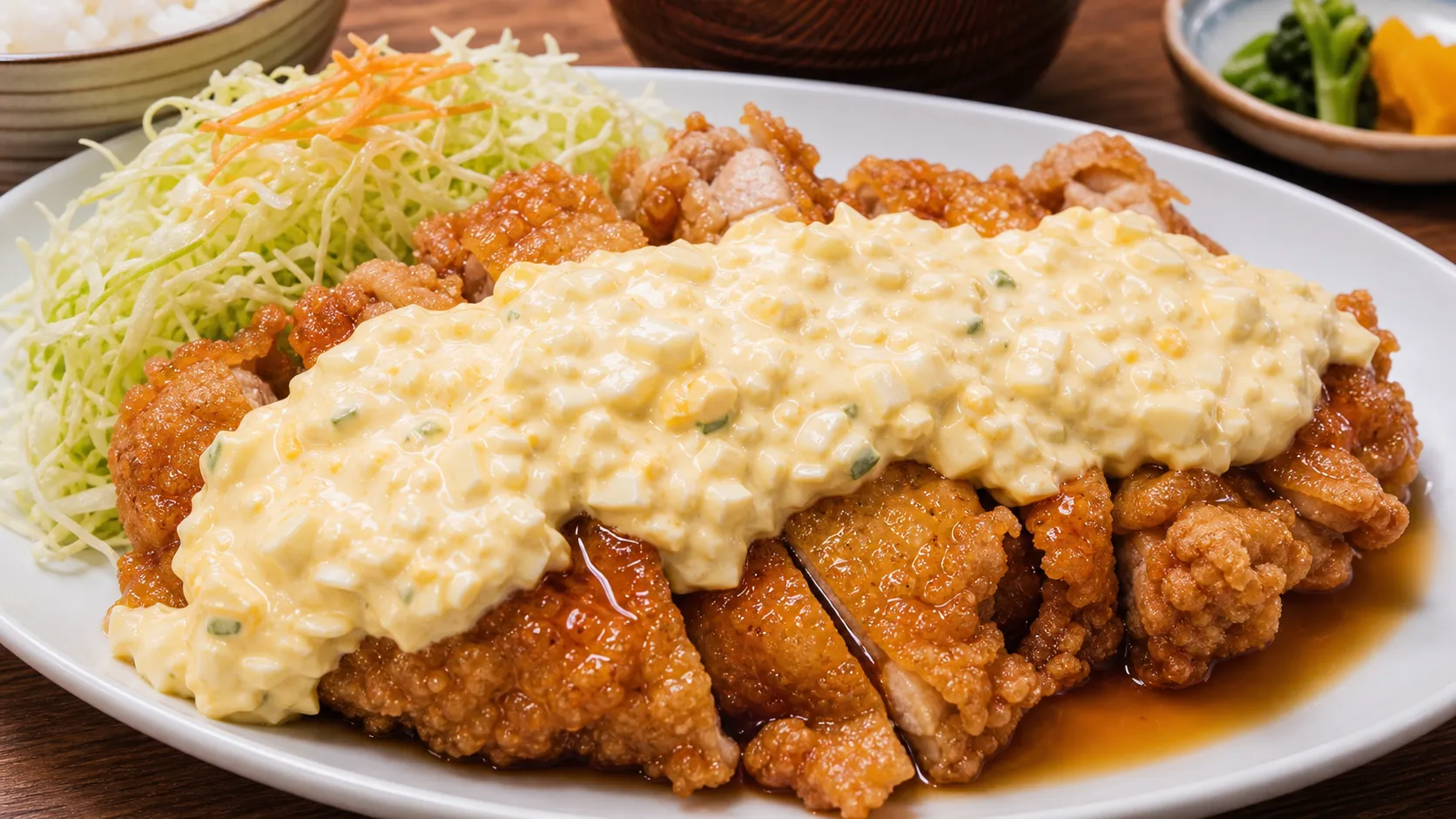
Local FoodNobeoka / Miyazaki
Chicken Nanban (チキン南蛮)
Deep-fried chicken soaked in sweet vinegar sauce, then buried under a snowdrift of homemade tartar. Miyazaki's greatest contribution to the art of fried chicken, and it's not even close.
June 25, 2026