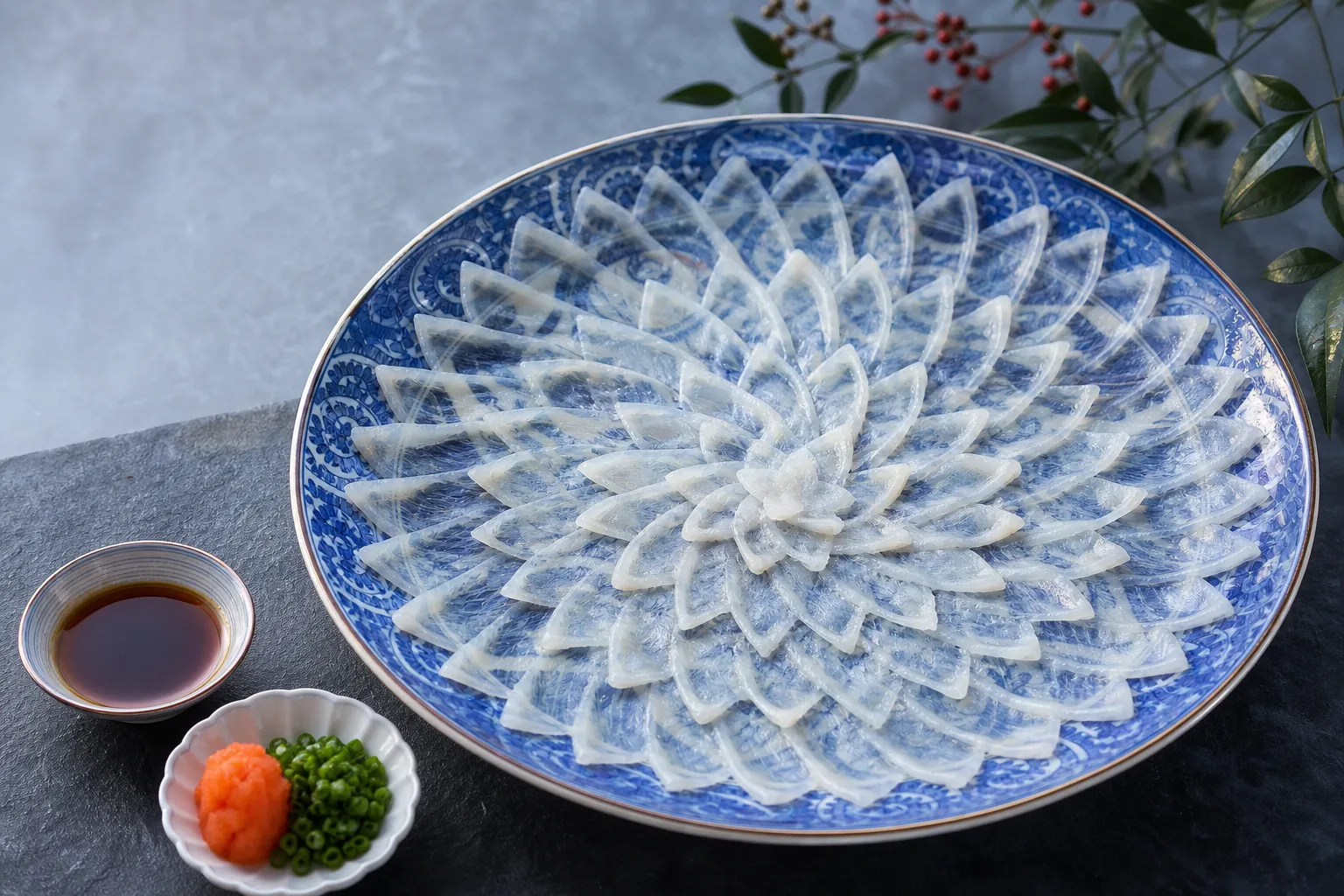
I held my chopsticks over the plate for a solid ten seconds before I actually picked anything up. Not because I was scared, exactly. Okay — a little because I was scared. The slices were arranged in a spiral so precise it looked less like food and more like a flower someone had carved out of glass, and I could see the blue chrysanthemum pattern on the plate glowing right through the fish. You're not supposed to be able to see through your dinner. I ate it anyway. Obviously.
Share this dish


The fish that can kill you is sliced so thin you can read the pattern on the plate through it — and somehow that's the least unsettling part of the meal.
🍜 Planning a food trip to Yamaguchi?Add this dish to my Food Trip →
 Add this dish to my Food Trip →
This is fugu (ふぐ), pufferfish, and specifically tessa — the paper-thin raw sashimi style Shimonoseki built its whole identity around. The fish carries a toxin that can be lethal if it's not prepared correctly, which is exactly why every slice on your plate came from a chef with a government-issued fugu license and years of training in exactly which parts to remove. The famous chrysanthemum plating isn't just showing off (though it is absolutely showing off) — slicing it that thin is also how a skilled chef spreads a small amount of very lean, very firm fish across a whole beautiful plate.
Shimonoseki bet its whole reputation on this fish
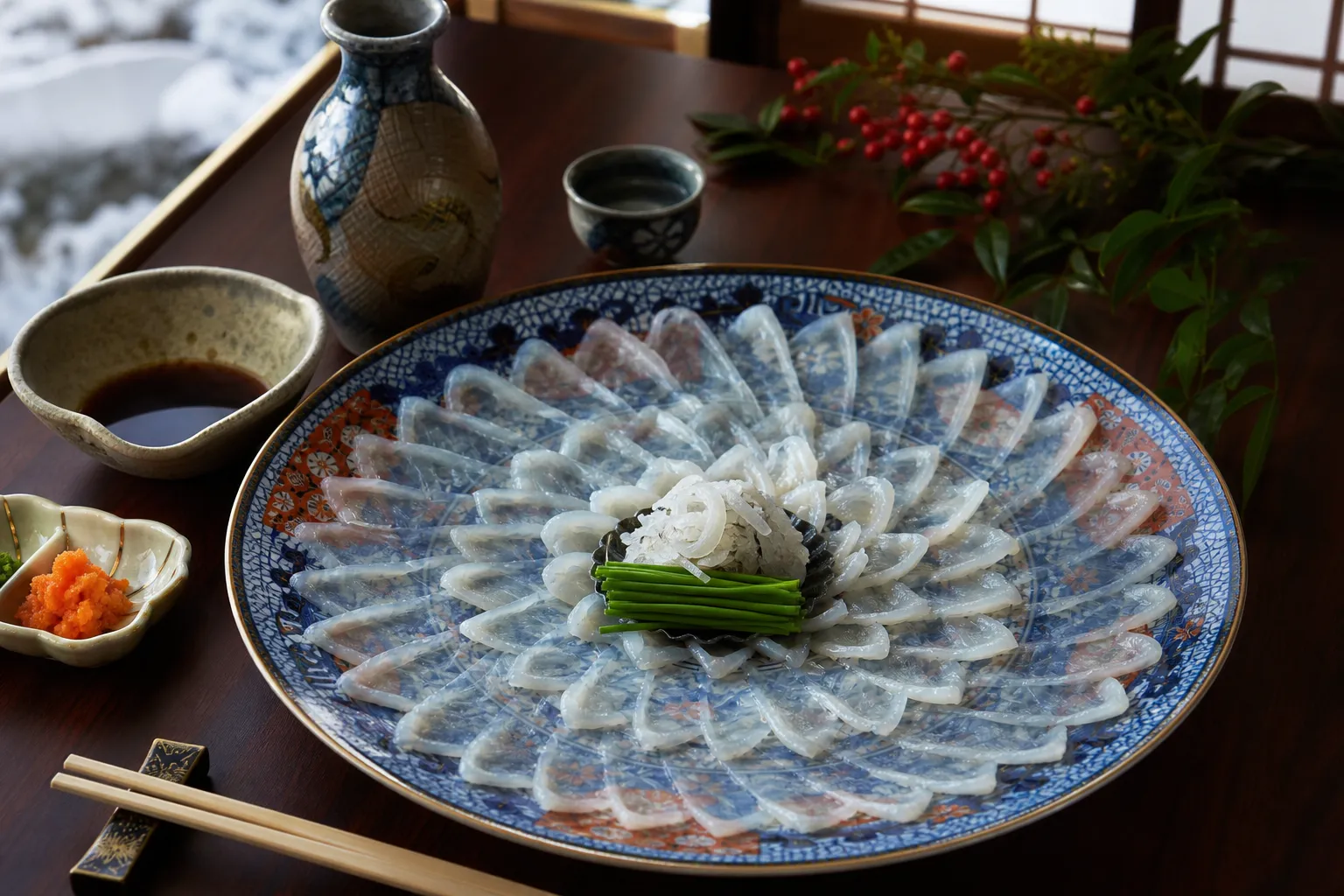
Shimonoseki, at the western tip of Honshu, handles the majority of Japan's fugu and has for generations — the city's fish market, Karato, runs fugu auctions the way other ports auction tuna. Fugu itself has a much older, rockier history in Japan: it was banned outright at various points (there's a well-worn story about Toyotomi Hideyoshi prohibiting his soldiers from eating it after too many died from bad preparation), and it took centuries of trial, error, and eventually strict licensing law before it became the celebrated delicacy it is today. Somebody, a long time ago, looked at a fish capable of killing them and decided the reward was worth perfecting the risk. I find that borderline insane and completely understandable at the same time.
Sitting in a Shimonoseki restaurant with a fugu set in front of me, knowing generations of trial-and-error (some of it fatal) led to the exact knife skill on my plate, gave the meal a weight I didn't expect from raw fish. I ate slower than usual. I think that's the correct response.
Translucent, clean, and nothing like what you're bracing for
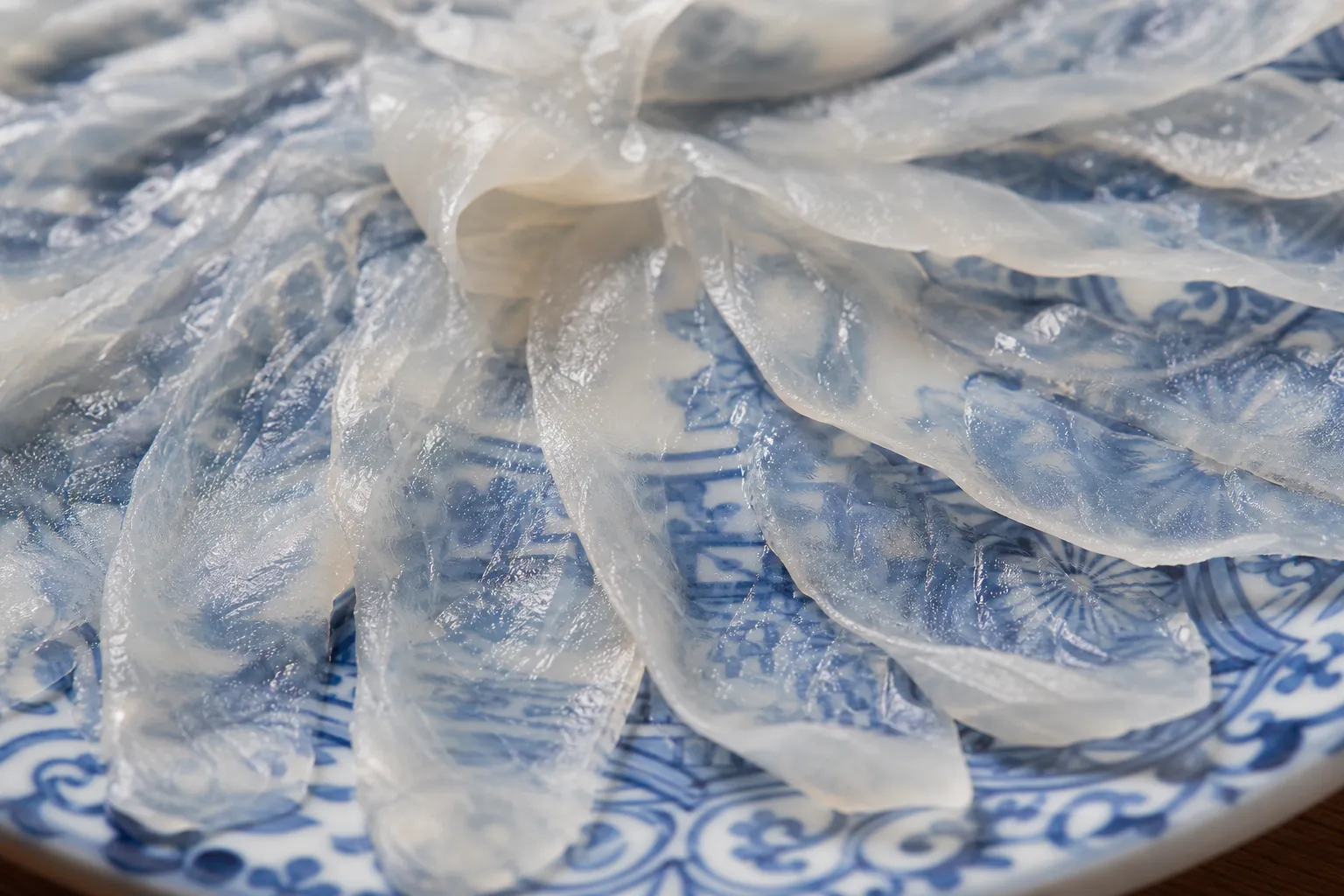
Here's the twist: fugu barely tastes like anything on its own, and that's the appeal. The flesh is lean, dense, and almost springy — a texture you chew rather than let melt, closer to a firm white fish than the buttery fattiness people associate with prized sashimi. The flavor is subtle, clean, faintly sweet, which is exactly why it's served with punchy ponzu and a mound of grated momiji-oroshi (daikon and chili grated together into something like spicy citrus snow) — dip each translucent petal, let the sharp acidity and heat wake the fish up. Skip the sauce and you'll wonder what the fuss is about; use it and the whole thing clicks into place.
It's a texture-and-technique dish more than a bold-flavor dish. The thrill is half in the taste, half in the theater of the chrysanthemum arrangement, and — I'll be honest — half in the small, giddy awareness of what you're eating. That's three halves. Fugu makes the math weird.
How it's made
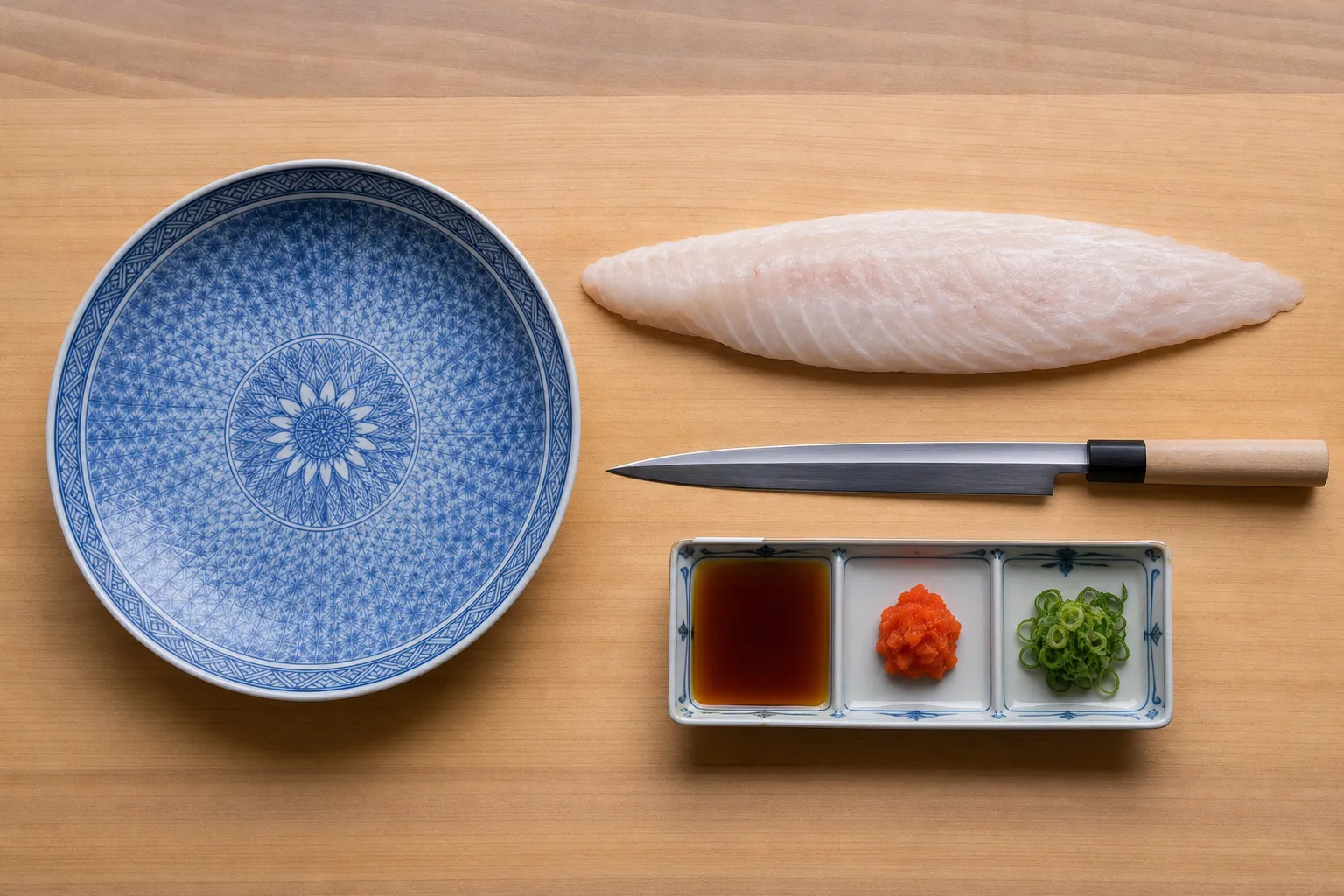
- A licensed fugu chef selects the fish and carefully removes the liver, ovaries, and skin sections that carry tetrodotoxin
- The cleaned fillet is rested briefly to firm up, since fresh-off-the-bone fugu is almost too soft to slice thin
- A specialized long, thin blade (fugu-hiki) slices the fillet into near-transparent pieces
- Slices are arranged one by one in a spiral or chrysanthemum pattern on a large decorative plate, patterned so the design shows through
- Served with ponzu sauce, grated momiji-oroshi, and finely chopped scallion for dipping
- Trimmings are often used later for fugu-chiri (hot pot) or fugu-hire-zake (grilled fin steeped in hot sake)
Before you go — for the brave
Your questions, answered honestly
"Is this actually dangerous?" — Not at a licensed restaurant. Only chefs who've passed a strict government fugu license exam are legally allowed to prepare and sell it in Japan. Fatalities today are essentially unheard of at licensed shops — the risk is real only with unlicensed, DIY, or black-market fish, which is not what you're being served.
"Why does it barely taste like anything?" — That's genuinely the point. Fugu's appeal is texture and the way it carries ponzu and momiji-oroshi, not a big fish flavor of its own. Don't skip the dipping sauce expecting a bold bite from the fish alone.
"Do I eat it plain or with sauce?" — With sauce, always. Dip each slice lightly in ponzu, add a touch of momiji-oroshi and scallion on top if you like heat.
"Is tessa the only way to eat fugu?" — No — it's the most famous, but fugu-chiri (hot pot) and fried fugu (karaage) are common too, especially in colder months. A full fugu course (fugu-ryōri) often runs through several of these in one sitting.
What the staff will ask you
| You'll hear | Romaji | Meaning | Just say |
|---|---|---|---|
| てっさ、てっちり、どちらになさいますか? | Tessa, tetchiri, dochira ni nasaimasu ka? | "Sashimi or hot pot?" | Tessa de onegaishimasu (Sashimi, please) |
| コースになさいますか? | Kōsu ni nasaimasu ka? | "Would you like the full course?" | Hai, onegaishimasu (Yes, please) |
| ひれ酒はいかがですか? | Hire-zake wa ikaga desu ka? | "Would you like grilled-fin sake?" | Ippai kudasai (One cup, please) |
| ポン酢とねぎ、お使いになりますか? | Ponzu to negi, otsukai ni narimasu ka? | "Using the ponzu and scallion?" | Hai, itadakimasu (Yes, thank you) |
To order, just say "Tessa kudasai" (てっさください) — "Fugu sashimi, please."
Where to eat it
- Karato Market, Shimonoseki — the city's famous fish market runs a fugu auction and has stalls and nearby restaurants serving fresh fugu, especially lively on weekend mornings.
- Shimonoseki's fugu restaurant district — the city is dotted with dedicated fugu specialists, many offering full-course fugu (fugu-ryōri) menus with tessa as the centerpiece.
- Osaka and Tokyo — both cities have long-established, licensed fugu restaurants for travelers not making it out to Yamaguchi.
- Check before you go — fugu is seasonal (best in colder months, roughly October–March) and course-style dinners often require reservations; confirm hours and licensing before you visit any particular shop.
Soul Score
Local Roots5/5
First-Timer Friendly2/5
Adventure Level5/5
Comfort Level3/5
Travel Worthy5/5
These scores are one obsessed eater's gut feeling — not a verdict. A low number isn't a bad mark, just a different kind of adventure.
Know someone planning Japan?
← All Articles
Local Food · Shimonoseki, Yamaguchi
Still hungry?
Eat more from Yamaguchi
Local FoodIwakuni, Yamaguchi
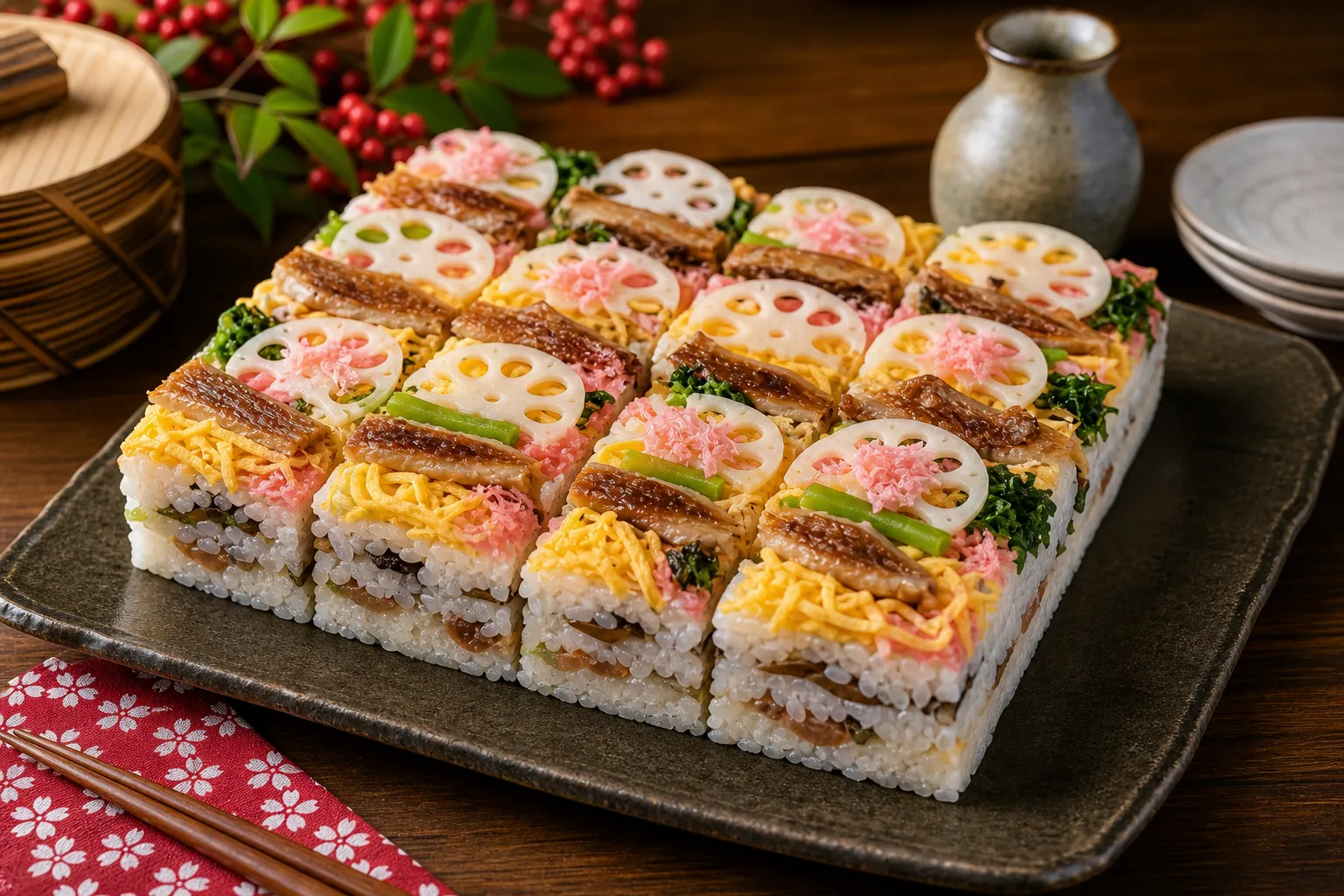
Iwakuni-zushi (岩国寿司)
Sushi built like architecture — pressed in a giant wooden box in colorful layers, then cut into hefty blocks. This is the samurai's answer to feeding a castle, and it lands on the plate like a striped little monument.
July 12, 2026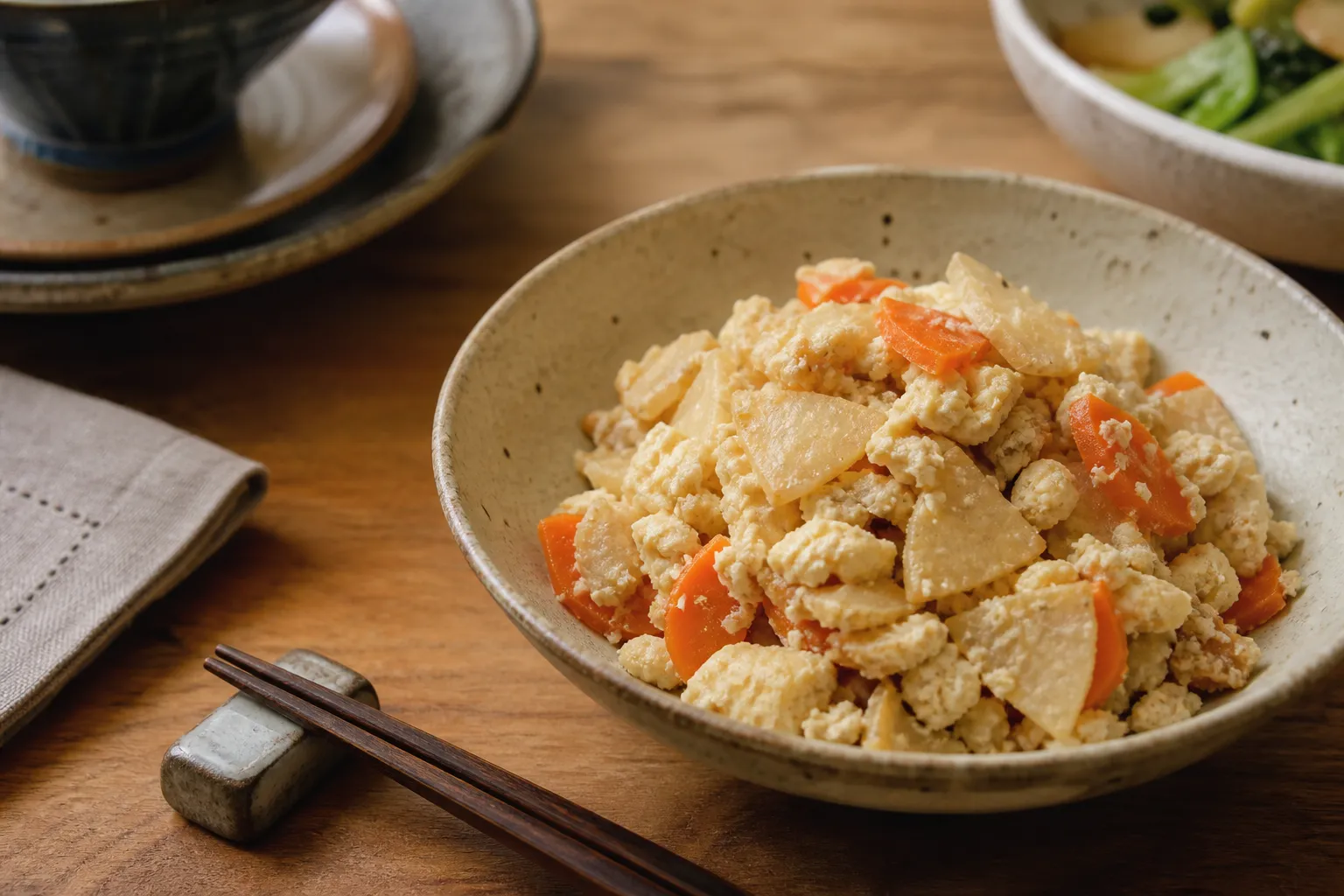
Local FoodYamaguchi
Kenchou (けんちょう)
Not a soup, not a scramble — Yamaguchi's crumbled tofu simmered soft with sweet daikon and carrot until it's gently soy-glossed and disappears bowlful by bowlful. Winter comfort in a pot.
July 12, 2026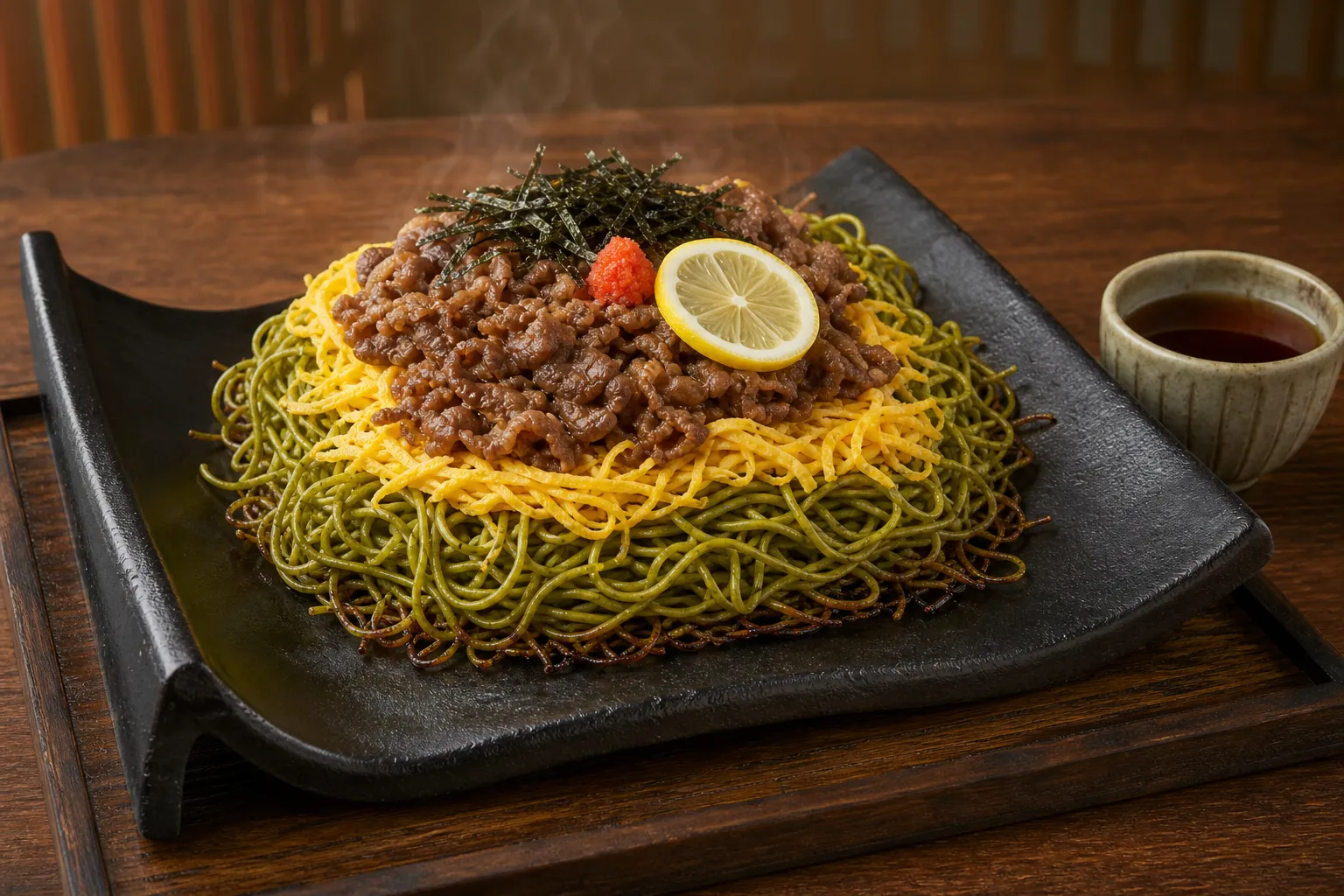
Local FoodKawatana Onsen, Yamaguchi
Kawara Soba (瓦そば)
Green tea noodles served sizzling on a hot roof tile, piled with beef and shredded egg, the bottom layer going crispy against the clay. Yamaguchi turned a battlefield legend into one of the most fun things you can eat.
June 27, 2026