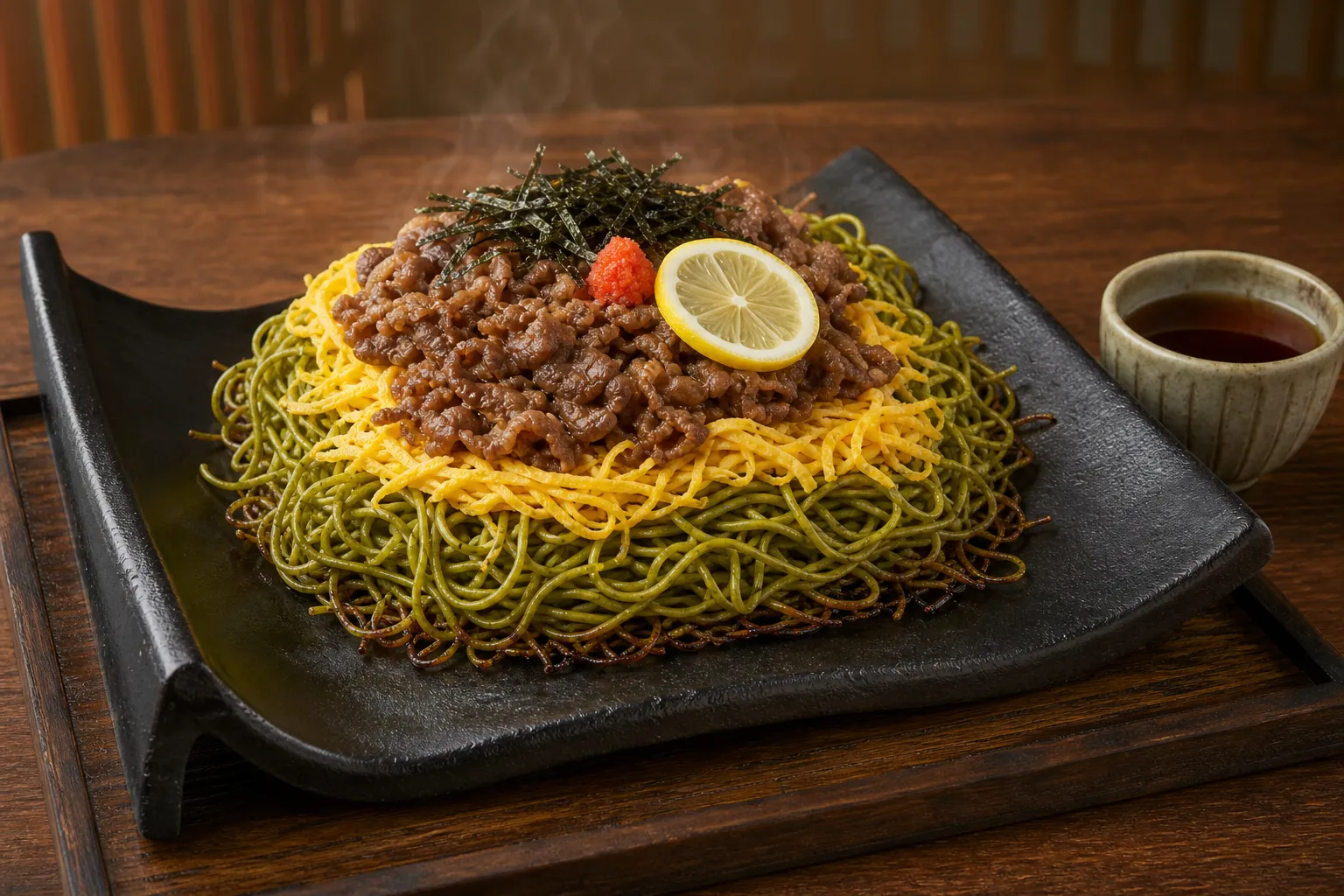
They put a roof tile down in front of me. An actual curved grey roof tile, screaming hot, with a heap of bright green noodles sizzling on top under shredded egg and beef and a single slice of lemon — and my first reaction was to laugh, out loud, because what is happening. Then I dipped a tangle of those green tea noodles in the warm tsuyu, ate it, went back for the layer touching the hot tile, and found it had gone crispy — and the laughing stopped, because now I was busy.
Share this dish


Green tea noodles served sizzling on a hot roof tile, piled with beef and shredded egg, the bottom layer going crispy against the clay. Yamaguchi turned a battlefield legend into one of the most fun things you can eat.
🍜 Planning a food trip to Yamaguchi?Add this dish to my Food Trip →
 Add this dish to my Food Trip →
This is kawara soba (瓦そば), the signature dish of Kawatana Onsen in Yamaguchi: cha-soba (green tea buckwheat noodles) grilled and served on a hot kawara roof tile, topped with thin-sliced seasoned beef, shredded omelet (kinshi tamago), nori, a slice of lemon, and a dab of momiji-oroshi (grated daikon with chili). You lift a portion, dip it in warm tsuyu, and eat — and the genius is that the noodles against the tile crisp up while the rest stay soft, so every tile gives you two textures at once.
A dish born from a battlefield legend
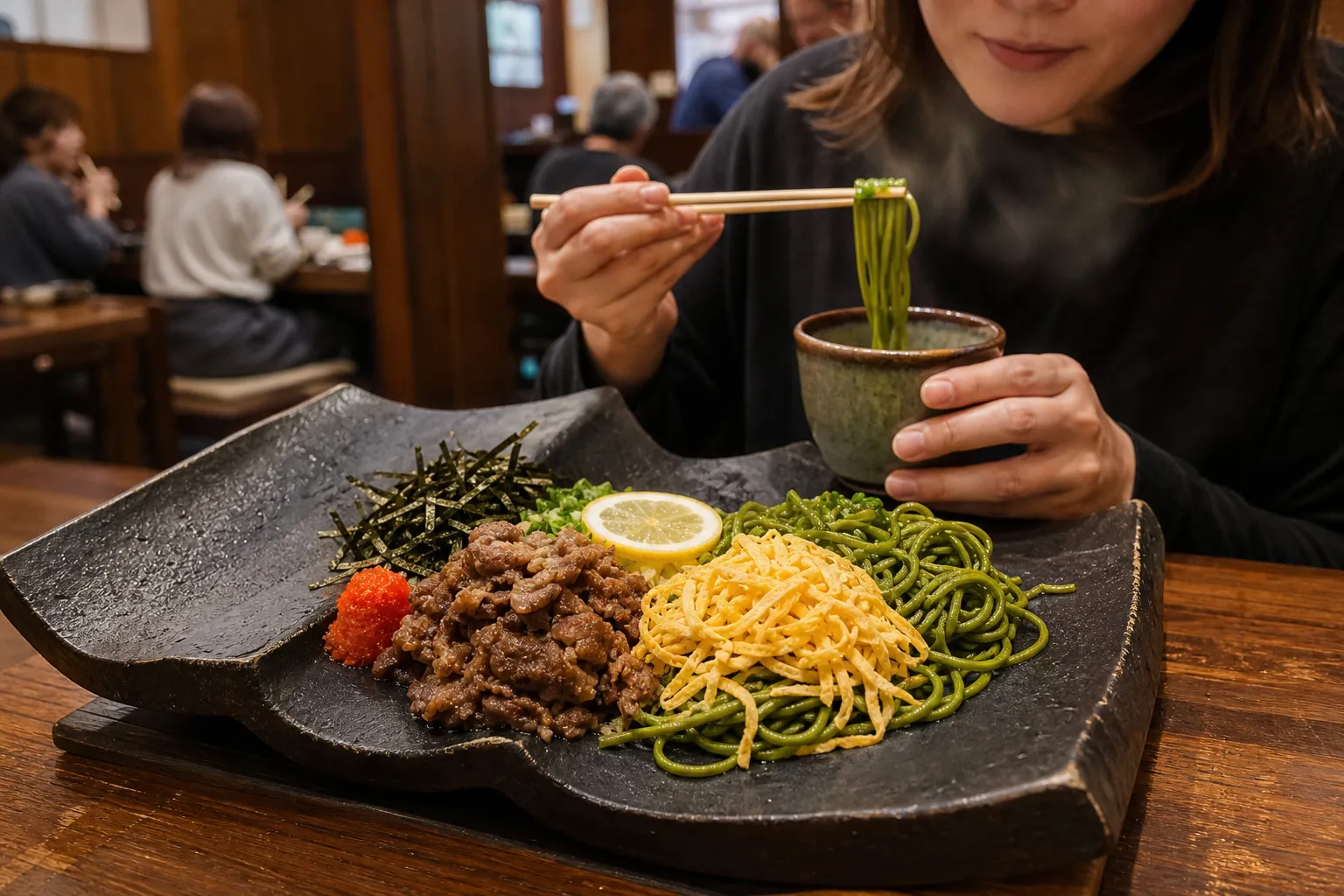
Here's a story I genuinely love. The dish was dreamed up in the 1960s at a ryokan in Kawatana Onsen, inspired by a piece of local lore: during the Satsuma Rebellion of the 1870s, soldiers camped in the field were said to have grilled meat and vegetables on hot roof tiles over their fires. Someone in Yamaguchi heard that and thought — why not noodles? They took cha-soba, grilled it on a tile, piled on the toppings, and accidentally invented one of the most theatrical regional dishes in the country.
So it's not some thousand-year tradition — it's a brilliant, relatively modern idea built on an old battlefield image, and it spread across Yamaguchi until it became the prefecture's pride and a fixture at celebrations and family gatherings. I find that kind of origin oddly inspiring: someone took a folk legend about desperate soldiers and turned it into a joyful, sizzling, lemon-topped feast you fight your family over. That's good cooking and good storytelling.
Green, sizzling, and two textures in one tile
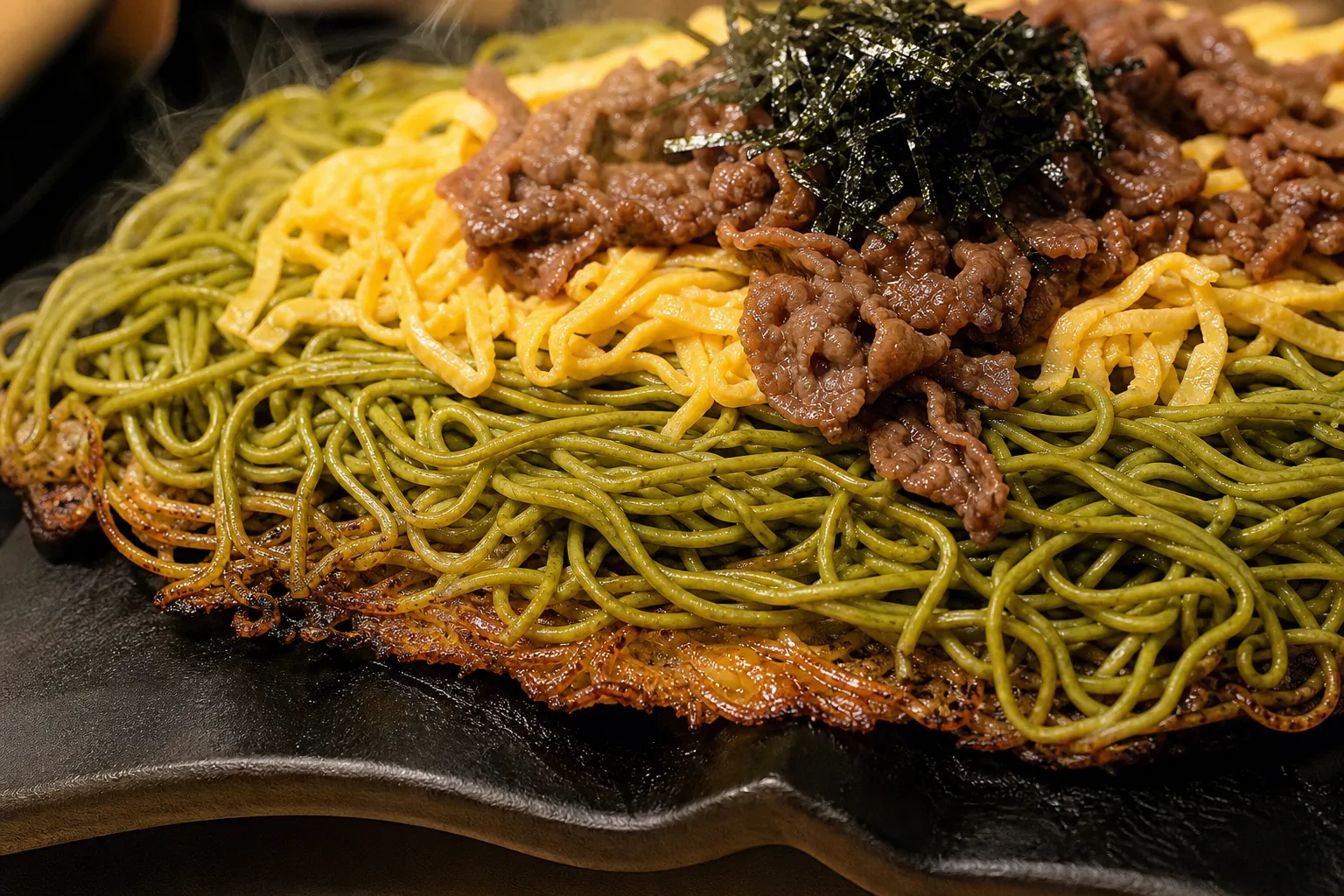
The fun is in the contrast. The cha-soba is a vivid green and faintly tea-bitter, springy and fresh; the thin beef is sweet-savory; the shredded egg is soft and mild; the nori adds the sea, and that slice of lemon — squeezed over everything — cuts through the richness and wakes the whole tile up. Then there's the momiji-oroshi, grated daikon flushed red with chili, for a gentle heat you add to the dipping tsuyu.
But the real magic is the tile itself. Because it's hot, the bottom layer of noodles keeps cooking and turns golden and crispy, while the top stays soft and slurpable. As you work down through the pile, you get more and more of those crunchy bits, and chasing them is half the joy. I deliberately saved the crispy bottom for last and regretted nothing. Eat it while it sizzles — that's the entire point.
How it's made
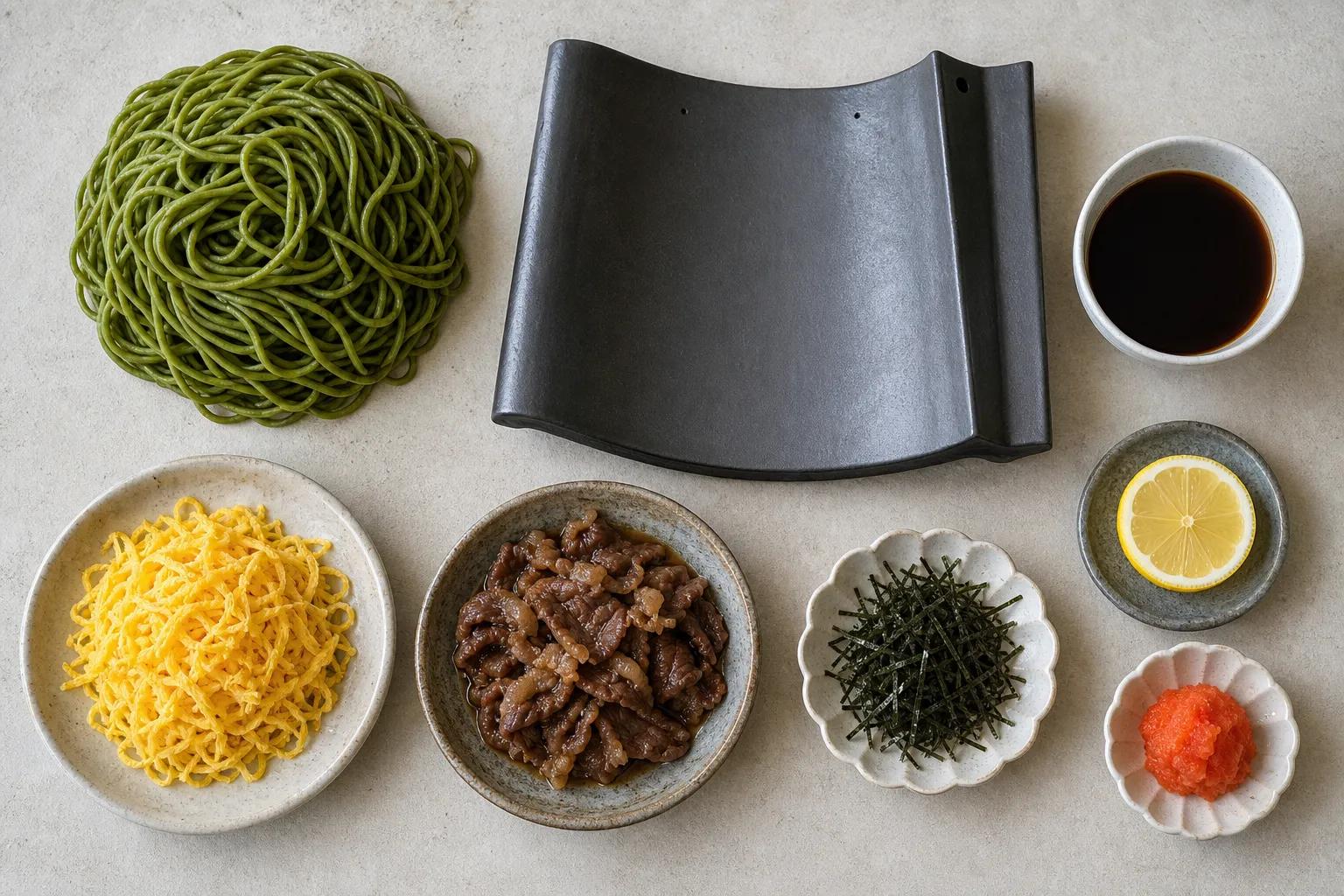
- Boil cha-soba (green tea buckwheat noodles), then drain
- Heat a kawara roof tile (or a tile-shaped hot plate) until very hot
- Pile the noodles on the tile so the underside grills and crisps
- Top with thin-sliced sweet-savory beef, shredded omelet (kinshi tamago), and nori
- Finish with a slice of lemon and a dab of momiji-oroshi (chili daikon)
- Serve sizzling, with a cup of warm tsuyu for dipping — eat hot, and chase the crispy bottom
Before you go — for the tile-curious
Your questions, answered honestly
"Do I eat off the tile directly?" — You lift portions of noodles and toppings off the hot tile, dip them in your cup of warm tsuyu, and eat. The tile is the cooking-and-serving surface — and it's genuinely hot, so don't touch it.
"What's the green? Is it matcha?" — The noodles are cha-soba — buckwheat noodles made with green tea, which gives the color and a light, pleasant tea bitterness. It's subtle, not a sweet matcha flavor.
"What's the lemon for?" — Squeeze it over the whole tile. It cuts the richness of the beef and egg and brightens everything. Don't skip it — it's part of the design, not a garnish.
"Best part?" — The crispy noodles at the bottom, where they've grilled against the hot tile. Work toward them. Some people (me) save them for last.
What the staff will ask you
| You'll hear | Romaji | Meaning | Just say |
|---|---|---|---|
| 何人前にしますか? | Nannin-mae ni shimasu ka? | "How many portions?" | Ninin-mae kudasai (two portions, please) |
| 取り分けますか? | Toriwakemasu ka? | "Shall we split it onto plates?" | Hai, onegaishimasu (yes please) |
| もみじおろしは付けますか? | Momiji-oroshi wa tsukemasu ka? | "Add the chili daikon?" | Hai, onegaishimasu (yes please) |
To order, just say "Kawara soba kudasai" (瓦そばください) — "Kawara soba, please."
Where to eat it
- Kawatana Onsen, Shimonoseki, Yamaguchi — the birthplace of kawara soba, where the originating ryokan-restaurant still serves it on hot tiles. The most atmospheric place to try it, paired with a soak in the hot springs.
- Across Yamaguchi Prefecture — kawara soba is a prefecture-wide specialty, served at restaurants throughout Yamaguchi and a staple at local celebrations. Easy to find if you're touring the area (Shimonoseki, Hagi, Iwakuni's Kintaikyo).
- Check before you go — it's often portioned for two or more and is best enjoyed sizzling-fresh; opening hours vary by restaurant, so confirm in advance.
Soul Score
Local Roots4/5
First-Timer Friendly4/5
Adventure Level4/5
Comfort Level4/5
Travel Worthy4/5
These scores are one obsessed eater's gut feeling — not a verdict. A low number isn't a bad mark, just a different kind of adventure.
Know someone planning Japan?
← All Articles
Local Food · Kawatana Onsen, Yamaguchi
Still hungry?
Eat more from Yamaguchi
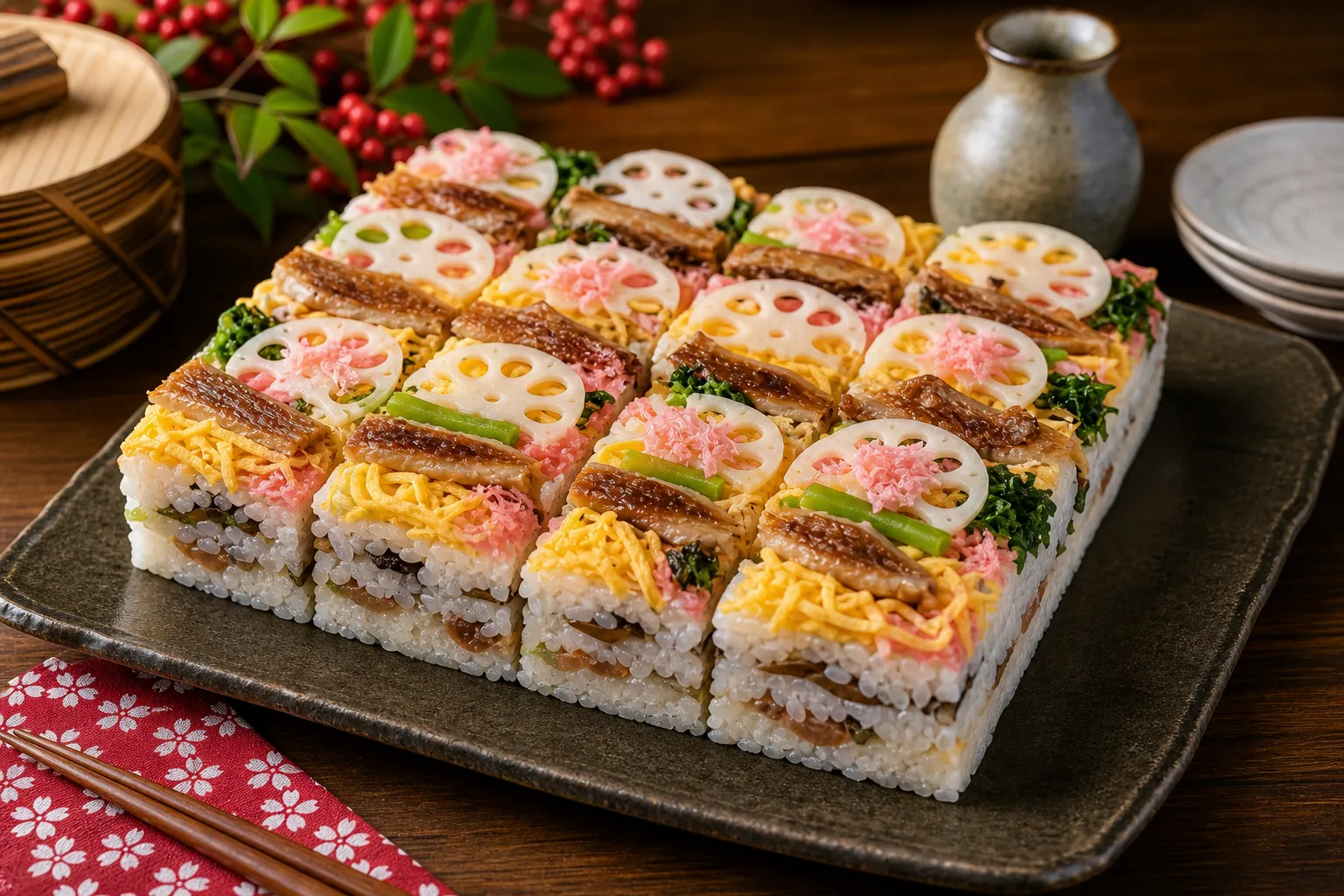
Local FoodIwakuni, Yamaguchi
Iwakuni-zushi (岩国寿司)
Sushi built like architecture — pressed in a giant wooden box in colorful layers, then cut into hefty blocks. This is the samurai's answer to feeding a castle, and it lands on the plate like a striped little monument.
July 12, 2026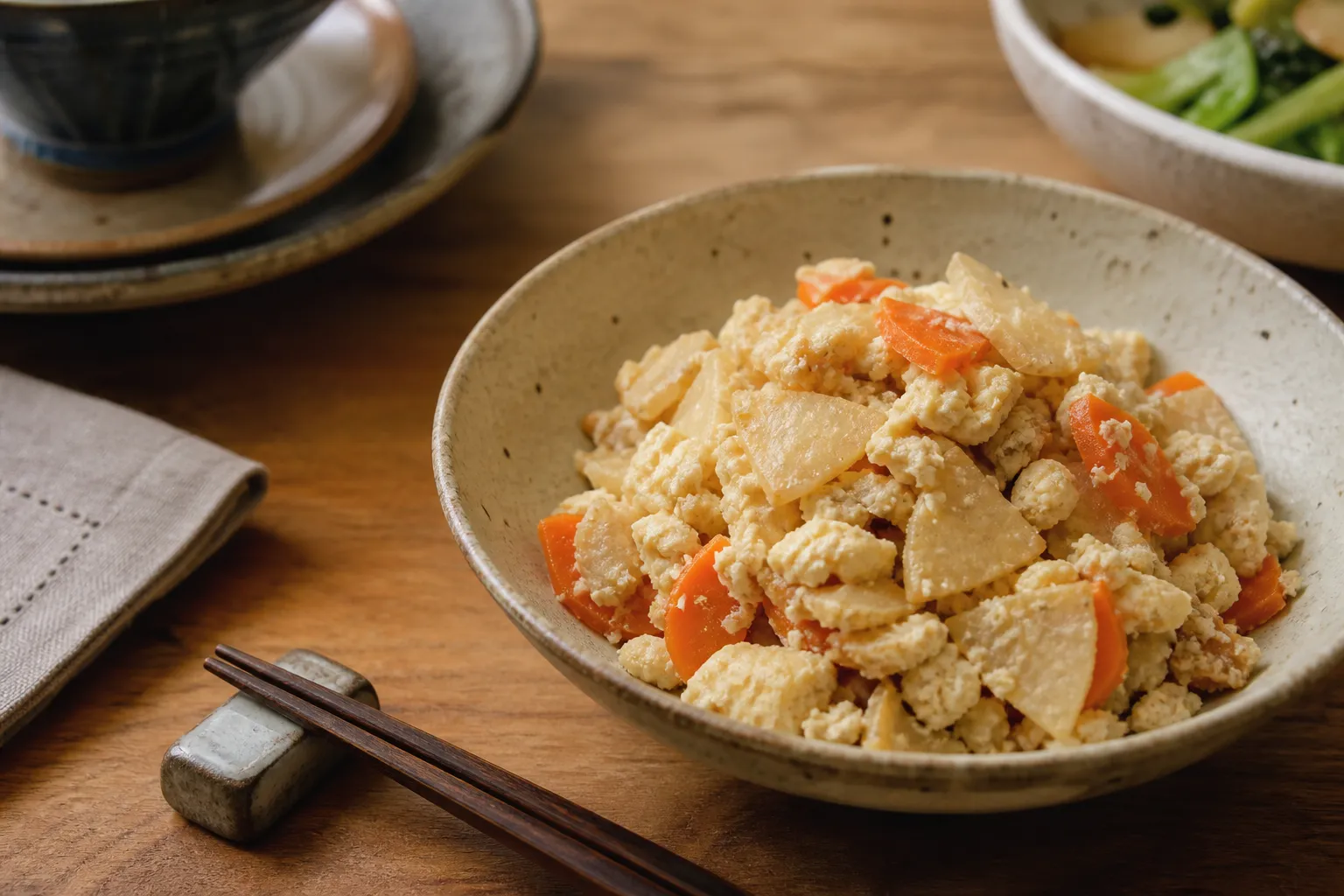
Local FoodYamaguchi
Kenchou (けんちょう)
Not a soup, not a scramble — Yamaguchi's crumbled tofu simmered soft with sweet daikon and carrot until it's gently soy-glossed and disappears bowlful by bowlful. Winter comfort in a pot.
July 12, 2026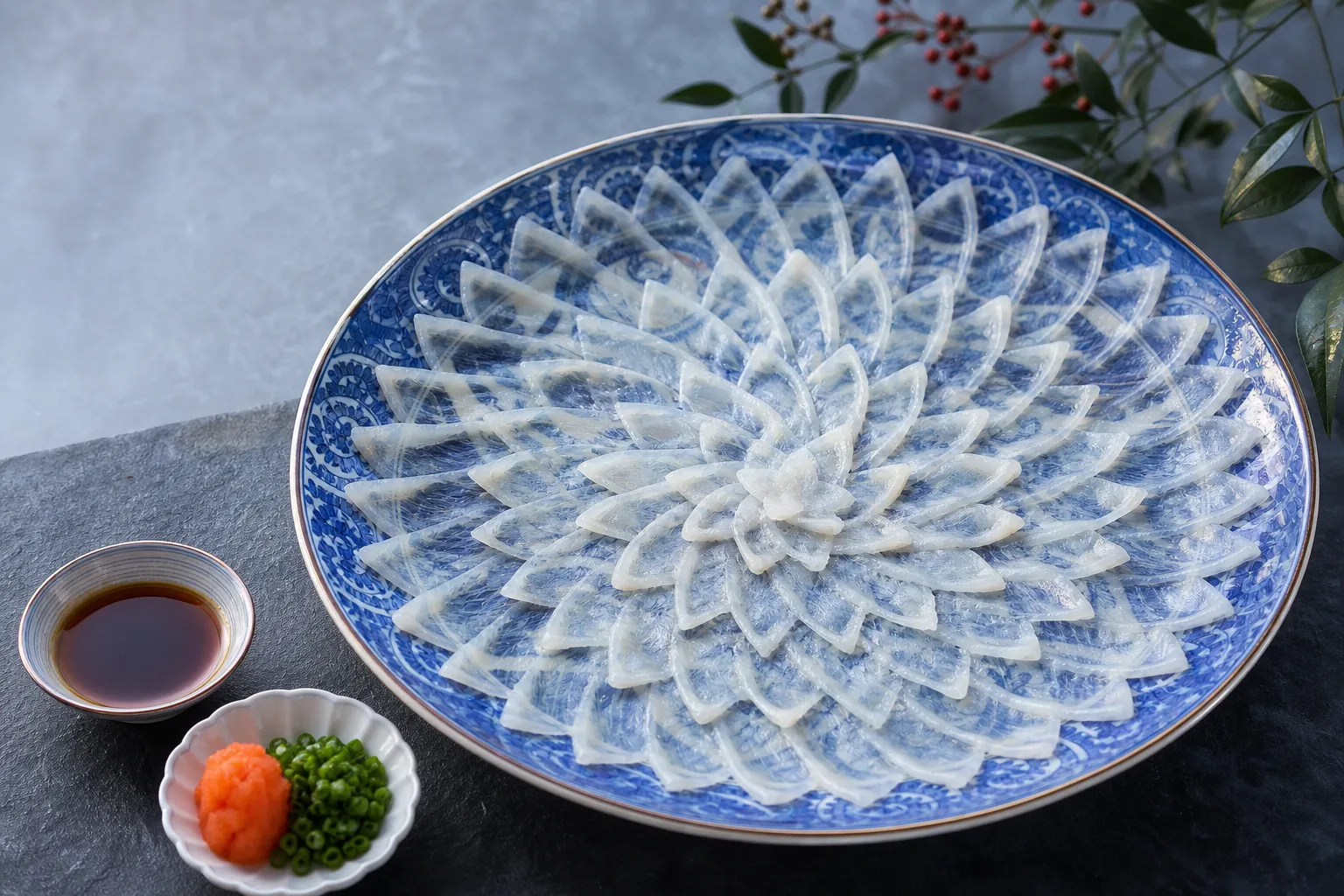
Local FoodShimonoseki, Yamaguchi
Fugu (ふぐ)
The fish that can kill you is sliced so thin you can read the pattern on the plate through it — and somehow that's the least unsettling part of the meal.
July 4, 2026