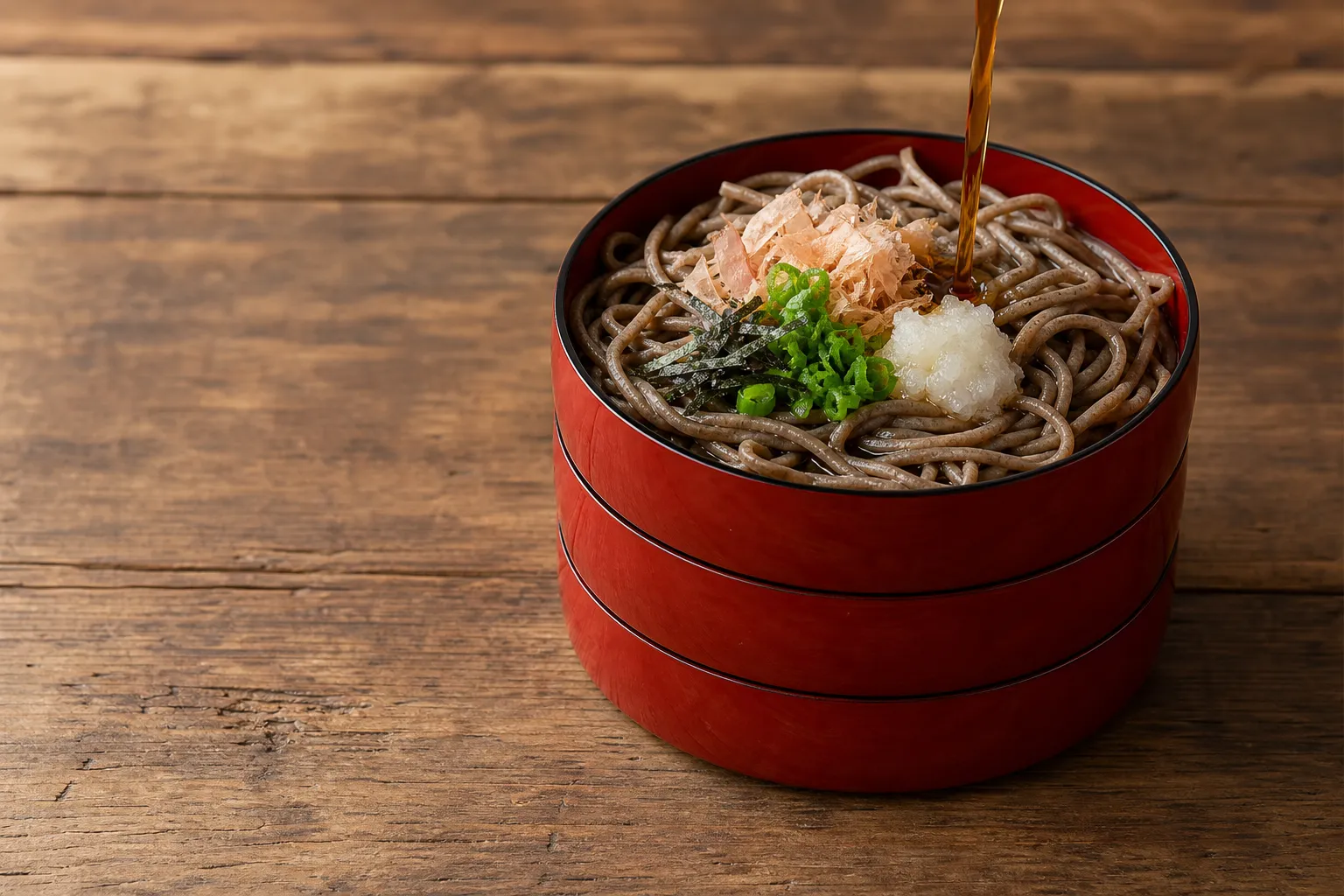
The first thing I did was reach for a dipping cup that wasn't there. Three little round lacquered dishes had arrived stacked on top of each other, the noodles inside almost black — way darker than any soba I'd met — and I sat there confused until the woman beside me tipped her tsuyu straight onto the top dish, slurped, then poured what was left down into the second tier. Oh. Oh. I copied her, and the noodles came up dark and rough and astonishingly fragrant, way more buckwheat-forward than the polite pale stuff back home. I ate all three tiers and immediately wanted three more.
Share this dish


Three little lacquered tiers of dark, husk-and-all buckwheat, eaten in the shadow of Japan's oldest great shrine. You pour the broth straight on, stack the dishes down, and taste soba the way the gods' country has done it for centuries.
🍜 Planning a food trip to Shimane?Add this dish to my Food Trip →
 Add this dish to my Food Trip →
This is izumo soba, one of Japan's three great soba traditions, from Izumo in Shimane — the land of myths, sitting right at the foot of Izumo Taisha, arguably the oldest and most important grand shrine in the country. What makes it dark is the milling: the whole buckwheat groat is ground husk and all (a method called hikigurumi), which gives the noodles their deep color, stronger nutty flavor, and a coarser, heartier texture. It comes two main ways — cold in those stacked warigo dishes, or hot as kamaage, served straight in its own cooking water.
Soba from the land of the gods
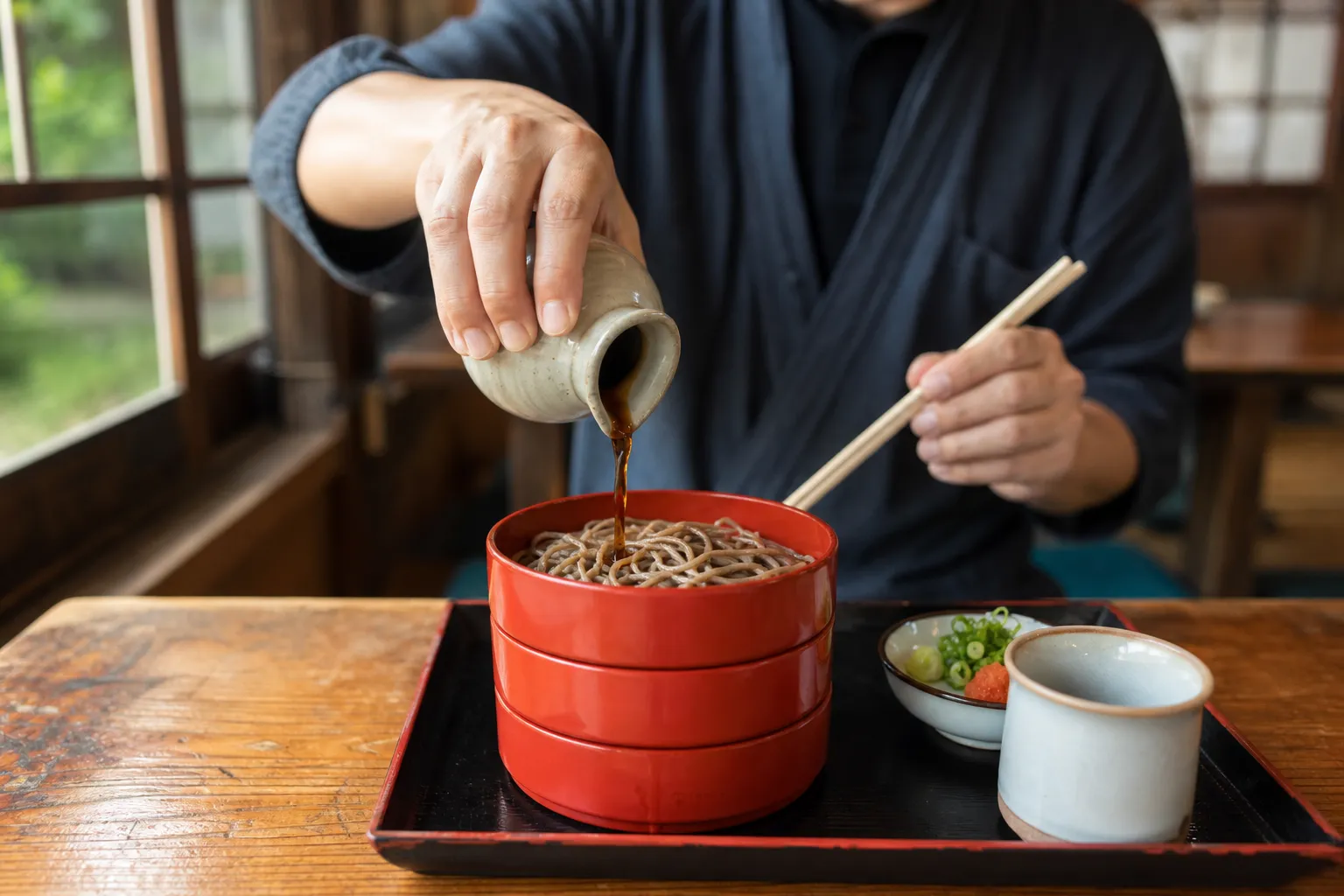
Izumo is a place soaked in myth — this is where, every autumn, the eight million gods of Japan are said to gather at Izumo Taisha. And the soba is wrapped up in that pilgrimage culture. For centuries, worshippers came to the shrine and ate soba at the stalls and shops around it, and a particular ritual food grew up alongside the worship: warigo soba, eaten at festivals and on the temple approach. There's even a tradition of jukk-warigo — stacking many tiers high — at celebrations. I find that genuinely moving, the idea that this exact bowl has been comfort food for shrine pilgrims since long before I showed up hungry and confused about the dipping cup.
The husk-and-all milling isn't just rustic charm, either — it's frugal, nutritious mountain cooking, the kind that makes the most of every grain in a snowy region where buckwheat grew better than rice. That's the thing about the best local foods: the flavor and the history are the same story. The dark color is the heritage.
Dark, nutty, and built for pouring
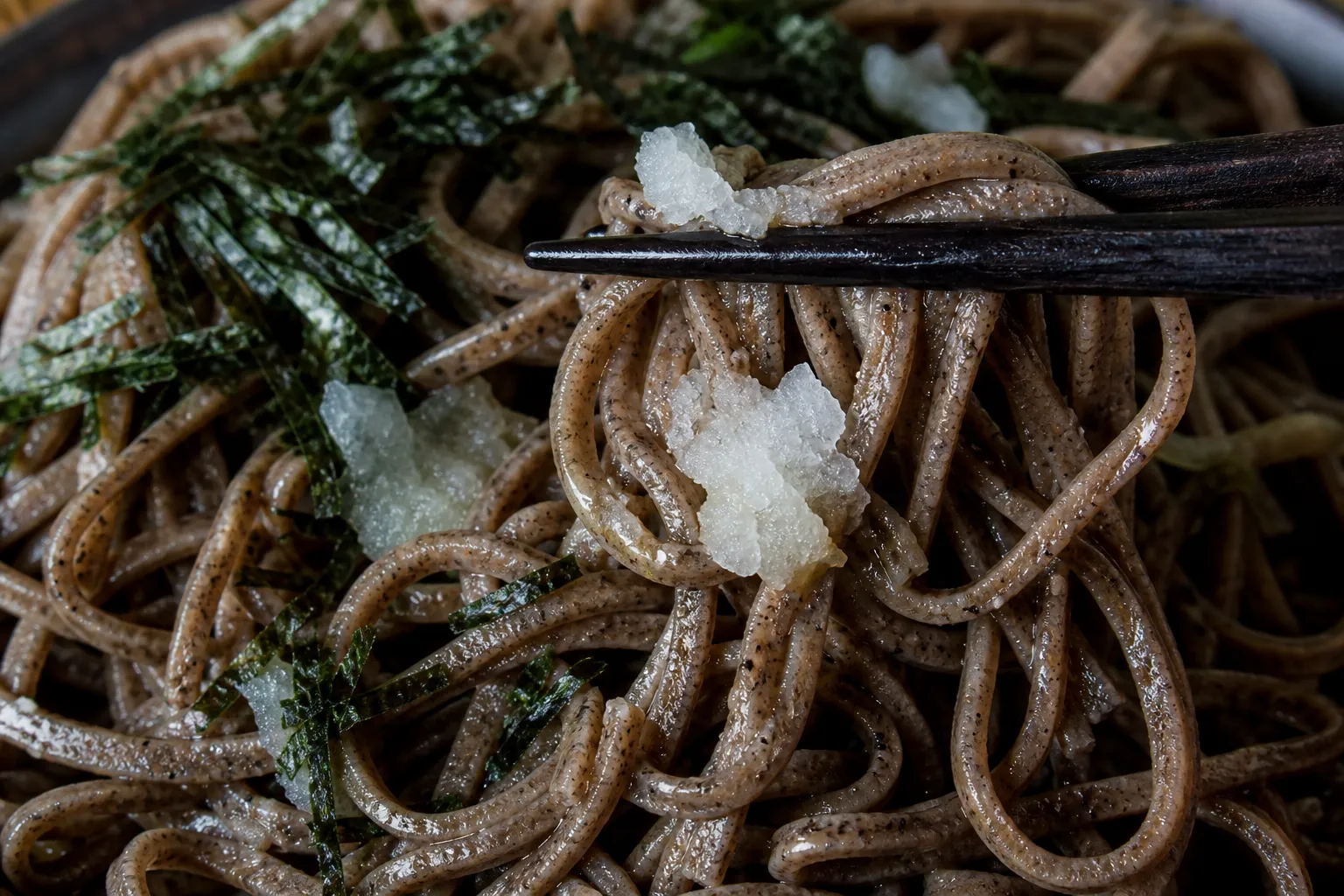
Texture and aroma are the whole point. Because the husk goes in, the noodles are darker, rougher, and far more intensely buckwheat-scented than standard soba — earthy, nutty, almost wild. The cold warigo version comes in those round stacked dishes, each topped with little garnishes: grated daikon, nori, bonito flakes, green onion, sometimes a raw quail egg. You don't dip — you pour the tsuyu directly over the noodles, eat that tier, then tip the leftover broth down onto the next.
The hot kamaage version is the cozy winter move: the noodles are scooped straight from the pot with their starchy, cloudy cooking water still on them, and you season the bowl with concentrated tsuyu and garnishes to taste. It's softer, warmer, and deeply soothing. I came for the warigo and got quietly converted to kamaage on a cold evening — both are correct, and both taste like the same dark, honest buckwheat.
How it's made
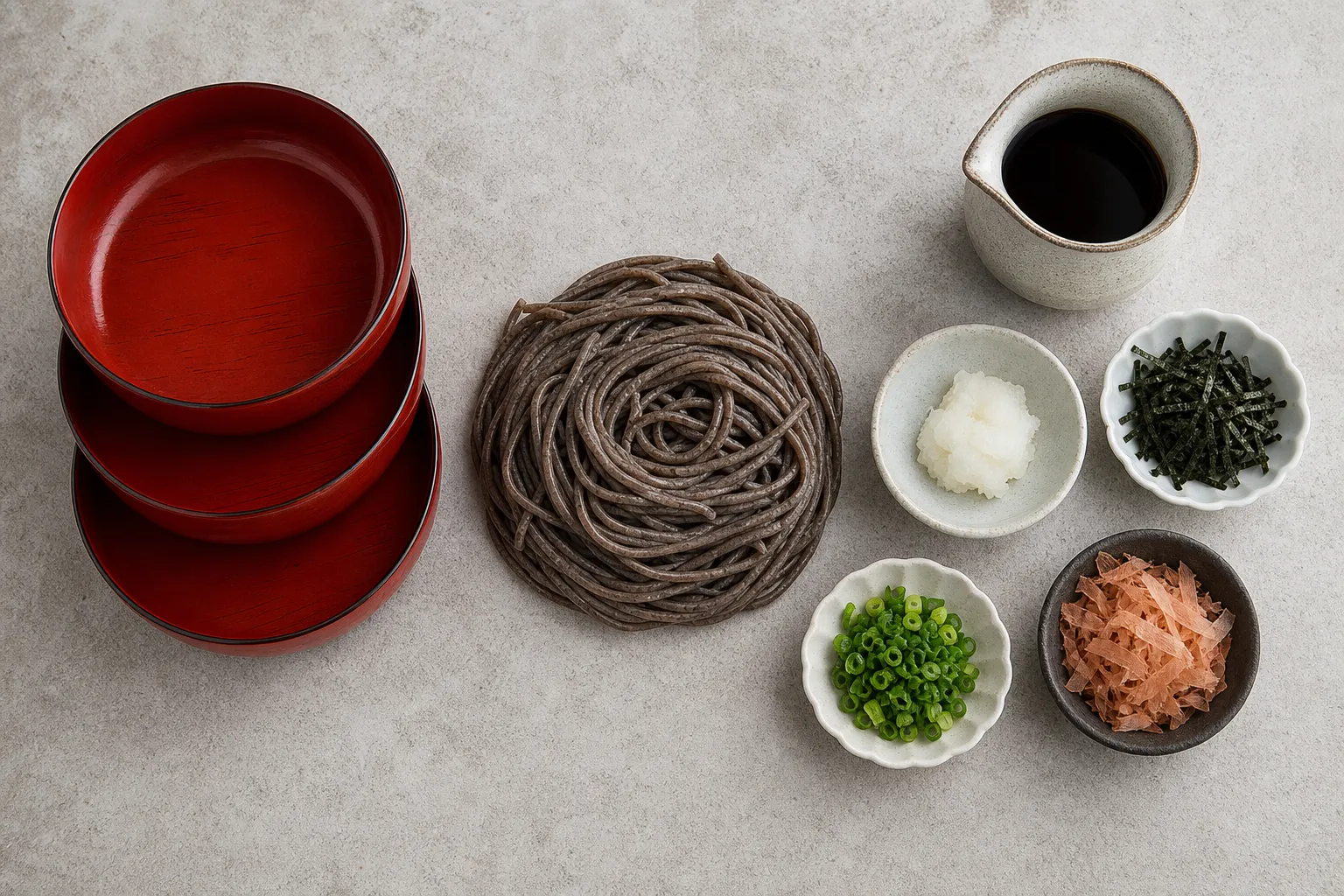
- Grind the whole buckwheat groat — husk, skin, and all (hikigurumi) — which gives the dark color and strong flavor
- Mix and knead into a firm dough, roll out, and cut into noodles slightly coarser than usual
- Boil, then either shock cold (for warigo) or serve straight in the cooking water (for kamaage)
- For warigo: portion into round stacked lacquered dishes, each with garnishes (daikon, nori, bonito, green onion)
- Serve with a concentrated tsuyu that you pour directly onto the noodles, not a dipping cup
- For kamaage: serve hot in the cloudy cooking water, seasoned with tsuyu and garnishes to taste
Before you go — for the soba pilgrim
Your questions, answered honestly
"Why is it so dark? Is it burnt?" — Not at all. It's dark because the whole buckwheat groat is milled with the husk on (hikigurumi). That's the entire point: more color, more aroma, more rugged buckwheat flavor. Embrace the darkness.
"Do I dip the noodles?" — No — and this trips up almost everyone. With warigo soba you pour the tsuyu straight onto the noodles in the dish, eat, then pour the leftover broth down into the next tier. There's no dipping cup. With kamaage, you season the bowl directly.
"Warigo or kamaage?" — Warigo (cold, stacked) shows off the texture and is the iconic version; kamaage (hot, in its cooking water) is the cozy cold-weather one. If it's your first time, get warigo. If it's freezing, kamaage will fix you.
"Is it beginner-friendly?" — Yes. It's noodles and broth — nothing strange. The only learning curve is the pouring ritual, and now you know it.
What the staff will ask you
| You'll hear | Romaji | Meaning | Just say |
|---|---|---|---|
| 割子と釜揚げ、どちらにしますか? | Warigo to kamaage, dochira ni shimasu ka? | "Warigo or kamaage?" | Warigo de onegaishimasu (warigo, please) |
| 何段にしますか? | Nan-dan ni shimasu ka? | "How many tiers?" | San-dan kudasai (three tiers, please) |
| 薬味は全部おつけしますか? | Yakumi wa zenbu otsuke shimasu ka? | "All the garnishes?" | Hai, onegaishimasu (yes please) |
To order, just say "Warigo soba kudasai" (割子そばください) — "Warigo soba, please."
Where to eat it
- Around Izumo Taisha, Izumo — the soba shops along the shrine's approach are the spiritual home of warigo soba; eating it here, at the source, is the whole experience. Pair it with a visit to the grand shrine itself.
- Matsue, Shimane — the castle town also has a strong izumo soba culture, with long-running shops serving both warigo and kamaage. An easy stop if you're touring the San'in coast.
- Across Shimane Prefecture — soba shops throughout the region serve izumo soba. Opening hours and which style is offered vary by shop and season, so check before you go.
Soul Score
Local Roots5/5
First-Timer Friendly4/5
Adventure Level3/5
Comfort Level4/5
Travel Worthy4/5
These scores are one obsessed eater's gut feeling — not a verdict. A low number isn't a bad mark, just a different kind of adventure.
Know someone planning Japan?
← All Articles
Local Food · Izumo, Shimane
Still hungry?
Eat more from Shimane
Local FoodTsuwano, Shimane
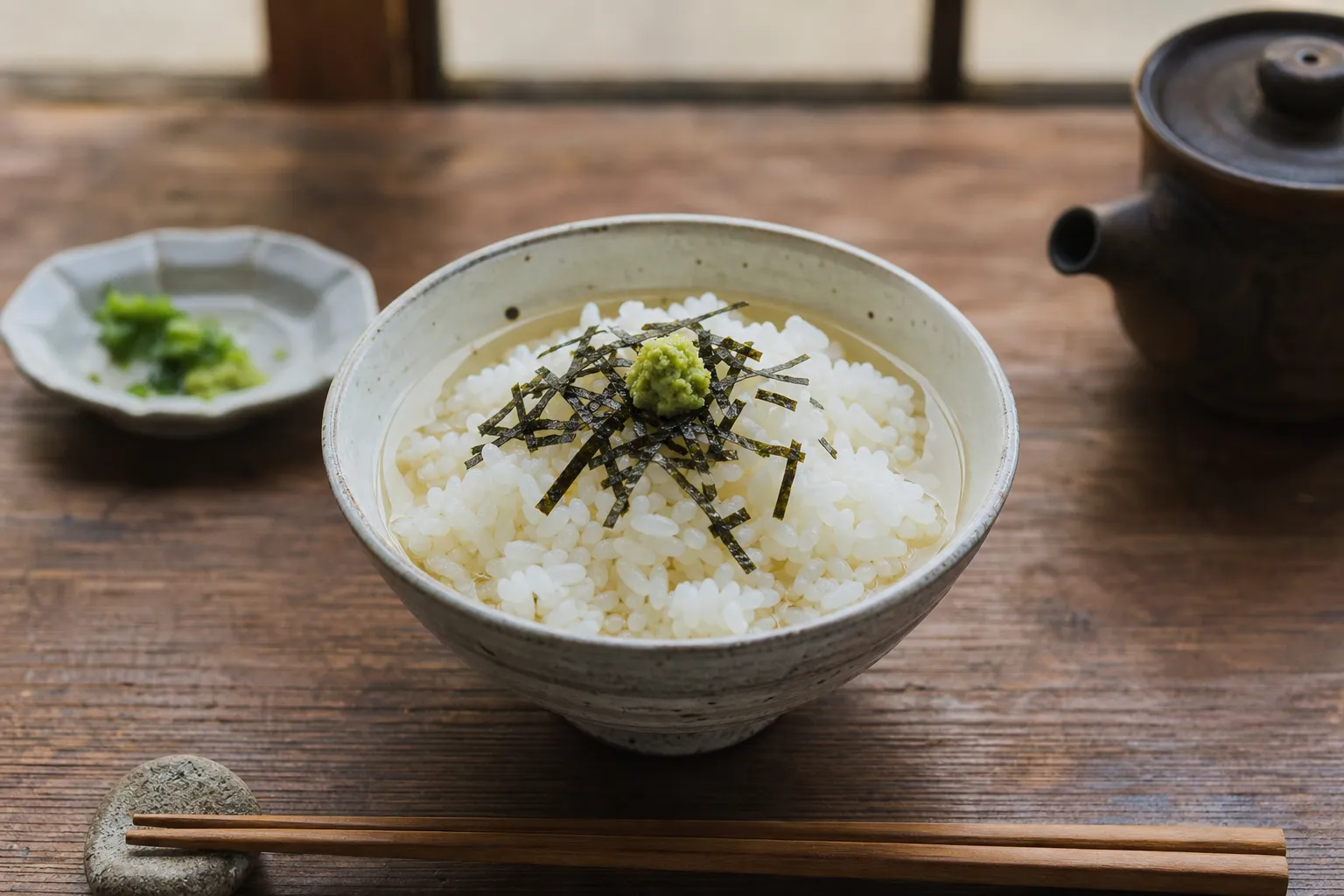
Uzumemeshi (うずめ飯)
It looks like a sad little bowl of plain rice with a dab of wasabi — and then your chopsticks hit the treasure buried underneath. A humble mountain town's edible magic trick, and one of Japan's three great rice dishes.
July 12, 2026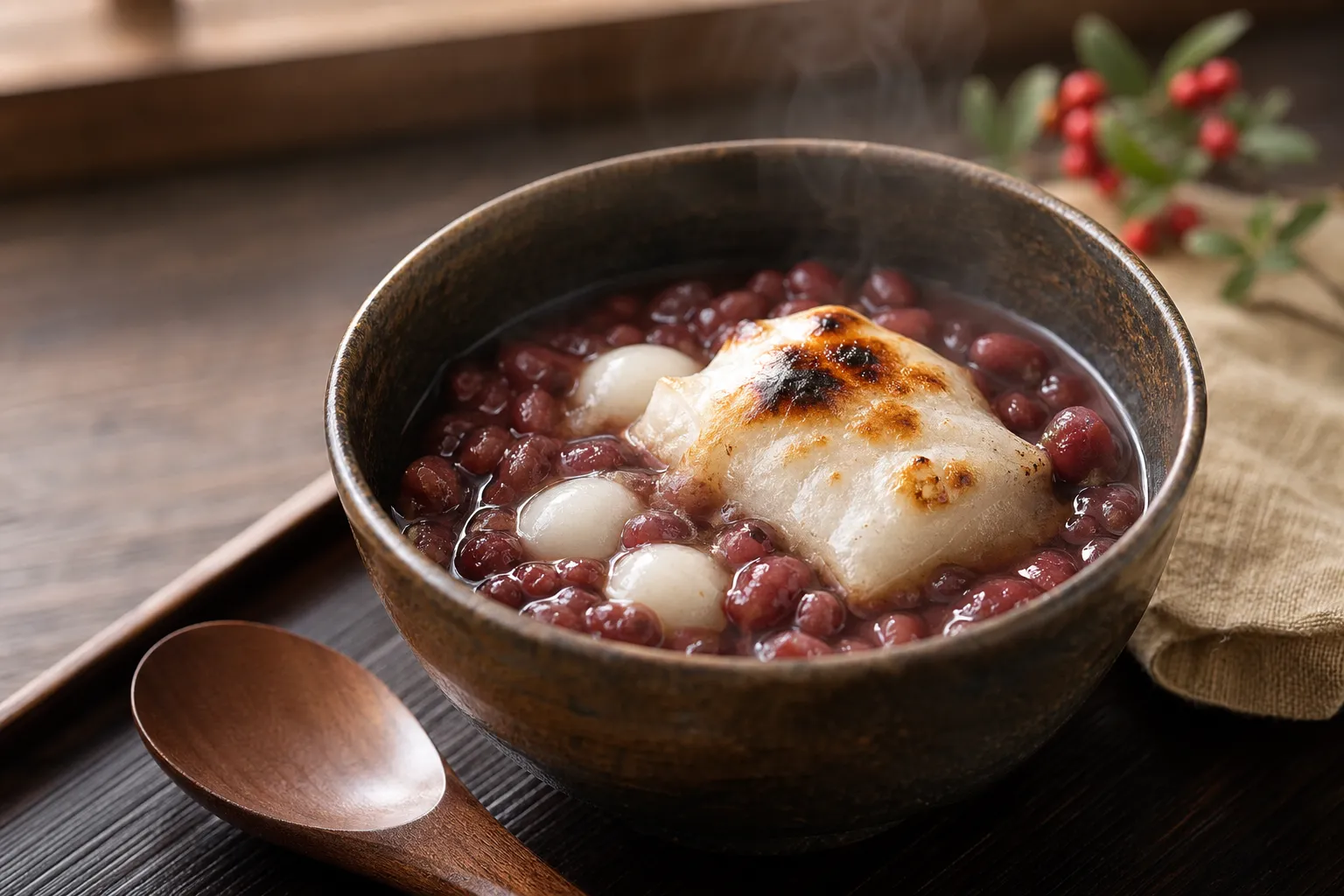
Local FoodIzumo, Shimane
Izumo Zenzai (出雲ぜんざい)
Whole red beans, still holding their shape, in a warm sweet broth with a soft chewy mochi hiding at the bottom — and the town says this is where the whole dish was born.
July 5, 2026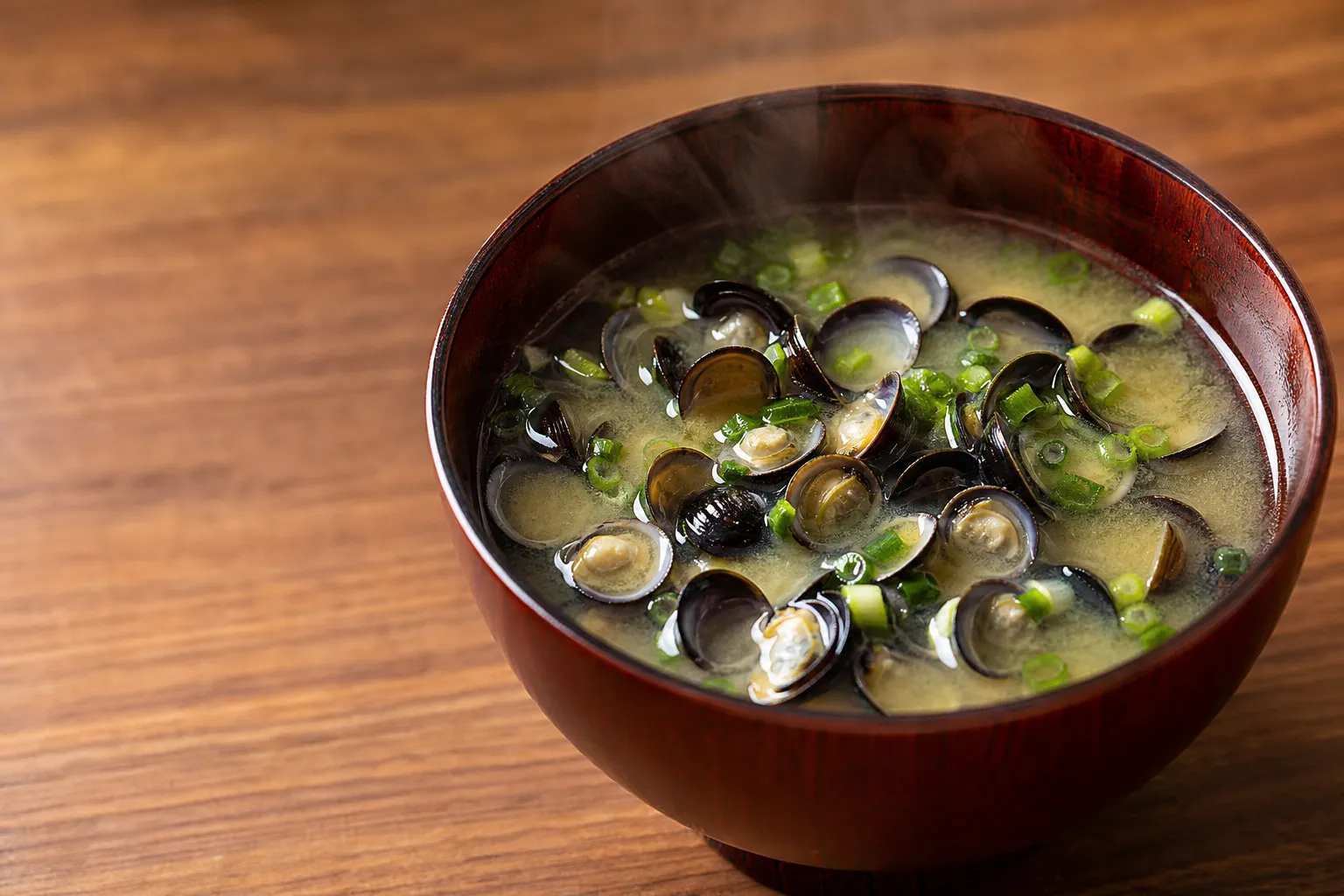
Local FoodLake Shinji, Shimane
Shijimi Soup (しじみ汁)
Tiny black clams the size of a fingernail, and somehow they make a miso soup deep enough to fix a rough morning — this is the bowl Shimane wakes up to.
July 5, 2026