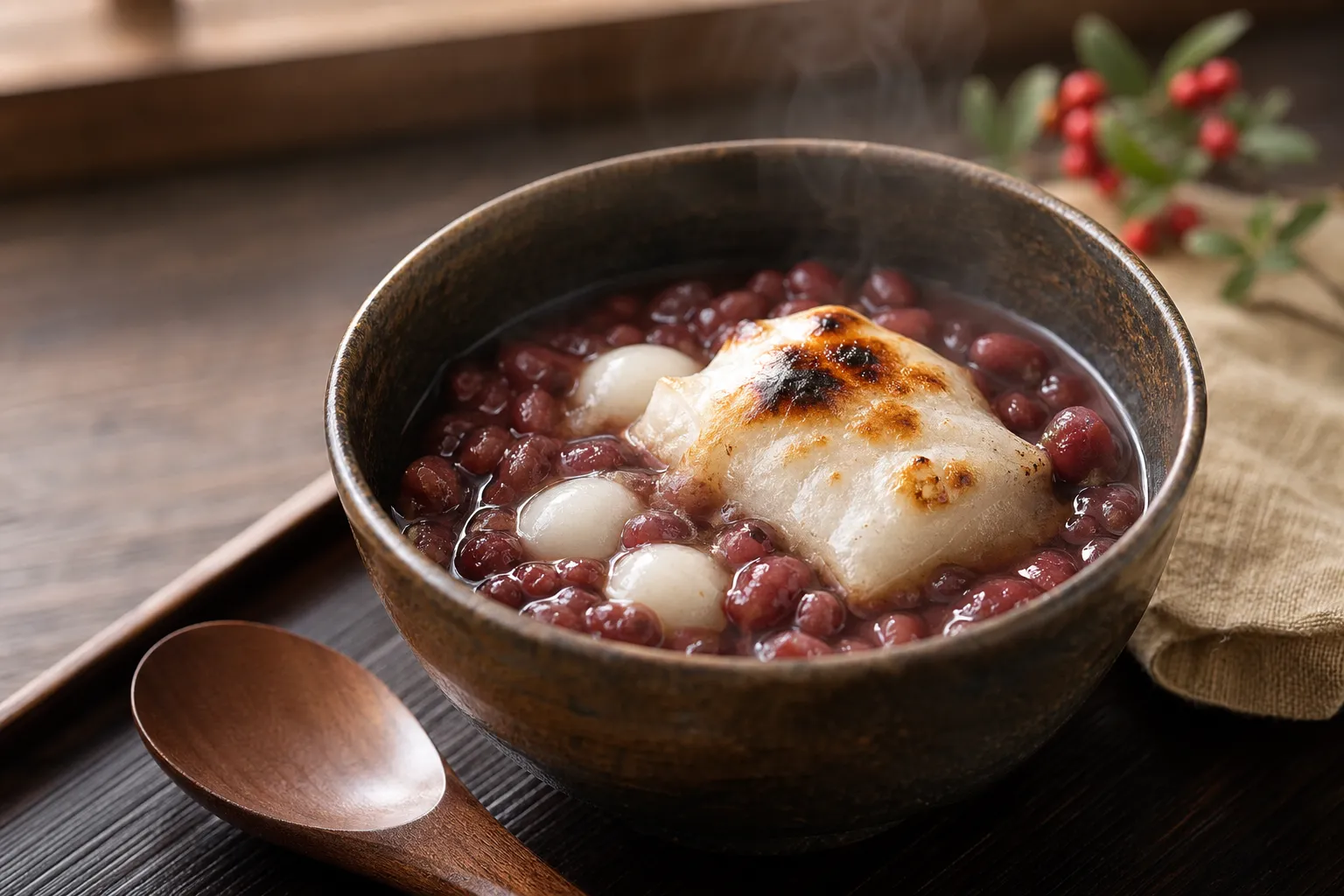
Cold hands, cold nose, a long walk up to a very old shrine — and then a bowl of something warm and deep red, steam curling off it, a piece of grilled mochi peeking out of the beans. First spoonful and the sweetness spread all the way to my fingertips. I actually sighed. Out loud. In a quiet teahouse. This is the kind of dessert that isn't really about dessert — it's about being cold and then, suddenly, not.
Share this dish


Whole red beans, still holding their shape, in a warm sweet broth with a soft chewy mochi hiding at the bottom — and the town says this is where the whole dish was born.
🍜 Planning a food trip to Shimane?Add this dish to my Food Trip →
 Add this dish to my Food Trip →
This is Izumo zenzai (出雲ぜんざい): a warm, sweet soup of azuki red beans, simmered with sugar so the beans stay whole and tender rather than dissolving, with pieces of soft grilled mochi or round shiratama rice dumplings tucked inside. And here's the fun part locals will absolutely tell you — Izumo claims to be the birthplace of zenzai itself. The theory goes that the word "zenzai" comes from jinzai (神在), the name of a shrine ritual held here, and that the sweet red-bean dish served during that event traveled out to the rest of Japan and became the zenzai eaten everywhere today. Whether or not you buy every link in that story, eating it in Izumo, near the great shrine, with cold hands, feels like the original setting.
Why Izumo says it started here
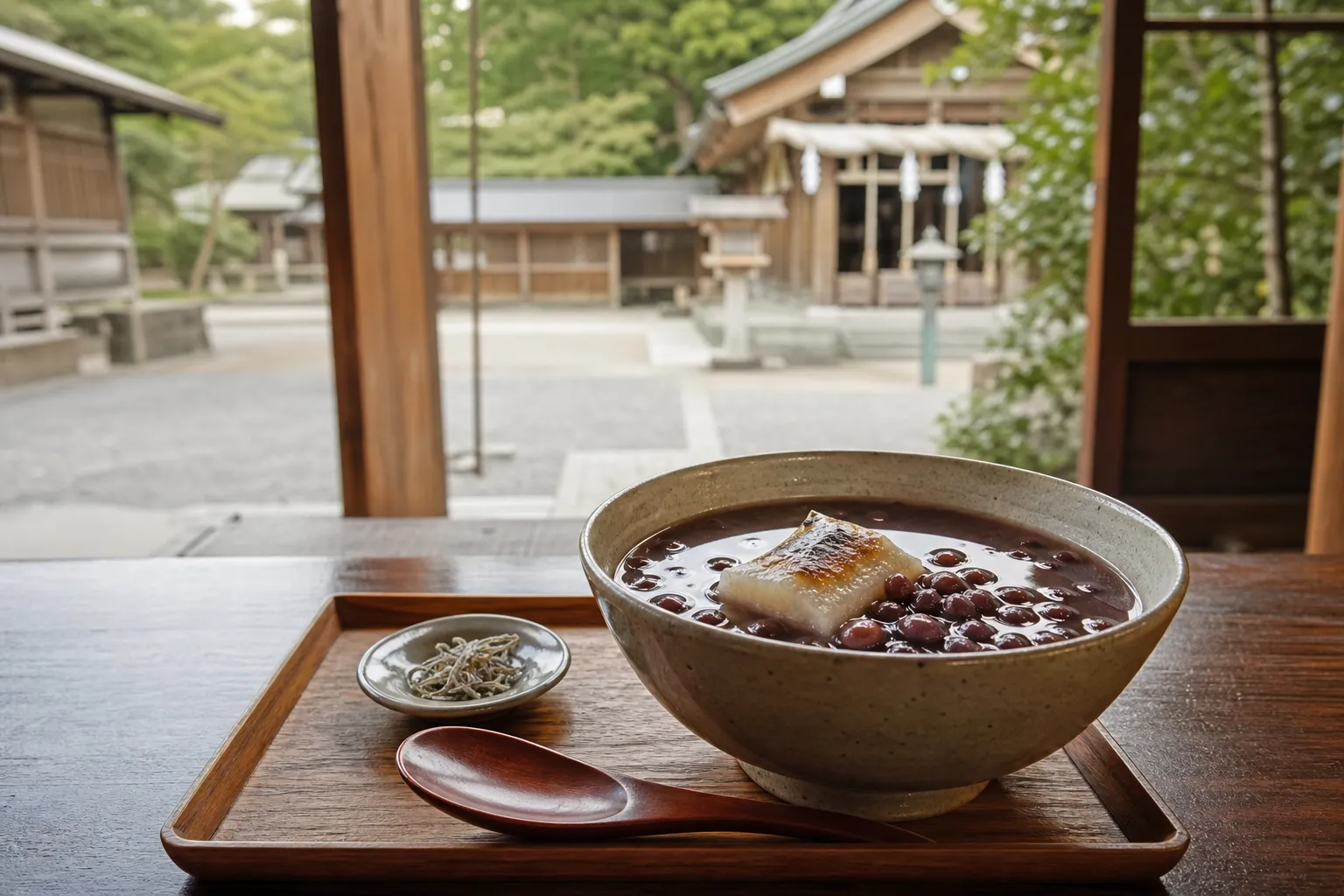
Izumo is one of the most sacred places in Japan, home to Izumo Taisha, a grand shrine tied to the country's oldest myths. Every year, in the tenth month of the old calendar, the gods of all Japan are said to gather here — which is why that month is called Kannazuki ("month with no gods") everywhere else, but Kamiarizuki ("month with gods present") in Izumo. During the associated Jinzai ritual, a sweet red-bean dish was served, and the local story holds that jinzai softened over time into zenzai as the food spread across the country. I find that genuinely wonderful — a dessert with a creation myth attached, born from a gathering of gods.
You don't have to take the etymology as gospel to feel the weight of it. Izumo leans proudly into the claim, and the teahouses and sweet shops on the approach to the shrine serve zenzai as a local specialty and a small pilgrimage reward. There's even a local zenzai day and festival celebrating it. Eating a warm bowl after paying respects at one of Japan's most ancient shrines — I'm not usually sentimental about desserts, but this one got me.
What makes it so good
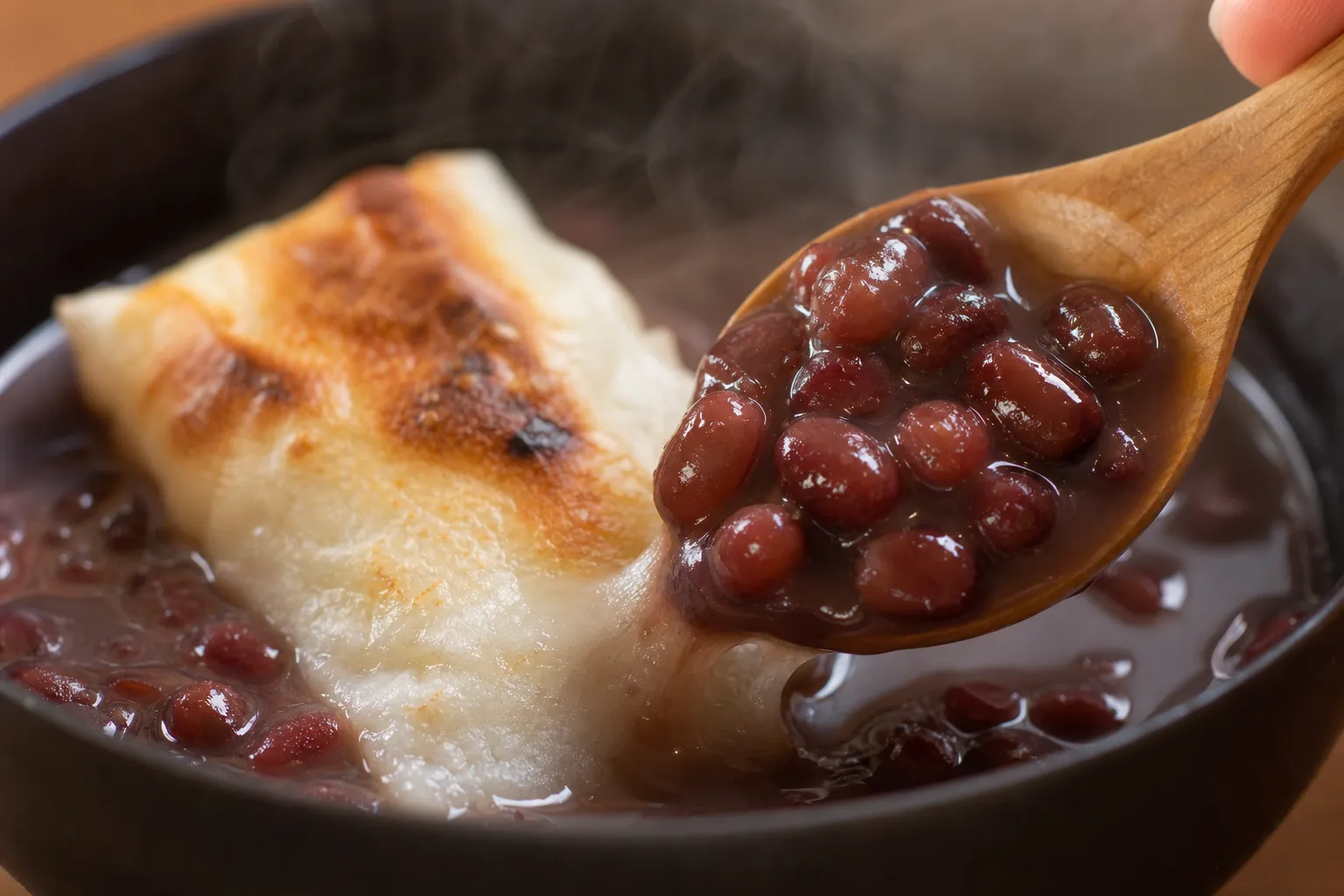
The character of it is all in the beans staying whole. This isn't a smooth, strained sweet paste — the azuki are cooked so they keep their shape and give a little pop and a soft, grainy body, floating in a glossy sweet broth that's rich but not cloying. Good zenzai balances the sugar with a tiny hit of salt, which makes the sweetness taste rounder and deeper instead of flat. Warm, thick-ish, comforting. The kind of sweet that feels like it's doing you good.
Then there's the mochi. If it's grilled mochi, it comes with a lightly toasted, faintly smoky skin over an interior that turns molten-stretchy in the hot soup — pull your spoon back and it strings. If it's shiratama dumplings, they're soft, round, and pleasantly chewy. Either way you get this play of textures: whole beans, silky broth, and a chewy centerpiece you have to work at a little. I ate slowly, partly to savor it and partly because hot mochi does not forgive rushing. Both are correct reasons.
How it's made
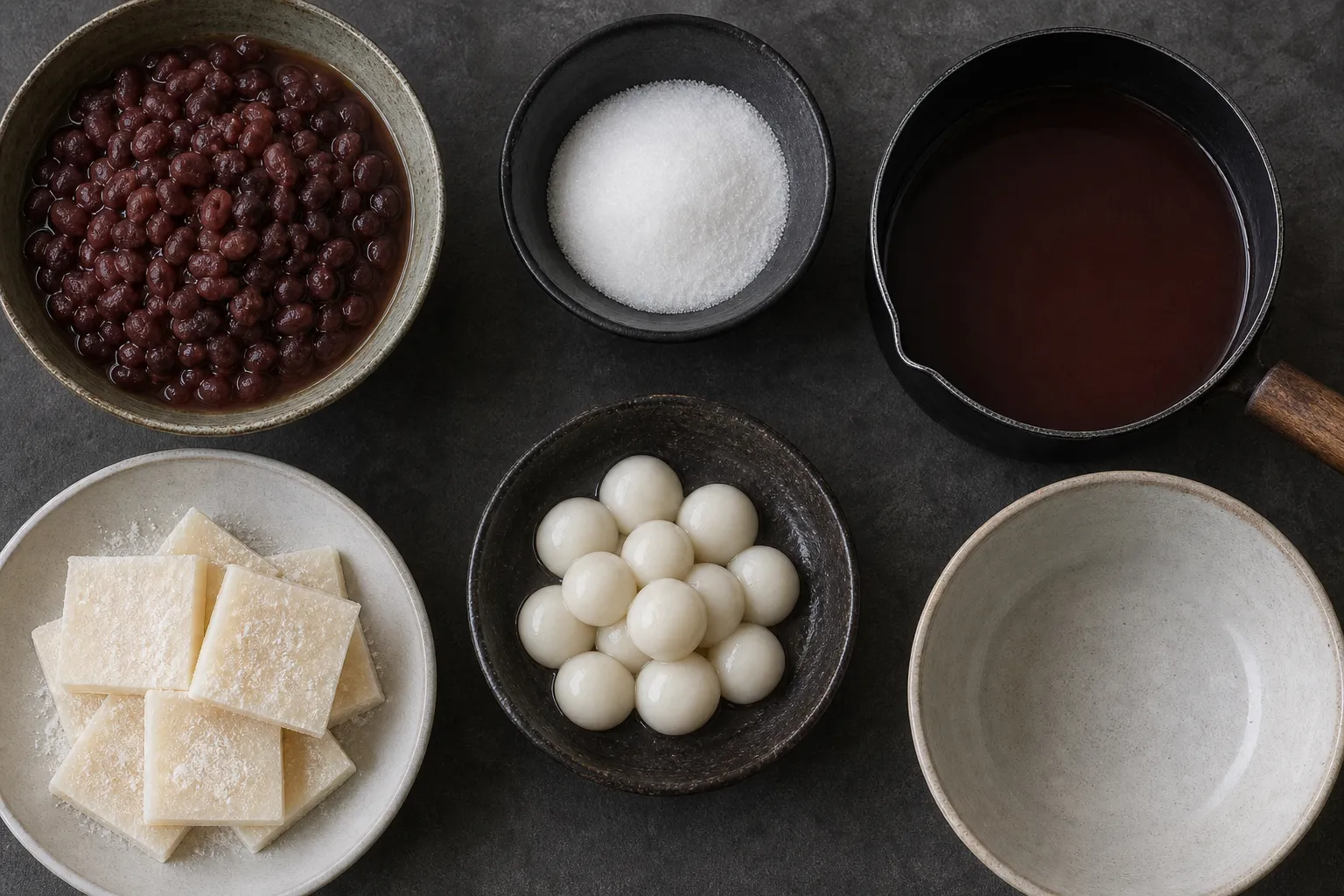
- Dried azuki beans are simmered gently in water until soft, with the cooking watched so they stay whole and don't burst apart
- Sugar is added in stages and cooked in, sweetening the beans and broth without collapsing them into paste
- A small pinch of salt is stirred in to round out and deepen the sweetness
- Mochi is grilled until puffed and lightly browned, or shiratama dumplings are boiled until they float and turn tender
- The warm sweet bean soup is ladled into a bowl and the mochi or dumplings are set in just before serving, while everything's hot
Before you go — how to actually eat it
Your questions, answered honestly
"Is zenzai the same as oshiruko?" — Close cousins, and people argue about the exact line. Broadly, zenzai keeps the whole beans (chunky), while oshiruko often uses a smoother, strained sweet-bean broth. In Izumo you want the chunky, whole-bean version — that's the point here. If the beans have dissolved into a smooth paste, that's the oshiruko end of the family.
"Is it a dessert or a snack?" — Somewhere in between, and best treated as a warm sweet pick-me-up — a teahouse pause, not a course after dinner. It pairs beautifully with green tea, which cuts the sweetness. Perfect after a cold walk to the shrine.
"Grilled mochi or shiratama dumplings — what's the difference?" — Grilled mochi is toasted, so it has a smoky skin and goes gloriously stretchy in the soup; shiratama are small, soft, springy rice-flour dumplings. Both are traditional. If you like a chewy centerpiece and a little smokiness, go mochi; if you like tender and neat, go shiratama.
"Is it very sweet?" — Yes, it's a sweet dish — but a good bowl is balanced by that pinch of salt so it doesn't overwhelm. Sip the green tea alongside and it stays comforting rather than sugary. One bowl is plenty.
What the staff will ask you
| You'll hear | Romaji | Meaning | Just say |
|---|---|---|---|
| お餅と白玉、どちらになさいますか? | Omochi to shiratama, dochira ni nasaimasu ka? | "Grilled mochi or shiratama dumplings?" | Omochi de onegaishimasu (grilled mochi, please) |
| 温かいのでよろしいですか? | Atatakai no de yoroshii desu ka? | "The warm one is okay?" | Onegaishimasu (yes, please) |
| お茶もおつけしますか? | Ocha mo otsuke shimasu ka? | "Shall I add green tea too?" | Onegaishimasu (yes, please) |
| 塩昆布はおつけしますか? | Shiokonbu wa otsuke shimasu ka? | "Would you like salted kombu on the side?" | Onegaishimasu (yes, please) |
To order, just say "Zenzai o kudasai" (ぜんざいください) — "Zenzai, please."
Where to eat it
- The approach to Izumo Taisha (Shinmon-dori), Izumo — the shrine's approach street and nearby teahouses and sweet shops serve zenzai as the local specialty, ideal right after visiting.
- Central Izumo, Shimane — cafés and traditional Japanese sweet shops (kanmidokoro) around town offer both grilled-mochi and shiratama versions.
- Regional sweet shops and antenna shops — Izumo zenzai is sold in packaged, ready-to-heat sets as a local souvenir you can take home.
Shops near the shrine keep their own seasonal hours and some do sell out, so check current details before you go — and note zenzai is at its most tempting in the cold months.
Soul Score
Local Roots5/5
First-Timer Friendly4/5
Adventure Level3/5
Comfort Level5/5
Travel Worthy3/5
These scores are one obsessed eater's gut feeling — not a verdict. A low number isn't a bad mark, just a different kind of adventure.
Know someone planning Japan?
← All Articles
Local Food · Izumo, Shimane
Still hungry?
Eat more from Shimane
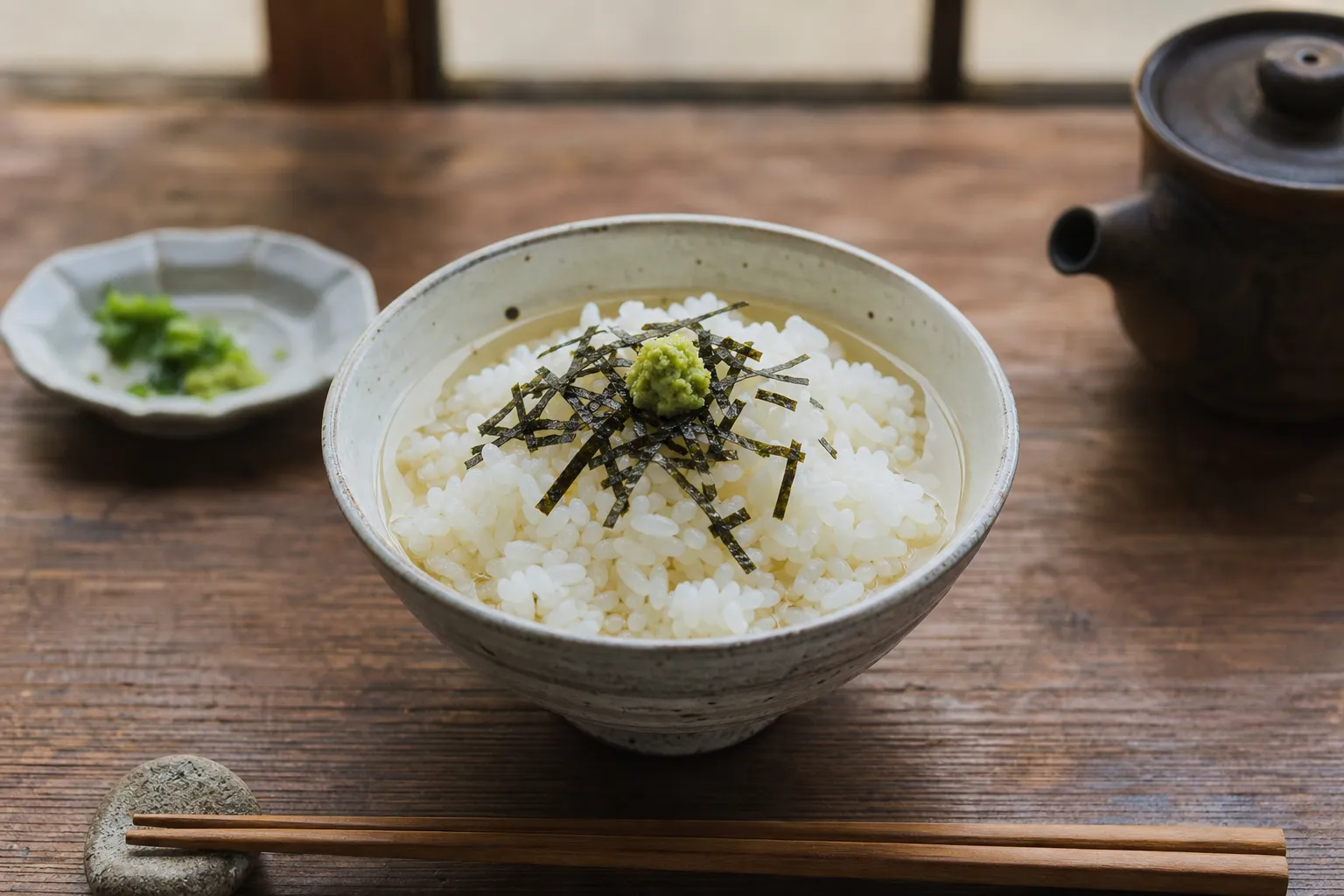
Local FoodTsuwano, Shimane
Uzumemeshi (うずめ飯)
It looks like a sad little bowl of plain rice with a dab of wasabi — and then your chopsticks hit the treasure buried underneath. A humble mountain town's edible magic trick, and one of Japan's three great rice dishes.
July 12, 2026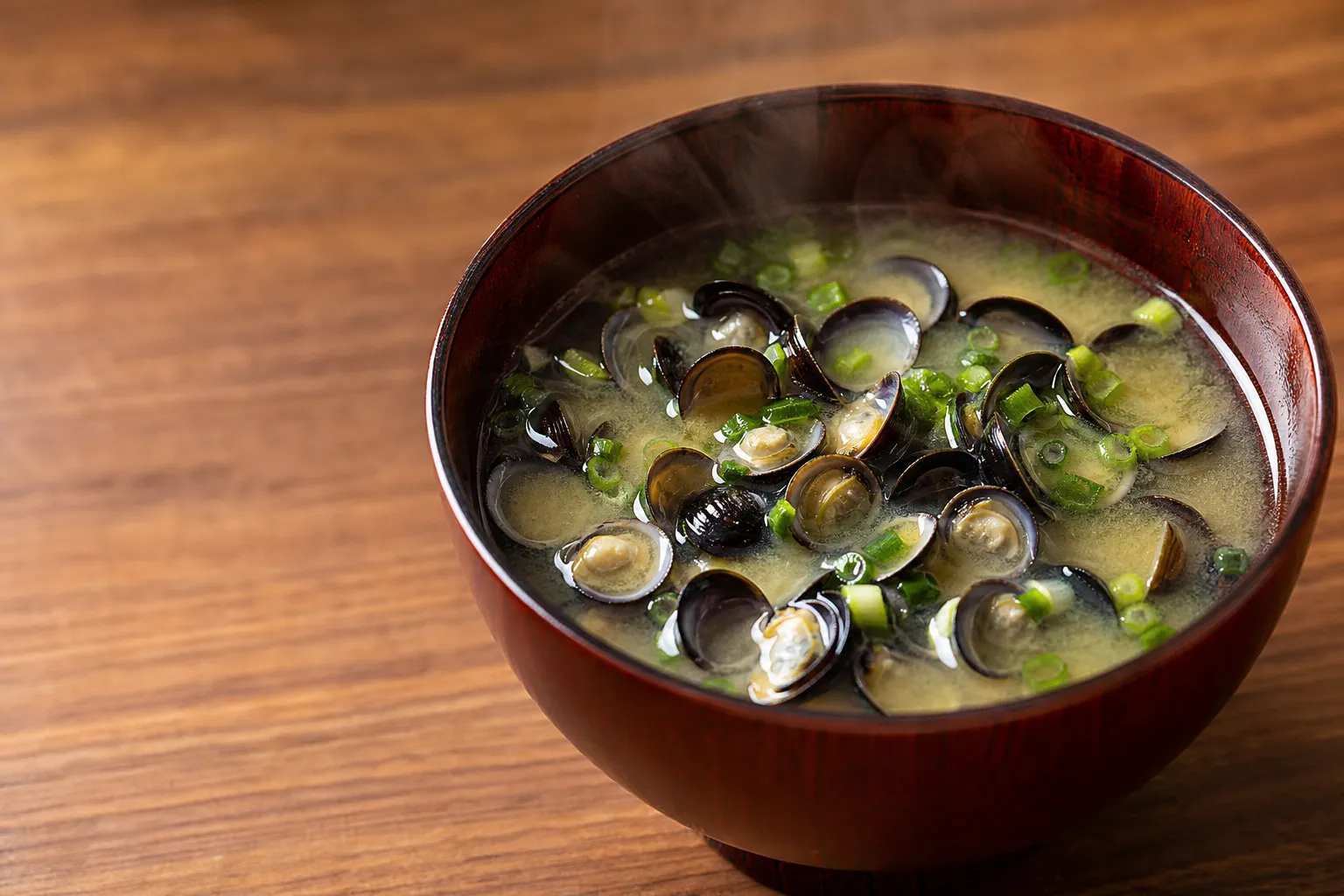
Local FoodLake Shinji, Shimane
Shijimi Soup (しじみ汁)
Tiny black clams the size of a fingernail, and somehow they make a miso soup deep enough to fix a rough morning — this is the bowl Shimane wakes up to.
July 5, 2026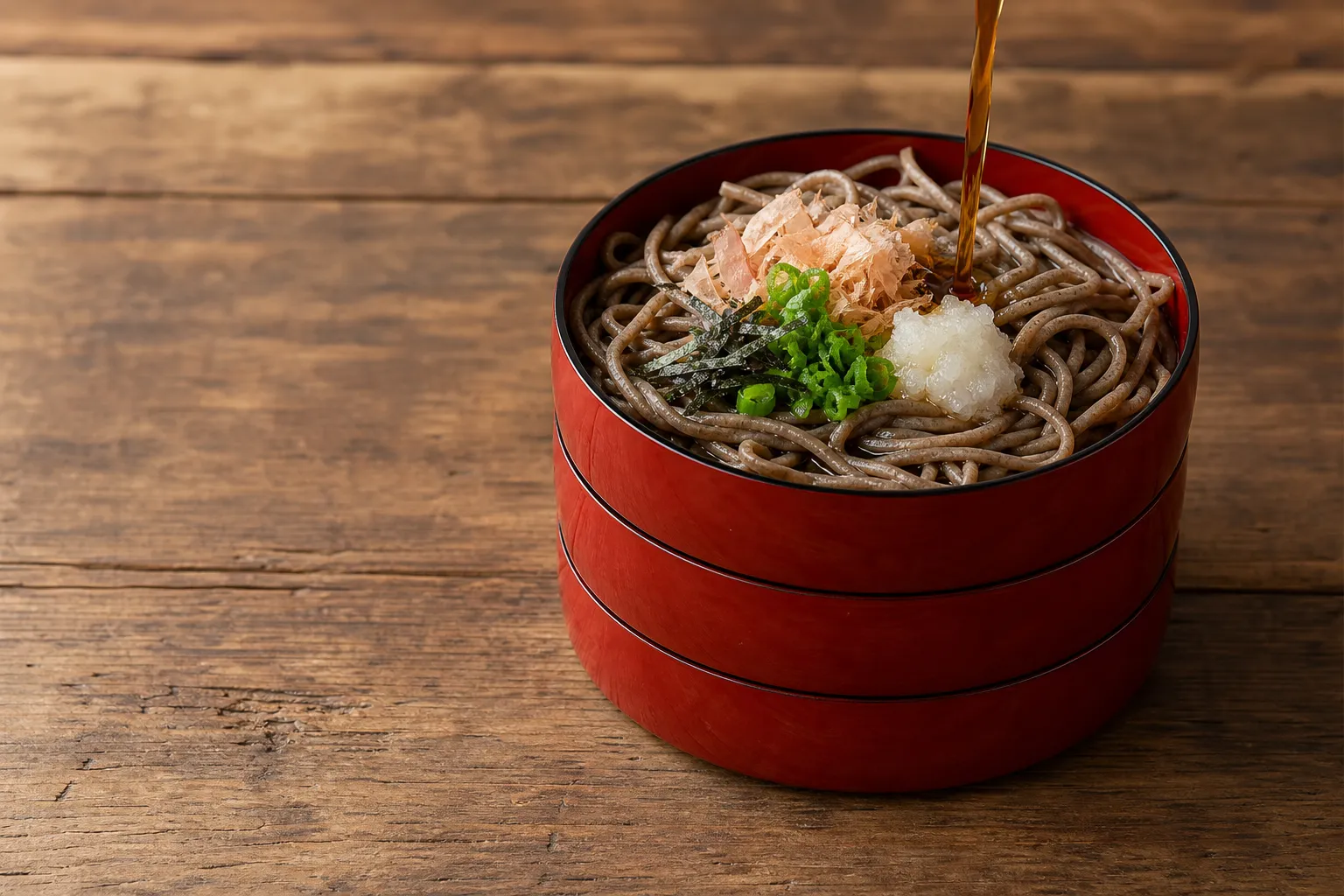
Local FoodIzumo, Shimane
Izumo Soba (出雲そば)
Three little lacquered tiers of dark, husk-and-all buckwheat, eaten in the shadow of Japan's oldest great shrine. You pour the broth straight on, stack the dishes down, and taste soba the way the gods' country has done it for centuries.
June 27, 2026