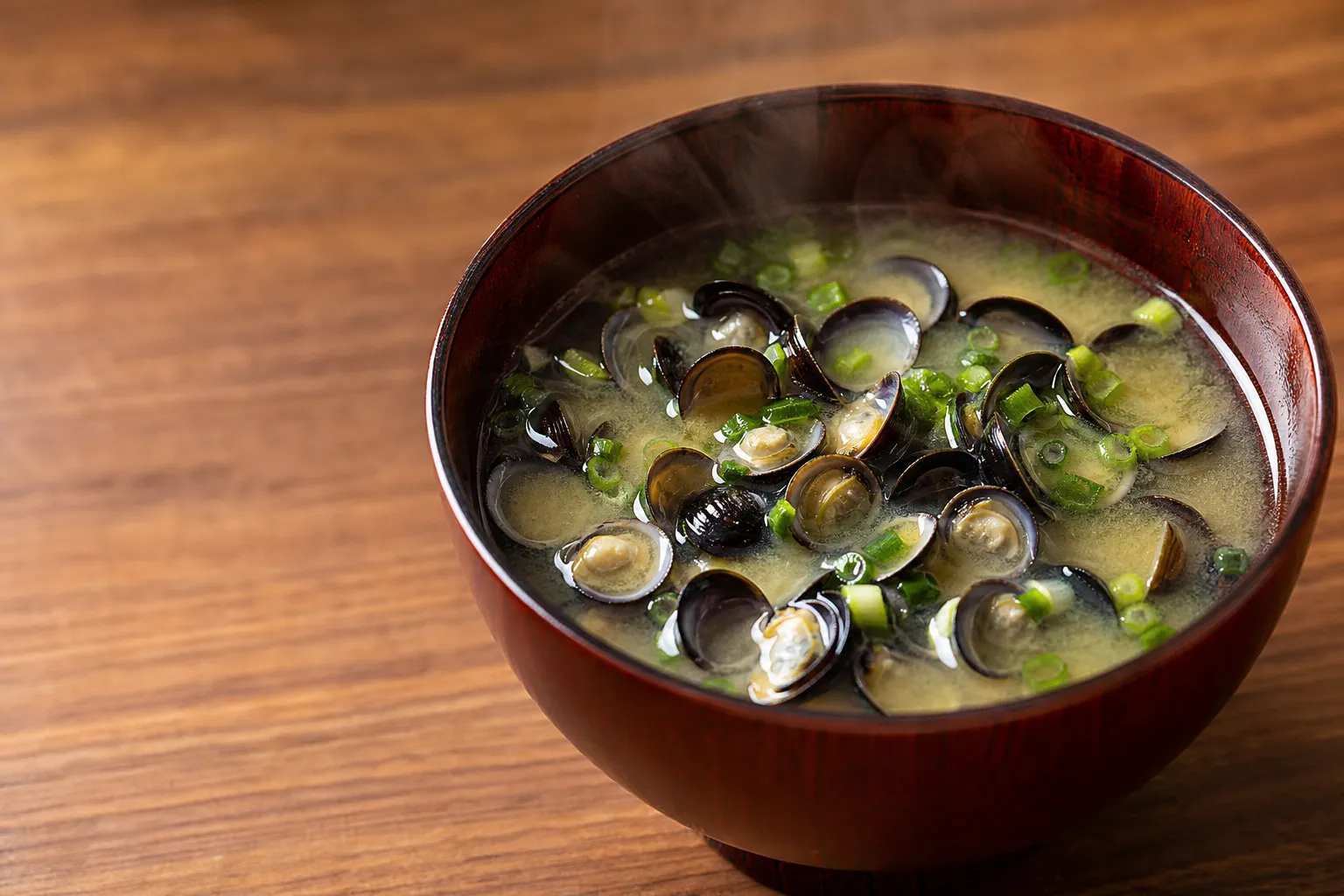
The clams were absurdly small — black, glossy, no bigger than a fingernail — and I genuinely wondered how anything that tiny could matter. Then I drank the broth. Deep, savory, faintly sweet, with this clean mineral edge that seemed to reset my whole head. It was 7 a.m. at a Shimane inn, I was half-awake, and one sip of clam miso soup did what coffee usually has to. I put the bowl down and just sat with it for a second.
Share this dish


Tiny black clams the size of a fingernail, and somehow they make a miso soup deep enough to fix a rough morning — this is the bowl Shimane wakes up to.
🍜 Planning a food trip to Shimane?Add this dish to my Food Trip →
 Add this dish to my Food Trip →
This is shijimi-jiru (しじみ汁), miso soup built around shijimi — small freshwater-brackish clams with dark, near-black shells. The most famous ones come from Lake Shinji (宍道湖) in Shimane Prefecture, a shallow brackish lake where fresh river water meets the sea, which is exactly the environment shijimi love. The clams themselves are small, but they release an outsized depth of flavor into the broth: rich, briny-savory, and loaded with that umami compound (ornithine) that's the reason Japanese folk wisdom swears by this soup for a tired body and a next-morning hangover. It is humble to look at and quietly powerful to drink.
Why Lake Shinji is clam country
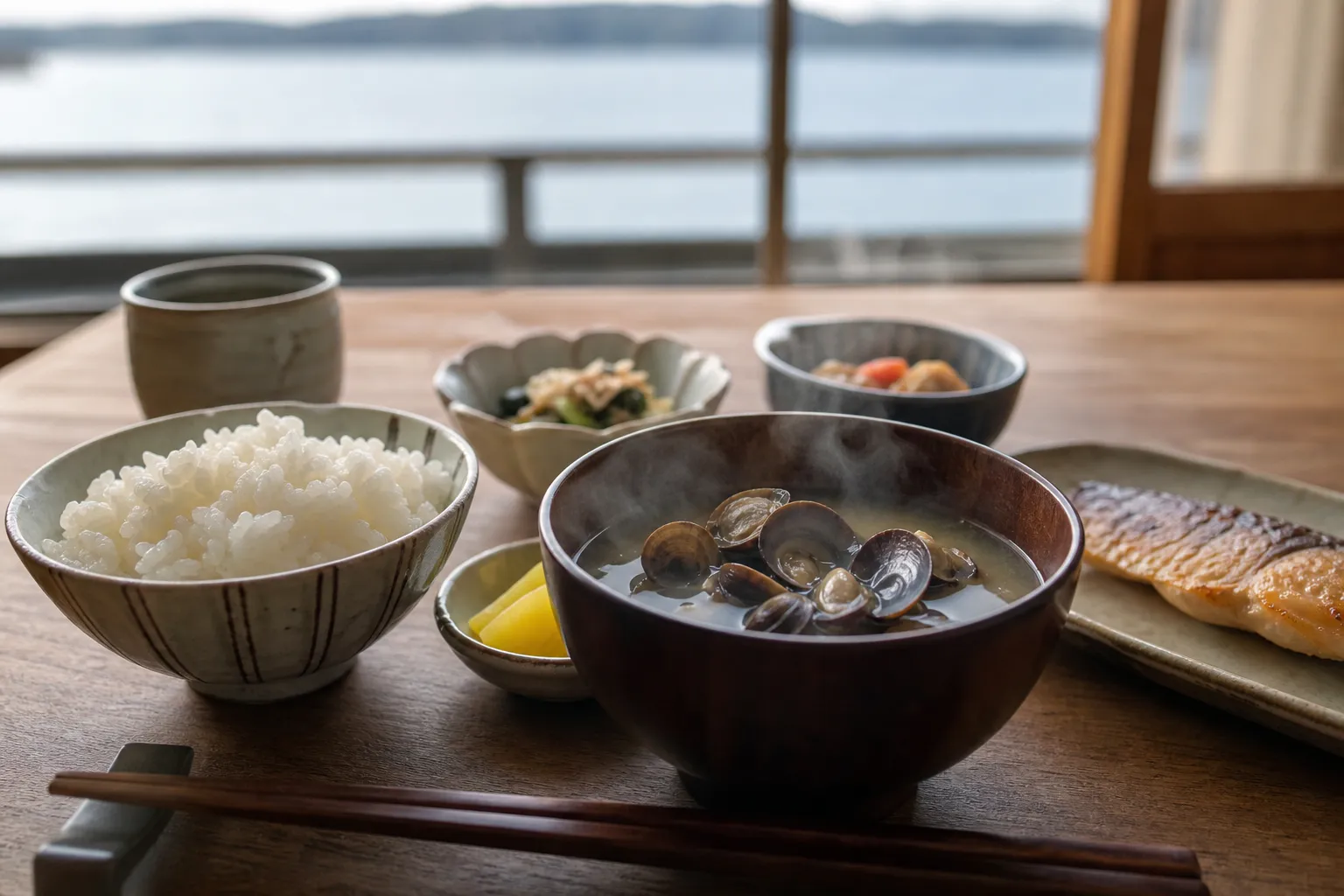
Lake Shinji is brackish — the seventh-largest lake in Japan, shallow, and sitting right where river freshwater and seawater blend into each other. That in-between water is perfect for shijimi (specifically yamato-shijimi), and Shinji has long been one of the top shijimi grounds in the whole country, some years the very top. Fishermen still harvest them the old way, raking the lakebed by hand from small boats with long-handled tools. There's something I find genuinely moving about a food economy that's stayed this local and this manual for generations, tied to one lake.
The lake is woven into daily life here — it's also famous for spectacular sunsets that draw people to the shore in the evening. And in Shimane, a bowl of shijimi-jiru is just breakfast. Not a delicacy you seek out; the normal, expected, comforting way to start the day. I love foods like that: the ones a whole region eats without thinking, that a visitor tastes and suddenly can't stop thinking about.
What makes it so good
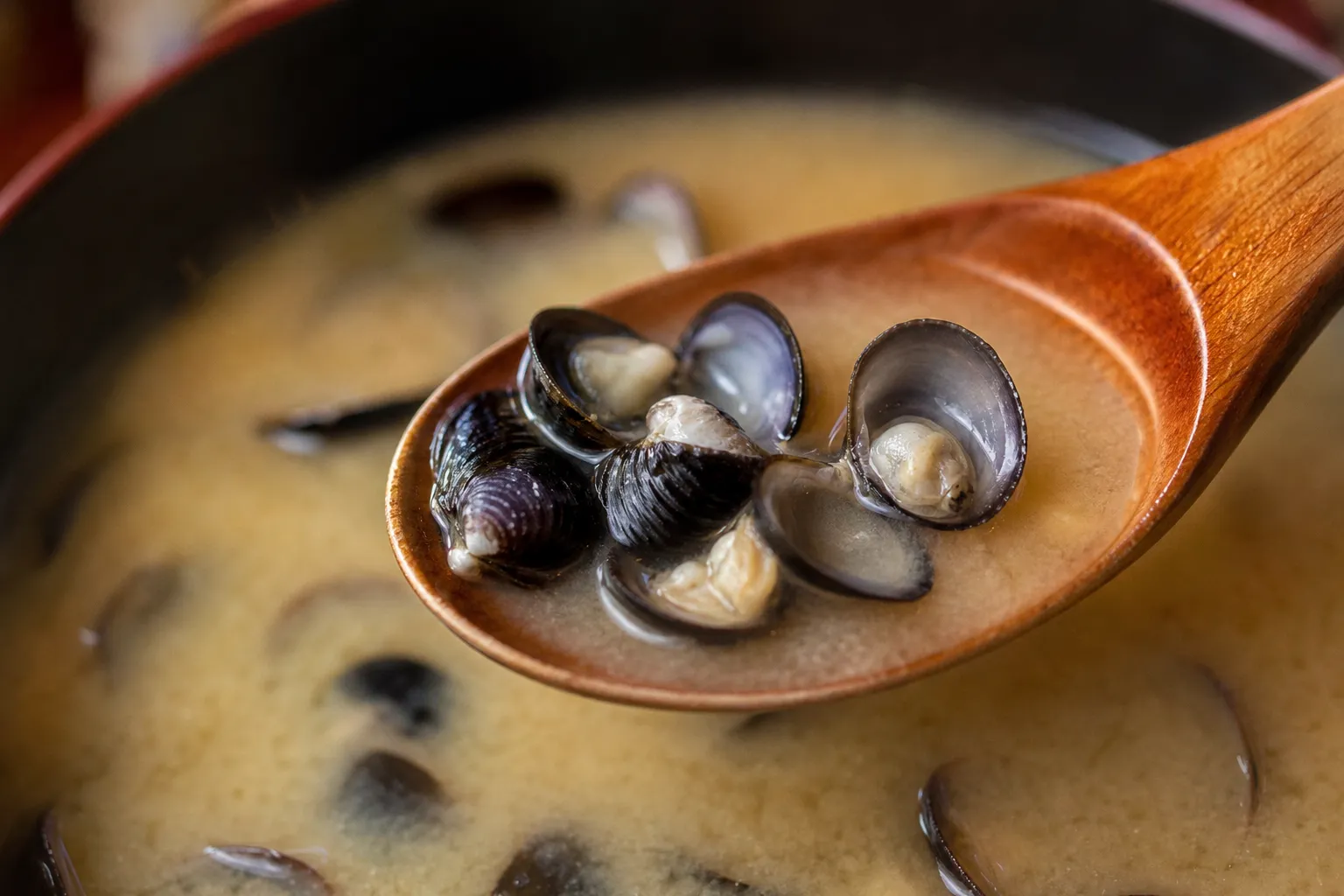
The whole point is the broth, and the clams are the engine that makes it. As the shijimi open in the hot soup, they release a concentrated, briny sweetness that miso alone could never produce — it's savory and clean and just faintly of the sea, without any fishiness. The clams are tiny, so you're not eating them for volume; you're eating the flavor they gave up into the liquid. Each little shell you pick out is a small bonus on top of a broth that's already done its job.
It's warm, light, and restorative in a way that's hard to explain until you've had it first thing in the morning. This is the anti-heavy soup — nothing rich or creamy, just deep savory clarity. And yes, there's the whole hangover-cure reputation, backed by that ornithine content the clams are unusually high in. Do I fully trust folk medicine? Not always. Did I feel noticeably more human after a bowl? I did. Make of that what you will.
How it's made
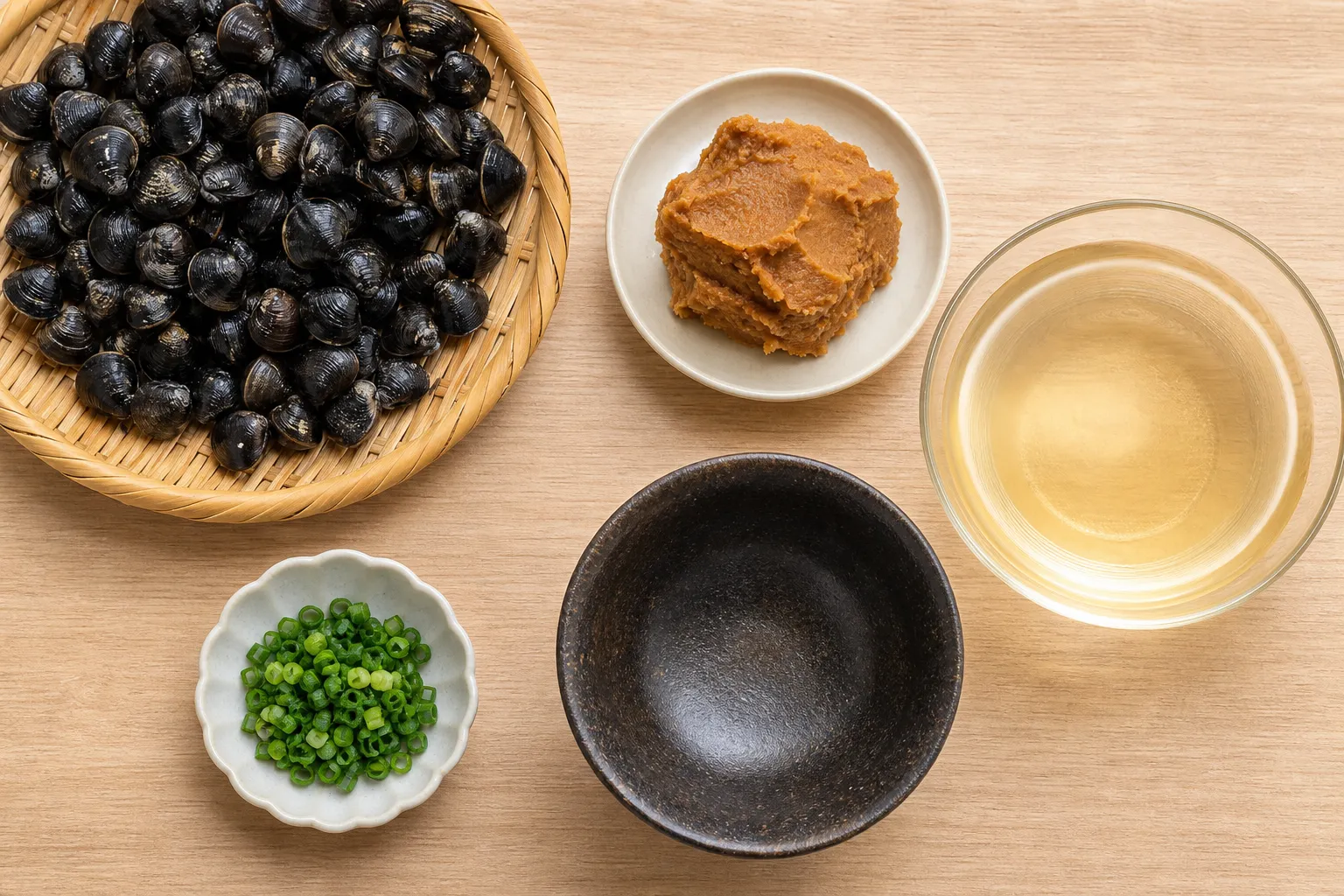
- Live shijimi are soaked in lightly salted water so they spit out any sand and grit — the crucial, non-skippable step
- The rinsed clams go into a pot with water or a light dashi and are brought slowly up to a simmer
- As the clams heat, their shells open and their savory juices flood the broth — the scum that rises is skimmed off
- Miso paste is stirred in near the end and never boiled hard, so the aroma stays bright
- It's poured into a bowl, clams and all, and finished with a scatter of chopped green onion
Before you go — how to actually eat it
Your questions, answered honestly
"Is this the same as clam miso soup with asari?" — Related, but no. Asari clams are bigger, and the broth they make is milder and rounder. Shijimi are tiny and dark, and they make a deeper, more mineral, more concentrated broth. Locals will tell you it's not the same soup, and after a side-by-side, you'll agree.
"Do I actually eat the little clams?" — Yes, but manage your expectations — the meat is small. Pick up a shell, suck or scrape the morsel out, and set the empty shell on the lid or a side dish. The real reward is the broth; the clams are the savory little proof of where it came from.
"What do I do with all the shells?" — Whatever's handy and tidy — most people pile the empties on the bowl's lid, a small plate, or the edge of the tray. There's no elegant technique. Just don't drop them back in the soup.
"Is it really a hangover cure?" — It has a real reputation for it in Japan, tied to the ornithine the clams are rich in. I won't oversell the science, but a hot bowl of savory broth on a rough morning helps regardless of chemistry. Order it and find out.
What the staff will ask you
| You'll hear | Romaji | Meaning | Just say |
|---|---|---|---|
| 味噌汁はしじみになさいますか? | Misoshiru wa shijimi ni nasaimasu ka? | "Would you like shijimi for the miso soup?" | Shijimi de onegaishimasu (shijimi, please) |
| ご飯もおつけしますか? | Gohan mo otsuke shimasu ka? | "Shall I add rice as well?" | Onegaishimasu (yes, please) |
| 定食になさいますか? | Teishoku ni nasaimasu ka? | "Would you like it as a set meal?" | Teishoku de onegaishimasu (the set meal, please) |
| おかわりはいかがですか? | Okawari wa ikaga desu ka? | "Would you like a refill?" | Daijōbu desu (I'm fine, thanks) |
To order, just say "Shijimi-jiru o kudasai" (しじみ汁ください) — "Shijimi miso soup, please."
Where to eat it
- Around Lake Shinji, Matsue — inns (ryokan) and set-meal restaurants near the lake in Matsue serve shijimi-jiru as a matter of course, often at breakfast.
- Matsue and Izumo, Shimane — local eateries and hotels across the region put shijimi soup on set menus; it's the standard morning soup here.
- Depachika and antenna shops — Shimane's famous Lake Shinji shijimi are sold packaged (fresh and frozen) at department-store food halls and regional shops, so you can make it yourself.
Which places serve it and when — breakfast versus all-day — varies by establishment, and inn breakfasts may need a reservation, so check current details before you go.
Soul Score
Local Roots5/5
First-Timer Friendly4/5
Adventure Level3/5
Comfort Level5/5
Travel Worthy3/5
These scores are one obsessed eater's gut feeling — not a verdict. A low number isn't a bad mark, just a different kind of adventure.
Know someone planning Japan?
← All Articles
Local Food · Lake Shinji, Shimane
Still hungry?
Eat more from Shimane
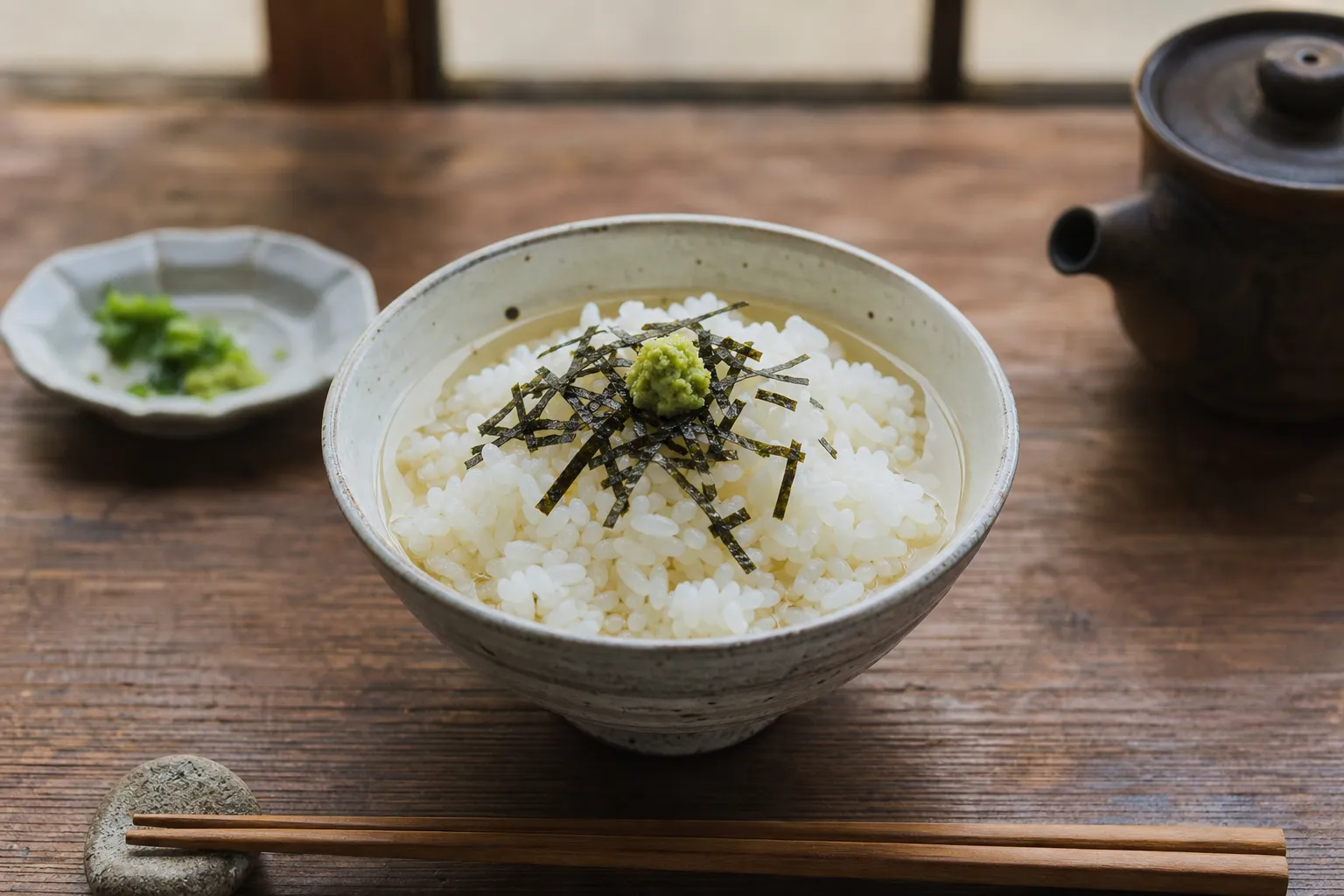
Local FoodTsuwano, Shimane
Uzumemeshi (うずめ飯)
It looks like a sad little bowl of plain rice with a dab of wasabi — and then your chopsticks hit the treasure buried underneath. A humble mountain town's edible magic trick, and one of Japan's three great rice dishes.
July 12, 2026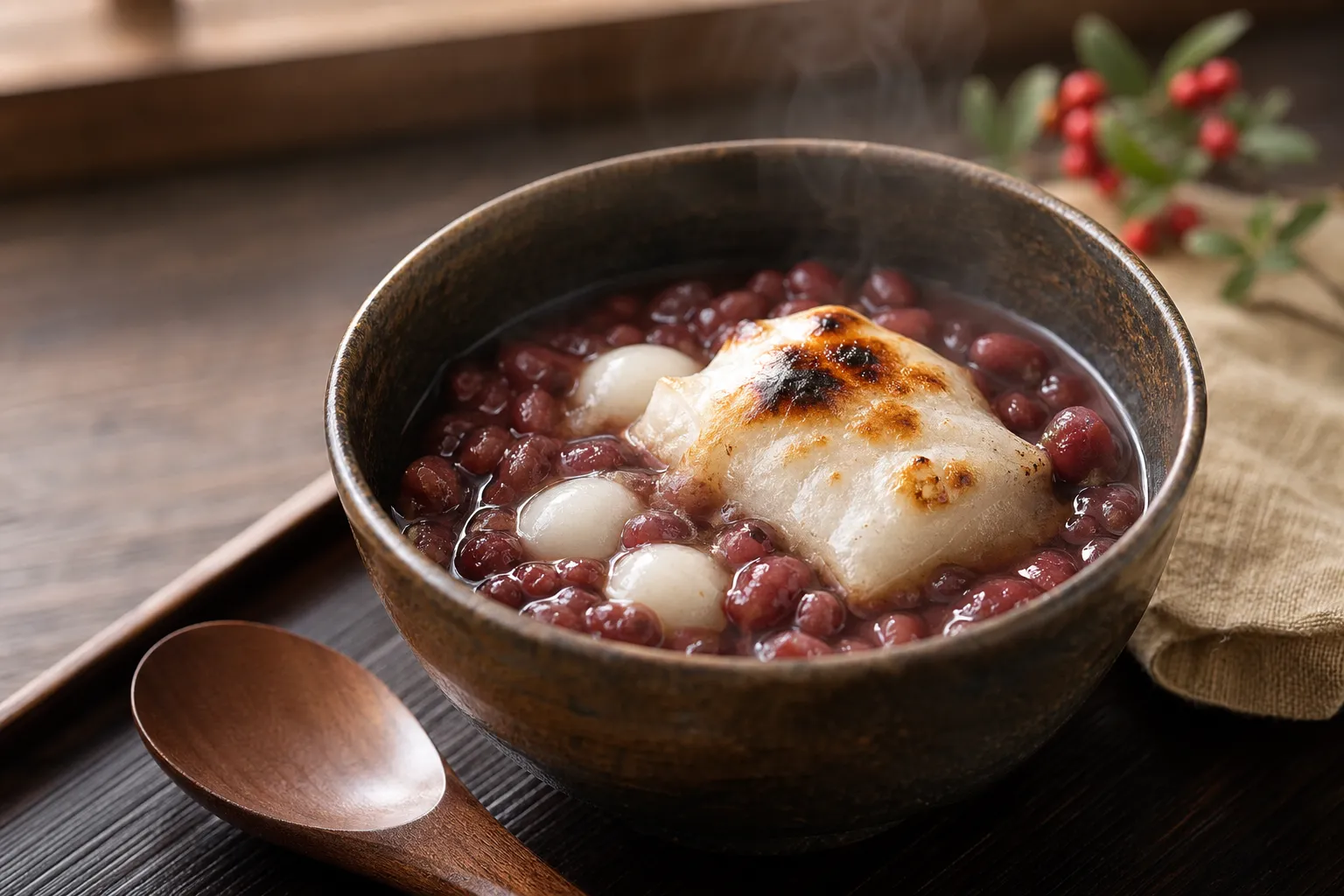
Local FoodIzumo, Shimane
Izumo Zenzai (出雲ぜんざい)
Whole red beans, still holding their shape, in a warm sweet broth with a soft chewy mochi hiding at the bottom — and the town says this is where the whole dish was born.
July 5, 2026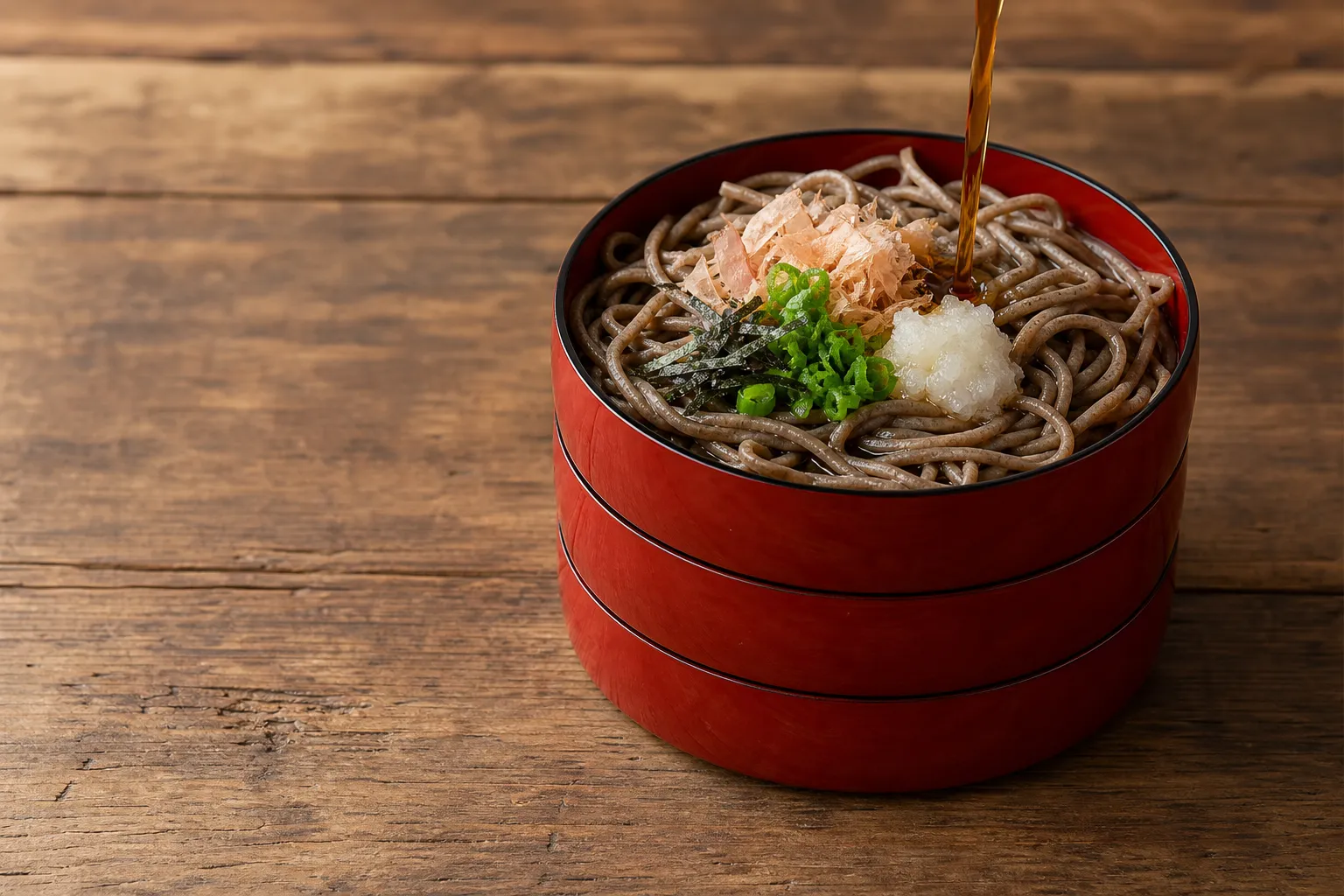
Local FoodIzumo, Shimane
Izumo Soba (出雲そば)
Three little lacquered tiers of dark, husk-and-all buckwheat, eaten in the shadow of Japan's oldest great shrine. You pour the broth straight on, stack the dishes down, and taste soba the way the gods' country has done it for centuries.
June 27, 2026