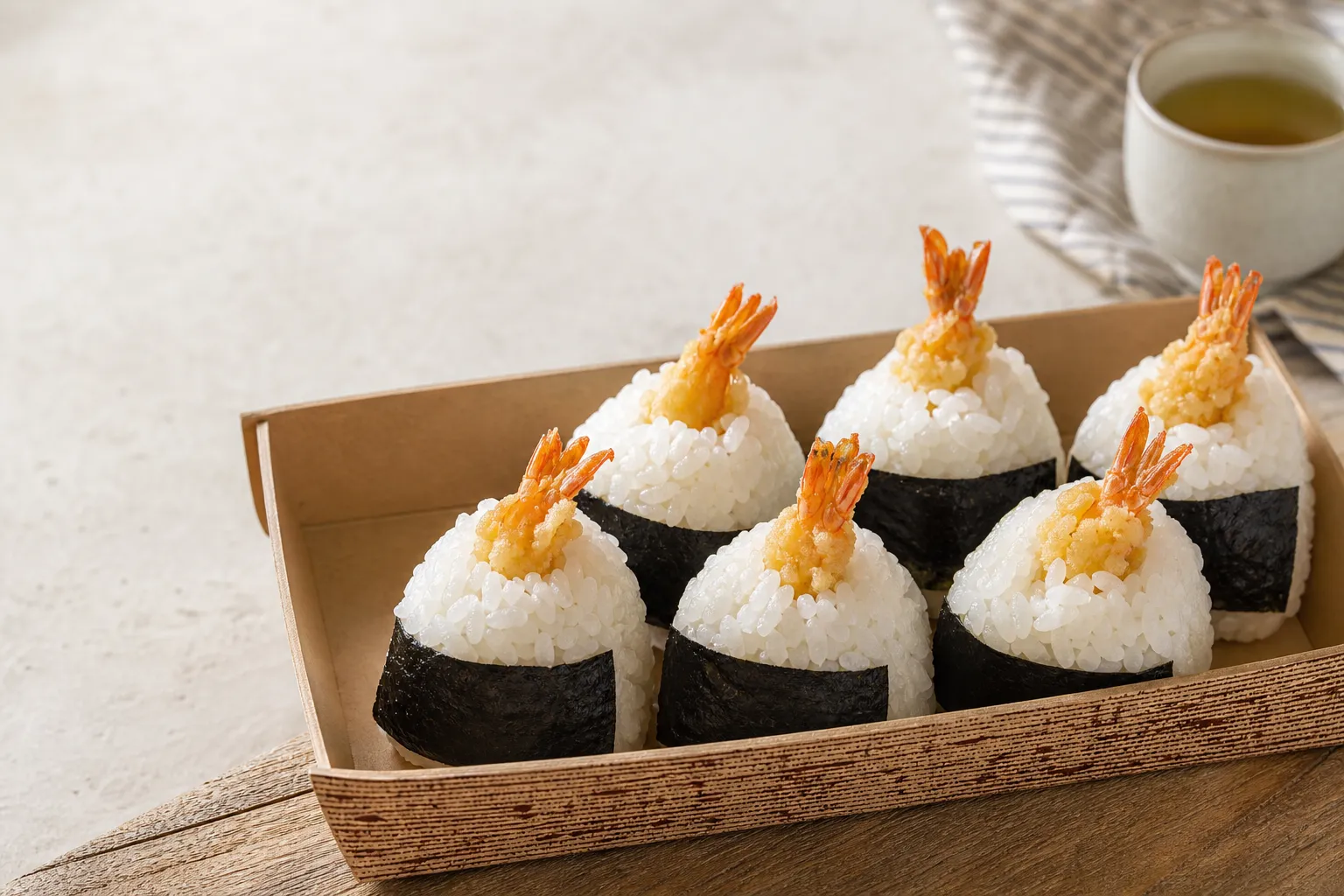
One bite in and there it was: a little fried shrimp tail poking out of a rice ball the size of an egg, staring back at me like it had somewhere to be. I laughed out loud, standing on a Nagoya train platform with a paper box balanced on one hand. Then I ate the second one before I'd finished laughing. Then the third. The box did not last the walk to my seat.
Share this dish


Little rice balls with a crisp shrimp tempura tail poking out of each one — Nagoya's portable genius, sold by the boxful and gone before your train pulls out of the station.
🍜 Planning a food trip to Aichi?Add this dish to my Food Trip →
 Add this dish to my Food Trip →
These are tenmusu (天むす): small salted onigiri, each one built around a single piece of crisp shrimp tempura tucked inside so the tail sticks out, wrapped partway in a strip of nori. Bite-sized, portable, sold in boxes of several. Not a tempura platter, not a rice bowl — just soft salted rice, one crunchy shrimp, and the good sense to make it small enough that you keep reaching for another.
From a Mie kitchen to Nagoya fame
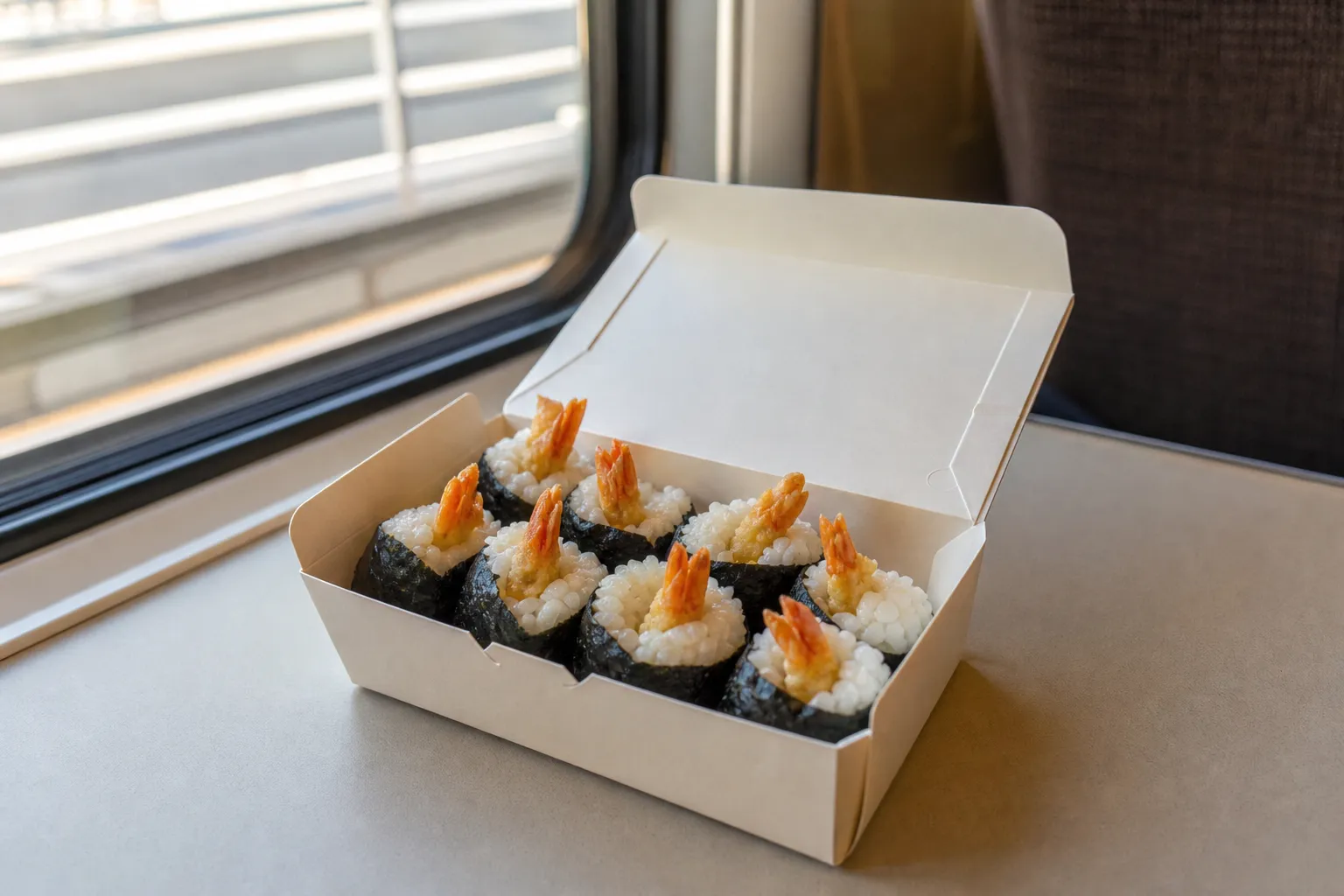
Here's the twist that Nagoya doesn't always advertise: tenmusu wasn't born in Nagoya. It started at a shop over in Tsu, in Mie Prefecture, where someone had the very good idea of folding a piece of leftover shrimp tempura into an onigiri. A snack for busy hands. That's it. That's the whole invention, and it's perfect.
But Nagoya adopted it, ran with it, and turned it into one of the flagship Nagoya meshi you're supposed to try when you pass through. I find this genuinely funny — a city famous for its appetite basically fostering another town's snack until everyone assumed it was theirs. Honestly? Good. Great ideas deserve a bigger stage, and Nagoya put this one on it.
Why one shrimp changes everything
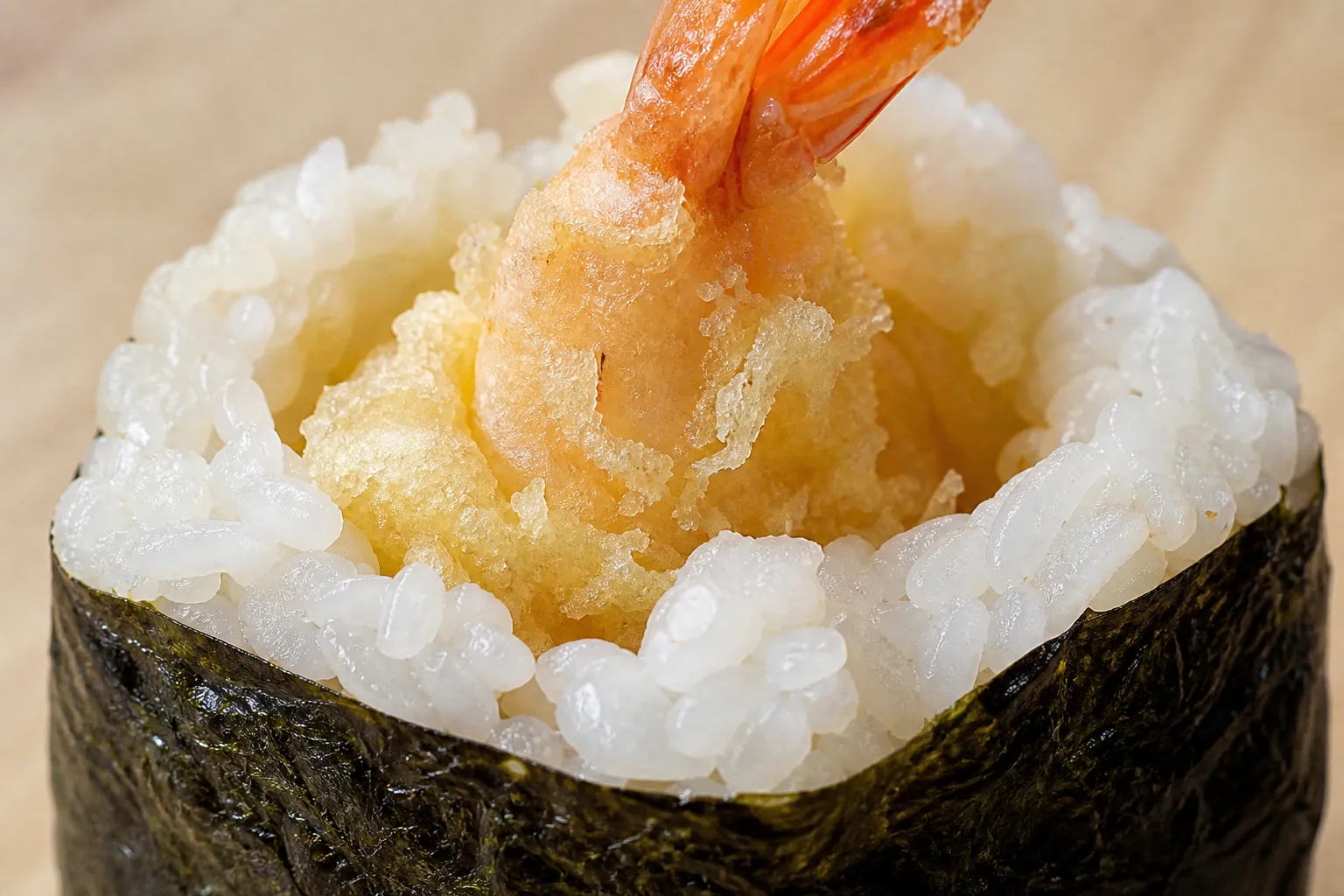
The magic is a texture ambush. Outside: cool, soft, lightly salted rice and a strip of nori that's gone just chewy against it. Inside: a piece of shrimp tempura that somehow held onto its crunch. Soft, soft, soft — then crisp, then sweet snap of shrimp. In a bite-sized package you barely had to think about.
And they're small on purpose. That's the part I keep coming back to. A big tempura shrimp on a plate is a commitment; a tenmusu is a decision you can make five times in a row. It's portable, it's tidy, the tail gives your fingers a handle, and it was clearly engineered by someone who understood that the best snacks are the ones you can eat on a moving train without shame. I ate them on a bench, on a platform, and once walking. No regrets, only crumbs.
How it's made
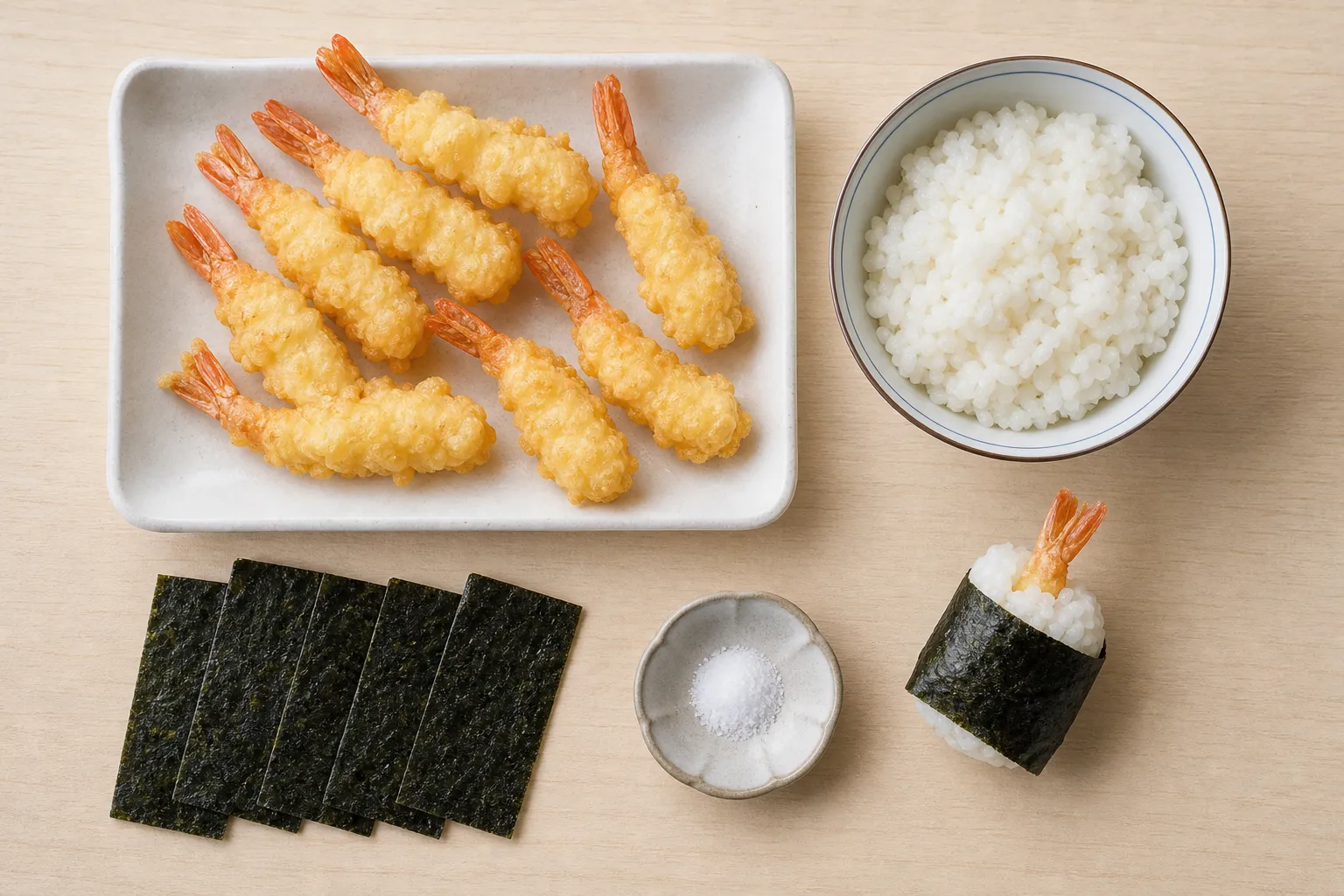
- Fry small shrimp into light, crisp tempura and let them drain
- Season warm rice with a little salt
- Take a small handful of rice — smaller than a normal onigiri
- Press a piece of shrimp tempura into the center so the tail pokes out one end
- Shape the rice around it into a compact ball or gentle triangle
- Wrap a strip of nori partway around the base, leaving the tail on show
Before you go — for the snack-curious
Your questions, answered honestly
"Is this just a tempura meal?" — No, and this trips people up. Tenmusu are rice balls with one shrimp tempura hidden inside each — a snack or bento, not a hot plate of fried food. Come for a portable bite, not a sit-down tempura dinner.
"How many do I get?" — They're usually sold in sets of several in a little box. One is a tease; a box of a few is a proper snack or light lunch. Buy the box.
"Are they served hot?" — Usually room temperature, made to travel. The shrimp keeps a surprising amount of crunch. This is a feature, not a compromise — it's designed to eat on the go.
"Is it spicy?" — Not at all. It's salty-savory: soft salted rice, sweet crisp shrimp, a little nori. Gentle, comforting, easy for a first-timer.
What the staff will ask you
| You'll hear | Romaji | Meaning | Just say |
|---|---|---|---|
| 何個入りにしますか? | Nan-ko iri ni shimasu ka? | "How many in the box?" | San-ko de (three) / Go-ko de (five) |
| お召し上がりですか、お持ち帰りですか? | O-meshiagari desu ka, o-mochikaeri desu ka? | "Eat in or take out?" | Mochikaeri de (to go) |
| 温めますか? | Atatamemasu ka? | "Shall I warm it?" | Sono mama de (as is) |
To order, just say "Tenmusu kudasai" (天むすください) — "Tenmusu, please."
Where to eat it
- Nagoya Station — the easiest catch. Tenmusu are a classic station and travel snack, so look for them at the station's food shops and bento counters as you pass through.
- Department-store basement food halls (depachika) — Nagoya's big department stores keep prepared-food floors downstairs where boxed tenmusu are a staple. Great for grabbing a set to eat later.
- Tsu, in Mie Prefecture — the birthplace, if you want to eat it where the idea started. Worth a nod for the pilgrims.
- Check before you go — shops, counters, and their hours change, and popular sellers can sell out of the day's tenmusu; grab yours earlier rather than later.
Soul Score
Local Roots4/5
First-Timer Friendly5/5
Adventure Level3/5
Comfort Level4/5
Travel Worthy3/5
These scores are one obsessed eater's gut feeling — not a verdict. A low number isn't a bad mark, just a different kind of adventure.
Planning what to eat in Nagoya?🍤 Nagoya Food Guide: What to Eat, Where to Start, and How to Order →
Know someone planning Japan?
← All Articles
Local Food · Nagoya, Aichi
Still hungry?
Eat more from Aichi
Sweets & SnacksNagoya, Aichi
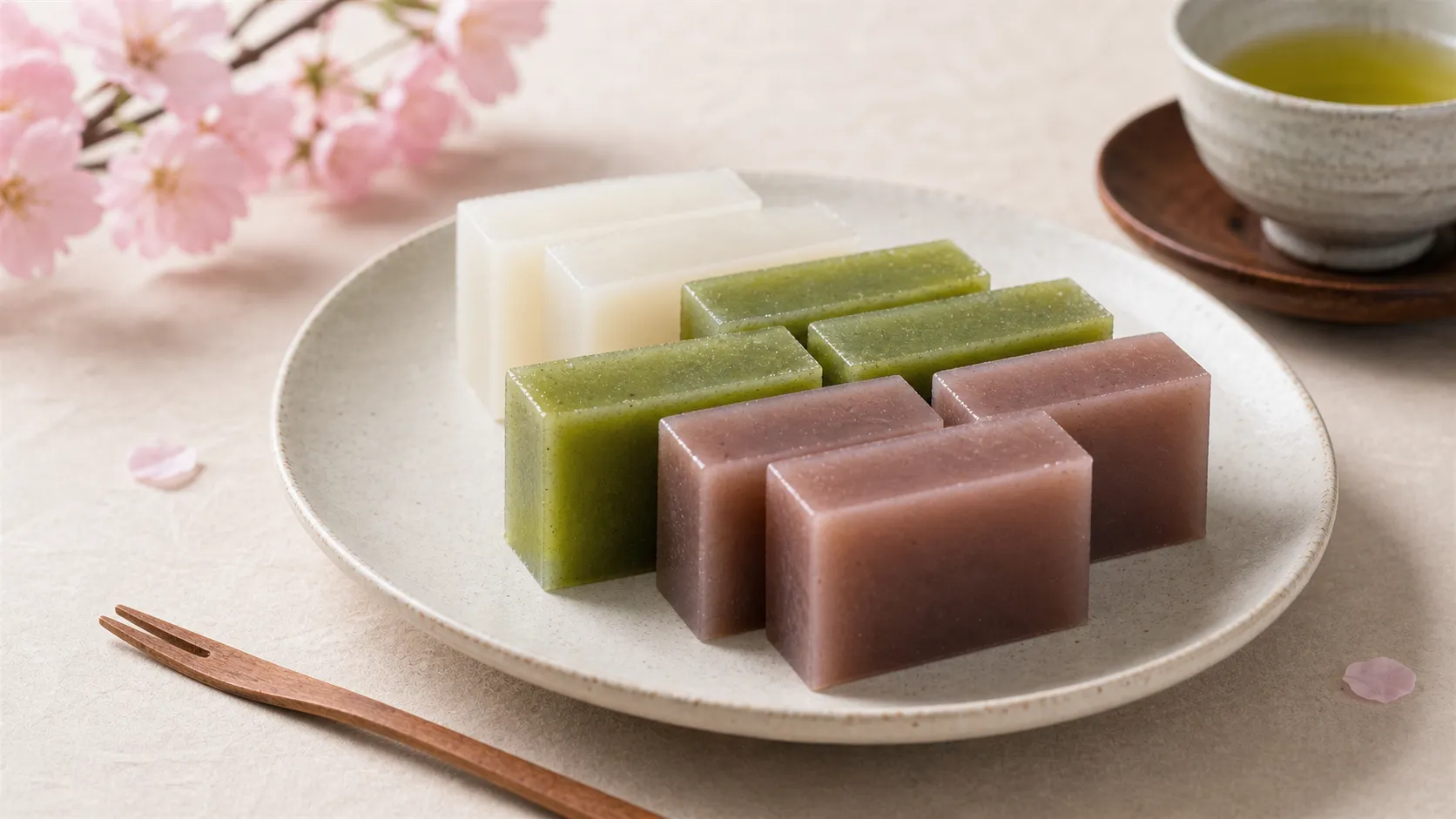
Uiro (ういろう)
A steamed cake of rice flour and sugar that's somehow both chewy and clean, mild and moreish — Nagoya's understated, faintly wobbly sweet that grows on you until you can't stop buying it at the station.
July 10, 2026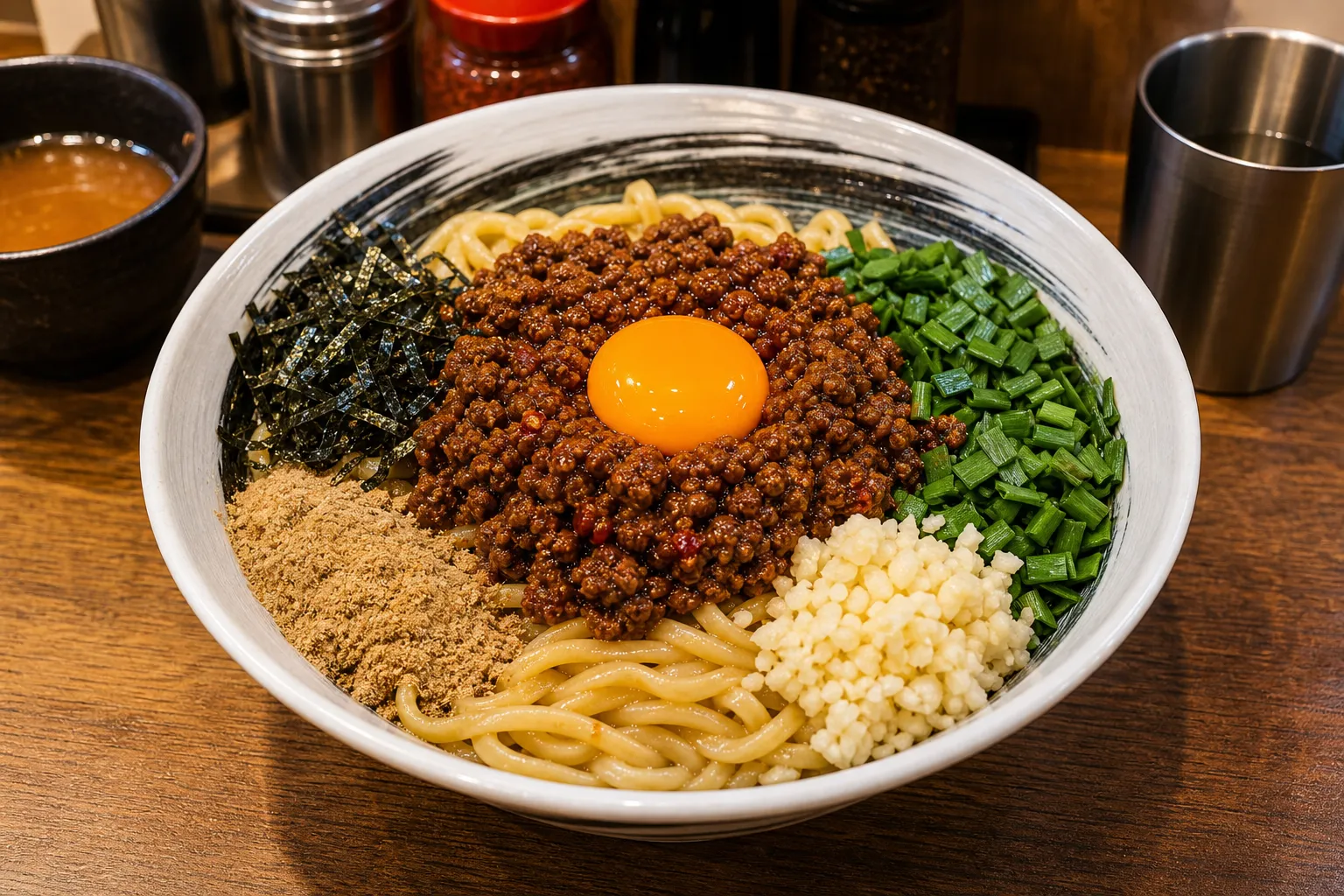
Local FoodNagoya
Taiwan Mazesoba (台湾まぜそば)
Break the egg yolk, plunge in, and mix like you're furious — this brothless Nagoya bomb of spicy pork, raw garlic and chives doesn't reveal itself until it's a chaotic, glorious mess.
July 9, 2026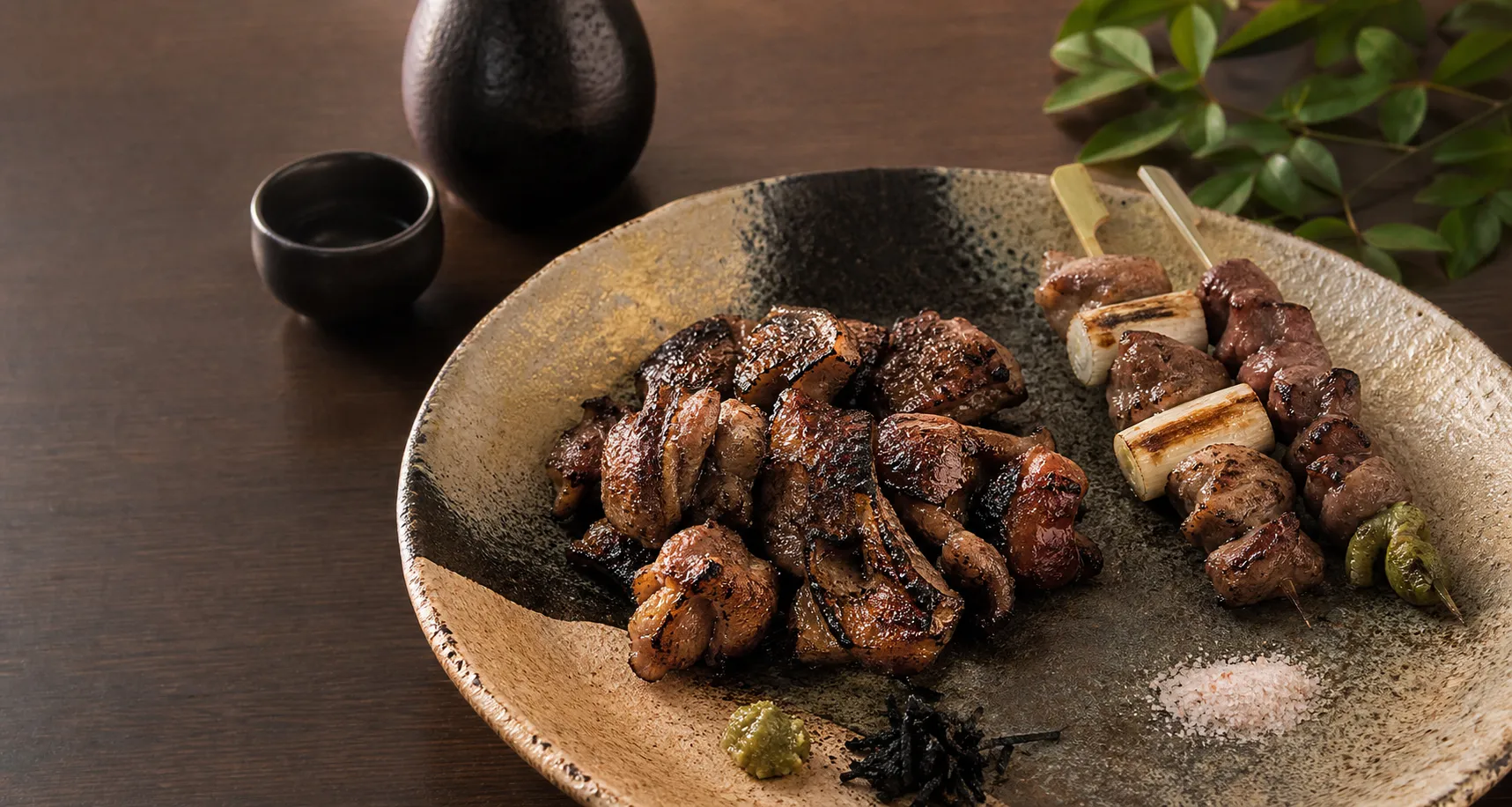
Local FoodNagoya, Aichi
Nagoya Cochin (名古屋コーチン)
Everyone warns you about the chewiness like it's a flaw — but that first spring-back bite of charcoal-grilled thigh is exactly the point, and I get it now.
July 5, 2026