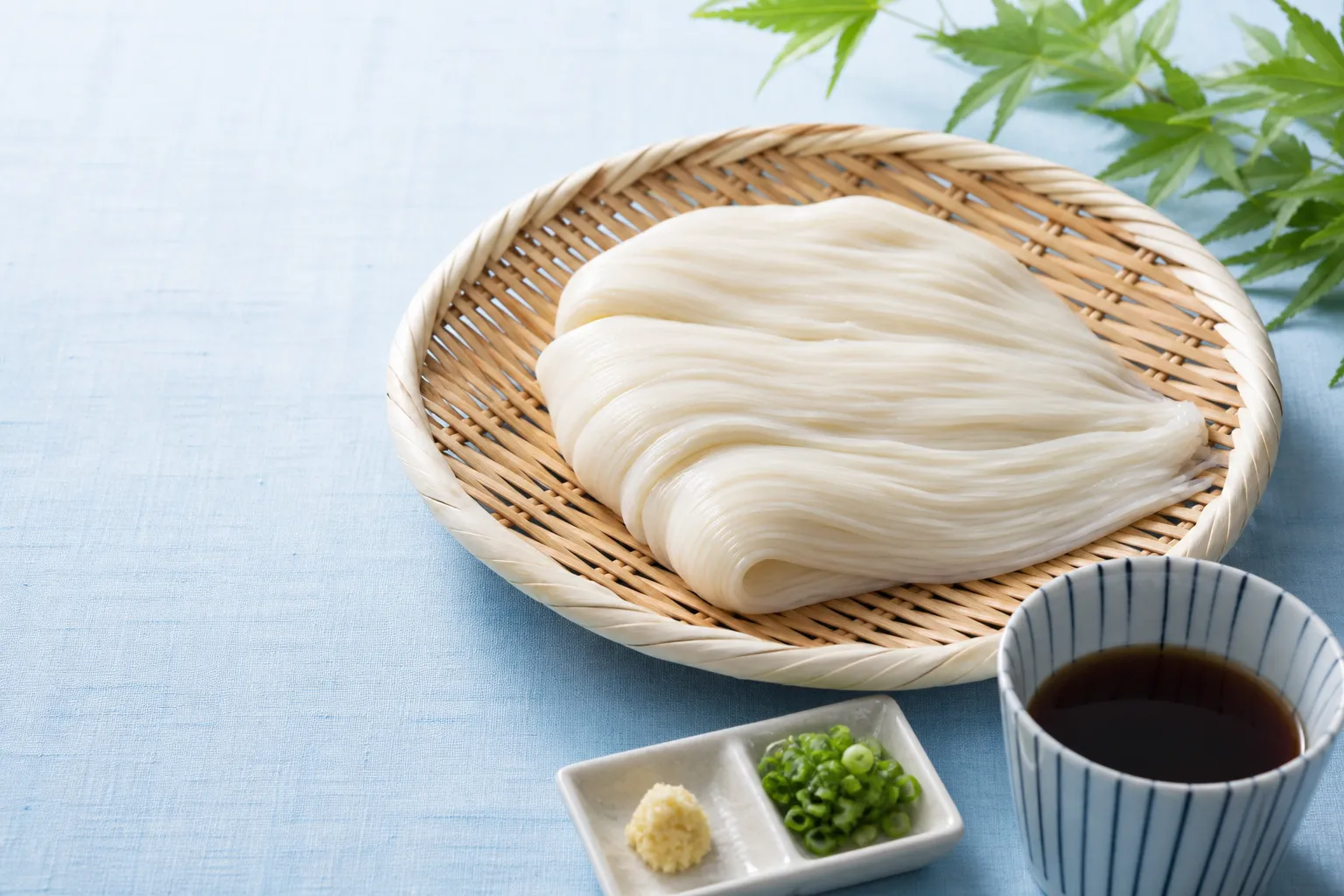
I lifted the first bundle out of the dipping cup and the noodles came up gleaming — flat, pale, almost translucent — and then they just... slid. Down. Gone before I'd properly started chewing. I sat there with my chopsticks in the air thinking, wait, where did you go. Then I went back for more, faster this time.
Share this dish


Udon so thin and silky it slips down before you've decided to chew. Three hundred years of hand-pulling, served cold with a dark dipping sauce. The most elegant noodle in Japan.
🍜 Planning a food trip to Akita?Add this dish to my Food Trip →
 Add this dish to my Food Trip →
This is inaniwa udon, and if your idea of udon is the thick, chewy, fist-fighting kind, recalibrate. Inaniwa is the opposite end of the same family: thin, flat, hand-pulled noodles with a glassy sheen and a slip-slide smoothness that has made it, for three centuries, one of Japan's three great udon — and arguably the most refined noodle in the country.
A 350-year-old secret from a snowbound village
Inaniwa udon comes from the village of Inaniwa in Yuzawa, southern Akita, and the craft dates to the 1600s. For most of that history it was closed — the technique was a family secret, the production tiny, the noodles a tribute good fine enough to send to the Akita lords. For generations only one household held the full method. That it ever reached the rest of us feels like a small miracle.
The making is brutal, slow handwork. The dough is rolled, twisted, and stretched by hand over and over, rested between each pull, so the gluten lines up and air gets worked in. It can take days. The result is a noodle that's flat rather than round, slightly hollow inside, dried hard and pale. I think about the patience in that and I genuinely can't be casual about it — every silky strand is somebody's afternoon.
Why it feels like that going down
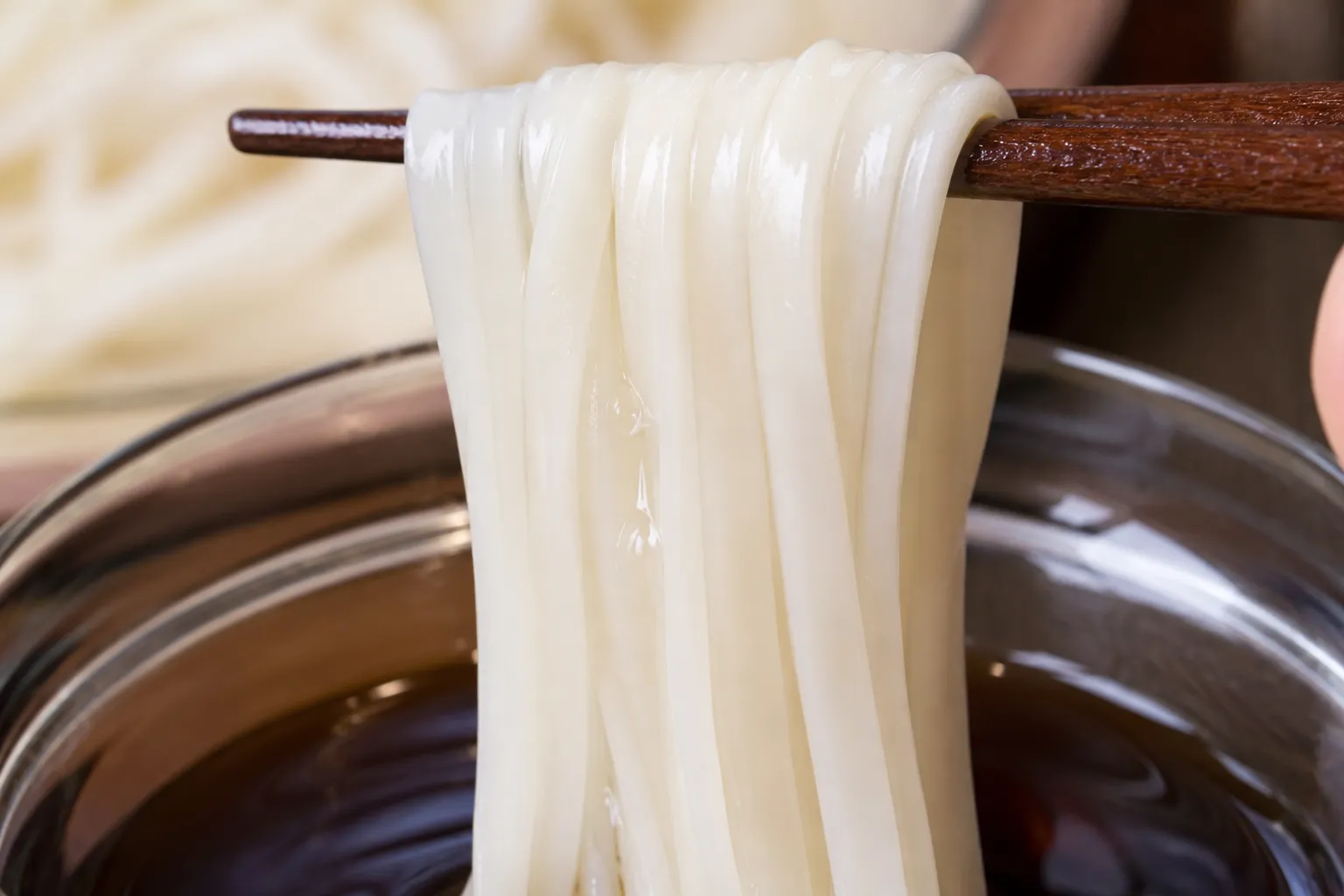
The whole pleasure of inaniwa is nodogoshi — the feel of it sliding down the throat. The noodles are thin and flat with a polished, almost waxy surface that catches the light and refuses to clump. There's just enough chew to know it's there, then it's gone. It's smooth in a way thick udon physically cannot be.
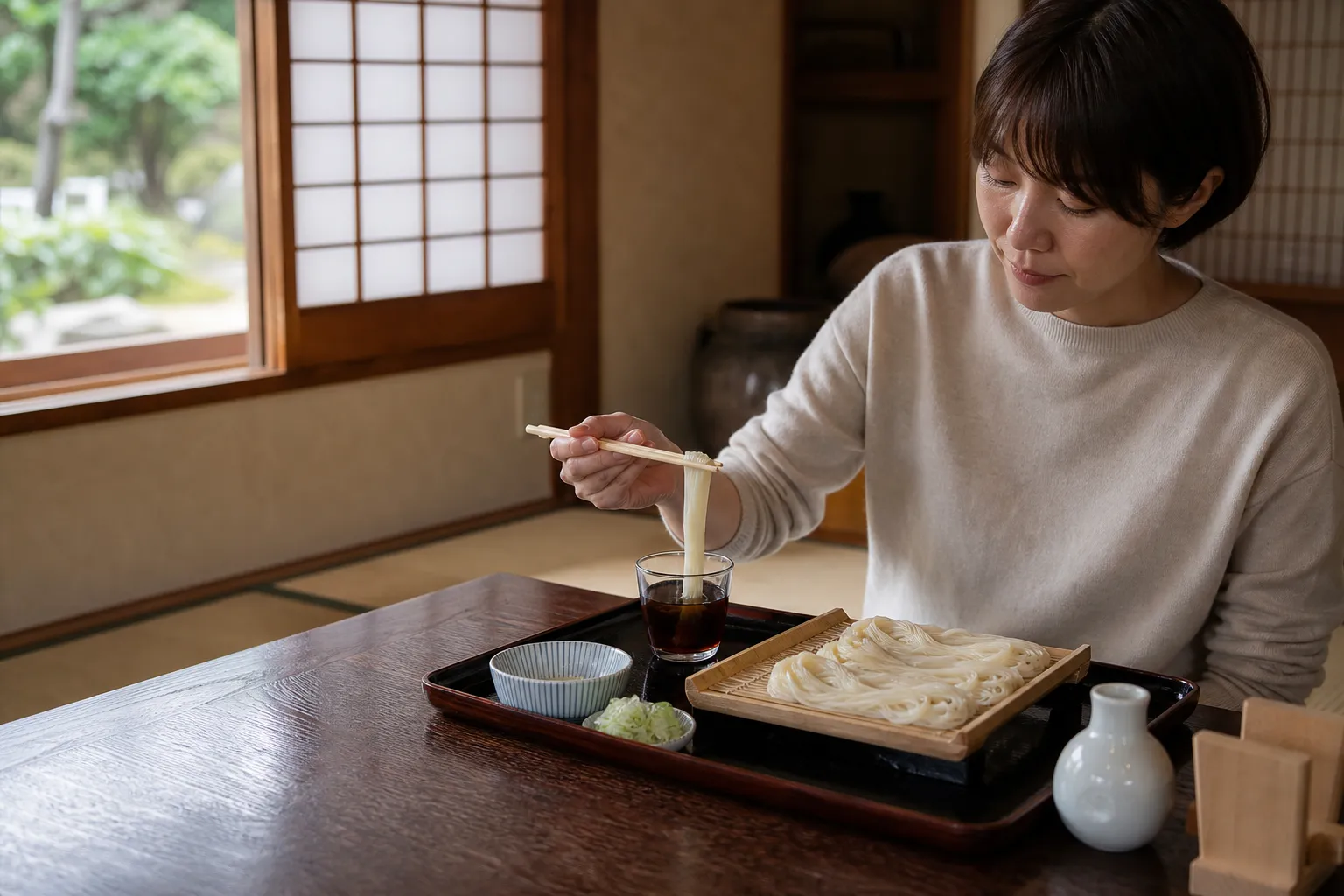
That's why the classic serve is cold, zaru-style: noodles on a bamboo tray, a small cup of dark, slightly sweet dipping tsuyu, a little grated ginger and green onion. Cold keeps the surface tight and slippery. You dunk a small bundle, slurp, repeat, and try to slow down (you will fail). It also comes hot in broth in winter, which is lovely — but cold is where the texture truly shows off. I ate a full tray and immediately understood why Akita is quietly smug about this.
How it's made
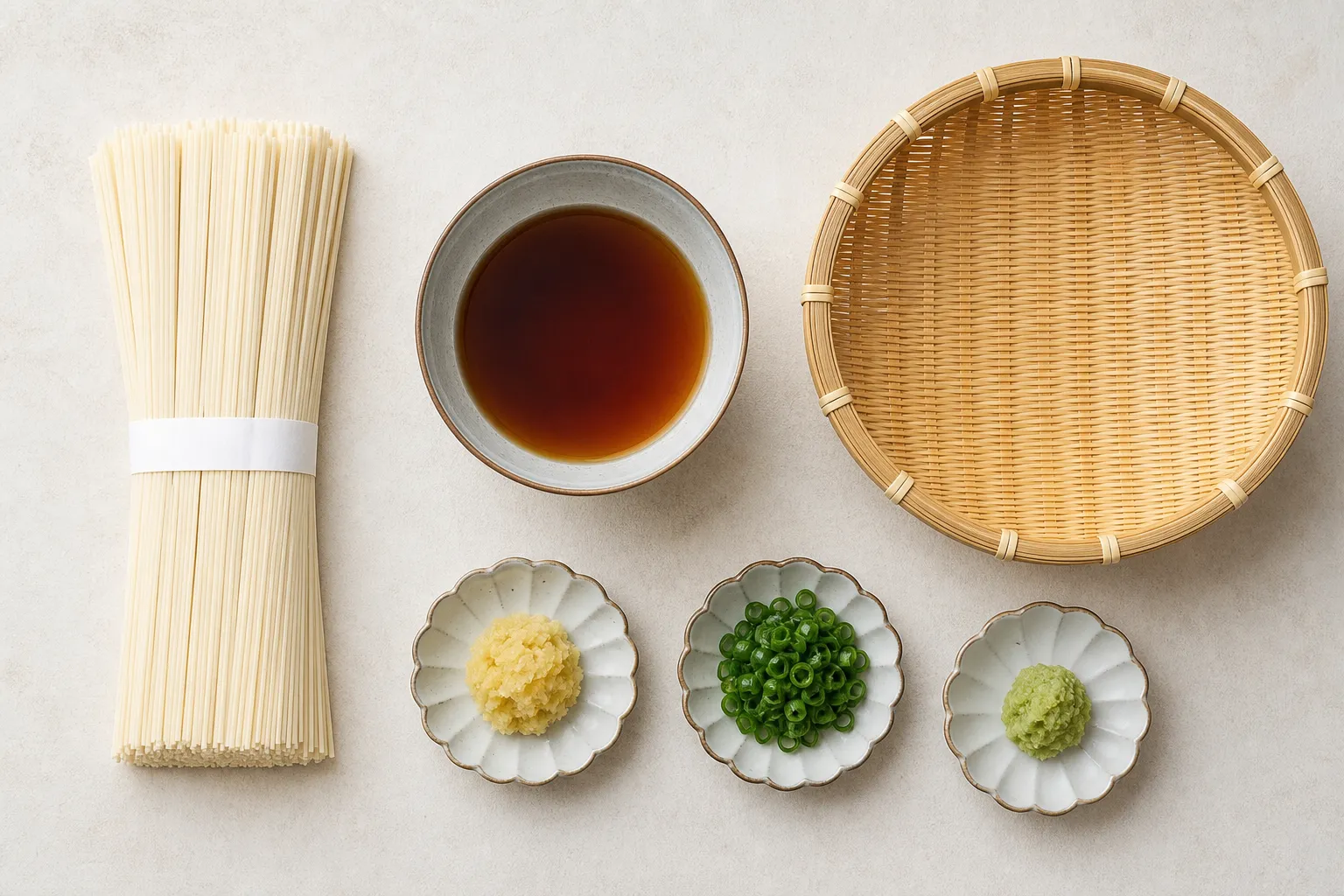
- Mix wheat flour, salt, and water into a dough and rest it
- Roll and twist the dough into ropes, brushing with a little flour, and rest again
- Hand-stretch the ropes repeatedly over multiple stages, resting between each, drawing the noodles thinner and flatter while working air into them
- Hang the stretched noodles to dry slowly until hard and pale
- To serve: boil briefly, then shock in cold water and tighten the surface (for cold zaru style)
- Plate on a bamboo tray with dipping tsuyu, grated ginger, and chopped green onion — or serve hot in a light broth in winter
Before you go — how to eat the elegant one
Your questions, answered honestly
"Hot or cold — which should I get?" — Cold (zaru) first, always, if the weather allows. The slippery texture is the entire point and cold shows it best. Try hot on a second visit or a freezing day.
"Is this just expensive udon?" — It's genuinely different: thinner, flatter, hand-pulled, lighter. It is pricier than everyday udon because the handwork is real. Worth it once, easily.
"How do I eat the cold one without making a mess?" — Lift a small bundle, dip just the bottom half into the tsuyu (don't drown it), and slurp. Slurping is correct and helps. Add ginger and onion to the tsuyu to taste.
"Is it filling?" — Lighter than thick udon — it slips down so easily you'll eat more than you think. Great as a refined lunch; pair with tempura if you want it heartier.
What the staff will ask you
| You'll hear | Romaji | Meaning | Just say |
|---|---|---|---|
| 温かいのと冷たいの、どちらにしますか? | Atatakai no to tsumetai no, dochira ni shimasu ka? | "Hot or cold?" | Tsumetai de (cold) or atatakai de (hot) |
| 天ぷらはお付けしますか? | Tenpura wa otsuke shimasu ka? | "Add tempura?" | Hai, onegaishimasu or kekkō desu (no thanks) |
| 薬味はこちらです | Yakumi wa kochira desu | "Here are the condiments" | Arigatō gozaimasu — thank you |
To order, just say "Inaniwa udon kudasai" (稲庭うどんください) — "Inaniwa udon, please."
Where to eat it
- Yuzawa & the Inaniwa area, Akita — the source; long-running makers and restaurants here serve it at its best, and several historic producers run their own shops. Check current hours.
- Akita City — soba/udon specialists and local-cuisine restaurants near the station regularly offer inaniwa udon, hot and cold.
- Department-store food halls & gift shops nationwide — dried inaniwa udon is a famous Akita souvenir; quality boxed sets travel well if you want to bring the noodle home. Restaurant versions in big-city Akita spots are reliable too.
Soul Score
Local Roots5/5
First-Timer Friendly5/5
Adventure Level3/5
Comfort Level4/5
Travel Worthy4/5
These scores are one obsessed eater's gut feeling — not a verdict. A low number isn't a bad mark, just a different kind of adventure.
Know someone planning Japan?
← All Articles
Local Food · Yuzawa, Akita
Still hungry?
Eat more from Akita
Local FoodAkita
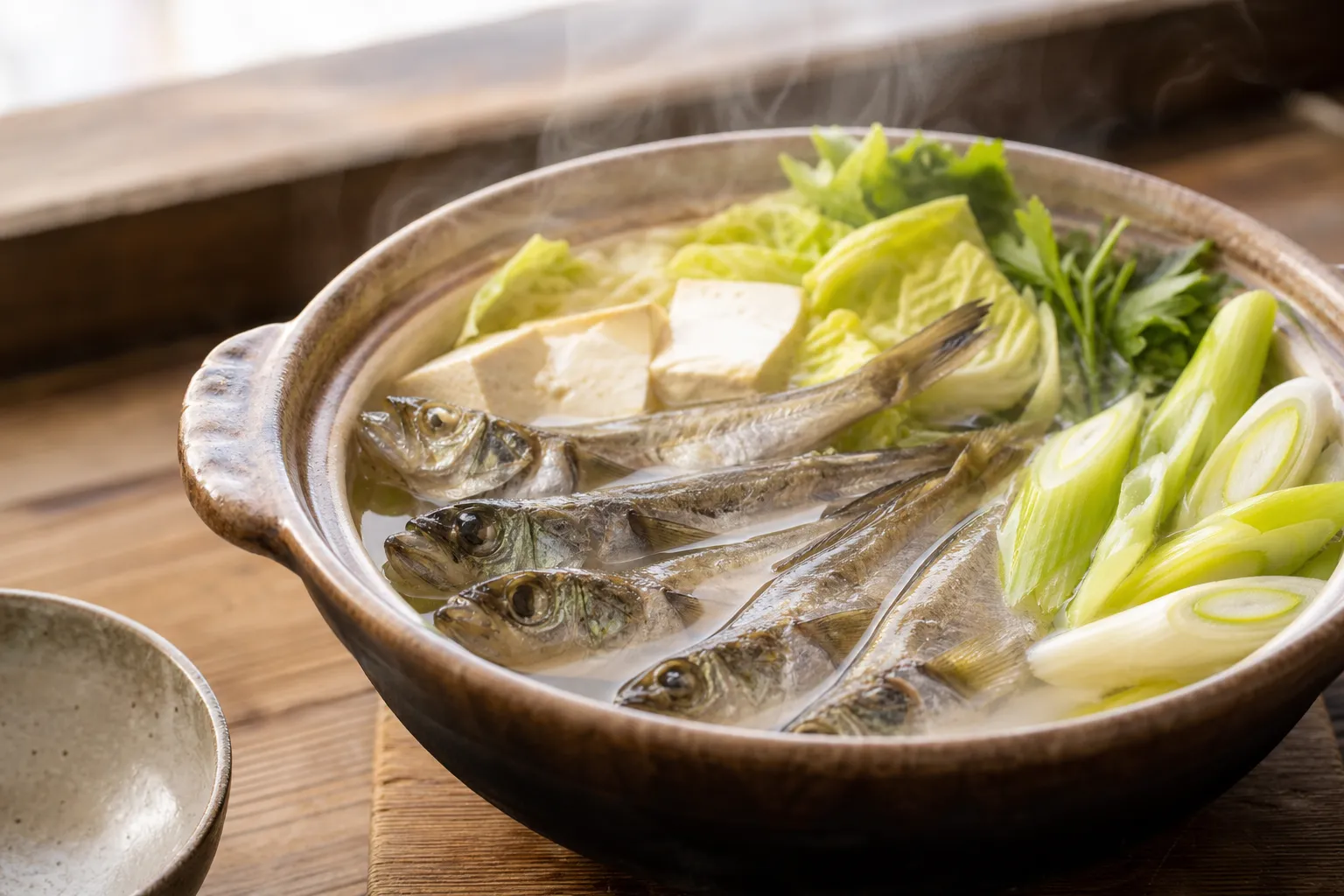
Shottsuru-nabe (しょっつる鍋)
Winter in Akita means a clear pot bubbling with whole silvery fish and one funky, ancient fish sauce doing all the heavy lifting — and it lifts.
July 5, 2026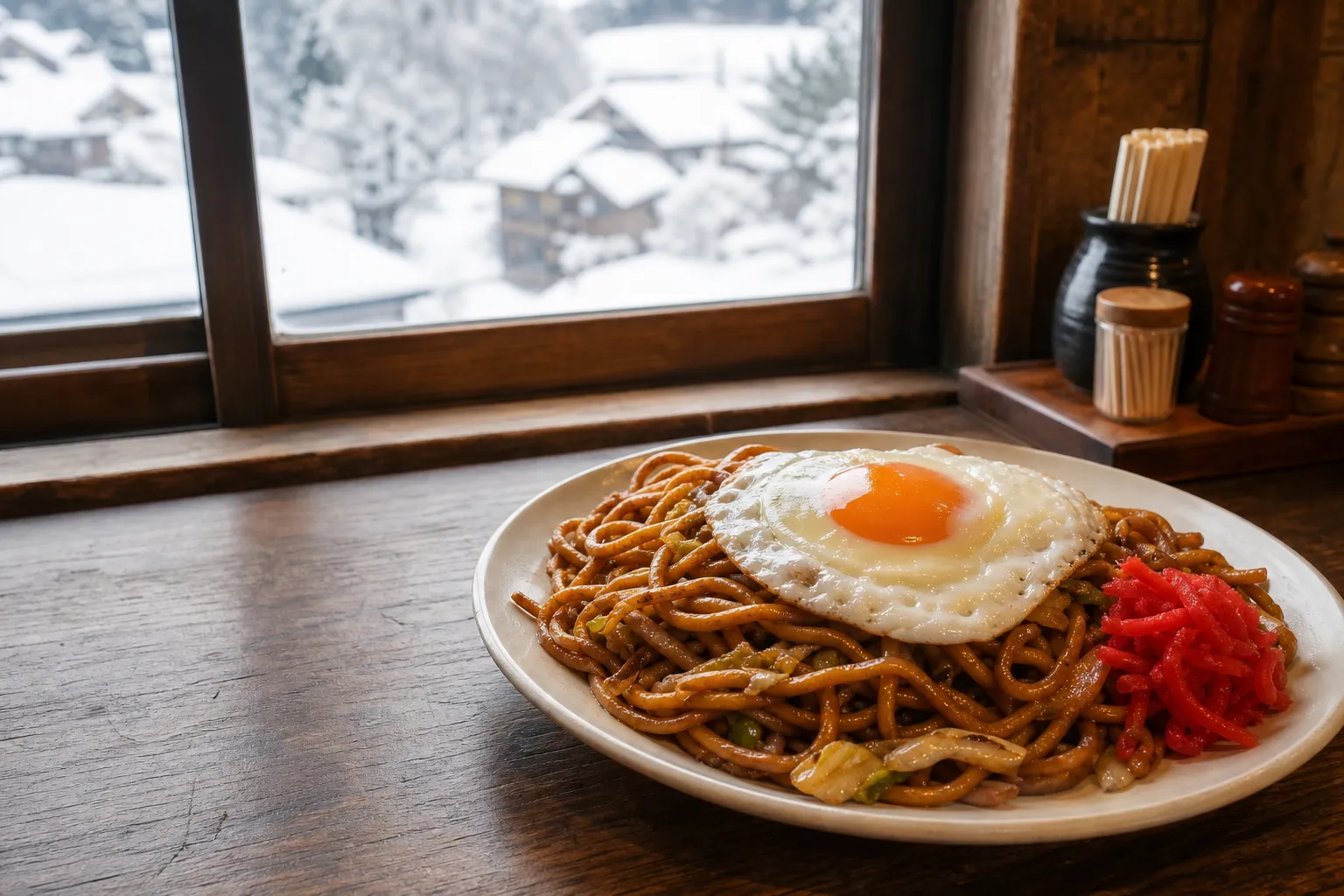
Local FoodYokote, Akita
Yokote Yakisoba (横手やきそば)
A fried egg cracked whole on top of a plate of yakisoba, a pile of red pickles on the side — and suddenly regular yakisoba looks unfinished. Akita's snow country did this one on purpose.
July 5, 2026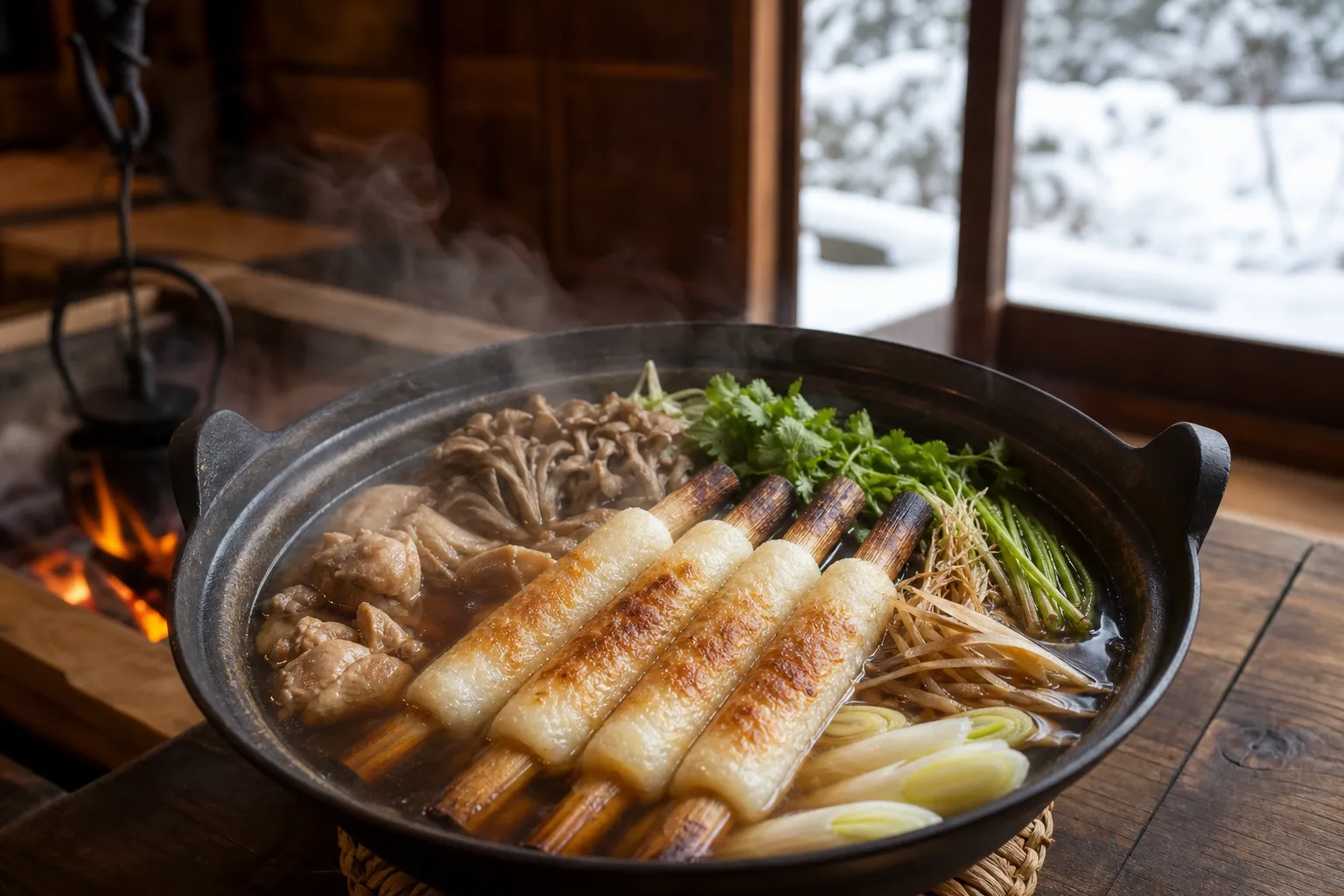
Local FoodAkita, Akita
Kiritanpo (きりたんぽ)
Pounded rice toasted onto cedar sticks, then dropped into a clear chicken hot pot until it drinks the broth. Akita in a bowl, and it tastes like coming in from the snow.
June 27, 2026