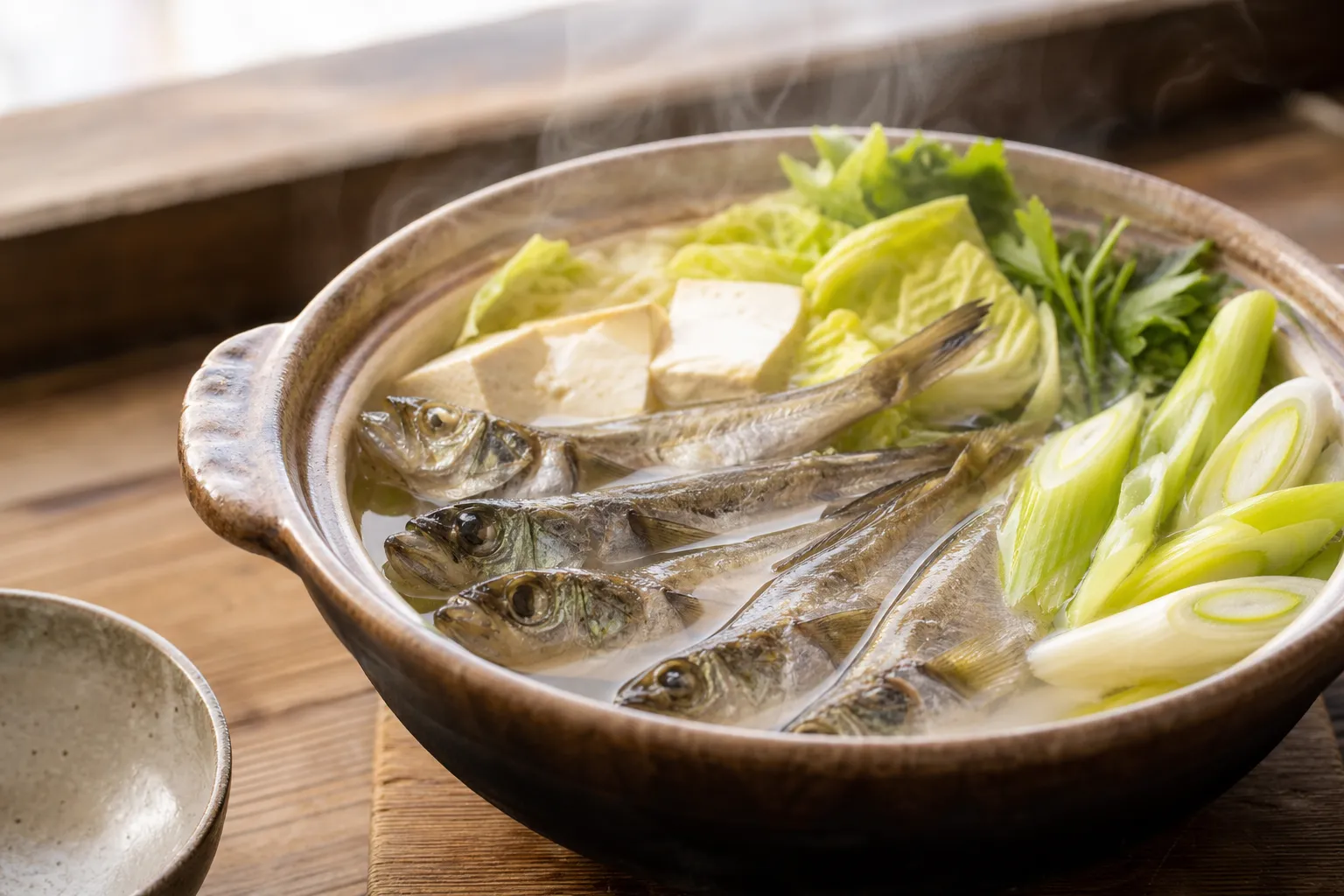
Steam hit me first, then the smell — deep, salty, funky, unmistakably alive — and then the lid came off and there were whole silvery fish nosing up through a broth clear as tea. I hesitated for exactly one spoonful. After that I was in, ladling like I'd been eating this every winter of my life. Some smells promise a lot and deliver little. This one promised a lot and then delivered more.
Share this dish


Winter in Akita means a clear pot bubbling with whole silvery fish and one funky, ancient fish sauce doing all the heavy lifting — and it lifts.
🍜 Planning a food trip to Akita?Add this dish to my Food Trip →
 Add this dish to my Food Trip →
That pot is shottsuru-nabe (しょっつる鍋), and its beating heart is shottsuru — one of Japan's great fermented fish sauces, an ancient Akita condiment made by salting and slowly breaking down fish over long months into a deep, savory, pungent liquid. The star swimming in the broth is hatahata, the sandfish, a small silvery winter fish that Akita is genuinely obsessed with. Add tofu, napa cabbage, green onion, and a clear dashi seasoned with that fish sauce, and you have a hot pot that is pure Akita winter. Not miso-based. Not a generic yosenabe. Not kiritanpo-nabe. This one is built on funk and fish, and it earns every bit of its reputation.
Why Akita bet its winter on one small fish and one bold sauce
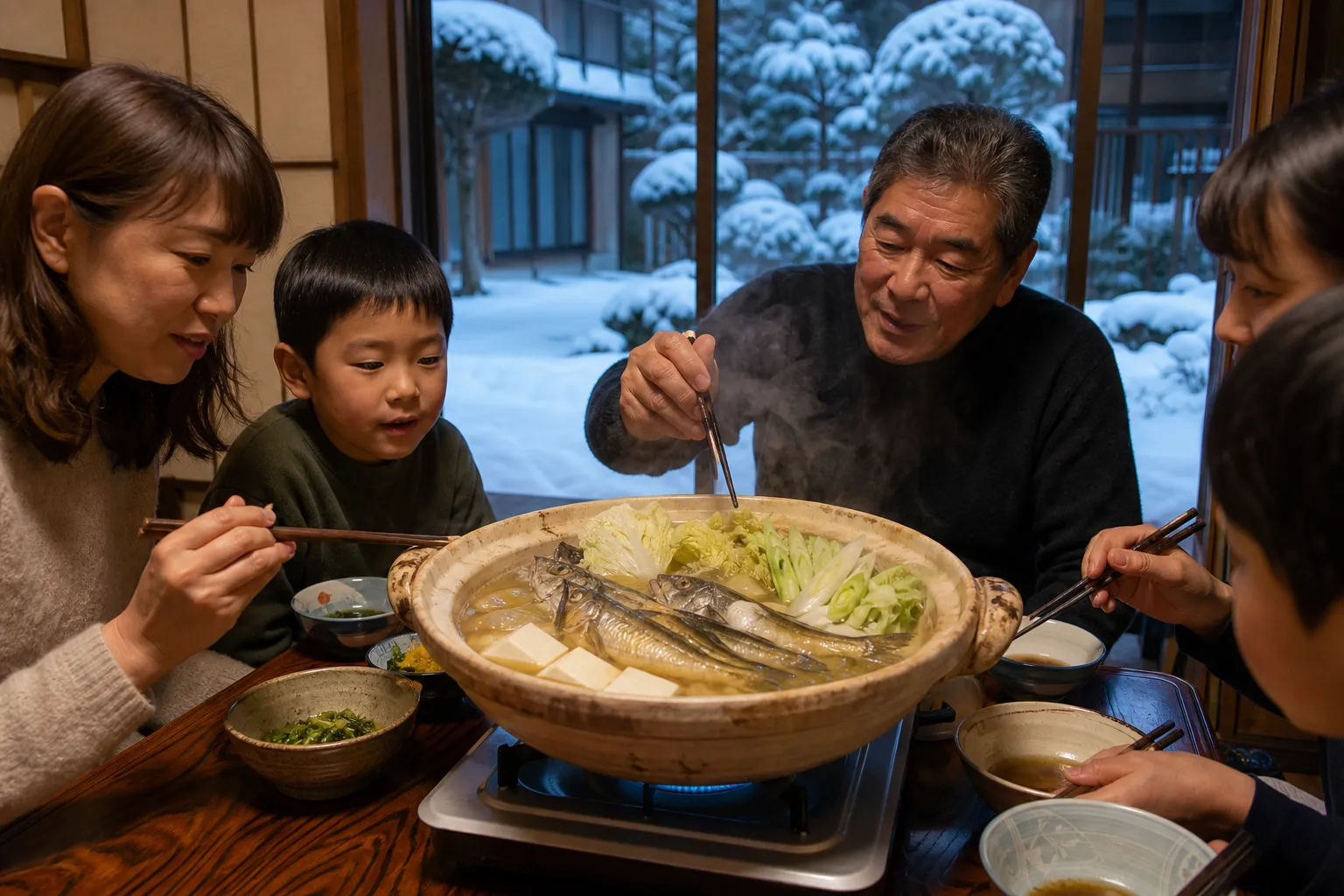
Hatahata arrive off the Akita coast in the cold months, sometimes in enormous shoals, and historically they showed up in numbers that mattered — a genuine seasonal event, a fish the whole region organized its winter around. When you have that much fish and a long, snowbound winter to get through, you learn to preserve, and salting and fermenting the surplus into shottsuru was the answer. The sauce is the fish's own afterlife.
So shottsuru-nabe is a beautifully closed loop: the fish flavors the pot, and the fermented essence of that same fish seasons the broth. Hatahata cooked in the liquefied soul of hatahata. I find that quietly perfect — a dish where the seasoning and the star ingredient are the same creature, separated only by time and salt. It's the taste of a cold coast that learned to waste nothing and make the leftovers sing.
What it actually tastes like
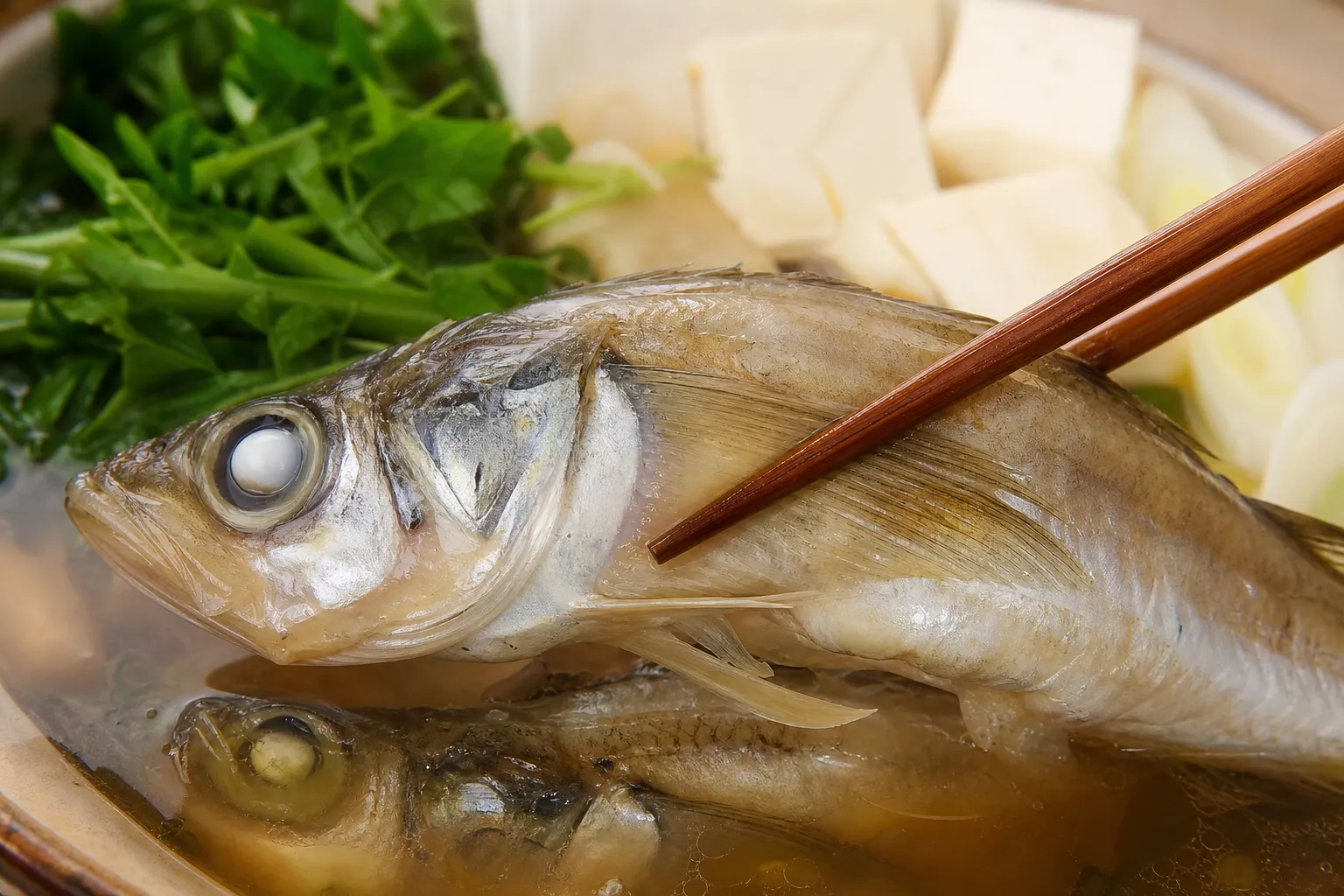
The broth looks innocent — clear, pale, calm. Then it hits, and it's deep in a way clear broths usually aren't: intensely savory, briny, umami-loaded, with that fermented-fish funk running underneath everything. It's bold, yes, but in the pot it's balanced and rounded, tempered by the sweet vegetables and mild tofu. The aroma is stronger than the flavor, which surprises people. Push through the smell.
The hatahata itself is the gentle counterpoint — tender, mild, almost delicate white flesh that slips off the bone, and the females carry buriko, clusters of roe with a famously sticky, crackly, chewy pop that Akita people rhapsodize about. Everything you dunk — cabbage going silky, tofu soaking up broth, green onion turning sweet — comes out coated in that savory depth. By the end I was drinking the broth straight, which locals will tell you is exactly correct. Then you can cook rice or noodles in what's left. Do that. Do not skip that.
How shottsuru-nabe comes together
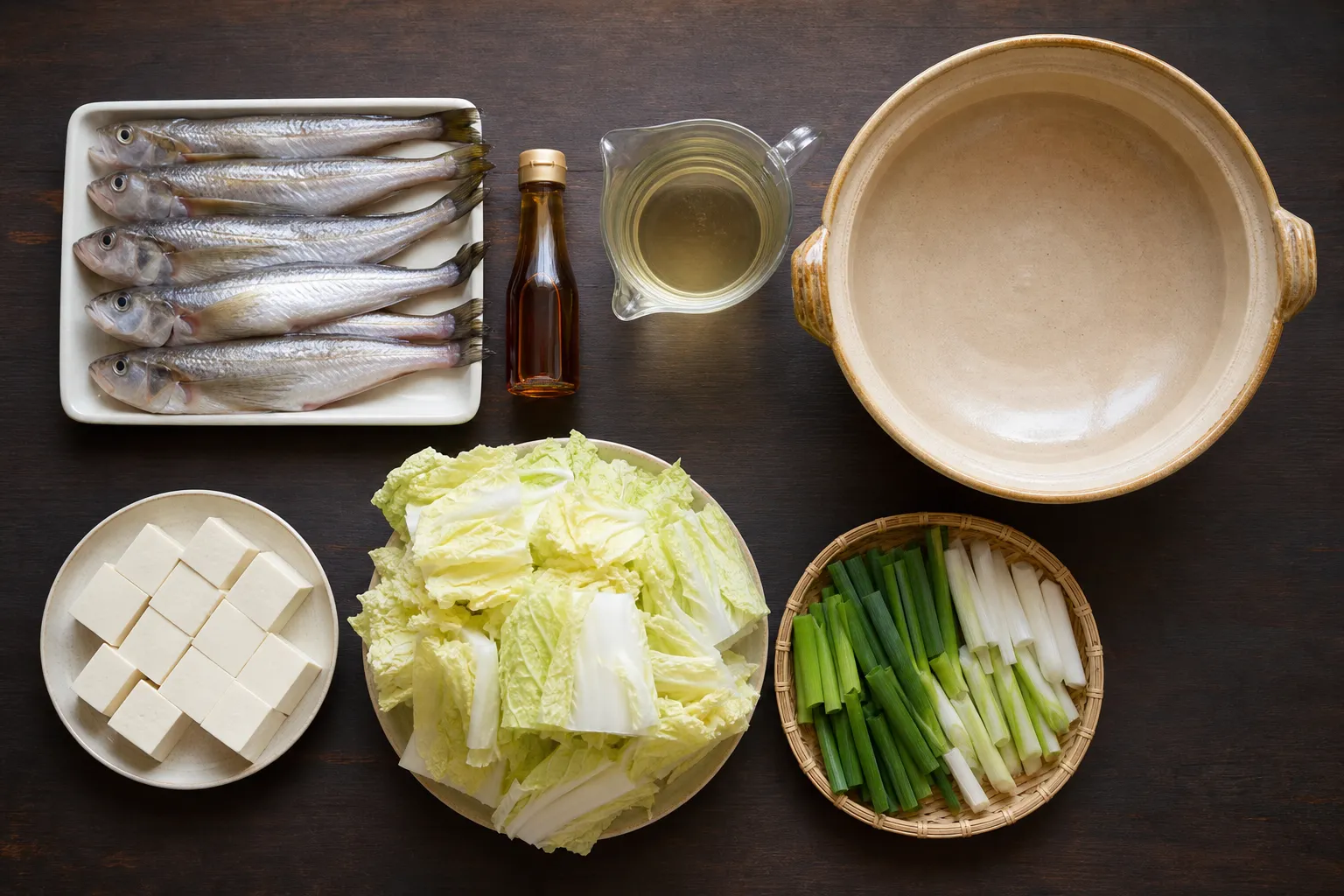
- A clear dashi is prepared, kept light so the fish and sauce can lead
- Shottsuru fish sauce is stirred in as the main seasoning, giving the broth its salty, fermented depth
- Whole hatahata sandfish are added and simmered gently so the flesh stays tender and the roe holds together
- Tofu, napa cabbage, green onion, and other vegetables go in to cook in the seasoned broth
- It's served bubbling in an earthenware pot at the table, and the leftover broth is used to cook rice or noodles at the end (shime)
Before you go — trust the funk
Your questions, answered honestly
"That smell — is something wrong?" — Nothing's wrong; that's the shottsuru, a fermented fish sauce, doing exactly what it's supposed to. The aroma is much bolder than the actual taste of the finished pot. If you've made peace with fish sauce anywhere in Southeast Asian cooking, you're already most of the way there.
"Are there bones? What's the sticky stuff?" — Yes and yes. Hatahata are served whole, so eat slowly and mind the small bones. The sticky, crackly clusters inside the females are buriko, the roe — it's a prized part, not a mistake. Some people love it, some find the texture wild. Try it; that's the local highlight.
"How is this different from kiritanpo-nabe?" — Both are Akita hot pots and easy to confuse. Kiritanpo-nabe features pounded-rice sticks in a chicken-based broth; shottsuru-nabe is about sandfish in a fish-sauce broth. Different star, different soul. If you're in Akita in winter, honestly, eat both.
"Do I really cook rice in the leftover broth?" — You really do, and skipping it is the actual mistake. That shime — rice or noodles simmered in the concentrated, fish-rich broth at the end — is where a lot of the meal's payoff lives. Ask for it. Don't let them clear the pot.
What the staff will ask you
| You'll hear | Romaji | Meaning | Just say |
|---|---|---|---|
| 何名様ですか? | Nan-mei-sama desu ka? | "How many people?" | Futari desu (two people) |
| 〆はご飯になさいますか、麺になさいますか? | Shime wa gohan ni nasaimasu ka, men ni nasaimasu ka? | "For the finish, would you like rice or noodles?" | Gohan de onegaishimasu (rice, please) |
| ぶりこ(卵)は大丈夫ですか? | Buriko (tamago) wa daijōbu desu ka? | "Are you okay with the roe?" | Hai, tabemasu (yes, I'll eat it) |
To order, just say "Shottsuru-nabe o kudasai" (しょっつる鍋をください) — "Shottsuru-nabe, please."
Where to eat it
- Akita City — izakaya and regional restaurants around the city serve shottsuru-nabe through the cold season, when hatahata is in and the pot is at its best.
- Oga Peninsula, Akita — a coastal area strongly tied to hatahata and shottsuru culture; ryokan and seafood restaurants here are a natural place to eat it near the source.
- Akita ryokan and hot-spring inns — winter set menus at inns across the prefecture frequently feature shottsuru-nabe as a regional centerpiece.
It's a seasonal, catch-dependent dish and availability swings with the hatahata run, so check the season and current menus before you go.
Soul Score
Local Roots5/5
First-Timer Friendly3/5
Adventure Level4/5
Comfort Level5/5
Travel Worthy4/5
These scores are one obsessed eater's gut feeling — not a verdict. A low number isn't a bad mark, just a different kind of adventure.
Know someone planning Japan?
← All Articles
Local Food · Akita
Still hungry?
Eat more from Akita
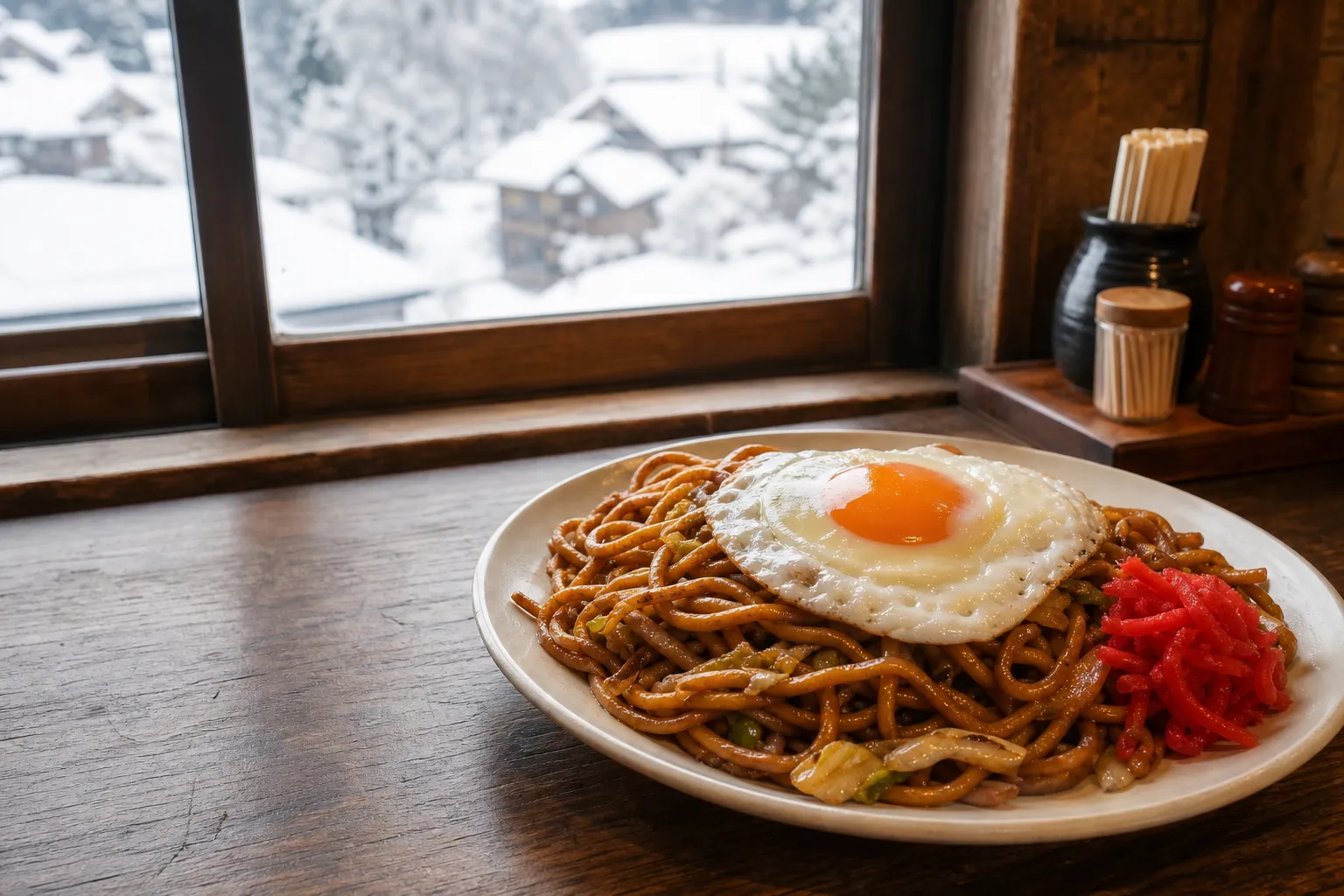
Local FoodYokote, Akita
Yokote Yakisoba (横手やきそば)
A fried egg cracked whole on top of a plate of yakisoba, a pile of red pickles on the side — and suddenly regular yakisoba looks unfinished. Akita's snow country did this one on purpose.
July 5, 2026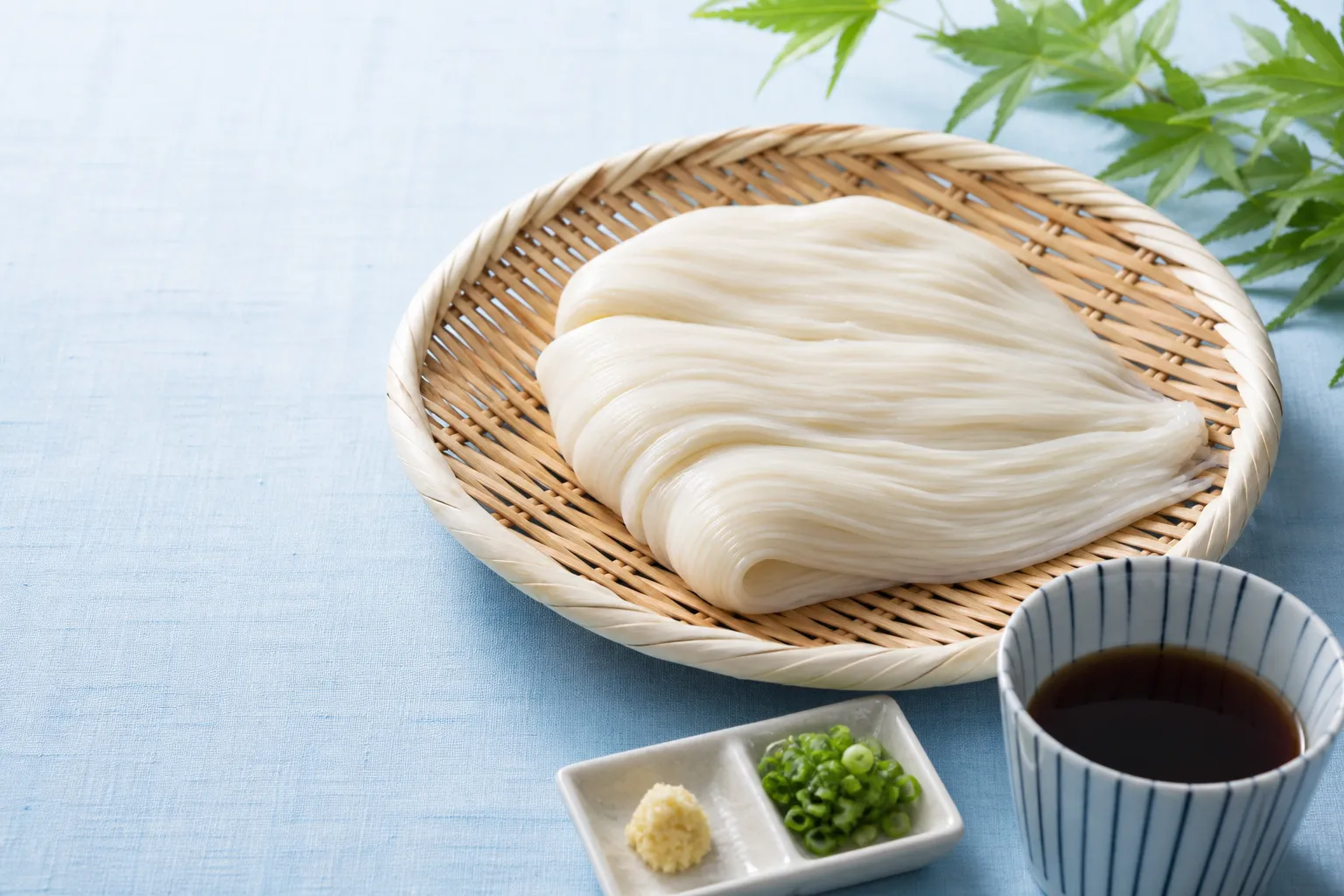
Local FoodYuzawa, Akita
Inaniwa Udon (稲庭うどん)
Udon so thin and silky it slips down before you've decided to chew. Three hundred years of hand-pulling, served cold with a dark dipping sauce. The most elegant noodle in Japan.
June 27, 2026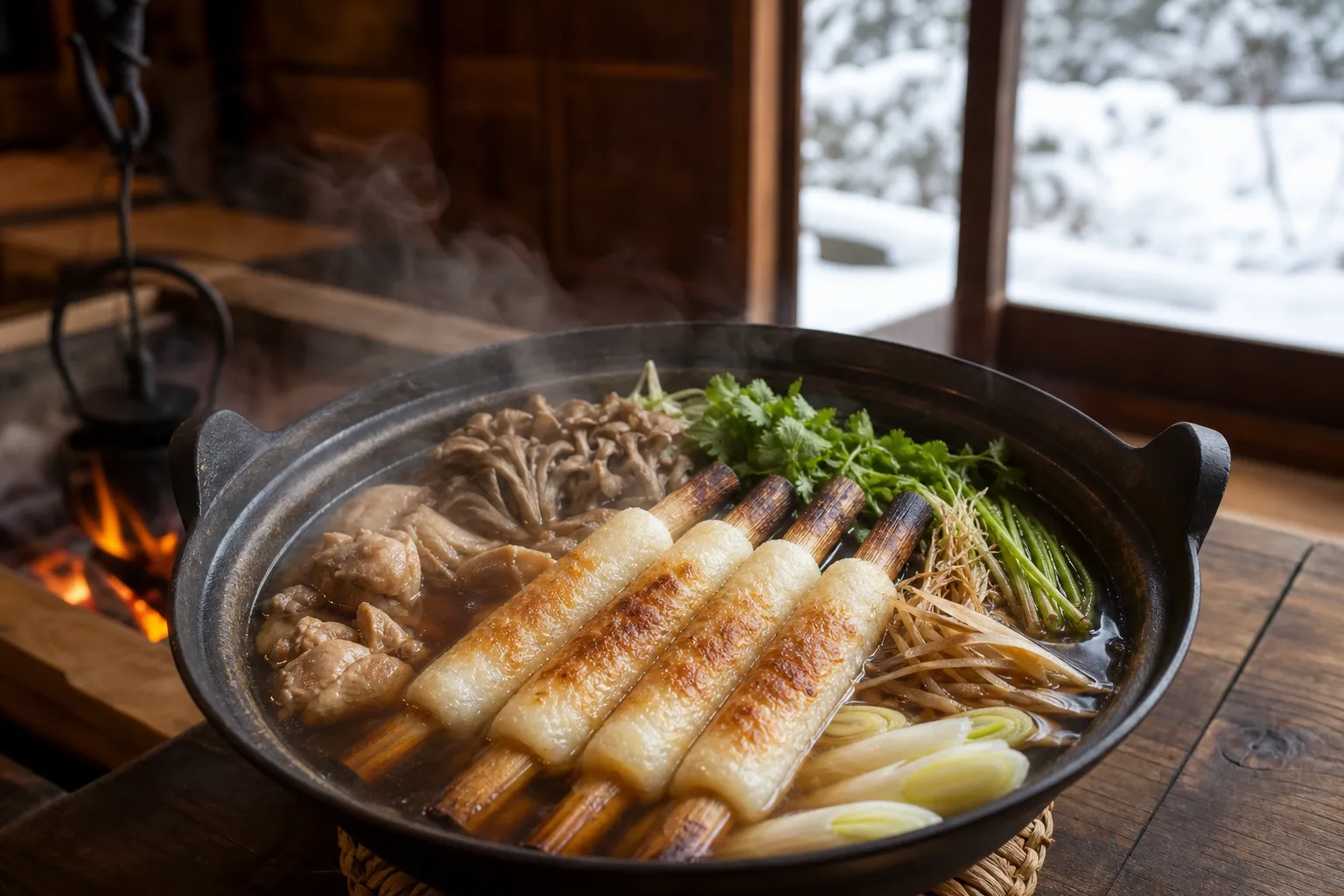
Local FoodAkita, Akita
Kiritanpo (きりたんぽ)
Pounded rice toasted onto cedar sticks, then dropped into a clear chicken hot pot until it drinks the broth. Akita in a bowl, and it tastes like coming in from the snow.
June 27, 2026